Our readers keep the lights on and my smoothie glass nicely filled. As an Amazon Associate, I earn from qualifying purchases.
Starting bonsai means making a single high-stakes purchase — a living tree that must survive beginner mistakes. The wrong choice leads to a crisp, brown plant within weeks. The right one builds confidence and a lifelong skill. The key is matching hardiness to your environment, not just picking what looks impressive.
I’m Mohammad Maruf — the founder and writer behind WellFizz. After analyzing soil composition, watering needs, and trunk maturation cycles across dozens of bonsai entries, I focus on what keeps a tree alive through its first year under novice care.
This guide cuts through the aesthetic noise to help you choose a resilient specimen from the best bonsai trees for beginners that will actually survive your learning curve.
How To Choose The Best Bonsai Trees For Beginners
Picking your first bonsai should start with species selection, not appearance. A tree that demands constant humidity and strict light will frustrate a novice. Look for species that tolerate irregular watering and variable indoor light before considering trunk shape or pot finish.
Evaluate the Age and Trunk Development
A 6-year-old tree has a lignified trunk with bark texture and established branch structure. Younger trees, between 3 and 5 years, have thinner green trunks that scar easily during wiring. Age translates directly to survival margin — older trees store more energy in their woody tissue.
Match Species to Your Available Light
Jade (Portulacaria afra) thrives on a south-facing windowsill with direct sun. Junipers need outdoor exposure with at least four hours of unfiltered sunlight. Seed kits often include species like Jacaranda or Delonix Regia that require supplemental grow lights indoors. Know your light before you buy.
Quick Comparison
On smaller screens, swipe sideways to see the full table.
| Model | Category | Best For | Key Spec | Amazon |
|---|---|---|---|---|
| Live Dwarf Juniper 6 Yr | Pre-Grown Tree | Immediate display with character | 6 years old, lignified trunk | Amazon |
| Brussel’s Dwarf Jade | Pre-Grown Tree | Forgiving indoor houseplant | Succulent leaves, ceramic pot | Amazon |
| Brussel’s Green Mound Juniper | Pre-Grown Tree | Outdoor patio greenery | Cold-hardy juniper species | Amazon |
| Planter’s Choice Starter Kit | Seed Kit | Growing multiple species from scratch | 5 seed varieties, pre-fertilized soil | Amazon |
| AVERGO Classic Kit | Seed Kit | Family DIY activity with kids | Extra seeds, coconut coir soil | Amazon |
| LUOJIBIE Starter Kit | Seed Kit | Gift-ready wooden box presentation | Wooden gift box, complete tools | Amazon |
| LQTTEK Tools Kit | Tool Set | Essential pruning and shaping tools | 24 pieces, carbon steel shears | Amazon |
In‑Depth Reviews
1. Live Dwarf Juniper Bonsai Tree About 6 Years Old

This 6-year-old dwarf juniper arrives with a fully lignified trunk and bark texture that instantly communicates maturity. The ceramic pot includes a glazed fisherman figurine, and the artificial moss keeps the surface aesthetic consistent. What matters most is the trunk — it has already endured several growing seasons, making it more resilient to missed waterings than a younger specimen.
The tree measures about 6 inches in height with the pot dimensions at 7 by 4 by 6 inches. Junipers require outdoor placement with direct sunlight and consistent soil moisture. The care instructions emphasize never letting the soil dry out completely. That means checking moisture daily during hot weeks and watering when the top quarter-inch feels dry to the touch.
Because the tree is handcrafted, each shape varies — you get a one-of-a-kind trunk bend and branch placement. The plastic pot base and artificial moss are functional for transport, but long-term growers often repot into a deeper training pot after the first season to encourage root spread. This is the safest entry point for someone who wants a living sculpture from day one.
Why it’s great
- 6 years of growth gives a thick, woody trunk that forgives beginner mistakes
- Full ceramic pot with figurine makes it gift-ready immediately
Good to know
- Requires outdoor sunlight — not suitable for dim office shelves
- Artificial moss may need replacement after a few months
2. Brussel’s Bonsai – Live Dwarf Jade Bonsai Tree
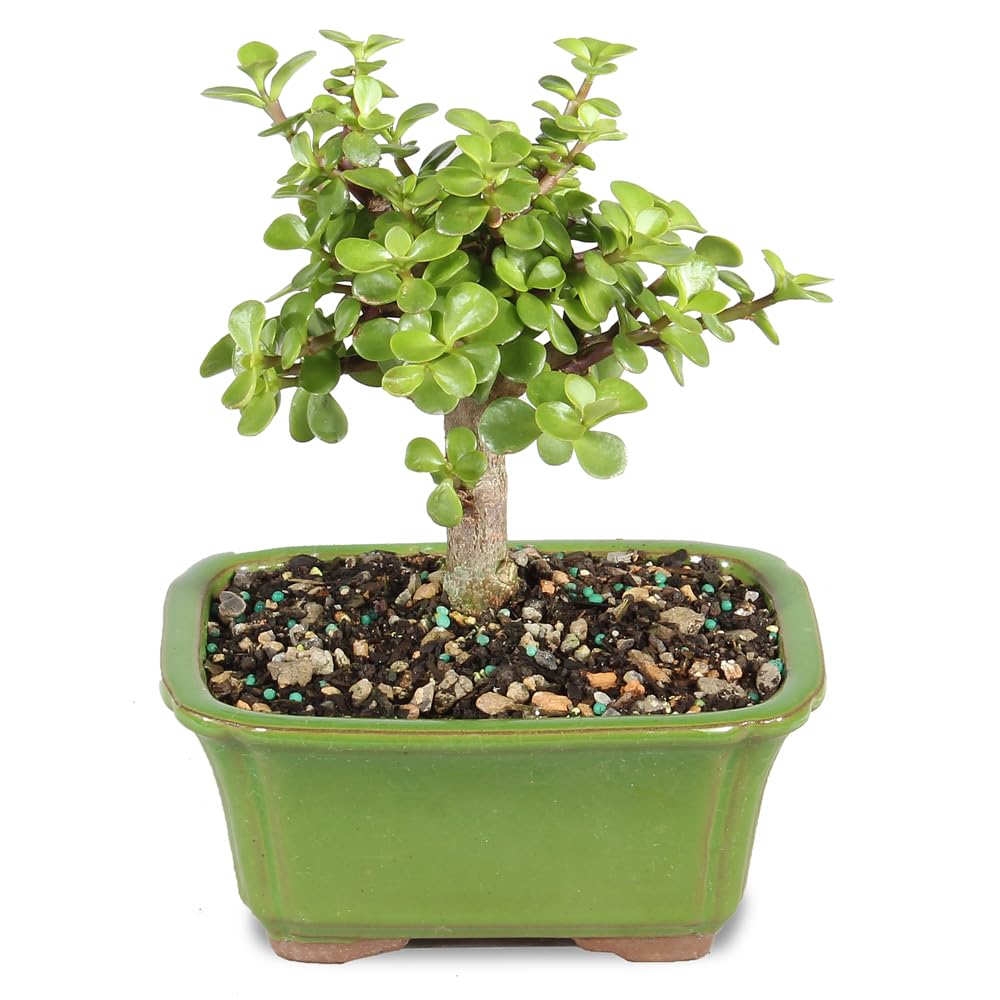
Dwarf Jade (Portulacaria afra) is the most forgiving bonsai species for indoor environments. This 3-year-old specimen stands 5 to 8 inches tall with a thick, fleshy trunk that stores water like a succulent. If you forget to water for three days, the leaves will wrinkle but the tree will bounce back after a deep soak. No other beginner bonsai offers that margin for error.
The tree ships in a ceramic bonsai pot with a soil composition that retains moisture longer than juniper soil. Growers note that the peat-based mix can stay too wet if not monitored — consider repotting into a grittier succulent mix after the first month to prevent root rot. Place it on a bright south-facing windowsill and water only when the soil feels completely dry one inch down.
Brussel’s Bonsai cultivates in Mississippi and ships with careful packaging. Some customers received trees with saturated soil during cold transit, causing leaf drop. If you live in a climate where nighttime temperatures drop below 50°F, order during mild weather. Despite that caveat, the Dwarf Jade remains the single best species for a desk or apartment dweller.
Why it’s great
- Fleshy succulent trunk survives inconsistent watering better than juniper
- Compact 5-to-8-inch size fits any windowsill or desk
Good to know
- Peat-heavy soil may need amending for proper drainage
- Shipping sensitivity to cold weather can cause leaf drop
3. Brussel’s Bonsai – Live Green Mound Juniper
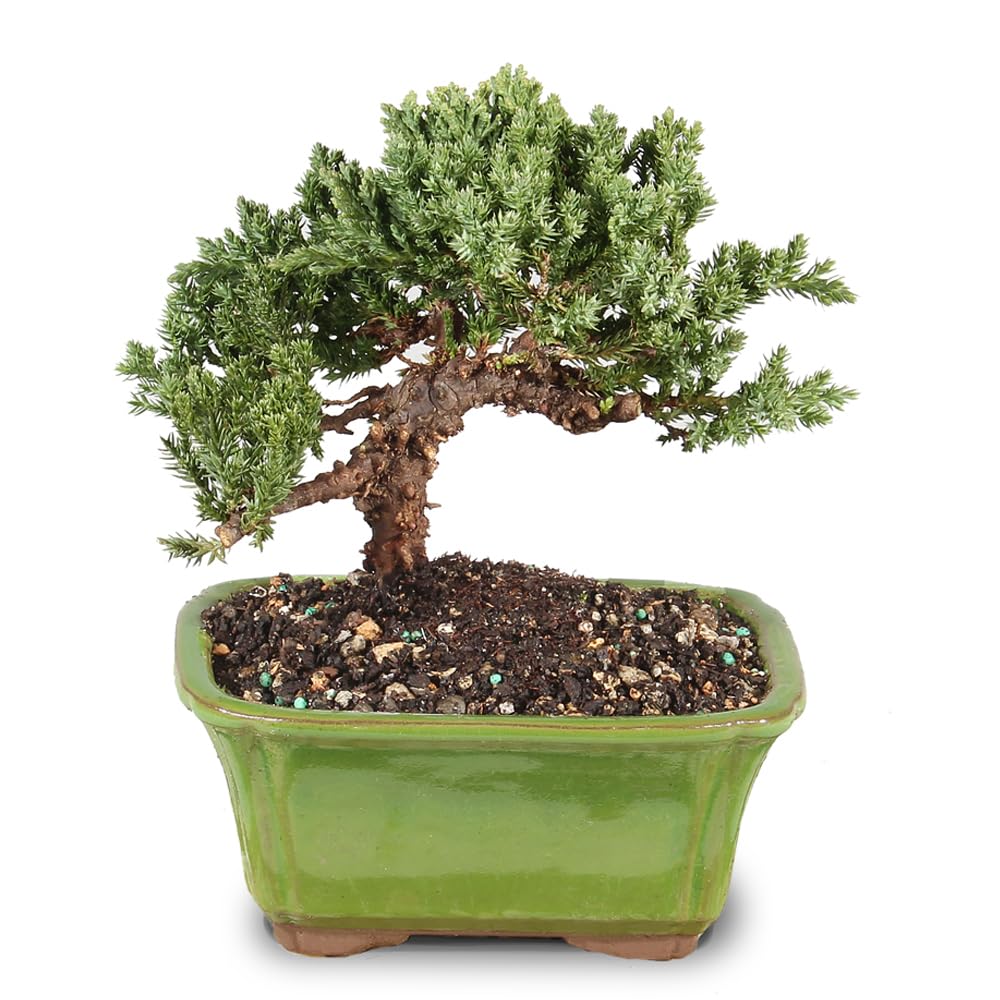
Green Mound Juniper is the classic starter species for outdoor bonsai, and Brussel’s delivers a healthy 3-year-old tree in a high-quality ceramic pot. The dense blue-green foliage provides natural texture, and the trunk has enough taper to suggest age. Outdoor placement is mandatory — junipers need winter dormancy and cannot survive indoors long-term.
The tree stands 4 to 6 inches tall with a spread that fills the pot nicely. The soil includes slow-release fertilizer, and the packaging protects the foliage during transit. Water thoroughly when the top inch of soil dries, and mist the foliage daily if your climate is dry. Junipers signal stress by turning brown from the inside out, so inspect the inner foliage weekly.
Some customers reported pest issues or weak root systems on arrival, though most received vigorous trees. The 30-day guarantee offers some protection, but inspect the tree immediately upon delivery. If the foliage feels brittle or the soil is bone dry, contact support within the warranty window. For its price point, this is the most reliable outdoor beginner tree available.
Why it’s great
- Classic juniper species with dense foliage and natural trunk taper
- High-quality ceramic pot and slow-release fertilizer included
Good to know
- Exclusively outdoor — cannot survive inside a home
- Some units shipped with weak root systems or pests
4. Planter’s Choice Bonsai Tree Starter Kit
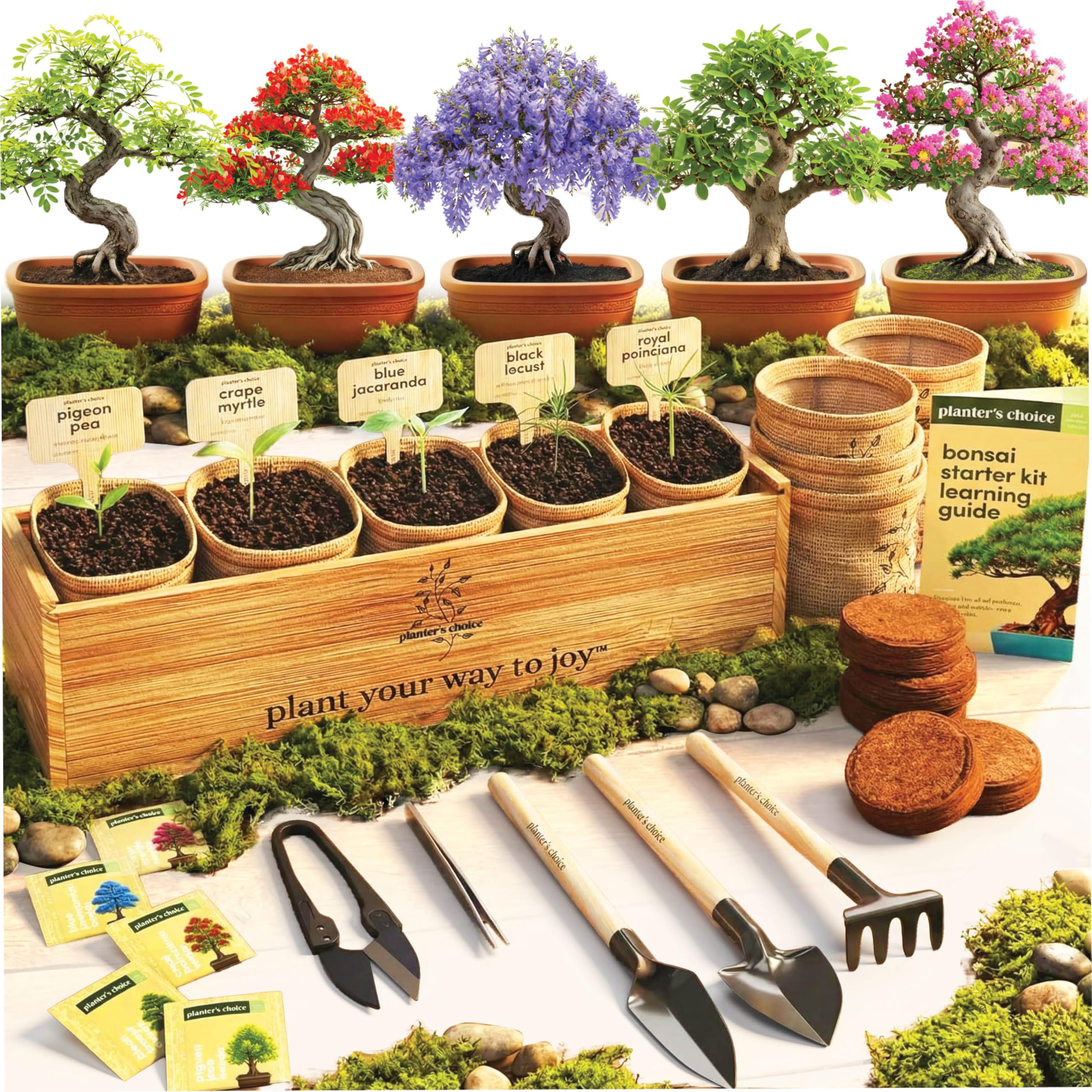
This deluxe starter kit includes five distinct seed varieties — Black Locust, Blue Jacaranda, Crape Myrtle, Pigeon Pea, and Delonix Regia — all packed in a rustic wooden box. The pre-fertilized soil discs expand when water is added, eliminating the need to source separate potting mix. The burlap pots and bamboo markers give the entire setup a natural, gift-ready aesthetic.
The seed instructions are straightforward: soak the soil disc, plant two seeds per pot, and place on a warm windowsill with partial sun. Germination rates vary by species — Pigeon Pea sprouts fastest, often within 7 days, while Jacaranda can take 3 weeks. The kit includes extra seeds for replanting if the first batch fails. This is the most comprehensive introduction to the germination process available at this tier.
Because bonsai grown from seed take 3 to 5 years before they resemble a miniature tree, this kit teaches the foundational skill of seedling care rather than immediate shaping. You will learn to recognize hypocotyl emergence, cotyledon development, and the first true leaves. Planter’s Choice includes an illustrated guide covering each species’ history and care preferences, making this a legitimate educational tool.
Why it’s great
- Five genetically distinct species offer a real comparative learning experience
- Pre-fertilized expanding soil discs eliminate guesswork
Good to know
- Seedling-to-bonsai takes years — not an instant decorative tree
- Jacaranda and Delonix Regia need supplemental light indoors
5. AVERGO Bonsai Tree Kit Classic
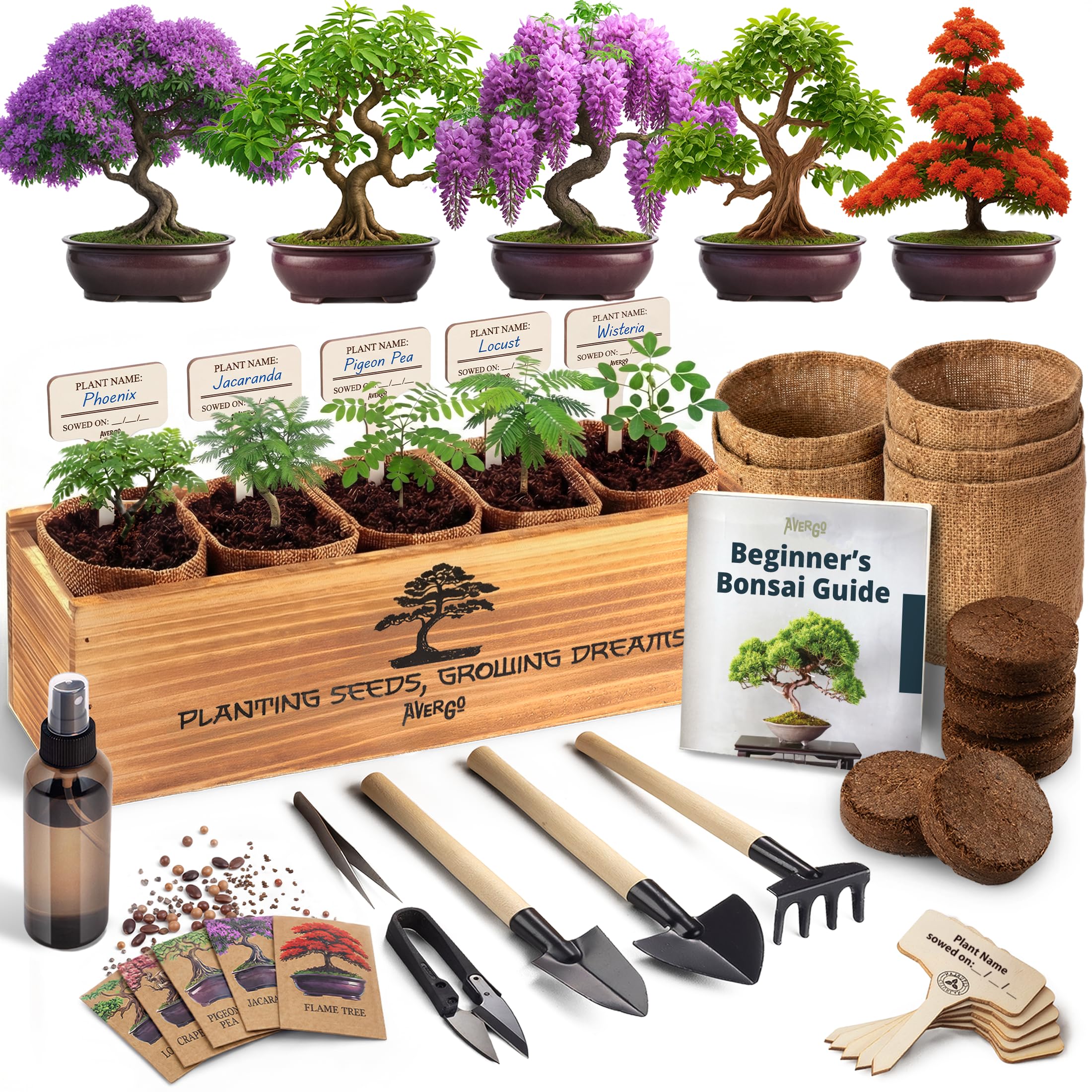
AVERGO’s kit includes Wisteria, Flame Tree, Blue Jacaranda, Pigeon Pea, and a fifth mystery species, with extra seed packets bundled to increase your odds of success. The coconut coir soil provides better aeration and drainage than standard peat-based discs, reducing the risk of damping-off disease in seedlings. This makes it a smarter choice for households with children who tend to overwater.
The wooden planter and basic tools feel substantial for the price. The instructions emphasize the challenge of germination and include tips for scarifying hard-coated seeds like Wisteria. Some customers reported that Wisteria seeds molded rather than sprouted — using a sterile seed-starting mix and surface-sterilizing the seeds with diluted hydrogen peroxide can improve outcomes.
Flame Tree (Delonix Regia) and Blue Jacaranda produce dramatic foliage once established, but both require warm temperatures above 70°F to germinate reliably. If your home stays cooler, consider a seedling heat mat. The kit is marketed toward beginners and advanced growers alike, but the reality is that seed germination requires patience and attention to moisture levels that pure beginners sometimes struggle with.
Why it’s great
- Coconut coir soil reduces overwatering risk during seedling stage
- Extra seed packets provide multiple attempts at each species
Good to know
- Wisteria seeds have a high mold rate without sterilization
- Flame Tree and Jacaranda need consistent warmth above 70°F
6. LUOJIBIE Bonsai Tree Starter Kit

LUOJIBIE designed this kit specifically for gifting. The wooden box opens to reveal seed packets, planters, soil discs, and a complete set of growing tools arranged in a visually appealing layout. The unboxing experience earns high marks from customers who used it for white elephant exchanges and birthday presents. Aesthetics aside, the functional components are standard — expect the same germination challenges as any seed kit.
The kit does not specify which seed species are included, which is a notable omission for buyers who want to research specific care requirements. Customer reviews indicate the seeds include a mix of common fast-germinating species and one or two slower varieties. One reviewer noted that three of four seed types sprouted successfully, with one type failing entirely. That aligns with the typical variability of mass-packaged seeds.
For the target recipient — someone who enjoys crafting, gardening, or mindfulness — this kit delivers a complete activity in a beautiful package. The step-by-step instructions are clear enough for a pre-teen to follow independently. However, if the recipient is serious about growing a specific bonsai species, a kit with labeled seed packets and species-specific guides is a better fit.
Why it’s great
- Premium wooden box presentation makes it an instant gift solution
- Includes all tools and instructions for a complete DIY activity
Good to know
- Seed species are not clearly labeled on the packaging
- One or two varieties may fail to germinate due to seed quality
7. LQTTEK Bonsai Tools Kit – 24 PCS

Once your bonsai tree begins growing, you need proper tools for pruning and shaping. This 24-piece set includes pruning shears, long-handled scissors, leaf cutters, a bucket shovel, three coils of aluminum training wire, and a PU leather storage bag. The carbon steel blades hold a sharp edge longer than stainless steel, and the shears can cut branches up to 3/4 inches in diameter depending on wood density.
The aluminum training wire comes in three gauge sizes, allowing you to shape branches from thin twigs to moderate limbs. The three-piece succulent tool set (wide shovel, narrow shovel, mini harrow) works well for repotting and root pruning. The microfiber towel and gloves keep the process clean. Carbon steel requires maintenance — oil the blades after each use to prevent rust, especially in humid environments.
This kit is not a tree — it is the companion equipment you buy alongside your first pre-grown tree or seed kit. The included wire is annealed aluminum, which is softer than copper and safer for beginner wiring because it is less likely to scar the bark. If you purchase this alongside the Dwarf Jade or Green Mound Juniper, you will have everything needed for the first year of pruning and shaping.
Why it’s great
- Carbon steel shears cut cleanly through branches up to 3/4 inches
- Three-gauge aluminum wire set covers all beginner shaping needs
Good to know
- Blades rust quickly if not oiled after every use
- No watering can or misting bottle included
FAQ
How often should I water a Dwarf Jade bonsai indoors?
Can a Green Mound Juniper survive indoors if I put it near a window?
How long after planting a seed kit will I have a miniature tree?
Final Thoughts: The Verdict
For most users, the best bonsai trees for beginners winner is the Live Dwarf Juniper 6-Year Tree because its mature trunk provides the widest margin for beginner watering mistakes and immediate visual payoff. If you want a forgiving indoor species that tolerates missed waterings, grab the Brussel’s Dwarf Jade. And for learning the full lifecycle from seed, nothing beats the Planter’s Choice Starter Kit.

Mo Maruf
I created WellFizz to bridge the gap between vague wellness advice and actionable solutions. My mission is simple: to decode the research and give you practical tools you can actually use.
Beyond the data, I am a passionate traveler. I believe that stepping away from the screen to explore new environments is essential for mental clarity and physical vitality.