Our readers keep the lights on and my smoothie glass nicely filled. As an Amazon Associate, I earn from qualifying purchases.
A boning knife that flexes too much or too little turns a simple deboning task into a frustrating wrestling match. You need a blade that follows the contours of the chicken bone without fighting you, slicing tendons and joints with authority rather than tearing at the meat. The wrong knife leaves shredded fillets and wasted yield; the right one lets you break down a whole bird in minutes, keeping every piece clean and intact.
I’m Mohammad Maruf — the founder and writer behind WellFizz. I spend my days analyzing knife steel compositions, blade geometries, handle ergonomics, and edge retention metrics to separate precision tools from marketing fluff.
After reviewing blade flex, handle comfort, steel hardness, and edge sharpness across seven models, this roundup delivers a clear winner for anyone looking for the best boning knife for chicken. Whether you need a flexible thin blade or a rigid curved design, there is an option here that fits your technique.
How To Choose The Best Boning Knife For Chicken
Selecting a boning knife for chicken is about matching blade characteristics to the specific poultry anatomy. Chicken bones are small and curved, and the joints are delicate. A knife that works on a beef roast can feel clumsy and oversize on a chicken thigh. Focus on blade length, flexibility, handle security, and steel quality to find your match.
Blade Flexibility: Stiff vs. Flexible
A flexible blade bends as it tracks along the ribcage or around the thigh bone, allowing you to keep the edge against the bone without gouging the meat. A stiff blade is better for cutting through thicker cartilage or splitting joints with a clean crack. For chicken, a medium-flex blade that springs back quickly offers the best balance. Too flimsy and you lose control; too rigid and you leave meat behind.
Blade Length: 5.5 vs. 6 vs. 7 Inches
Chicken parts are compact. A 5.5-inch blade maneuvers easily inside the cavity and around the wing joints. A 6-inch blade is the most versatile length for both chicken and occasional larger cuts like pork shoulder. At 7 inches, you gain reach for turkey or large roasts but may find the tip unwieldy when working on a small bird. For dedicated chicken work, stay between 5.5 and 6 inches.
Handle Grip and Material
Boning chicken means wet, slippery hands. Handles made from thermoplastic rubber, G10, or textured pakkawood provide a secure grip even when covered in fat. Smooth stainless steel handles or polished wood become hazardous without a dry towel. Look for triple-riveted full tang construction for balance and a handle contour that fills your palm without causing fatigue over a dozen birds.
Quick Comparison
On smaller screens, swipe sideways to see the full table.
| Model | Category | Best For | Key Spec | Amazon |
|---|---|---|---|---|
| Victorinox Swiss Classic 6″ | Mid-Range | All-around chicken deboning | NSF Fibrox handle, 3.52 oz weight | Amazon |
| Cutluxe Curved Boning 6″ | Mid-Range | Precision trimming and butterflying | Pakkawood handle, 56+ HRC steel | Amazon |
| KYOKU Shogun Series 7″ | Premium | Heavy butchery and large birds | VG-10 Damascus core, 16.6 oz weight | Amazon |
| HENCKELS Forged Premio 5.5″ | Premium | Small-bird joint separation | German stainless, forged bolster | Amazon |
| Wusthof 4603 Boning 6″ | Premium | Heirloom-quality daily use | POM handle, forged German steel | Amazon |
| Shun Classic 6″ Boning | Premium | Fillet and fish alongside chicken | VG-MAX core, 16-degree edge | Amazon |
| ZWILLING Professional “S” 5.5″ | Premium | Precision brisket and chicken work | SIGMAFORGE one-piece steel, ice-hardened | Amazon |
In‑Depth Reviews
1. Victorinox Swiss Classic 6-Inch Boning Knife

The Victorinox Swiss Classic is the benchmark for entry-level professional boning knives. Its narrow, flexible blade is thin enough to slip along the ribcage without resistance, and the Fibrox handle provides a secure grip even when your hands are greasy from breaking down a whole bird. At just 3.52 ounces, this knife feels almost weightless, reducing hand fatigue during extended prep sessions. The stamped stainless steel arrives sharp out of the box and holds its edge well through several chickens before needing a quick touch-up on a steel.
NSF certification means the handle material meets commercial kitchen sanitation standards — no pores for bacteria to hide. The “S” shaped edge geometry is engineered specifically for separating meat from bone, giving you control at the tip for tight joints. Users report that after breaking down dozens of chickens and pork shoulders, the edge remains functional with regular steeling. The blade offers enough flex to fillet fish but springs back to true, making it a versatile tool for any protein.
One minor trade-off: the blade is stamped rather than forged, so it lacks the heft and forward balance of premium forged knives. But for chicken work, the lightness and precise flex actually help you feel the bone contours better than a heavier blade would. The lifetime warranty against defects backs a knife that has been a commercial kitchen staple for decades.
Why it’s great
- Thin, flexible blade tracks chicken bones effortlessly
- NSF Fibrox handle stays grippy when wet
- Lightweight design reduces hand fatigue
- Proven track record in professional kitchens
Good to know
- Stamped construction lacks forward weight of forged knives
- Edge requires regular steeling for best performance
- Plain blade color may show stains quickly
2. Cutluxe Curved Boning Knife 6″

The Cutluxe Curved Boning Knife delivers forged construction and a high-carbon German steel blade at a price that undercuts most competitors. The curved shape is designed for filleting and skinning, making it ideal for trimming chicken breasts and removing skin in long, clean strokes. Hand-sharpened to 14-16 degrees per side, the edge is aggressive enough to glide through tendon and cartilage without sawing. The full tang and triple-riveted pakkawood handle offer excellent balance, with the weight settling naturally in the palm.
At 56+ Rockwell hardness, the blade balances edge retention with ease of sharpening. Users report that it arrives razor-sharp and holds that edge through multiple chicken prep sessions. The pakkawood handle is laminated and polished for sanitation, though it can become slick if your hands are very oily — a quick wipe solves the issue. The curved profile excels at butterflying chicken breasts and deboning thighs, where the belly of the blade can ride along the bone while the tip stays engaged.
The included storage sheath protects the edge, but this knife should never go in the dishwasher; the pakkawood will dry out and crack. The lifetime warranty covers material and workmanship defects, giving you confidence in a brand that is building a reputation among home cooks and professionals alike.
Why it’s great
- Forged German steel at a mid-range price point
- Curved blade profile matches chicken anatomy
- Full tang construction for balanced weight
- Lifetime warranty against defects
Good to know
- Pakkawood handle can get slippery with heavy fat
- Not dishwasher safe — hand wash only
- Blade is stiffer than some prefer for fish
3. KYOKU Shogun Series 7″ Damascus Boning Knife
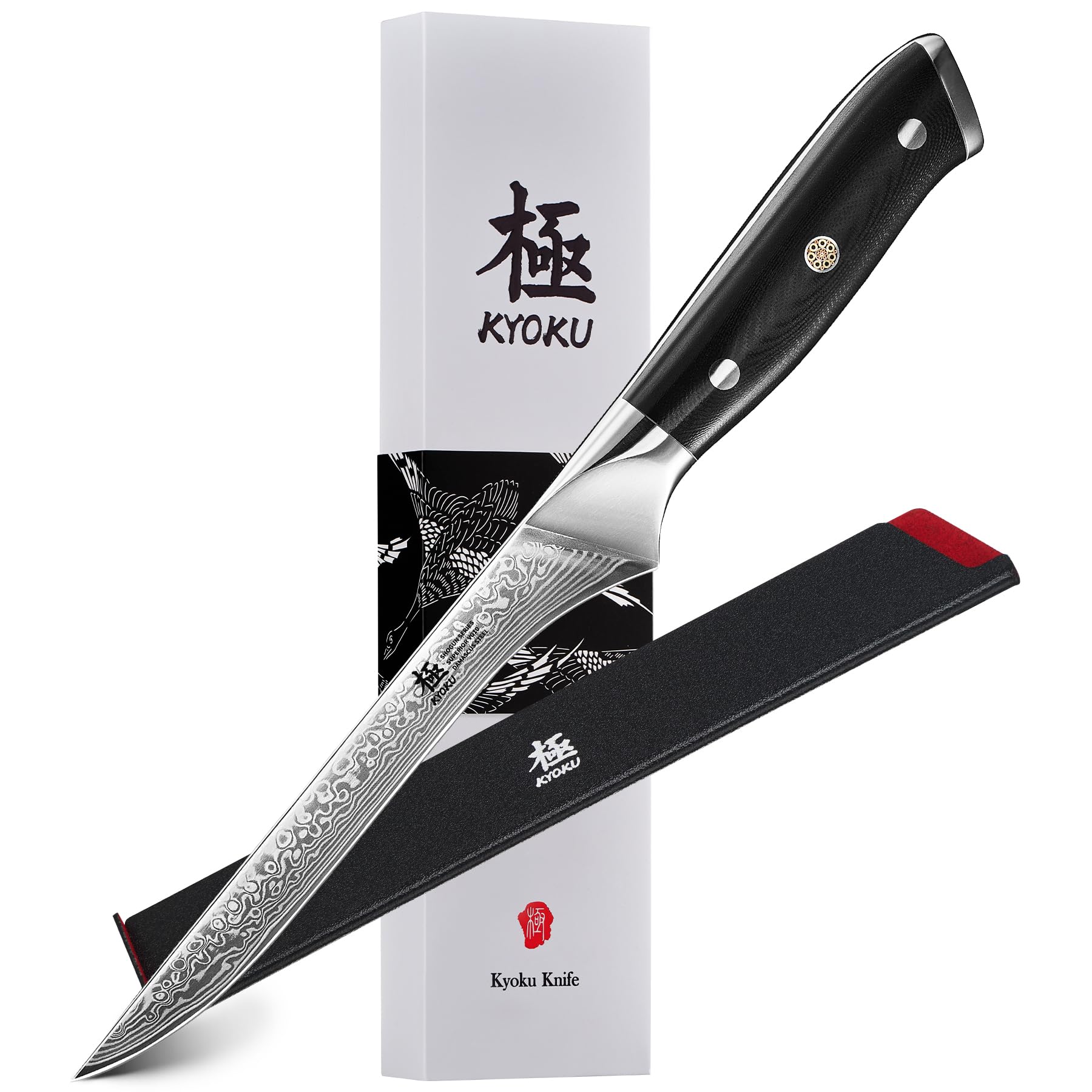
The KYOKU Shogun Series boning knife brings a VG-10 Japanese super steel core clad in 68 layers of Damascus to the poultry prep station. At 7 inches, it is the longest blade in this lineup, making it better suited for larger birds like turkey or for butchery tasks where reach matters. The G10 handle is military-grade composite — impervious to heat, moisture, and cold — and offers a textured grip that stays secure when your hands are wet. This knife weighs 16.6 ounces, giving it substantial heft that helps drive the blade through thicker joints.
Hand sharpened to an 8-12 degree angle using the Honbazuke method, the edge is scalpel-like out of the box. Users processed two 300-pound hogs with this knife, sharpening only once midway, which speaks to the edge retention of the VG-10 core at HRC 58-60. For chicken, the extra length means you can reach deeper into the cavity, but the weight may feel excessive for delicate work like removing tenders. The included sheath and case protect the Damascus pattern from scratches.
One consideration: the blade tip is sharp on both the edge and the spine, so you need to be mindful of your off-hand position during use. The Damascus pattern is purely aesthetic but adds a visual premium that many home cooks appreciate. This knife is a statement piece that performs at a high level, but its weight and length make it a specialist tool rather than an everyday chicken knife.
Why it’s great
- VG-10 core holds edge through heavy use
- G10 handle is impervious to moisture and grease
- Damascus cladding adds visual appeal
- Includes protective sheath and case
Good to know
- 7-inch blade may feel long for small chicken parts
- 16.6 oz weight causes fatigue over many birds
- Spine edge requires careful handling
- Hand wash only – no dishwasher
4. HENCKELS Forged Premio 5.5-inch Boning Knife

The HENCKELS Forged Premio is a compact 5.5-inch boning knife built around a forged bolster construction that creates a seamless transition from blade to handle. The shorter blade length is ideal for navigating the tight joints of chicken wings and thighs, where excess blade length can interfere with your work. The German stainless steel blade arrives with a professional satin finish and is honed to a sharp edge that users report can shave arm hair straight from the packaging. The triple-rivet handle is curved to fit the palm, offering a comfortable grip for smaller hands.
Users switching from higher-end brands like Wusthof have been pleasantly surprised by the Premio’s build quality. The knife feels heavy and solid in hand, with enough forward weight to help cut through cartilage without excessive wrist force. For chicken deboning, the 5.5-inch blade slips into the thigh joint and separates the drumstick with one clean cut. The stainless steel endcap adds a balanced feel and prevents the handle from rolling on the counter.
The main drawback is the handle material: it is stamped as stainless steel, which can become slippery when wet despite the curved design. The knife is dishwasher safe, but hand washing preserves the edge longer. For the price, this knife offers forged quality that punches above its weight class, making it a strong contender for anyone who prefers a shorter, more maneuverable blade for chicken.
Why it’s great
- Forged bolster adds durability and balance
- 5.5-inch length perfect for chicken joints
- Razor-sharp out of the box
- Solid feel with good forward weight
Good to know
- Handle can be slippery when wet
- Less flexible than stamped competitors
- Not suitable for larger butchery tasks
5. Wusthof 4603 Boning Knife, 6 Inch

The Wusthof 4603 is the boning knife that professional butchers reach for when they need consistent performance day after day. Forged from a single piece of high-carbon stainless steel, this 6-inch knife offers a flexible blade that is thin enough to follow the chicken ribcage yet stiff enough to split the backbone with authority. The polyoxymethylene (POM) handle is a high-durability polymer that resists heat, moisture, and impact — unlike wood handles that can crack or swell. It provides a traditional rounded shape that fits naturally in the hand without any sharp edges.
Users describe the edge as “scary sharp” after a few passes on a honing steel, and reports indicate it maintains that edge through ten chickens, two pork shoulders, and endless thighs without significant degradation. The blade is 6 inches of balanced flex — enough give to slide between the oyster and the hip joint, but not so floppy that you lose directional control. At 0.14 kg, the knife is light enough for precision work but carries the solid feel of a fully forged tool. The included holster is basic but functional.
This knife is dishwasher safe according to the manufacturer, but a lifetime of hand washing is recommended to preserve the edge and handle. The Wusthof name carries a premium, and the price reflects the Solingen, Germany manufacturing heritage. For home cooks who process chicken weekly and want a knife that will last decades with proper care, the Wusthof 4603 is a sound investment.
Why it’s great
- Forged German steel with excellent balance
- POM handle is durable and moisture-resistant
- Right flex for chicken — stiff enough for joints, flexible for ribs
- Heirloom-quality construction
Good to know
- Premium price point
- Dishwasher safe but hand washing is strongly preferred
- Plain black handle won’t turn heads
6. Shun Classic 6″ Boning & Fillet Knife

The Shun Classic 6-inch Boning Knife represents Japanese cutlery craftsmanship at its finest. The VG-MAX core is clad with 68 layers of Damascus stainless steel, creating a blade that is both exceptionally hard (HRC 61) and visually stunning. The 16-degree cutting angle is sharper than typical Western knives, allowing it to part chicken skin and meat fibers with minimal resistance. The D-shaped Pakkawood handle is ergonomically designed for both left and right-handed users, providing a secure grip that becomes more comfortable the longer you hold it.
Users report that this knife stays sharp for years with basic care, requiring only occasional passes on a ceramic honing rod to restore the fine edge. For chicken work, the blade is excellent for delicate tasks like removing silver skin or butterflying breasts, where precision matters more than brute force. The thin blade profile lets you feel the bone structure through the steel, similar to the tactile feedback of a fillet knife. It is equally adept at filleting fish, making it a dual-purpose tool for the home cook who works with both poultry and seafood.
The Pakkawood handle is beautiful but requires maintenance — it can crack if exposed to prolonged moisture or dishwasher cycles. The blade is also more brittle than German steel due to its higher hardness, so it should never be used to cut through bone or frozen product. At this price point, the Shun is an investment in precision, not a beater knife. For the cook who values a razor edge and is willing to hand wash and hand dry after each use, this knife delivers unmatched performance on chicken.
Why it’s great
- VG-MAX core with 68-layer Damascus cladding
- 16-degree edge for exceptional sharpness
- Ergonomic D-shaped Pakkawood handle
- Excellent for both chicken and fish
Good to know
- High hardness makes blade brittle — avoid bone contact
- Pakkawood handle requires careful hand washing
- Premium price limits accessibility
7. ZWILLING Professional “S” 5.5-inch Flexible Boning Knife

The ZWILLING Professional “S” 5.5-inch Flexible Boning Knife is forged from a single piece of high-carbon NO STAIN steel using the SIGMAFORGE process, which eliminates the weak point where the blade meets the handle. The Friodur ice-hardening treatment creates a blade that starts sharper and holds its edge longer than standard German stainless steel. At 5.5 inches, this knife is purpose-built for chicken work — the shorter length gives you maximum maneuverability inside the cavity and around tight joint connections. Users consistently describe it as the best boning knife they have used for chicken, and America’s Test Kitchen has named it a top pick.
The flexible blade is thin enough to run along the ribcage without scraping bone, yet the tip is stiff enough to puncture through cartilage cleanly. The handle is a composite material that provides a secure grip without the slickness of polished metal. For brisket trimming or breaking down a whole chicken, this knife excels at every task. The edge retention is outstanding — users report needing only a quick pass on a honing steel between whole chickens to maintain the factory sharpness. The laser-controlled edge angle ensures consistency along the entire blade length.
The composite handle is dishwasher safe, though hand washing is recommended to protect the blade edge. This knife is made in Germany and carries the ZWILLING reputation for quality, backed by a lifetime warranty. At this premium tier, the Professional “S” line competes directly with the Wusthof 4603 and edges ahead for chicken-specific work due to the shorter, more agile blade length and superior edge retention technology.
Why it’s great
- SIGMAFORGE one-piece construction eliminates weak points
- Friodur ice-hardening extends edge life
- 5.5-inch blade is ideal for chicken anatomy
- America’s Test Kitchen top pick
Good to know
- Premium price requires serious consideration
- Blade is thin enough to risk bending if abused
- Handle design is utilitarian, not decorative
FAQ
Can I use a boning knife to cut through chicken bones?
What is the best blade length for deboning a whole chicken?
How often should I sharpen a boning knife used for chicken?
Final Thoughts: The Verdict
For most users, the best boning knife for chicken winner is the Victorinox Swiss Classic 6-Inch because it offers the ideal balance of blade flex, handle security, and affordability for everyday poultry prep. If you want the precision of a Japanese edge and the beauty of a Damascus blade, grab the Shun Classic 6″ Boning Knife. And for a compact, forged-German-steel powerhouse that excels at chicken joints and beef trimming alike, nothing beats the ZWILLING Professional “S” 5.5-inch.

Mo Maruf
I created WellFizz to bridge the gap between vague wellness advice and actionable solutions. My mission is simple: to decode the research and give you practical tools you can actually use.
Beyond the data, I am a passionate traveler. I believe that stepping away from the screen to explore new environments is essential for mental clarity and physical vitality.