Our readers keep the lights on and my smoothie glass nicely filled. As an Amazon Associate, I earn from qualifying purchases.
Standard earbuds isolate you from traffic, fade when sweat hits, and jostle loose at the worst mile. Bone conduction headphones sidestep every one of those failures by transmitting vibration through your cheekbones instead of plugging your ear canal. For runners who need both audio and an audible crash warning system, this open-ear architecture converts from a niche tool to the only logical choice.
I’m Mohammad Maruf — the founder and writer behind WellFizz. I’ve spent years analyzing bone conduction driver performance, waterproof sealing standards, and frame ergonomics so runners don’t have to guess which specs actually matter when the pavement gets loud.
Whether you are training for a marathon or just dodging potholes on a dusk jog, the best bone conduction headphones for running keep you aware, comfortable, and locked in without sacrificing audio clarity for the sake of safety.
How To Choose The Best Bone Conduction Headphones For Running
Bone conduction headphones operate on a completely different physics than standard earbuds. Because the driver vibrates against your cheekbone rather than pushing air into your ear canal, fit, seal, and transducer quality define the experience. Four spec categories separate a reliable running companion from a headset that buzzes and slips.
Waterproofing and Sweat Resistance (IP Rating)
Runners generate more sweat than any gym-goer, and rain doesn’t stop a scheduled long run. An IP67 rating means the unit survives immersion in one meter of water for thirty minutes — good for heavy perspiration and light rain. IP68 goes further, certifying complete protection against continuous submersion past one meter. For dedicated outdoor runners, IP68 is the floor, not the ceiling.
Battery Life: Continuous vs Total Playtime
Many listings advertise “60 hours” but that figure includes the charging case. What matters for a runner is continuous single-charge playback — typically 8 to 15 hours. A 5-minute quick-charge that yields 1 to 1.5 hours is crucial for the runner who forgets to plug in overnight. Do not let total-case figures distract you from continuous runtime.
Fit and Frame Material
Titanium alloy frames with memory-wire geometry resist permanent bending and keep the transducers pressed against your cheekbones at a consistent angle. Silicone coating over the contact surface prevents slipping when sweat builds up. A loose frame that shifts during high-cadence strides will rob bass and treble equally, making any driver spec irrelevant.
Bluetooth Version and Connection Stability
Bluetooth 5.1 is the baseline for reliable range up to ten meters. Version 5.3 and 6.0 reduce latency and improve pairing speed, which matters when you are syncing to a watch or a phone tucked in a back pocket. Multipoint pairing (connecting two devices simultaneously) is a practical feature for runners who stream from both a phone and a sports watch.
Quick Comparison
On smaller screens, swipe sideways to see the full table.
| Model | Category | Best For | Key Spec | Amazon |
|---|---|---|---|---|
| SHOKZ OpenRun Pro | Premium | Marathon training with deep bass | 10 hours continuous playback | Amazon |
| Yistao Gen 2 B8 | Mid-Range | Extended runs with case charging | IP68 / Bluetooth 6.0 | Amazon |
| JBL Endurance Peak 4 | Mid-Range | Noise cancellation with safety | Dynamic driver / 48hr case | Amazon |
| mojawa Aerra | Mid-Range | Fast-charge heavy sweaters | IP67 / 8hr continuous | Amazon |
| SHOKZ OpenRun | Premium | Light fit, long battery safety | IP67 / 8hr continuous | Amazon |
| SHOKZ OpenComm2 | Premium | Call clarity mid-run | Noise-canceling boom mic | Amazon |
| Yistao B8 Non-Case | Budget-Friendly | Casual joggers on a budget | IP68 / 15hr single charge | Amazon |
In‑Depth Reviews
1. SHOKZ OpenRun Pro

The OpenRun Pro runs Shokz’s 9th-generation bone conduction driver paired with their TurboPitch technology, which reinforces the low-end frequencies that most open-ear designs simply cannot produce. The result is the fullest bass response available in this category — enough to make tempo-based running playlists feel punchy without the cheekbone vibration turning into a distracting tickle. The titanium frame weighs almost nothing and holds its clamp force even after hundreds of miles, so the transducers stay perfectly aligned against your cheekbones regardless of head angle or stride cadence.
Battery life hits ten continuous hours on a single charge, which covers double-marathon training blocks and week-long trips without needing the charging cable. The IP55 rating is less aggressive than IP68 competitors, but that is a deliberate trade-off for the slimmer profile and larger driver housing. Quick charge delivers 1.5 hours of playback from five minutes plugged in — genuinely useful for a runner who forgot to charge before an early morning start.
Sound leakage at high volume is more noticeable than some rivals, and the proprietary magnetic charging cable means you cannot borrow a friend’s USB-C in a pinch. For the runner who prioritizes secure fit, situational awareness, and bass presence above all other factors, the OpenRun Pro sets the category benchmark. It stays planted during sprints, produces enough low-end energy to drive a tempo workout, and never asks you to sacrifice safety for sound quality.
Why it’s great
- Best-in-class bass response among bone conduction models
- Featherlight titanium frame stays locked at high cadence
- 10-hour continuous runtime suits ultra-distance training
Good to know
- Only IP55 water resistance — not for heavy rain or submersion
- Proprietary magnetic charger rather than USB-C
- Sound leakage increases above 80% volume
2. Yistao Gen 2 B8
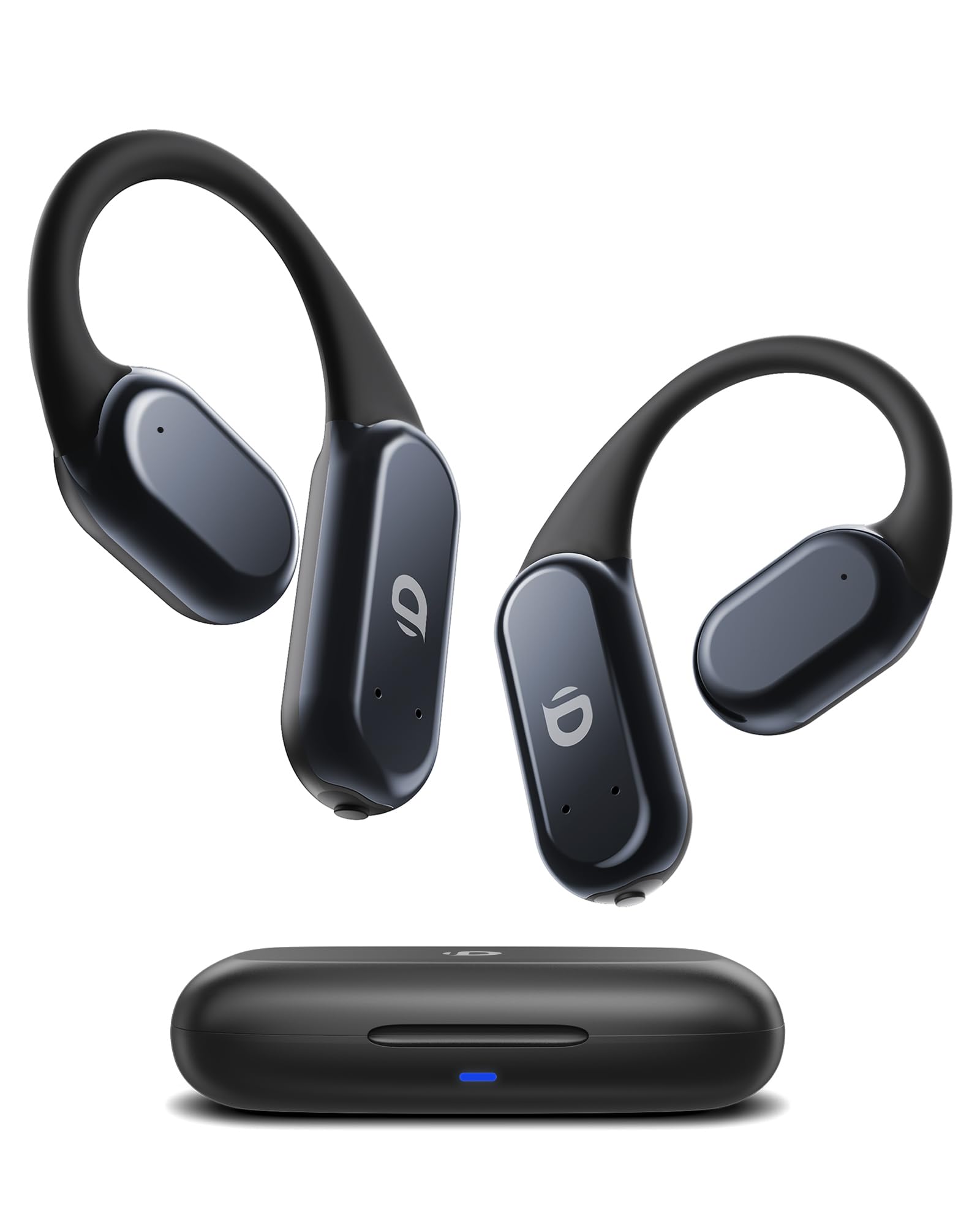
The Yistao Gen 2 B8 packs a set of specs that undercut the premium competition on raw features: IP68 waterproofing, Bluetooth 6.0, and a 60-hour total playtime budget when you factor in the charging case. The ToneTerra driver system is paired with SonicBoost 2.0, claiming a 30% volume increase over the previous generation — and in real terms that means outdoor runners can still hear podcasts at moderate volume even with wind noise. The liquid silicone ear-contact surface adds friction exactly where sweat would otherwise cause the frame to slide forward mid-stride.
Fifteen hours of continuous playback per charge is a full work week of daily hour-long runs without ever docking. The charging case holds four additional full charges, making this an obvious pick for runners who travel or commute without guaranteed access to a power outlet. The dual EQ modes switch between Music and Reading settings, allowing you to prioritize vocal clarity during audiobooks or boost the lower registers for workout playlists.
The trade-off is tonal balance: the bass is present but not as textured as the OpenRun Pro’s, and the mid-range can feel slightly scooped when you push volume past 80%. Some users report needing periodic fit adjustments every twenty minutes in hot weather, though the silicone surface improves grip compared to hard plastic frames. For the mid-range price, the B8 delivers the highest IP rating and most modern Bluetooth stack in this list, making it a smart hedge against sweat damage and future device compatibility issues.
Why it’s great
- IP68 rating — fully sweat and rain proof without caveats
- Bluetooth 6.0 for instant pairing and low dropout
- 15-hour single charge with 60-hour case total
Good to know
- Bass lacks texture compared to premium Shokz models
- Silicone fit still requires occasional re-adjustment
- Max volume adequate but not stadium-loud
3. JBL Endurance Peak 4

The Endurance Peak 4 is technically a true wireless sport earbud, but its inclusive IP68 rating and TwistLock ear hook design make it a legitimate alternative for runners who want bone conduction’s open-ear awareness without sacrificing noise cancellation. JBL’s OvalTubes with memory-wire ear hooks lock into the concha rather than relying on canal pressure, so the fit remains stable even during explosive starts and downhill descents. The 10mm dynamic driver produces the most authoritative bass in this list — deeper than any bone conduction transducer can manage — while the Smart Ambient mode pipes in external sound when you need traffic awareness.
Six microphones — three per earpiece — deliver crystal-clear call quality even in gusty outdoor conditions, which matters for runners who take work calls on their cool-down walk. Adaptive Noise Cancelling uses four noise-sensing mics to filter wind rumble and engine drone, though you can toggle it off entirely to rely on the open-ear hook design. Battery life hits 12 hours per charge with ANC off, and the case provides three full recharges for a 48-hour total, matching the best bone conduction packages.
The charging case is noticeably bulky compared to the slim Yistao or Shokz cases, and the touch controls occasionally register a false command when you wipe sweat from your temple. For runners who want the dual benefit of active noise cancellation during gym sessions and open-ear awareness on the road, the Peak 4 bridges that divide without forcing you into a single acoustic philosophy. It is not true bone conduction, but it solves the same core problem: staying aware, dry, and comfortable.
Why it’s great
- Adaptive ANC with Smart Ambient for traffic awareness
- TwistLock hook design — zero slip during hill sprints
- 48-hour total battery with case
Good to know
- Bulky charging case compared to bone conduction models
- Touch controls can false-trigger with sweat
- Not true bone conduction — uses dynamic drivers
4. mojawa Aerra
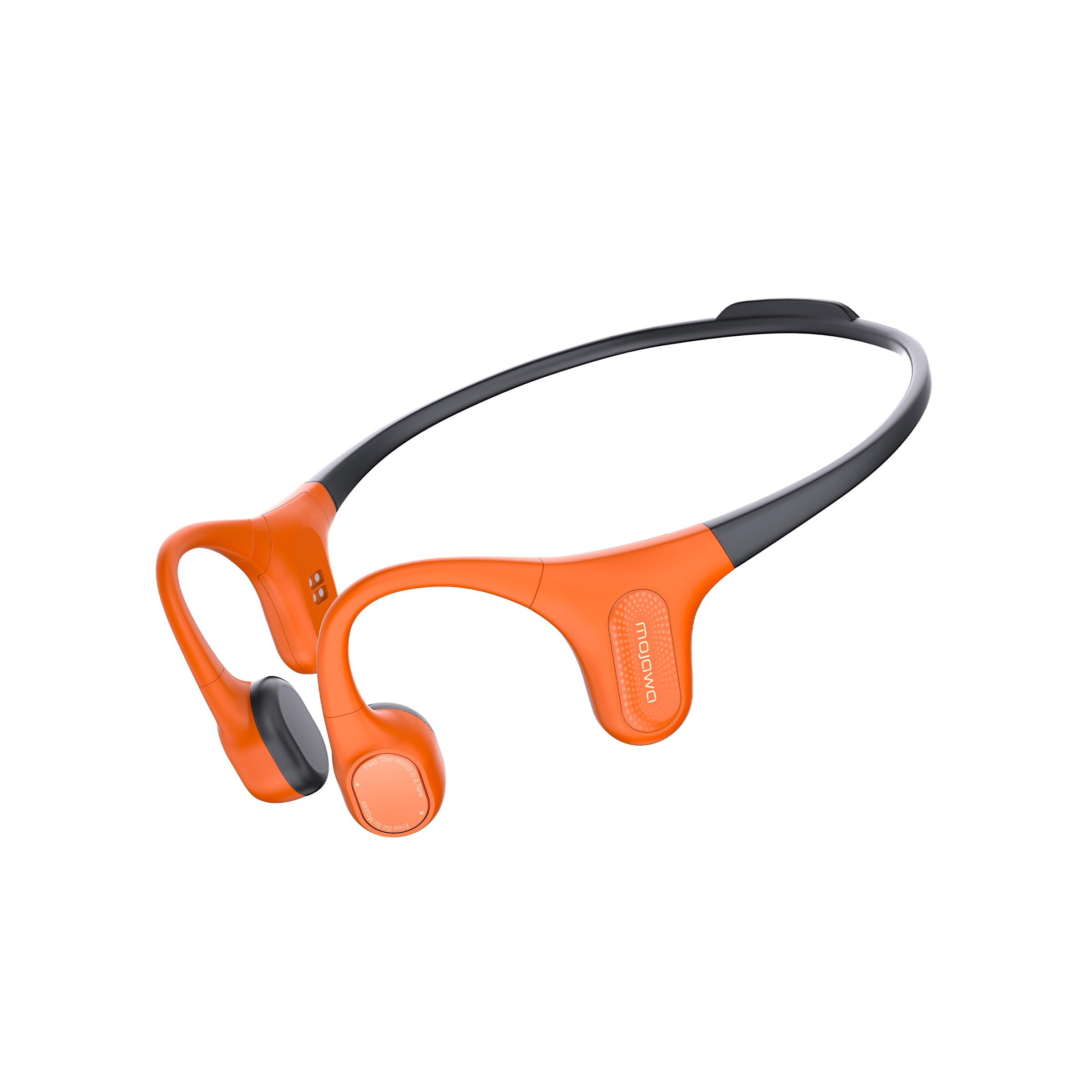
The mojawa Aerra targets the runner who values rapid top-up speeds over raw battery capacity. A five-minute quick charge yields 1.5 hours of playback — the fastest recovery rate in this selection — which means a quick pre-run coffee stop can rescue a dead headset. The IP67 rating handles heavy sweat and rain submersion up to one meter for 30 minutes, which covers any outdoor condition short of deliberate pool swimming. Audio calibration was tuned with Grammy-winning producers, and the Audio-Haptics Integrated System adds tactile low-frequency feedback that makes tempo-based music feel more physical than typical bone conduction drivers allow.
Three EQ presets — Equalizer, Bass Boost, and Vocal Enhancement — let you switch between music-heavy and podcast-heavy sessions without diving into an app. Dual-device multipoint pairing works for simultaneously connecting to a phone and a sports watch, so you never miss a call when streaming from your Garmin.
The continuous runtime of eight hours is adequate for half-marathon training but falls short of the 10-to-15-hour benchmarks set by Shokz and Yistao. Call quality is average for bone conduction — the mic picks up wind noise more readily than the OpenComm2’s boom design. For the runner who prioritizes quick charge speed and a bass-haptic response over marathon battery life, the Aerra is a focused, well-built tool that excels in its niche.
Why it’s great
- Fastest quick charge — 5 minutes for 1.5 hours playback
- Audio-Haptics system adds tactile bass feedback
- Multipoint pairing for phone and watch simultaneously
Good to know
- 8-hour continuous battery — shortest in this list
- Larger transducers can cause pressure after hour three
- Bluetooth 5.2 lags behind 5.3 and 6.0 competitors
5. SHOKZ OpenRun

The standard SHOKZ OpenRun is essentially the Aeropex successor that refines the formula without adding unnecessary weight. At 26 grams with an 8th-generation bone conduction driver, it remains one of the lightest full-feature bone conduction headsets on the market — light enough that forgetting you are wearing it is the norm rather than a claim. The IP67 rating offers genuine sweat and rain protection up to one meter submersion, and the ten-meter Bluetooth 5.1 range stays solid through a concrete wall if you need to leave your phone on a gym bench during track repeats.
Eight hours of continuous playback covers a standard training week’s worth of daily hour-long runs, and the ten-minute quick charge yields 1.5 hours of juice — slightly slower than the mojawa but still practical for most schedules. The included Shokz sport headband is a thoughtful addition for runners who want to prevent wind chill on cold morning runs or simply keep sweat from dripping onto the driver housing. The wraparound titanium frame exerts consistent clamp force regardless of head width, so the transducers do not wander during high-cadence strides.
The sound signature is lean in the bass register — this is strictly a mid-and-treble instrument optimized for vocal content and podcast clarity. Runners who want to feel a kick drum in their chest will need the OpenRun Pro or a dynamic-driver alternative. The proprietary magnetic charger is shared across Shokz’s entire lineup, which can be frustrating when you misplace the cable. For the runner who values minimum weight and reliable waterproofing above all other metrics, the OpenRun is the proven standard that rarely surprises in the wrong direction.
Why it’s great
- Extremely lightweight at 26 grams — barely noticeable
- IP67 rated for sweat, rain, and sink rinsing
- Consistent clamp force across varying head sizes
Good to know
- Bass is weak — not designed for music-heavy runners
- Proprietary magnetic charger, not USB-C
- Bluetooth 5.1, not the latest version
6. SHOKZ OpenComm2

The OpenComm2 diverges from typical running-focused bone conduction headsets by prioritizing call quality as the primary feature rather than an afterthought. The boom mic with DSP noise cancellation captures voice cleanly even when you are mid-stride on a windy street, and the 7th-generation driver delivers PremiumPitch 2.0 audio that tilts the EQ toward vocal clarity — ideal for runners who use training time to work through conference calls or coaching sessions. The IP55 water resistance is lower than running-specific models, but the silicone finish and flexible frame still shrug off light rain and sweat during a morning jog.
Sixteen hours of talk time is exceptional for this form factor, and the five-minute quick charge adds two hours of conversation — the fastest talk-time recovery in the category. The multipoint connection pairs with both your phone and a laptop or sports watch, letting you switch between a coaching call and your playlist without manual re-pairing. The physical control buttons for mute and volume are more reliable than touch panels when your hands are sweaty or gloved, and the USB-C charging eliminates the proprietary cable frustration of other Shokz models.
The frame width is optimized for larger heads; users with smaller skull diameters report that the stiff titanium wire can cause pressure headaches after two hours. The boom mic, while excellent for calls, adds visual weight that some runners find awkward for daily wear. For the runner who needs to stay reachable during long workouts or manages work calls from the road, the OpenComm2 delivers the most intelligible transmission in this list — even if its waterproofing is not at the same tier as the Yistao or OpenRun.
Why it’s great
- Best-in-class call clarity with DSP boom mic
- 16 hours talk time — longest of any model here
- USB-C charging eliminates proprietary cable
Good to know
- IP55 rating — not for heavy rain or submersion
- Frame is wide — can cause headaches on smaller heads
- Boom mic adds visual bulk some runners dislike
7. Yistao B8 (Non-Case)

The Yistao B8 without the charging case is the entry-level version of the brand’s hardware, yet it retains the same IP68 rating and 15-hour continuous battery life that make the Gen 2 model so compelling. At a lower entry point, you lose the wireless charging case but keep the core acoustic package: a 16mm bone conduction driver with AAC codec support for slightly richer AAC-streamed audio from iPhones and compatible Android devices. The 0.7mm memory-flex titanium frame is lighter than many premium competitors, and the skin-friendly silicone coating prevents the hard-plastic irritation that plagues ultra-budget bone conduction units.
Bluetooth 5.3 with 60 Mbit/s transfer speed keeps audio in sync with video content even on a laggy connection, and the 300-meter open-field range means you can leave your phone on a park bench during short loops without losing signal. The physical pause/play button is a tactile relief compared to touch-only controls that fumble when your fingers are sweaty. Some reviewers noted that the ear holder is not adjustable and can feel loose during high-impact running, occasionally shifting position after twenty minutes of continuous bouncing.
Sound quality is serviceable for spoken-word content and moderate-volume music, but the bass is hollow and the max volume is lower than the premium tier — an acknowledged trade-off at this price point. The mic performance is average, with noticeable background noise pickup during phone calls. For the runner who wants IP68 protection and long single-charge battery life without paying for a charging case they may never use, the B8 provides the most watertight foundation at the lowest cost of entry.
Why it’s great
- IP68 rating at the most accessible price point
- 15-hour single charge — no case needed for daily runs
- Physical button controls work reliably with sweaty hands
Good to know
- Ear holder is not adjustable — loose fit for some runners
- Bass is hollow; max volume lower than premium models
- No charging case included for on-the-go top-ups
FAQ
Can I wear bone conduction headphones with sunglasses or a bike helmet?
Do bone conduction headphones let you hear traffic while running?
How do I clean bone conduction headphones after a sweaty run?
Final Thoughts: The Verdict
For most runners, the best bone conduction headphones for running winner is the SHOKZ OpenRun Pro because it combines the strongest bass response in the category with a proven frame design and enough battery life for marathon training. If you need IP68 waterproofing and a modern Bluetooth stack at a mid-range price, grab the Yistao Gen 2 B8. And for the value-conscious runner who wants the same IP68 protection without paying for a charging case, nothing beats the Yistao B8.

Mo Maruf
I created WellFizz to bridge the gap between vague wellness advice and actionable solutions. My mission is simple: to decode the research and give you practical tools you can actually use.
Beyond the data, I am a passionate traveler. I believe that stepping away from the screen to explore new environments is essential for mental clarity and physical vitality.