Our readers keep the lights on and my smoothie glass nicely filled. As an Amazon Associate, I earn from qualifying purchases.
Whether you’re cycling on a busy road, running trails, or taking calls in a noisy office, the biggest problem with standard earbuds is that they seal you off. Bone conducting headphones solve this by sending sound through your cheekbones, leaving your ear canals completely open so you stay tuned into your surroundings. The trade-off has always been audio quality and fit — but the latest generation closes that gap fast.
I’m Mohammad Maruf — the founder and writer behind WellFizz. I spend my time analyzing the hardware specs behind wellness and lifestyle gear, comparing driver types, battery ratings, and waterproofing standards to find what actually holds up in real-world use.
After evaluating seven of the newest models on the market, I’ve narrowed down the field to the most capable picks for every use case. This guide covers the best bone conducting headphones for running, swimming, office work, and everything in between.
How To Choose The Best Bone Conducting Headphones
Bone conduction headphones aren’t like regular earbuds. The way they deliver sound and the environments they’re built for demand a different set of priorities. Here’s what matters most when you’re comparing models.
Driver Type: Bone Conduction vs. Air Conduction
True bone conduction uses a transducer pressed against your cheekbone to vibrate sound directly into your inner ear. Some models now include a secondary air conduction driver to add bass — like the SHOKZ OpenRun Pro 2’s dual-driver design. If you want the traditional open-ear experience, stick with pure bone conduction. If deeper low-end is your priority, look for a hybrid setup.
Waterproofing and IP Rating
This is where the category splits. An IPX5 rating handles sweat and rain — fine for running and gym work. IPX8, like the PSIER swimming headphones, allows submersion up to two meters for an hour. Know your environment before you pick a rating. An IPX8 model is overkill for the gym, and IPX5 won’t survive a pool session.
Battery Life and Charging Speed
Eight to twelve hours is the current standard. If you’re an all-day user, the OpenRun Pro 2’s 12-hour playtime is a clear advantage. Quick charge support is equally important — a five-minute charge that gives you 1.5 to 2 hours of playback can save you before a workout or call.
Bluetooth Version and Multipoint Connectivity
Bluetooth 5.1 is reliable, but 5.3 and 6.0 improve power efficiency and connection stability. If you juggle calls between your phone and laptop, multipoint pairing is essential — models like the MONODEAL and OpenComm2 handle two simultaneous connections seamlessly.
Weight and Frame Design
Weights range from 26g to 35g. A titanium memory wire frame (found on SHOKZ and SANOTO models) holds its shape and stays comfortable even with glasses or helmets. A lighter frame reduces fatigue during extended wear, but too-light frames can feel flimsy. Look for a balance between heft and flexibility.
Quick Comparison
On smaller screens, swipe sideways to see the full table.
| Model | Category | Best For | Key Spec | Amazon |
|---|---|---|---|---|
| SHOKZ OpenRun Pro 2 | Premium Sport | All-day running & gym | 12-hour battery / Dual drivers | Amazon |
| SHOKZ OpenComm2 | Premium Call | Office calls & meetings | 16-hour talk time / USB-C | Amazon |
| SHOKZ OpenRun Pro | Premium Sport | Workout & outdoor sports | 10-hour battery / 29g weight | Amazon |
| PSIER Swimming Headphones | Specialty | Swimming & water sports | IPX8 / 32GB MP3 mode | Amazon |
| SANOTO DG10 | Mid-Range | Versatile daily use | Dual-mic ENC / 33g | Amazon |
| MONODEAL MD08 Pro | Mid-Range | Driving & office calls | Boom mic / Mute button | Amazon |
| Yomdud Open Ear | Budget | Entry-level running | Bluetooth 5.4 / 29g | Amazon |
In‑Depth Reviews
1. SHOKZ OpenRun Pro 2

The OpenRun Pro 2 is the most complete bone conduction headphone I’ve evaluated. SHOKZ combined a bone conduction driver for clear mids and highs with an air conduction driver dedicated to bass — a hybrid setup that delivers richer, more three-dimensional sound than any single-driver model. The 12-hour battery life easily covers a full day of workouts and commutes, and the fast-charge (five minutes gives 1.5 hours) is genuinely useful in a pinch.
The frame uses a Ni-Ti alloy memory wire that holds its shape across repeated flexing, and the 26g weight is barely noticeable even during long runs. Dual wind-resistant microphones paired with AI noise reduction filter out up to 96.5% of background noise — including wind up to 15 mph — making calls clear in conditions that would ruin lesser headsets. The reflective strip on the band adds a layer of safety for low-light runs.
The Shokz App lets you switch between EQ modes, including a Classic Mode that removes the air conduction driver for pure bone conduction sound. Sizing is critical here — the wrong size can affect both comfort and audio performance — but with the correct fit, the OpenRun Pro 2 is the benchmark every other model in this category should be measured against.
Why it’s great
- Hybrid bone + air conduction for real bass
- 12-hour battery with magnetic USB-C charging
- Secure, lightweight fit for all-day wear
Good to know
- Must choose correct head size for optimal performance
- Expensive — a serious investment for the category
2. SHOKZ OpenComm2

The OpenComm2 is purpose-built for voice calls, not music. Its 7th-generation bone conduction transducer delivers clear, face-to-face vocal quality, and the noise-canceling boom microphone with DSP effectively eliminates background noise — several users report it cancels car washes and open-office chatter completely. The 16-hour talk time is the highest in this roundup, making it a strong choice for remote workers or anyone on back-to-back calls.
At 35g, it’s slightly heavier than the OpenRun Pro 2, but the flexible frame and IP55 water-resistant silicone finish hold up through long workdays. The OpenComm2 uses USB-C charging — a welcome upgrade from proprietary cables — and the five-minute quick charge gives two hours of talk time. Multipoint pairing handles two devices simultaneously, and the Shokz App allows EQ switching between Music and Talk modes.
Some users with smaller heads report the frame can feel loose, which causes pressure on the ears over time. If your head is on the smaller side, the SANOTO or MONODEAL may offer a more reliable fit. But for anyone whose primary use is clear, all-day voice communication, the OpenComm2 is the most capable option here.
Why it’s great
- Best-in-class noise-canceling microphone
- 16-hour talk time with USB-C charging
- Dual-device multipoint pairing
Good to know
- Can feel loose on smaller heads
- Focused on call clarity — music quality is secondary
3. SHOKZ OpenRun Pro

The OpenRun Pro is SHOKZ’s 9th-generation bone conduction headphone and a proven performer for outdoor training. Its TurboPitch technology delivers noticeably deeper bass than earlier SHOKZ models, and the open-ear design lets you hear traffic, announcements, and conversations without removing the headset. The 29g titanium frame wraps around the head securely — it stays put during sprints, jump roping, and cycling without shifting.
Battery life is rated at 10 hours, and many users report getting closer to 13 hours with moderate volume. The proprietary magnetic charger is a common frustration — you can’t use the same cable as your phone — but the quick charge feature (five minutes for 1.5 hours) mitigates the inconvenience. The included headband helps stabilize the fit during intense activity.
Audio volume struggles in very loud environments like heavy traffic or construction zones. The mic also picks up background noise during calls, so it’s better for quick check-ins than long conference calls. If you’re buying your first pair of bone conduction headphones and want the most trusted name in the space, the OpenRun Pro is a safe, reliable entry point.
Why it’s great
- Excellent situational awareness for road runners
- Lightweight, secure titanium frame
- Proven SHOKZ reliability with strong customer support
Good to know
- Proprietary charger — not USB-C
- Mic struggles with background noise in windy conditions
4. PSIER Swimming Headphones
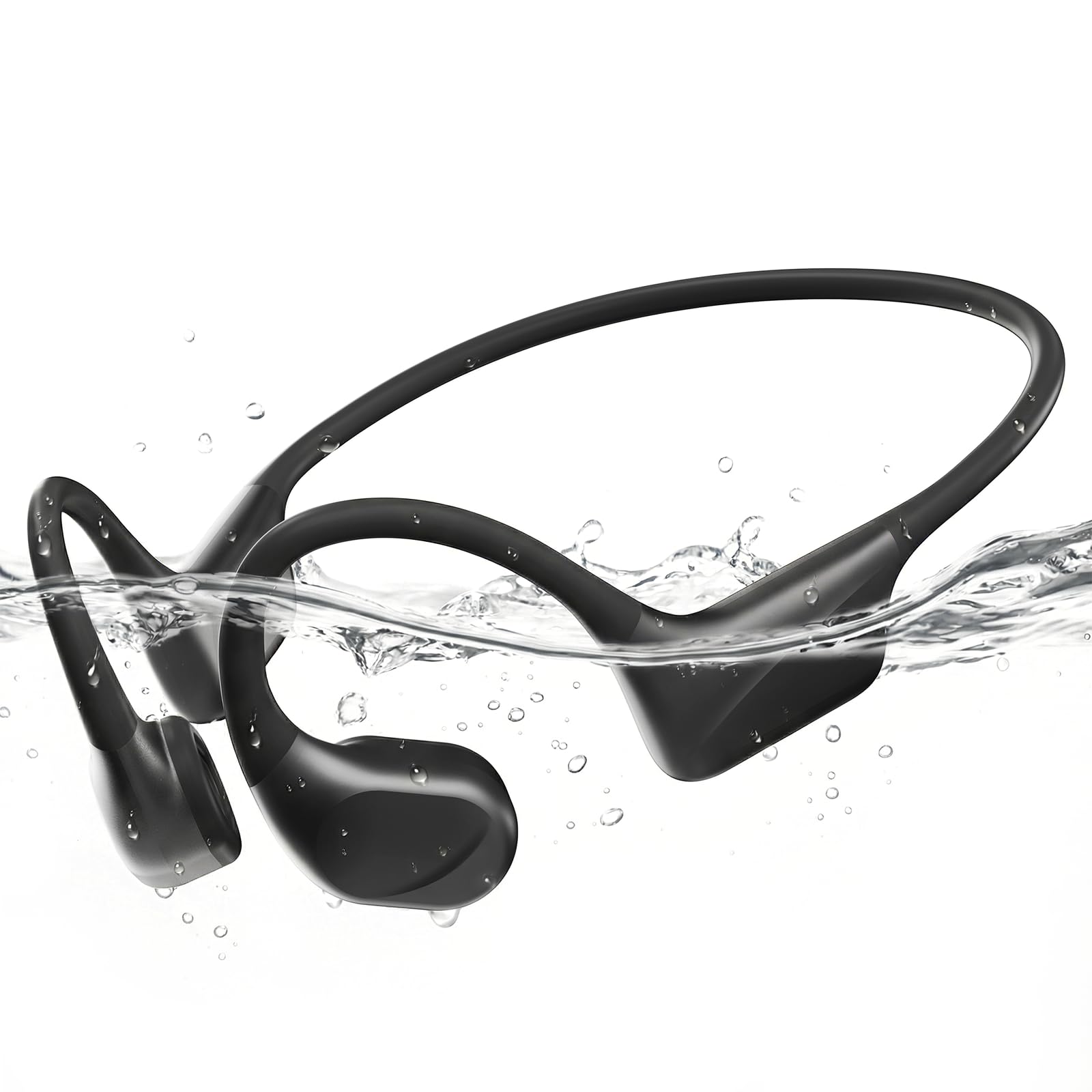
Most bone conduction headphones repel sweat but die in water. The PSIER is different — its IPX8 certification allows submersion up to two meters for an hour, making it one of the few models genuinely built for swimming. It uses a hybrid bone-plus-air conduction driver system that delivers 30% more bass than standard bone conduction models, which makes a real difference in the muffled underwater acoustic environment.
The built-in 32GB memory can hold up to 8,000 songs, so you can leave your phone in the locker and still have your full playlist during laps. In MP3 mode, the headphones work completely offline — Bluetooth cannot connect underwater, so the MP3 storage isn’t a gimmick, it’s a necessity. The seamless liquid silicone coating feels soft against the skin and integrates well with swim caps and goggles.
The Boean companion app lets you adjust EQ profiles, which adds flexibility, but the app’s interface isn’t as polished as Shokz’s. Some users with smaller heads report the band feels oversized and doesn’t sit snugly. If swimming or heavy water exposure is part of your routine, the PSIER is the only serious option on this list — but for pure land use, a lighter, non-submersible model is more comfortable.
Why it’s great
- True IPX8 waterproof — swim-ready
- 32GB onboard storage for phone-free listening
- Hybrid driver for stronger bass underwater
Good to know
- Frame is too large for smaller heads
- App experience lags behind competitors
5. SANOTO DG10
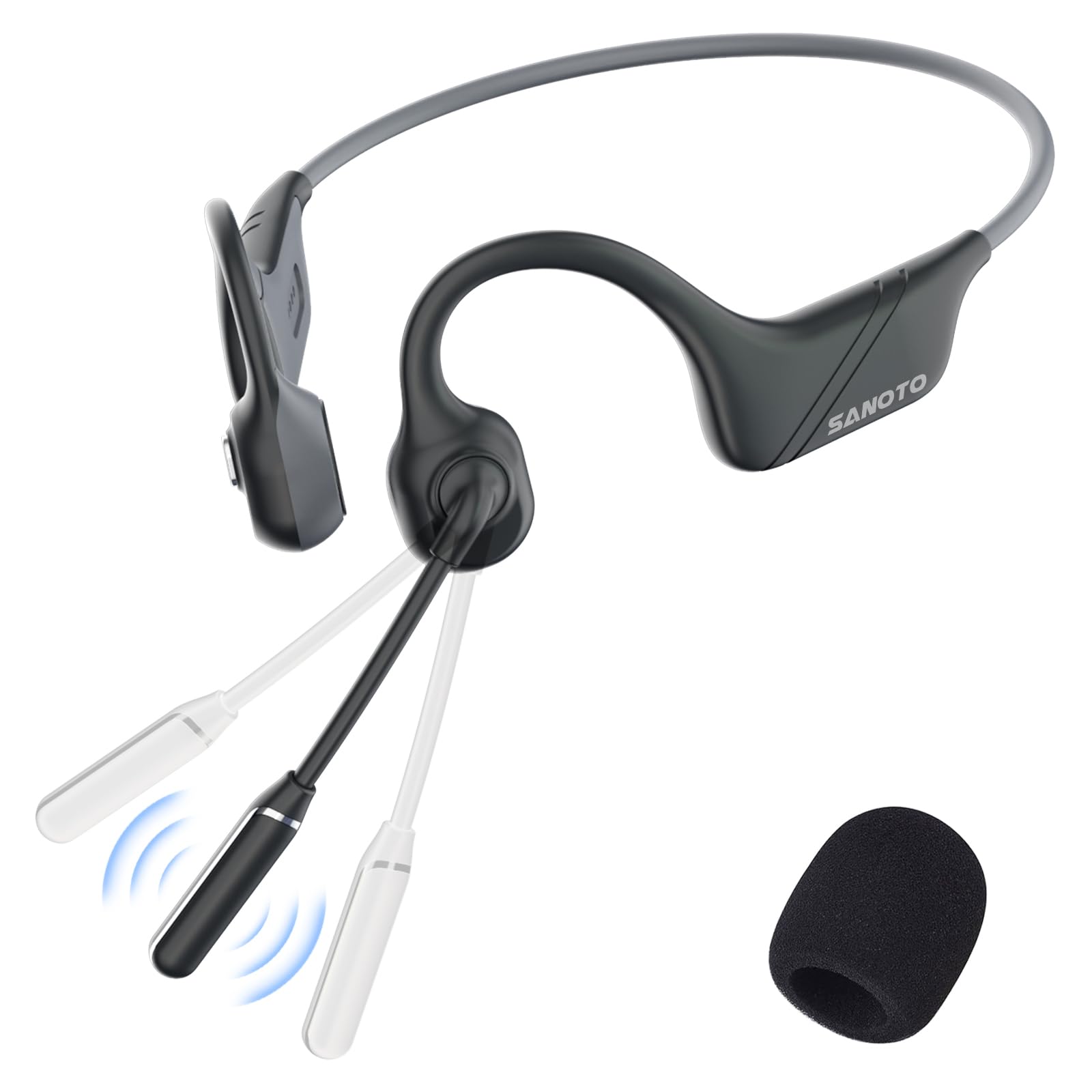
The SANOTO DG10 delivers a genuinely impressive feature set at a mid-range price. The dual-mic ENC algorithm paired with an adjustable boom microphone and a detachable windproof foam cover produces call quality that rivals the OpenComm2 — even in outdoor environments with noticeable wind. It’s one of the few budget-friendly models I’d trust for professional remote work calls.
The 33g frame uses a flexible titanium wire wrapped in skin-friendly silicone. It’s comfortable enough for all-day wear, and the open-ear design prevents the moisture buildup and irritation common with in-ear buds. Bluetooth 5.3 ensures stable connections with low latency, and multipoint pairing lets you switch between phone and laptop without re-pairing. The physical mute button on the boom mic is well-placed for quick access during calls.
A design quirk: the power button sits on the underside, which can trigger accidental pairing when you set the headset down. The boom mic boom also rests against your ear, and users wearing winter gear report it’s difficult to swing into position. If you primarily use bone conduction headphones for work calls and want strong noise cancellation without paying flagship prices, the SANOTO is a smart pick.
Why it’s great
- Dual-mic ENC with windproof boom mic cover
- Bluetooth 5.3 with multipoint connection
- Comfortable all-day titanium frame
Good to know
- Underside power button causes accidental pairing
- Boom mic placement can be awkward with winter clothes
6. MONODEAL MD08 Pro
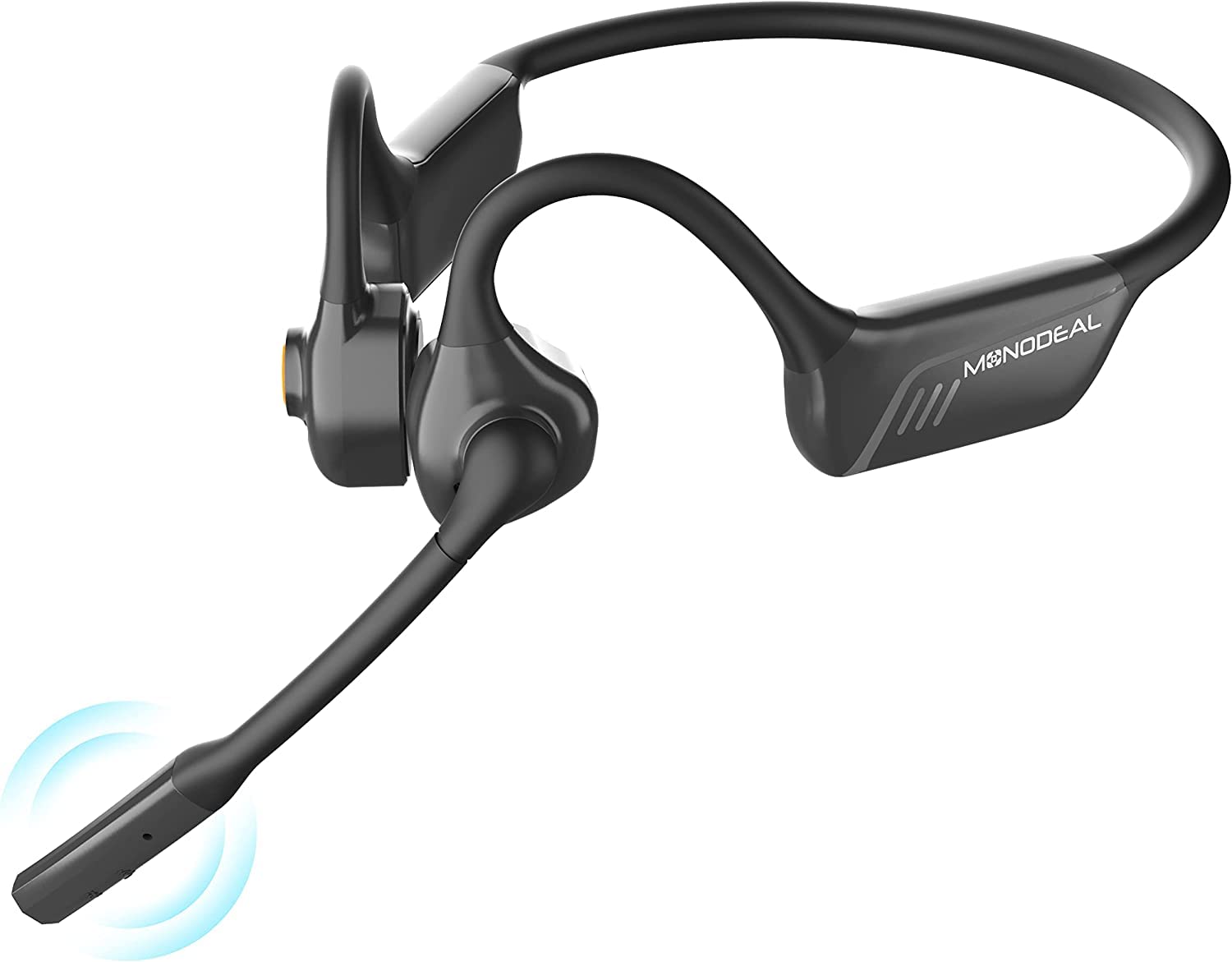
The MONODEAL MD08 Pro takes a different approach — it’s an air conduction headset, not true bone conduction. Instead of vibrating through your cheekbone, it uses a small speaker directed toward your ear. This eliminates the tickling vibration that some users find uncomfortable with bone conduction, but it means the audio is technically air-conducted, not bone-conducted. If you specifically want the skull-vibration experience, this isn’t it.
What the MD08 Pro does well is voice calls. The boom microphone and environmental noise reduction technology deliver clear, face-to-face communication, and the dedicated mute button is convenient for quick muting during meetings. Bluetooth 5.1 supports multipoint pairing, and the battery lasts eight hours, which is standard for the mid-range. The lightweight frame is comfortable for all-day wear, and several users who also own Shokz models report the MD08 is more comfortable for extended use.
The main drawback is misleading marketing — several customers were disappointed to discover it’s not bone conduction. If you’re open to air conduction and prioritize call quality, the MD08 Pro is a solid value. But if you want true bone conduction for situational awareness during running or cycling, look at the SANOTO or Yomdud instead.
Why it’s great
- Excellent boom microphone for clear calls
- Comfortable for all-day wear — no vibration tickle
- Convenient mute button and multipoint pairing
Good to know
- Not true bone conduction — uses air conduction speakers
- Bluetooth 5.1 instead of newer 5.3 or 6.0
7. Yomdud Open Ear Headphones

The Yomdud is the entry-level anchor of this list, and it punches well above its price tier. Despite being the most affordable option, it uses Bluetooth 5.4 — the newest version of any model here — which gives it fast pairing, low latency, and stable connections up to 33 feet. The 29g frame is the lightest of the seven, and the feather-light design is genuinely comfortable for hours of continuous wear without fatigue.
The 16mm bone conduction driver produces clear, strong sound with enough volume for outdoor running, and the IPX5 waterproofing handles sweat and rain without issue. Battery life is rated at 10 hours, with a 10-minute fast charge that provides one hour of playback — useful when you forget to charge overnight. The microphone quality is surprisingly good for the price: reviewers report it picks up voice clearly without background noise.
The build quality is decent but not on the same level as SHOKZ or SANOTO — the plastic frame doesn’t feel as rugged as a titanium alloy wrap. Bluetooth pairing can be finicky if you’re far from your WiFi source. If you’re on a tight budget or want a secondary pair for travel, the Yomdud is a strong starter that covers all the essentials without major compromises.
Why it’s great
- Newest Bluetooth 5.4 for stable low-latency connection
- Ultra-light 29g frame for all-day comfort
- 10-hour battery with fast charging
Good to know
- Plastic frame feels less durable than titanium models
- Pairing can be finicky at distance from source
FAQ
Can I use bone conduction headphones for swimming?
Will bone conduction headphones damage my hearing?
Do bone conduction headphones work with glasses or helmets?
How long do bone conduction headphones typically last on a charge?
Why do some bone conduction headphones vibrate or tickle my skin?
Final Thoughts: The Verdict
For most users, the best bone conducting headphones winner is the SHOKZ OpenRun Pro 2 because it pairs true situational awareness with dual-driver sound that finally delivers decent bass. If you want a dedicated call-centric headset with the best noise-canceling microphone, grab the SHOKZ OpenComm2. And for swimming or heavy water exposure, nothing beats the PSIER Swimming Headphones with its IPX8 rating and onboard MP3 storage.

Mo Maruf
I created WellFizz to bridge the gap between vague wellness advice and actionable solutions. My mission is simple: to decode the research and give you practical tools you can actually use.
Beyond the data, I am a passionate traveler. I believe that stepping away from the screen to explore new environments is essential for mental clarity and physical vitality.