Our readers keep the lights on and my smoothie glass nicely filled. As an Amazon Associate, I earn from qualifying purchases.
Finding a board game that sings with exactly three players is a specific challenge. Many games either feel too sparse without a fourth or drag on with only two. The best three-player games create a unique tension—a dynamic where alliances shift, resources are tighter, and every decision directly impacts the table.
I’m Mohammad Maruf — the founder and writer behind WellFizz. I spend my time dissecting tabletop mechanics, analyzing player-count dynamics, and matching game weight to real-world groups so you don’t waste a single game night.
Whether you crave a quick party game, a deep engine-builder, or a strategic war simulation, this guide narrows your search to the truest board games for 3 players that deliver the perfect balance of competition and replayability.
How To Choose The Best Board Games For 3 Players
Three players is a sweet spot—more personal than a four-player free-for-all but less predictable than a duel. The key to a great experience lies in the game’s mechanism and player scaling. Below are the essential factors to weigh before buying.
Player Count Scalability
Not every 3-player game is designed equally. Some games, like CATAN, are built for 3-4 and scale perfectly, while others that claim “2-5 players” often play best at the high or low end. Check the community consensus or the rulebook for the recommended player count. For a three-person group, a game that plays exclusively at 3 or scales well from 3-4 will always feel balanced.
Game Weight & Complexity
Consider your group’s tolerance for rule complexity. Light games (like Hues and Cues) take minutes to learn and are great for casual nights. Medium-weight games (like Wyrmspan) offer deep strategy with a 90-minute playtime. Heavy strategy games (like Axis & Allies) require a long commitment and a taste for deep, conflict-heavy mechanics. Match the weight to your group’s experience level.
Interactivity & “Take That” Mechanics
With three players, a game that allows direct attacks or resource denial can create a kingmaker scenario where two players gang up on the leader. Some groups love this tension (Axis & Allies); others prefer indirect competition where everyone builds their own engine (Wyrmspan). Decide whether your group enjoys conflict or prefers parallel play.
Quick Comparison
On smaller screens, swipe sideways to see the full table.
| Model | Category | Best For | Key Spec | Amazon |
|---|---|---|---|---|
| Wyrmspan | Premium | Engine-building & gorgeous art | 183 dragon cards, 90 min play | Amazon |
| CATAN 6th Ed | Mid-range | Classic trading & strategy | 19 hex tiles, 60-90 min play | Amazon |
| Hues and Cues | Mid-range | Light, creative family fun | 480 color squares, 30 min | Amazon |
| Moon Colony Bloodbath | Mid-range | Thematic engine destruction | 1-5 players, 45-90 min | Amazon |
| Axis & Allies 1942 SE | Premium | Deep WWII wargaming | 40×26″ board, 3-4 hrs | Amazon |
In‑Depth Reviews
1. Stonemaier Games: Wyrmspan

Wyrmspan takes the beloved engine-building chassis of Wingspan and drops it into a cavernous dragon sanctuary. With 183 unique dragon cards and 75 cave cards, the game offers enormous variability—every three-player session feels distinct. The chaining mechanic where you activate dragons by sending your adventurer down the cave path is intuitive and satisfying, creating a tactile sense of exploration.
For a trio, Wyrmspan excels because each player builds their own sanctuary with minimal direct conflict. The Dragon Guild bonuses and objective tiles provide multiple scoring paths, so no single strategy dominates. The game scales perfectly from 1-5 players, but the sweet spot is 3, offering just enough interaction without the chaos of a full table. Setup takes only 5 minutes, making it easy to get to the table.
The component quality is stellar—speckled wooden eggs, shiny cardboard coins, and watercolor art that would be at home in a gallery. The rulebook is clear, though first-timers may want to watch a quick tutorial. If your group enjoys medium-weight strategy with gorgeous production values, Wyrmspan is a near-perfect three-player experience.
Why it’s great
- Beautiful artwork and high-quality components enhance immersion
- Multiple scoring paths keep every game unpredictable
- Chaining mechanic feels rewarding and thematic
- Excellent replayability with 183 dragon cards
Good to know
- Learning curve is moderate—plan for a 15-20 min teach
- May feel similar to Wingspan for existing fans
- Box is large and may not fit standard game shelves
2. CATAN 6th Edition

CATAN needs no introduction—it’s the game that launched the modern board gaming boom. With three players, the island feels less crowded than a four-player game, giving you more room to expand settlements and roads before bumping into opponents. The trading mechanic becomes more meaningful because you have fewer trading partners, so resource negotiation carries greater weight.
The 6th Edition introduces several welcome upgrades: built-in card trays that keep the table tidy, chunkier wooden player pieces, and a streamlined rulebook that renames “Grain” to “Wheat” and “Lumber” to “Wood” for clarity. The modular hex board ensures no two games look the same, and the 19 terrain hexes plus 18 number discs provide plenty of configuration options. A typical game runs 60-90 minutes, perfect for an evening session.
One caveat: CATAN is best at 3-4 players, so it’s a tight fit for your group. The robber mechanic and direct competition can lead to some tension, but that’s part of the charm. The expansions (Seafarers, Cities & Knights) scale up the complexity and player count, making this a long-term investment for your game collection. It remains the gold standard for accessible strategy gaming.
Why it’s great
- Timeless design that has taught millions how to play modern board games
- 6th Edition components are noticeably improved
- Modular board offers near-infinite replayability
- Teaches resource management and negotiation skills
Good to know
- Dice-dependent luck can frustrate strategy-first players
- Player elimination is rare but possible in drawn-out games
- Best with exactly 3 or 4—do not play with 2 without expansion
3. Hues and Cues
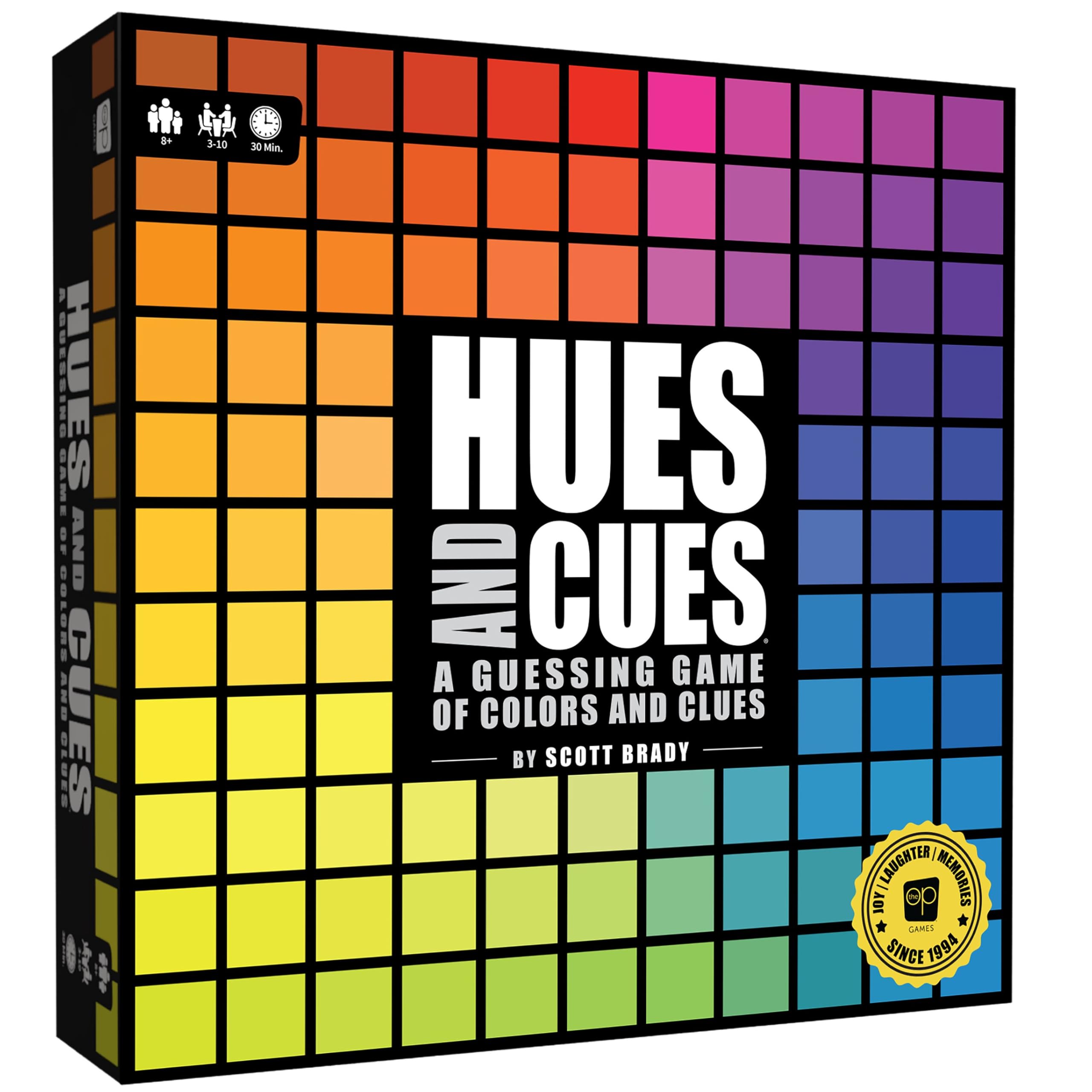
Hues and Cues is a surprisingly deep party game that challenges players to describe a color using just one word (the “cue”), then a second word. The game board features 480 distinct color squares, and the subjective nature of color perception leads to hilarious moments—one player’s “grass” might land near a vibrant green while another’s “grass” lands on a muted olive. With three players, the game moves quickly and every round feels fresh.
The rulebook is straightforward: the cue giver picks a color card, gives a one-word clue, and then all players place their pawns on the board. After the second-word clue, players can adjust their guesses. Scoring is simple and the whole game wraps up in about 30 minutes. It’s ideal for a warm-up, a family game night, or a non-gamer group. The age rating is 8+, but younger kids can play with minimal help.
The quality of the components is solid—thick game board, durable color cards, and player pieces that fit comfortably in adult hands. One reviewer noted the square pieces are easier to handle for those with arthritis. The only downside is that colorblind players may struggle with the fine discrimination, though the primary color zones help. For a light, creative, and endlessly replayable three-player experience, Hues and Cues is a winner.
Why it’s great
- Extremely easy to learn and teach—no reading required
- Creative gameplay encourages hilarious conversations
- 30-minute playtime fits any schedule
- Works well with mixed-age groups (8 to 80)
Good to know
- Color discrimination may be challenging for colorblind players
- Some rounds can feel subjective or ambiguous
- Best with 3-6 players—fewer than 3 loses energy
4. Moon Colony Bloodbath
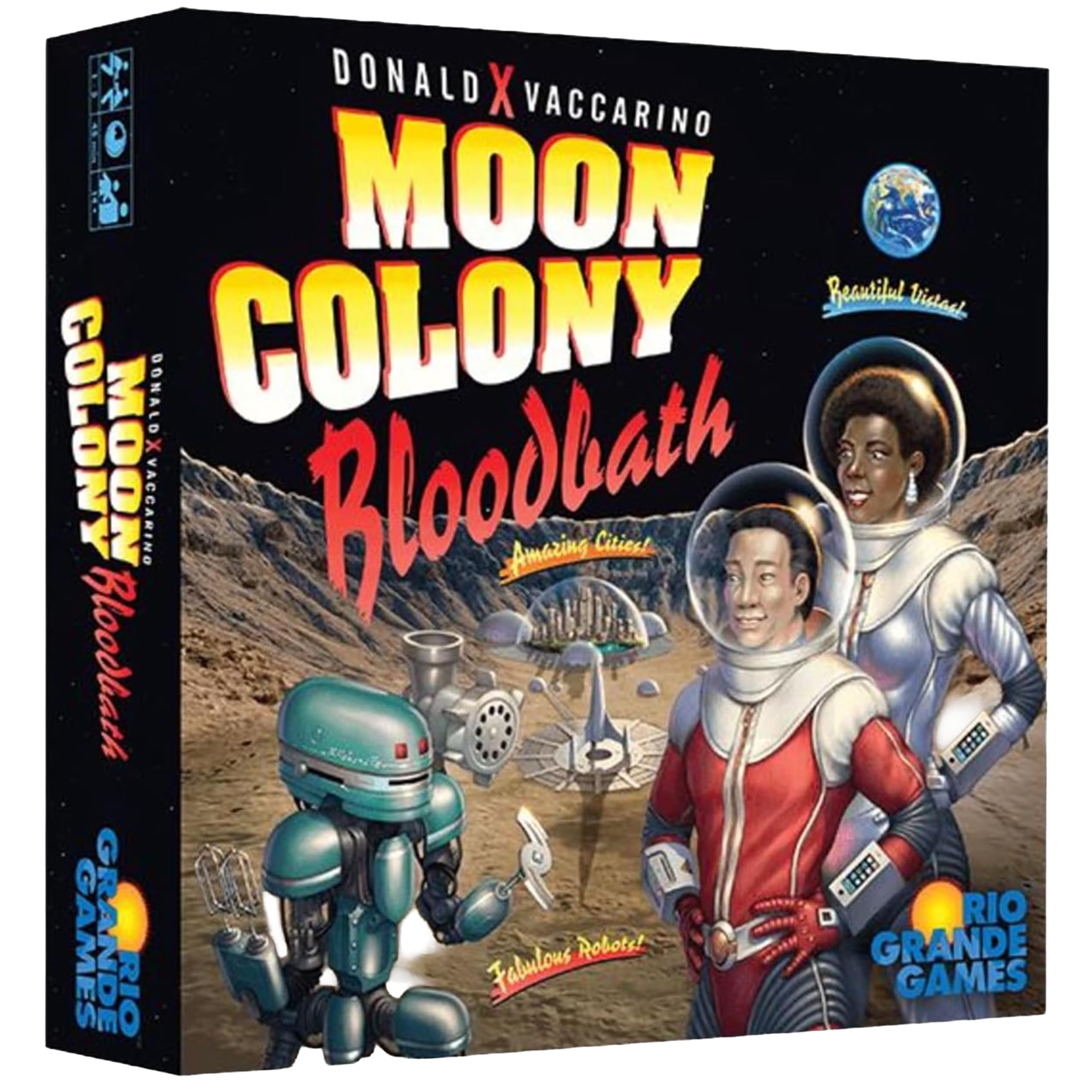
Moon Colony Bloodbath flips the typical engine-building formula on its head: instead of building a robust resource engine, you’re trying to keep your colony alive while events constantly kill off your people. The retro-futuristic theme is thick with cheesy horror vibes, and the card-driven gameplay feels like a tabletop sci-fi B-movie. With three players, the simultaneous action phase keeps everyone engaged and the game moves at a brisk pace.
The game plays 1-5 players with a 45-90 minute runtime. The card draws introduce luck, but the strategic decisions about resource allocation and risk management give you control. The “engine destruction” mechanism is refreshing for veteran players tired of optimizing the same combos. Setup is fast and the rulebook is clear—most groups will be playing within 10 minutes of opening the box.
Component quality is solid, though the box art is the main visual draw. The cards have a punchy, retro design that fits the theme perfectly. The simultaneous play means no downtime, which is a blessing for three-player games. The main downside is the luck factor—sometimes a bad draw can cripple your colony early. But for groups who enjoy a thematic challenge with a dark sense of humor, Moon Colony Bloodbath is a hidden gem.
Why it’s great
- Unique engine destruction mechanic is a fresh twist
- Simultaneous play keeps everyone involved
- Quick to learn with a strong thematic narrative
- Fast setup and short playtime
Good to know
- Card draw luck can feel unfair at times
- Theme may not appeal to all groups
- Box packaging may arrive damaged due to lightweight materials
5. Axis & Allies 1942 Second Edition

Axis & Allies 1942 is a heavyweight in every sense—a sprawling WWII strategy game that demands a table, a commitment, and a taste for deep conflict. With three players, the game is typically played with one player controlling the Axis powers (Germany and Japan) and two players controlling the Allies (USA, UK, USSR). This asymmetrical setup creates a unique 1-vs-2 dynamic that is tense, strategic, and deeply satisfying.
The 6th Edition features an oversized 40×26-inch game board, refined rules based on community feedback, and double-sided punchboard tokens for durability. The game mechanics involve area control, resource management, and complex strategic decision-making. A single game runs 3-4 hours, so this is for dedicated groups who want a full evening of simulation. The educational value is strong—players learn about WWII theater dynamics while making tough economic choices.
Component quality is decent: plastic pieces are serviceable though some reviewers note the vehicle pieces feel less robust than older editions. The factory chips are functional but some players prefer 3D-printed replacements. The rulebook is well-organized, but the game has a significant learning curve. If your trio craves deep, conflict-rich strategy and doesn’t mind a long time commitment, Axis & Allies 1942 delivers an unmatched tabletop wargaming experience.
Why it’s great
- Asymmetric 1v2 setup is perfectly balanced for three players
- Deep strategic decision-making with historical authenticity
- Giant game board creates an immersive battlefield
- Excellent nostalgic value for returning players
Good to know
- 3-4 hour playtime requires a significant time commitment
- Learning curve is steep—plan for a full teach session
- Component quality is good but not premium (plastic pieces)
FAQ
Do I need an expansion to make CATAN play well with three players?
Which game in this list is best for a group that hates conflict?
Can I play Axis & Allies with only three players effectively?
Are any of these games suitable for kids under 10?
Final Thoughts: The Verdict
For most users, the board games for 3 players winner is the Wyrmspan because it combines gorgeous production, deep strategic engine-building, and perfect scaling for a trio. If you want classic, accessible strategy that has stood the test of time, grab the CATAN 6th Edition. And for a quick, creative, and laugh-filled warm-up that works with any group, nothing beats the Hues and Cues.

Mo Maruf
I created WellFizz to bridge the gap between vague wellness advice and actionable solutions. My mission is simple: to decode the research and give you practical tools you can actually use.
Beyond the data, I am a passionate traveler. I believe that stepping away from the screen to explore new environments is essential for mental clarity and physical vitality.