Our readers keep the lights on and my smoothie glass nicely filled. As an Amazon Associate, I earn from qualifying purchases.
The biohacking movement has moved past simple step counting. Today’s serious self-optimizers are targeting their nervous system directly — using vagus nerve toning, grounding frequencies, and targeted light wavelengths to hack recovery, sleep, and cognitive edge. Gifting in this space means giving a tool that literally changes the recipient’s biology, not just their routine.
I’m Mohammad Maruf — the founder and writer behind WellFizz. I spend my days analyzing the overlap between consumer neuroscience, wearable biometric tech, and clinical-grade home devices to separate genuine performance tools from placebo gadgets.
Building a shortlist of best biohacking gifts requires identifying devices that deliver measurable physiological shifts — from HRV optimization and infrared photobiomodulation to infrasonic vagal stimulation — not just novelty.
How To Choose The Best Biohacking Gifts
Not all biohacking devices are created equal. The difference between a gadget that collects dust and a tool that becomes part of a daily optimization stack comes down to three variables: how the device interacts with your nervous system, the precision of its output, and whether the data it generates is actionable. Here’s how to evaluate each category.
Vagus Nerve vs. Sensory Stimulation
Many relaxation devices rely on generic vibration or white noise. True biohacking tools target the vagus nerve — the body’s primary parasympathetic highway — using infrasonic resonance or specific frequency bands. A device that claims to lower heart rate without a biometric sensor or closed-loop feedback is likely just offering passive distraction, not nervous system conditioning. Look for tools that actively modulate HRV or provide measurable toning.
Light Therapy Dosage and Wavelength Precision
Red light therapy masks vary wildly in potency. The key metrics are LED count, irradiance (mW/cm²), and wavelength purity. A mask with 292 LEDs and 40 mW/cm² at 830nm delivers genuine photobiomodulation; a mask with 80 LEDs and no listed irradiance is cosmetic at best. Wavelengths matter — 633nm targets surface skin, 830nm penetrates deeper for cellular repair, and 590nm addresses pigmentation. If the manufacturer won’t publish these specs, the device isn’t therapeutic.
Grounding Authenticity and Signal Integrity
Grounding mats work by connecting to the earth’s electrical potential through a grounded outlet or direct earth rod. A mat’s efficacy depends on the conductivity of its carbon layer and the presence of a built-in resistor (typically 100K ohm) to protect against surges. If the mat lacks a snap-on cord or the resistor spec isn’t listed, it’s likely a decorative pad, not a functional grounding tool. True biohackers verify with a multimeter.
Quick Comparison
On smaller screens, swipe sideways to see the full table.
| Model | Category | Best For | Key Spec | Amazon |
|---|---|---|---|---|
| Sensate Relaxation Device | Vagus Nerve | Stress resilience & HRV | Infrasonic resonance, 12-mo app | Amazon |
| Therabody SmartGoggles Gen 2 | Eye Massage | Headache & sleep prep | Biometric heart-rate adaptive | Amazon |
| Red Light Therapy Mask (VYM) | Photobiomodulation | Skin repair & collagen | 292 LEDs, 830/633/590nm | Amazon |
| RENPHO Eyeris 1 | Eye Massager | Dry eyes & tension | 104-113°F heat, 5 modes | Amazon |
| Portable Tibetan Singing Bowl | Frequency | Meditation & frequency | 8 Hz (396-963Hz), USB-C | Amazon |
| GAYA Grounding Mat | Grounding | Sleep & inflammation | 100K ohm resistor, 15ft cord | Amazon |
| prxxhri Smart Ring | Wearable | Discreet health tracking | 4.0 sensor, 80m waterproof | Amazon |
In‑Depth Reviews
1. Sensate Relaxation Device
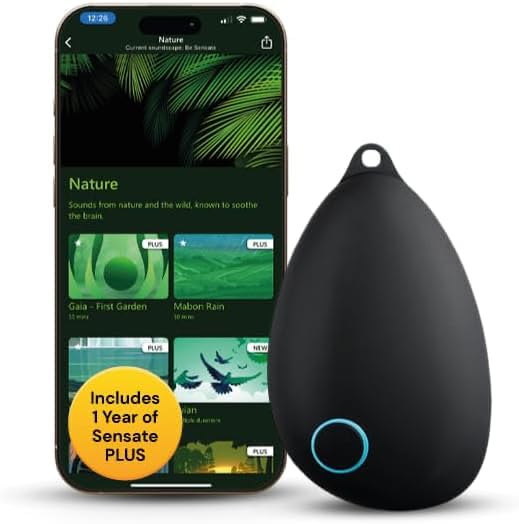
The Sensate is the only device on this list that directly targets the vagus nerve using patented infrasonic resonance — not electrical pulses, not vibration motors, but tactile sound waves transmitted through the sternum. It’s based on 30 years of clinical research and won The Times Health Tech Invention of the Year for good reason: it actively conditions the nervous system’s relaxation response by improving Heart Rate Variability (HRV) within 10-minute sessions.
Users report immediate sleep induction, dropped heart rates to 53 bpm during sessions, and lasting calm that carries through missed days. The included 12-month Sensate Plus subscription unlocks a full library of immersive soundscapes. The pebble-shaped device is lightweight, portable, and charges via USB-C. No electrodes, no gels, no shocks — just deep, resonant vibration that shifts the body from fight-or-flight to parasympathetic rest.
The main real-world friction is the Bluetooth pairing process, which a minority of users found unreliable on first attempt. The device also has a relatively bright power indicator light, and the subscription cost after the first year is optional but adds depth to the session library. For anyone serious about nervous system hacking, this is the gold standard.
Why it’s great
- Clinically developed non-invasive vagus nerve toning with infrasonic resonance
- Produces measurable HRV improvements and rapid sleep induction in under 10 minutes
- Lightweight pebble design with 12-month premium app subscription included
Good to know
- Bluetooth pairing can be finicky during initial setup
- Bright on-switch LED may be distracting in dark rooms
- Subscription required for full session library after first year
2. Therabody SmartGoggles (2nd Generation)

The Therabody SmartGoggles Gen 2 stand apart because they don’t just apply heat and compression — they use a biometric sensor to read your heart rate and adapt the relaxation treatment in real time. The SmartRelax mode gently guides your heart rate downward, creating a closed feedback loop that’s genuinely personalized. Three preset treatments target headache relief, stress reduction, and sleep preparation, each adjustable for temperature and intensity.
Construction is premium: a contoured blackout mask that blocks 100% of light, with cushioning that allows free eye movement without pressure. The compression massage targets the forehead, eyebrows, and temples — exactly where tension headaches originate. Users consistently report falling asleep within 5–10 minutes, often replacing sleep aids like melatonin. The mask also pairs with a phone app for guided meditations and noise cancellation.
The weight is the most common trade-off — at 13.7 ounces, it’s heavier than basic eye masks, though this is mitigated when lying down. Some users note a gap in the center where the mask doesn’t contact the bridge of the nose. The battery lasts through multiple sessions but requires nightly charging with regular use.
Why it’s great
- Biometric sensor personalizes relaxation by lowering heart rate in real time
- 100% blackout design with contoured cushioning for unrestricted eye movement
- Three targeted treatments: headache relief, stress reduction, and sleep prep
Good to know
- Heavier than standard sleep masks at nearly 14 ounces
- Center nose gap may reduce contact for some face shapes
- Requires regular charging for consistent use
3. Red Light Therapy Mask (VYM, 292 LEDs)

This mask delivers professional-grade photobiomodulation with 292 individual LED beams spread across three clinically validated wavelengths: 830nm near-infrared for deep tissue repair, 633nm red for surface collagen production, and 590nm yellow for pigmentation and tone. At 40 mW/cm² irradiance and 15W total power, it matches the output of salon-grade panels — but in a flexible silicone form factor that weighs only 4.6 ounces.
The 1.8mm ultra-thin design is molded from a single piece of silicone with LEDs embedded directly — not glued or snapped in. This ensures consistent light placement on the same facial zones every session. The LCD controller offers three quick modes plus dedicated Red Light and Infrared modes, with adjustable session time and energy level. At just 6 minutes per session, it’s practical enough for daily use without disrupting a morning routine.
Users report softening of deep cysts, visible wrinkle reduction, and improved skin texture within weeks. The wireless, cordless design makes it easy to move around the house. The main limitation is that near-infrared requires skin contact — the mask’s fit must be snug for optimal transmission. The packaging is gift-ready, but buyers should verify they prefer a full-face mask vs. a targeted panel.
Why it’s great
- 292 LEDs with 830nm, 633nm, and 590nm wavelengths at 40 mW/cm² irradiance
- Ultra-thin 1.8mm one-piece silicone design for close-fit, even light delivery
- Wireless LCD controller with adjustable time and intensity settings
Good to know
- Near-infrared efficacy depends on snug skin contact and fit
- No eye protection is built in — users should close eyes during use
- Charging is required after roughly 6–8 sessions
4. RENPHO Eyeris 1 Eye Massager

The RENPHO Eyeris 1 brings targeted heat therapy (104–113°F) and air-pressure massage to the eye area in a portable, foldable form factor. It’s not a vagus nerve tool or a photobiomodulation device — it’s a pragmatic solution for ocular tension, dry eyes, and sinus headaches. The five massage modes pair with soothing music, and the 1500mAh battery provides extended run time across multiple sessions.
Users with chronic migraines and dry eye conditions report that the combination of adjustable heat and rhythmic air pressure significantly reduces discomfort, often clearing styes within days when used with eye drops. The flexible headband accommodates head circumferences from 18.9 to 27.5 inches, making it suitable for the whole family. The 180° foldable design stows easily in a carry-on or desk drawer.
The primary trade-off is audible noise from the air pump — it’s not silent, and some users find it distracting. The mask also requires a full recharge after each use, so it’s not a leave-by-the-bed device. For the price, it delivers reliable relief for tension and dry eyes without the complexity of app-connected wearables.
Why it’s great
- Soothing 104–113°F heat combined with adjustable air-pressure massage
- Five specialized modes with paired music for tension and headache relief
- Foldable, portable design with 1500mAh battery and universal headband fit
Good to know
- Audible air pump noise may be distracting in quiet environments
- Requires a full charge after each use session
- Not designed for use while lying on your side
5. Portable Electronic Tibetan Singing Bowl (NDLT)
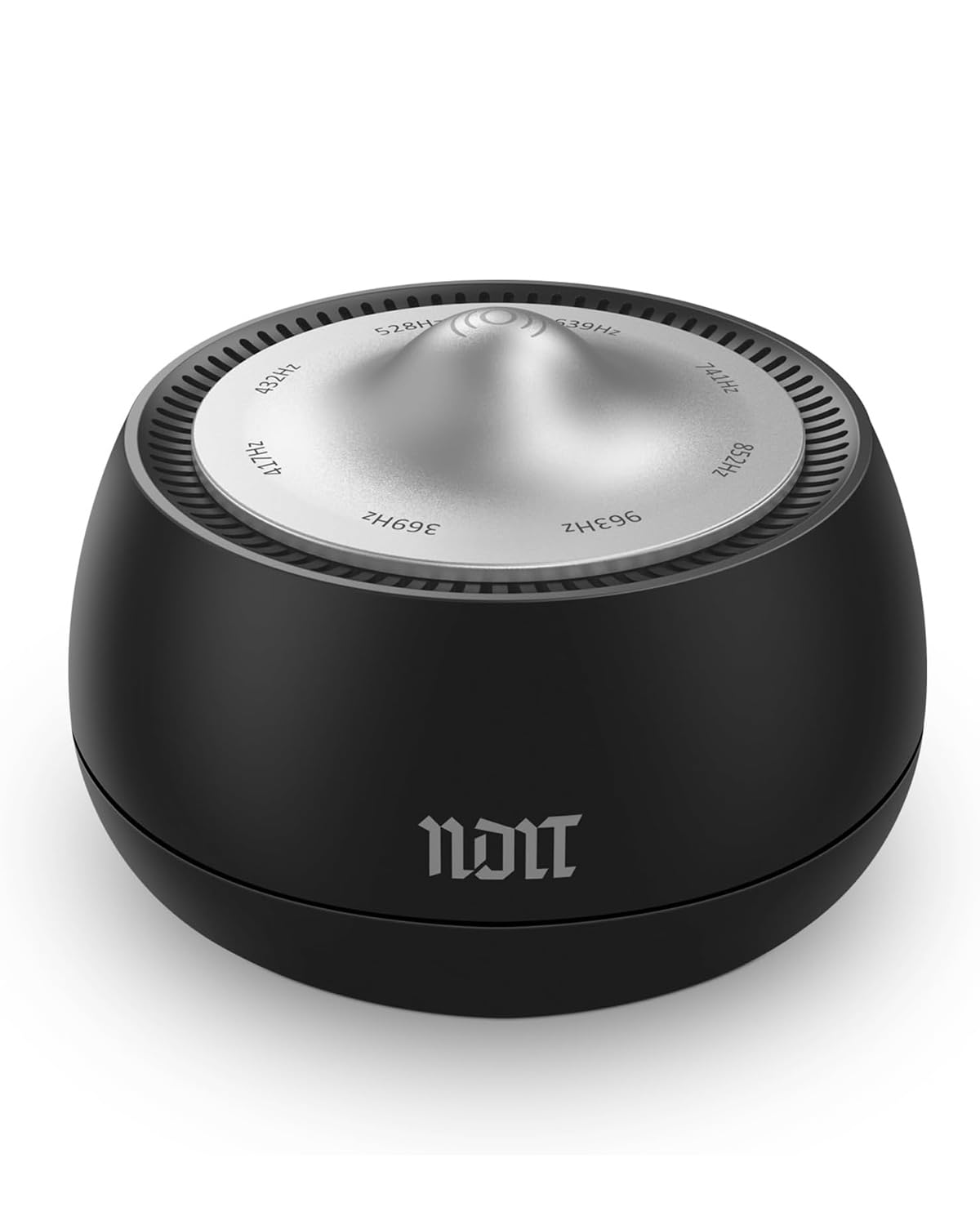
This compact device replicates the experience of a traditional Tibetan singing bowl using digital sound synthesis across eight Solfeggio frequencies from 396Hz to 963Hz. Each frequency targets a specific energetic outcome — 528Hz for repair and miracles, 432Hz for natural harmony, 741Hz for awakening intuition — making it a frequency-based biohacking tool rather than just a relaxation gadget.
The dual-mode design allows for auto-play continuous sound or a manual mode where sliding the top surface in circles recreates the tactile experience of playing a real bowl. A vibration motor adds haptic feedback synchronized with the tone. The USB-C battery delivers 8 hours of playback and fully recharges in 90 minutes. The included storage bag makes it travel-friendly, and the FAA-compliant footprint fits in carry-on luggage.
Users report that the realistic resonance and manual play mode deepen meditation states significantly. The device is lightweight and well-constructed, though the plastic housing lacks the premium feel of a metal singing bowl. For biohackers focused on sound-based nervous system entrainment, this is a portable, affordable gateway into frequency medicine.
Why it’s great
- Eight clinically tuned Solfeggio frequencies from 396Hz to 963Hz for targeted healing
- Manual slide mode replicates authentic singing bowl technique with haptic vibration
- USB-C fast charging with 8-hour battery life and travel-friendly form factor
Good to know
- Plastic construction lacks the weight and resonance of metal bowls
- Manual slide mode takes practice to produce consistent sound
- Volume may be insufficient for large rooms or group sessions
6. GAYA Grounding Mat for Feet (24”x16”)
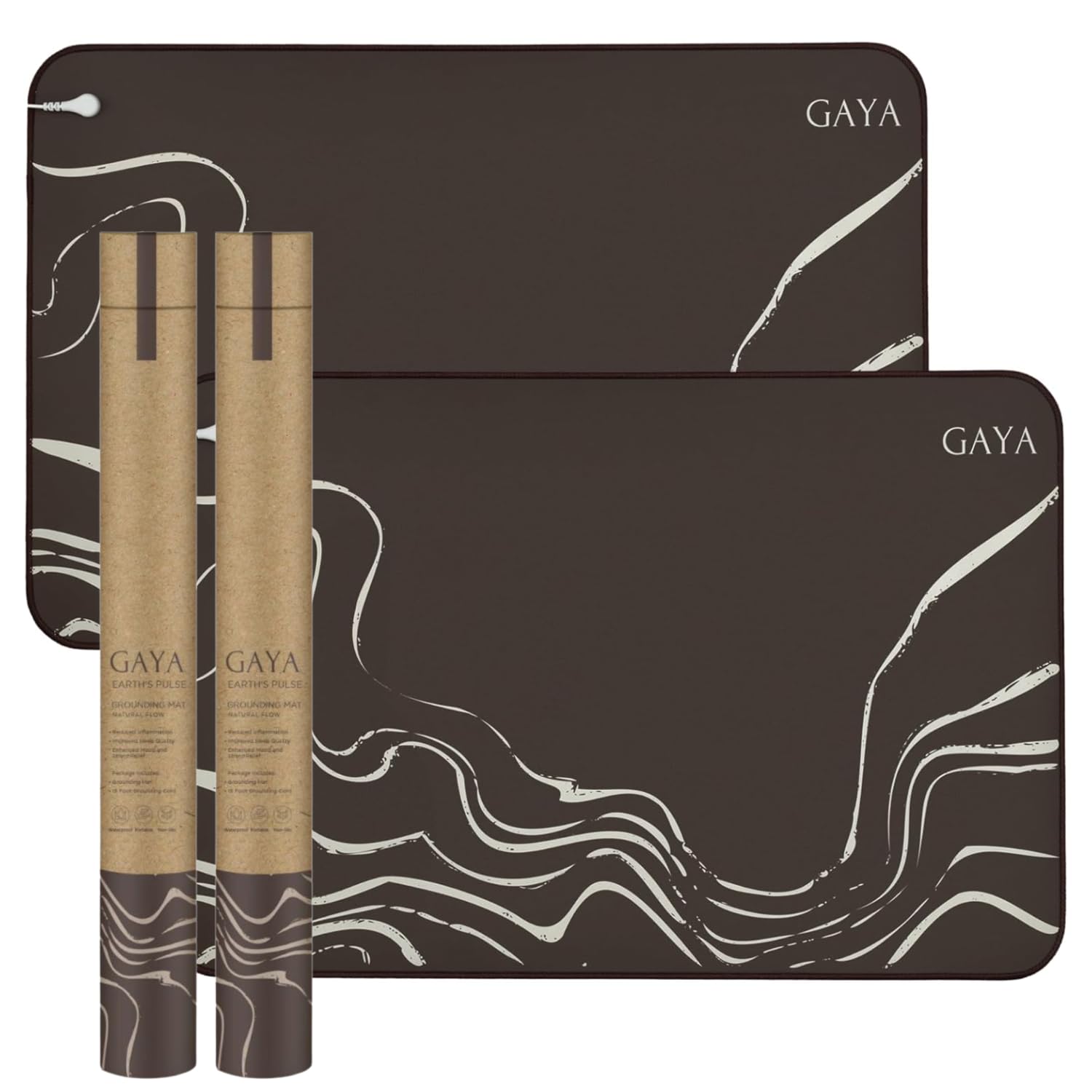
Grounding mats connect the body to the earth’s electrical potential, and the GAYA Grounding Mat does this with engineering integrity. The 24×16-inch mat features a three-layer construction — skin-friendly PU leather top, conductive carbon center, and non-slip base — with a built-in 100K ohm resistor that protects against electrical surges. The dual 15-foot cords mean it can reach a bed, desk, or couch from any standard US/Canada grounded outlet.
Users who spend long hours on their feet report significant reductions in leg swelling, foot pain, and restless leg syndrome within days. The mat requires consistent daily use of 30 minutes or more, and results are subtle rather than instantaneous. Verified buyer tests with multimeters confirm the mat is properly grounded. The included travel-ready tube packaging makes it a thoughtful, wellness-focused gift.
The main caveat: grounding mats do not work without a properly grounded outlet, and users in older buildings may need a ground rod adapter. The mat also requires skin contact — socks or clothing create insulation. For biohackers targeting inflammation, sleep quality, and circadian alignment, this is a low-cost, high-efficacy addition to any optimization stack.
Why it’s great
- Verified 100K ohm resistor for surge protection and reliable grounding
- Three-layer construction with conductive carbon core and non-slip base
- Dual 15-foot cords reach bed, desk, or couch with ease
Good to know
- Requires a properly grounded outlet — does not work in ungrounded buildings
- Bare skin contact required for conductivity; socks or clothing block the effect
- Results are cumulative over weeks, not instant
7. prxxhri Smart Health Ring

The prxxhri Smart Ring packs a 4.0 sensor into a lightweight silicone band that tracks sleep cycles, heart rate, activity, and stress 24/7 — all without a subscription fee. With a 2–3 day battery life extended to over 10 days using the included smart charging case, it’s one of the most practical discreet wearables for continuous health monitoring. The ring is waterproof to 80 meters, suitable for swimming and intense workouts.
The companion app syncs easily with both iOS and Android, providing clear data on sleep quality, heart rate trends, and stress levels. Users appreciate the ability to monitor elderly family members’ vital signs remotely. The ring’s slim profile means it can be worn alongside a traditional watch without looking bulky, making it ideal for biohackers who prefer form factor over wrist-based trackers.
The ring lacks GPS and on-device display, so data review requires the app. The sizing process requires careful measurement before purchase, and the silicone material may not suit all aesthetics. For the price, it delivers core biometric tracking without hidden costs, making it a solid entry point for biohacking beginners.
Why it’s great
- Advanced 4.0 sensor tracks sleep, heart rate, stress, and activity 24/7
- 2–3 day battery life extended to 10+ days with charging case
- 80-meter waterproof with no subscription fees for app access
Good to know
- No on-display data — requires app for all information review
- Precise finger sizing critical; returns may be limited
- Silicone band material may not appeal to all users
FAQ
How do I verify a grounding mat is actually working?
Can red light therapy masks damage my eyes?
What is the difference between vagus nerve toning and regular relaxation?
How often should I use a frequency-based meditation device?
Final Thoughts: The Verdict
For most users, the best biohacking gifts winner is the Sensate Relaxation Device because it directly targets the nervous system with clinically developed infrasonic resonance, producing measurable HRV improvements and rapid stress reset. If you want non-invasive photobiomodulation for cellular repair and skin health, grab the VYM Red Light Therapy Mask — its 292 LEDs at 40 mW/cm² match salon-grade output. And for a budget-conscious entry into frequency-based relaxation, nothing beats the Portable Electronic Tibetan Singing Bowl with eight Solfeggio frequencies in a travel-friendly form factor.

Mo Maruf
I created WellFizz to bridge the gap between vague wellness advice and actionable solutions. My mission is simple: to decode the research and give you practical tools you can actually use.
Beyond the data, I am a passionate traveler. I believe that stepping away from the screen to explore new environments is essential for mental clarity and physical vitality.