Our readers keep the lights on and my smoothie glass nicely filled. As an Amazon Associate, I earn from qualifying purchases.
Finding a binocular that delivers a full, undistorted image while you keep your glasses on is harder than it sounds. Most optics force you to mash the eyecups into your face or lose the outer edges of the view, creating a tunnel effect that ruins the experience. The real divide comes down to eye relief—the distance between the last lens and your eye—and how well the eyecups adjust to accommodate prescription frames without sacrificing field of view.
I’m Mohammad Maruf — the founder and writer behind WellFizz. I research optical hardware daily, analyzing lens coatings, prism designs, and the specific ergonomic specs that separate a clear, comfortable look from a frustrating, blurry one for glass wearers.
The guide below cuts through the noise to help you find the right binoculars for glasses wearers, with detailed reviews built around what actually matters when you wear eyewear.
How To Choose The Best Binoculars For Glasses Wearers
When you wear glasses, the purchase decision flips from magnification and objective lens size to one primary number: eye relief. If the binocular can’t project a full image to your eye at the distance your frames create, you will see black rings around the view or have to press so hard your glasses fog. The three specs below dictate whether a given model is actually usable with eyewear.
Eye Relief: The Hard Minimum
Eye relief is the distance from the ocular lens to the point where the full image forms. Glasses wearers need at least 15 millimeters, and 17 millimeters or more is much safer. Models like the Nikon Monarch M5 with 19.5 millimeters of eye relief give a generous viewing window that lets you keep your frames on without any vignetting. Anything under 14 millimeters will likely force you to remove your glasses to see the full picture.
Twist-Up Eyecups: The Adjustability Factor
Eyecups that twist up and down in click-stop positions allow you to dial in the exact height your glasses need. Fixed or fold-down rubber eyecups are less precise. The best designs for glasses wearers offer at least two intermediate positions between fully raised and fully collapsed, letting you match the cup height to your frame thickness and prescription distance.
Lens Coatings & Prism Glass
Fully multi-coated lenses and BaK-4 prisms are not marketing fluff; they directly affect how bright and sharp the image appears, especially in dawn or dusk conditions. With glasses, you already lose some light through reflection off your lenses, so the binocular’s transmission efficiency becomes even more important. Dielectric-coated prisms, found on mid-range and premium models, further boost brightness and color accuracy without adding weight.
Quick Comparison
On smaller screens, swipe sideways to see the full table.
| Model | Category | Best For | Key Spec | Amazon |
|---|---|---|---|---|
| Vortex Copperhead HD 10×42 | Mid-Range | Hunting & all-weather use | 17 mm Eye Relief | Amazon |
| Bushnell H2O Xtreme 10×42 | Mid-Range | Marine & wet conditions | 17 mm Eye Relief | Amazon |
| Vortex Diamondback HD 8×28 | Mid-Range | Lightweight travel & hiking | 18 mm Eye Relief | Amazon |
| Nikon PROSTAFF P7 10×42 | Mid-Range | Birding & wildlife observation | 15.7 mm Eye Relief | Amazon |
| Bushnell Legacy WP 10-22×50 | Premium | Astronomy & long-range viewing | 14 mm Eye Relief | Amazon |
| Nikon Monarch M5 8×42 | Premium | All-around premium glass wearer use | 19.5 mm Eye Relief | Amazon |
| Leupold BX-4 Pro Guide HD 10×42 | Premium | Professional grade & low light hunting | ~18 mm Eye Relief | Amazon |
In‑Depth Reviews
1. Nikon Monarch M5 8×42
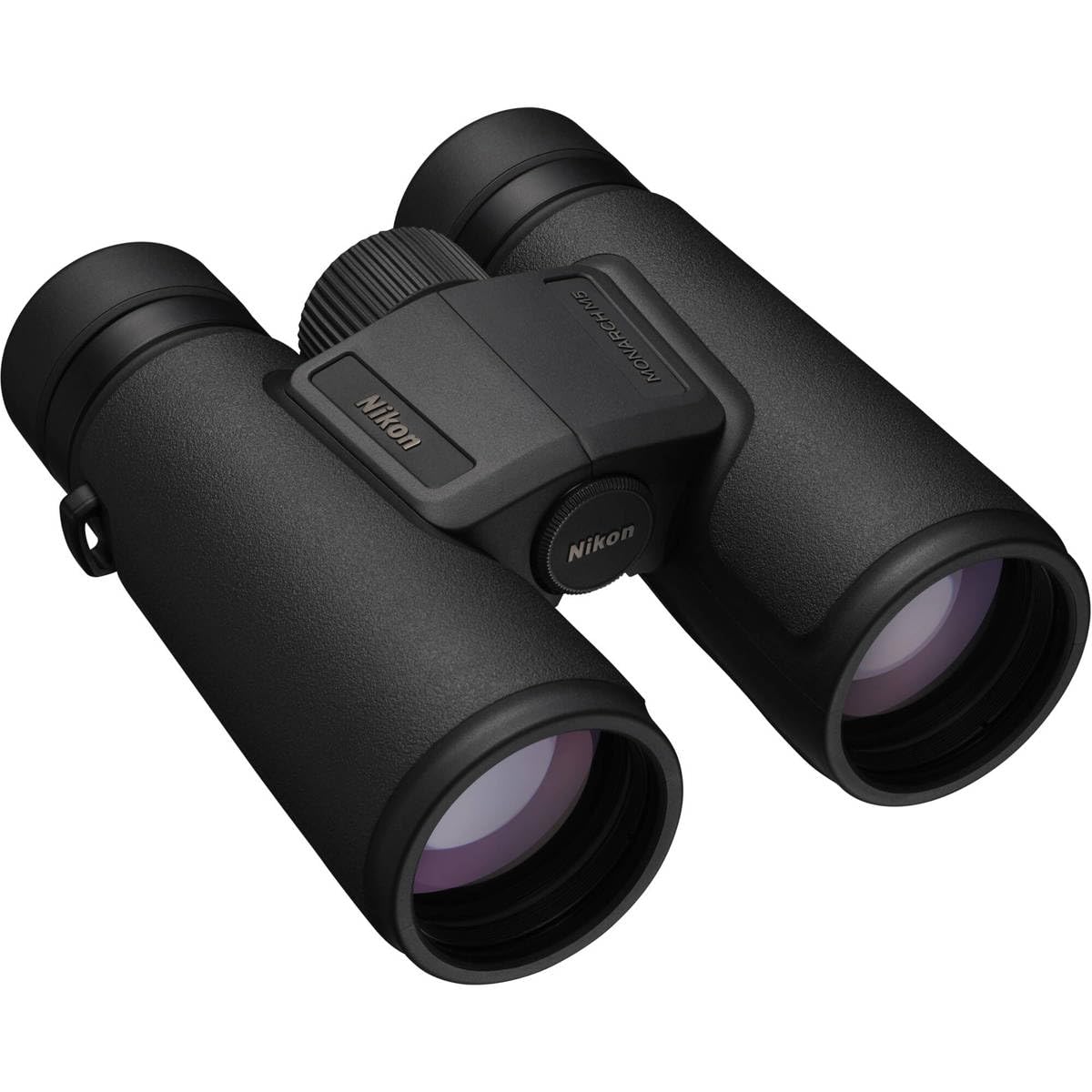
The Monarch M5 staked its reputation on delivering premium optical performance at a mid-level price, and its 19.5 millimeters of eye relief makes it the most comfortable binocular in this lineup for glasses wearers. The Extra-low Dispersion (ED) glass cuts chromatic aberration remarkably well, producing a sharp, color-true image even when viewing at tree-line against a bright sky.
Dielectric high-reflective prism coatings push light transmission high enough that you can spot birds moving in deep understory light without losing detail. The large central focus knob moves with a smooth, damped action that lets you track fast subjects without overshooting the focus point.
Some users note the field of view is narrower than the Monarch HG, but the difference is marginal for most outdoor use. The 8×42 configuration keeps the exit pupil at 5.3 millimeters, which pairs beautifully with the long eye relief to deliver a full, bright image from first look to last.
Why it’s great
- Generous eye relief works perfectly with frames up to moderate thickness
- ED glass eliminates color fringing for crisp edge-to-edge clarity
- Dielectric-coated prisms deliver very high light transmission
Good to know
- Field of view is slightly narrower than the more expensive Monarch HG
- Slightly heavier than compact 8×28 models
2. Leupold BX-4 Pro Guide HD 10×42 Gen 2
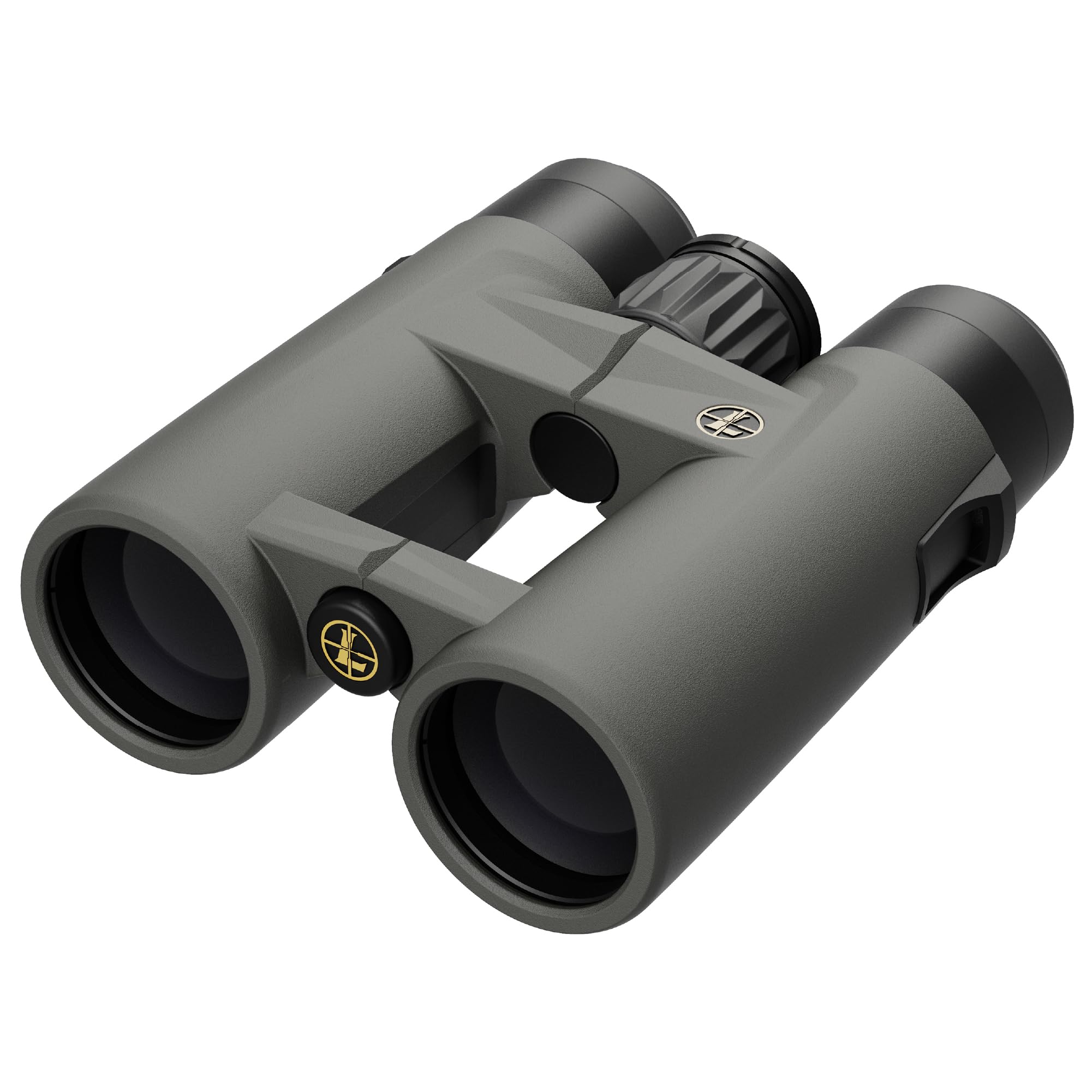
The BX-4 Pro Guide HD Gen 2 uses an open-bridge, dual-hinge design that keeps the weight down to 25 ounces while providing a comfortable grip for long glassing sessions. Its Guard-ion lens coating repels water, dirt, and fingerprints aggressively, which is a practical advantage when you are swapping between your glasses and the binoculars frequently in the field.
The Elite Optical System delivers exceptional resolution and glare reduction, and the eye relief sits around 18 millimeters—comfortably above the threshold for eyeglass wearers. Twilight and dawn performance is notably strong thanks to the high-quality HD glass and fully multi-coated lenses, giving you a bright image long after other optics start fading.
The twist-up eyecups have positive click stops that hold their position firmly, so you do not have to readjust every time you raise the binocular. The only trade-off is the price, which sits at the upper end of the spectrum, but Leupold’s customer care and build quality justify the investment for serious glassers.
Why it’s great
- Excellent low-light performance with HD glass and advanced coatings
- Guard-ion coating sheds dirt and moisture instantly
- Lightweight dual-hinge design reduces fatigue during long use
Good to know
- Premium price point may exceed casual budgets
- 10×42 format requires a steadier hold than 8x models
3. Vortex Copperhead HD 10×42

Vortex’s Copperhead HD sits at a price point that feels like a steal when you consider its HD optical system. At 17 millimeters of eye relief, it gives glasses wearers a full viewing circle without requiring them to collapse the eyecups completely. The 10x magnification and 42mm objectives produce a 4.2mm exit pupil, which balances brightness well for dawn and dusk sessions.
The rubber armor wrap provides a sure grip even with wet hands, and the included GlassPak harness is a thoughtful addition for hunters who want the binocular to sit securely against the chest. Customer reviews consistently note that the optical quality punches well above the price, especially regarding color fidelity and edge sharpness.
Where the Copperhead HD saves money relative to higher-end Vortex models like the Diamondback is in the diopter adjustment feel and a slightly less crisp image in deep twilight. For daytime glassing and moderate low-light conditions, however, it is hard to beat the value. The Vortex VIP warranty—unconditional and transferable—removes any purchase hesitation.
Why it’s great
- 17 mm eye relief provides a comfortable view with glasses
- HD optical system delivers outstanding color and sharpness for the price
- Vortex VIP lifetime warranty is unconditional and transferable
Good to know
- Diopter adjustment feels slightly less precise than premium models
- Low-light edge clarity not quite as sharp as the Nikon Monarch M5
4. Nikon PROSTAFF P7 10×42

The PROSTAFF P7 sits right on the edge of the glasses-friendly eye relief threshold at 15.7 millimeters. For wearers of slim metal or thin-rimmed frames, this works without vignetting; thicker plastic frames may require a slight adjustment in how you seat the eyecups. The turn-and-slide eyecups provide a customized fit that compensates reasonably well.
Nikon’s phase-correction coated roof prisms and dielectric high-reflective multilayer prism coating give this binocular excellent light transmission and color fidelity. The field of view measures 367 feet at a thousand yards, which is generous for a 10×42 and makes tracking birds through brush easier.
The locking diopter ring is a subtle but important feature—once you set the focus for your specific vision, it stays put. The rubber armor is shock-resistant and the housing is both waterproof and fogproof. The eye relief is not as high as the Monarch M5, but for glasses wearers with narrower frames, this is a strong mid-range option.
Why it’s great
- Wide field of view makes tracking moving subjects easier
- Locking diopter ring holds your setting securely
- Dielectric-coated prisms produce vivid, color-accurate images
Good to know
- 15.7 mm eye relief is borderline for thick-frame glasses
- Eyecups could offer more intermediate click stops
5. Bushnell Legacy WP 10-22×50
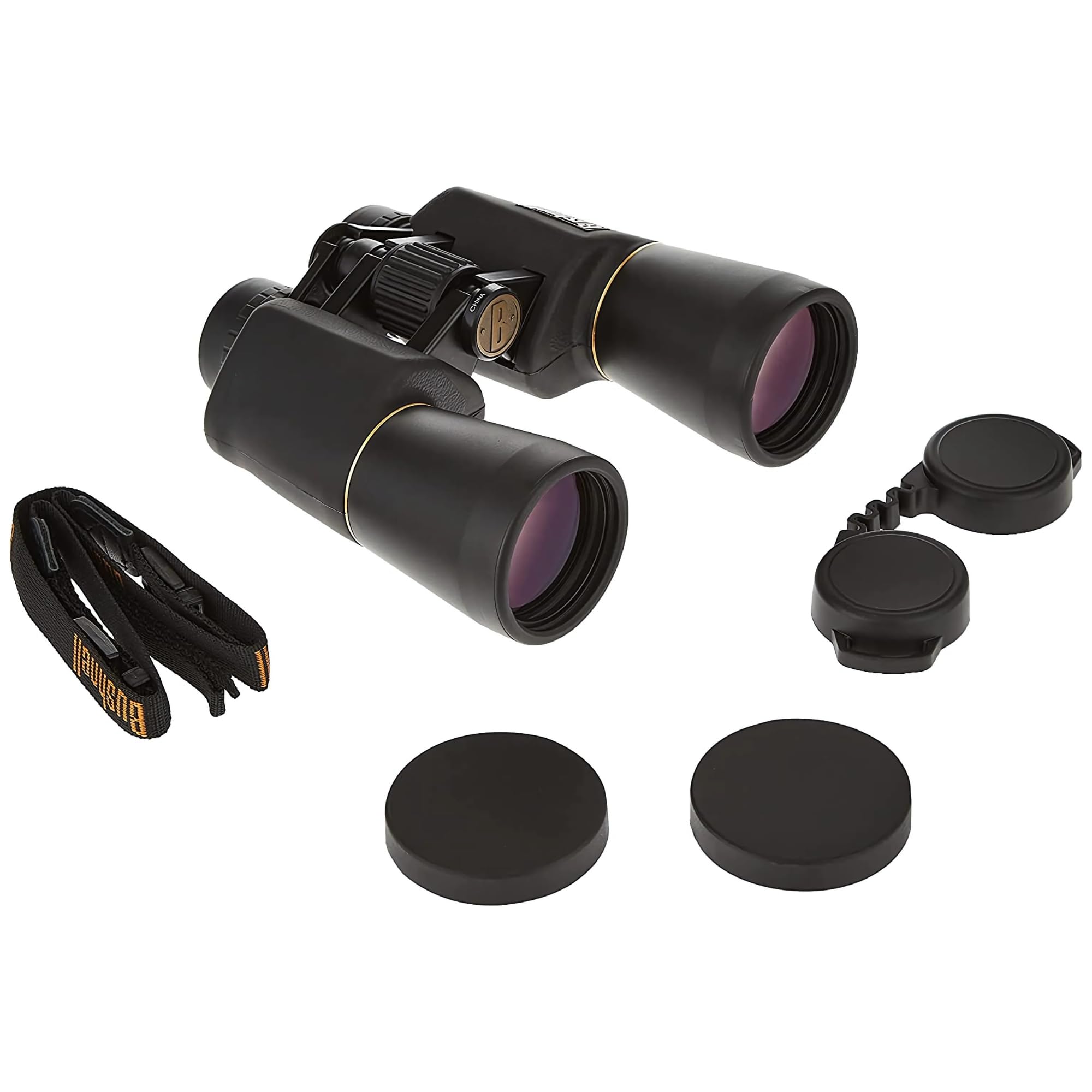
This is a zoom binocular with a Porro prism design, and it is built for two specific jobs: astronomy and long-range target observation. The 14 millimeters of eye relief is tight for glasses wearers—you will likely need to operate without glasses or run the eyecups fully collapsed and hold the binocular a precise distance away. But the optical reward is the ability to zoom from 10x up to 22x and still maintain a reasonably clear image.
The fully multi-coated BaK-4 prisms deliver sharp pinpoint stars and excellent contrast against dark skies. For the price, the brightness and sharpness at 22x on a tripod is remarkable, and the 50mm objectives collect enough light to resolve objects like the Pleiades or Jupiter’s moons in detail.
The main limitation for glasses wearers is that zoom binoculars often have shorter fixed eye relief than prime-magnification models, and this one is no exception. Hand-holding above 14x is impractical due to shake; you will want a stable tripod. For dedicated stargazers who can work around the eye relief, the Legacy WP is a powerful tool.
Why it’s great
- Zoom range from 10x to 22x covers both general viewing and detailed observation
- BaK-4 fully multi-coated prisms produce bright, crisp astronomical views
- Rugged waterproof and fogproof construction for outdoor durability
Good to know
- 14 mm eye relief is not ideal for most glasses wearers
- Requires a tripod for steady viewing above 14x
6. Bushnell H2O Xtreme 10×42

Bushnell designed the H2O Xtreme specifically for conditions where rain, spray, and splashes are part of the experience. The O-ring sealed, nitrogen-purged body earns an IPX7 waterproof rating, meaning it can survive submersion in shallow water without fogging. The 17 millimeters of eye relief puts it in the safe zone for glasses wearers, and the fully multi-coated BaK-4 prisms keep the view bright and clear even in overcast coastal light.
The rubber armor has a soft texture that provides a non-slip grip when wet, and the compact roof prism form factor makes it easy to stash in a boat bag or backpack. The twist-up eyecups have a single stop position that works passably for glasses, though more intermediate positions would have been welcome.
The 10×42 format with a 6.8-degree angle of view gives a comfortable balance between magnification and situational awareness. Some users note the absence of a tripod adapter socket, so if you plan to use it for long-duration stationary viewing, that is a limitation. For active water use, the H2O Xtreme is a reliable, glasser-friendly companion.
Why it’s great
- IPX7 waterproof rating is ideal for boating, fishing, and rain
- 17 mm eye relief works well with most eyeglass frames
- Fully multi-coated BaK-4 prisms for bright, sharp viewing
Good to know
- No built-in tripod adapter socket
- Eyecups lack multi-position click stops
7. Vortex Diamondback HD 8×28

The Diamondback HD 8×28 is a featherweight companion for hikers, travelers, and anyone who wants binoculars that disappear into a pocket or pack. Despite the small objective size, it delivers an impressive 18 millimeters of eye relief, which is more than enough for glasses. The HD optical system uses select glass elements to reduce chromatic aberration and maintain sharpness across the field.
The twist-up eyecups move in smooth clicks and hold firmly at each stop, making it easy to find the right position for your frames. Argon purging and O-ring seals keep the optics fog-free and waterproof, so you do not have to baby them in light rain or humid conditions. The center focus wheel is smooth and allows one-handed operation.
The 8×28 format does sacrifice low-light performance compared to the 42mm objective models. The exit pupil is only 3.5 millimeters, which means the image dims noticeably in deep twilight or dense forest canopy. For daytime use and pack-light trips, however, the Diamondback HD is an outstanding option for glasses wearers.
Why it’s great
- Very lightweight and compact at 28mm objective size
- 18 mm eye relief is excellent for glasses wearers
- Argon purging ensures waterproof and fogproof reliability
Good to know
- Small aperture limits low-light performance
- Does not include a harness, only a neck strap
FAQ
Can I use binoculars with progressive or bifocal lenses?
Is higher eye relief always better for glasses wearers?
Do compact 8×28 binoculars work well with glasses?
What does the second number mean on binoculars like 10×42?
Final Thoughts: The Verdict
For most users, the binoculars for glasses wearers winner is the Nikon Monarch M5 8×42 because its 19.5 millimeters of eye relief and ED glass provide the most comfortable, high-clarity viewing experience with prescription frames. If you want a compact, packable option with excellent eye relief, grab the Vortex Diamondback HD 8×28. And for premium low-light performance and professional build quality, nothing beats the Leupold BX-4 Pro Guide HD 10×42.

Mo Maruf
I created WellFizz to bridge the gap between vague wellness advice and actionable solutions. My mission is simple: to decode the research and give you practical tools you can actually use.
Beyond the data, I am a passionate traveler. I believe that stepping away from the screen to explore new environments is essential for mental clarity and physical vitality.