Our readers keep the lights on and my smoothie glass nicely filled. As an Amazon Associate, I earn from qualifying purchases.
You scan the garden center and see trays of green starts that all look the same, but you know that half of them will peter out after a single harvest. Every berry gardener has wasted a season on plants that never truly produced — weak root systems, wrong zone, or a variety that ripens all at once and leaves you with nothing for the rest of summer.
I’m Mohammad Maruf — the founder and writer behind WellFizz. I’ve spent the better part of my career analyzing hundreds of edible-plant listings and cross-referencing hardiness data, bare-root survival rates, and verified grower feedback to separate the worthwhile starts from the root-bound duds.
Whether you are after a raised-bed strawberry patch or a long-lived blackberry trellis, this guide walks through the top five contenders for the best berry plants that actually deliver on their yield promises across different growing styles and budgets.
How To Choose The Best Berry Plants
Berry plants live or die on two factors: the type of root system you receive (bare-root vs. potted) and the fruiting habit of the variety. Nail those two choices and you skip the “nothing happened” disappointment that drowns garden forums every July.
Fruiting Habit: Everbearing vs. June-Bearing
Everbearing (or day-neutral) varieties push fruit continuously from late spring through early fall, giving you steady handfuls rather than one overwhelming glut. June-bearing types dump a massive harvest over a few weeks — ideal for jam-sessions but rough if you want berries for the whole season. Most home growers prefer everbearing for consistent table fruit.
Root Form: Bare-Root vs. Potted Transplants
Bare-root plants are dormant and cost less to ship, but they need careful handling — soak the roots before planting and keep them moist for the first two weeks. Potted plants (like the 19.3-oz Bonnie containers) arrive actively growing and transplant with nearly zero shock. If you are a beginner, potted stock is the safer bet.
Quick Comparison
On smaller screens, swipe sideways to see the full table.
| Model | Category | Best For | Key Spec | Amazon |
|---|---|---|---|---|
| Bonnie Plants Strawberry 4-Pack | Potted Start | Immediate transplant success | 19.3 oz pot per plant | Amazon |
| All Star Strawberry (10 plants) | Bare-Root | Long season of fresh eating | Everbearing day-neutral | Amazon |
| Apache Blackberry Bush | Potted Bush | Thornless, high-yield trellis | 1-gallon container, zones 6-9 | Amazon |
| Pink Icing Blueberry Bush | Ornamental Edible | Year-round color plus fruit | #2 pot (2-gallon), zones 5-10 | Amazon |
| All Star Strawberry (15 plants) | Bare-Root Bulk | Budget mass planting | 15 bare-root starts | Amazon |
In‑Depth Reviews
1. Bonnie Plants Strawberry, 19.3 oz. (4-Pack)

Bonnie Plants ships actively growing strawberry starts in 19.3-ounce pots, which means the root ball is largely undisturbed from nursery soil to your garden bed. Customers in Alaska reported plants arriving in “amazing shape,” surviving a delivery that would stress most bare-root starts into dormancy or death. The soil in each pot stayed moist through transit, a detail that matters far more than leaf count.
These are June-bearing plants (perennial in zones 5 to 9) and grow to roughly 10 inches tall. For growers who need a foolproof transplant with no soaking or two-week coddling, the potted format eliminates the single biggest failure point of berry starts — root dehydration during shipping. The four-pack fills a 4×4-foot raised bed nicely.
Several reviewers noted the roots were already pushing through the pot’s drainage holes, signaling well-established stock. The only downside is the limited quantity — four plants won’t cover a large patch. For small-space gardeners and first-time berry growers, this is the most forgiving option on the list.
Why it’s great
- Zero transplant shock — grow-ready potted soil
- Consistently healthy arrivals even to remote zones
- Compact footprint ideal for patios and small beds
Good to know
- Only 4 plants per pack — not enough for large gardens
- June-bearing habit means a concentrated harvest window
2. All Star Strawberry Plants (10 Bare-Root Plants)
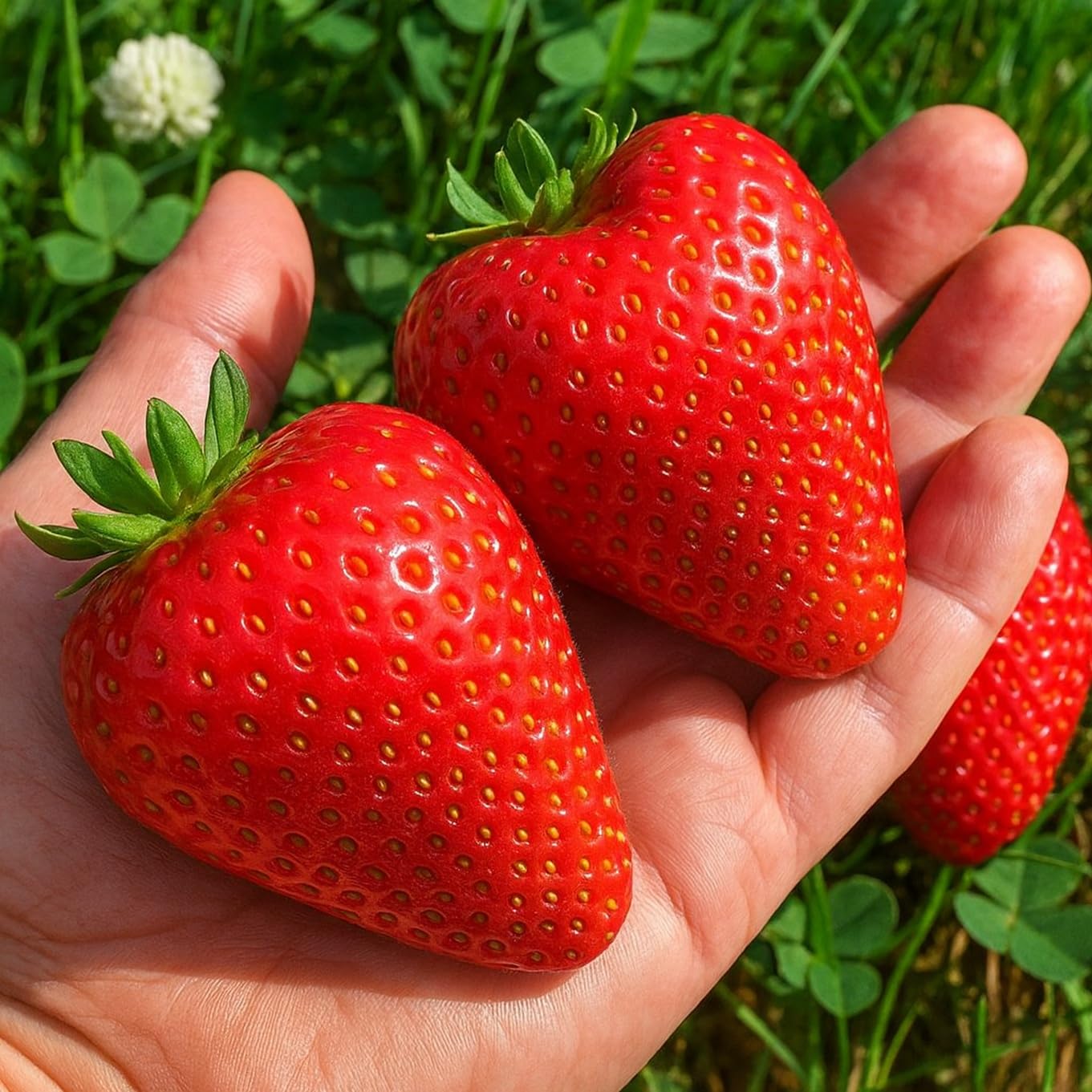
All Star is a day-neutral everbearing variety, meaning it sets fruit continuously from late spring through fall rather than in a single two-week flush. The bare-root starts arrive dormant and will typically show green growth within a week if soaked and planted correctly. One customer grew them in 6-inch-deep window planters 17 stories up and reported daily berries from June through the following year — a testament to the variety’s remontant genetics.
The 10-count bundle gives you enough plants to fill a 3×6-foot raised bed or a half-dozen large containers. Because they are bare-root, the shipping weight stays low and the cost per plant is significantly cheaper than potted equivalents. The included growing instructions link to a video tutorial, which helps new bare-root growers avoid the common “planted too deep” mistake.
Not every batch survives — a small number of reviewers reported 6 out of 15 plants failing to take off, which is a typical risk with dormant bare-root stock. The survivors, however, produced heavily. If you want a long picking season and are comfortable with a modest initial loss rate, this is the strongest everbearing option here.
Why it’s great
- Everbearing habit yields fruit for months
- Low cost per plant for budget-conscious gardeners
- Lightweight and easy to ship in dormant state
Good to know
- Bare-root survival can be inconsistent
- Needs careful soaking and planting technique
3. Perfect Plants Apache BlackBerry Bush (1-Gallon)

The Apache blackberry is a thornless, semi-erect variety that hits 5-6 feet tall and produces dark purple berries in early summer. Unlike wild brambles, the lack of thorns makes pruning and picking genuinely comfortable, and the 1-gallon pot means the bush is already 8–12 months old with a developed root system. Several buyers reported fruit in the first year, which is rare for blackberries — most need a full season before setting a meaningful crop.
Grown organically in Florida and shipped nationwide (excluding CA, HI, and AZ due to agricultural restrictions), the Apache is heat-tolerant once established. One gardener grew it in a 20-gallon cloth pot on a trellis and saw heavy production a year later. The plant spreads by crown rather than aggressive runners, so it stays contained better than wild types.
The main risk is soil moisture during transit — one reviewer received a plant with soggy soil that later declined. Once planted in well-drained loam, however, the Apache is a low-maintenance perennial that will produce for years. Pair it with a Quachita or Triple Crown for extended harvest overlap.
Why it’s great
- Thornless canes make picking and pruning pain-free
- Can produce fruit in the first growing season
- Non-running crown stays where you plant it
Good to know
- Cannot ship to CA, HI, or AZ
- Occasional soil moisture issues during shipping
4. Bushel and Berry Pink Icing Blueberry Bush (2-Gallon)

Pink Icing breaks the “green bush” mold with spring foliage that emerges bright pink before settling into a blue-green blend for winter. At maturity it reaches 3–4 feet tall with a 4–5 foot spread, making it a true landscape shrub that also produces large sweet blueberries. The 2-gallon container means the bush is mature enough to flower in its first spring — several buyers reported white blossoms and fruit set in the first season.
This is a Vaccinium corymbosum hybrid bred specifically for warmer climates (zones 5–10). One critical detail: blueberry roots require acidic soil (pH 4.5–5.5), and several reviewers noted the bush arrived in alkaline-leaning soil. A cheap soil pH test and a light sulfur or peat moss amendment solves this completely. The plant is otherwise vigorous and pest-resistant.
The “pink icing” name is not marketing fluff — the spring color is genuinely vivid and persists for weeks. For gardeners who want year-round visual interest from an edible plant rather than a plain green box, this bush delivers both curb appeal and breakfast fruit.
Why it’s great
- Striking pink spring foliage adds landscape value
- Large 2-gallon pot = mature start with less waiting
- Broad zone range (5–10) fits most of the US
Good to know
- Requires soil acid amendment in neutral/alkaline beds
- Spread of 4–5 feet needs generous spacing
5. All Star Strawberry Plants (15 Bare-Root Plants)
This is the same All Star everbearing variety as the 10-pack, but upsized to 15 bare-root starts for covering larger ground — think 4×8-foot raised beds or a dedicated strawberry patch. The unit price drops noticeably versus the 10-pack, making this the cheapest per-plant option in the lineup. For bulk planting on a budget, the math is hard to beat.
Growers have reported success growing these in everything from conventional garden soil to vertical towers. The everbearing genetics mean you can expect berries from June until the first frost, and the cultivar is known for large fruit size — more than one buyer described the berries as “giant” compared to typical grocery strawberries.
The same bare-root caveats apply: survival rate varies. One customer saw only 6 of 15 plants establish well. If you are comfortable with 60–70% success from dormant starts (which is normal for bare-root), the survivors will more than compensate in yield. Just soak, plant shallow, and keep evenly moist for the first two weeks.
Why it’s great
- Highest count per dollar for bulk planters
- Everbearing type provides months of harvest
- Large fruit size for fresh eating or jam
Good to know
- Standard 30-40% bare-root loss rate expected
- Needs careful initial watering and sun exposure
FAQ
Should I soak bare-root strawberry plants before planting?
Can blackberry bushes grow in containers?
Final Thoughts: The Verdict
For most users, the best berry plants winner is the Bonnie Plants Strawberry 4-Pack because potted starts eliminate the failure risk that buries bare-root newcomers, and the plant health reviews are consistently excellent. If you want a months-long harvest from a few dollars’ worth of plants, grab the All Star Strawberry 10-Pack. And for a thornless, long-lived berry staple that produces from year one, nothing beats the Apache BlackBerry Bush.

Mo Maruf
I created WellFizz to bridge the gap between vague wellness advice and actionable solutions. My mission is simple: to decode the research and give you practical tools you can actually use.
Beyond the data, I am a passionate traveler. I believe that stepping away from the screen to explore new environments is essential for mental clarity and physical vitality.