Our readers keep the lights on and my smoothie glass nicely filled. As an Amazon Associate, I earn from qualifying purchases.
Walking into a noisy restaurant used to mean nodding along to conversations you could barely catch. Modern behind-ear hearing aids have changed that—they now pack adaptive noise cancellation, Bluetooth streaming, and smartphone app controls into discreet, all-day-wearable devices. But with prices ranging from a few hundred to several thousand dollars, separating the real performers from the also-rans requires detailed spec-by-spec comparison.
I’m Mohammad Maruf — the founder and writer behind WellFizz. I’ve spent years analyzing the hardware, digital signal processing chips, and real-world reliability reports for over-the-counter hearing aids, focusing specifically on how each model handles feedback suppression, speech clarity in noise, and battery longevity under continuous use.
Whether you’re upgrading from an older pair or buying your first set, this guide breaks down the top-rated options to help you find the best behind ear hearing aids that match your hearing loss profile and lifestyle.
How To Choose The Best Behind Ear Hearing Aids
Behind-ear hearing aids range from simple amplifiers to sophisticated digital devices with adaptive sound processing. To pick the right one, focus on gain output, noise management, connectivity, and physical fit—each factor determines how well the device performs in real-world situations.
Gain Level and Frequency Response
Gain, measured in decibels (dB), determines how much the device amplifies sound. Mild loss typically needs 20–30 dB of gain, while moderate to moderately-severe loss requires 40–50 dB. Look for models that specify peak gain—a 50 dB peak gain unit can serve a wider range of hearing profiles than a 30 dB one. Frequency response up to 8,500 Hz ensures high-frequency sounds like children’s voices and doorbells remain audible.
Feedback and Whistle Suppression
Acoustic feedback—that annoying whistling sound—occurs when amplified sound leaks from the ear canal back into the microphone. Modern digital feedback cancellation detects and cancels these frequencies in milliseconds. Models with multi-band feedback suppression or AI-driven feedback management (like the ones in the Lexie B2 Plus or ELEHEAR-Beyond Pro) virtually eliminate this issue, even at higher volume levels.
Noise Reduction and Scene Adaptation
Basic hearing aids amplify everything equally, which makes background noise louder too. Advanced models use directional microphones and adaptive noise reduction to isolate speech from competing sounds. Some offer scene-specific presets (quiet, noisy, outdoor, music) that you can switch manually or let the device auto-detect. For restaurant or social use, look for models with dedicated “noisy environment” modes and at least 20 dB of noise reduction capability.
Bluetooth Connectivity and App Control
Bluetooth lets you stream phone calls, music, and TV audio directly to the hearing aids. Newer Bluetooth 5.4 offers lower latency and better power efficiency compared to older versions. App control is equally important—the best apps include an in-app hearing test, personalized EQ adjustment, and tinnitus masking. Without app support, you’re stuck with whatever factory presets the device ships with.
Battery Life and Charging Convenience
Rechargeable behind-ear hearing aids should deliver at least 18–20 hours of use per charge to cover a full day plus evening. Fast-charge capability (15 minutes for 6 hours) is a practical bonus for travel or forgetful days. The charging case should hold multiple full recharges—4+ full cycles is the standard for worry-free weekly use.
Fit, Comfort, and Dome Options
A poor fit causes discomfort and acoustic leakage that triggers feedback. Multiple dome sizes (open, closed, power) in S/M/L let you tailor the seal to your ear canal. RIC (receiver-in-canal) designs place the speaker in the ear canal while the main body rests behind the ear—this reduces feedback and makes the device more discreet than traditional BTE styles. The body weight and wire length also affect long-term comfort, especially when worn with glasses.
Quick Comparison
On smaller screens, swipe sideways to see the full table.
| Model | Category | Best For | Key Spec | Amazon |
|---|---|---|---|---|
| ELEHEAR-Beyond Pro | Premium RIC | Speech clarity in noise | VocClear 2.0 / 8ms latency | Amazon |
| Jabra Enhance Select 700 | Clinic-Grade | Professional audiology support | SoundScape Auto Focus / IP68 | Amazon |
| iBstone AuraLink | AI Premium | Adaptive AI & durability | AI noise reduction / IP68 | Amazon |
| ELEHEAR-Beyond | Mid-Range | App-based customization | 50dB gain / 4 scene modes | Amazon |
| Jabra Enhance Select 500 | Mid-Range | Discreet micro design | 18hr battery / Bluetooth LE | Amazon |
| Lexie B2 Plus | Mid-Range | Bose sound algorithms | Self-fitting app / 10 programs | Amazon |
| Vivtone Xpure 2.0 | Mid-Range | Bluetooth streaming & calls | RIC design / 24hr runtime | Amazon |
| Nova iBstone | Value CIC | Nearly invisible CIC wear | 1.4g weight / 20hr use | Amazon |
| Vivtone Lucid508 | Entry BTE | First-time BTE users | 41dB peak gain / 125hr backup | Amazon |
In‑Depth Reviews
1. ELEHEAR-Beyond Pro
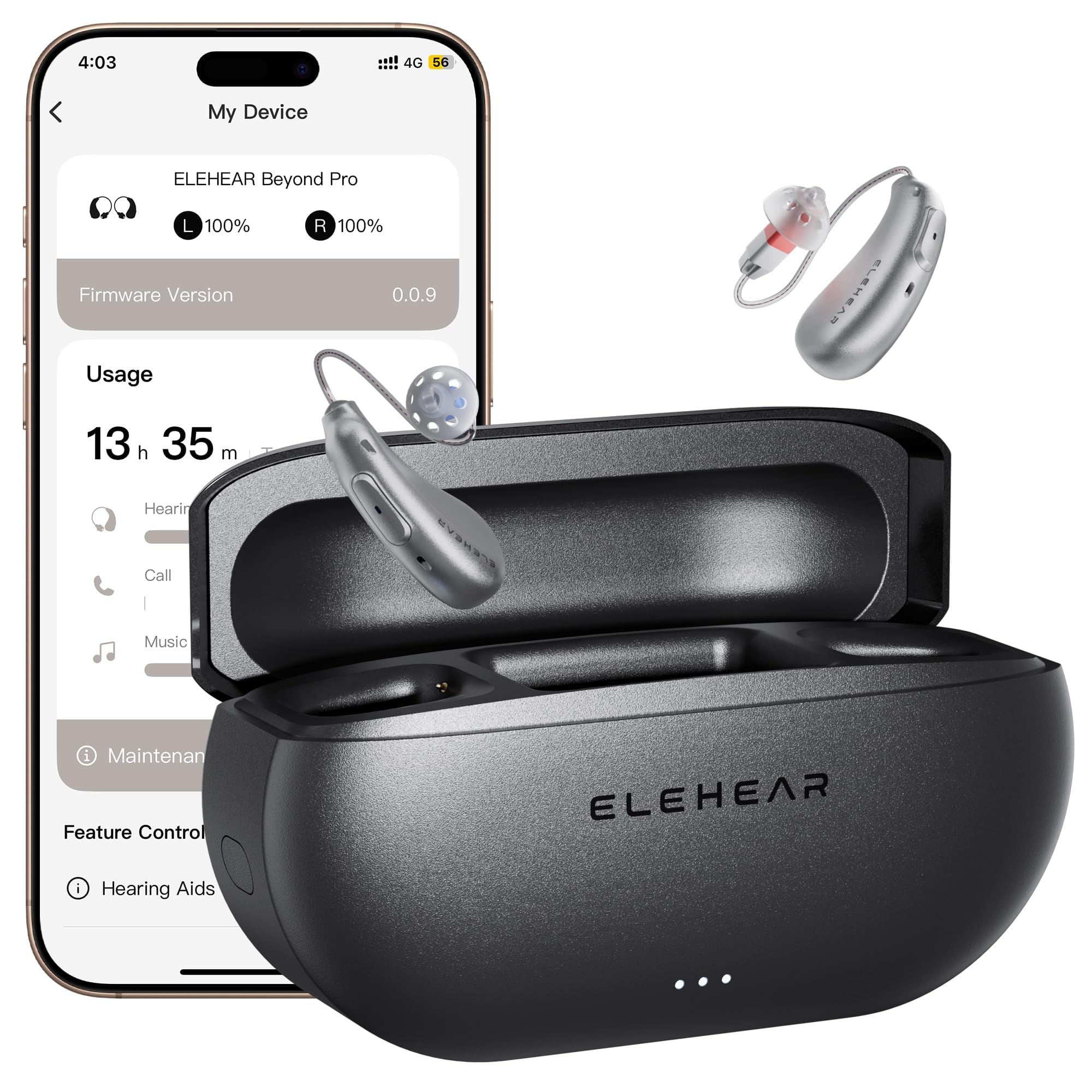
The ELEHEAR-Beyond Pro represents a significant leap in OTC hearing aid performance, driven by the VocClear 2.0 algorithm that delivers 30 percent clearer speech reproduction up to 8,500 Hz. With an ultra-low 8ms latency, the device eliminates the hollow, delayed sound that plagues lesser digital aids, making live conversation feel natural and immediate. The four-scene modes—including a dedicated Music mode—allow the user to shift from speech-focused noise reduction to a broader frequency response for audio enjoyment, a versatility rarely seen at this tier.
The companion app is where this model truly differentiates itself. Users can run an in-app hearing test, fine-tune frequency bands, and access 20 immersive soundscapes for tinnitus relief or relaxation. The 15-minute fast charge yields six hours of use, and the case provides four additional full cycles, totaling 100 hours of standby power. Real-time AI translation across 11 languages is an unexpected but genuinely useful bonus for travelers or multilingual households.
Across verified reviews, the Beyond Pro earns consistent praise for sound quality that rivals prescription aids costing several times more. The most common critique involves occasional Bluetooth pairing hiccups and the need to select the correct dome size to avoid feedback at max volume. Still, with excellent customer support that offers remote audiologist programming via the app, this model sets the new standard for the premium mid-range category.
Why it’s great
- VocClear 2.0 delivers noticeably clearer speech than previous generation
- Comprehensive app with hearing test, EQ, and tinnitus masking
- Fast charge in 15 minutes for 6 hours of use
- Real-time AI translation for 11 languages
Good to know
- Some users reported feedback issues after two months of use
- Warranty replacement may require shipping from overseas
2. Jabra Enhance Select 700
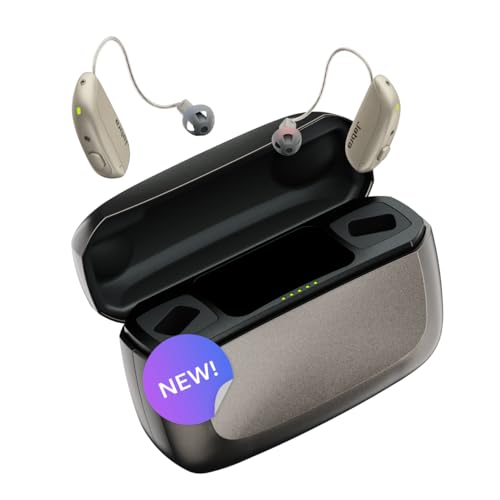
Jabra Enhance’s Select 700 is the world’s smallest rechargeable receiver-in-ear hearing aid, measuring just 1.04 inches long and weighing 2.12 grams. Despite its micro footprint, it packs SoundScape with Auto Focus technology that continuously adapts directional focus based on your environment—amplifying the person in front of you while suppressing noise from behind. The IP68 weatherproof nano-coating means rain, sweat, and dust won’t compromise performance, a crucial feature for active users who don’t want to remove their aids during exercise or outdoor work.
Licensed audiologists from the Jabra Enhance team provide remote programming based on your audiogram or an online hearing test, a level of professional calibration typically reserved for prescription models that cost twice as much. The Select 700 also supports Bluetooth LE Audio and Auracast, enabling crystal-clear hands-free phone calls with a double-tap gesture on the device itself. Battery life exceeds 24 hours on a single charge, and the portable charging case extends that further for multi-day trips without outlet access.
User reviews consistently highlight sound quality that matches or exceeds prescription aids, especially in noisy environments like car interiors or crowded restaurants. A small subset of users experienced a frustrating issue where the hearing aids reset their programmed settings when placed in the charger. Overall, the combination of clinic-grade audiology support, extreme durability, and near-invisible form factor makes the Select 700 the top choice for those seeking professional-level results without the clinic price tag.
Why it’s great
- World’s smallest rechargeable RIC design at 1.04 inches
- Licensed audiologists provide remote programming
- IP68 weatherproof for rain, sweat, and dust resistance
- 24+ hour battery with Bluetooth LE Audio streaming
Good to know
- Some users report settings reset when placed in the charger
- Higher price point than many OTC competitors
3. iBstone AuraLink
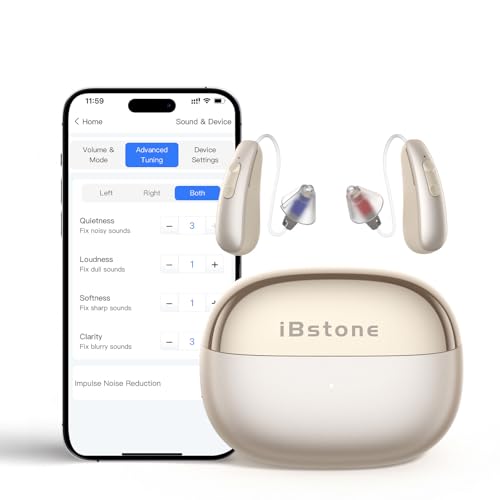
The iBstone AuraLink uses an AI-powered adaptive processor that continuously tailors its amplification and filtering in real time based on environmental sound analysis. This means the hearing aid automatically shifts from a wide-directional mode in quiet settings to a focused forward beam in noisy restaurants, without requiring manual scene switching. The Bluetooth 5.4 chip delivers lower power consumption and faster data transfer than older versions, resulting in very stable streaming for phone calls and music with minimal audio dropouts.
Durability is a standout feature here: the AuraLink carries an IP68 rating against dust and water immersion, and the device is SGS-certified for drop resistance. The charging case includes UV sanitization, a thoughtful addition for daily hygiene that competing models rarely offer. The AuraFit app provides an in-app hearing test, personalized EQ, and tinnitus masking tones, and the device has been selected for a US physician-led study on cognitive health, lending it professional credibility beyond typical consumer marketing.
Verified buyers rate the sound quality highly, with many noting it matches their previous prescription aids that cost five times more. The most common criticism is that the wire from the behind-ear unit to the earpiece is somewhat stiff and longer than ideal, which can cause the earpiece to shift out of optimal position. For users who prioritize adaptive AI processing and rugged build quality over pure discretion, the AuraLink represents an excellent value proposition.
Why it’s great
- AI adaptive processing adjusts in real-time without manual switching
- IP68 rated with UV-sanitizing charging case
- Bluetooth 5.4 for stable, low-latency streaming
- Physician-endorsed for cognitive health study
Good to know
- Stiff wire can cause earpiece to shift from optimal position
- Limited noise reduction performance at maximum volume
4. ELEHEAR-Beyond

The original ELEHEAR-Beyond delivers 50 dB of peak gain, enough to address moderate hearing loss, while leveraging VocClear AI to boost speech clarity by 17 percent and cut background noise by 24 dB. The four-tailored scene modes—accessible via the intuitive app—let you switch between quiet conversation, noisy restaurant, outdoor wind, and music listening with a single tap. The device also supports 360-degree sound input or front-only directional focus, a flexibility that helps in one-on-one versus group scenarios.
Battery performance is robust: 20 hours of runtime per charge, with the case providing four additional full charges for a total of 100 hours. The 15-minute quick charge delivers six hours of use, making it practical for overnight trips when you forget to charge. The lightweight body and nine included dome sizes help achieve a comfortable seal, though the plastic body does feel slightly less premium than the metal-accented Beyond Pro model.
Customer reviews are overwhelmingly positive, with users praising the crisp sound, effective noise suppression, and Bluetooth range of approximately 30 feet. Some users noted that the wire from the receiver to the behind-ear unit felt slightly short, requiring aftermarket retention wires for a secure fit. For buyers who want strong amplification and app-based customization without stepping up to the Pro version’s price, the standard Beyond delivers impressive performance.
Why it’s great
- 50dB gain suitable for moderate hearing loss
- Effective AI noise reduction reduces background sounds by 24dB
- Multidirectional or focused front-only sound input
- 15-minute quick charge provides 6 hours of use
Good to know
- Wire length may be too short for some ear shapes
- Plastic build feels less premium than Pro version
5. Jabra Enhance Select 500
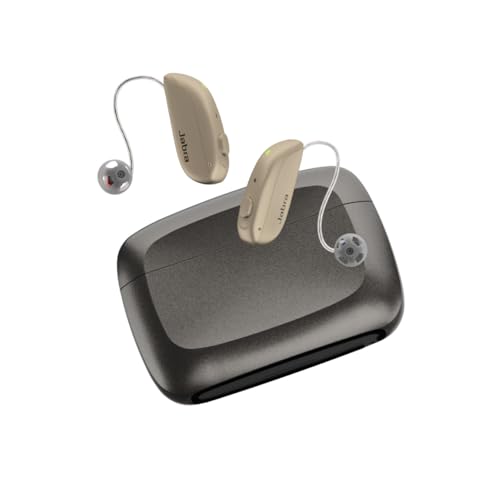
The Jabra Enhance Select 500 offers many of the same professional audiology services as the Select 700 in a slightly larger but still remarkably discreet housing. The “micro” design measures just 1.14 inches by 0.33 inches and weighs 2.12 grams, making it barely visible even from a close conversational distance. It employs a clinic-grade digital processor that handles complex listening situations—like following one voice in a loud party—better than most OTC aids, thanks to its directional microphone array and multi-band compression.
Bluetooth LE Audio support enables hands-free calling with a double-tap gesture, and the companion app allows users to switch between four listening modes or submit their audiogram for remote fine-tuning by a licensed audiologist. A 100-day risk-free trial, 3-year warranty with loss and damage protection, and included maintenance kit provide peace of mind that budget brands cannot match. The charging case holds several days of power, and the device delivers around 18 hours per charge.
Across user feedback, the Select 500 earns top marks for sound clarity in quiet and moderately noisy settings, with many reviewers calling it the best value they have found after years of wearing prescription aids. The most frequent complaint revolves around the app’s complexity—especially during initial setup across multiple platforms—and the need for occasional manual re-pairing. Nonetheless, for those who prioritize professional support and a near-invisible wearing experience, the Select 500 is a compelling choice.
Why it’s great
- Ultra-discreet micro design at just 1.14 inches
- Licensed audiologist remote programming included
- Bluetooth LE Audio for hands-free calls
- 3-year warranty with loss and damage protection
Good to know
- App can be confusing during initial multi-platform setup
- Some users experience occasional Bluetooth disconnections
6. Lexie B2 Plus Powered by Bose
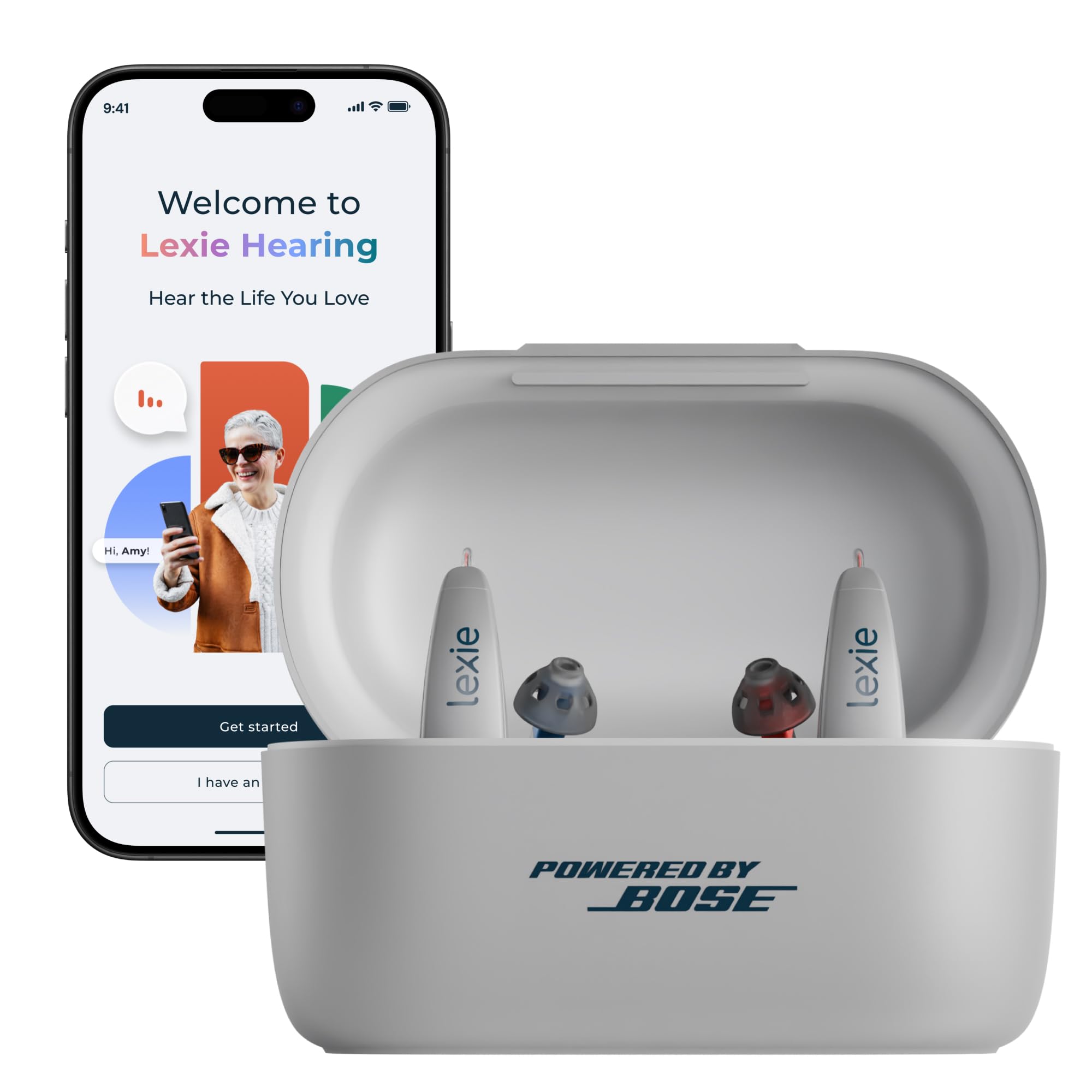
The Lexie B2 Plus is the only OTC hearing aid on this list powered by Bose sound technology, incorporating Bose proprietary algorithms for noise management, wind noise reduction, impulse noise suppression, and feedback management. This translates to a noticeably more natural listening experience in environments ranging from quiet living rooms to windy outdoor patios. The self-fitting app includes a clinically validated hearing test that customizes treble, bass, world volume, balance, and directionality—all without needing an audiologist visit.
Unlike most devices that offer just 3–5 fixed programs, the Lexie B2 Plus lets you create up to 10 custom environment programs, giving exceptional flexibility for diverse daily scenarios. The rechargeable wireless charging case is convenient, though it requires precise placement to ensure the contacts align. Battery life is solid, with users reporting approximately 16–18 hours per charge depending on streaming usage. The Lexie coach feature provides on-demand support and acclimation guidance directly within the app.
Verified buyers consistently praise the Bose-powered sound quality, with many noting it outperforms their previous devices that cost significantly more. However, several long-term reviews warn of reliability issues after 6–12 months, including one aid losing volume or producing static noises. Customer service responsiveness has drawn mixed feedback. For users willing to accept some durability risk in exchange for Bose’s exceptional sound algorithms, the Lexie B2 Plus remains a top contender.
Why it’s great
- Bose-powered algorithms provide industry-leading noise management
- Self-fitting app creates up to 10 custom environment programs
- Clinically validated in-app hearing test
- Lightweight and discreet behind-ear design
Good to know
- Reliability concerns reported after 6–12 months of use
- Wireless charging case requires precise alignment
7. Vivtone Xpure 2.0

The Vivtone Xpure 2.0 adopts a receiver-in-canal (RIC) architecture that separates the speaker from the body, reducing feedback and delivering cleaner sound than traditional BTE designs at its price tier. Bluetooth connectivity allows direct phone call handling and music streaming from both iOS and Android devices, with the companion app providing volume control, frequency adjustment, and access to multiple sound presets. The gain ceiling is high enough that users with moderate loss report hearing clearly at 80 percent volume.
Charging speed is a highlight: a full charge takes 2.5 hours and provides 24 hours of hearing aid operation or 3 hours of continuous Bluetooth streaming. The charging case itself holds enough reserve to keep the aids powered for a full week without a wall outlet, making this a very travel-friendly option. The device also includes an auto on/off feature triggered by inserting or removing the aids from the case, eliminating the need for a manual power switch that smaller hands can fumble with.
User reviews frequently compare the Xpure 2.0 favorably against prescription aids costing over , with particular praise for the app’s hearing test function and ease of use. Some users reported that the earpieces can loosen during extended wear, though the included multiple dome sizes help mitigate this. The lack of a dedicated noise suppression mode for extremely loud environments is a minor limitation, but for everyday use—conversations, TV, phone calls—the Xpure 2.0 delivers excellent performance.
Why it’s great
- RIC design minimizes feedback and distortion
- Direct Bluetooth streaming for calls and music
- 24-hour battery life with week-long case reserve
- In-app hearing test and frequency adjustment
Good to know
- Earpieces may loosen during extended wear
- No advanced noise suppression for very loud environments
8. Nova Hearing Aids by iBstone
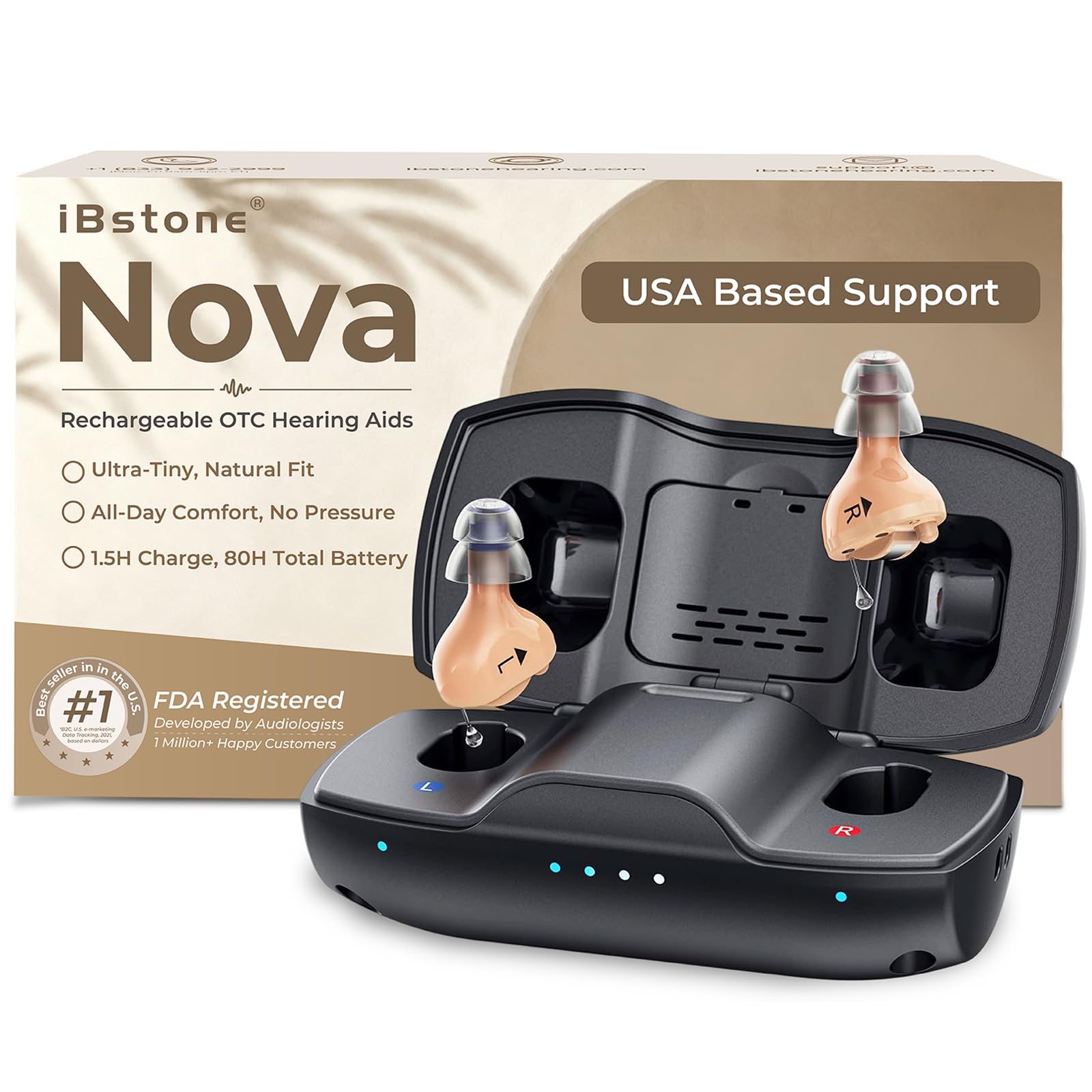
The Nova by iBstone takes a different approach from most behind-ear models by using a completely-in-canal (CIC) form factor that weighs just 1.4 grams—lighter than a single feather. This design fits entirely inside the ear canal, making it compatible with wearing masks and glasses without the aids being dislodged. Despite its small size, it packs a smart noise-canceling chip that suppresses 99 percent of feedback whistling, a common pain point for in-ear designs that sit deeper in the canal.
Charging efficiency is impressive: 1.5 hours of charging provides 20 hours of use, and the portable case holds four additional full charges for a total of 100 hours of backup power. The included nine pairs of ear tips (S/M/L in three different shapes) ensure a snug seal for nearly any ear anatomy, which is critical for CIC devices to avoid feedback and achieve adequate gain. The built-in drying system in the charging case automatically removes moisture after each use, extending the lifespan of the delicate receiver components.
Buyers consistently highlight the near-invisible appearance and all-day comfort, with many reporting they forget they are wearing them after a few hours. The most common drawbacks include a button-based volume control that cycles through levels rather than allowing direct adjustment, and noise reduction that, while decent for quiet to moderate noise, struggles in very chaotic environments like large family gatherings. For users who prioritize discretion and comfort over maximum noise handling, the Nova is an excellent choice.
Why it’s great
- Ultra-lightweight at 1.4 grams with CIC design
- Comfortable with glasses and masks without dislodging
- 1.5-hour charge provides 20 hours of use
- Charging case includes automatic drying system
Good to know
- Volume control cycles through levels rather than direct adjustment
- Noise reduction insufficient for very loud environments
9. Vivtone Lucid508
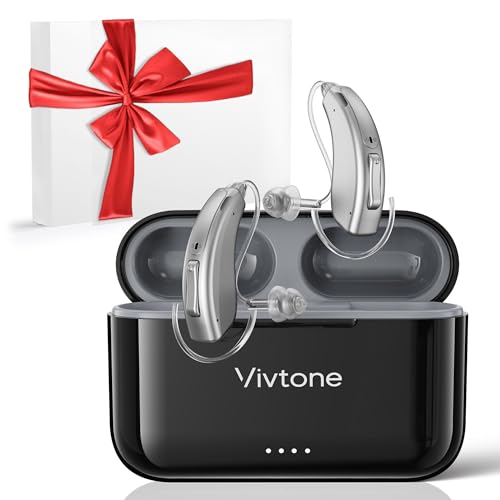
The Vivtone Lucid508 serves as a capable entry point for first-time behind-ear hearing aid users, offering 41 dB of peak gain sufficient for mild to moderate hearing loss. It features three operating modes—Quiet for calm environments, Noisy for background reduction with human voice focus, and Tinnitus Masking for relief from ringing—all accessible via a single-button control on the device body. The auto-on/off function activates when you remove or insert the aids from the charging case, simplifying daily use for those who prefer not to fiddle with tiny switches.
Charging speed is competitive at 2 hours for a full charge, delivering 25 hours of continuous use. The included charging case can recharge both units four times, providing a total backup of 125 hours—the highest reserve capacity among all devices reviewed here. The compact behind-ear housing is made from medical-grade plastic and sits discreetly against the head, though it is slightly more visible than RIC or CIC alternatives.
Customer reviews consistently praise the Lucid508 for its ease of setup, clear sound, and excellent value for first-time users. Several reviewers noted that choosing the correct dome size is essential to prevent feedback at higher volumes, and the charging base’s rounded bottom can tip over easily on uneven surfaces. For seniors seeking a straightforward, low-cost introduction to behind-ear amplification without sacrificing essential features, the Lucid508 is the most practical budget option.
Why it’s great
- 41dB gain covers mild to moderate hearing loss
- Three modes including tinnitus masking
- 125 hours of total backup battery from charging case
- Auto-on/off simplifies daily usage
Good to know
- Rounded charging base can tip over on uneven surfaces
- Requires correct dome size to avoid feedback at high volume
FAQ
How many hours should a rechargeable behind-ear hearing aid last per charge?
Can I wear behind-ear hearing aids with glasses or a mask?
What is the difference between BTE and RIC behind-ear designs?
Do I need a prescription to buy behind-ear OTC hearing aids?
Final Thoughts: The Verdict
For most users, the best behind ear hearing aids winner is the ELEHEAR-Beyond Pro because it combines superior speech clarity from VocClear 2.0, comprehensive app control, and fast charging at a price that undercuts clinic-level alternatives by thousands. If you want professional audiology support and the world’s smallest RIC design, grab the Jabra Enhance Select 700. And for a low-cost entry into reliable behind-ear amplification without Bluetooth complexity, nothing beats the Vivtone Lucid508.

Mo Maruf
I created WellFizz to bridge the gap between vague wellness advice and actionable solutions. My mission is simple: to decode the research and give you practical tools you can actually use.
Beyond the data, I am a passionate traveler. I believe that stepping away from the screen to explore new environments is essential for mental clarity and physical vitality.