Our readers keep the lights on and my smoothie glass nicely filled. As an Amazon Associate, I earn from qualifying purchases.
Starting yoga brings enough mental hurdles—finding your breath, remembering the Sanskrit names, not wobbling out of Mountain Pose. Your mat shouldn’t add friction (or a sore knee) to that equation. The wrong beginner mat slides on hardwood, compresses to nothing under your weight, or reeks of chemical odor for weeks. The right one disappears beneath you, letting you focus on the practice itself.
I’m Mohammad Maruf — the founder and writer behind WellFizz. I’ve analyzed hundreds of yoga mat product specs and customer review patterns to identify the specific foam densities, thickness ranges, and surface textures that actually matter when you’re learning Downward Dog for the first time.
This guide breaks down five carefully selected options so you can find exactly the best beginner yoga mat for your home practice without overpaying for features you won’t use.
How To Choose The Best Beginner Yoga Mat
New yogis often grab the cheapest, thinnest mat available, then wonder why their knees ache and their hands slide in Downward Dog. A good beginner mat balances three specific qualities: adequate cushioning for joints, reliable grip to prevent slipping, and a material that won’t break down after a few weeks of daily use.
Thickness: The Comfort vs. Stability Trade-off
Beginner mats typically range from 6mm to 12mm. Thicker mats (10-12mm) feel luxurious on knees and elbows during kneeling poses, but they can make standing balance poses feel slightly unstable because your feet sink into the foam. A 6-8mm mat offers a firmer foundation for balance while still providing decent cushioning. If you have sensitive knees or plan to do lots of floor work, lean toward 10mm or thicker.
Material: TPE vs. NBR vs. PVC
Most beginner-oriented mats use one of three materials. NBR (Nitrile Butadiene Rubber) is the softest and most affordable, often found in budget mats 10mm and thicker—but it absorbs moisture and wears out faster. TPE (Thermoplastic Elastomer) is lighter, more eco-friendly, and offers better grip, but can be pricier. PVC mats are durable and grippy yet heavy and not biodegradable. For a starter mat, TPE gives the best balance of weight, grip, and environmental consideration.
Size and Portability
Standard yoga mats measure 72 inches long by 24 inches wide. Taller practitioners (over 5’8″) may appreciate an extra-wide 32-inch mat to keep hands and feet on the surface during wide-legged poses. Look for a carrying strap or bag if you plan to bring your mat to classes or the park. A lightweight TPE mat (under 3 lbs) makes transport effortless compared to a heavy PVC or NBR mat that feels like lugging a rolled-up carpet.
Quick Comparison
On smaller screens, swipe sideways to see the full table.
| Model | Category | Best For | Key Spec | Amazon |
|---|---|---|---|---|
| KEEP Yoga Mat | Premium TPE | Extra-wide stability | 32″ wide, 7mm thick | Amazon |
| Gruper Yoga Mat | Premium TPE | Alignment guidance | 32″ wide, 6 or 8mm | Amazon |
| YOTTOY Yoga Mat | Mid-Range TPE | Maximum cushioning | 12mm (1/2″) thick | Amazon |
| Gaiam Yoga Mat | Budget NBR | Plush joint protection | 10mm (0.39″) thick | Amazon |
| Amazon Basics TPE Mat | Budget TPE | Lightweight portability | 6mm (0.24″) thick | Amazon |
In‑Depth Reviews
1. KEEP Yoga Mat
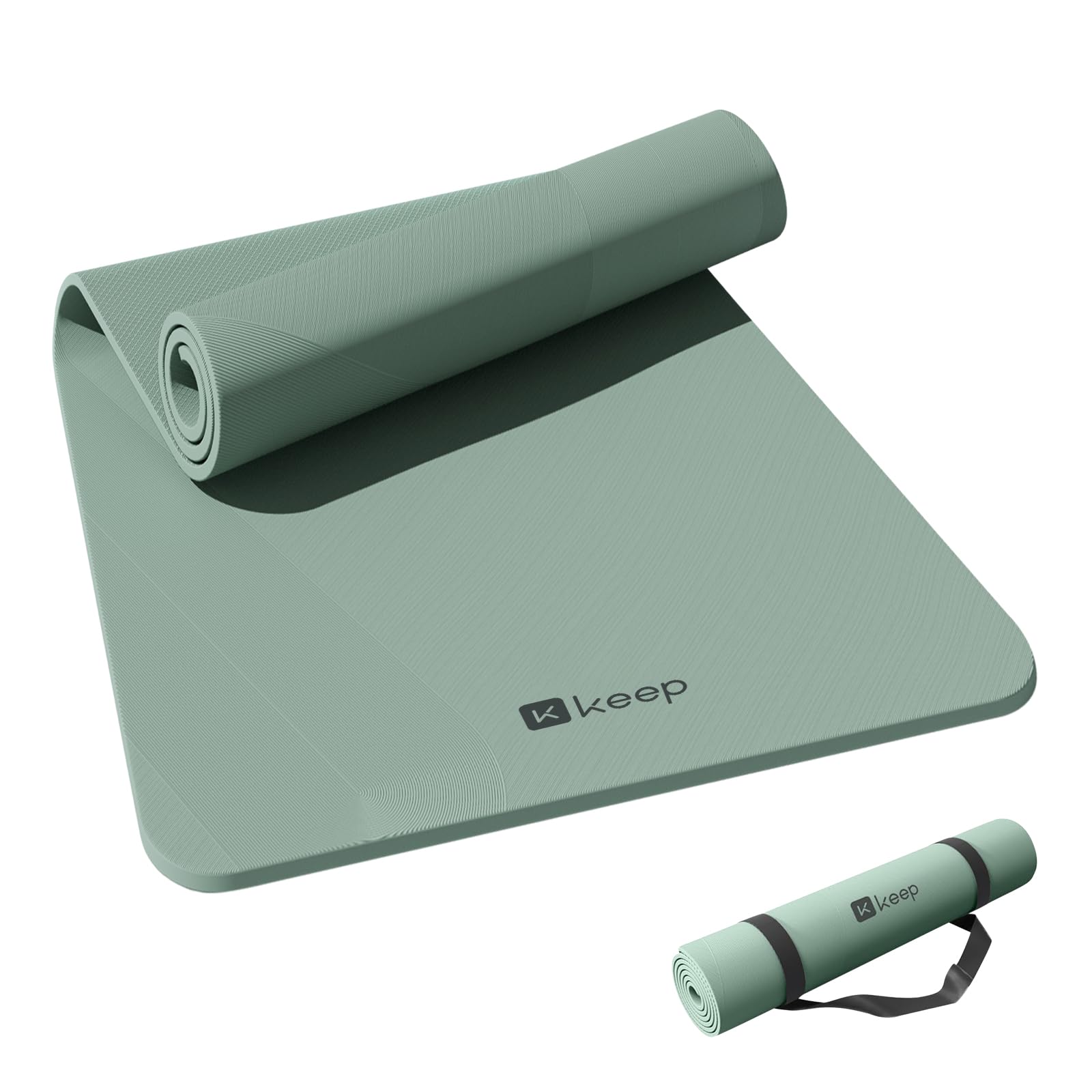
The KEEP Yoga Mat nails the sweet spot between cushioning and stability for new practitioners. At 7mm thick and 32 inches wide, it offers ample room for wide-legged stances without the wobbly instability of a thicker foam mat. The double-sided non-slip texture—a fingerprint-like pattern on top with a comprehensive anti-slip bottom—keeps you planted whether you’re practicing in socks or barefoot on a hardwood floor.
Weighing only 2.8 pounds, this TPE mat is light enough to sling over your shoulder with the included polyester strap, making it a solid companion for studio-hopping newbies. Multiple reviewers who’ve used it for months report the anti-tear construction holds up well against daily strength and stretching routines. The pale green color adds a calming aesthetic, though the mat also comes in other shades.
Where this mat really shines is the 32-inch width. Standard 24-inch mats leave your hands hanging off the edge during wide-legged forward folds, which is frustrating when you’re still learning alignment. This extra real estate eliminates that problem entirely. A light air-out before first use will dissipate any packaging odor, though it’s less pronounced than with NBR mats.
Why it’s great
- Extra-wide 32-inch surface accommodates taller and broader body types
- Double-sided non-slip texture works on both dry and slightly damp surfaces
- Lightweight TPE construction is easy to carry and eco-friendly
- 7mm thickness balances joint comfort with balance stability
Good to know
- May require 24-48 hours to fully flatten after unrolling
- Not as plush as 10-12mm mats for kneeling poses
2. Gruper Yoga Mat with Alignment Mark
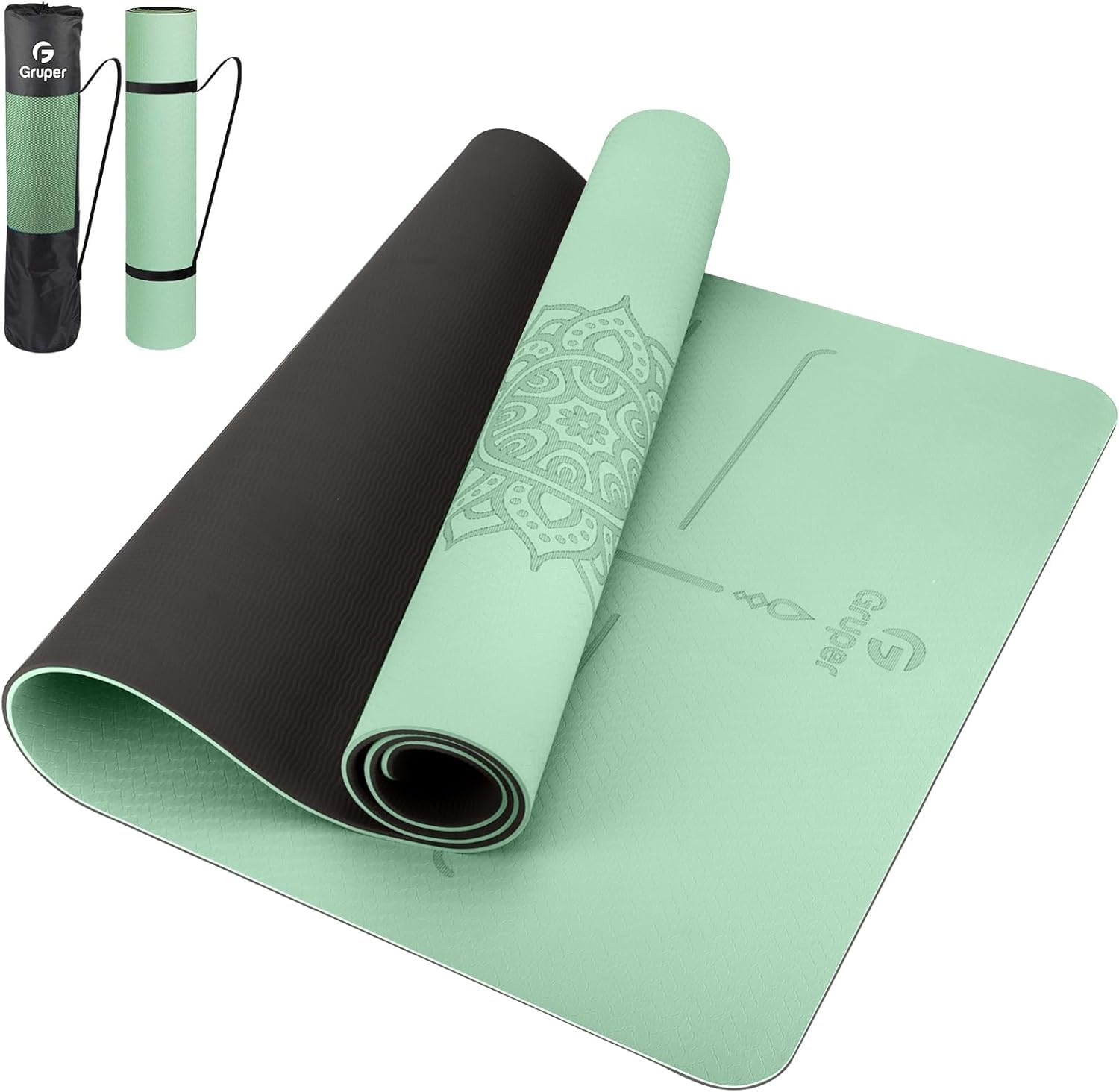
The Gruper Yoga Mat stands out because of its printed alignment system—hand and foot position markers printed directly on the surface. This is a game-changer for self-taught beginners who practice from YouTube videos or apps. Instead of guessing where your hands should land in Chaturanga, the markings give you immediate spatial feedback, helping you build muscle memory faster.
Choose from two thickness options: 6mm for a firmer, more stable foundation, or 8mm for extra cushioning. Even the thinner version provides adequate knee protection for moderate practice. The double-layer TPE construction resists tearing and deformation better than single-layer budget mats. Both the top and bottom surfaces feature a sticky non-slip texture, which reviews confirm works well even during sweatier sessions.
The included carrying bag and strap make transport easy, though the 6mm version produces some static electricity in dry air (a minor trade-off for its durability). One 175cm reviewer noted the 72-inch length is sufficient for taller practitioners, and the 32-inch width provides generous lateral space. If you’re learning sequences sans instructor, the alignment markings alone justify the upgrade over a plain mat.
Why it’s great
- Alignment markings help solo beginners correct hand/foot placement
- Durable double-layer TPE resists tears and deformation
- Sticky non-slip texture on both sides works in sweaty conditions
- Includes both carrying bag and strap for easy portability
Good to know
- 6mm version can generate static electricity in dry environments
- Strong pressure may leave temporary indentations on the surface
3. YOTTOY Yoga Mat

If your primary concern is sore knees and elbows during floor-based poses, the YOTTOY Yoga Mat delivers the thickest cushioning in this lineup at a full 12mm (half an inch). One-piece foamed TPE construction makes this mat non-toxic and odorless, with SGS and TUV certifications confirming it’s free of heavy metals and phthalates. The granular protrusions on the surface increase friction, while the water ripple texture on the bottom grips various floor types.
Multiple beginner reviewers specifically mention the 12mm thickness as a lifesaver for hip-sensitive movements and hot Pilates. At 4 pounds, it’s heavier than thinner TPE mats but still manageable with the included carrying strap. The one-piece foam process means there are no layers to delaminate over time, though some users note the material can show small indentations from pets or sharp objects.
The trade-off for this plushness is that standing balance poses (Tree, Half Moon) feel slightly less stable because your feet sink into the foam. Beginners who mainly practice seated, kneeling, or reclining postures will love the cloud-like feel. If you’re planning a mix of standing and floor work, consider whether the 7mm KEEP mat offers a better all-around balance for your specific practice style.
Why it’s great
- 12mm thickness is the most cushioned option for joint-sensitive beginners
- SGS & TUV certified non-toxic, free of heavy metals and phthalates
- Granular surface texture provides solid grip during sweaty sessions
- One-piece foam process prevents layer separation over time
Good to know
- Thick foam reduces stability in standing balance poses
- Heavier than thinner mats at 4 pounds
4. Gaiam Yoga Mat

Gaiam has been a household name in yoga accessories for years, and their 10mm NBR foam mat remains a popular entry point for beginners who prioritize comfort above all else. The 10mm thickness provides generous cushioning that insulates against cold hardwood floors and protects knees during lunges. Multiple long-term reviewers note the mat effectively cushioned falls during early practice, potentially preventing injury.
The textured foam surface reduces slipping on hard floors during dry workouts, though NBR foam is inherently more absorbent than TPE, meaning it can get slick with sweat over time. Some reviews mention the foam can develop small holes with repeated use, which is a known trade-off for the soft NBR material. The initial packaging odor typically fades after 24-48 hours of airing out.
The included Easy-Cinch carrying strap makes rolling and transport straightforward, though some users reported not receiving the strap in their package (inconsistent packaging). At 930 grams (about 2 pounds), this mat is lightweight despite its thickness. For pure floor-work comfort at an accessible entry level, the Gaiam delivers a reliable experience, especially for kids, seniors, or anyone with joint sensitivity.
Why it’s great
- 10mm NBR foam offers plush cushioning for knees and joints
- Textured surface reduces slipping on hardwood and tile floors
- Lightweight at about 2 pounds despite the thickness
- Includes adjustable carrying strap for easy storage
Good to know
- NBR foam can develop small holes with frequent use
- Strong initial odor requires 24-48 hours of airing out
5. Amazon Basics 1/4 Inch TPE Yoga Mat
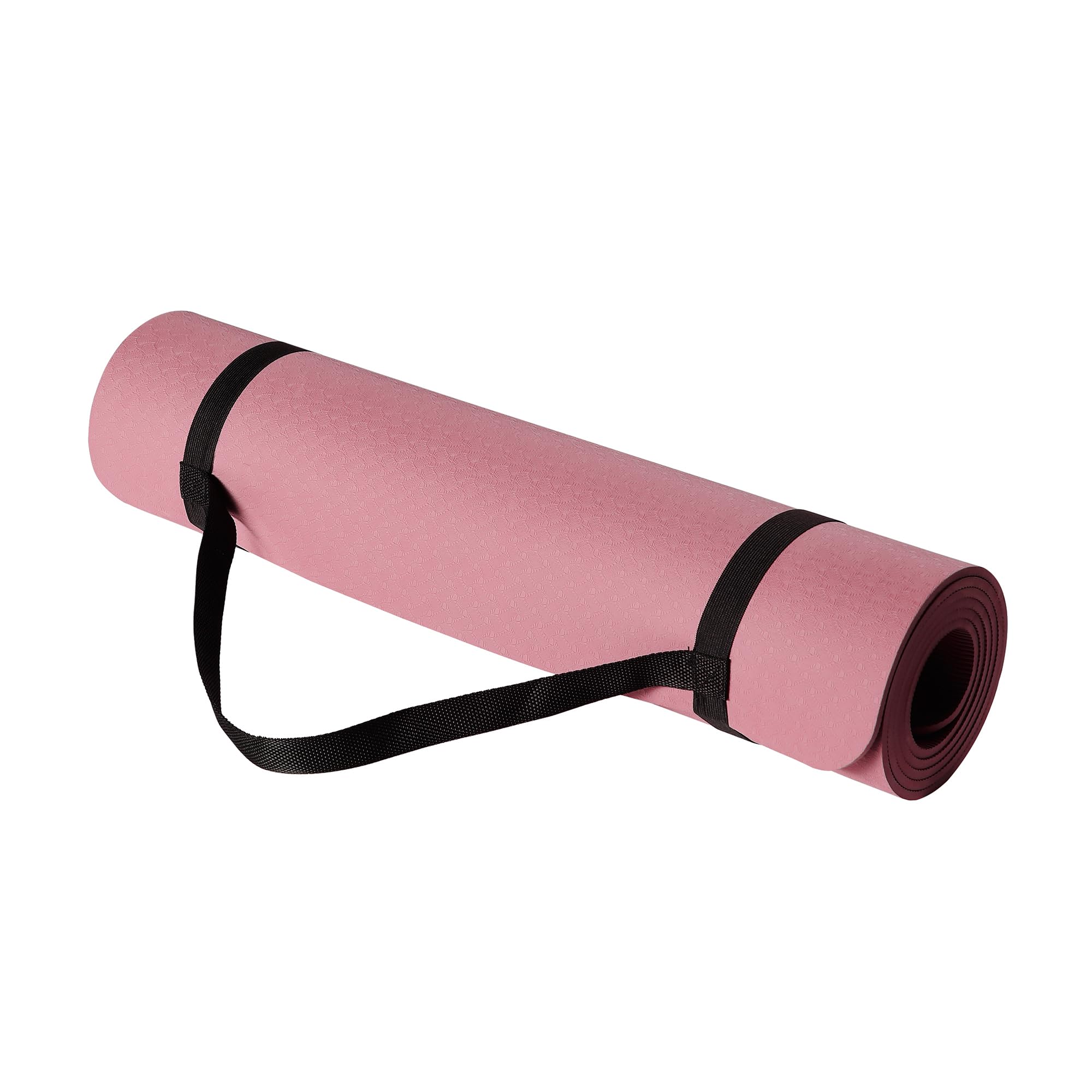
The Amazon Basics TPE mat proves you don’t need to spend heavily to get a functional beginner mat. At 6mm (0.24 inches), it’s the thinnest option here, which actually works in its favor for balance-based practices—the firm surface gives you a stable foundation for standing poses. The non-slip surface provides decent grip, though a handful of reviews note it can feel slightly slippery during dynamic flows.
The TPE material offers spring-back elasticity that maintains its shape after rolling and unrolling, a feature that cheaper PVC mats often lack. At just 2 pounds, this may be the lightest mat in the roundup, and the included carrying strap makes it effortless to bring to the gym or outdoor sessions. The 73.6-inch length provides a bit of extra headroom for taller practitioners compared to standard 72-inch mats.
The key limitation is the 24-inch standard width. If you’re broad-shouldered or practice wide-legged poses, your hands may drift off the edges. This mat also lacks the extra cushioning that knee-sensitive beginners need for kneeling poses. However, for those starting with mostly standing yoga, stretching, or gentle Pilates, the Amazon Basics mat is a no-frills, reliable entry point that won’t break the bank.
Why it’s great
- Firm 6mm surface provides excellent stability for balance-based poses
- Lightweight 2-pound design is the easiest to carry in this lineup
- TPE spring-back elasticity maintains shape over time
- 73.6-inch length accommodates taller users
Good to know
- Standard 24-inch width feels narrow for wider stances
- Less cushioning for sensitive knees during floor work
FAQ
How thick should a beginner yoga mat be?
Is a wider yoga mat necessary for beginners?
TPE or NBR: which material is better for a starter mat?
How do I clean and maintain my beginner yoga mat?
Will a beginner yoga mat work for Pilates and stretching too?
Final Thoughts: The Verdict
For most users, the best beginner yoga mat winner is the KEEP Yoga Mat because its 7mm thickness and 32-inch width offer the best all-around balance of joint comfort, stability, and spaciousness for beginners still exploring their practice. If you want extra alignment guidance to learn poses correctly on your own, grab the Gruper Yoga Mat with Alignment Mark. And for maximum cushioning on sensitive knees during floor-intensive sessions, nothing beats the YOTTOY 12mm Mat.

Mo Maruf
I created WellFizz to bridge the gap between vague wellness advice and actionable solutions. My mission is simple: to decode the research and give you practical tools you can actually use.
Beyond the data, I am a passionate traveler. I believe that stepping away from the screen to explore new environments is essential for mental clarity and physical vitality.