Our readers keep the lights on and my smoothie glass nicely filled. As an Amazon Associate, I earn from qualifying purchases.
That first flight defines whether you fall in love with the hobby or crash into a tree and walk away frustrated. A beginner FPV racing drone must balance stability strong enough to keep you airborne with agility that won’t punish a late stick correction. The wrong choice fights you from the moment the rotors spin.
I’m Mohammad Maruf — the founder and writer behind WellFizz. I’ve spent many hours analyzing flight logs, camera specifications, and GPS reliability across dozens of entry-level models to separate genuinely beginner-oriented hardware from marketing claims that overpromise and underdeliver.
Whether you want to learn manual acro flying or just capture smooth cinematic shots with a reliable auto-return safeguard, choosing the right beginner fpv racing drone means finding the precise balance between forgiving flight modes and enough performance to grow into.
How To Choose The Best Beginner FPV Racing Drone
Entry-level FPV drones vary dramatically in camera resolution, flight stabilization, and transmission range. Three core factors determine whether your first quadcopter teaches you correctly or leaves you grounded with spare parts.
GPS vs. Optical Flow Positioning
A drone with dual GPS and optical flow holds its position without pilot input. This matters outdoors for learning the controls without constantly fighting wind drift. Purely optical-flow drones work indoors but can lose positional lock in open fields, leading to unintended wander. For a true beginner, GPS with optical flow backup is the safer path.
Controller Screen vs. Smartphone App
Dedicated controller screens eliminate the phone mount, reduce latency, and prevent your phone from overheating during long flights. Remotes with built-in 4.5-inch displays provide a cleaner FPV experience than app-based systems that split Wi-Fi bandwidth and drain your phone battery. Phone-based control is cheaper but introduces connectivity drops under interference.
Camera Stabilization and Resolution
Electronic Image Stabilization (EIS) smooths out the jello-effect common in lightweight drones. While 4K resolution sounds impressive on paper, many budget drones upscale from lower native resolutions. A true 2.5K sensor with EIS often delivers smoother footage than a faux 4K camera without stabilization. Check whether the camera uses a Sony sensor for better low-light performance and dynamic range.
Quick Comparison
On smaller screens, swipe sideways to see the full table.
| Model | Category | Best For | Key Spec | Amazon |
|---|---|---|---|---|
| Potensic ATOM LT | Entry-Level GPS | Long flight sessions | 4KM PixSync 2.0 transmission | Amazon |
| Ueegxuxa HC018 | FPV Screen | Integrated display flying | 4K camera, 4.5″ FPV screen | Amazon |
| Karuisrc K600GPS | EIS Stabilized | Smooth footage capture | EIS 1080P, 4.5″ screen | Amazon |
| PLEGBLE PL-715 | Long Flight Time | Extended practice sessions | 46 min total, dual 2700mAh | Amazon |
| NAFYRE N11 PRO | Triple Battery | Multiple flights without charging | Three batteries, 66 min total | Amazon |
| Suangrc X9 | Screen Remote | No-phone flying | 4.5″ LCD remote, 4K camera | Amazon |
| Mcokoe S159Two-B | Camouflage Design | Entry-level with screen | 5.9″ remote screen, 720P camera | Amazon |
| FAKJANK F417PRO | Budget Beginner | Kids and family flying | Screen controller, 1080P dual lens | Amazon |
In-Depth Reviews
1. Potensic ATOM LT

The Potensic ATOM LT sits at the premium end of the entry-level market for good reason. Its ShakeVanish 2.0 EIS stabilization combined with a Sony sensor delivers genuinely smooth 2.5K footage that beats most faux 4K cameras in this price band. The PixSync 2.0 transmission system maintains a clean HD feed up to 4 kilometers, giving you room to explore without signal dropout anxiety.
Flight time stands out even among premium options — each of the two 3000mAh intelligent batteries delivers a full 40 minutes of airtime, totaling 80 minutes before you need to recharge. The quad GSNSS support (GPS, GLONASS, Galileo, BeiDou) locks satellites fast and holds position firmly, while SurgeFly 2.0 handles Level 5 wind conditions with minimal drift. Beginner mode limits height and distance until you build confidence.
The foldable airframe weighs exactly 249 grams, right at the FAA exemption threshold. The dedicated remote controller includes a phone mount with both Type-C and Lightning cables in the box. Keep in mind that the ATOM LT requires GPS mode for flight — it will not fly indoors or in spaces without satellite lock. The camera lacks a physical gimbal, relying entirely on EIS, so aggressive turns produce some rolling shutter artifact.
Why it’s great
- True 40-minute flight time per battery with intelligent power management
- 4-kilometer PixSync 2.0 video transmission with minimal latency
- Quad-band GSNSS locks GPS, GLONASS, Galileo, and BeiDou for rock-solid hold
- EIS 2.5K Sony sensor camera produces smooth, clean footage
Good to know
- Requires GPS lock outdoors — will not fly indoors or in dense tree cover
- No physical 3-axis gimbal; EIS struggles during aggressive yaw turns
- Controller battery and drone battery charge separately via different cables
2. Ueegxuxa HC018
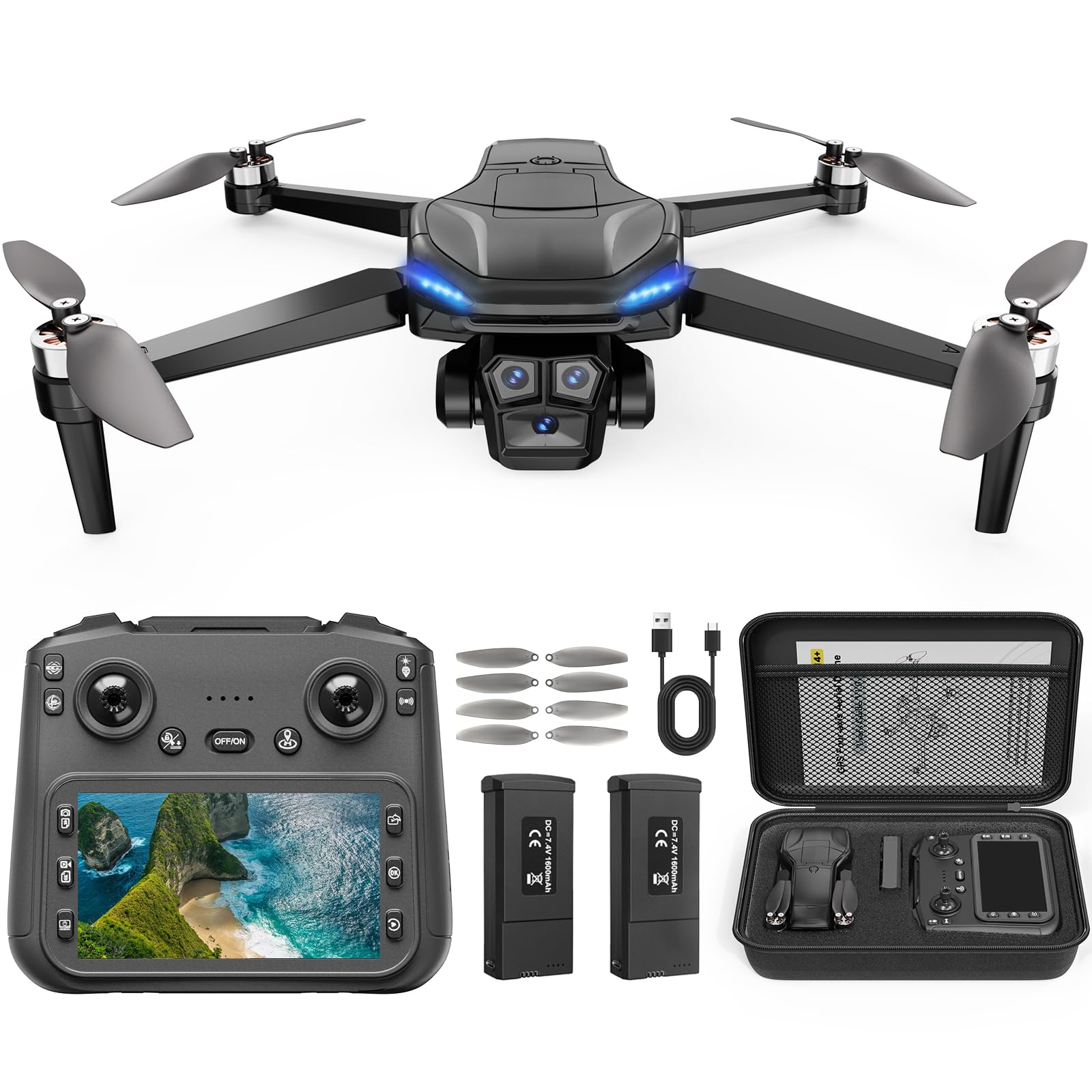
The Ueegxuxa HC018 brings a 4.5-inch FPV screen integrated into the remote controller, eliminating the need to mount your phone for live video. The 4K camera tilts up to 90 degrees, and the real-time transmission feeds directly to the built-in display. Dual brushless motors deliver smoother, quieter propulsion compared to budget brushed-motor drones.
Two batteries provide up to 30 minutes each, totaling 60 minutes of combined flight time. The GPS and optical flow positioning systems work together for stable hovering indoors and outdoors. Three return-to-home triggers — one-key, low battery, and signal loss — protect your drone during early learning sessions when orientation awareness is still developing.
Weighing 220 grams, the HC018 stays under the FAA registration threshold and folds down to a portable size. Some users report the app interface feels unfinished, and certain advanced features like Follow Me and waypoint flight require the mobile app rather than working directly from the remote screen. The 4K camera performs well in good lighting but shows limited dynamic range in shadow-heavy scenes.
Why it’s great
- Integrated 4.5-inch FPV screen removes phone dependency and saves battery
- Triple return-to-home modes reduce crash risk for absolute beginners
- Brushless motors provide quiet, wind-resistant flight with longer motor life
- Dual battery system delivers 60 minutes total without landing to swap
Good to know
- Advanced flight modes require mobile app connection, not standalone remote
- Camera lacks EIS — footage shows jello effect in moderate wind
- Initial compass calibration and satellite acquisition can take several minutes
3. Karuisrc K600GPS
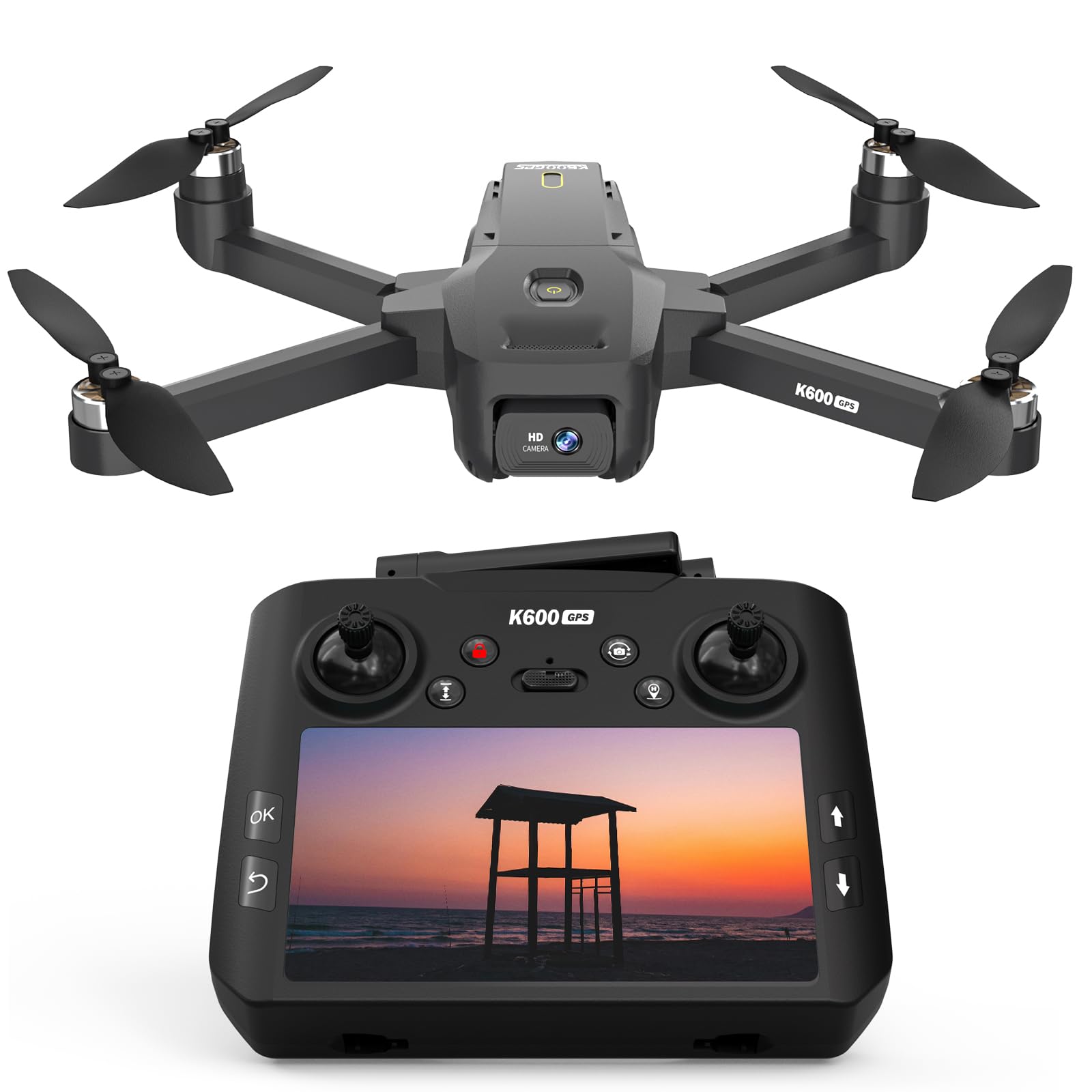
The Karuisrc K600GPS packs Electronic Image Stabilization into a lightweight 195-gram frame, making it one of the better options for beginners who prioritize smooth-looking footage over raw resolution. The 1080P camera with 90-degree adjustable tilt delivers usable video, and the integrated 4.5-inch smart screen on the controller streams real-time FPV without draining your phone.
Brushless motors spin at 12,000 RPM, providing enough thrust to handle moderate breezes that would push lesser drones off course. The GPS auto-return, follow-me mode, and custom waypoint functions work reliably based on user reports. The modular battery design means swapping packs is quick, and Type-C charging reduces the cable clutter found on older drones.
Weighing under 249 grams, no FAA registration is needed. The K600GPS supports TF cards up to 32GB for storing footage directly on the drone. A few users noted that the camera resolution is not true 4K despite the listing mentioning 4K compatibility — native capture is 1080P with upscaling. The remote screen brightness can struggle in direct sunlight, making FPV viewing difficult on bright days.
Why it’s great
- EIS smooths footage noticeably compared to non-stabilized cameras at this tier
- Smart controller screen eliminates phone overheating and connection drops
- 12000 RPM brushless motors provide strong wind resistance for the weight class
- Modular Type-C battery design simplifies charging logistics
Good to know
- Camera records native 1080P despite product listing mentioning 4K compatibility
- Remote screen can wash out under direct sunlight glare
- GPS satellite acquisition time can feel slow in urban canyon environments
4. PLEGBLE PL-715
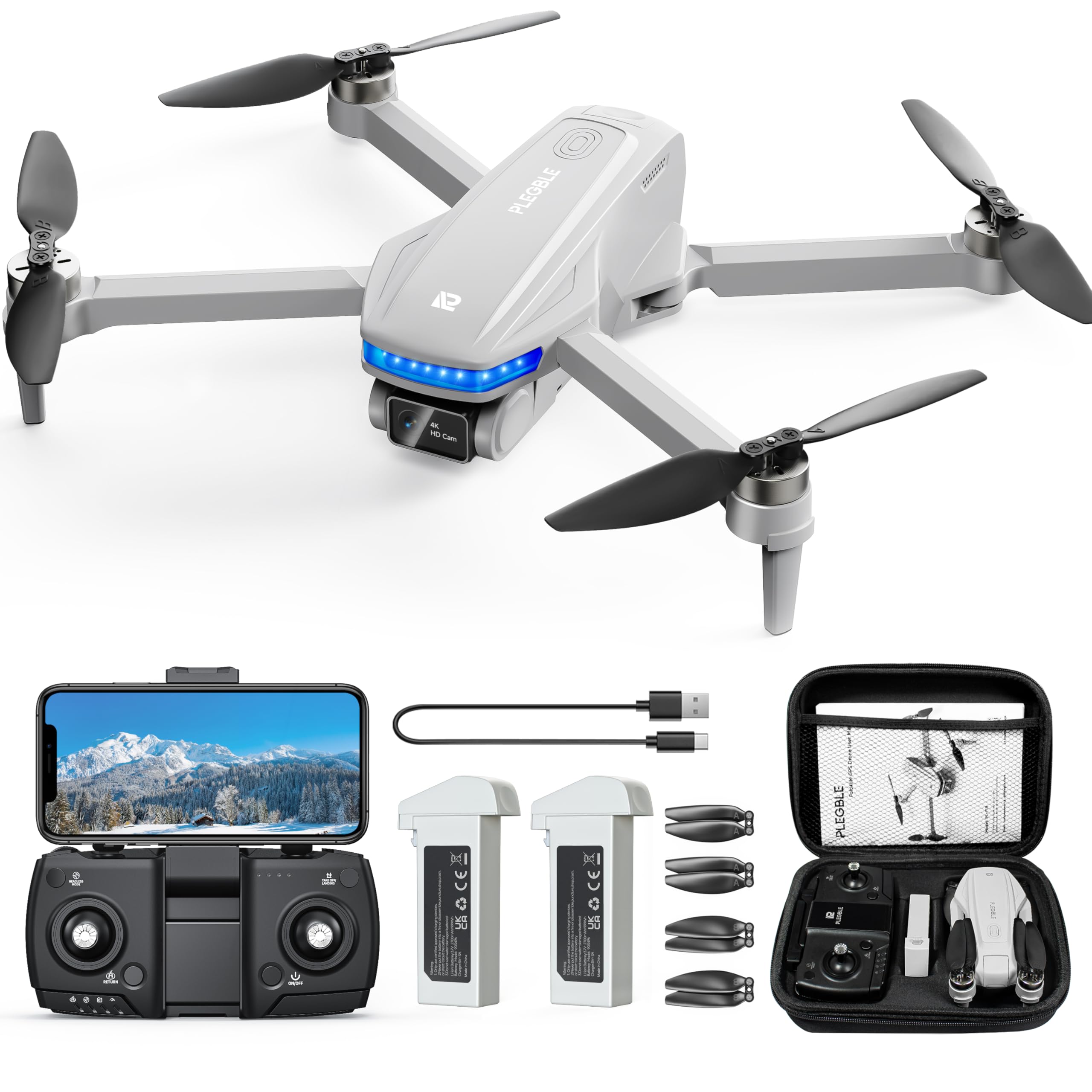
The PLEGBLE PL-715 delivers exceptional total flight time for its price with two 2700mAh intelligent batteries providing up to 46 minutes combined. The 4K camera uses a 120-degree wide-angle lens with 90-degree adjustable tilt and streams via 5GHz FPV to your phone. Brushless motors keep the flight smooth and quiet, while altitude hold maintains position even in light wind.
GPS functions include auto return on signal loss or low battery, Follow Me, Waypoint Flight, and Circle Fly. The beginner mode limits flight radius to 30 meters, keeping the drone within visual range while you learn orientation. Weighing under 250 grams, the PL-715 requires no FAA registration and packs into the included carrying case.
The camera delivers sharp 4K stills in good lighting, but video stabilization is purely software-based rather than EIS hardware, so footage can appear shaky during fast descents or turns. The phone-dependent FPV system means your phone handles the video processing load, which can cause overheating during longer flights. Some pilots report the remote control range of 1,968 feet requires clear line of sight for reliable connection.
Why it’s great
- 46-minute combined flight time from two 2700mAh batteries leads the budget segment
- 4K 120-degree wide-angle camera captures expansive aerial views for the price
- GPS auto return, Follow Me, and Waypoint modes add safety net for learners
- Under 250g with carrying case — truly grab-and-go with no FAA paperwork
Good to know
- No hardware EIS or gimbal — video shows shaking during aggressive maneuvers
- FPV system requires phone processing, risking overheating in summer sun
- 2,000-foot range is solid but drops quickly with obstacles or interference
5. NAFYRE N11 PRO

The NAFYRE N11 PRO stands out for its three-battery configuration, delivering up to 66 minutes of total flight time without needing to stop and recharge. Each 2000mAh battery provides roughly 22 minutes of airtime, and swapping them is straightforward with the modular design. The brushless motors run quietly and resist wind better than the brushed alternatives found on cheaper models.
Dual positioning pairs GPS for outdoor stability with Optical Flow for indoor hovering, giving the N11 PRO versatility that pure GPS drones lack. Smart flight modes include Follow Me, Tap Fly, and Point of Interest, allowing you to automate shots while focusing on composition. The 90-degree adjustable lens captures 4K video that streams to your phone or remote in real time via 5G Wi-Fi.
At 180 grams, the N11 PRO is one of the lightest drones in this comparison, making it exceptionally portable. The lightweight design also means it lacks altitude hold — some users noted the drone tends to drift vertically in gusty conditions. The Follow Me mode reportedly stops tracking after about 10 feet for some users, and the GPS can lose satellite lock more readily than heavier competitors.
Why it’s great
- Three included batteries provide 66 minutes total — best in class for uninterrupted sessions
- Dual GPS + Optical Flow positioning works both indoors and outdoors
- Ultra-light 180g frame makes it the most portable option for hiking or travel
- Tap Fly and Point of Interest automate shots without complicated programming
Good to know
- Altitude hold is missing — drone drifts vertically in gusty wind conditions
- Follow Me mode has limited tracking distance before disengaging
- No memory card slot — footage must be transferred via phone connection
6. Suangrc X9
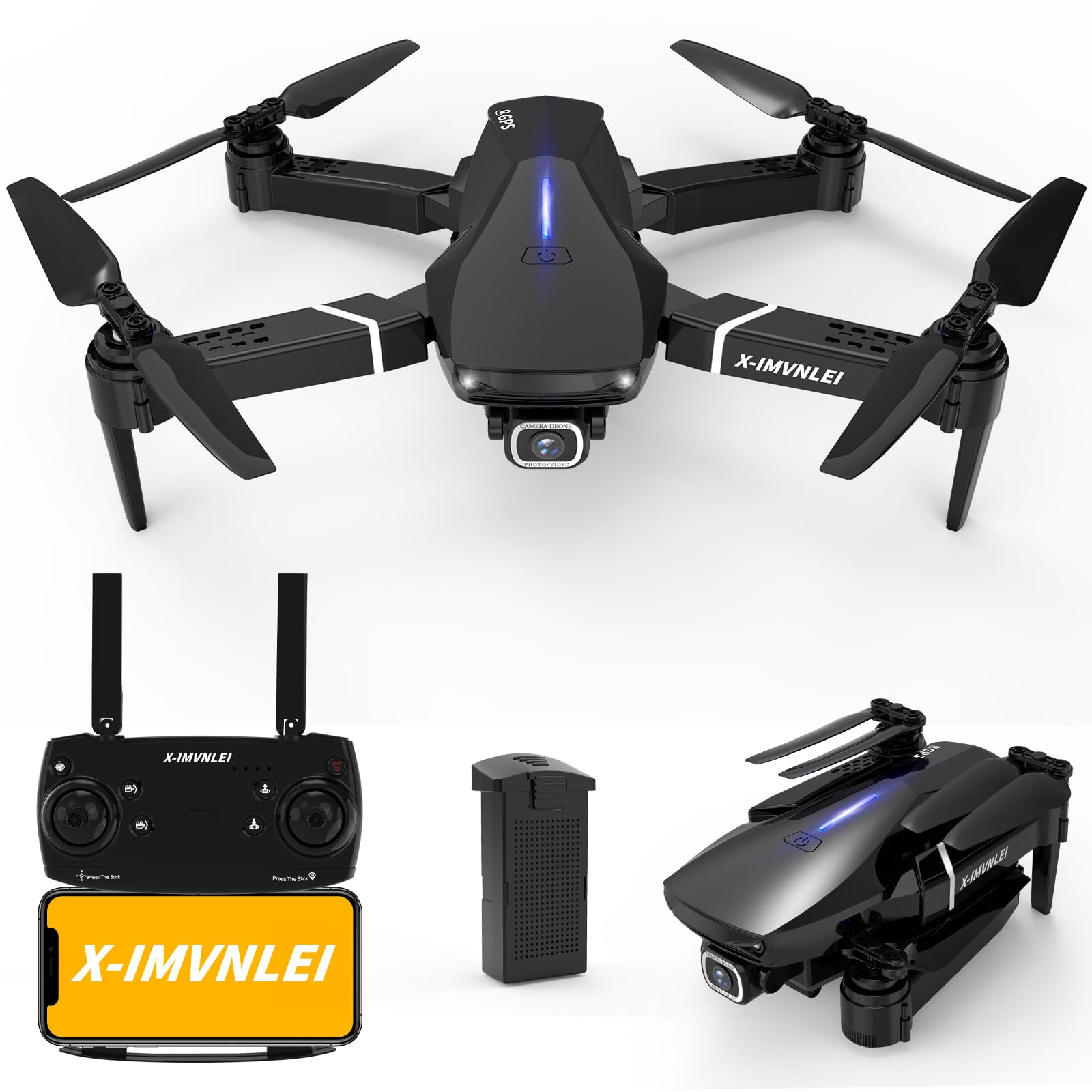
The Suangrc X9 brings a 4.5-inch LCD screen built directly into the remote controller, letting you fly without connecting a phone or downloading an app. The 4K UHD camera with a 110-degree adjustable lens streams live video to the integrated display, and 5GHz Wi-Fi keeps the feed smooth during normal flying distances. Gesture control lets you snap selfies with a wave of your hand.
GPS holds the position steady outdoors, while Trajectory Flight lets you draw a path on the screen for the drone to follow autonomously. The X9 supports 3D flips and rolls, which adds an acro element once you outgrove beginner mode. Altitude hold and three adjustable speed levels accommodate progression from timid hovering to confident cruising.
Battery life is the main compromise — a single battery delivers about 18 minutes of flight time, and only one battery is included in the box. Some users reported the 1200mAh battery felt underpowered for stable lift in moderate wind, with emergency landings triggering prematurely. The app integration for advanced GPS features can feel unresponsive, and the obstacle avoidance is more of an IR proximity sensor than a full collision-avoidance system.
Why it’s great
- Integrated 4.5-inch LCD remote eliminates phone dependency and app setup
- Gesture control and 3D flips add fun progression beyond basic flying
- GPS + Trajectory Flight allows creative autonomous path flying
- Under 249g foldable design with included carrying case for portability
Good to know
- Single battery delivers only 18 minutes — additional batteries are essential for real sessions
- 1200mAh battery struggles to maintain lift in moderate wind conditions
- Obstacle avoidance is basic proximity detection, not true collision avoidance
7. Mcokoe S159Two-B
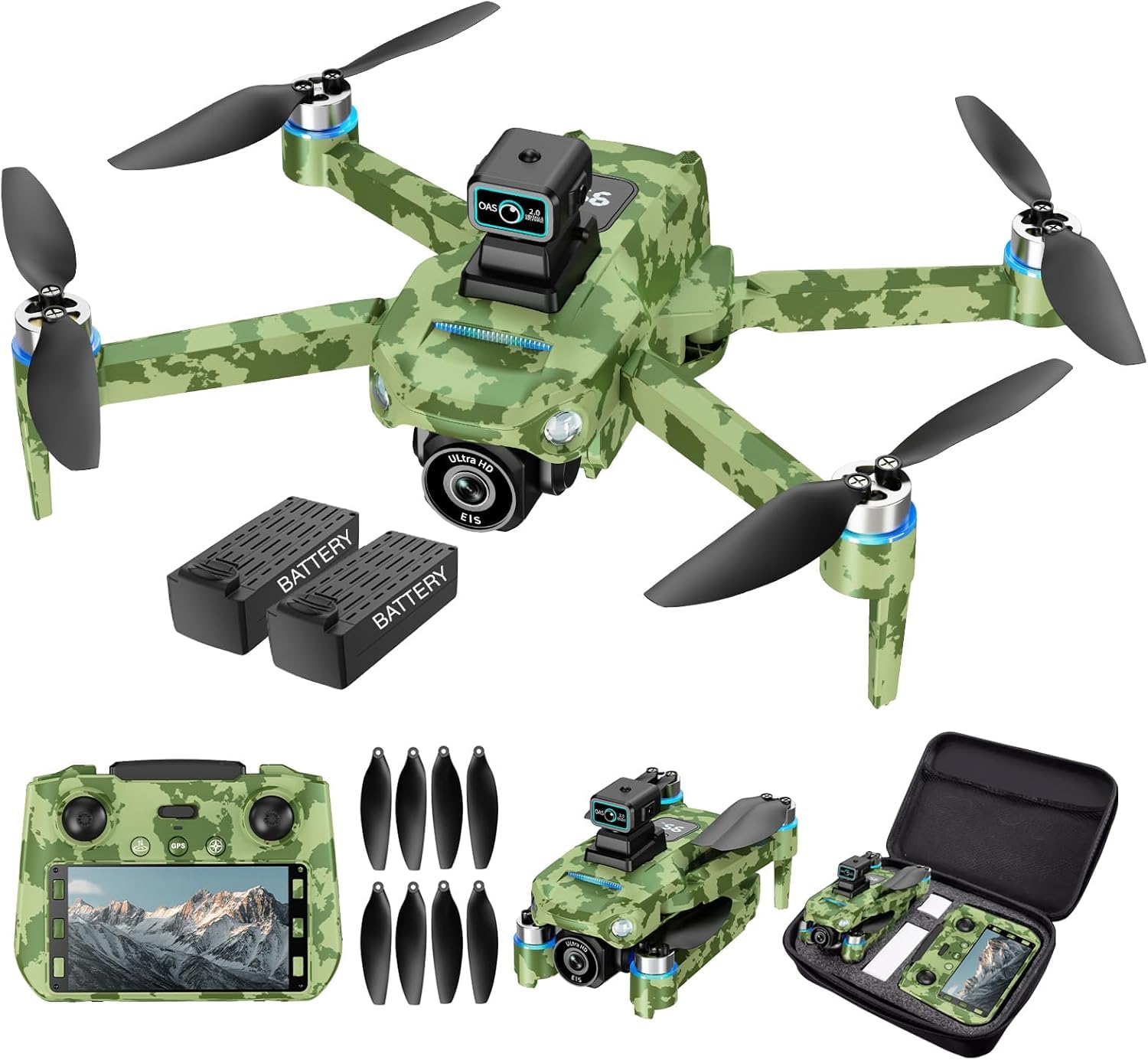
The Mcokoe S159Two-B features an unusually large 5.9-inch screen on the remote controller, providing a big FPV canvas without needing a phone. The 720P HD camera with 120-degree wide-angle and 90-degree adjustable tilt captures decent footage for casual sharing, and the 5GHz FPV transmission keeps the video feed responsive. Brushless motors provide smoother and more durable propulsion than the brushed motors on ultra-budget drones.
GPS functions include auto return on low battery or signal loss, Follow Me, Waypoint Flying, and Circle Fly. Beginner mode restricts the flight radius to help new pilots stay within visual range. The camouflage color scheme adds a distinctive aesthetic that stands out from the usual black or white drones. Gesture control enables hands-free photo capture during flight.
Total flight time reaches 40 minutes using two 2200mAh batteries (20 minutes each). The camera resolution maxes out at 720P, which is noticeably lower than the 4K claims — users should expect 720P native capture. The large remote screen drains battery faster than smaller displays, and the UI can feel sluggish during menu navigation. A few users reported the GPS satellite lock requires 9 satellites minimum, which can take several minutes in partially obstructed areas.
Why it’s great
- 5.9-inch remote screen is the largest in this category for comfortable FPV viewing
- Gesture control and GPS Follow Me add easy automation for solo creators
- Brushless motor durability outlasts brushed alternatives at this price tier
- Weight under 249g with no FAA registration requirement
Good to know
- Camera captures native 720P despite marketing language — not true high-definition
- Large screen drains remote battery faster than smaller displays
- Requires 9+ GPS satellites before takeoff, causing slow launch in tight areas
8. FAKJANK F417PRO

The FAKJANK F417PRO positions itself as the most accessible entry point with a remote controller that includes an integrated screen and requires no phone connection. The dual 90-degree adjustable cameras capture 1080P video, and the optical flow positioning helps the drone hold its place during indoor flights. Bright LED lights make twilight flying visible and add a visual flair that appeals to younger pilots.
One-key start and headless mode remove the orientation confusion that frustrates first-time pilots. The protective frame around the propellers prevents damage from minor collisions, making it well-suited for kids and family park sessions. 3D flip capabilities let you experiment with basic aerobatics once you master the basics.
The 1080P camera produces acceptable footage for social media sharing but lacks any form of stabilization — expect jello in anything but calm air. The 3D flip and headless mode are fun gimmicks but have limited utility for progressing toward manual acro flying. Some users noted the drone needs a little finesse to control smoothly, and the optical flow positioning struggles in brightly lit outdoor environments with uniform ground texture.
Why it’s great
- Integrated screen remote eliminates phone dependency for quick family sessions
- Protective propeller frame and headless mode reduce crash frustration for kids
- Dual 90-degree adjustable camera captures flexible shooting angles
- LED lights enable visible flying in low-light evening conditions
Good to know
- No camera stabilization — video shows jello effect in any wind condition
- Optical flow positioning struggles outdoors on uniform ground surfaces
- Plastic build feels less durable than brushless metal-framed alternatives
FAQ
Do I need FAA registration for a beginner drone under 250 grams?
Can I practice FPV racing with a GPS-aided beginner drone?
Why does my drone camera show jello effect in the video?
Is a controller with a built-in screen better than using my phone?
Final Thoughts: The Verdict
For most users, the beginner fpv racing drone winner is the Potensic ATOM LT because its true 40-minute battery life, 4-kilometer PixSync 2.0 transmission, and EIS-stabilized 2.5K Sony sensor provide a clear upgrade path without immediately outgrowing the hardware. If you want a controller screen that removes phone dependency, grab the Ueegxuxa HC018. And for maximum flight time on a budget, nothing beats the PLEGBLE PL-715 with 46 minutes of combined airtime from two batteries.

Mo Maruf
I created WellFizz to bridge the gap between vague wellness advice and actionable solutions. My mission is simple: to decode the research and give you practical tools you can actually use.
Beyond the data, I am a passionate traveler. I believe that stepping away from the screen to explore new environments is essential for mental clarity and physical vitality.