Our readers keep the lights on and my smoothie glass nicely filled. As an Amazon Associate, I earn from qualifying purchases.
A three-layer laminate rain jacket is the single most important piece of technical outerwear you can own. Unlike budget two-layer shells that trap sweat or stiff ponchos that flap in the wind, a true 3L construction bonds a face fabric, a waterproof membrane, and an inner knit backer into one durable, breathable, and packable garment. This guide cuts through marketing jargon to find the shells that actually keep you dry without turning you into a steamed vegetable.
I’m Mohammad Maruf — the founder and writer behind WellFizz. I’ve spent countless hours analyzing membrane technologies, denier ratings, seam-tape quality, and real-world breathability data to separate genuine performance from hype in technical outerwear.
Whether you face Pacific Northwest drizzle, alpine downpours, or humid treks where every gram of moisture matters, the right shell changes everything. This guide covers the best 3l rain jackets for every budget and use case, from commuter-friendly mid-range options to expedition-grade Gore-Tex Pro shells.
How To Choose The Best 3L Rain Jackets
Choosing a 3L rain jacket means balancing waterproofing, breathability, weight, and durability. The membrane technology — whether Gore-Tex, NanoPro, Helly Tech, or a proprietary ePE — determines how dry you stay. The denier of the face fabric dictates how long the jacket survives bushwhacking vs. how small it packs. Fit matters because a 3L shell is your outermost layer; it must accommodate a mid-layer without restricting motion.
Membrane Technology
Gore-Tex remains the gold standard for proven, long-lasting waterproof-breathable performance. But Marmot’s NanoPro and Helly Hansen’s Helly Tech offer competitive breathability at lower price points. The key spec is the hydrostatic head rating (mm) — anything above 10,000mm is fully waterproof for heavy rain — and the breathability (RET or MVTR), where lower RET values mean less sweat buildup.
Face Fabric Denier
Denier (D) measures fiber thickness. A 30D face fabric packs tiny and feels soft but abrades quickly against rock. A 70D or 80D fabric adds significant durability for alpine use at the cost of weight and packability. N80d Gore-Tex Pro, used in the Arc’teryx Beta AR, sits at the tough end of the spectrum. For casual hiking, 40D to 50D hits the sweet spot.
Fit and Layering
Most 3L jackets are cut trim to reduce flapping in the wind, but that means sizing up to wear a fleece or synthetic puffy underneath is common. Pay attention to customer feedback on sizing — several jackets in this guide run slim. A helmet-compatible hood is essential for alpine use, while a stowable hood suits urban commuting.
Quick Comparison
On smaller screens, swipe sideways to see the full table.
| Model | Category | Best For | Key Spec | Amazon |
|---|---|---|---|---|
| Arc’teryx Beta AR Men’s | Premium | Alpine climbing & heavy use | N80d Gore-Tex Pro face | Amazon |
| Arc’teryx Beta Women’s | Premium | Three-season versatility | Gore-Tex ePE membrane | Amazon |
| Rab Kangri GTX Men’s | Premium | Hiking & mountaineering | 70D Gore-Tex fabric | Amazon |
| Outdoor Research Foray 3L Men’s | Mid-Range | Wind & light rain protection | 3L proprietary membrane | Amazon |
| Outdoor Research Aspire 3L Women’s | Mid-Range | Heavy downpour reliability | 3L fully taped seams | Amazon |
| Helly Hansen Momentum 3L Stretch Women’s | Mid-Range | Active outdoor wear | Stretch 3L Helly Tech | Amazon |
| Helly Hansen Moss Rain Coat | Mid-Range | Extended wet-weather work | 2-ply waterproof shell | Amazon |
| Marmot PreCip Eco Men’s | Budget | Packable everyday carry | NanoPro 100% recycled | Amazon |
| Outdoor Research Foray 3L Men’s (Colorway) | Mid-Range | Cold weather layering | 3L windproof face | Amazon |
In‑Depth Reviews
1. Arc’teryx Beta AR Men’s Jacket

The Arc’teryx Beta AR is the benchmark for a serious alpine shell. It uses N80d Gore-Tex Pro on the face — among the toughest 3L fabrics on the market — combined with N40d reinforcements in lower-wear areas to save weight. The result is a jacket that withstands rock abrasion and ice tools without the bulk of a full expedition parka.
Every detail is intentional: the DropHood adjusts without a separate collar, WaterTight zippers eliminate flapping storm flaps, and the hem drawcord routes through the hand pockets. The fit is trim for active climbing, but customers report very long sleeves — expect to size carefully if you are between sizes. The embedded RECCO reflector adds backcountry safety.
At this tier, breathability is exceptional. Gore-Tex Pro vents moisture vapor during high-output ascents, and the jacket layers cleanly under a harness or backpack hip belt. One buyer noted receiving a used unit, so inspect upon delivery. For all-around alpine performance, this shell sets the standard.
Why it’s great
- Industry-leading N80d Gore-Tex Pro durability
- Excellent breathability for high-output activities
Good to know
- Sleeves run very long; careful sizing required
- Quality control on delivery can vary
2. Arc’teryx Beta Jacket Women’s
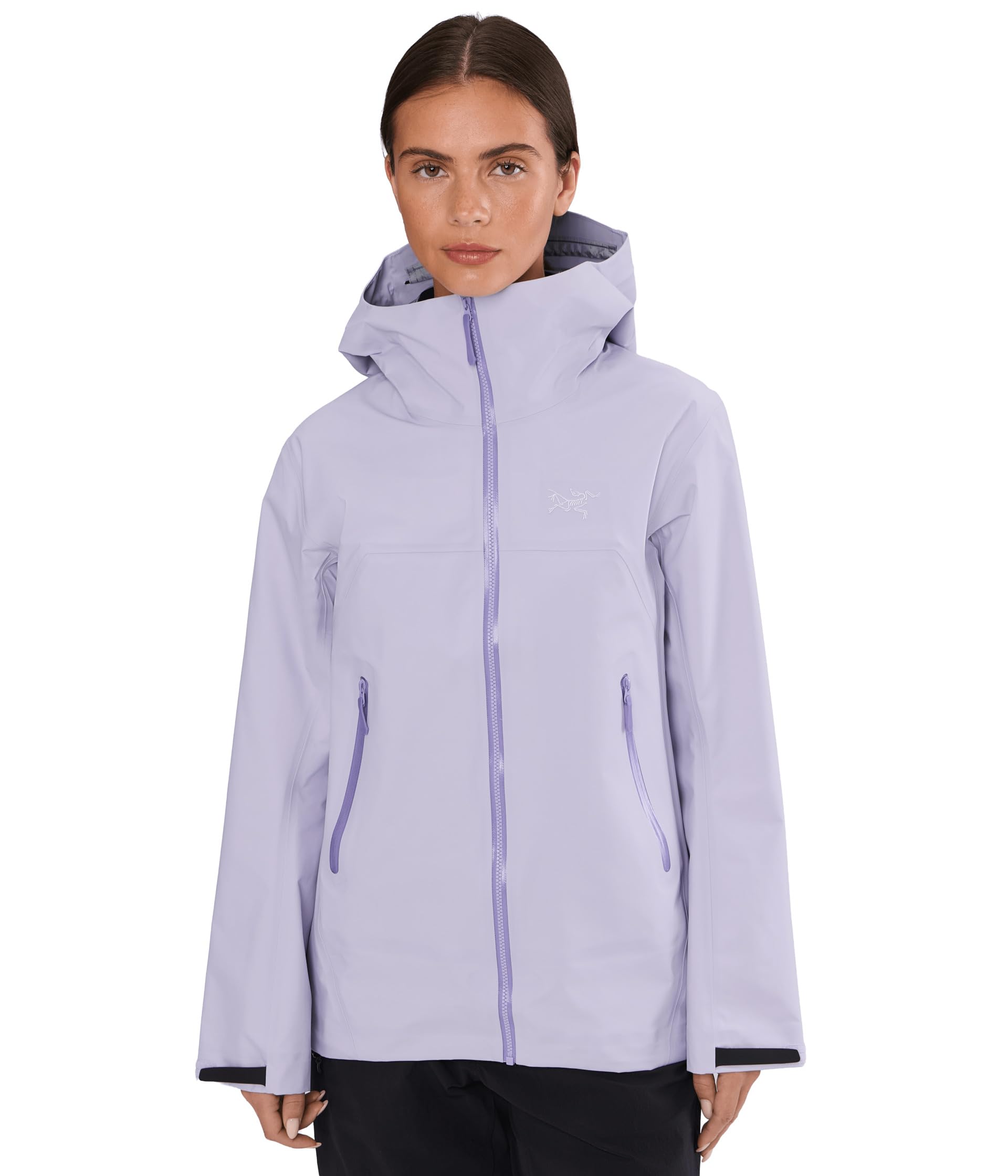
The women’s Beta jacket swaps Gore-Tex Pro for the newer ePE membrane — a PFC-free, lightweight alternative that maintains strong waterproofing and breathability. It packs smaller than the Beta AR and feels more supple against the skin, making it a better choice for three-season hiking and travel where weight matters.
Customers consistently praise its breathability during active use and its stylish, fitted cut. The adjustable hood works well with or without a helmet, and the overall jacket stuffs into a daypack without eating all the space. Testers confirmed full waterproofness during sustained downpours in New Zealand and the Pacific Northwest.
Note that sizing runs slightly large — one reviewer at 5’3″, 135 lbs found a Medium roomy enough for a mid-layer. The bright color options improve visibility on dark, rainy trails. For a premium, lightweight do-everything shell, this is the most balanced option in Arc’teryx’s 3L lineup.
Why it’s great
- PFC-free ePE membrane without sacrificing performance
- Lightweight and packable for travel
Good to know
- Sizing can be generous; consider sizing down
- Face fabric is less durable than Beta AR
3. Rab Kangri GTX Men’s Jacket

Rab’s Kangri GTX offers a compelling middle ground between the lightweight Beta and the burly Beta AR. Its 70D Gore-Tex face fabric is noticeably thicker than a standard 40D shell — it has a substantial, almost “woven” feel that inspires confidence against brush and rock. Customers describe it as feeling like it will outlast most shells in its price bracket.
The cut is generous enough to layer a heavy insulated jacket underneath, and the adjustable hood has multiple cinch points for a custom seal. The fleece-lined chin guard eliminates that clammy membrane feel against the neck. Inside pockets are thoughtfully placed for a phone or wallet, and the hem drops below the waist for added downpour coverage.
Weight is the trade-off — at 7.8 oz listed (likely a spec error; actual jackets are heavier), it is not an ultralight choice. But for hiking, trekking, and mixed mountaineering where durability is the priority, the Kangri delivers Gore-Tex reliability at a price well below the Arc’teryx flagship. Consider it if you want a bomber shell without the “I just spent ” sticker shock.
Why it’s great
- Thick 70D face fabric for long-term durability
- Excellent value for a full Gore-Tex shell
Good to know
- Heavier than ultralight shells
- Limited color options available
4. Outdoor Research Aspire 3L Women’s Jacket
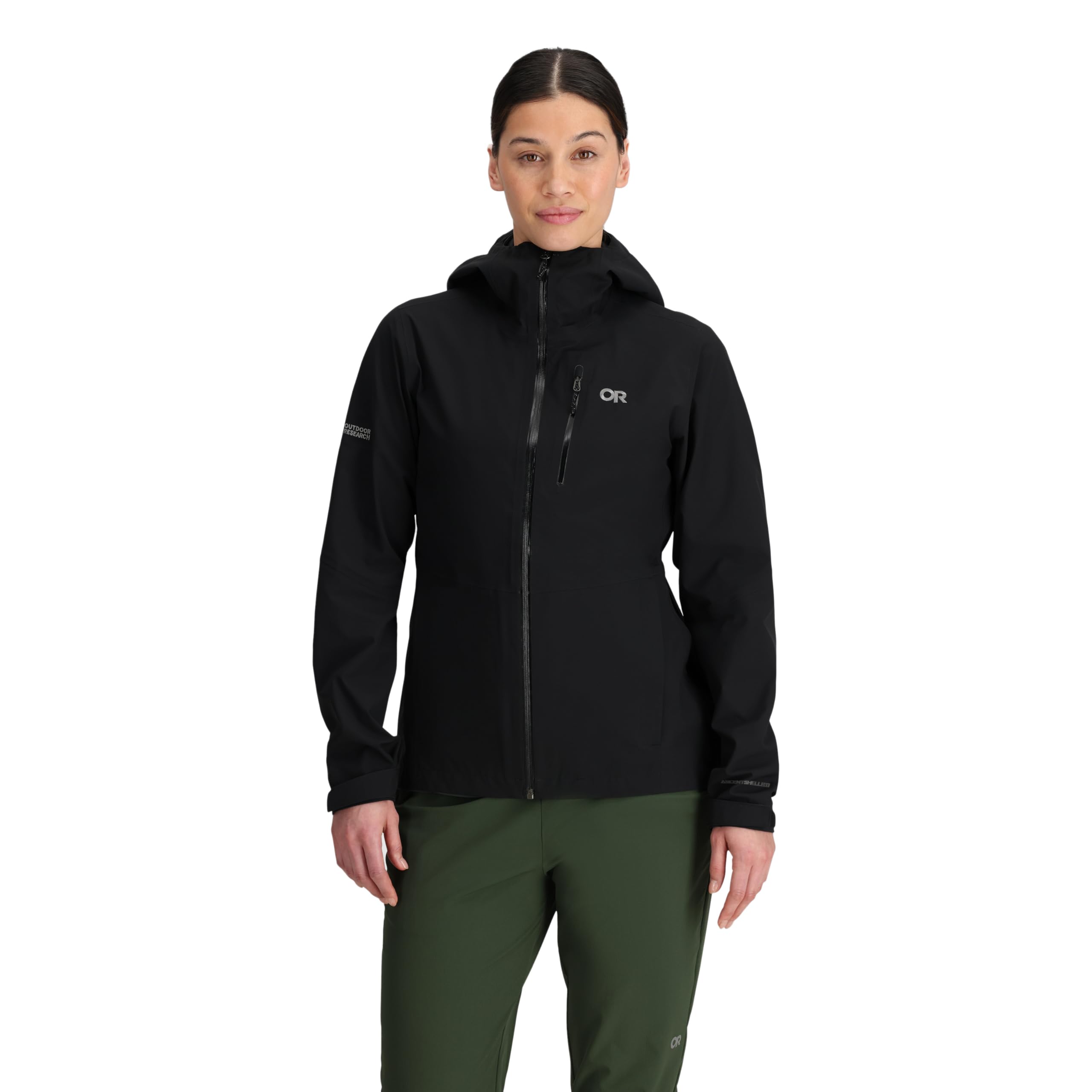
The Outdoor Research Aspire 3L is a women-specific shell that earns near-universal praise for its ability to handle sustained, heavy precipitation. Multiple verified reviews describe wearing it through major downpours in New Zealand and the Pacific Northwest without any wetting out. The 3L membrane combined with fully taped seams creates a truly impenetrable barrier.
Comfort is another standout feature. The fabric interior slides easily over layers without sticking, and the cut accommodates thick sweaters underneath without restricting arm movement. The two-tone color scheme (blue/black/grey) is neutral enough for both trail and town. One customer at 5’7″, 135 lbs found the Medium perfect with room for a fleece.
Weight is moderate — it is not the lightest packable shell — but the durability more than compensates. Sand, wind, and repeated wet-dry cycles in harsh coastal environments did not degrade its performance. For women who need a rain jacket that simply works without needing to baby it, the Aspire is a top contender.
Why it’s great
- Proven waterproofness in severe rain
- Great fit for layering without bulk
Good to know
- Packs larger than ultralight options
- Limited ventilation zippers
5. Helly Hansen Momentum 3L Stretch Jacket Women’s
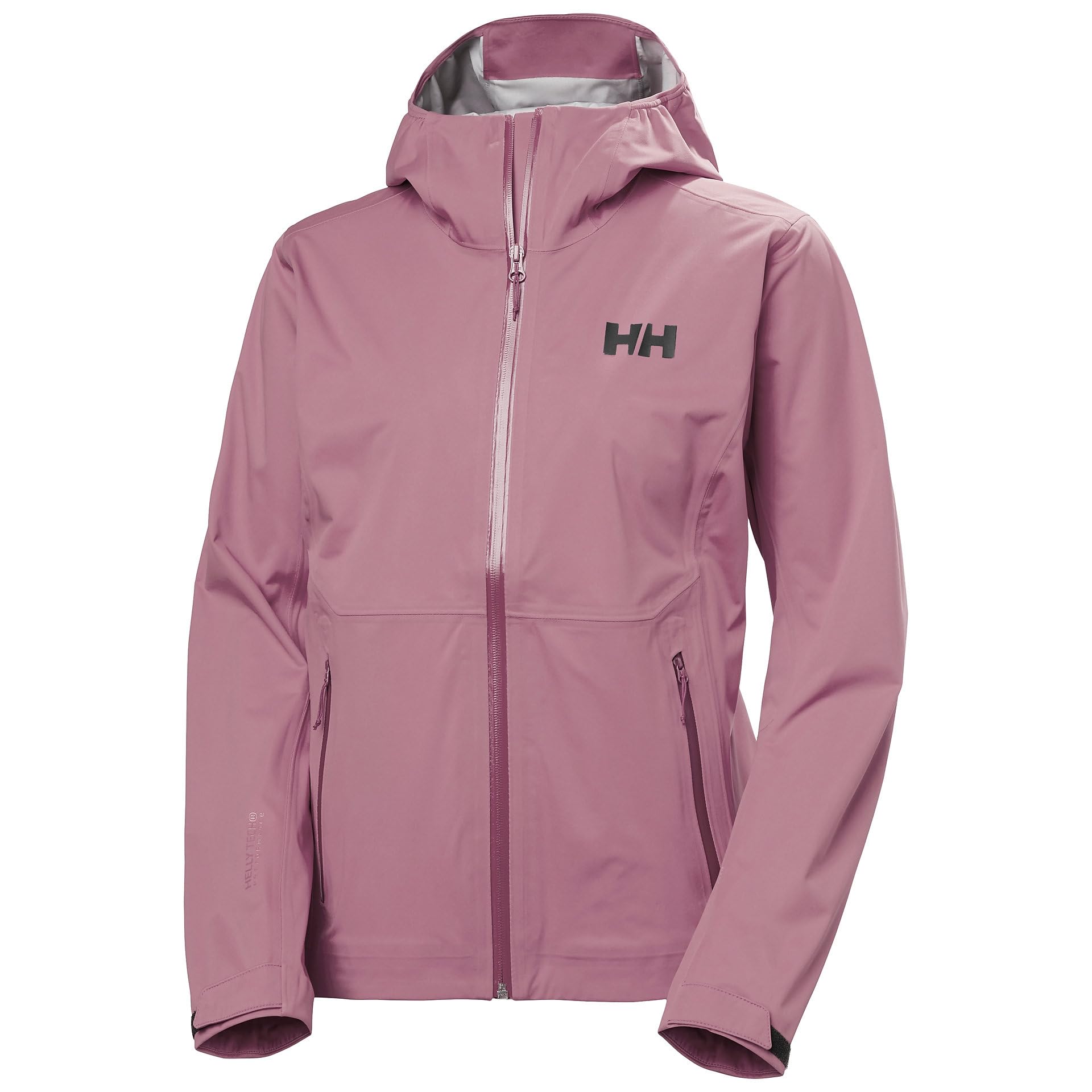
Helly Hansen’s Momentum 3L distinguishes itself with a stretch-woven 3L fabric that moves with the body during high-reach activities like climbing or cross-country skiing. The face has a soft, almost woven hand feel rather than the crinkly plasticky texture of some shells. This makes it comfortable to wear directly over bare arms on warmer rainy days.
The high-visibility color options were appreciated by reviewers who commute by bike or walk roads in low light. The membrane is fully waterproof — testers in Alaska confirmed it stayed dry during sustained rain. Sizing runs a bit large, which is fine for layering but may require sizing down for a trim fit.
One caveat: the stretch fabric may not be as abrasion-resistant as a straight 70D nylon face. It is ideal for active use where mobility is the priority, but not the best choice for bushwhacking through sharp talus or dense undergrowth.
Why it’s great
- Stretch fabric allows full range of motion
- High-vis color options improve safety
Good to know
- Sizing runs large for some builds
- Face fabric less rugged than non-stretch shells
6. Helly Hansen Moss Rain Coat

While technically a 2-ply construction rather than a true 3L, the Helly Hansen Moss Rain Coat earns a spot here for its exceptional waterproof performance and robust build at a mid-range price. It uses a durable face fabric and a coated inner layer that, while not as breathable as a 3L membrane, keeps moisture out reliably during long shifts in wet weather.
A USPS postal worker reviewed this jacket after wearing it for 8-10 hour outdoor shifts in heavy rain and found it completely waterproof and more breathable than the stiff -400 postal coats. The fit accommodates big builds well — XL fits 6’2″, 250 lbs with room for layers. Ventilation zippers help manage heat during active work in humid climates.
The trade-off is breathability. Multiple reviewers note that the non-3L lining can feel clammy during strenuous activity. But for stationary or moderate-effort rain protection — waiting for a bus, walking the dog, working a full shift outside — this jacket is a durable, budget-conscious choice.
Why it’s great
- Bomber waterproof construction for all-day wear
- Spacious fit for bulky layering
Good to know
- Not a true 3L; less breathable for high output
- Sleeve length can be long for some builds
7. Outdoor Research Foray 3L Men’s Jacket
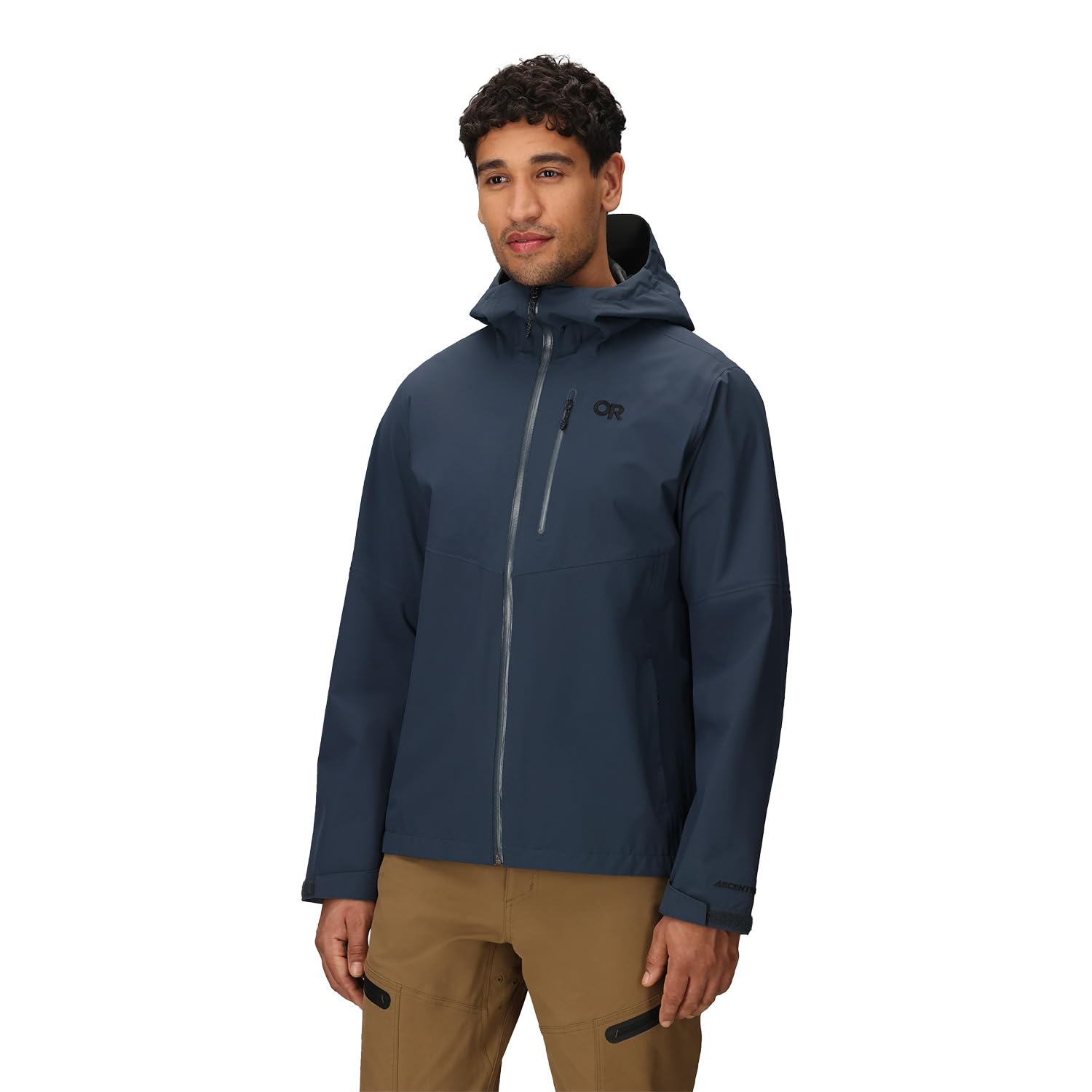
The Outdoor Research Foray 3L is designed as a windproof and light-rain shell for active use in cold weather. Its proprietary 3L membrane is less burly than Gore-Tex but significantly more packable. The face fabric is soft and quiet, which makes it a good choice for daily walks and moderate hikes where the forecast suggests drizzle rather than deluge.
Reviewers praise its performance as a windproof layer during winter activities — it cuts the chill effectively when paired with a merino base and mid-layer. However, in sustained heavy rain, the waterproofness has limits; one tester noted that after a year, the coating needed revival with manufacturer-specific soap, and heavy downpours eventually soaked through.
Sizing runs slim, especially through the chest and stomach. At 5’10” and 180 lbs, a Medium was too tight; a Large fit well. The jacket has a clean, professional look that works for casual office commutes as well as trail use. If you need a light, breathable shell for variable conditions rather than a hardcore monsoon barrier, this is a strong mid-range pick.
Why it’s great
- Excellent windproofing for cold-weather activity
- Lightweight and easy to pack
Good to know
- Limited waterproofing in sustained heavy rain
- Runs slim; size up for layering
8. Marmot PreCip Eco Men’s Jacket

Marmot’s PreCip Eco is the entry-level 3L jacket that redefines what budget-friendly means. While not a true 3-layer bonded construction in the sense of Gore-Tex Pro, its NanoPro membrane uses a microporous coating that is waterproof and breathable, backed by a 100% recycled nylon ripstop face. It packs into its own pocket smaller than a grapefruit, making it the ultimate emergency shell for a daypack.
The PitZips are a standout feature at this price — they provide dump ventilation when the NanoPro membrane hits its breathability limit during high exertion. The adjustable Velcro cuffs and hem drawcord keep drafts out. Fit is trim through the body, so size up if you intend to layer a fleece underneath. It handles moderate rain well, though in a heavy downpour, the membrane can wet out faster than premium options.
Durability is the main compromise: the 30D-ish face fabric is lightweight and will not withstand repeated bushwhacking. But for around-town use, day hikes, and travel where you want a reliable rain layer that weighs nothing, the PreCip Eco delivers performance that punches well above its class.
Why it’s great
- Ultra-packable for easy carry
- Excellent value with PitZip ventilation
Good to know
- Face fabric not durable for heavy trail use
- Runs small; size up for layering
9. Outdoor Research Foray 3L Men’s (Colorway Variation)

This colorway variation of the Outdoor Research Foray 3L is identical in construction to the version reviewed above — same 3L proprietary membrane, same standard-fit cut that runs slim through the chest. It is an excellent windproof layer for cold-weather outings and handles light rain effectively, making it a solid mid-range choice for winter layering.
Customers who used it as an outer shell in Japan during winter months paired it with merino wool and a down layer, finding it prevented overheating during active walking while still cutting the wind. As with the other Foray, heavy rain eventually overwhelms the water repellency unless the DWR coating is freshly reactivated with the manufacturer’s recommended detergent.
Sizing is the same crux: buy one size up if you need room for an insulating layer underneath. The fabric is quieter and more supple than many Gore-Tex shells, which some users prefer for urban wear. For the price, it is a capable, comfortable shell that excels at wind resistance and moderate moisture — just do not plan to wear it through a typhoon.
Why it’s great
- Quiet, supple fabric comfortable for daily wear
- Good wind resistance for cold-weather layering
Good to know
- Same slim fit issues as other Foray versions
- Waterproofing requires DWR maintenance
FAQ
What does 3L mean in a rain jacket?
How do I wash a 3L Gore-Tex jacket without ruining it?
Can I wear a 3L rain jacket in summer without overheating?
Final Thoughts: The Verdict
For most users, the best 3l rain jackets winner is the Arc’teryx Beta AR because it combines unmatched N80d Gore-Tex Pro durability with the breathability and feature set that serious alpine adventurers demand. If you want a lighter, more packable option for three-season travel and hiking, grab the Arc’teryx Beta Women’s with its PFC-free ePE membrane. And for a durable, budget-conscious entry into 3L performance that still packs small and vents well, nothing beats the Marmot PreCip Eco.

Mo Maruf
I created WellFizz to bridge the gap between vague wellness advice and actionable solutions. My mission is simple: to decode the research and give you practical tools you can actually use.
Beyond the data, I am a passionate traveler. I believe that stepping away from the screen to explore new environments is essential for mental clarity and physical vitality.