Our readers keep the lights on and my smoothie glass nicely filled. As an Amazon Associate, I earn from qualifying purchases.
Bed bugs are masters of survival, building resistance to chemical sprays and hiding in the tiniest seams of your luggage, furniture, and electronics. Heat treatment is the only non-chemical method scientifically proven to kill bed bugs at every life stage, including eggs that laugh at insecticides — but only if the heat penetrates deep enough and holds long enough.
I’m Mohammad Maruf — the founder and writer behind WellFizz. I’ve spent thousands of hours analyzing consumer pest control hardware, from thermal chambers to commercial steamers, and I track the engineering specs that separate a 120°F kill zone from a 95°F waste of time.
A bed bug heater isn’t just another appliance — it’s your first line of defense against an infestation that can cost thousands to treat professionally. The best bed bug heater delivers sustained lethal temperatures between 120°F and 155°F, penetrates thick fabrics, and includes a reliable control system that doesn’t require you to babysit it for hours.
How To Choose The Best Bed Bug Heater
Not every heater that blows hot air can actually kill bed bugs. The difference between a useful tool and a fire hazard lies in three factors: temperature control, chamber design, and safety redundancy. Here’s what to watch for before you click buy.
Temperature Consistency and Control
Bed bugs die at 120°F, but only if the core of your load reaches that temperature and stays there for at least 45 minutes. A heater that cannot maintain that range — or one that spikes past 160°F without a cutoff — risks both under-treating your items and damaging electronics or fabrics. Look for a unit with an adjustable timer and a separate thermometer so you can monitor the interior temp, not just the heater output.
Chamber Size and Airflow Engineering
Capacity matters, but shape matters more. A tall tent unit may hold large items, but if air cannot circulate around thick loads — like a winter coat or a stuffed suitcase — the center stays cold. Conductive heating panels (six-sided units) solve this by radiating heat from every wall, eliminating cold spots. If you’re treating mostly luggage, a compact unit works. If you need to sanitize furniture or a stack of boxes, look for a larger box-style chamber or a dual-heater system.
Safety Features and Build Quality
Cheaper heaters sometimes omit a thermostat entirely, letting the chamber climb toward unsafe temperatures that trip breakers or melt materials. A safe unit includes a tip-over shutoff switch, a high-temperature limit sensor, and a timer that turns the system off automatically. Also check the interior liner — hospital-grade or sealed PVC panels contain bugs better and reduce the chance of escape through a torn wall.
Quick Comparison
On smaller screens, swipe sideways to see the full table.
| Model | Category | Best For | Key Spec | Amazon |
|---|---|---|---|---|
| Dr Infrared Heater (DR-122) | Chamber | Large household loads | 38x38x26 in treatment area | Amazon |
| ThermalStrike Ranger | Conductive | Luggage & daily gear | Six-sided heating panels | Amazon |
| ZappBug Heater | Tent | Travel items & toys | 23×37.5×23 in chamber | Amazon |
| ZappBug The Oven 2 XL | Box | Large furniture & chairs | Dual 1500W heaters | Amazon |
| DEWALT DXH75KT | Forced Air | Whole-room heating | 75,000 BTU output | Amazon |
| Mr. Heater 170K BTU | Forced Air | Large workshop spaces | 170,000 BTU output | Amazon |
| Polti Cimex Eradicator | Steamer | Direct-contact spot treatment | 356°F steam temperature | Amazon |
| Bayer Temprid FX | Spray | Liquid chemical treatment | 900 ml concentrate | Amazon |
| Steri-fab 4 Gal | Spray | Mattress & upholstery | 512 fl oz non-residual | Amazon |
In‑Depth Reviews
1. ThermalStrike Ranger Bed Bug Heater

The ThermalStrike Ranger is the only consumer-grade bed bug heater that genuinely uses a six-sided conductive heating system — not a single forced-air unit blowing into a tent. The patented design surrounds your items with heat from every direction, eliminating the cold spots that plague tent-style chambers. Commercial-grade PVC panels and a sealed inner liner make this unit feel durable enough for daily use, and users consistently report hitting 145-150°F on standard loads.
Assembly takes about 60 seconds: snap the support poles into the base, drape the liner, and plug it in. The built-in timer offers two, four, and eight-hour cycles, and the wired thermometer clips onto the front panel so you can track the current and max temperature without opening the chamber. It fits a 29-inch suitcase easily, and the whole unit rolls up flat for storage under a bed.
There are no moving parts — no fan, no motor — which means nothing to break. Some users note that the temperature probe screen can blank when the unit gets very hot, and the Velcro straps on the pegs are slightly short, but these are minor complaints for a heater that delivers consistent kill temperatures without babysitting.
Why it’s great
- Six-sided conductive heat eliminates cold spots completely
- No moving parts means zero mechanical failure risk
- Built-in timer with 2, 4, and 8-hour cycles
- Folds flat for easy storage between uses
Good to know
- Wired thermometer screen may blank temporarily at high temps
- Velcro retention straps for pegs are slightly short
- Not intended for large furniture items
2. Dr Infrared Heater Upgraded 2-Tier (DR-122)

The Dr Infrared 2-Tier heater offers the largest treatment area in this comparison at 38x38x26 inches, making it the only unit that can accommodate folded chairs, boxes of clothes, and multiple suitcases simultaneously. The upgraded version replaces an earlier problematic knob control with a red on/off switch and a built-in light, and users report that assembly takes about ten minutes even for a first-timer. The two-tier steel rack system helps maximize interior space.
Despite its capacity, this is a forced-air design: a 1500-watt heater blows hot air into a collapsible tent. It reaches 120-155°F quickly, but users caution that the included thermometer only monitors temperature — it does not control the heater. You have to manually switch the unit on and off to keep the chamber in the lethal range, which means checking every 15-20 minutes. The tent itself is rugged and collapsible, but storing it requires more space than a soft bag unit.
Customer feedback is split. Most owners praise the value and capacity, especially as a prevention tool after travel. A vocal minority reports that the unit can spike past 165°F very quickly and trip circuit breakers, especially on older wiring. This unit works best for someone who doesn’t mind monitoring the thermometer and adjusting the heater manually during a cycle.
Why it’s great
- Largest treatment area of any tent-style unit
- Two-tier steel rack organizes items efficiently
- Heats to killing temp in minutes
- Upgraded controls fixed early design issues
Good to know
- Thermometer does not regulate heater — manual monitoring required
- Can spike above 165°F if left unattended
- Some users report tripped breakers on older circuits
3. ZappBug Heater (Original)

The original ZappBug heater has been a go-to for travelers and homeowners for years, and for good reason: it’s simple, quiet, and backed by a company that actually answers the phone. The 1500-watt forced-air heater is programmable with a 0.5 to 8-hour timer, and the wireless thermometer lets you monitor chamber temperature from across the room. The tent measures 23 x 37.5 x 23 inches — enough for a large suitcase, shoes, a purse, and a backpack.
Set-up is a one-person job: unfold the tent, slide the heater into its sleeve, plug it in, and press start. Users consistently confirm that the unit reaches and holds 120°F+ when loaded properly. The key tip is not to overload the chamber — you need airflow around items for the heat to penetrate. Burying the sensor in the thickest part of the load gives you the most accurate reading. The fan is noticeably quieter than most competition, which matters if you’re running it overnight in a living space.
The one consistent critique is the included wireless thermometer, which some users say loses connection above 130°F. Several experienced owners recommend replacing it with a Bluetooth grill thermometer for more reliable readings. The tent material is sturdy but can sag if you load heavy items. Overall, this is a well-tested design with proven customer support backing it up.
Why it’s great
- Quiet forced-air operation
- Programmable timer from 30 min to 8 hrs
- Strong manufacturer warranty and responsive support
- Compact enough for apartment storage
Good to know
- Wireless thermometer may disconnect above 130°F
- Not suitable for large or thick furniture loads
- Tent sags slightly with very heavy items
4. ZappBug The Oven 2 XL

The ZappBug Oven 2 XL is the heavy lifter of this lineup, designed to treat items too large for a standard tent: dining chairs, queen-size pillows, bulk clothing loads, and multiple large suitcases. The chamber measures 39.5 x 39.5 x 28 inches and requires two dedicated 15-amp electrical circuits because it runs two independent 1500-watt heaters simultaneously. Users report that the unit reliably reaches 145°F in about 3-6 hours depending on load density.
Assembly is straightforward but takes longer than a soft tent — the box frame is rigid and the ventilation tubes need to be stretched before they fit properly. Each heater has a tip-over safety switch, but some users discovered that the switches need to be shimmed with a 1-2 inch book because the ventilation tube lifts the heaters slightly off the ground. The base station shows a clock and each timer has 0.5-8 hour settings, which gives you fine-grained control over the treatment cycle.
The biggest drawback is size: when assembled, this unit dominates a room. It’s not something you tuck into a closet between uses. One reviewer noted an electric bill jump from to , citing the prolonged 100-hour run time. However, for treating large items in a boarding home or multi-family situation, the capacity justifies the footprint.
Why it’s great
- Massive interior fits furniture and bulk loads
- Dual 1500W heaters ensure even heat distribution
- Independent timers for each heater
- Tip-over safety switches on both units
Good to know
- Requires two separate 15A circuits
- Heaters may need shimming for proper tip-switch contact
- Very large footprint — not for small apartments
- Prolonged use can significantly increase electric bill
5. Polti Cimex Eradicator Pro Steamer

The Polti Cimex Eradicator is not a chamber — it’s a professional steam generator that superheats dry steam to 356°F, killing bed bugs and their eggs through thermal shock on contact. This is the tool you use for treating mattress seams, baseboards, furniture crevices, and any spot a chamber can’t reach. The adjustable steam flow lets you choose low, medium, or high output, and a full tank provides 90 to 120 minutes of continuous steam.
The 1.2-liter tank takes about 25 minutes to pressurize, and it uses distilled water (4 cups per fill). No chemicals are involved, so treated rooms can be used immediately after steaming. The steam is dry enough that it doesn’t soak fabrics, which is critical for mattress and upholstery treatment.
The main trade-off is price and ergonomics. The included gloves are not heavy enough for prolonged use — you’ll want welding-grade gloves. The steam output distance is shorter than many expect, requiring you to hold the nozzle close to the surface for full effect.
Why it’s great
- 356°F steam kills bugs and eggs instantly on contact
- No chemicals — safe for mattresses and upholstery
- Proven 10-year lifespan in commercial pest control
- Adjustable steam flow for different material types
Good to know
- High entry cost — professional-grade investment
- 25-minute warm-up time before use
- Steam gun locking mechanism can stick
- Requires thick gloves for safe handling
6. DEWALT DXH75KT Kerosene Heater (75K BTU)
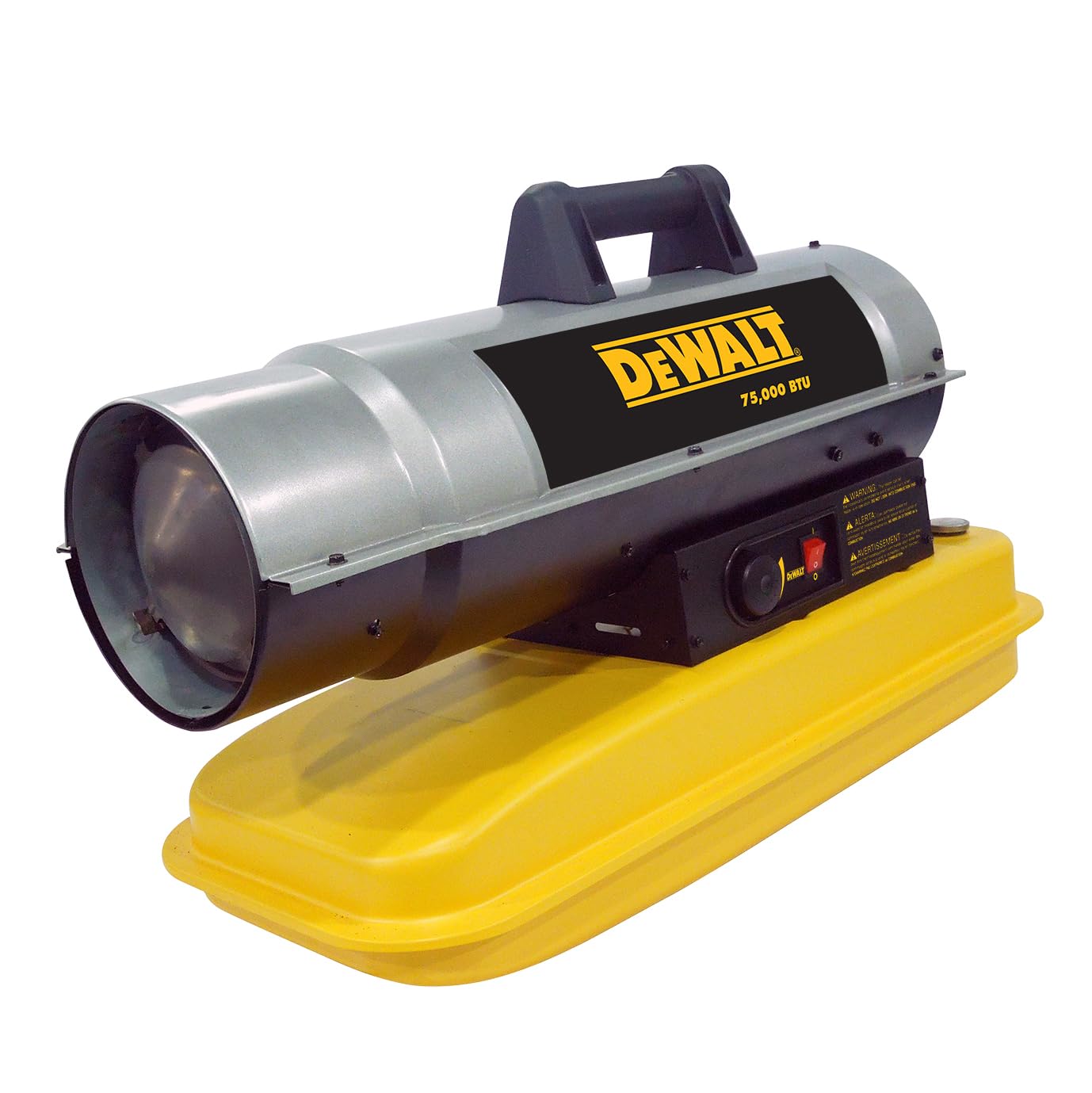
The DEWALT DXH75KT is a forced-air kerosene heater designed for workshops, barns, and construction sites — not for enclosed living spaces. If you are trying to heat an entire room to 120°F to kill bed bugs hiding in walls and furniture, this is the brute-force approach. The 75,000 BTU output covers approximately 1,875 square feet, and a full tank runs for 8-10 hours on a single fill.
Operation is simple: fill with kerosene or diesel, flip the switch, and the heater ignites instantly without the puff of smoke that older kerosene units produce. Users consistently report that it heats a 28×30 foot garage through a northeast winter, which gives you a sense of its thermal capacity. The recessed controls are protected from accidental damage, and the CSA certification means it meets recognized safety standards for its intended use.
The critical limitation here is ventilation. This heater must never be used indoors without adequate airflow because kerosene combustion produces carbon monoxide and consumes oxygen. You cannot run it in a sealed bedroom. Use it to pre-heat a well-ventilated space or in a barn where you can open windows and doors while maintaining a consistent temperature above 120°F for at least two hours. The fuel cost adds up: kerosene and diesel are not free, and you’ll need to store fuel safely.
Why it’s great
- Massive 75K BTU output for whole-room heating
- Instant ignition — no priming or puffing
- 8-10 hour run time per tank
- CSA certified for safe operation
Good to know
- Kerosene/diesel fuel cost adds up over time
- Requires excellent ventilation — not for sealed spaces
- Heavy at nearly 27 pounds
- Mixed long-term reliability reports
7. Mr. Heater 170K BTU Propane Forced Air Heater
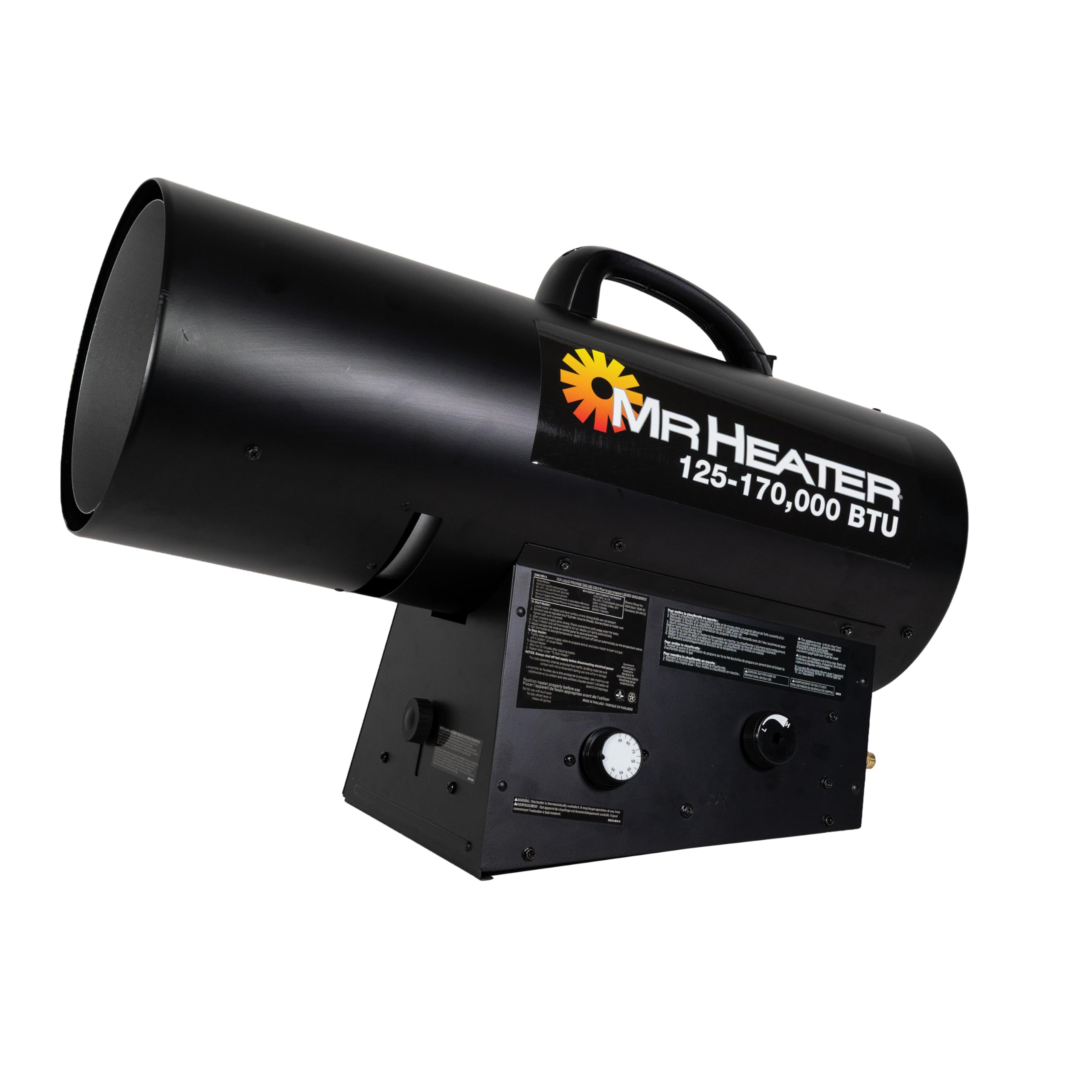
At 170,000 BTU, the Mr. Heater QBT is the highest-output unit in this guide, capable of heating a 4,000 square foot space. If your bed bug strategy involves raising the ambient temperature of an entire workshop, barn, or large garage to 120°F, this propane-fired forced-air heater will do it faster than anything electric. The QBT (Quiet Burner Technology) makes it 50% quieter than standard propane heaters — not silent, but you can hold a conversation or listen to a radio without shouting.
The heater runs up to 17 hours on a 100-pound propane tank at the low setting, and the automatic solid-state ignition means no pilot light to fiddle with. The high-temperature limit switch provides automatic shutoff if the unit overheats. Users report that this heater can bring a 30×30 foot shop to 80°F when it’s 16°F outside, which is the kind of thermal headroom you need for a proper whole-room bed bug heat treatment.
Two major pain points: propane tanks frost up in cold weather, causing the flame to dip and sometimes triggering carbon monoxide detectors. You need at least a 100-pound tank for reliable pressure — a standard 20-pound BBQ tank won’t cut it for more than 4-5 hours at full output. The thermostat has about a 20°F swing, making precise temperature control difficult. Like the DEWALT, this is strictly for well-ventilated spaces. Do not use in a bedroom or living area.
Why it’s great
- Enormous 170K BTU output for whole-building treatment
- 50% quieter than comparable propane heaters
- Up to 17 hours of run time on a 100 lb tank
- Automatic solid-state ignition
Good to know
- Requires large propane tank — 100 lb minimum recommended
- Tank frosting can cause flame instability in cold weather
- Thermostat has ~20°F temperature swing
- Must be used in well-ventilated area only
8. Bayer Temprid FX Insecticide

Temprid FX is a professional-grade, non-repellent liquid concentrate that combines imidacloprid (21%) and beta-cyfluthrin (10.5%) — two active ingredients that attack bed bugs through different neural pathways, reducing the chance of resistance. This is not a bed bug heater, but it is a critical tool in a comprehensive heat-plus-chemical strategy: use heat to kill the visible population and eggs, then apply Temprid FX as a residual barrier for any bugs that escaped or hatch later.
The 900 ml bottle makes 30.4 fluid ounces of finished spray when mixed according to label directions. Users in the pest control industry report that this product eliminates severe infestations after 2-3 weekly applications, even after a professional exterminator with a treatment failed. The non-repellent formula means bed bugs walk through the spray zone without detecting it, pick up the dose, and die later.
Important restrictions: this product is not for sale in Alaska, Connecticut, Hawaii, or New York due to state regulations. It requires careful mixing with water and should be applied with a sprayer that delivers a coarse fan pattern. The concentrated liquid has a strong odor that dissipates once dry. Always wear gloves and follow the EPA-approved label instructions — this is a restricted-use product in some states, so verify your local rules before ordering.
Why it’s great
- Dual-active formula fights resistance development
- Non-repellent — bugs don’t avoid treated areas
- Professional-grade results used by pest control businesses
- Long residual effect after drying
Good to know
- Not for sale in AK, CT, HI, NY
- Requires careful mixing and proper PPE
- Strong odor until dry
- Not a standalone solution — best paired with heat treatment
9. Steri-fab Bed Bug Insecticide (4 Gallons)

Steri-fab is one of the few non-residual insecticides specifically EPA-labeled for direct application to mattresses and upholstered furniture. This is a big deal because most bed bug sprays cannot legally be used on surfaces where people sleep — the label explicitly restricts them. Steri-fab dries quickly and leaves no long-term residue, making it the chemical partner of choice for treating mattress seams, box springs, and sofa cushions after a heat treatment cycle.
The 4-gallon case provides 512 fluid ounces of ready-to-use spray. Users report that two gallons is usually sufficient for a full apartment treatment, and the fast-drying formula means rooms can be used within an hour of application. However, the product has a strong odor that requires a mask and good ventilation during application. Pest control resale shops use it daily to ensure compliance with state regulations, and the ethanol-based formula also acts as a sanitizer.
The primary limitation is that Steri-fab has no residual activity — once it dries, it stops killing. You cannot spray it and expect protection weeks later. Use it as an immediate contact killer for visible bugs and eggs on sleep surfaces, then rely on heat chambers and residual sprays for ongoing protection.
Why it’s great
- EPA-labeled for direct mattress and upholstery use
- Non-residual formula dries quickly
- Effective as an immediate contact killer
- Also functions as a sanitizer/disinfectant
Good to know
- Strong odor requires mask and ventilation during use
- No residual protection after drying
- 4-gallon case is a large quantity for single households
- Not a replacement for heat treatment or residual sprays
FAQ
Can I put electronics like laptops or phones inside a bed bug heater?
How long do I need to run a bed bug heater to kill eggs?
Can I leave a bed bug heater running overnight while I sleep?
What’s the difference between a bed bug heater and a regular space heater?
Final Thoughts: The Verdict
For most users, the best bed bug heater winner is the ThermalStrike Ranger because its six-sided conductive heating system eliminates cold spots and requires zero babysitting, making it the safest and most reliable option for regular luggage and household item treatment. If you need to sanitize large furniture or bulk loads, grab the ZappBug Oven 2 XL — its dual-heater design and massive chamber can handle items no tent-style unit can fit. And for treating mattress seams, baseboards, and crevices that no chamber can reach, the professional-grade Polti Cimex Eradicator delivers instant thermal kill at 356°F with a decade-plus track record in commercial pest control.

Mo Maruf
I created WellFizz to bridge the gap between vague wellness advice and actionable solutions. My mission is simple: to decode the research and give you practical tools you can actually use.
Beyond the data, I am a passionate traveler. I believe that stepping away from the screen to explore new environments is essential for mental clarity and physical vitality.