Our readers keep the lights on and my smoothie glass nicely filled. As an Amazon Associate, I earn from qualifying purchases.
A smoke detector that chirps at 3 AM, triggers from toast, or runs out of battery during a storm is worse than no alarm at all. Finding a battery-operated model that delivers real protection without the nuisance is a non-negotiable safety decision — not a casual purchase.
I’m Mohammad Maruf — the founder and writer behind WellFizz. I’ve analyzed hundreds of hours of customer feedback and spec sheets on fire safety hardware to understand what separates a reliable smoke detector from a ticking annoyance.
Whether you’re replacing outdated units in a rental, outfitting a new home, or adding protection to a bedroom, choosing the best battery operated smoke detector means understanding sensor type, battery life, and false-alarm resistance — not just picking the cheapest option on the shelf.
How To Choose The Best Battery Operated Smoke Detector
Not all battery-powered alarms are created equal. The differences in sensor technology, power source, and mounting flexibility directly affect how well your unit performs over a decade of use.
Sensor Type: Photoelectric vs. Ionization
Photoelectric sensors use a beam of light to detect smoke particles, making them faster at catching smoldering fires that produce thick smoke before bursting into flames. Ionization sensors are older technology and prone to more nuisance trips from cooking steam or shower humidity. For a bedroom or hallway near a kitchen, photoelectric is the safer, less frustrating choice.
Battery Life: Sealed Lithium vs. Replaceable AA/9V
A sealed 10-year lithium battery means zero maintenance and zero low-battery chirps for the entire life of the alarm. When the unit expires, you replace the whole detector. Replaceable AA or 9V batteries give you flexibility — you can swap in fresh cells — but you must remember to change them annually, and the chirping starts well before the battery is truly dead.
False Alarm Mitigation
Advanced sensing algorithms and “Precision Detection” or “Hush” features are not marketing fluff. A detector that can differentiate between actual smoke and cooking steam saves you from ripping it off the ceiling in frustration. UL 217 10th Edition certification now mandates better false-alarm resistance, so look for that standard on the box.
Quick Comparison
On smaller screens, swipe sideways to see the full table.
| Model | Category | Best For | Key Spec | Amazon |
|---|---|---|---|---|
| First Alert SMICO110 | Premium Combo | Smoke + CO protection | 10-Year sealed lithium battery | Amazon |
| Kidde P3010B | Premium Smoke | Sealed battery, no CO | 10-Year lithium, photoelectric | Amazon |
| First Alert SMICO100 | Mid-Range Combo | Budget 2-in-1 smoke & CO | 9V battery, Precision Detection | Amazon |
| Kidde 20SDR | Mid-Range Smoke | AA-powered, fast detection | 2x AA batteries, 85 dB | Amazon |
| SITERWELL GS525A | Entry-Level Smoke | Low-cost 10-year sealed unit | 10-Year built-in lithium | Amazon |
In‑Depth Reviews
1. First Alert SMICO110

The First Alert SMICO110 is the rare smoke detector that doubles as a carbon monoxide alarm without doubling the maintenance. Its 10-year sealed lithium battery means no annual battery swaps and zero chirping for the entire decade — a massive quality-of-life upgrade if you’ve ever been jolted awake by a dying 9V. The Precision Detection sensor technology complies with the latest UL 217 standards, which specifically target the reduction of nuisance alarms from cooking and steam.
Installation is genuinely tool-light. The unit twists onto a base plate that matches existing First Alert brackets, so if you’re replacing an older model, you can skip drilling new holes. The test/silence button works as expected, and the end-of-life chirp tells you exactly when the whole unit must be retired. At under 6 inches wide, it fits neatly in hallways, bedrooms, and even RVs without looking like a hockey puck.
The one recurring caveat: the alarm only activates after it’s fully mounted on the base plate, and the button won’t respond until it’s engaged. A small note in the manual would save a few confused minutes. Also, a small minority of users report false triggers from steam over the life of the unit, though this is less common than with competing combo alarms.
Why it’s great
- True 10-year sealed battery, no replacements needed
- Combined smoke and CO detection in one unit
- Precision Detection reduces nuisance alarms from cooking
- Fits existing First Alert mounting brackets
Good to know
- Test button non-functional until fully mounted on plate
- Some steam false alarms reported over extended use
2. Kidde P3010B

The Kidde P3010B is a photoelectric-only smoke detector that eliminates battery swaps with a sealed 10-year lithium battery, but it does not include carbon monoxide detection. That makes it a focused choice for bedrooms and hallways where CO risk is already covered by a separate alarm. The photoelectric sensor is explicitly faster at detecting smoldering fires — the kind that produce thick, rolling smoke before visible flames appear — which is exactly the scenario where ionization detectors often lag.
The alarm activates automatically when you twist it onto the mounting bracket, so there’s no pull-tab to forget. The Test-Hush button lets you silence a false trigger from cooking or shower steam without disabling the unit — press it, and the detector goes quiet for up to 10 minutes before returning to normal sensitivity. At 5.2 inches in diameter, it’s compact and low-profile for ceiling installation.
Customer feedback reveals a split on battery longevity. While Kidde claims 10 years, several users report false chirps or sensor failure as early as year two or three. The limited warranty covers defects, not battery life, so a premature end-of-life chirp means a full replacement. Also, Kidde changed the mounting plate design from older models, so you can’t simply swap onto an existing bracket from a previous Kidde alarm.
Why it’s great
- Sealed 10-year lithium battery, no replacement hassle
- Photoelectric sensor excels at smoldering fire detection
- Auto-activates when mounted on bracket
- Test-Hush button silences false alarms temporarily
Good to know
- No carbon monoxide detection included
- Battery may not last the full 10 years for some users
- Mounting plate incompatible with older Kidde models
3. First Alert SMICO100

The First Alert SMICO100 is a 2-in-1 smoke and carbon monoxide alarm that runs on a standard 9V battery — giving you the flexibility to replace the battery yourself instead of tossing the whole unit. It uses the same Precision Detection technology as the premium SMICO110, which means it’s calibrated to reduce nuisance alarms from everyday cooking. That’s a huge practical advantage if your kitchen is near a hallway detector.
Mounting is straightforward, and the base plate includes multiple hole patterns so you can reuse existing ceiling screw positions — even if you’re replacing a different brand. The test/silence button is front-and-center, and the end-of-life warning chirps when the sensor reaches its 10-year limit. At 5.6 inches wide, it’s slightly larger than the Kidde units but still unobtrusive on a ceiling.
The trade-off is annual battery replacement. The included 9V is generic, and some users note that the battery compartment is snug — swapping in a fresh alkaline can require a bit of leverage. Also, the mounting plate does not match older First Alert bases, so if you’re upgrading from a previous model, expect to drill new holes or use the included wall anchors.
Why it’s great
- Combined smoke and CO detection at a mid-range price point
- Precision Detection minimizes false triggers
- Multiple mounting hole patterns for easy retrofit
- Replaceable 9V battery — no need to discard whole unit
Good to know
- Requires annual 9V battery replacement
- Mounting plate different from older First Alert bases
- Battery compartment can be tight with some brands
4. Kidde 20SDR

The Kidde 20SDR runs on two AA batteries (included) and delivers an 85-decibel alarm with a flashing red LED for visual confirmation — ideal for large rooms or anyone who needs both an audio and visual cue. It uses advanced sensing technology that meets UL 217 10th Edition standards, which specifically addresses false alarm reduction. That means fewer phantom triggers from steam or cooking smoke, a common complaint with older Kidde models.
The Test and Hush button works cleanly: press to test the circuitry, hold to silence a nuisance alarm for roughly 10 minutes. The unit is 5 inches wide and 1.88 inches deep, making it one of the slimmest options on this list. It fits into standard Kidde mounting brackets, so if you’re replacing a previous Kidde hardwired alarm, you may be able to reuse the existing base — though this model is strictly battery-powered.
Some buyers mistake this for a hardwired unit because of the “20SDR” model numbering and the bracket design. It is not. If your home uses hardwired interconnected alarms, this won’t replace them. The AA batteries also mean you’ll need to swap them yearly, and the alarm lacks both carbon monoxide detection and a sealed 10-year battery — so it’s a straightforward battery smoke detector, nothing more.
Why it’s great
- Uses standard AA batteries, widely available
- Fits existing Kidde mounting brackets
- Red LED visual indicator with 85 dB alarm
- Advanced sensing reduces cooking and steam false alarms
Good to know
- AA batteries require annual replacement
- No carbon monoxide detection included
- Easily mistaken for hardwired model by casual buyers
5. SITERWELL GS525A
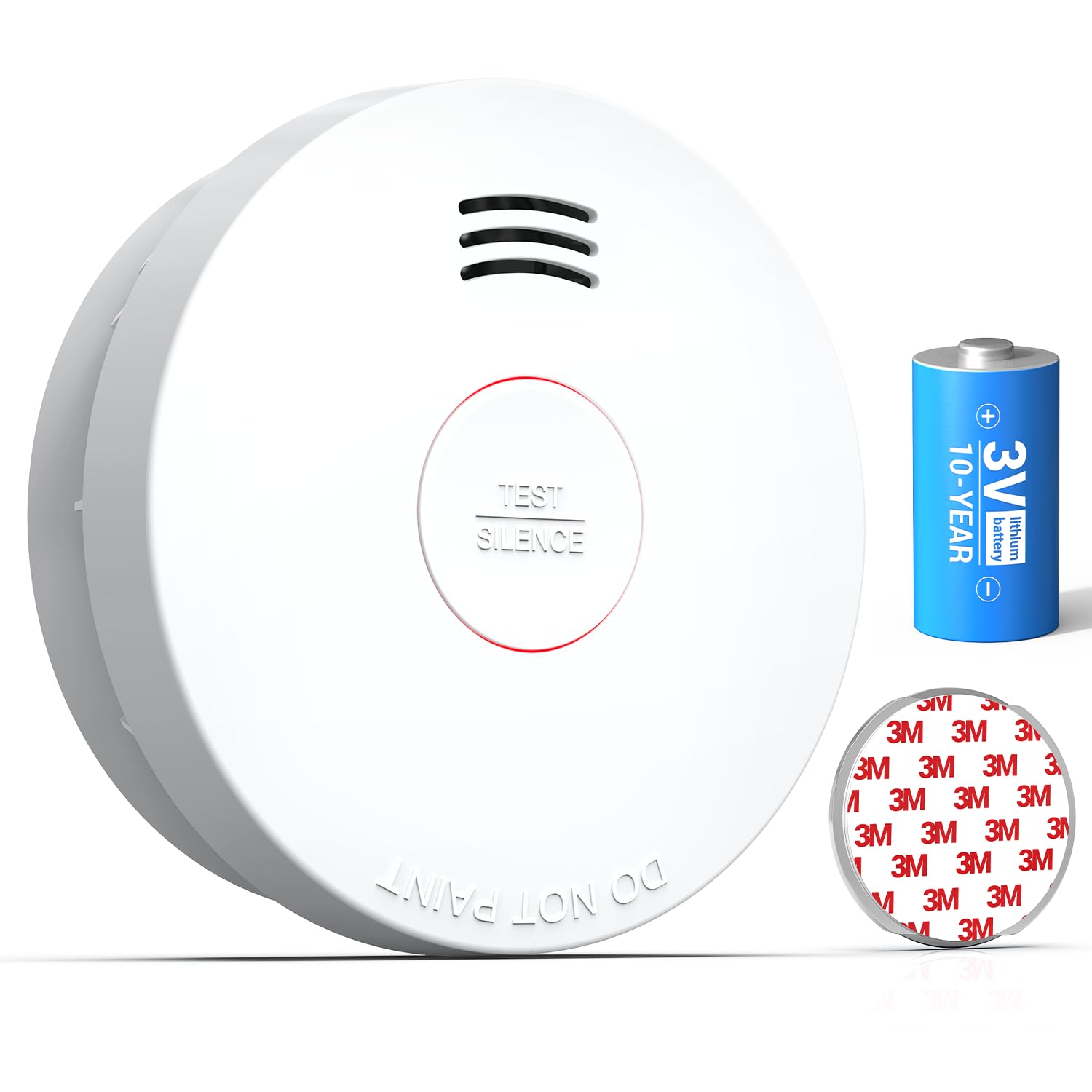
The SITERWELL GS525A is a photoelectric smoke detector with a built-in 3V lithium battery rated for 10 years, yet it comes at a budget-friendly price that undercuts most sealed-battery competitors. It also includes a magnetic mounting kit — rare at this tier — so you can attach it to a metal surface without drilling. That’s a huge plus for renters, RVs, or anyone who hates patching ceiling holes.
The unit is compact at 3.93 inches wide and just 1.38 inches thick, making it one of the smallest smoke detectors you can buy. The 85-decibel alarm is loud enough to wake sleepers, and the optimized sensing algorithm claims to filter out daily steam and cooking interference. UL 217 listing confirms it meets the same safety certification as name-brand units.
The built-in battery is not replaceable, so when it dies — potentially before the 10-year mark based on user reports — you must replace the entire unit. A handful of customers note that the test button requires the pull-tab to be fully removed before it works, and the magnetic mount is strong enough for a ceiling but may not hold on textured or painted metal surfaces over time. No carbon monoxide detection here, so it’s smoke-only.
Why it’s great
- Sealed 10-year lithium battery, zero maintenance needed
- Magnetic mount included for no-drill installation
- Compact size fits tight spaces and RVs
- UL 217 certified for safety compliance
Good to know
- Battery is non-replaceable — whole unit must be swapped
- No carbon monoxide detection
- Magnetic mount may not hold on all ceiling surfaces
FAQ
Can a photoelectric sensor detect fast-flaming fires?
What does the end-of-life chirp sound like?
Do I need a combination smoke and CO alarm or just smoke?
Final Thoughts: The Verdict
For most users, the best battery operated smoke detector winner is the First Alert SMICO110 because it combines a sealed 10-year battery with precision smoke and carbon monoxide detection in one easy-install package. If you want a photoelectric-only unit with no annual battery swaps, grab the Kidde P3010B. And for a budget-friendly sealed battery option that includes a magnetic mount for renters, nothing beats the SITERWELL GS525A.

Mo Maruf
I created WellFizz to bridge the gap between vague wellness advice and actionable solutions. My mission is simple: to decode the research and give you practical tools you can actually use.
Beyond the data, I am a passionate traveler. I believe that stepping away from the screen to explore new environments is essential for mental clarity and physical vitality.