Our readers keep the lights on and my smoothie glass nicely filled. As an Amazon Associate, I earn from qualifying purchases.
Attics are not built for walking. The real challenge is finishing a space between joists that were never designed to support a solid floor, all while keeping airflow and insulation intact. A weak or poorly installed surface turns storage into a hazard.
I’m Mohammad Maruf — the founder and writer behind WellFizz. I focus on market research and specification analysis for home improvement products, looking at load ratings, material tolerances, and real-world installation constraints that most buyers overlook.
After examining the load limits, base materials, and ventilation designs of the top options available, here is the complete breakdown of the best attic flooring for different attic layouts and budgets.
How To Choose The Best Attic Flooring
Attic flooring is different from standard home flooring because it sits on top of joists rather than a solid subfloor. Every choice you make needs to account for load distribution, insulation compression, and access to wiring and ductwork.
Load Capacity and Joist Spacing
The first number to check is the per-panel weight limit. Most attics have joists spaced 16 or 24 inches on center. A panel designed for 16-inch centers may flex or feel bouncy when placed on 24-inch spans. Look for systems that specify the joist spacing they are tested for, and match that to your attic’s actual layout.
Material and Ventilation
Closed panels block airflow and can trap moisture against insulation, leading to mold. The best attic flooring panels have built-in vents, raised ribs, or drainage channels that allow the insulation underneath to breathe. Avoid solid sheets that seal off the attic floor entirely unless you have adequate cross-ventilation.
Ease of Installation and Adjustability
Cutting plywood to fit around obstacles is time-consuming and imprecise. Prefabricated panels with pre-drilled holes and interlocking edges save hours. Some systems include wiring notches so you can route cables without drilling. Prioritize systems that can be trimmed or adjusted without specialized tools.
Quick Comparison
On smaller screens, swipe sideways to see the full table.
| Model | Category | Best For | Key Spec | Amazon |
|---|---|---|---|---|
| Attic Dek 4-Panel System | Prefab Panels | Long-term attic storage | 250 lbs per panel | Amazon |
| GREEN ALLUVIUM Acacia Tiles | Wood Deck Tiles | Finished attic aesthetic | 0.9-inch thick slats | Amazon |
| EVANCENT Drainage Tiles | Interlocking PVC | Damp attic floor zones | 0.47-inch thick PVC | Amazon |
| JADERLU Rubber Mats | Interlocking Rubber | Cushioning under equipment | 0.59-inch thick rubber | Amazon |
| Sorbus Foam Mats | Foam Tiles | Lightweight anti-fatigue surface | 0.35-inch thick foam | Amazon |
In‑Depth Reviews
1. Attic Dek Flooring Storage System

This is the only system in this list designed specifically for unfinished attic joists. Each panel supports up to 250 pounds and includes tapered ribs that position it between joists, so you don’t have to measure or cut. The panels have pre-drilled screw holes and integrated notches to hold wiring on both sides, keeping cables organized and accessible.
The ABS and polycarbonate construction is lightweight enough to carry through a small attic hatch yet rigid enough to handle foot traffic and boxed storage. The built-in vents allow insulation to breathe, preventing moisture buildup under the floor. Installation takes about 15 minutes per panel with just a drill and the included screws.
Best suited for attics with 16-inch on-center joists, though it works on 24-inch centers with some flex. Some users report that the included screws can shear off — replacing them with standard #8 decking screws solves the issue. It’s a premium option but the most purpose-built solution for converting dead attic space into usable storage.
Why it’s great
- Engineered specifically for attic joist spacing
- Built-in wire notches for cable routing
- Vented design prevents insulation compression and moisture issues
Good to know
- Included screws may be low quality — budget for replacements
- Panel feels bouncy on 24-inch joist centers
- Premium cost per square foot compared to DIY plywood
2. GREEN ALLUVIUM Premium Acacia Wood Deck Tiles
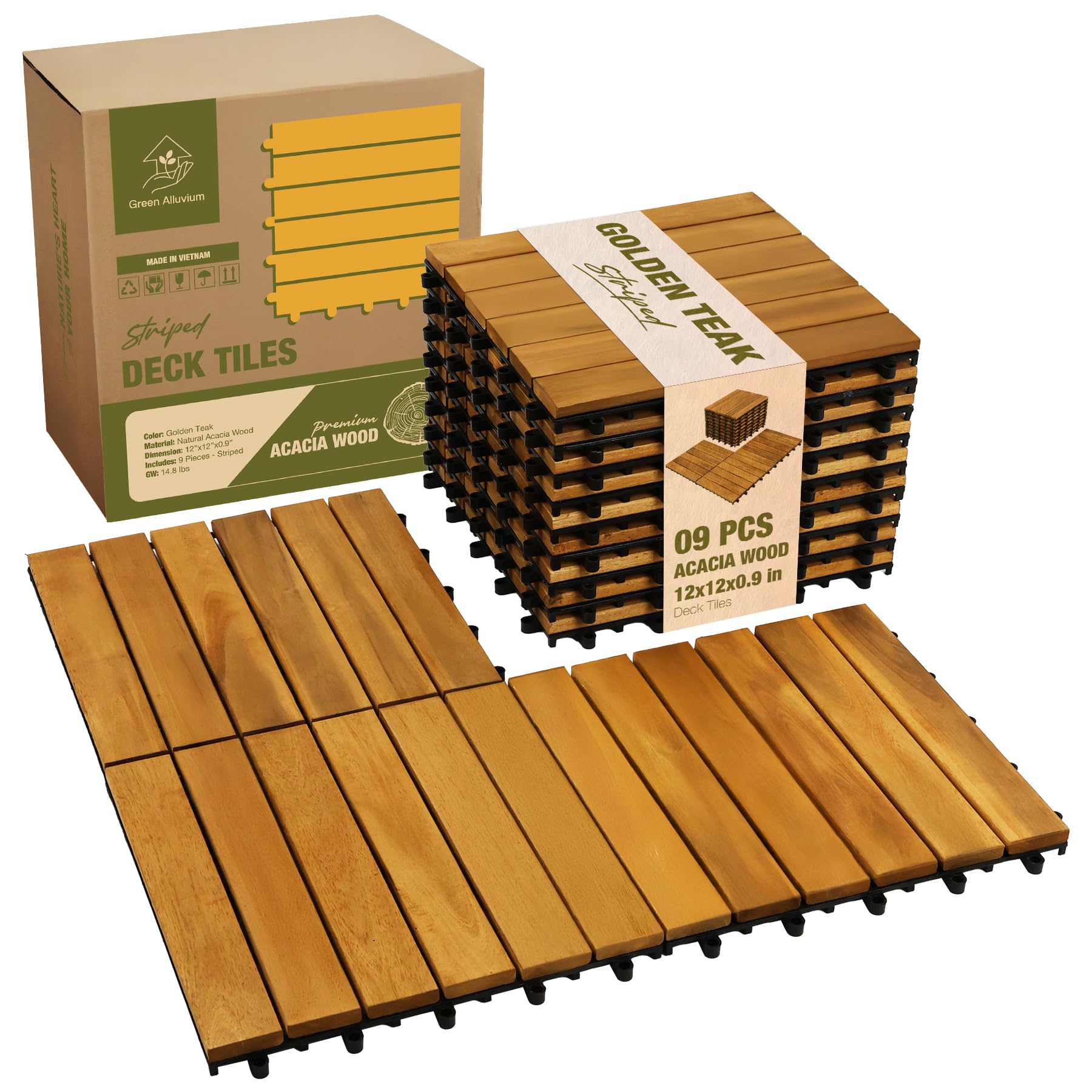
If your attic is being converted into a livable space or home office, these solid acacia wood tiles deliver a finished look that standard attic panels cannot match. Each 12×12 tile is 0.9 inches thick and pre-finished with cured linseed oil, so no sealing or staining is needed before installation.
The raised base channels water underneath, making these tiles suitable for attics that have occasional moisture exposure. The interlocking plastic base clicks together without nails or adhesive, and the tiles can be trimmed with a standard wood saw for edges and corners. They support standard foot traffic and lightweight furniture without flexing.
One limitation is that you need a full box for seamless edges since there is no clip loop for partial tiles. The tiles are best on flat, stable subfloors — installing them directly on joists without a plywood underlayment may cause unevenness. They are ideal for attics that already have a plywood subfloor or a flat concrete slab.
Why it’s great
- Solid hardwood with no sealing required
- Interlocking base makes installation tool-free
- Raised base allows airflow and moisture drainage underneath
Good to know
- Requires a flat, stable underlayment — not for direct-joist installation
- Must waste entire box for clean edges at room boundaries
- Limited to small areas; covering larger spaces requires multiple boxes
3. EVANCENT Drainage Interlocking Floor Tiles

Made from 100% recycled polypropylene, these 12×12 interlocking tiles provide a raised, non-slip surface that works well in attics with occasional water exposure or condensation. The drainage holes allow moisture to pass through while the raised bottom teeth keep the tile above any standing water.
Each tile is 0.47 inches thick and connects via a simple snap-together system. You can cut them with scissors or a utility knife for irregular spaces. Users have used these tiles for everything from chicken coops to RV mattress bases, which speaks to their versatility and durability in damp environments.
The soft PVC feel provides comfortable footing, but the tiles are not load-rated for heavy storage — they work best as a walking path or light-duty surface. The price per square foot is low, making this an affordable option for covering large attic sections where you just need a stable, dry surface to walk on.
Why it’s great
- Excellent drainage and ventilation for damp attics
- Easy to cut and install without tools
- Affordable per-square-foot cost for large areas
Good to know
- Not designed for heavy storage loads
- PVC base can have strong initial odor
- Thinner profile may not suit all attic floor needs
4. JADERLU Modular Interlocking Rubber Mats

These rubber tiles are thicker than the PVC alternatives at 0.59 inches and provide significant cushioning, making them ideal for attics where you plan to store heavy equipment or spend time kneeling. The mesh design of the surface allows debris to fall through, and the open structure promotes airflow underneath.
The rubber material is flexible enough to conform to slightly uneven surfaces while still providing stable footing. Each tile is 11.6 x 11.6 inches, and the set of 12 covers roughly 11 square feet. The tiles can be trimmed with scissors, and the locking mechanism is strong enough to keep the mats in place without shifting.
One trade-off is that the locking lugs require some modification if you need to create partial panels, and the edges of cut tiles may not look as clean as factory edges. The rubber also feels uncomfortable walking barefoot, but for an attic space where you’ll wear shoes, this is a non-issue. It is a solid mid-range option with good moisture control properties.
Why it’s great
- Thick rubber provides real cushioning for kneeling and standing
- Mesh design allows excellent airflow and debris drainage
- Durable enough for high-traffic attic walkways
Good to know
- Locking lugs add complexity when cutting partial tiles
- Uncomfortable barefoot due to rubber texture
- Limited to lighter-duty storage applications
5. Sorbus Wood Grain Foam Interlocking Mats
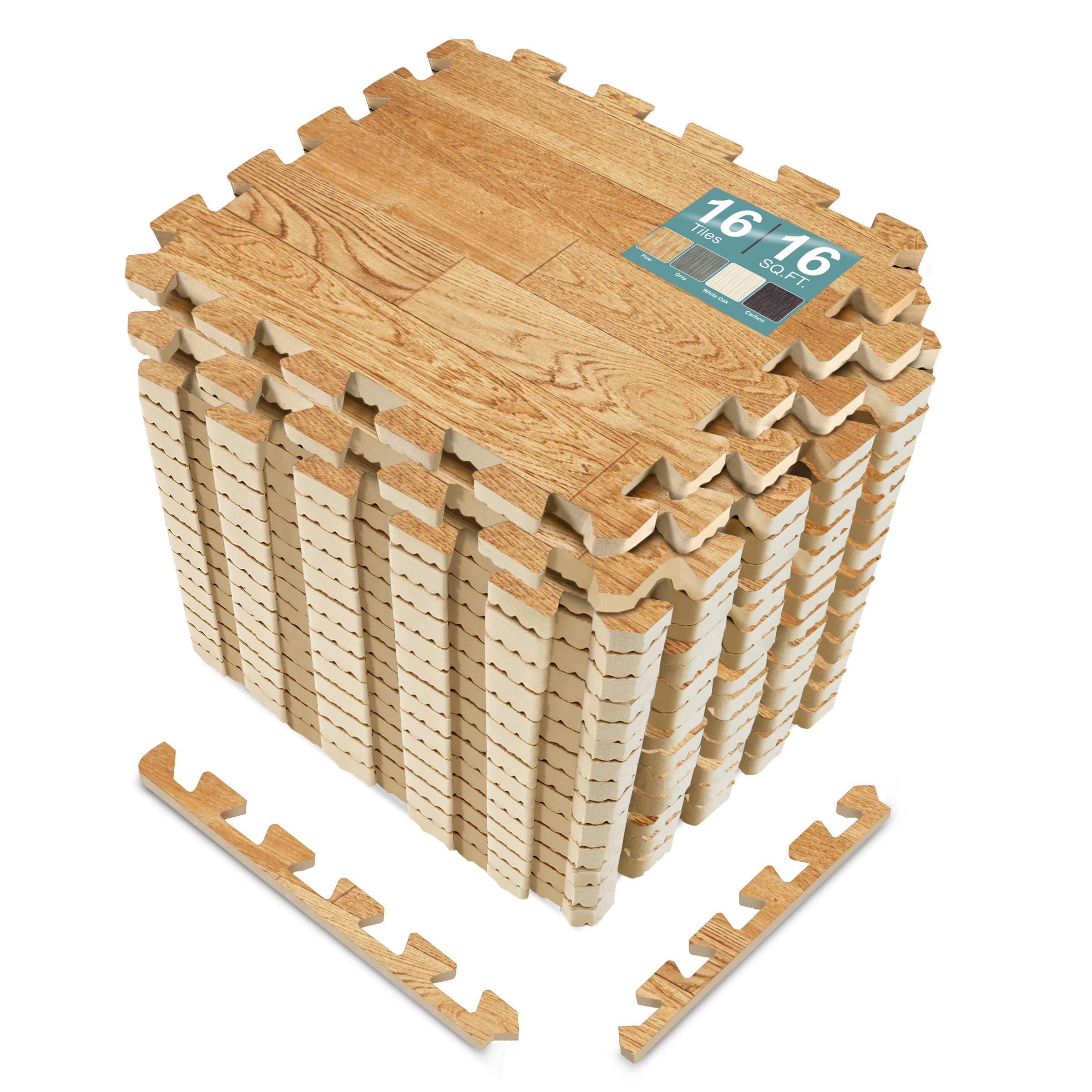
These foam tiles are the most affordable option and provide a cushioned, anti-fatigue surface that is very comfortable underfoot. Each tile is 0.35 inches thick and features a faux wood grain pattern that looks decent for a temporary or light-use application. The interlocking jigsaw edges keep the tiles in place without adhesive.
The foam is non-absorbent and waterproof, which is important for attic use where condensation may occur. The tiles are lightweight and portable, making them easy to move if you need to access wiring or ductwork underneath. They are best suited for attics that serve as a play area, light storage space, or temporary workspace.
These tiles are not load-rated and will compress under heavy boxes or furniture. They also cannot be installed directly on joists — they need a smooth, continuous subfloor to avoid uneven surfaces and gaps. For a budget-friendly temporary attic floor covering, however, they perform well and are easy to replace.
Why it’s great
- Very comfortable cushion for standing and kneeling
- Lightweight and easy to reposition or remove
- Waterproof and easy to clean with a damp cloth
Good to know
- Not designed for heavy storage loads
- Requires a smooth, flat subfloor — not for direct-joist use
- Thinner profile provides less structural rigidity
FAQ
What is the maximum weight I can put on attic flooring panels?
Can I install attic flooring directly over insulation without venting?
How do I cut attic flooring panels to fit around roof trusses and obstacles?
Final Thoughts: The Verdict
For most users, the best attic flooring winner is the Attic Dek 4-Panel System because it is purpose-built for the specific constraints of attic joists — load rated, vented, and designed for quick installation. If you want a more aesthetically finished look for a converted attic space, grab the GREEN ALLUVIUM Acacia Tiles. And for a budget-friendly temporary surface for light storage, nothing beats the EVANCENT Drainage Tiles for the price.

Mo Maruf
I created WellFizz to bridge the gap between vague wellness advice and actionable solutions. My mission is simple: to decode the research and give you practical tools you can actually use.
Beyond the data, I am a passionate traveler. I believe that stepping away from the screen to explore new environments is essential for mental clarity and physical vitality.