Our readers keep the lights on and my smoothie glass nicely filled. As an Amazon Associate, I earn from qualifying purchases.
Finding a basement wall sealer that actually stops hydrostatic pressure without turning your foundation into a glossy mess is the central challenge of below-grade waterproofing. The wrong choice either peels within a season or traps moisture behind the wall, accelerating spalling.
I’m Mohammad Maruf — the founder and writer behind WellFizz. I’ve spent years analyzing concrete chemistry, hydrostatic pressure ratings, and silane/siloxane penetration data to separate real solutions from temporary fixes.
After comparing formulations, coverage rates, and long-term performance data, I’ve narrowed the field to the very best basement wall sealer options that deliver lasting protection without altering the natural look of your masonry.
How To Choose The Best Basement Wall Sealer
Selecting a sealer for your basement walls means understanding the difference between a breathable repellent that lets moisture vapor escape and a waterproof membrane that locks everything out. The wrong pick can worsen efflorescence or trap water inside the concrete.
Penetrating vs. Film-Forming Sealers
Penetrating sealers (silanes and siloxanes) bond chemically inside the pores, creating a hydrophobic layer that blocks liquid water but allows vapor to pass. Film-forming sealers (acrylics, liquid rubber, epoxy) sit on the surface. For below-grade walls, deep-penetrating formulas are generally safer because they won’t delaminate from back pressure.
Hydrostatic Pressure Rating
If your basement experiences active water seepage, check the sealer’s ability to withstand hydrostatic pressure. Some acrylic-based waterproof paints are rated for up to 12 psi, while basic penetrating sealers prevent moisture wicking rather than stopping flowing water. Identify your leak type — dampness vs. trickling water — before choosing.
Vapor Permeability and Breathability
A basement wall sealer must allow trapped moisture to escape as vapor. Non-breathable coatings can cause concrete spalling when water vapor builds up behind the film and freezes. Silane/siloxane formulations are inherently breathable; elastomeric rubber coatings require specific conditions to avoid trapping moisture.
Quick Comparison
On smaller screens, swipe sideways to see the full table.
| Model | Category | Best For | Key Spec | Amazon |
|---|---|---|---|---|
| Siloxa-Tek 8505 | Penetrating | Heavy water ingress & salt resistance | Industrial-grade silane/siloxane | Amazon |
| PROSOCO Sure Klean Weather Seal | Penetrating | Long-term brick & masonry protection | 10+ year service life | Amazon |
| INSL-X WaterBlock | Film-Forming | Vertical non-leaking basement walls | Withstands 12 psi hydrostatic | Amazon |
| AMES Blue Max | Elastomeric | Below-grade foundations & ICFs | 1200% elongation | Amazon |
| MasonryDefender All Purpose | Penetrating | Multi-surface brick & stone | Silane-Siloxane formula | Amazon |
| MasonryDefender Concrete Sealer | Penetrating | Budget-friendly concrete only | 128 fl oz per gallon | Amazon |
| Rust-Oleum 301239 | Fortifying | Sealing concrete before epoxy | Fortifying sealer | Amazon |
In‑Depth Reviews
1. Siloxa-Tek 8505 Ready to Use
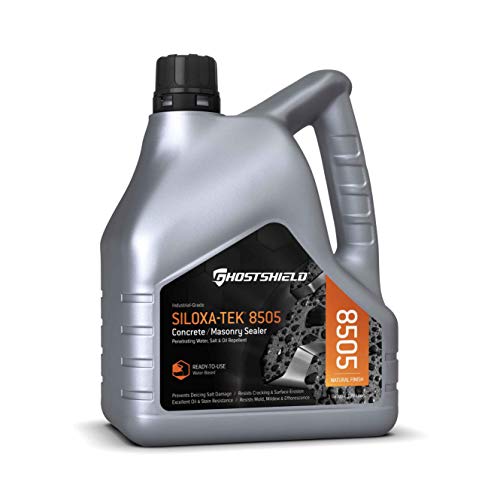
The Siloxa-Tek 8505 represents the gold standard for penetrating basement wall sealers. Its industrial-grade, water-based silane/siloxane chemistry penetrates deep into concrete pores, reducing moisture intrusion and vapor transmission without altering the surface appearance. Users report excellent hydrophobic performance even over existing cracks after a one-week cure.
This sealer is engineered to resist damage from deicing salts and chlorides, making it a top choice for basement walls connected to garage slabs or driveways. The ready-to-use formulation eliminates mixing errors — just apply with a 3/8-inch nap roller or low-pressure sprayer. Coverage is generous, and the low-VOC formula makes interior application safer.
While the prep work is labor-intensive (wet grinding and thorough cleaning are required for best results), the payoff is a durable, invisible barrier that keeps basement walls dry. Some users note a slight darkening of the surface immediately after application, but this fades as the sealer fully cures over seven days.
Why it’s great
- Industrial-grade silane/siloxane for deep penetration
- Resists salt, chlorides, and oil stains
- Breathable — won’t trap moisture in walls
Good to know
- Requires thorough surface prep for optimal bonding
- Full cure takes up to seven days
2. PROSOCO Sure Klean Weather Seal Siloxane PD

PROSOCO’s Siloxane PD is the sealer professionals reach for when they need a brick or concrete treatment that lasts over a decade. This penetrating formula bonds deep within masonry, helping to resist cracking, spalling, and staining from water intrusion while allowing the substrate to breathe naturally. Users frequently mention its flat, non-wet appearance that preserves the original look of brick and stone.
Application is straightforward with a standard garden sprayer, and the coverage is impressive — some users report covering roughly 1,000 square feet with multiple gallons. The treated surface stays cooler in direct sun and sheds water effectively, a sign of proper hydrophobic saturation. Because it doesn’t form a surface film, there’s no risk of peeling or blistering on vertical basement walls.
The estimated service life of more than ten years sets this apart from cheaper alternatives that require annual reapplication. For homeowners who want a one-and-done solution for their foundation or retaining wall, the PROSOCO is a worthy investment. The only trade-off is the premium cost per gallon, which is offset by the exceptional longevity.
Why it’s great
- Industry-leading 10+ year service life
- Breathable and non-glossy finish
- Professional-grade performance on brick, concrete, and stone
Good to know
- Requires multiple gallons for large wall areas
- Premium price reflects the extended longevity
3. INSL-X WaterBlock Acrylic Masonry Waterproofer

The INSL-X WaterBlock is a film-forming acrylic paint specifically engineered for vertical masonry walls. Its key advantage is the ability to withstand up to 12 psi of hydrostatic pressure — enough to stop moderate seepage through foundation walls after proper application. Users who applied two coats report that heavy rain no longer produces dampness on the interior side.
The paint-like consistency makes it easy to apply with a brush or roller, and it dries to a semi-gloss white finish that brightens basement interiors. The formula resists high alkalinity (pH up to 13), which is critical for fresh concrete or block walls that may otherwise degrade standard paints. INSL-X includes a can opener and stir stick, a thoughtful touch for DIYers.
A notable limitation is the lower coverage — 75 to 125 square feet per gallon — meaning larger basement walls will require multiple gallons. Additionally, because it is a film-forming coating, it’s best suited for walls that aren’t experiencing active water flow; hydrostatic pressure behind the film could cause it to peel over time if the underlying issue isn’t addressed.
Why it’s great
- 12 psi hydrostatic pressure rating stops active leaks
- Bright white finish improves basement lighting
- High alkali resistance for fresh concrete
Good to know
- Coverage is lower than penetrating sealers
- Film-forming — not ideal for walls with high back pressure
4. AMES Blue Max Regular Liquid Rubber Waterproofer

AMES Blue Max is an elastomeric liquid rubber membrane designed for severe waterproofing scenarios. Its standout spec is 1200% elongation, meaning the coating can stretch significantly without cracking or peeling — a critical property for below-grade foundations subject to ground movement or settlement. The blue pigment makes application coverage easy to see on gray concrete.
This sealer is non-toxic, eco-friendly, and VOC-compliant in all 50 states, making it a solid choice for interior basement applications where fumes are a concern. Users have successfully applied it to shower window sills and bird baths, but it truly shines on foundation walls, insulated concrete forms, and underlayment. It bonds to concrete, wood, and metal equally well.
The main caveat is that Blue Max requires a top coat if exposed to direct sunlight, which limits its standalone use on exterior above-grade walls. Also, the cure time is long — at least one week in warm weather — so planning the application window is essential. For basement walls that remain below grade and out of UV light, this liquid rubber forms an incredibly durable, watertight seal.
Why it’s great
- 1200% elongation resists cracking from ground movement
- Non-toxic and low-odor for indoor use
- Bonds to concrete, wood, and metal
Good to know
- Requires top coat if exposed to UV light
- Full cure takes up to one week
5. MasonryDefender All Purpose Brick Stone & Concrete Sealer

The MasonryDefender All Purpose sealer is a silane-siloxane penetrator formulated for a wide range of surfaces including concrete, brick, stone, limestone, and granite. It delivers a clear, waterproof barrier that doesn’t alter the natural appearance of the masonry — a key feature for homeowners who want protection without the glossy film. One user reported that it stopped water seepage in a basement under a stone porch post after other fixes had failed.
Application is simple with a pump-up garden sprayer, and the sealer dries quickly enough for a second coat within an hour. Coverage is listed at 90 to 150 square feet per gallon, putting it in the same range as competing penetrating formulas. The non-glossy finish preserves the original reds and grays of brick patios and walkways while adding water beading.
The main unknown for buyers is the exact chemical composition and long-term durability. While short-term water beading is impressive, some users express uncertainty about how many years the protection will last. For the price point, it’s a capable mid-range option that works well on a variety of surfaces, though it lacks the industrial certifications of premium brands.
Why it’s great
- Works on concrete, brick, stone, and limestone
- Clear, non-glossy finish preserves appearance
- Easy spray-on application with fast dry time
Good to know
- Long-term durability data is limited
- Coverage may vary on rough surfaces
6. MasonryDefender Concrete Sealer – Deep Penetrating Water Repellent
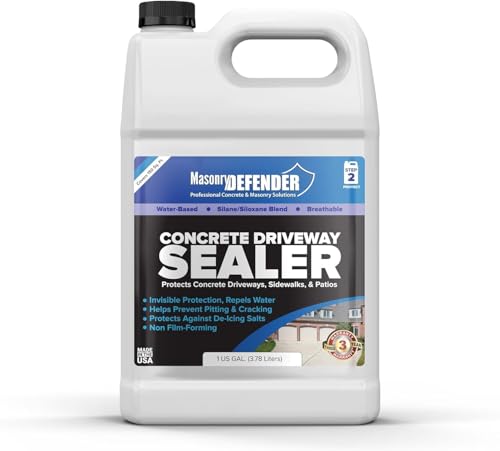
This MasonryDefender sealer focuses on concrete-only protection using a silane siloxane base that creates an invisible hydrophobic layer. Water beads up and rolls off treated surfaces while the concrete remains breathable — no trapped moisture, no peeling. Users in rainy climates confirm that their concrete patios and pavers stay cleaner and resist staining even after three years of exposure.
Application with a low-pressure garden sprayer takes roughly ten minutes, making it a hassle-free project for an afternoon. The formula is odorless and cleans up with water, which simplifies use in occupied basements. A single gallon covers 90 to 150 square feet, and multiple users recommend annual reapplication to maintain peak performance on high-traffic concrete slabs.
The trade-off is price-sensitivity regarding longevity; while initial results are excellent, the sealer doesn’t carry the same extended service-life guarantee as premium options. For a tight-budget DIY project where the concrete is sound but porous, this is a reliable choice that outperforms its price tier substantially.
Why it’s great
- Affordable silane siloxane penetrating formula
- Invisible, breathable protection for concrete
- Easy spray-on application with no odor
Good to know
- Annual reapplication recommended for best results
- Limited to concrete — not for brick or stone
7. Rust-Oleum 301239 Concrete Moisture Stop Fortifying Sealer

The Rust-Oleum Moisture Stop is a unique entry in the basement wall sealer category because it functions as both a sealer and a primer for subsequent coatings. Its primary purpose is to bond to concrete, prevent moisture from migrating through, and provide a stable base for epoxy or paint. Users who applied it before a Rust-Oleum epoxy system report zero moisture-related failures after nearly three years, even on floors with high hydrostatic pressure.
Application is straightforward: pour the liquid onto the concrete, spread it with a roller, and let it penetrate for 45 minutes before removing excess. A single gallon covers up to 200 square feet, which is generous compared to film-forming acrylics. The clear formula doesn’t alter the surface appearance, so it can be left alone if you prefer an uncoated concrete look.
While the primary use case is as a pre-coat primer, it does seal the concrete against moisture, radon gas, and salts. However, it is not a standalone solution for actively leaking basement walls — its real strength lies in preparing the surface for a durable top coat. For DIYers planning to epoxy their basement floor or paint the walls, this is the best preparatory step available.
Why it’s great
- Bonds and primes for epoxy or paint adhesion
- Prevents moisture, salt, and radon migration
- High coverage at 200 sq ft per gallon
Good to know
- Designed as a primer — not a standalone waterproof coating
- Requires 45-minute soak time before removal
FAQ
Can I apply a penetrating sealer to a damp basement wall?
Will a film-forming sealer like INSL-X trap moisture inside my concrete?
How long does a silane/siloxane basement wall sealer typically last?
Final Thoughts: The Verdict
For most users, the best basement wall sealer winner is the Siloxa-Tek 8505 because its industrial-grade silane/siloxane chemistry delivers deep, breathable protection against moisture intrusion without altering the wall’s appearance. If you need an ultra-long-lasting solution for brick or stone masonry, grab the PROSOCO Sure Klean Weather Seal. And for a budget-friendly penetrant that handles concrete-only applications reliably, the MasonryDefender Concrete Sealer provides impressive value.

Mo Maruf
I created WellFizz to bridge the gap between vague wellness advice and actionable solutions. My mission is simple: to decode the research and give you practical tools you can actually use.
Beyond the data, I am a passionate traveler. I believe that stepping away from the screen to explore new environments is essential for mental clarity and physical vitality.