Our readers keep the lights on and my smoothie glass nicely filled. As an Amazon Associate, I earn from qualifying purchases.
Traditional rain boots force your toes into a cramped, wedge-shaped toe box and lift your heel off the ground, creating a walking posture that works against your body’s natural alignment. When you add the sloshing, the heavy rubber, and the inevitable sweat buildup, the classic galosh becomes a misery during a downpour.
I’m Mohammad Maruf — the founder and writer behind WellFizz. I spend my days analyzing the structural engineering of footwear, from last shapes and stack heights to waterproof membranes and outsole rubber durometers, so you don’t have to wade through the marketing sludge to find a boot that actually fits your foot’s anatomy.
After sifting through hundreds of reviews and technical specs, I have built a tight list of the best barefoot rain boots that keep you dry, grounded, and walking naturally through any storm.
How To Choose The Best Barefoot Rain Boots
A rain boot that claims to be “barefoot” has to pass three non-negotiable tests: a zero-drop sole that keeps your heel and forefoot at the same level, a toebox wide enough for your toes to spread naturally, and a flexible sole that lets your foot move the way it was designed to. Not all waterproof boots clear that bar.
Stack Height & Ground Feel
Look for a stack height between 12mm and 18mm for a balance of puddle protection and proprioception. Anything thicker than 20mm starts to feel blocky, reducing the sensory feedback your feet need to adapt to wet, uneven surfaces.
Waterproofing Vs. Breathability
A waterproof membrane like those used by Xero Shoes or a sealed seam construction from Hike Footwear keeps moisture out, but it can also trap heat. If you plan to wear these boots for hours in moderate rain, a soft fleece or wool lining helps wick sweat while maintaining comfort.
Traction on Wet Ground
The outsole rubber compound and lug pattern matter more than a chunky tread block. Softer rubber with multi-directional lugs grips wet pavement, smooth rocks, and muddy grass better than a hard, rigid sole. Look for at least 3mm of lug depth on the forefoot and heel.
Quick Comparison
On smaller screens, swipe sideways to see the full table.
| Model | Category | Best For | Key Spec | Amazon |
|---|---|---|---|---|
| Xero Alpine Pull-On | Snow Boot | Deep snow & freezing rain | Pull-on, 200g insulation (est.) | Amazon |
| JIM GREEN African Ranger | Leather Work Boot | Rugged trails & heavy rain | Full-grain leather, stitch-down | Amazon |
| Xero Ridgeway | Hiking Boot | All-season wet hiking | 12mm stack height | Amazon |
| Hike Vindra Flex | Winter Boot | Cold urban slush | 11.2 oz per boot | Amazon |
| Xero Scrambler Mid | Mid Waterproof | Light rain & daily commute | 5mm FeelTrue sole | Amazon |
| Hike Caspar Pro HF | Winter Boot | Neuropathy & cold puddles | Fleece lining | Amazon |
| Hike HF Winter Boot | Winter Boot | Budget winter puddle walk | Zero-drop sole | Amazon |
In‑Depth Reviews
1. Xero Shoes Women’s Alpine Barefoot Pull-On Snow Boots
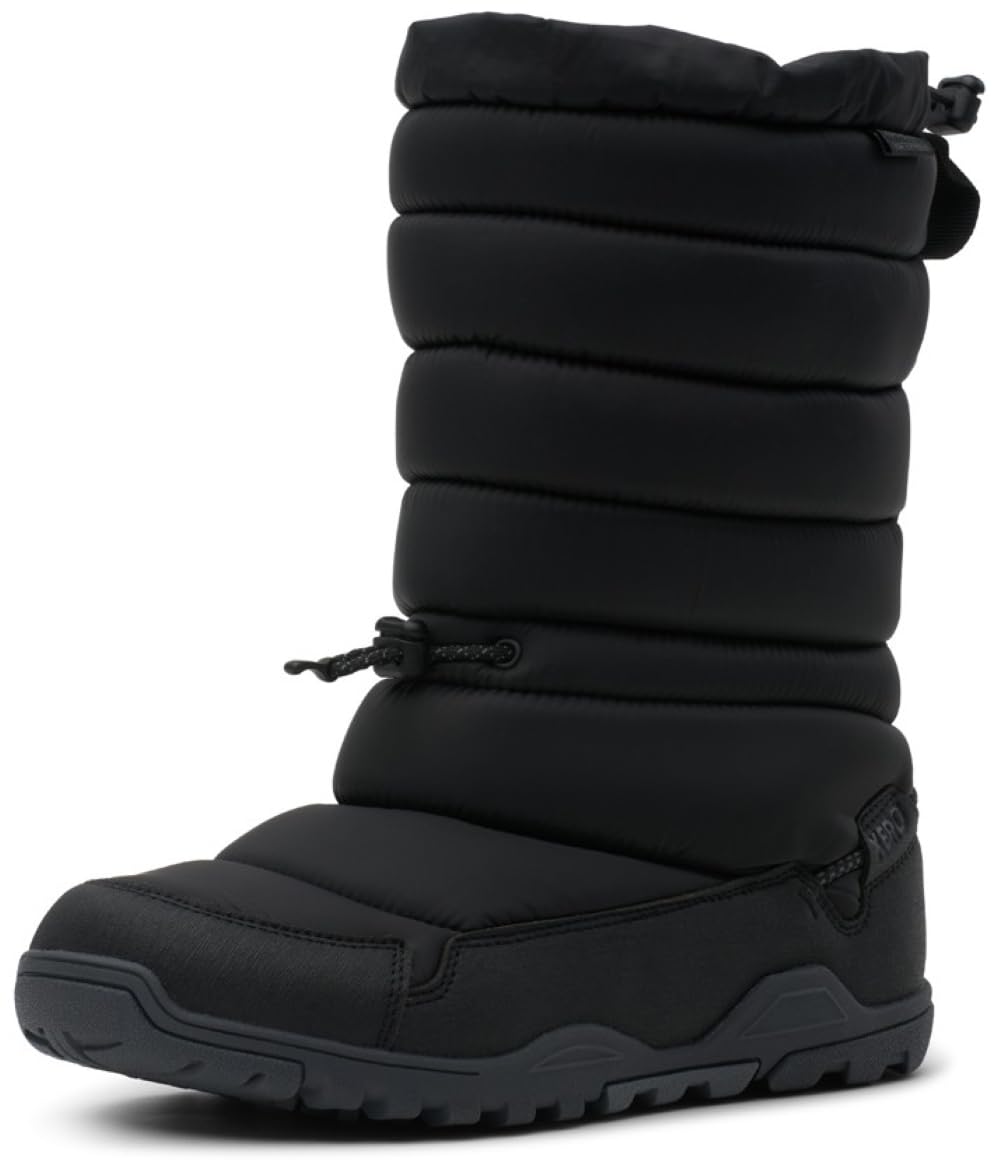
This boot sets the benchmark for a true barefoot experience in wet, cold conditions. The pull-on design eliminates pressure points from laces, while the wide toe box gives your toes full splay room inside a waterproof shell. Users report staying warm and dry through deep snow and extended walks without blisters or foot pain.
The sole delivers a zero-drop platform with excellent slip-resistant tread. Reviewers consistently note that these boots feel more comfortable than conventional snow boots from Keen or Sorel, and they double as house slippers when you come inside—proof that the flexible sole and natural shape work for long wear.
Size up by half a size if you plan to wear two sock layers. The wide shaft accommodates larger calves, and the collar can be worn tall or folded down. For heavy rain and snow, this is the pair that delivers on every barefoot promise.
Why it’s great
- Excellent traction on snow and ice
- Warm without heavy insulation bulk
- Zero-drop platform with flexible feel
Good to know
- Runs slightly snug with thick socks
- Not ideal for warm rain (insulated)
2. JIM GREEN Men’s Barefoot African Ranger Boots
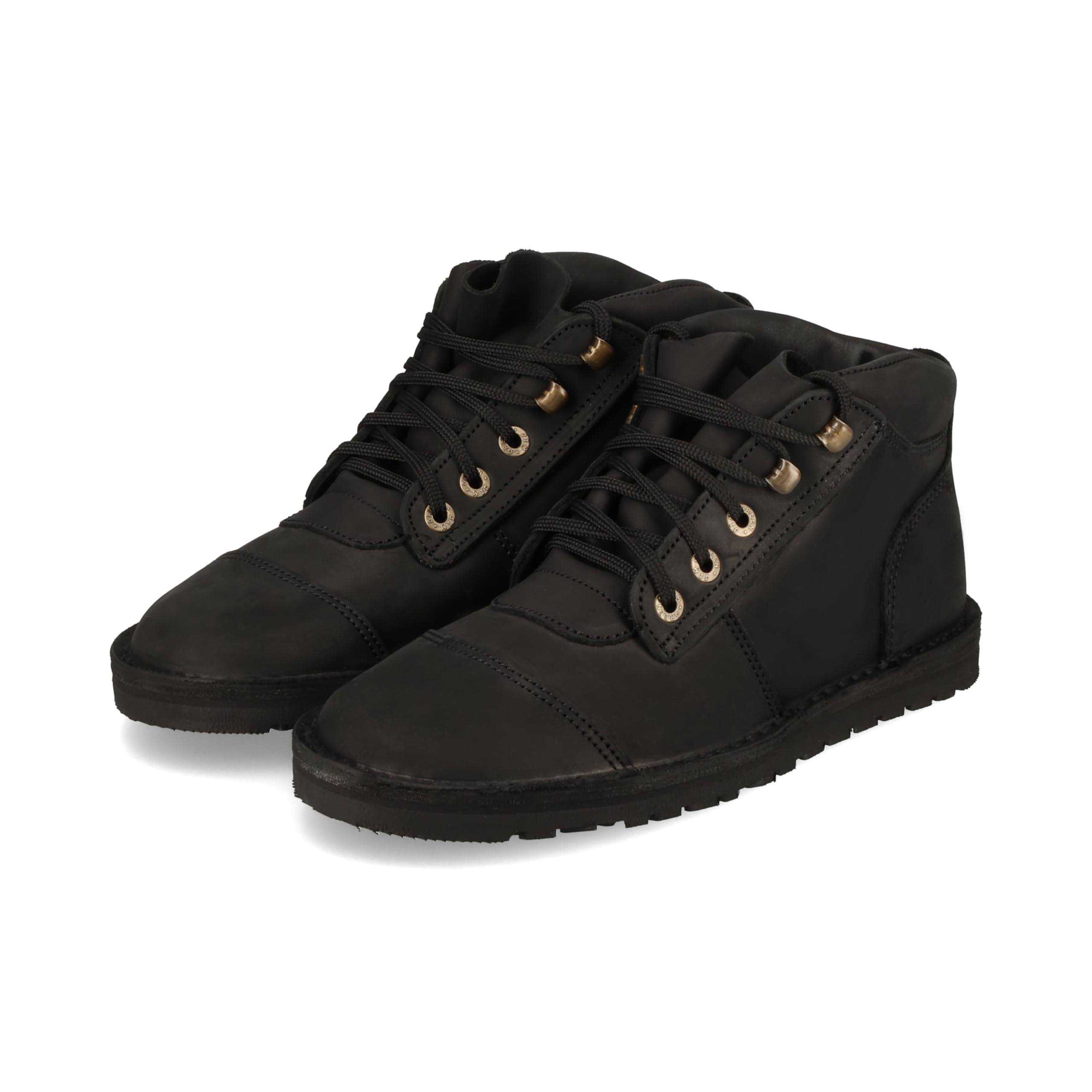
This is the boot that bridges barefoot philosophy with old-world craftsmanship. The full-grain leather upper and stitch-down construction mean these boots can be resoled, giving them a lifespan that far exceeds cemented rubber boots. The wide toe box is genuinely round and deep, accommodating bunions and wide feet without looking duck-like.
The outsole is soft and grippy, providing good traction on wet trails and pavement. Reviewers note that the break-in period can be long—expect blisters during the first week—but after that, the leather molds to your foot for a custom fit. The partial leather sock liner also helps regulate moisture, reducing foot odor even after long days in the rain.
Do not add insoles; the intended barefoot geometry works best with the built-in leather board. These are not winter boots—the uninsulated leather lets cold penetrate in freezing temps—but for heavy spring and fall rain, they are unmatched for durability and ground feel.
Why it’s great
- Resoleable stitch-down construction
- Extremely wide toe box for bunions
- High-quality full-grain leather
Good to know
- Long break-in period with blisters
- Not insulated for cold winter wear
3. Xero Shoes Women’s Ridgeway Barefoot Hiking Boots
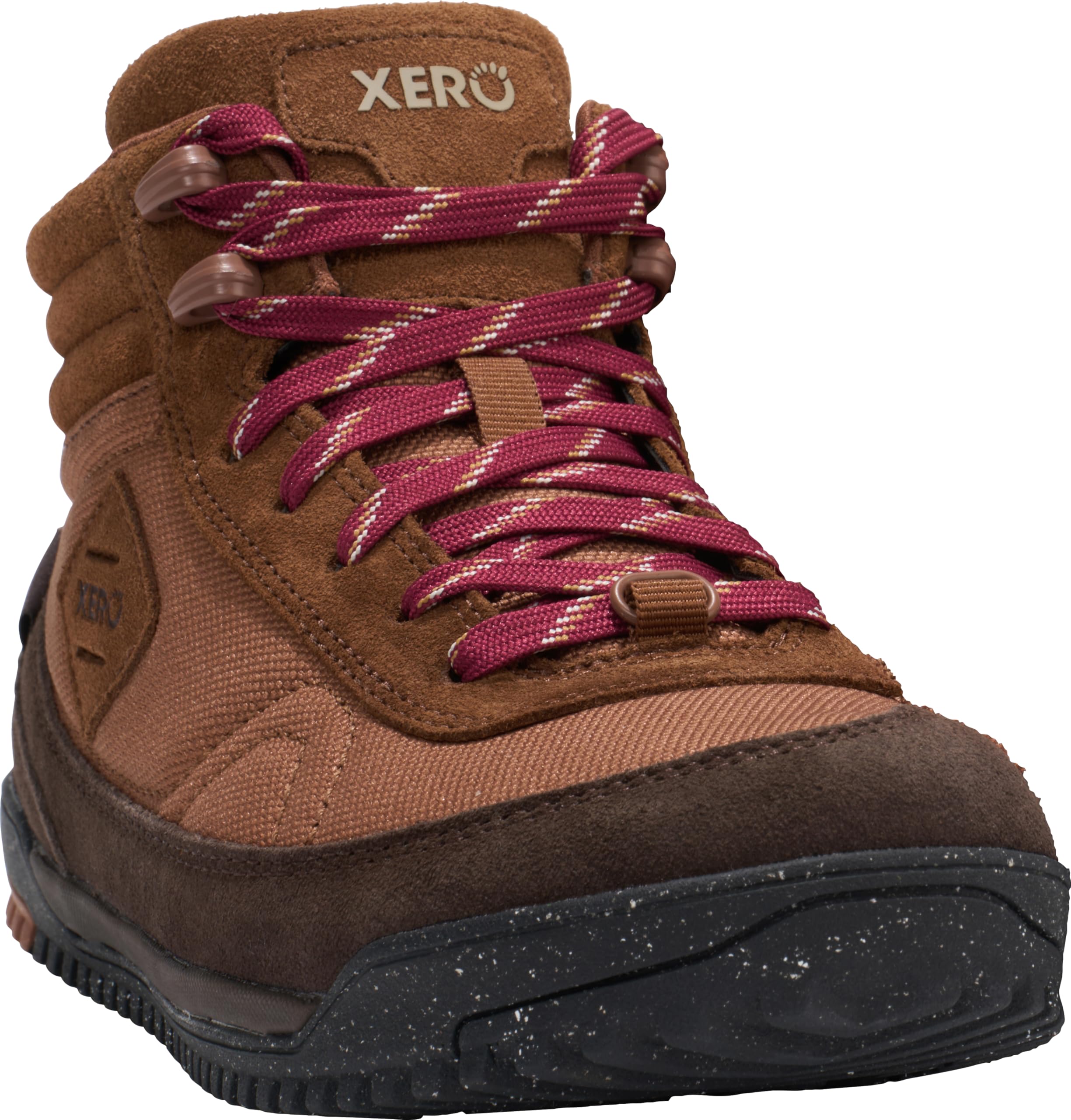
The Ridgeway is a true do-everything boot for wet environments. With a 12mm stack height, it provides enough lift for puddle clearance while keeping your foot close enough to the ground to feel trail texture. The waterproof membrane works reliably—users report no water ingress even after hours in slush.
Reviewers highlight the comfort for all-day wear, with several noting relief from back pain after switching from traditional hiking boots. The tread pattern handles snow well, and the boot is light enough for warm-weather hikes despite the waterproofing. The toe box is wide but not as spacious as European barefoot brands, so size up by half if you have especially broad toes.
One user reported that the light color shows dirt at the toe flex point quickly, and the sole can be slippery on ice. For light rain and mixed-season hiking, this boot delivers solid performance at a fair price point.
Why it’s great
- Versatile across all four seasons
- Lightweight and flexible
- Good waterproofing for wet trails
Good to know
- Toe box is narrower than some barefoot options
- Sole is slippery on pure ice
4. Hike Footwear Vindra Flex Barefoot Winter Boots
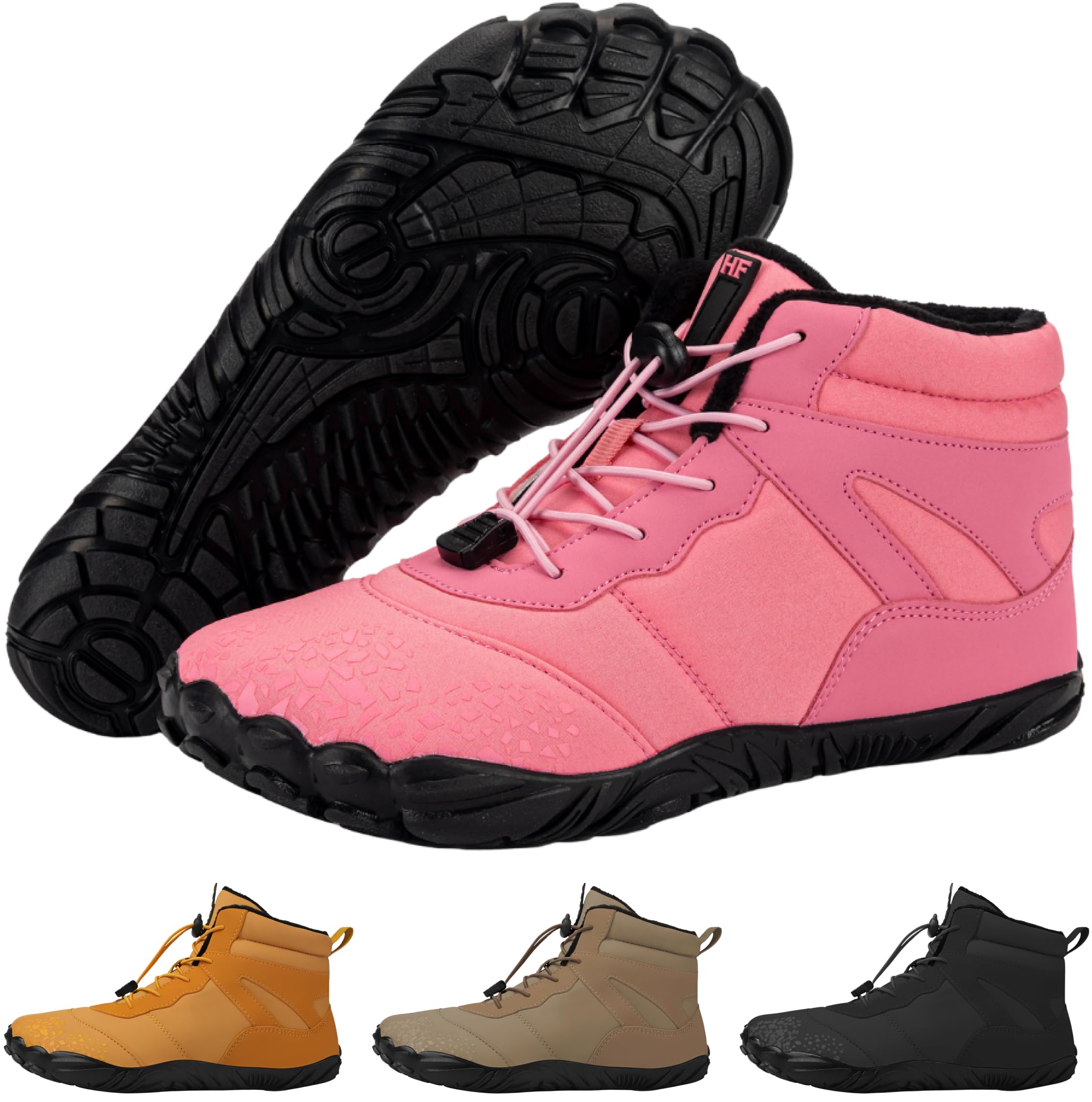
At just over 11 ounces per boot, the Vindra Flex is one of the lightest waterproof barefoot options on the market. The wide toe box and zero-drop sole make it ideal for improving posture and reducing back pain, according to user feedback. The non-slip rubber sole provides solid traction on wet pavement and light snow.
The warm inner lining is a fleece-like material that keeps feet cozy in near-freezing temperatures. However, some users report that the liner bunches underfoot after extended wear, requiring adjustment. The lace system also has a slider that can drag on the floor if you don’t tuck it in properly.
Most users find them true to size, but if you plan to wear thick wool socks, go up one full size. For mild winter rain and slush, these boots offer a compelling combination of warmth and lightweight freedom.
Why it’s great
- Extremely lightweight for a waterproof boot
- Warm fleece lining for cold rain
- Non-slip outsole on wet surfaces
Good to know
- Liner can bunch underfoot
- Lace slider may touch the ground
5. Xero Shoes Women’s Scrambler Mid Waterproof Shoes
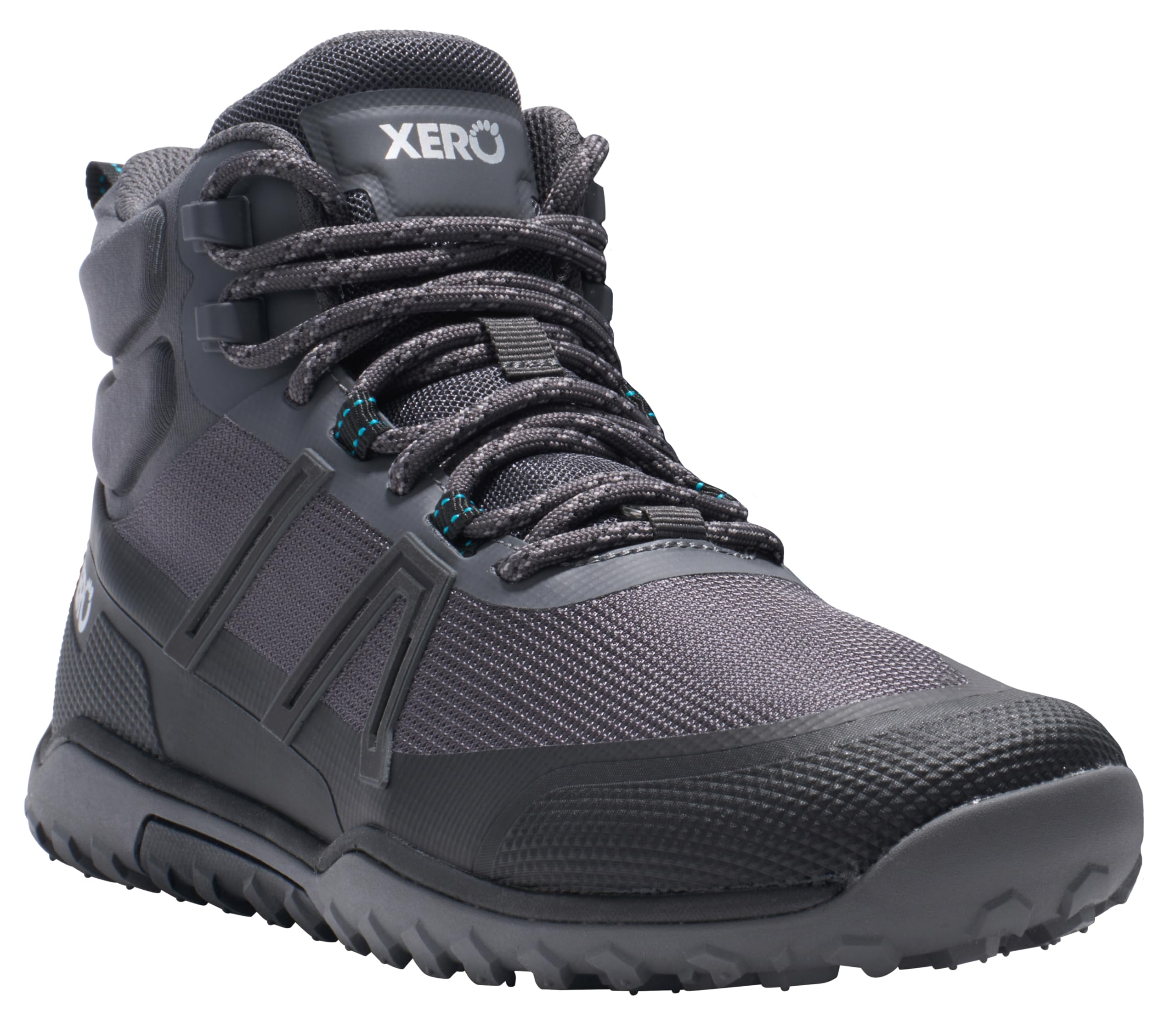
The Scrambler Mid is the boot that transitions seamlessly from your morning commute to a weekend hike. The 5mm FeelTrue sole provides excellent ground feel while still offering enough protection from sharp objects. Users describe the fit as “perfect” out of the box, with a comfortable toe box that allows natural splay without being sloppy.
The waterproofing holds up against waves and heavy rain—one reviewer reported no water ingress after stepping through standing water. The ankle support is good for a barefoot boot, providing stability on uneven ground without restricting movement. A short break-in period of about a week is needed for full comfort.
Some users with extra-wide feet found the fit too narrow in the toebox, and the 60-inch laces may need to be replaced with longer ones. If your feet are on the wider side, consider sizing up or looking for a model with a roomier forefoot.
Why it’s great
- Excellent ground feel through 5mm sole
- Good ankle support for a barefoot design
- Lightweight and flexible for commuting
Good to know
- Narrow for extra-wide feet
- Laces are short for larger sizes
6. Hike Footwear Caspar Pro HF Winter Barefoot Shoes
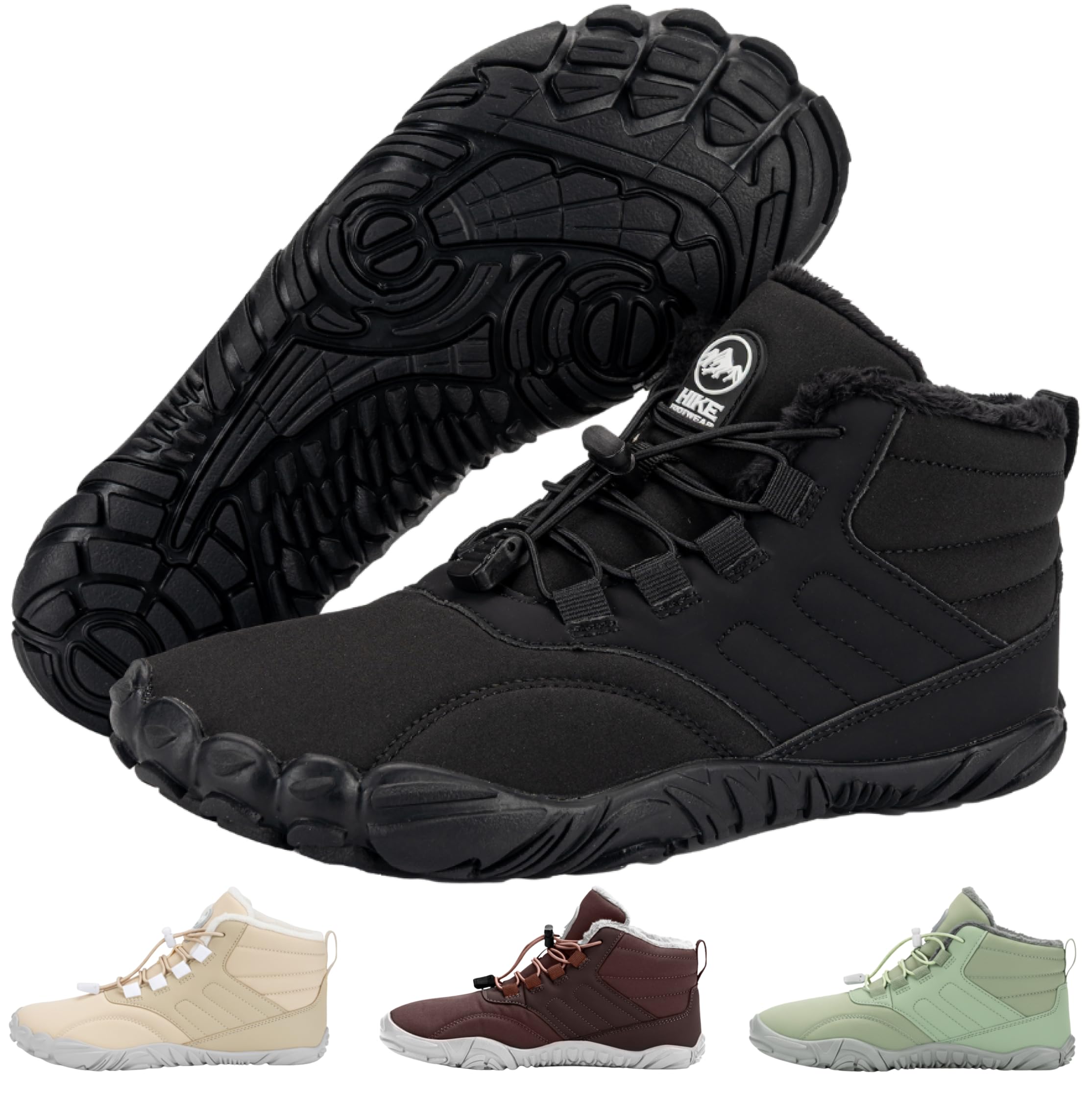
The Caspar Pro HF is built for warmth without sacrificing the barefoot profile. The soft fleece lining wraps your foot in a cozy layer that works well even without socks, making it a strong choice for users with neuropathy who need extra warmth and a non-restrictive toebox. The bungee lacing system makes them easy to slip on and off.
The rubber outsole has thin treads that provide good ground feel but can be slippery on gravel. Users recommend sizing up one to two sizes—the European sizing runs small, especially if you plan to wear thick socks. The quality exceeds expectations given the price point; multiple reviewers own several pairs for daily wear.
These are not meant for technical hiking or deep snow. The thin tread and flexible sole are best suited for urban rain, puddle walking, and cold-weather errands. For warmth and comfort in a zero-drop package, this boot delivers at a budget-friendly tier.
Why it’s great
- Very warm fleece lining for cold rain
- Easy bungee lacing system
- Good for neuropathy and sensitive feet
Good to know
- Runs small; size up significantly
- Thin tread can slip on gravel
7. Hike Footwear HF Winter Barefoot Boots
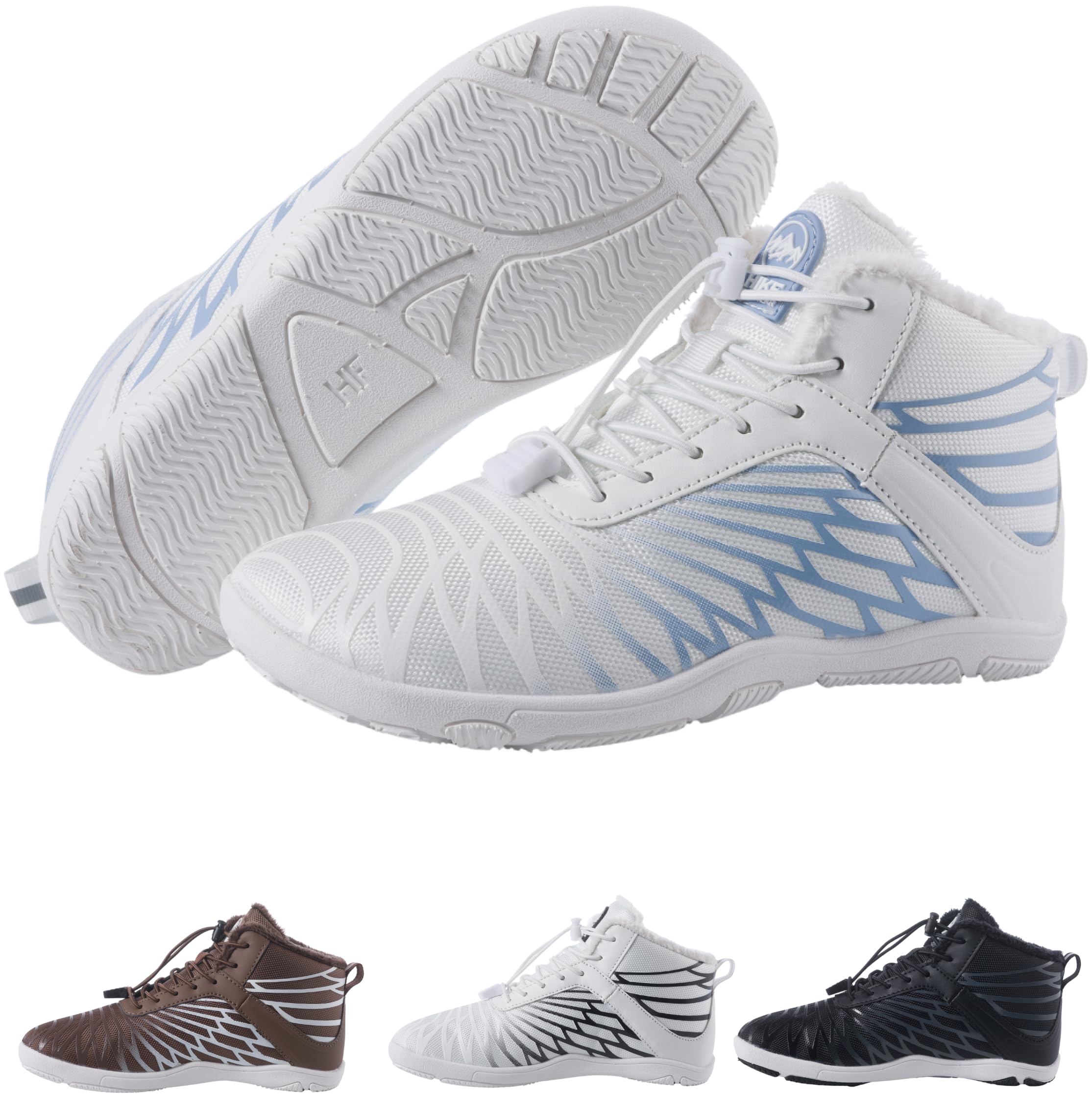
The HF Winter Boot is an entry-level option that brings the essentials of barefoot geometry—zero-drop, wide toe box, and flexible sole—into a waterproof package. Users consistently praise the warmth and comfort, with one reviewer noting it motivated them to start taking winter walks again. The boot is lightweight and easy to put on.
The toe box is wide but not especially deep, which some users with high-volume feet found restrictive. Sizing is a recurring theme: the boot runs small, so sizing up one full size is recommended for most foot shapes. The waterproofing holds up for puddle walking and light snow, but it is not designed for deep submersion.
This is a solid entry point for someone new to barefoot boots who wants to test the waters without a large investment. For regular rain and slush, it gets the job done, but the construction does not have the same longevity as premium options like the Jim Green or Xero Alpine models.
Why it’s great
- Warm and comfortable for winter walks
- Zero-drop sole with wide toe box
- Affordable entry to barefoot rain boots
Good to know
- Toe box is wide but not deep
- Runs small; size up one full size
FAQ
How much ground feel should I expect from barefoot rain boots?
Can waterproof barefoot boots also be breathable?
Final Thoughts: The Verdict
For most users, the barefoot rain boots winner is the Xero Alpine Pull-On Snow Boot because it combines true zero-drop geometry, reliable waterproofing, and genuine warmth without sacrificing ground feel. If you want a premium leather boot that can be resoled, grab the JIM GREEN African Ranger. And for a budget-friendly entry into barefoot wet-weather wear, nothing beats the Hike Footwear HF Winter Boot for its lightweight design and comfortable warmth.

Mo Maruf
I created WellFizz to bridge the gap between vague wellness advice and actionable solutions. My mission is simple: to decode the research and give you practical tools you can actually use.
Beyond the data, I am a passionate traveler. I believe that stepping away from the screen to explore new environments is essential for mental clarity and physical vitality.