Our readers keep the lights on and my smoothie glass nicely filled. As an Amazon Associate, I earn from qualifying purchases.
The difference between a good gaming session and a great one often comes down to the screen in front of you. A 65-inch canvas offers the perfect balance of immersion and practicality, but the wrong specs—a low refresh rate, poor input lag, or a panel that crushes blacks—can pull you right out of the action. The panel must keep up with your reflexes, not fight them.
I’m Mohammad Maruf — the founder and writer behind WellFizz. I’ve spent years analyzing display hardware, refresh rate standards, and input lag performance to separate marketing hype from meaningful gaming features. This guide focuses on measurable specs that actually affect your gameplay, not brand prestige.
Whether you are chasing high-frame-rate competitive titles or deep single-player worlds, finding the right 65 inch tv for gaming requires understanding panel technology, HDMI 2.1 bandwidth, and VRR compatibility—three factors that define the modern gaming experience.
How To Choose The Best 65 Inch TV For Gaming
Selecting a gaming TV in this size class is about more than screen real estate. Four technical pillars determine whether a set delivers a fluid, responsive gaming experience or introduces delays and artifacts that undermine your performance.
Native Refresh Rate and VRR Support
A 60Hz panel is the bare minimum, but 120Hz is the standard for modern consoles, and 144Hz is increasingly common for PC and high-end console use. Variable Refresh Rate (VRR) synchronizes the display’s refresh rate to the game’s frame output, eliminating screen tearing without introducing stutter. Look for HDMI 2.1 VRR, AMD FreeSync Premium, or NVIDIA G-SYNC Compatible certifications.
HDMI 2.1 Bandwidth and Port Count
True HDMI 2.1 ports support 4K at 120Hz with full 48 Gbps bandwidth. Many budget TVs advertise HDMI 2.1 but cap bandwidth at 24 Gbps, which limits color depth or forces chroma subsampling. You need at least two full-bandwidth HDMI 2.1 inputs to connect a PS5 and an Xbox Series X simultaneously without swapping cables.
Panel Technology: Mini-LED, QLED, or OLED
Mini-LED and QLED panels offer high brightness and excellent color volume, making them ideal for brightly lit rooms. OLED provides perfect black levels and instantaneous pixel response, but peak brightness is lower, and burn-in risk exists for static HUDs. The choice depends on your room lighting and tolerance for potential image retention.
Input Lag and Auto Low Latency Mode (ALLM)
Input lag under 10ms at 120Hz is the target for competitive gaming. ALLM automatically switches the TV into its lowest-lag picture mode when it detects a game signal, so you do not have to dig through menus mid-session. Some TVs also offer a dedicated game menu overlay for quick access to VRR status, crosshairs, and black stabilizer settings.
Quick Comparison
On smaller screens, swipe sideways to see the full table.
| Model | Category | Best For | Key Spec | Amazon |
|---|---|---|---|---|
| iFFALCON 65U85 | Mini-LED | High-refresh 4K gaming on a budget | 144Hz native, 4x HDMI 2.1 | Amazon |
| TCL T7 Series | QLED | Bright room QLED with 144Hz | 144Hz panel, QLED color | Amazon |
| Hisense U6 Series | Mini-LED | Mini-LED brightness with Fire TV | 144Hz, 600 local dimming zones | Amazon |
| TCL Q6 QLED | QLED | Entry-level QLED with 120Hz accelerator | Game Accelerator 120, 60Hz panel | Amazon |
| Sony BRAVIA 2 II | LED | PS5 exclusive features on a budget | PS5 Auto HDR Tone Mapping | Amazon |
| Samsung Q70D | QLED | Samsung ecosystem with Gaming Hub | Motion Xcelerator 120Hz | Amazon |
| Toshiba Z670R | Mini-LED | Japanese-engineered picture processing | 144Hz, REGZA Engine ZRi Gen3 | Amazon |
| Samsung QN70F | Neo QLED | AI upscaling and Mini-LED precision | 144Hz, NQ4 AI Gen2 Processor | Amazon |
| Sony BRAVIA 3 II | LED | XR Processor cinematic gaming | XR Processor, 120Hz, Anti-Glare | Amazon |
| LG C5 OLED | OLED | Perfect blacks and instant response | 120Hz, G-SYNC, FreeSync Premium | Amazon |
| LG C1 OLED | OLED | OLED gaming at a lower entry point | 120Hz, α9 Gen 4, G-SYNC | Amazon |
In‑Depth Reviews
1. iFFALCON 65″ 4K MiniLED Smart TV (65U85)
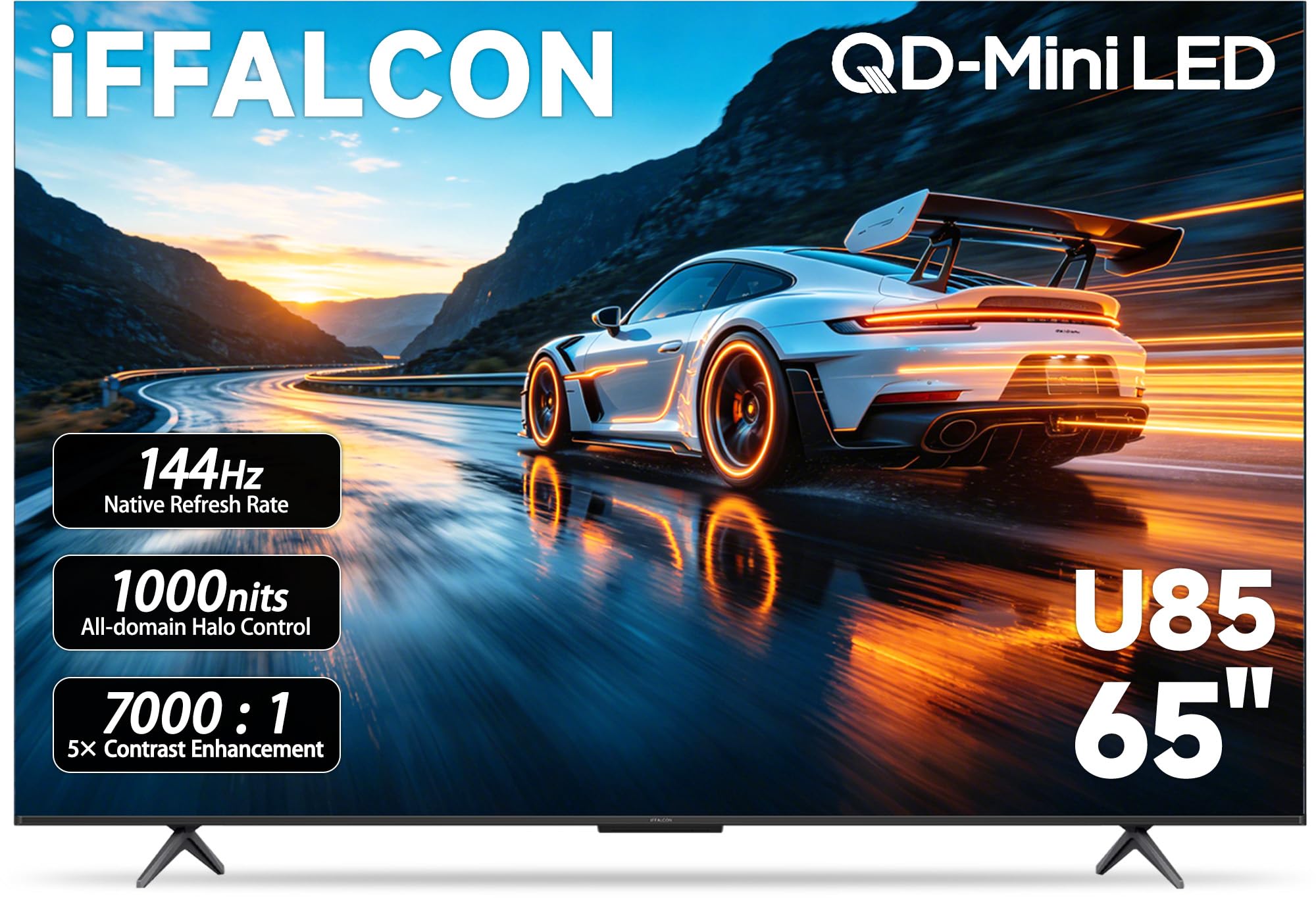
The iFFALCON 65U85 punches well above its tier with a native 144Hz Mini-LED panel and a full suite of four HDMI 2.1 ports—two dedicated to 4K@144Hz for the latest consoles and gaming PCs. Variable Refresh Rate extends up to 288Hz, and FreeSync Premium Pro certification ensures tear-free action with low input lag. Peak brightness hits roughly 1000 nits, giving HDR highlights genuine punch in bright rooms.
Dolby Vision IQ and Dolby Vision Gaming support mean the TV automatically adjusts picture settings based on ambient light and content type, which is a rare find at this price point. The IMAX Enhanced certification adds another layer of compatibility for streaming titles mastered in that format. Google TV with built-in Chromecast and AirPlay 2 makes app selection straightforward, and the 50W 2.1-channel audio system with Dolby Atmos passthrough delivers solid room-filling sound without an external bar.
The set also includes hotel mode and IP/IR control—features aimed at commercial installations but useful for users who want locked-down settings or remote management. The thinness of the panel is average, but the modular stand offers stable support. For gamers who need multiple high-bandwidth HDMI inputs and a fast panel without the OLED premium, this is the strongest value proposition in the 65-inch segment.
Why it’s great
- Native 144Hz panel with VRR up to 288Hz
- Four full-bandwidth HDMI 2.1 ports
- Dolby Vision IQ and Gaming support included
Good to know
- Panel thickness is slightly above ultra-slim competitors
- Occasional flickering reported on early units
2. TCL 65-Inch T7 Series QLED (65T7)
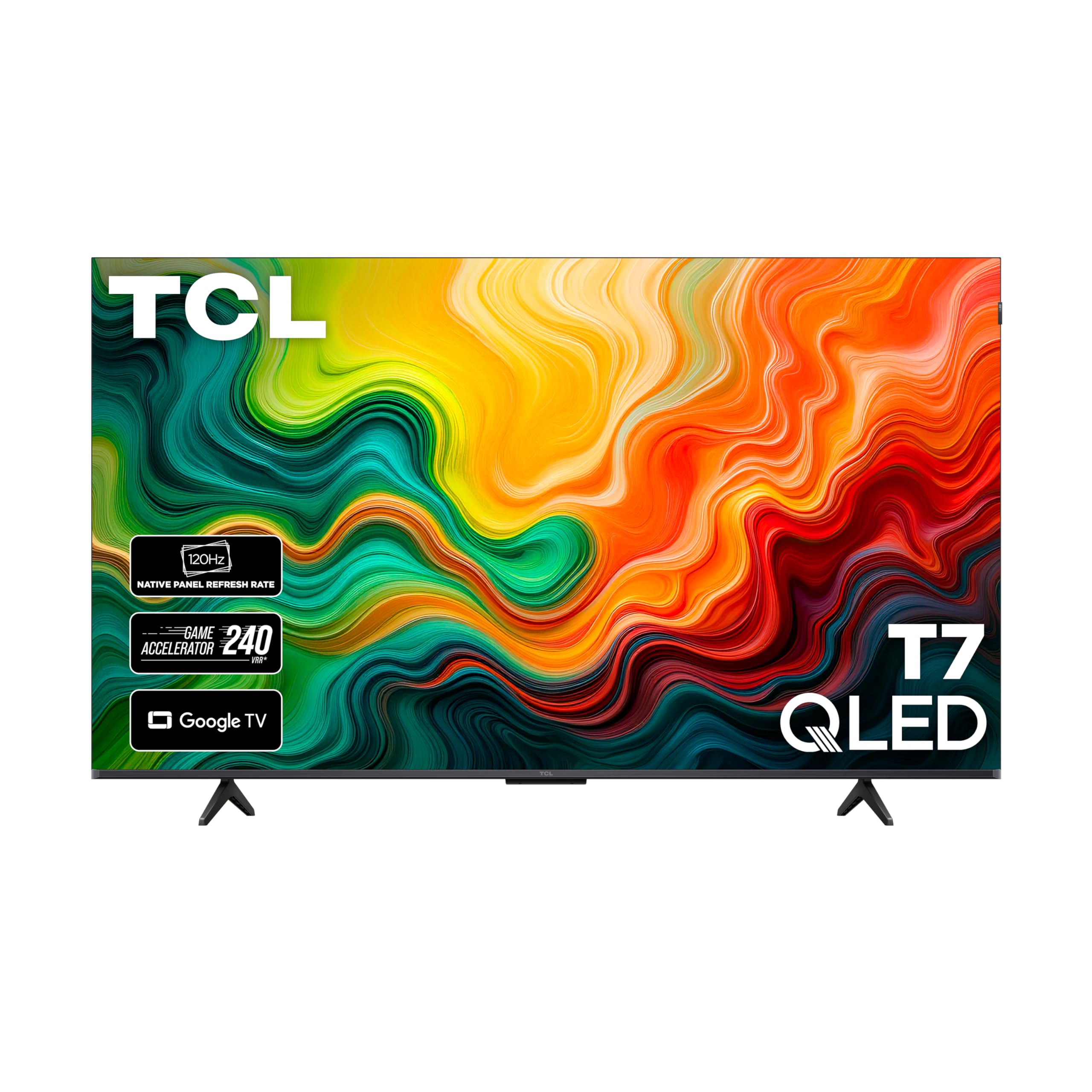
The TCL T7 Series brings QLED quantum dot color to a 144Hz panel, covering nearly the entire DCI-P3 color space for vibrant, saturated hues that maintain their intensity even in well-lit rooms. The AIPQ Pro Processor handles upscaling and contrast optimization intelligently, delivering a clean 4K image from 1080p sources without introducing visible artifacts. Motion Rate 480 with MEMC frame insertion ensures fast-moving objects stay sharp.
Four HDMI inputs are included, one with eARC, but the 144Hz mode is handled through a single designated port. The FullView 360 metal bezel-less design gives the set a sleek profile, and the height-adjustable feet offer flexibility for soundbar placement. Google TV with built-in Chromecast and Apple AirPlay 2 covers streaming needs, and the voice remote supports Alexa, Google Assistant, and Apple HomeKit.
PC gamers should be aware that the TV does not always wake from power-save mode via HDMI without manually reconnecting the cable. The built-in speakers are adequate for casual use but lack the bass depth of a dedicated soundbar. For users prioritizing color volume and brightness in a living room with windows, the T7 delivers strong performance at a mid-range price.
Why it’s great
- Quantum dot color with wide DCI-P3 coverage
- Bezel-less design with adjustable stand
- Multi-assistant voice control support
Good to know
- HDMI wake-from-sleep bug with PC connections
- Only one port supports full 144Hz bandwidth
3. Hisense 65″ U6 Series Mini-LED (65U65QF)
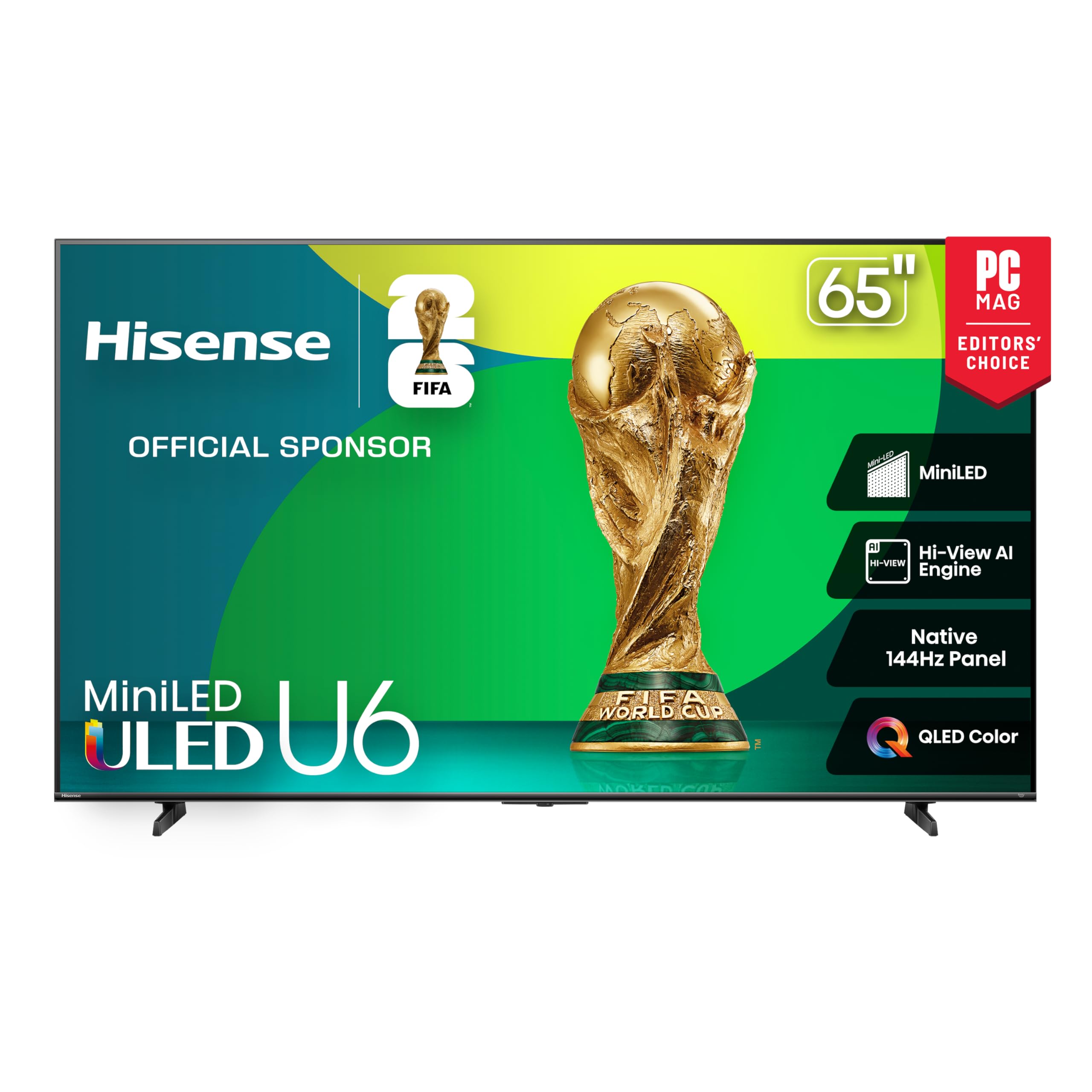
The Hisense U6 Series delivers serious Mini-LED hardware with up to 600 local dimming zones and a peak brightness of roughly 1000 nits. This combination produces deep blacks with minimal halo, strong highlight pop, and excellent HDR contrast for games like Cyberpunk 2077 or Forza Horizon 5. The native 144Hz panel supports VRR from 48Hz to 144Hz and includes AMD FreeSync Premium for smooth, tear-free gameplay on both console and PC.
Dolby Vision IQ and HDR10+ Adaptive are both supported, and the Hi-View AI Engine adjusts picture parameters based on scene content in real time. The built-in subwoofer is a standout feature for a TV—it delivers genuine low-end extension that makes explosions and engine roars feel more physical without needing a separate soundbar. Fire TV OS with Alexa built-in provides a snappy interface, and all four HDMI ports support 4K at 60Hz, but only two of them are HDMI 2.1 capable of 144Hz.
The set is heavier than some competitors due to the additional audio hardware, so a second person is recommended for wall mounting. The viewing angle is solid for a VA-based panel, but off-axis contrast drops noticeably in very bright rooms. For gamers who prioritize deep contrast and bass without adding external speakers, this is a compelling choice.
Why it’s great
- Up to 600 local dimming zones for high contrast
- Built-in subwoofer provides genuine low-end audio
- Native 144Hz with FreeSync Premium VRR
Good to know
- Only two HDMI ports are 144Hz capable
- Heavier build due to integrated subwoofer
4. TCL 65-Inch Q6 QLED (65Q650G)

The TCL Q6 QLED uses a 60Hz panel with Game Accelerator 120, which accepts a 120Hz signal but processes it at a lower vertical resolution internally. This makes it a mixed option for true high-refresh gaming—it works for console titles that support 120fps, but the image clarity is not identical to a native 120Hz panel. Quantum Dot technology delivers over a billion colors with good vibrancy, and HDR PRO+ covers Dolby Vision, HDR10+, and HLG.
Motion Rate 240 with MEMC frame insertion helps smooth fast-paced content, and AMD FreeSync support reduces screen tearing in supported games. Google TV with Chromecast built-in handles streaming apps reliably, and the voice remote supports Alexa. The built-in speakers are notably weak—most users will want a soundbar almost immediately.
Some units have exhibited OS lag and occasional freezing that requires a power cycle. The panel’s contrast ratio is decent for an entry-level QLED, but local dimming is absent, so black levels in dark scenes will appear grayish in a dim room. For budget-conscious buyers who want QLED color and basic 120Hz support without buying a native high-refresh panel, this works—but the compromises are clear.
Why it’s great
- Quantum dot color at an entry-level price
- Game Accelerator 120 for basic 120Hz support
- Dolby Vision and HDR10+ included
Good to know
- Native 60Hz panel, not true 120Hz
- Built-in speakers lack bass and volume
5. Sony BRAVIA 2 II 65 Inch (K-65S20M2)

The Sony BRAVIA 2 II is built for PlayStation 5 users who want exclusive integration features. Auto HDR Tone Mapping and Auto Genre Picture Mode communicate directly with the console to optimize HDR output and switch to Game Mode automatically when a game is detected. The 4K Processor X1 handles upscaling competently, bringing 1080p and 1440p content closer to 4K sharpness without visible ringing.
Motionflow XR keeps fast-moving games smooth, and the Game Menu overlay puts all gaming picture settings, including VRR status and black level adjustment, in one place. The LED panel is not the brightest on this list, but the anti-glare coating helps maintain visibility in rooms with ambient light. Google TV with Sony Pictures CORE provides access to a library of movies redeemable with included credits.
Panel refresh rate is capped at 60Hz with motion interpolation, so high-frame-rate gaming at 120fps is not supported natively. The TV has been reported to occasionally drop Wi-Fi connectivity and require a restart, which is frustrating during an online gaming session. For PS5 owners who value seamless console integration over raw refresh rate specs, this is a reasonable choice.
Why it’s great
- Exclusive PS5 Auto HDR Tone Mapping
- Game Menu overlay for quick settings access
- Anti-glare screen works well in bright rooms
Good to know
- Max native refresh rate is 60Hz
- Occasional Wi-Fi dropping reported
6. Samsung 65-Inch QLED Q70D (QN65Q70D)
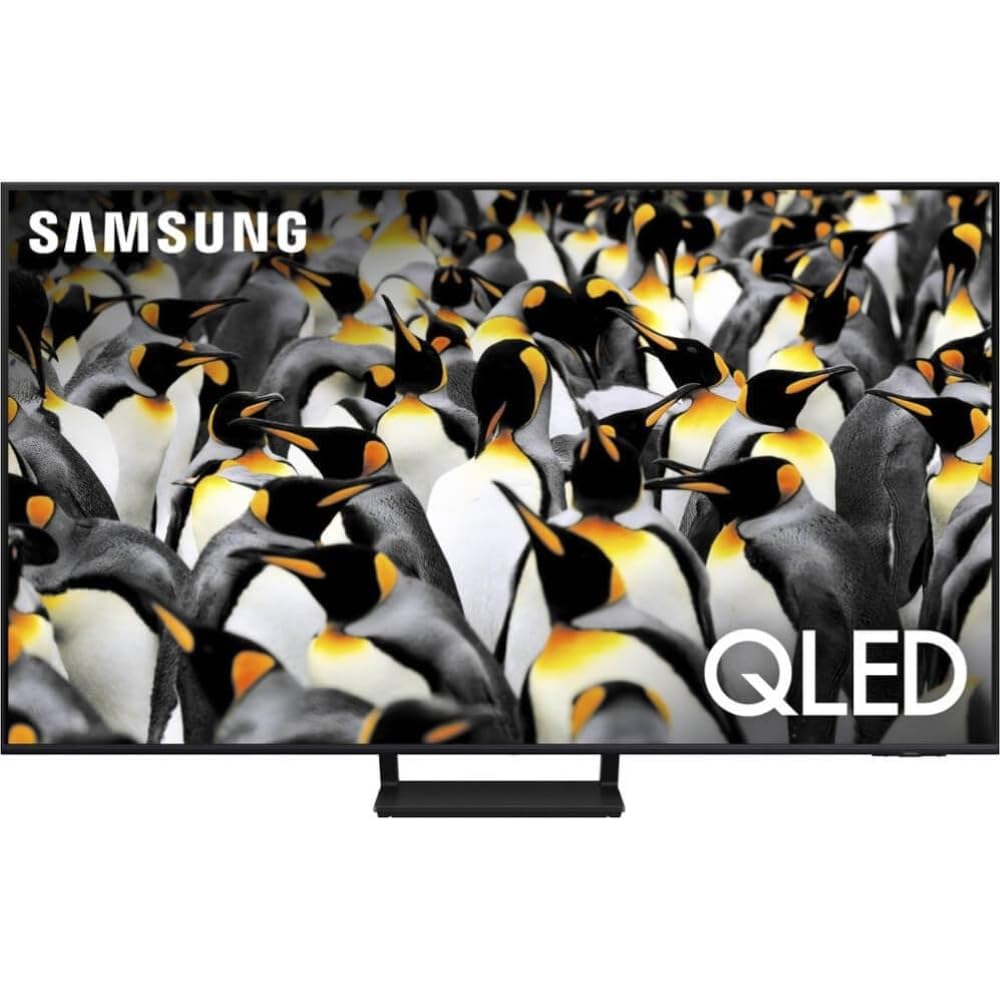
The Samsung Q70D uses Dual LED backlight technology to adjust color temperature between warm and cool LEDs, improving contrast accuracy compared to single-backlight QLED sets. Motion Xcelerator 120Hz processes up to 120 frames per second with MEMC interpolation, keeping sports and racing games smooth. The Quantum Processor 4K with AI upscaling sharpens low-resolution content effectively without introducing excessive noise.
Object Tracking Sound Lite creates a virtual 3D audio field that follows on-screen movement, using the TV’s built-in speakers to pan sound effects laterally. Samsung Gaming Hub provides cloud gaming access to Xbox Game Pass, NVIDIA GeForce NOW, and Amazon Luna without a console. Pantone Validation ensures color accuracy across the DCI-P3 spectrum, which matters for games that target precise visual fidelity.
Some users report that the picture appears cloudy or blurry on dark scenes, with faces looking blocky and motion handling struggling in low-light content. The one-legged stand requires a wide, stable surface and may not fit all entertainment centers. For Samsung ecosystem users who want Gaming Hub integration and good motion processing for sports titles, the Q70D delivers, but dark-room performance is not its strength.
Why it’s great
- Dual LED backlight improves contrast accuracy
- Object Tracking Sound Lite for spatial audio
- Samsung Gaming Hub with cloud gaming access
Good to know
- Dark scene performance can appear cloudy
- One-legged stand needs wide surface area
7. Toshiba 65″ Z670R Mini-LED (65Z670R)

The Toshiba Z670R is engineered around the REGZA Engine ZRi Gen3, an AI picture processor developed by Toshiba’s Japanese team that performs scene-by-scene optimization of clarity, contrast, and color. Mini-LED backlight with full array local dimming delivers deeper blacks and more precise highlight control than edge-lit alternatives. The native 144Hz panel supports VRR up to 144Hz with AMD FreeSync Premium and ALLM for low-lag console and PC gaming.
QLED quantum dot technology covers over a billion shades, and the Total HDR Solution Pro supports Dolby Vision IQ, HDR10+, and HDR10+ Adaptive, ensuring compatibility across streaming platforms and disc formats. The REGZA Power Audio Pro system includes a built-in bass woofer and dual clear direct speakers, producing room-filling sound with genuine low-frequency extension that rivals budget soundbars. Fire TV with Alexa built-in offers a clean home screen and voice control.
The AI Light Sensor Pro adjusts brightness and color balance based on room lighting, reducing eye strain during long gaming sessions. The design is minimalist with clean lines inspired by Japanese aesthetics, and the build quality feels solid. For gamers who want excellent picture processing out of the box with strong integrated audio, the Z670R is a premium choice without the OLED price.
Why it’s great
- REGZA Engine ZRi Gen3 for advanced picture processing
- Built-in bass woofer with Dolby Atmos support
- Native 144Hz with FreeSync Premium VRR
Good to know
- Fire TV OS may not suit all users
- AI Light Sensor can be too aggressive in dim rooms
8. Samsung 65-Inch Neo QLED QN70F

The Samsung QN70F is a 2025 Neo QLED model that uses precision-controlled Mini LEDs and the NQ4 AI Gen2 Processor with 20 neural networks to upscale content to 4K. Quantum Matrix Technology controls the Mini LEDs with high granularity, producing sharp contrast with minimal blooming around bright objects. Motion Xcelerator 144Hz supports VRR gaming at up to 4K 144Hz, making it suitable for both high-frame-rate PC titles and future console updates.
Samsung Vision AI analyzes on-screen content to optimize picture and sound settings in real time, and the Tizen OS provides access to Samsung TV Plus with thousands of free channels. The set supports HDR10+ Adaptive, but notably lacks Dolby Vision, which is a dealbreaker for some HDR libraries. The build is remarkably thin, but the slim profile makes the panel more fragile during shipping and setup.
Color volume is excellent thanks to Quantum Dot technology, and the anti-reflection coating handles bright room glare better than the Q70D. Some users have reported price drops shortly after purchase, and the remote is compact but takes time to learn due to reduced button count. For those who prefer Samsung’s processing and want Dolby Vision alternatives, the QN70F is a strong contender.
Why it’s great
- NQ4 AI Gen2 Processor with 20 neural networks
- Motion Xcelerator 144Hz with VRR support
- Excellent color volume and anti-glare coating
Good to know
- No Dolby Vision HDR support
- Thin design is more fragile during handling
9. Sony BRAVIA 3 II 65 Inch (K-65XR30M2)
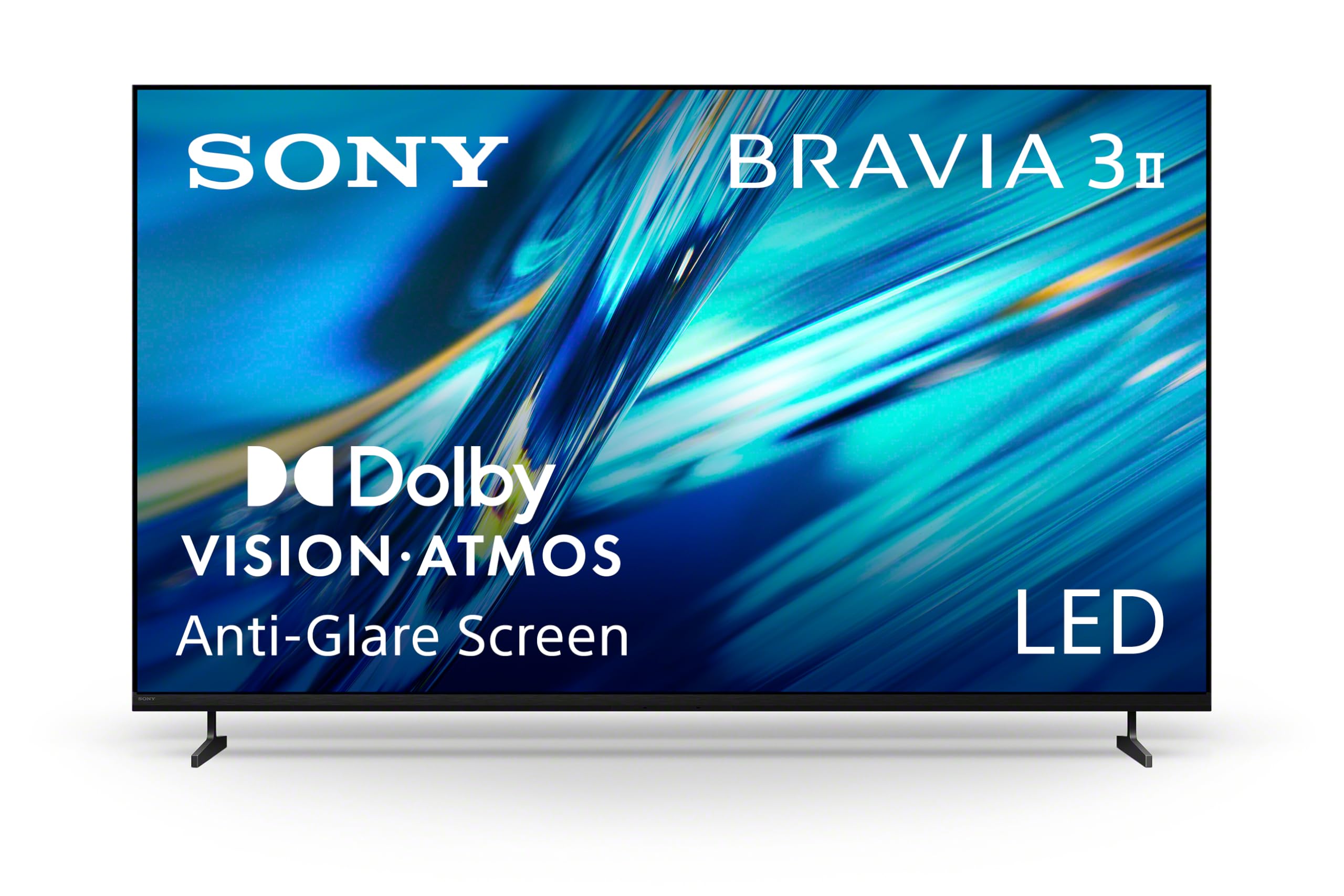
The Sony BRAVIA 3 II is built around the XR Processor, which uses AI scene recognition to optimize color, contrast, and clarity in real time. The 120Hz panel with HDMI 2.1 supports 4K/120, VRR, and ALLM for smooth, responsive gameplay. The anti-glare screen, available on the 65-inch model, effectively diffuses reflections from windows and lamps, making it usable in bright rooms without distracting hotspots.
XR Triluminos Pro reproduces over a billion colors with natural shades, and XR Clear Image uses AI to restore lost detail in low-resolution content. Dolby Vision and Dolby Atmos are both supported, and DTS:X creates immersive audio from the built-in speakers. Google TV with Gemini integration allows natural language search, and Sony Pictures CORE includes 5 credits for recent movie rentals and 12 months of streaming access to a library of classics.
The TV is optimized for PlayStation 5 with exclusive Auto HDR Tone Mapping and Auto Genre Picture Mode. However, setup involved a lengthy Google account login process with multiple password prompts, and the software exhibited Wi-Fi connectivity drops that required unplugging the TV. The remote is functional but requires a learning curve for media playback controls. For gamers who prioritize image processing and PS5 integration over raw brightness, the BRAVIA 3 II delivers a polished experience despite software quirks.
Why it’s great
- XR Processor with AI scene-by-scene optimization
- Anti-glare screen for bright room gaming
- PS5 exclusive HDR and genre mode integration
Good to know
- Wi-Fi connectivity drops reported by multiple users
- Setup requires lengthy Google account process
10. LG OLED65C5P C5 Series 4K OLED

The LG C5 OLED uses the Alpha 9 AI Processor Gen8 and over 8.3 million self-lit pixels to produce perfect blacks and infinite contrast. Pixel response time is near-instantaneous, eliminating motion blur completely even at 120fps. Bright Room Ready certification means the panel can reach higher luminance than previous generations, improving HDR highlight visibility in moderate ambient light without sacrificing black depth.
HDMI 2.1 ports support 4K at 120Hz with both NVIDIA G-SYNC and AMD FreeSync Premium compatibility, covering PC and console gamers across ecosystems. The Game Optimizer dashboard provides quick access to VRR status, input lag measurement, and genre-specific picture presets. webOS offers a polished smart TV experience with support for all major streaming apps, Chromecast, and multiple voice assistants including Google Assistant and Alexa.
The remote uses a magic pointer interface that can take time to adjust to, and the glossy screen is reflective in rooms with direct window light. Text clarity when used as a PC monitor is excellent at 40% brightness, making it suitable for mixed use. For gamers who demand the best contrast and motion clarity available, the C5 is a top-tier OLED choice that justifies its premium positioning.
Why it’s great
- Perfect black levels with infinite contrast ratio
- Supports both G-SYNC and FreeSync Premium
- Game Optimizer dashboard with comprehensive controls
Good to know
- Glossy screen reflects bright room lighting
- Magic remote pointer interface requires adjustment
11. LG C1 Series 65-Inch OLED (OLED65C1PUB)

The LG C1 remains a relevant OLED gaming TV thanks to its α9 Gen 4 AI Processor 4K, which handles motion interpolation, upscaling, and dynamic tone mapping effectively. The panel produces deep, inky blacks with per-pixel illumination, and the response time is effectively instantaneous—there is no visible ghosting in fast-paced competitive shooters. NVIDIA G-SYNC and FreeSync Premium compatibility ensure tear-free gameplay across both ecosystems.
HDMI 2.1 ports support 4K at 120Hz, and the Game Optimizer menu consolidates VRR, input lag, and genre-specific picture settings. Filmmaker Mode preserves director intent for HDR movies, and Dolby Vision IQ adjusts picture based on ambient light. webOS remains responsive, and the remote supports Magic Pointer navigation, though the glossy finish collects fingerprints quickly.
The C1 is a 2021 model, so stock is increasingly limited to refurbished or third-party sellers. The EVO panel lottery exists—some units ship with WBC panels, others with brighter WBE panels—and the performance difference is noticeable in HDR peak brightness. The screen is reflective, and the back-firing speakers sound thin without a soundbar. For buyers who want OLED gaming at a lower entry point and are comfortable buying a previous-generation model, the C1 still delivers excellent motion clarity.
Why it’s great
- Instant pixel response with perfect black levels
- Dual G-SYNC and FreeSync Premium support
- Filmmaker Mode for accurate HDR reproduction
Good to know
- EVO panel lottery affects HDR brightness
- Limited stock as a previous-generation model
FAQ
Is a 60Hz TV enough for console gaming?
How many HDMI 2.1 ports do I really need for gaming?
Does OLED burn-in happen during gaming?
What is the difference between VRR and FreeSync?
Final Thoughts: The Verdict
For most users, the 65 inch tv for gaming winner is the iFFALCON 65U85 because it combines a native 144Hz Mini-LED panel with four full-bandwidth HDMI 2.1 ports and Dolby Vision IQ support at a price that undercuts the competition by a wide margin. If you want perfect black levels and instant pixel response for immersive single-player titles, grab the LG C5 OLED. And for gamers who need excellent out-of-the-box picture processing with strong built-in audio, nothing beats the Toshiba Z670R.

Mo Maruf
I created WellFizz to bridge the gap between vague wellness advice and actionable solutions. My mission is simple: to decode the research and give you practical tools you can actually use.
Beyond the data, I am a passionate traveler. I believe that stepping away from the screen to explore new environments is essential for mental clarity and physical vitality.