Our readers keep the lights on and my smoothie glass nicely filled. As an Amazon Associate, I earn from qualifying purchases.
A floppy, gummy pizza crust is a kitchen tragedy that no amount of extra cheese can fix. The difference between a mediocre bake and a restaurant-quality pie at home comes down to one thing: the surface your dough sits on. A proper baking stone stores intense heat and transfers it instantly to the dough, driving off steam to create that blistered, crackling crust you crave.
I’m Mohammad Maruf — the founder and writer behind WellFizz. Over the past few years, I’ve analyzed hundreds of baking surfaces, from cordierite ceramic to thick carbon steel, comparing thermal conductivity, thermal shock resistance, and real-world crust performance to separate the genuine performers from the pretenders.
Whether you are firing up a weeknight pizza or perfecting a sourdough boule, finding the right baking stone changes your entire baking game by locking in the heat that makes every crust worth the wait.
How To Choose The Best Baking Stone
Not all baking stones behave the same in a hot oven. The material, thickness, and size dictate how your crust turns out — and whether the stone survives repeated use without cracking. Focus on these factors to land the right surface for your kitchen.
Material: Ceramic vs. Carbon Steel
Ceramic baking stones — especially cordierite — are prized for their thermal shock resistance. They can handle sudden temperature swings without shattering, making them safer for grills and ovens that cycle heat rapidly. Carbon steel baking steels, on the other hand, deliver dramatically higher thermal conductivity — roughly 20 times that of ceramic. A steel plate transfers heat into the dough faster, producing a darker, crisper bottom crust in less time. The trade-off is weight and a higher risk of rust if not properly seasoned.
Thickness and Weight
Thicker stones store more thermal energy, which helps them recover temperature quickly after you load a cold pizza onto them. A 0.25-inch steel plate works well for most home ovens, but a 0.315-inch version holds more heat for back-to-back bakes. Ceramic stones around 0.6 inches thick balance heat retention with manageable weight. Heavier stones also resist temperature drops better when you open the oven door.
Size and Fit
Measure your oven interior before buying. A 15×12-inch rectangular stone fits most standard home ovens and leaves enough air gap for proper convection. Larger 16-inch stones require careful placement, especially in smaller ovens, and may need to sit directly on the oven floor. Ensure at least one inch of clearance on all sides for even heat circulation.
Thermal Shock Resistance
If you plan to move the stone between oven and grill, or if you bake at very high temperatures, cordierite ceramic is your safest bet. Steel does not crack from thermal shock, but it can warp if exposed to uneven heating — like placing a cold steel plate directly onto a blazing burner. Preheating gradually and avoiding cold liquid contact prevents damage to either material.
Quick Comparison
On smaller screens, swipe sideways to see the full table.
| Model | Category | Best For | Key Spec | Amazon |
|---|---|---|---|---|
| Chef Pomodoro 16″ | Carbon Steel | NYC-style crispy crust | 16 x 13.25 in, 0.25 in thick | Amazon |
| Primica XL (0.315″) | Carbon Steel | Maximum heat retention | 16 x 13.4 in, 0.315 in thick | Amazon |
| Primica Classic XL | Carbon Steel | High-conductivity steel | 16 x 13.4 in, 0.25 in thick | Amazon |
| Loftern 14×16 Steel | Carbon Steel | Versatile multi-use plate | 16 x 14 in, 0.25 in thick | Amazon |
| Cuzi Gourmet 4-Piece Set | Cordierite Set | Complete starter bundle | 13 in round, 0.6 in thick | Amazon |
| Cuzi Gourmet 3-Piece Set | Cordierite Set | Individual pizza value | 15 x 12 in, 0.6 in thick | Amazon |
| Arcedo Cordierite Stone | Cordierite | Budget-friendly cordierite | 15 x 12 in, 0.6 in thick | Amazon |
In‑Depth Reviews
1. Chef Pomodoro Pizza Steel for Oven 16 Inch

The Chef Pomodoro steel delivers exactly what a home baker needs: a 16 x 13.25-inch surface that hits 932°F without flinching and produces a crust that rivals brick-oven pizzerias. Its 0.25-inch thickness provides enough thermal mass to bake a 16-inch pie with a blistered, crunchy bottom while keeping the center fully cooked — no more raw dough under the sauce.
The pre-seasoned surface arrives ready to bake, saving you the initial seasoning step required by raw steel plates. Owners report cooking a full pizza in 4 to 6 minutes after a 60-minute preheat at 550°F, with a crust that crackles compared to any ceramic stone they had used before. The single lifting hole on one edge makes handling the 14.6-pound slab safer when hot.
For bakers who also make sourdough, this steel excels at preventing burnt bottoms while still developing a deep golden crust. The carbon steel construction eliminates the cracking risk of ceramic, though you must keep it dry to avoid surface rust. A quick wipe with a damp cloth and occasional oiling keeps it in prime condition.
Why it’s great
- Massive 16-inch surface fits large pizzas and multiple bread loaves
- Pre-seasoned and ready to use immediately out of the box
- Heat retention and conductivity outperform any ceramic stone
Good to know
- Heavy at nearly 15 pounds — requires careful handling
- Needs a 60-minute preheat at 550°F for best results
2. Primica Pizza Steel XL – Rectangular, 0.315″ Thick

The Primica Premium XL steps up the thickness to 0.315 inches, giving it roughly 26 percent more thermal mass than a standard 0.25-inch steel. This extra mass means it recovers temperature faster after loading a cold pizza, making it ideal for back-to-back bakes or for cooks who frequently open the oven door during the bake cycle.
At 8.57 kilograms (nearly 19 pounds), this is a serious piece of hardware. Users report producing thin, crispy crusts with a perfect chew after preheating at 550°F for 45 minutes. The steel delivers the same 20x conductivity advantage over ceramic, pulling moisture from the dough instantly and eliminating soggy centers even with wet, high-hydration doughs.
The downsides are its weight and its tendency to warp if placed on a stovetop burner at high heat. One owner reported a slight warp after preheating the steel directly on a gas burner, though performance at 520°F remained excellent through roughly 70 pizzas. Stick to oven preheating only, and this steel will outlast any ceramic stone by years.
Why it’s great
- Thickest steel in the lineup at 0.315 inches for superior heat recovery
- 20x thermal conductivity of ceramic for instant crust development
- Durable carbon steel resists cracking and lasts indefinitely with care
Good to know
- Extremely heavy at 19 pounds — can be difficult to move
- May warp if preheated on a stovetop burner at high heat
3. Primica Pizza Steel XL Classic (0.25″ Thick)

The Primica Classic XL brings the same 20x thermal conductivity advantage over ceramic at a slightly lower weight than its thicker sibling. At 0.25 inches thick and 14.4 pounds, it balances heat retention with everyday manageability, making it a smart entry point for anyone moving from a ceramic stone to a steel plate for the first time.
Owners consistently praise the crust it produces — crunchy on the bottom, chewy inside, and free of the gummy texture that plagues standard pizza pans. Preheating at 550°F for 45 minutes delivers a 5 to 6 minute bake time for a thin-crust pizza. The steel also doubles as a versatile baking surface for roasting vegetables, baking cookies, and even searing steaks.
The carbon steel requires occasional seasoning with a high-smoke-point oil to maintain its non-stick properties and prevent rust. One long-term owner made roughly 70 pizzas over three months without any degradation in performance, noting that the steel holds its seasoning well if wiped clean and lightly oiled after each use.
Why it’s great
- Same conductivity as the Premium XL at a lighter, more manageable weight
- Produces restaurant-quality crust with a 45-minute preheat
- Versatile enough for bread, pastries, and roasting
Good to know
- Requires regular seasoning to maintain non-stick surface
- Not as thick as the Premium XL for back-to-back bakes
4. Loftern 14×16 Pizza Steel
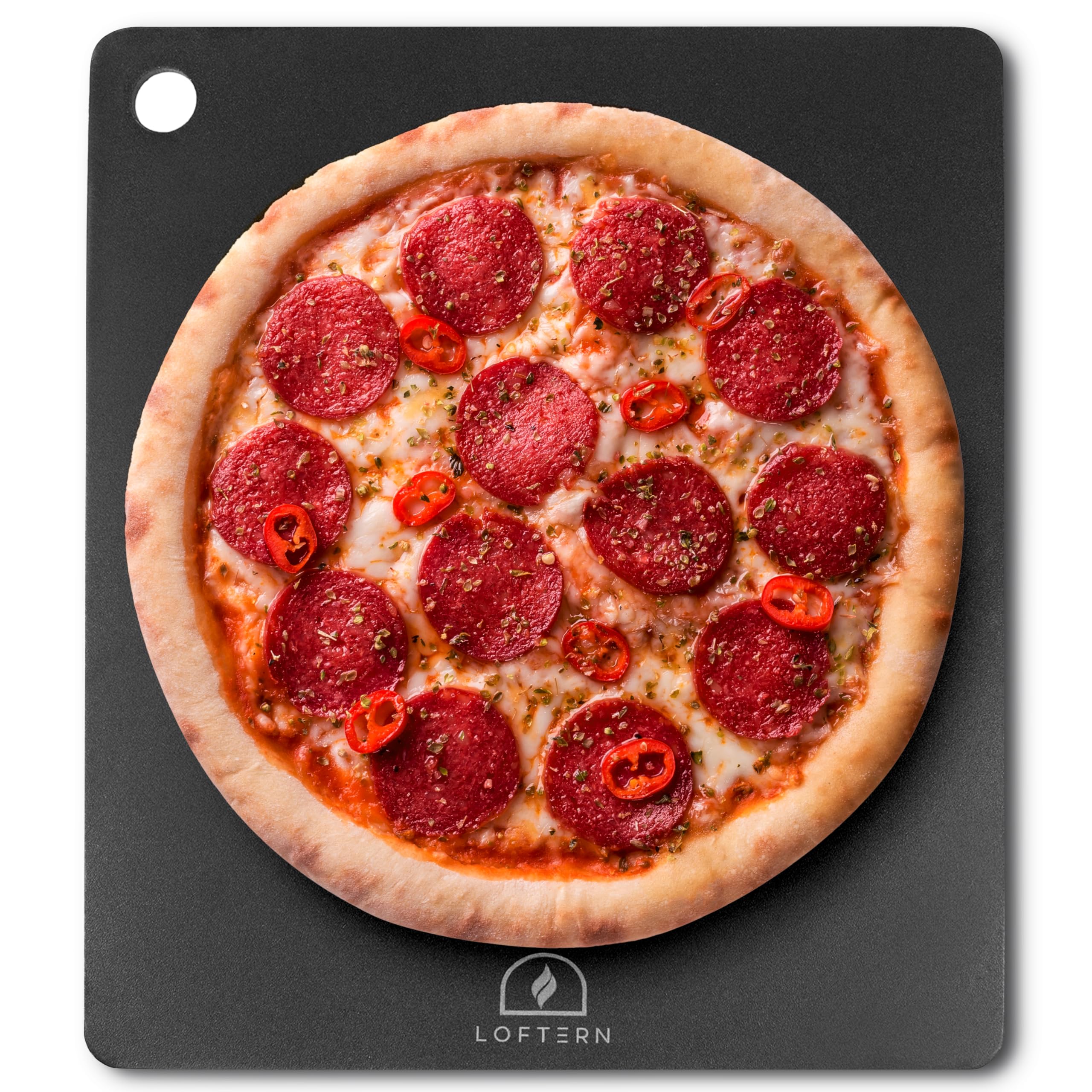
The Loftern 14×16 steel offers the largest baking surface in this roundup at 16 inches long by 14 inches wide, providing ample room for oversized pizzas, multiple baguettes, or even a full sheet of cookies. Its 0.25-inch carbon steel construction delivers the same superior heat conduction as other steel options, turning out crispy, evenly baked crusts every time.
This steel arrives pre-seasoned and ready to use. Owners report excellent results baking sourdough bread, with the steel preventing burnt bottoms while still developing a deep crust color. The steel also handles searing steaks and roasting vegetables, making it a true multitasker for the oven. A quick wipe with a damp cloth is all it needs after cooling.
The size is a double-edged sword — it fits most standard ovens, but you should measure your interior carefully. At 13.6 pounds, it is heavy enough to stay put but still manageable for a single person to lift. The lack of lifting holes makes gripping the hot steel a bit tricky, so oven mitts with good grip are essential.
Why it’s great
- Largest baking surface at 14 x 16 inches for maximum capacity
- Pre-seasoned and ready to bake immediately
- Versatile enough for pizza, bread, roasting, and searing
Good to know
- No lifting holes makes handling the hot steel awkward
- Large footprint may not fit smaller ovens
5. Cuzi Gourmet 4-Piece Large Pizza Stone Set

The Cuzi Gourmet 4-Piece set bundles a 13-inch round cordierite stone with a 19-inch bamboo peel, a stainless steel rack, and a bamboo pizza cutter — everything a family needs to start making pizzas immediately. The cordierite ceramic handles thermal shock well, surviving grill flames and oven preheats without cracking, unlike cheaper stoneware alternatives.
The 0.6-inch thickness provides adequate heat retention for medium-sized pizzas, pastries, and breads. Owners who replaced older ceramic stones praised this set for its consistency, noting that the stone distributes heat evenly across the surface and eliminates the cold spots that cause uneven baking. The beveled wooden peel makes sliding the pizza onto the stone much easier.
The set includes a metal rack that elevates the stone for better airflow, though the stone itself is on the smaller side — 13 inches rounds out to a medium pizza. For singles, couples, or families who prefer individual pies, this size works perfectly. The bamboo cutter is lightweight but effective for slicing through thick crusts with a rocking motion.
Why it’s great
- Complete set with stone, peel, rack, and cutter saves you from buying separately
- Cordierite ceramic resists thermal shock for grill and oven use
- 0.6-inch thickness provides even heat distribution for consistent bakes
Good to know
- 13-inch diameter only accommodates medium pizzas
- Ceramic is more fragile than steel — handle with care to avoid cracks
6. Cuzi Gourmet 3-Piece Pizza Stone Set
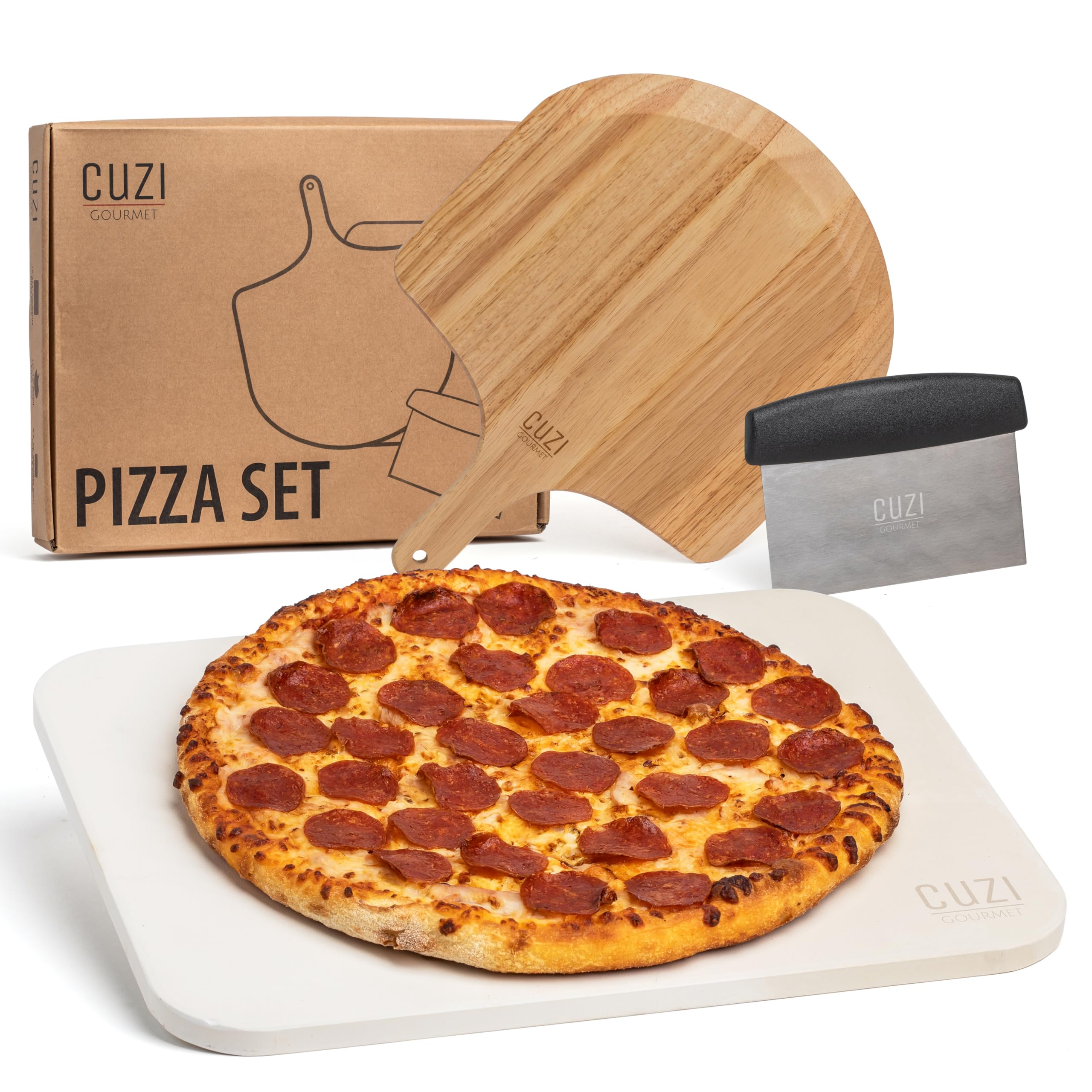
The Cuzi Gourmet 3-Piece set offers a rectangular 15 x 12-inch cordierite stone, a wooden pizza peel, and a steel scraper-cutter — a practical bundle for the baker who wants a larger footprint than the round 13-inch version. The rectangular shape fits more comfortably in standard ovens and grills, and the 0.6-inch thickness provides the same thermal shock resistance and even baking as its round counterpart.
Owners report excellent results with everything from frozen pizzas to homemade focaccia and naan. The cordierite material draws moisture from the dough, producing a crispier crust than metal pans. The wooden peel features a beveled edge that slides under dough cleanly, and the steel scraper doubles as a cutter for square slices.
The set is priced as an entry-level bundle, but the stone performs well within the cordierite category. The main limitation is the stone’s weight at 8.4 pounds — lighter than steel, but still substantial enough to require two hands when hot. Avoid using soap on the stone, as the porous ceramic absorbs detergents and can impart off-flavors to future bakes.
Why it’s great
- Rectangular 15×12 inch shape fits most ovens and grills more naturally than round stones
- Includes peel and scraper-cutter for a complete starter kit
- Cordierite material resists thermal shock up to 1450°F
Good to know
- Only accommodates medium pizzas, not large family-sized pies
- Requires hand washing and careful drying to maintain performance
7. Arcedo Pizza Stone 15 x 12 Inch
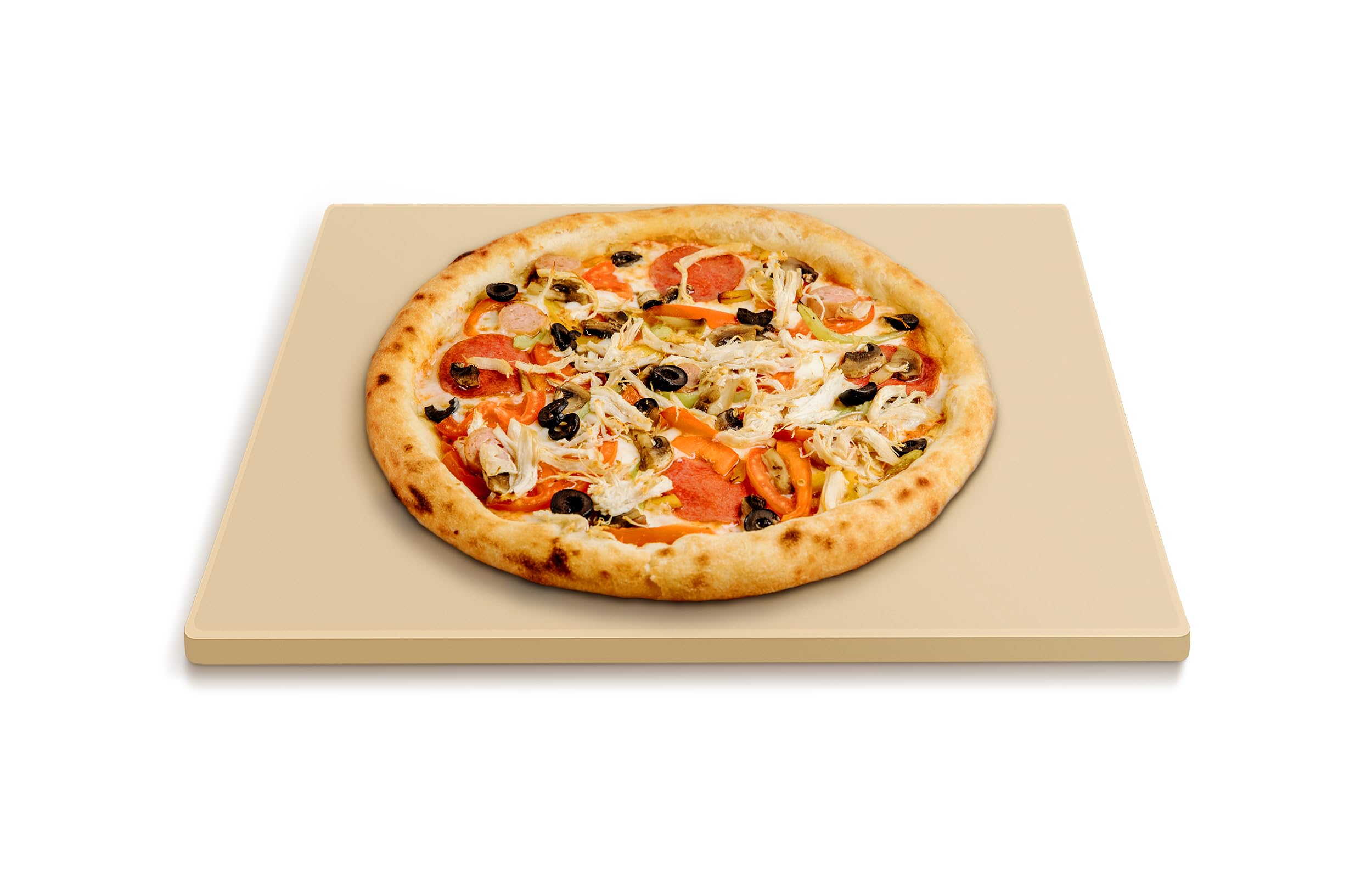
The Arcedo cordierite stone is the most affordable entry into true baking stone territory, offering a 15 x 12-inch surface that heats evenly and resists thermal shock up to 1450°F. Its 0.6-inch thickness (15mm) provides enough thermal mass for single pizza bakes and bread loaves, and the porous ceramic actively wicks moisture from the dough for a noticeably crisper crust than any metal pan.
Owners in compact kitchens and RVs appreciate the stone’s ability to regulate temperature inside small ovens, preventing the wild temperature swings that ruin delicate bakes. The stone works equally well on gas and charcoal grills, transforming a standard propane cooker into a passable pizza oven. The included scraper helps remove baked-on cheese without damaging the porous surface.
The trade-offs are typical of budget cordierite: the surface is somewhat rough, which means flour or cornmeal is essential to prevent sticking, and the stone should never be exposed to soap or detergent. Over time, the stone will develop a dark patina from oil absorption — this is normal and actually improves its non-stick properties. Avoid sudden temperature shocks, such as placing a frozen pizza directly onto a preheated stone, to prevent cracking.
Why it’s great
- Excellent thermal shock resistance for use in oven and grill
- Porous cordierite draws out moisture for a crisp crust
- Compact size fits RV and countertop ovens
Good to know
- Rough surface requires generous dusting of flour or cornmeal
- Not dishwasher safe and must never be cleaned with soap
FAQ
Should I get a ceramic baking stone or a steel baking plate?
How long should I preheat my baking stone before cooking?
Can I use a baking stone on a gas or charcoal grill?
How do I clean a baking stone without damaging it?
Final Thoughts: The Verdict
For most users, the baking stone winner is the Chef Pomodoro 16-Inch Steel because it combines the largest usable surface area with steel’s superior heat conductivity, pre-seasoned convenience, and a reasonable weight that most home cooks can handle. If you want the absolute best heat retention for marathon baking sessions, grab the Primica Premium XL (0.315″). And for those on a tighter budget or who need thermal shock resistance for grill use, nothing beats the value of the Arcedo Cordierite Stone.

Mo Maruf
I created WellFizz to bridge the gap between vague wellness advice and actionable solutions. My mission is simple: to decode the research and give you practical tools you can actually use.
Beyond the data, I am a passionate traveler. I believe that stepping away from the screen to explore new environments is essential for mental clarity and physical vitality.