Our readers keep the lights on and my smoothie glass nicely filled. As an Amazon Associate, I earn from qualifying purchases.
Finding a bottle that doesn’t fill your baby’s tummy with air bubbles is the single biggest feeding challenge for new parents. The wrong nipple flow or a poor venting system can turn every feeding into a battle against gas pains, fussiness, and interrupted sleep. You need a bottle designed to keep air out of the milk and out of your baby’s digestive system — not just one that claims to be “anti-colic.”
I’m Mohammad Maruf — the founder and writer behind WellFizz. I’ve spent years analyzing the venting mechanisms, nipple materials, and flow-rate engineering behind the most popular feeding systems to identify what actually reduces gas in real-world use.
Whether you are switching from breastfeeding or battling persistent spit-up, finding the right baby bottles for gas requires understanding how each vent design, nipple shape, and material choice directly affects air intake and feeding comfort.
How To Choose The Best Baby Bottles For Gas
Not every bottle marketed as “anti-colic” is built the same. The difference comes down to how the bottle manages airflow — some use internal vent tubes, others rely on slit valves in the nipple, and a few depend on membrane vents at the base. Each approach affects cleaning complexity and real-world air reduction.
Vent System Architecture
The most effective gas-reducing bottles use a two-piece internal vent system that separates air from the milk entirely. These systems create a vacuum-free feeding environment, meaning your baby does not have to suck air out of the nipple to keep milk flowing. Passive venting in the nipple alone reduces air less aggressively but is simpler to clean. The trade-off is measurable: internal vents reduce colic symptoms more consistently in clinical settings, but they add extra parts to wash.
Nipple Flow Rate and Material
A nipple that flows too fast for your baby’s age forces them to gulp, swallowing air with every swallow. Slow flow (Level 1 or Flow 1) is almost always the right starting point for newborns and most infants under three months. Beyond flow rate, the material matters: medical-grade silicone that closely mimics the skin-like flexibility of a breast allows a deeper latch, which naturally seals out air around the nipple base. Harder nipples create gaps where air seeps in.
Quick Comparison
On smaller screens, swipe sideways to see the full table.
| Model | Category | Best For | Key Spec | Amazon |
|---|---|---|---|---|
| Dr. Brown’s Anti-Colic Options+ Narrow Glass | Glass Premium | Clinical gas reduction | Internal vent + borosilicate glass | Amazon |
| Gulicola Natural Glass | Glass Mid-Range | Breastfed baby transition | 4-piece assembly + super slow flow | Amazon |
| Philips Avent Natural Response | Plastic Mid-Range | Paced feeding control | No-drip nipple + anti-colic valve | Amazon |
| Tommee Tippee Natural Start | Plastic Value | Budget multi-pack | Self-sterilizing + 6-pack | Amazon |
| NUK Perfect Match 2-in-1 | Plastic Entry | Breastfeeding mimicry | Integrated vent + SafeTemp indicator | Amazon |
In‑Depth Reviews
1. Dr. Brown’s Anti-Colic Options+ Narrow Glass Baby Bottles
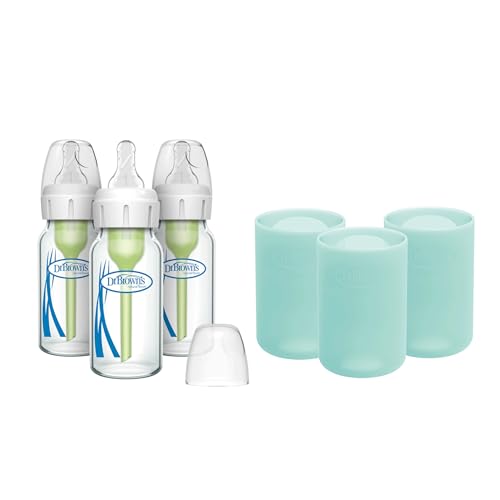
Dr. Brown’s narrow glass bottle uses an internal vent system that is the gold standard for clinical colic reduction. The vent tube runs down the center of the bottle, creating a vacuum-free feeding environment that prevents air from mixing with the milk. The 4 oz size is ideal for newborns, and the slow flow nipple ensures your baby does not gulp and swallow extra air. Customers repeatedly report a significant drop in spit-up and burping within days of switching to this system.
The borosilicate glass construction is heat and thermal shock-resistant, meaning it can go straight from the refrigerator into a bottle warmer without cracking. The silicone sleeve adds grip and protects the glass from minor drops, though the bottle is noticeably heavier than plastic alternatives. The glass also heats milk more evenly and holds temperature longer, which reduces the need for mid-feed reheating — a small but meaningful comfort advantage for a gassy baby.
The trade-off is cleaning: this bottle has five separate pieces, and the small vent tube requires a dedicated brush to scrub milk residue out of the inner channel. Parents who prioritize easy cleanup may find the extra parts tedious, but the clinical anti-colic performance is unmatched in this category. The narrow neck is compatible with standard cup warmers, and the measured ounce markings remain legible after repeated sterilization cycles.
Why it’s great
- Clinically proven internal vent reduces colic, spit-up, and gas more effectively than passive nipple vents.
- Borosilicate glass is thermal shock-resistant and does not absorb odors or residue from milk fats.
- Consistent slow flow rate mimics breastfeeding and encourages paced feeding.
Good to know
- Five-piece assembly with small vent tube requires a specialty brush for thorough cleaning.
- Heavier than plastic bottles — some babies may struggle to hold it independently.
- Glass heats up faster than plastic, so check temperature carefully before feeding.
2. Gulicola Natural Glass Baby Bottle Set
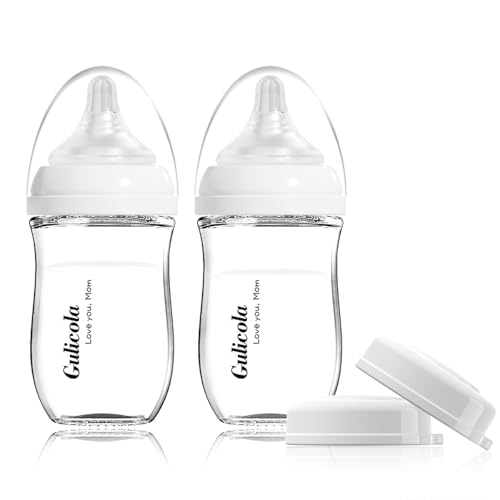
The Gulicola Natural Glass bottle is purpose-built for breastfed babies who struggle with the transition to bottle feeding. The ultra-soft silicone nipple is engineered to mimic the natural flex, feel, and movement of a breast, which helps babies maintain a deep latch that seals air out. The slow flow rate is notably the slowest in this lineup — intentional, because breastfed babies are accustomed to working for milk, and a faster flow can cause gulping and air intake.
The bottles are made from premium borosilicate glass that survives repeated drops without chipping, according to multiple customer reports. The wide neck design simplifies cleaning and allows you to fit your hand or a standard bottle brush inside easily. With only four pieces total — bottle, nipple, cap, and ring — the assembly is far simpler than Dr. Brown’s, while still offering anti-colic vents embedded in the nipple to reduce bubbles during feeding.
Some users note that air bubbles can build up in the nipple during feeding, requiring a mid-feed pause to release them. The inner ledge around the bottle neck can also trap a small amount of milk, which needs attention during rinsing. However, for parents who prioritize glass safety and a nipple flow that forces slow, paced feeding, this set is a strong mid-range investment that balances performance with simplicity.
Why it’s great
- Ultra-soft breast-like nipple encourages deep latch and reduces air gaps during feeding.
- Borosilicate glass is durable, heat-resistant, and free of BPA, BPS, and phthalates.
- Four-piece design is much easier to clean than internal-vent bottles.
Good to know
- Air bubbles can accumulate inside the nipple and require manual release during feeds.
- Inner ledge at the bottle neck can trap milk residue if not rinsed thoroughly.
- Nipple flow is extremely slow — some babies older than 3 months may need a faster flow upgrade.
3. Philips Avent Natural Baby Bottles with Natural Response Nipples

Philips Avent’s Natural Response bottle solves a specific problem: babies who choke because milk flows even when they are not actively sucking. The unique nipple opening only releases milk when your baby creates suction and pauses during swallow and breathe cycles — this prevents the “drip-drown” effect common in standard bottles. The anti-colic valve integrated into the nipple skirt keeps air away from the tummy, reducing gas without adding extra cleaning parts.
In real-world use, parents consistently report zero leaks from this bottle — a major advantage over competitors like Dr. Brown’s and Tommee Tippee, where assembly alignment matters. The wide neck simplifies filling with formula powder and scrubbing with a brush. The soft, breast-shaped nipple is wide at the base, promoting a deep latch that mimics breastfeeding, and the 4 oz size works well for newborns while the Flow 2 nipple is slow enough for most infants under 4 months.
The main compromise is that the anti-colic valve is less aggressive than internal tube systems like Dr. Brown’s. For babies with moderate gas, it works perfectly; for severe colic, you may need a more robust vent. A small number of users note that the nipple can collapse inward during feeding if the vent gets clogged, but regular cleaning prevents this. For parents who want a leak-proof, easy-to-clean system that still reduces gas, this is the best mid-range plastic option.
Why it’s great
- Natural Response nipple releases milk only during active sucking, preventing choking and gulping.
- Zero leaks even when shaken or transported upside down — rare in anti-colic bottles.
- Wide neck design makes scooping formula and brush cleaning effortless.
Good to know
- Nipple can collapse if the vent port becomes blocked by milk residue; requires thorough cleaning.
- Passive anti-colic valve is less effective for severe gas compared to internal vent systems.
- Slow flow (Flow 2) may be too fast for some newborns — consider Flow 1 if available separately.
4. Tommee Tippee Natural Start Anti-Colic Baby Bottles
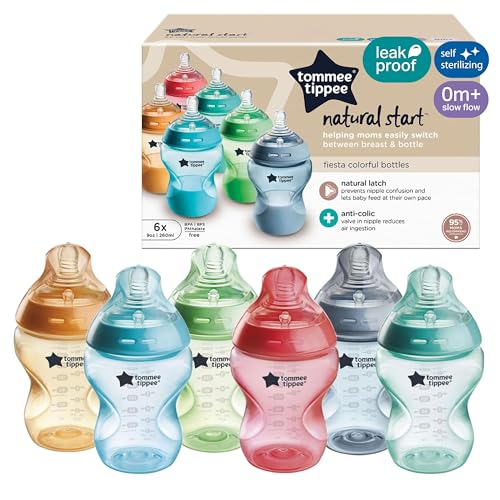
Tommee Tippee Natural Start bottles deliver a six-bottle set at an entry-level price point without cutting corners on the anti-colic valve. The silicone nipple is shaped to mimic the flexibility of a breast, encouraging a natural latch that reduces air intake around the nipple base. The valve is embedded in the nipple skirt, similar to Philips Avent, and is designed to vent air into the bottle rather than into your baby’s stomach.
The standout feature is the self-sterilizing capability: you add a small amount of water to the bottle, microwave it for three minutes, and the steam sanitizes the interior. This is a huge time saver for parents who want to avoid buying a separate sterilizer. The hourglass shape of the bottle makes it easy for small hands to grip later, and customers consistently praise the lightweight feel compared to glass alternatives. The 9 oz size is generous and grows with your baby through the first year.
The main downside reported by users is that the slow flow nipple (Flow 1) can still be too fast for some newborns, and the nipple can be difficult to push through the screw ring during assembly. A small number of users also report that the bottle leaks if the cap is not aligned perfectly with the nipple vent. Despite these quirks, the value per bottle is excellent, and the anti-colic performance is solid for babies with mild to moderate gas issues.
Why it’s great
- Six-bottle set at a budget-friendly price point, reducing the need for frequent bottle rotation.
- Self-sterilizing in the microwave in three minutes eliminates the need for a separate sterilizer.
- Hourglass shape is easy for babies to grip independently as they grow.
Good to know
- Nipple can be difficult to thread through the screw ring — alignment matters for a leak-free seal.
- Flow 1 nipple is still relatively fast; some newborns may need a slower flow, which is not included.
- Leak reports occur when the vent slot is not aligned with the bottle’s screw ring notch.
5. NUK Perfect Match 2-in-1 Natural and Anti-Colic Bottle
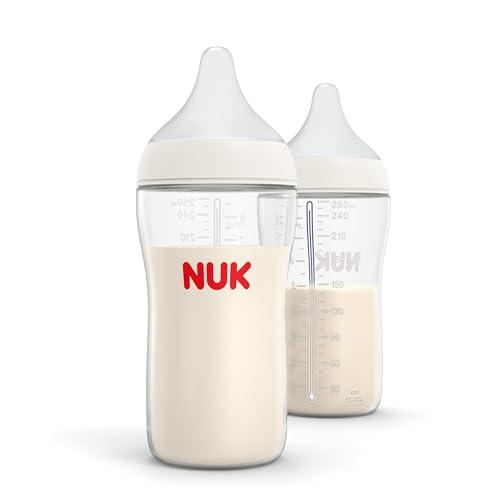
NUK’s Perfect Match bottle focuses on the breastfeeding experience more than any other bottle in this lineup. The nipple is 2x softer than leading brands, according to NUK’s internal testing, and the unique shape encourages a wide, deep latch that seals out air naturally. The integrated anti-colic vent sits inside the nipple base, allowing air to flow into the bottle instead of your baby’s stomach, and it does not require the extra cleaning parts of a Dr. Brown’s system.
The SafeTemp indicator is a practical addition: the nipple changes color when milk is too hot, preventing burns without requiring a wrist test. The bottle is lightweight and easy to assemble, with only three main parts plus the cap. Customers whose babies rejected other bottles — including Dr. Brown’s and Tommee Tippee — report that the softer NUK nipple solved bottle refusal and chewing behavior, especially during teething. The 8 oz size provides enough capacity to last through the first year.
The venting is less aggressive than internal tube systems, so babies with severe colic may not get full relief. Some users also note that the vent holes in the nipple can clog if formula powder is not fully dissolved, requiring a pin to clear them. However, for parents who prioritize a soft, breast-like nipple and a simple cleaning routine, the NUK Perfect Match offers an excellent value that directly addresses latch-related air ingestion.
Why it’s great
- Nipple is significantly softer than competitors, reducing bottle refusal and chewing during teething.
- SafeTemp indicator changes color at unsafe milk temperature, offering a visual safety check.
- Integrated anti-colic vent requires no extra tubes, keeping cleaning simple.
Good to know
- Vent holes in the nipple can clog with unmixed formula powder; may need periodic clearing with a pin.
- Passive vent design is less effective for severe colic compared to internal tube systems.
- Color-changing indicator may fade after repeated sterilization cycles.
FAQ
How does the internal vent system in Dr. Brown’s bottles reduce gas differently than a nipple valve?
Can I use glass baby bottles for gas in a bottle warmer or microwave?
How often do I need to replace anti-colic nipples to maintain gas reduction?
Final Thoughts: The Verdict
For most users, the baby bottles for gas winner is the Dr. Brown’s Anti-Colic Options+ Narrow Glass because its internal vent system provides the most clinically reliable reduction of air intake, and the borosilicate glass construction eliminates chemical leaching concerns. If you want a simpler cleaning routine with strong gas control, grab the Philips Avent Natural Response. And for the budget-conscious parent who needs six bottles from day one, nothing beats the value of the Tommee Tippee Natural Start set.

Mo Maruf
I created WellFizz to bridge the gap between vague wellness advice and actionable solutions. My mission is simple: to decode the research and give you practical tools you can actually use.
Beyond the data, I am a passionate traveler. I believe that stepping away from the screen to explore new environments is essential for mental clarity and physical vitality.