Our readers keep the lights on and my smoothie glass nicely filled. As an Amazon Associate, I earn from qualifying purchases.
Off-road trail repairs and campfire prep demand a tool that can handle both limbing deadfall and splitting kindling without taking up precious cargo space. The wrong axe leaves you fighting a dull edge, a loose head, or a handle that snaps at the worst moment.
I’m Mohammad Maruf — the founder and writer behind WellFizz. I’ve spent hundreds of hours analyzing steel hardness, handle ergonomics, and head geometry to narrow the best options for dual-use off-roading and camping scenarios.
Whether you are clearing a trail or splitting wood for a fire, the right tool makes the job faster and safer. This guide breaks down the five top contenders for the best axe for off roading and camping by focusing on hardened steel, balanced weight, and secure storage features that matter on the trail.
How To Choose The Best Axe For Off Roading And Camping
An off‑roading and camping axe needs to perform two distinct jobs: clear brush or small trees on the trail and split firewood at camp. You don’t want a heavy felling axe that takes up half your gear, nor a tiny hatchet that can’t handle a 5‑inch log. Focus on steel hardness, handle durability, head weight, and storage safety to find the right balance.
Steel Hardness & Edge Retention
High‑carbon steel — typically 1055 or 1065 — holds a sharper edge longer than stainless or mild steel. 1065 steel offers slightly higher hardness for trail debris, but requires a bit more effort to sharpen. For most off‑road and camp use, 1055 carbon steel offers an ideal blend of toughness and easy field maintenance with a file or stone.
Handle Material & Swing Fatigue
Wood handles (hickory, beech) provide natural shock absorption and a classic feel, but they can split if overstruck on a root or rock. Fiberglass handles with rubber grips are nearly indestructible and reduce vibration, making them excellent for high‑repetition splitting sessions at camp. Molded composite handles offer the best durability and weight savings for vehicle storage.
Head Weight, Blade Length & Packability
For dual off‑road and camp use, a head weight between 1.5 and 2.5 pounds with a blade edge of 3.5 to 4.5 inches is the sweet spot. An overall length of 24 to 28 inches gives you enough leverage to split logs without being too long to strap to a roof rack or pack in a truck bed. Hatchets under 16 inches are better for kindling but struggle on larger trail wood.
Sheath & Storage Safety
A secure sheath is non‑negotiable when the axe lives in your vehicle. Leather sheaths protect the edge and prevent accidental cuts when reaching for gear. Some axes include a plastic blade cover, but a sturdy leather or nylon sheath with a retention strap is far more durable for off‑road bouncing and dust.
Quick Comparison
On smaller screens, swipe sideways to see the full table.
| Model | Category | Best For | Key Spec | Amazon |
|---|---|---|---|---|
| Fiskars 28″ Chopping Axe | Premium | All‑around trail & camp splitting | 28″ length, 3.5 lb weight | Amazon |
| Cold Steel Hudson Bay Camp Axe | Mid‑Range | Lightweight trail clearing & pack hunting | 27″ length, 1.5 lb weight | Amazon |
| Fiskars 14″ Hatchet with Sheath | Mid‑Range | Backpack‑friendly kindling & limbing | 14″ length, 1.5 lb weight | Amazon |
| INTERTOOL 24-Inch Chopping Axe | Budget | Entry‑level camp splitting & wedge driving | 24″ length, 3.5 lb weight | Amazon |
| DWFKHT 15.7″ Hatchet | Budget | Bushcraft carving & scout camp tasks | 15.7″ length, 2.5 lb weight | Amazon |
In‑Depth Reviews
1. Fiskars 28″ Chopping Axe
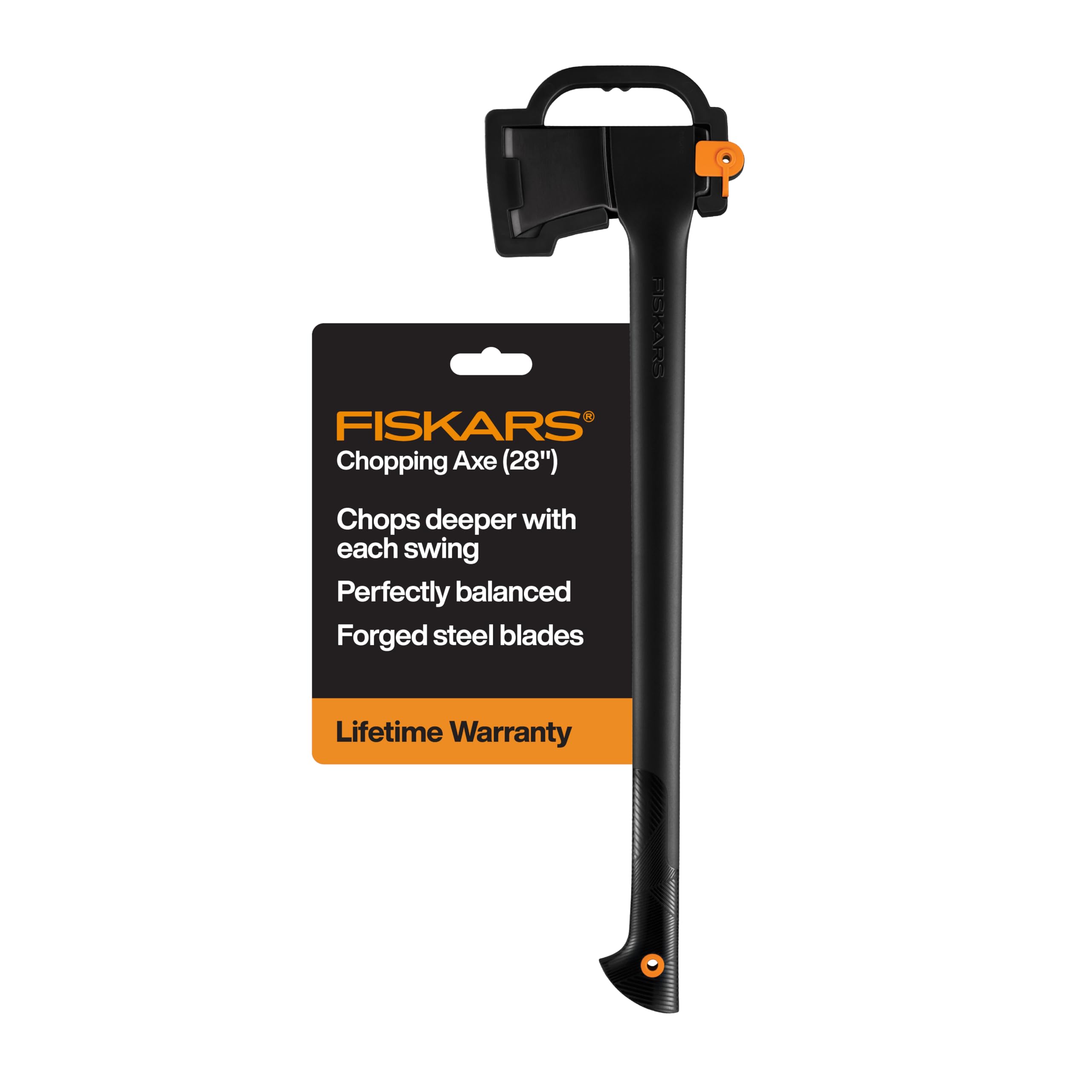
The Fiskars 28″ Chopping Axe earns the top spot for off‑road and camp use because of its precision‑balanced design and ultra‑sharp alloy steel blade. The low‑friction coating reduces drag, so the blade bites deeper into wood without getting stuck — a huge advantage when you are splitting logs after a long day of driving. The DuraFrame handle absorbs shock far better than wood, which means less arm fatigue when you are processing several armloads of firewood.
At 3.5 pounds and 28 inches, this axe provides enough leverage to fell small trees along a blocked trail without being cumbersome to strap to a roof rack or store in a truck bed. User reports confirm the edge holds well after repeated use, and the overall build quality rivals tools costing significantly more. The lifetime warranty adds peace of mind for a tool that will see dirt, dust, and moisture.
The main downside is the included blade cover — it is functional but not ideal for backpack carry; a more robust sheath would be welcome for vehicle storage. Some taller users prefer the longer X27 handle for extra swing arc, but for most off‑roaders and campers, the 28″ length hits the perfect balance between power and portability.
Why it’s great
- Ultra‑sharp blade bites deep on first swing
- Low‑friction coating prevents sticking in green wood
- Excellent shock absorption for high‑volume splitting
Good to know
- Blade cover is basic, not suited for rough vehicle storage
- Some users prefer a longer handle for maximum leverage
2. Cold Steel Hudson Bay Camp Axe

The Cold Steel Hudson Bay Camp Axe brings a classic 27‑inch hickory handle with a 1055 carbon steel head that weighs only 1.5 pounds, making it the lightest full‑size axe in this lineup. The lightweight profile is a major advantage for pack hunters or overlanders who count every ounce, yet the 4‑inch cutting edge provides enough bite for small hardwoods and medium softwoods encountered on the trail.
Its standout feature is the clamp‑like locking mechanism that allows you to replace the handle in under two minutes without a wedge. For off‑road use where a broken handle can ruin a trip, this is a genuine field‑repair advantage. The handle also accepts boiled linseed oil, which many users apply to improve weather resistance after stripping the factory clear coat.
The trade‑off is that the blade comes fairly dull out of the box and will require at least a 5‑minute stone session to reach a truly sharp edge. The Hudson Bay head shape is thinner than many modern axes, so it performs better for limbing and chopping than heavy splitting. It also lacks a blade cover, so you will need to buy or make a sheath for safe vehicle storage.
Why it’s great
- Extremely lightweight design ideal for pack hunting and overlanding
- Clamp‑lock head allows fast handle replacement in the field
- Classic hickory handle provides natural shock absorption
Good to know
- Blade arrives dull and needs immediate sharpening
- No sheath or blade cover included for storage
3. Fiskars 14″ Hatchet with Sheath

The Fiskars 14″ Hatchet is a proven performer for anyone who prioritizes packability above all else. Its molded DuraFrame handle is lighter than steel but stronger, and the proprietary blade‑grinding technique delivers an edge that bites effectively on first contact. At 1.5 pounds and only 14 inches long, this hatchet fits easily inside a backpack, under a seat, or strapped to a daypack without adding noticeable bulk.
This tool shines at camp for splitting kindling and limbing small branches. The low‑friction coating is the same technology found on the larger Fiskars axes, so the blade does not stick when you are splitting wet wood. User feedback consistently praises its durability — many report using the same unit for years with nothing more than occasional filing.
The included plastic sheath works well for storage, but it is not rugged enough for consistent off‑road bouncing and can pop off. The short handle limits swing power, making it unsuitable for logs over 5 inches in diameter. For pure trail clearing where you might face thicker deadfall, the larger 28″ Fiskars is a better choice.
Why it’s great
- Extremely compact and lightweight for backpack carry
- DuraFrame handle is stronger than steel and resists overstrikes
- Low‑friction blade prevents sticking in green wood
Good to know
- Plastic sheath is not durable for rough vehicle storage
- Short handle limits power on logs over 5 inches
4. INTERTOOL 24-Inch Chopping Axe

The INTERTOOL 24-Inch Chopping Axe fills the mid‑size gap between a hatchet and a full‑length felling axe. The 4.9‑inch carbon steel blade gives you a generous cutting surface, and the rubberized fiberglass handle reduces the sting and vibration that can fatigue your arms during a long splitting session. At 3.5 pounds and 24 inches, it provides solid swing leverage without being unwieldy.
This axe is a strong entry‑level option for campers and off‑roaders on a tight budget. It arrives sharp out of the box, and the included blade cover protects the edge during transport. Users note that after years of daily logging use, the edge can be quickly restored with a flap disc or stone. The handle design also makes it a great choice for driving wedges when splitting larger logs.
The main downsides are the sub‑par blade guard, which many users replace with a leather holster, and the edge sharpness consistency — some units need a quick touch‑up before first use. The fiberglass handle can feel slightly sticky after exposure to oil or grease, which is something to be aware of when storing in a truck bed with tools.
Why it’s great
- 24‑inch length offers great all‑around balance for camp and trail
- Fiberglass handle with rubber grip reduces vibration significantly
- Arrives sharp and includes a protective blade cover
Good to know
- Blade guard is cheaply made and often needs replacement
- Edge sharpening is inconsistent across units
5. DWFKHT 15.7″ Hatchet

The DWFKHT 15.7″ Hatchet targets bushcraft enthusiasts and scouts who need a compact tool for carving, splitting kindling, and camp tasks. The head is hand‑forged from 1065 high carbon steel, which offers a slightly harder edge than 1055 steel, making it ideal for detailed carving work and sharpening to a razor‑shaving finish. The beech wood handle provides a comfortable, natural grip that reduces hand fatigue during extended carving sessions.
The included leather sheath protects the blade and head during storage, which is a welcome upgrade over basic plastic covers. At 2.5 pounds, it feels solid in hand without being too heavy for backpack carry. The ergonomic handle design fits naturally into the palm, and the bearded Norse style head gives excellent control for carving notches and feather sticks.
The primary drawback is that the edge often needs significant sharpening out of the box — several users report spending an hour with a stone or bench grinder to reach a shave‑sharp edge. While the included sharpening stone helps, it is a small piece that is easy to lose. This hatchet is best for detailed camp work and kindling, not for heavy trail clearing or splitting large logs.
Why it’s great
- Hand‑forged 1065 high carbon steel holds a very sharp edge
- Full leather sheath included for secure vehicle storage
- Ergonomic beech handle reduces fatigue during carving
Good to know
- Blade often arrives dull and requires extensive sharpening
- Not suited for heavy splitting or clearing larger trail debris
FAQ
Can I use a hatchet for trail clearing on a 4×4 recovery trip?
What steel hardness is best for high‑carbon camping axes?
How do I store an axe safely in a vehicle for off‑roading?
Final Thoughts: The Verdict
For most users, the best axe for off roading and camping winner is the Fiskars 28″ Chopping Axe because it combines an ultra‑sharp alloy steel blade, low‑friction coating, and excellent shock absorption in a length that works for both trail clearing and camp splitting. If you want a lightweight pack‑friendly tool, grab the Cold Steel Hudson Bay Camp Axe. And for an entry‑level mid‑size axe that won’t break the budget, nothing beats the INTERTOOL 24-Inch Chopping Axe.

Mo Maruf
I created WellFizz to bridge the gap between vague wellness advice and actionable solutions. My mission is simple: to decode the research and give you practical tools you can actually use.
Beyond the data, I am a passionate traveler. I believe that stepping away from the screen to explore new environments is essential for mental clarity and physical vitality.