Our readers keep the lights on and my smoothie glass nicely filled. As an Amazon Associate, I earn from qualifying purchases.
Gaming audio built for competitive advantage and pure immersion demands more than just bass cannons. You need headphones that resolve footsteps from gunfire at 20 meters, render the reverb of a cathedral, and sustain hours of wear without fatigue — all while preserving the raw, uncolored detail that defines the audiophile standard.
I’m Mohammad Maruf — the founder and writer behind WellFizz. I’ve analyzed hundreds of driver topologies, impedance curves, and THD measurements in the audiophile gaming space, separating flat-sounding marketing specs from truly revealing transducers.
This guide maps the nine most competitive models on the market today, from planar magnetic bargains to reference-grade ring radiators, to help you find the best audiophile headphones for gaming that match your ear and your rig.
How To Choose The Best Audiophile Headphones For Gaming
Selecting a proper set of audiophile headphones for gaming requires balancing technical resolution with comfort and positional accuracy. Consumer gaming headsets often boost low frequencies to mask driver limitations, muddying the mid-range where enemy cues live. Here’s what matters.
Driver Topology: Planar Magnetic vs. Dynamic
Planar magnetic drivers use a thin diaphragm suspended between two magnetic arrays, delivering faster transient response and lower distortion at high volumes than traditional dynamic drivers. This translates to cleaner separation of overlapping sounds — like a reload sound occurring behind a distant explosion. Dynamic drivers like the 56mm ring radiator in the HD 800 S can still achieve exceptional detail but often require heavier damping to control breakup modes.
Impedance, Sensitivity, and Amplification Requirements
High-impedance models like the DT 990 Edition 600 Ohm demand a dedicated headphone amplifier to reach adequate volume and dynamic range. Low-impedance, high-sensitivity options such as the MEZE AUDIO 109 PRO can run directly from a console controller or smartphone. Check both figures: a model with 300+ Ohms and under 100 dB/mW sensitivity will sound thin and quiet without a proper amp stack.
Soundstage Width and Imaging Precision
Open-back designs allow air to flow through the ear cups, creating a wider, more natural soundstage than closed-back counterparts. This spatial expansion helps you perceive distance and direction more accurately in games like Escape from Tarkov or Call of Duty. Imaging — the headphone’s ability to place individual sounds at specific points in that stage — relies on consistent phase response across the frequency band, a strength of well-tuned planar magnetics and symmetrically damped dynamics.
Comfort and Build for Long Sessions
Weight, clamp force, and pad material determine whether you can wear a pair for four hours straight. Lightweight designs like the Audio-Technica ATH-R70x at 210 grams reduce neck strain, while plush velour or sheepskin pads avoid sweat buildup. Replaceable cables and ear pads extend the lifespan significantly, especially for daily gaming use where cables endure constant routing.
Quick Comparison
On smaller screens, swipe sideways to see the full table.
| Model | Category | Best For | Key Spec | Amazon |
|---|---|---|---|---|
| Sennheiser HD 800 S | Premium Reference | Competitive FPS & Critical Listening | 56 mm Ring Radiator Driver | Amazon |
| MEZE AUDIO 109 PRO | Premium Versatile | All-Day Gaming & Music | 40 Ohm Impedance | Amazon |
| Sennheiser HD 660S2 | Mid-Range Reference | Intimate Imaging & Vocal Clarity | 42 mm Dynamic Driver | Amazon |
| HIFIMAN Arya Stealth | Premium Planar | Expansive Soundstage & Detail | Nanometer Diaphragm | Amazon |
| beyerdynamic DT 1990 PRO MKII | Pro Studio | Mixing & Competitive Gaming | TESLA.45 Driver | Amazon |
| Sennheiser HD 490 PRO | Mid-Range Analytical | Competitive FPS & Mixing | 5 – 36,000 Hz Response | Amazon |
| Audio-Technica ATH-R70x | Mid-Range Reference | Ultra-Light Wear & Natural Sound | 210 g Weight | Amazon |
| HIFIMAN SUNDARA | Entry-Level Planar | Budget Planar Entry | NEO “Supernano” Diaphragm | Amazon |
| beyerdynamic DT 990 Edition 600 Ohm | Entry Dynamic | High-Impedance Value | 600 Ohm Impedance | Amazon |
In‑Depth Reviews
1. Sennheiser HD 800 S

The HD 800 S sets the reference standard for soundstage in the headphone world, using a 56 mm ring radiator transducer that angles sound waves directly into the ear canal. In games like Hunt: Showdown, this translates to hearing a moving target behind a wall with specific distance cues, not just direction. The open-back design and absorber technology eliminate frequency peaks, revealing micro-details like shell casings hitting concrete.
Weighing around 330 grams, the HD 800 S remains comfortable for marathon sessions thanks to plush microfiber pads and a generously padded headband. The included balanced 4.4 mm cable and single-ended 6.3 mm cable offer flexibility for high-end DACs. The 300 Ohm impedance demands a quality amp — pairing with a Schiit Magnius or Chord Mojo unlocks the full transient speed and three-dimensional staging this headphone is known for.
Bass extension is linear rather than boosted, which purists appreciate for accurate monitoring but bass-head gamers may find too reserved. The treble is detailed but can be slightly peaky on poorly recorded game audio, especially older titles without high-quality sound assets. With well-mastered modern games, the HD 800 S delivers an unmatched sense of being inside the virtual environment.
Why it’s great
- Unrivaled soundstage depth and width for competitive positional audio
- Exceptional detail retrieval reveals cues other headphones miss
- Lightweight and comfortable for long gaming sessions
Good to know
- Bass is lean and may not satisfy players who prefer heavy low-end
- Requires a quality DAC/amp stack to reach full potential
- Treble can sound bright on low-quality game audio
2. MEZE AUDIO 109 PRO

The MEZE AUDIO 109 PRO combines genuine walnut wood earcups with a 50 mm dynamic driver, delivering a warm yet detailed sound signature that flatters both music and game audio. Its low 40 Ohm impedance and high sensitivity mean you can drive these from a PlayStation controller or phone dongle without losing dynamics, making them one of the most versatile audiophile gaming headphones available.
The self-adjusting manganese spring steel headband distributes 270 grams evenly across the crown, and the memory foam ear pads with vegan leather stay plush after hours of wear. The included hard EVA case and two detachable TPE cables (1.5 m and 3 m) add practical value for moving between a desktop rig and a couch setup. The 2-year warranty and fully replaceable parts reflect a design philosophy that prioritizes longevity.
The soundstage is wide for a dynamic driver, though it doesn’t match the holographic width of planar flagships like the Arya Stealth. Some listeners report sibilance on sibilant-heavy game audio — a slight treble emphasis at 8 kHz that can fatigue sensitive ears over extended play. For RPGs and story-driven games, the 109 PRO offers a rich, immersive tonal balance that feels more musical than clinical.
Why it’s great
- Works with any device due to low impedance and high sensitivity
- Beautiful walnut wood construction with replaceable parts
- Warm, engaging sound that pairs well with game soundtracks
Good to know
- Treble can be sibilant on some tracks and game assets
- Soundstage is good but not class-leading for competitive FPS
- Premium pricing reflects build materials as much as acoustics
3. Sennheiser HD 660S2
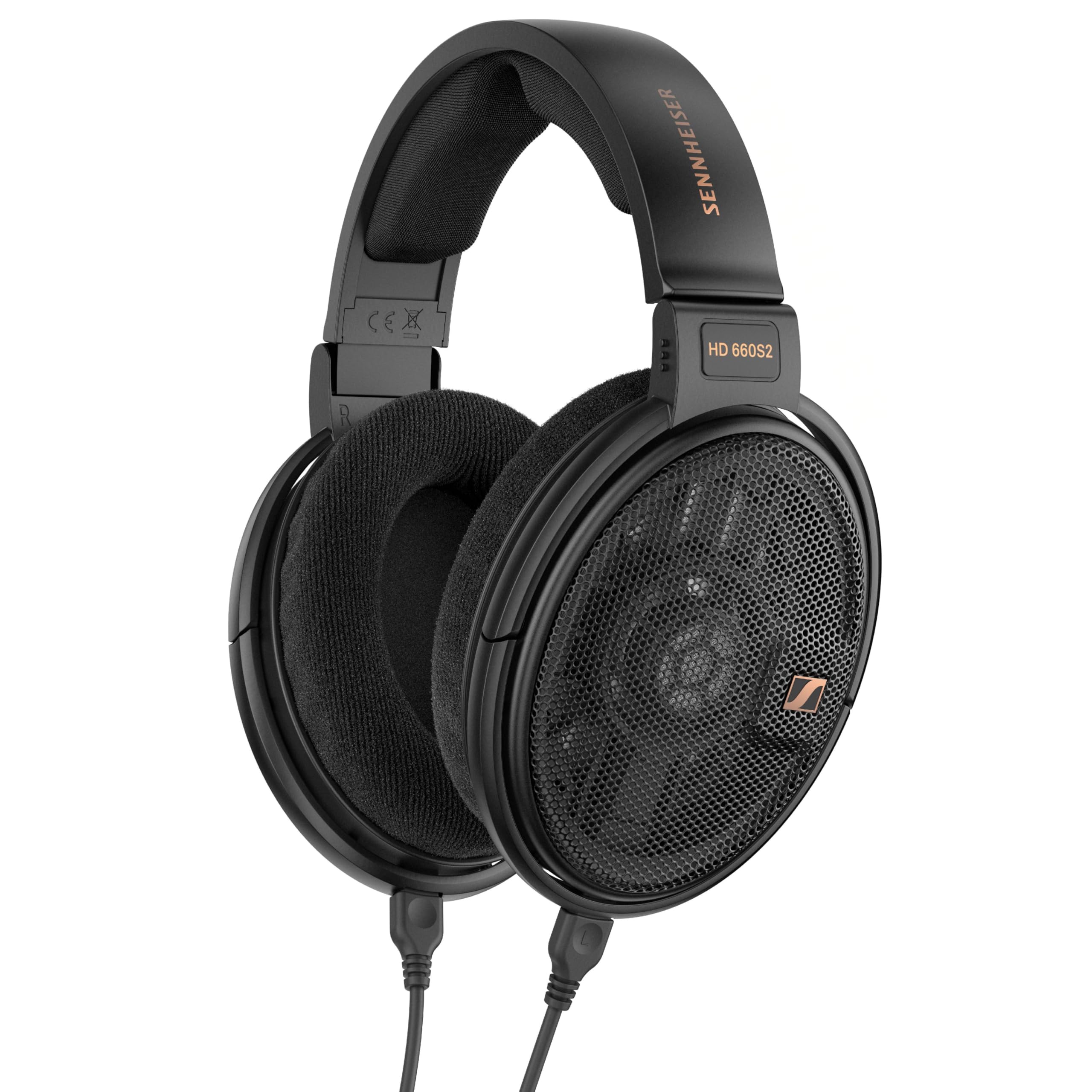
The HD 660S2 refines the classic HD 600 series with an ultra-light aluminum voice coil and 42 mm transducer that extends deeper into the sub-bass region — reaching 27.5 Hz cleanly — while preserving the intimate mid-range presentation that makes vocals and enemy callouts sound present and natural. In tactical shooters like Rainbow Six Siege, the imaging precision allows you to lock onto the exact floor level of an opponent.
At 260 grams with breathable velour ear cushions, the HD 660S2 disappears on your head during long play sessions. The included 6.3 mm and 4.4 mm balanced cables give you options, though the stock cables exhibit some microphonics at the connection point. The 300 Ohm impedance again requires a dedicated amplifier — a JDS Labs Atom or FiiO K5 Pro works well to bring out the snare attack and vocal body.
Compared to the HD 490 PRO, the 660S2 trades a slightly narrower soundstage for more intimate, immersive vocal presence. Bass is punchier than the HD 800 S but still controlled, avoiding the bloat that masks mid-range details. The main trade-off is that the narrow stage can make large environments in open-world games feel less expansive than they should.
Why it’s great
- Excellent imaging for precise sound placement in FPS games
- Rich, natural mid-range with deep sub-bass extension
- Lightweight and comfortable for extended wear
Good to know
- Soundstage is narrower than open-back alternative options
- Requires a dedicated headphone amplifier
- Stock cables have microphonics near the earcup connection
4. HIFIMAN Arya Stealth Magnet Version

The Arya Stealth Magnet uses HIFIMAN’s specially shaped magnets and a nanometer-thickness diaphragm to reduce wave diffraction turbulence, resulting in an expansive, three-dimensional soundstage that places instruments and game effects in precise spatial locations. In battle royale games, you can distinguish a crate opening 50 meters to your left from footsteps approaching from the front-right — a level of separation that standard dynamic drivers struggle to match.
The build combines a metal headband with high-grade plastic earcups, keeping the weight manageable at around 440 grams. The asymmetrical earcups follow the natural ear shape and are generously padded with pleather, though the large size can press against the jaw when lying down. The single 6.35 mm crystalline copper cable is adequate, but the 3.5 mm connector at the earcup makes aftermarket cable upgrades easy.
Bass response is tight, well-extended, and responsive to EQ — planar drivers handle parametric boosts without distorting. The treble is airy and detailed but never harsh, avoiding the fatigue some report with the DT 1990 PRO MKII. The main downside is that the Arya requires careful handling: the plastic wing hinge can creak, and the open-back design leaks sound heavily, making it unsuitable for shared spaces.
Why it’s great
- Massive, holographic soundstage with pinpoint imaging
- Fast planar transient response for instantaneous detail
- Excellent EQ headroom without distortion
Good to know
- Large earcups can contact the jaw when seated or lying down
- Build quality includes plastic components prone to creaking
- Heavy sound leakage — not suited for shared rooms
5. beyerdynamic DT 1990 PRO MKII

The DT 1990 PRO MKII features the next-gen TESLA.45 driver, offering 30 Ohm impedance that makes it easier to drive than its predecessor while maintaining extremely low distortion. The dual interchangeable velour pad sets — one designed for fuller bass, the other for analytical highs — allow you to tune the headphone for different game genres without EQ. The open-back design delivers a natural soundstage with precise instrument placement ideal for competitive play.
Build quality is tank-like, with anodized metal components and a memory foam headband wrapped in breathable fabric. The dual-detachable mini-XLR cables (3 m straight and 5 m coiled) provide flexibility for desktop or studio setups, and the premium hard case offers reliable protection. Hand-crafted in Germany, the DT 1990 PRO MKII is designed for sustainability with many replaceable parts, including the ear pads and headband padding.
The tuning is more balanced than the v-shaped DT 990 series, with controlled bass, clear mids, and detailed but non-fatiguing treble. Some early reports note that the plastic slider plates can crack under repeated adjustment — a known weak point that beyerdynamic should address in future revisions. For players who need a headphone that doubles as a mixing tool and a gaming weapon, the DT 1990 PRO MKII is a capable contender.
Why it’s great
- TESLA.45 drivers deliver high resolution with low distortion
- Interchangeable pads let you tune the sound profile instantly
- Robust German construction with replaceable components
Good to know
- Plastic slider plates may crack over time under tension
- Premium pricing places it in a competitive bracket
- Slightly heavier than some mid-range open-back options
6. Sennheiser HD 490 PRO

The HD 490 PRO is engineered for analytical listening with an open-frame architecture that minimizes total harmonic distortion and resonance. Its frequency response spans 5 to 36,000 Hz, with a low-frequency cylinder system that delivers accurate bass without boominess. In games like CS2, the HD 490 PRO provides crystal-clear imaging that significantly improves survivability — footsteps and reload cues are rendered with surgical precision.
The fiberglass-reinforced polymer construction keeps weight low while offering surprising durability. The ear pads are washable and replaceable, and the two included sets — mixing pads and producing pads — change the frequency presentation subtly. The detachable 1.8 m cable terminates in a 3.5 mm jack with a 6.3 mm adapter, and the patented coil structure eliminates cable-borne noise. The HD 490 PRO is also easier to drive than many Sennheiser studio models, working well with most audio interfaces.
Compared to the HD 660S2, the HD 490 PRO offers a wider, more directional soundstage that benefits competitive gaming, but its mids are slightly less rich and intimate. The bass is clean but lacks the sub-bass authority of planar magnetic options. For players who prioritize hearing every directional cue over musical warmth, the HD 490 PRO is a compelling mid-range pick.
Why it’s great
- Superior directionality and imaging for tactical FPS games
- Low distortion design with ultra-wide frequency response
- Easy to drive with most audio interfaces and DACs
Good to know
- Mids lack the warmth and body of the HD 660S2
- Proprietary ear pad design limits aftermarket replacements
- Cable is short for desktop setups without a front audio port
7. Audio-Technica ATH-R70x

Weighing just 210 grams without the cable, the ATH-R70x is the lightest headphone in this lineup — a decisive advantage for gamers who play for six-plus hours without a break. The 3D wing support system self-adjusts to your head shape, distributing pressure evenly and eliminating hot spots. The carbon composite resin housing and aluminum honeycomb mesh provide natural, spacious open-back sound without adding bulk.
The 45 mm dynamic drivers use high-efficiency neodymium magnets and a pure alloy magnetic circuit to keep THD low across the frequency range. The ATH-R70x delivers a neutral tonality with a slight warmth that makes game worlds feel organic without over-emphasizing any region. Its imaging is precise, and the soundstage feels deep and layered for an open-back in this price band — though the HD 490 PRO edges it in directional pinpointing for competitive FPS.
The dual-sided detachable locking cables are L/R independent, ensuring correct stereo orientation every time. The 470 Ohm impedance is demanding — many buyers report needing a powerful amp like the JDS Labs Atom to get satisfying volume and dynamics. Sub-bass extension is limited stock, but EQ correction using the oratory1990 preset dramatically improves low-end performance without distorting the planar-like clarity in the mids and highs.
Why it’s great
- Exceptional 210 g weight minimizes fatigue during long sessions
- Natural, uncolored tonality with good soundstage depth
- Self-adjusting wing support fits many head shapes comfortably
Good to know
- 470 Ohm impedance requires a powerful amplifier
- Sub-bass is lacking without parametric EQ
- Cable is very long and can snag on desk equipment
8. HIFIMAN SUNDARA

The SUNDARA remains a benchmark for entry-level planar magnetic performance, using a NEO “supernano” diaphragm that is 80% thinner than its predecessor. This delivers class-leading transient speed and detail retrieval at a price that undercuts many dynamic competitors. In gaming, the SUNDARA reveals subtle audio cues — the rustle of grass, the echo of footsteps down a corridor — with a clarity that budget dynamic headphones often mask.
The new headband design distributes the 372 g weight evenly via a separate strap, and the revised earpads use comfortable pleather with reasonable depth. The 3.5 mm detachable cable connectors are robust and standard, making replacement simple. However, the SUNDARA is not sensitive — it demands a decent amplifier (the Monolith Liquid Spark or FiiO K5 Pro are common matches) to reach proper volume levels and to control the bass response, which can sound thin when underpowered.
Tonally, the SUNDARA leans neutral-bright with excellent extension in both lows and highs. The treble is airy and extended without becoming harsh, and the mid-range is clear if slightly less intimate than the HD 660S2. Early units had QC issues with rattling frame hardware, though recent batches seem more consistent. The 1-year warranty is shorter than the competition, so a trusted seller with a good return policy is advisable.
Why it’s great
- Outstanding planar detail and speed for the price point
- Wider soundstage and better imaging than most budget dynamics
- Neutral-bright tuning works well with game audio EQ
Good to know
- Requires a dedicated amplifier to sound its best
- Build QC has been inconsistent across manufacturing runs
- 1-year warranty is shorter than many competitors
9. beyerdynamic DT 990 Edition 600 Ohm
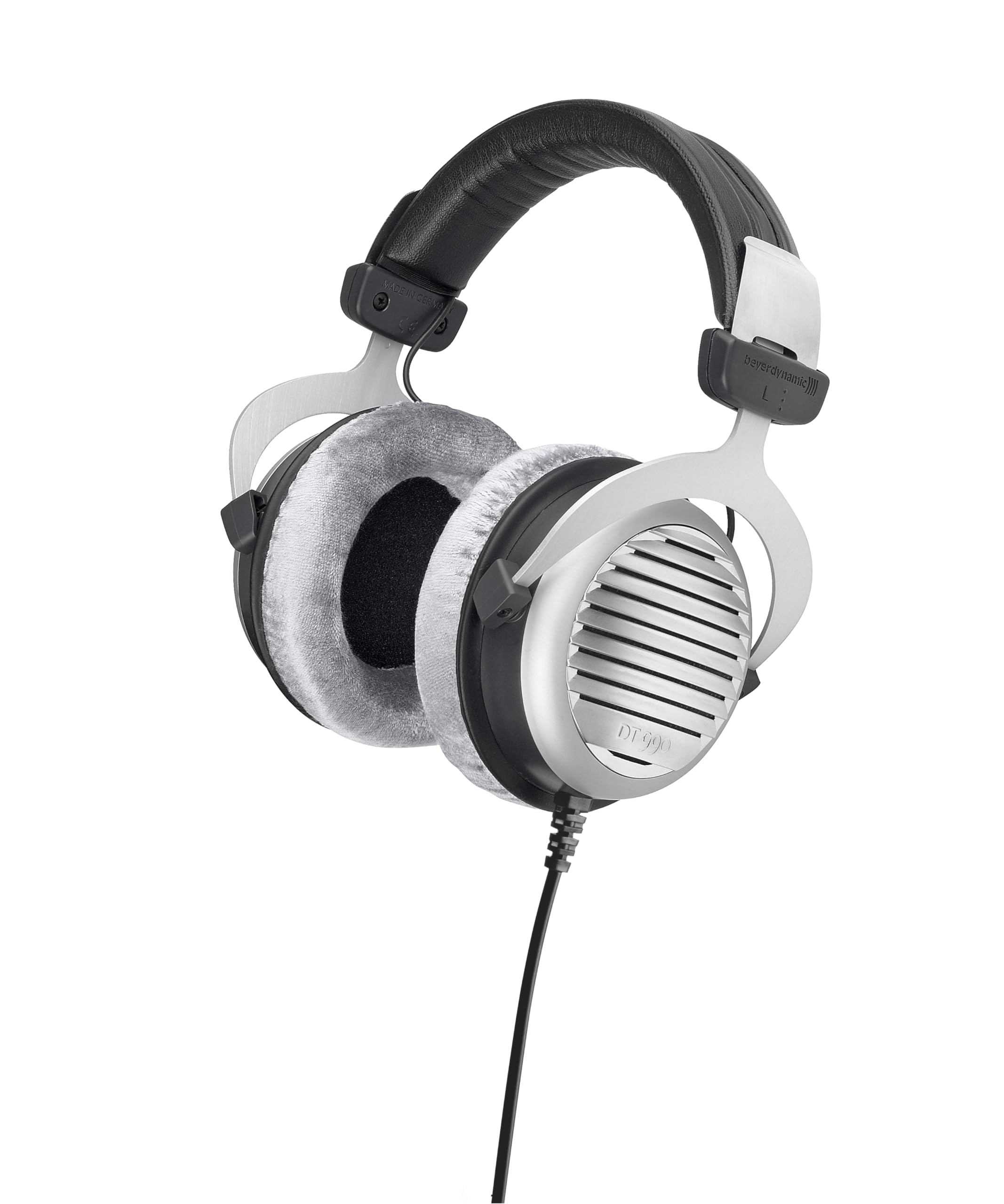
The DT 990 Edition in the 600 Ohm variant is a high-impedance beast that rewards a powerful desktop amplifier with a dynamic, engaging sound that few budget headsets can match. Its velour earpads and leatherette headband provide all-day comfort, and the open-back design creates a spacious, airy presentation that accentuates the V-shaped frequency response — boosted bass and treble with slightly recessed mids. In games, the emphasized treble helps sizzling sound effects like footsteps on gravel pop, though it can be fatiguing over long sessions.
Build quality is classic beyerdynamic: sturdy metal arms with plastic adjustment sliders that can develop a popping noise if handled roughly. The cable is permanently attached, a drawback for longevity compared to detachable alternatives. The 600 Ohm version pairs beautifully with hybrid tube amplifiers like the Schiit Valhalla 2, which smooths the treble peak and adds body to the mids. Without adequate amplification, the DT 990 sounds thin and harsh.
Compared to the DT 1990 PRO MKII, the DT 990 is less refined: the treble is peakier, the bass is looser, and the mids are more recessed. However, for the price, it offers a genuinely exciting sound that makes game audio feel propulsive and alive. Bass lovers will appreciate the snappy low-end punch, while treble-sensitive players should consider the 250 Ohm version or add a gentle EQ cut around 8 kHz to smooth the edge.
Why it’s great
- Exciting V-shaped sound with punchy bass and crisp treble
- Comfortable velour pads for extended wear
- Classic build quality with good component longevity
Good to know
- Treble peak is fatiguing for treble-sensitive listeners
- 600 Ohm impedance requires a very powerful amplifier
- Non-detachable cable limits replacement options
FAQ
Will a audiophile headphone beat a gaming headset for positional audio?
Do I need a separate microphone for voice chat with these headphones?
What amplifier do I need for the Sennheiser HD 800 S in gaming?
How do planar magnetic headphones improve gaming performance?
Can I use open-back headphones in a noisy environment?
Final Thoughts: The Verdict
For most gamers seeking the absolute pinnacle of competitive audio and passive immersion, the best audiophile headphones for gaming winner is the Sennheiser HD 800 S because its ring radiator driver creates an unmatched three-dimensional soundstage that reveals every positional cue with surgical precision. If you want a premium open-back that works without an amplifier and delivers stunning build aesthetics, grab the MEZE AUDIO 109 PRO. And for the best value entry into planar magnetic speed, nothing beats the HIFIMAN SUNDARA.

Mo Maruf
I created WellFizz to bridge the gap between vague wellness advice and actionable solutions. My mission is simple: to decode the research and give you practical tools you can actually use.
Beyond the data, I am a passionate traveler. I believe that stepping away from the screen to explore new environments is essential for mental clarity and physical vitality.