Our readers keep the lights on and my smoothie glass nicely filled. As an Amazon Associate, I earn from qualifying purchases.
An interview recording is only as good as the gear that captured it. Background hum, clipped peaks, or a muddy vocal track can ruin hours of conversation. The right audio recorder for interviews needs to prioritize clear dialogue, reliable file management, and a form factor that stays out of the way.
I’m Mohammad Maruf — the founder and writer behind WellFizz. I’ve spent the last decade analyzing portable field-recording hardware, from budget-friendly handhelds to premium multi-track field units, and I focus on the specifications that actually matter for capturing clean interview audio.
This guide cuts through marketing noise to deliver a focused, data-backed look at the best audio recorder for interviews currently available, covering real-world specs like microphone configuration, preamp noise floor, bit depth, and storage expandability.
How To Choose The Best Audio Recorder For Interviews
Selecting the perfect interview recorder means understanding the specific audio environment you work in, the number of subjects you record, and your post-production workflow. Here are the critical factors to weigh.
Microphone Configuration
Built-in stereo microphones (X/Y or A/B) work well for sit-down conversations at a table. Lavalier mics are best for single-subject, on-the-move interviews where background noise is high. For maximum quality, look for a recorder with XLR combo inputs that allow you to plug in professional handheld or shotgun microphones.
Bit Depth and Recording Format
Standard 16-bit recording requires careful gain staging to avoid clipping. 32-bit float recording is a breakthrough for interviews: it captures a massive dynamic range, so you can fix a clipped take in post without distortion. WAV format is lossless and preferred for archiving, while MP3 saves space at the cost of fidelity.
Battery Life and Storage
Long-form interviews demand a recorder that won’t die midway. Look for a device that offers at least 10 hours of continuous recording on standard batteries. Expandable storage via SD or microSD cards is non-negotiable when archiving multiple sessions. Some recorders support cards up to 1TB.
Quick Comparison
On smaller screens, swipe sideways to see the full table.
| Model | Category | Best For | Key Spec | Amazon |
|---|---|---|---|---|
| Zoom H4 Essential | Premium Handheld | Professional multi-track interviews | 32-bit float / 4-track recording | Amazon |
| Zoom H1 XLR | Compact Field Recorder | Portable XLR setup | 2 XLR/TRS inputs / 32-bit float | Amazon |
| TASCAM DR-10L Pro | Lavalier Recorder | Discreet, single-subject recording | 32-bit float / includes lavalier mic | Amazon |
| Sony ICD-UX570 | Ultra-Compact Voice | Journalists needing pocket-sized simplicity | 4GB internal + microSD / S-microphone | Amazon |
| OM System DM-720 | Olympus Stereo Recorder | Low-noise recordings in noisy environments | TRESMIC 3-mic system / low-cut filter | Amazon |
| Olympus WS-883 | Budget Journalist Recorder | Entry-level field recording | 8GB internal + microSD / MP3 format | Amazon |
| 128G Magnetic Voice Recorder | Value Storage Recorder | Long battery and massive built-in memory | 128GB internal / 35-day battery | Amazon |
In‑Depth Reviews
1. Zoom H4 Essential Handheld Recorder

The Zoom H4 Essential features the largest X/Y microphone capsule on any handheld recorder at 19.4mm, capturing rich, wide-stereo dialogue with a low noise floor. The 32-bit float recording engine means you never need to set input gain before a conversation — clipping is a thing of the past, and you can normalize levels in post without introducing distortion.
Its two XLR/TRS combo inputs allow you to plug in professional condenser or dynamic microphones, while the USB audio interface mode turns it into a high-quality input for your laptop. The lightweight build, 20-hour battery life, and support for microSDXC cards up to 1TB make it a trustworthy daily driver for field interviews.
Some users note handling noise when gripping the body, and the H4 requires basic post-processing to adjust levels if recorded at conservative gain. The menu is logical but takes a session to learn. For any serious interviewer needing pro-level, clip-proof audio, this is the most versatile choice.
Why it’s great
- 32-bit float eliminates gain-staging mistakes.
- Dual XLR/TRS inputs for pro microphones.
- Excellent battery life for long sessions.
Good to know
- Handling noise may require a shock mount.
- Post-processing needed for level normalization.
- Bulky for pocket carry.
2. Zoom H1 XLR 2-Channel Recorder

The Zoom H1 XLR packs two professional XLR/TRS locking inputs into a tiny handheld frame, making it ideal for interviewers who want to use external dynamic microphones without lugging a large device. It records at 32-bit / 96kHz, ensuring your audio can handle unexpected level spikes without distortion.
The OLED waveform display lets you monitor levels visually at a glance, a feature typically found on much pricier recorders. It also includes a 3.5mm stereo input for a second source and a headphone output for live monitoring. SDXC support up to 1TB provides massive storage for multi-season projects.
Its plastic build feels lightweight but less rugged than metal-chassis alternatives. Battery life checks in at about 10 hours with phantom power, so bring spares for all-day shoots. The interface is straightforward, but new users should read the manual to understand the menu structure fully.
Why it’s great
- Professional XLR inputs in a compact body.
- 32-bit float recording avoids clipping.
- SDXC support up to 1TB.
Good to know
- Plastic build feels less durable.
- Short battery life with phantom power.
- Menu navigation requires some learning.
3. TASCAM DR-10L Pro Field Recorder

The TASCAM DR-10L Pro is purpose-built for discreet single-subject interviews. It comes with a TM-10L clip-on lavalier microphone that delivers clear, chest-level audio, and the 32-bit float recording ensures you never lose a take to clipping, even if your subject leans into the mic. The firmware now supports LTC Jam Sync for timecode synchronization across multi-camera setups.
The device itself weighs only 65 grams, clipping onto a belt or stashing in a pocket easily. It runs on a single AAA battery (or a rechargeable lithium cell) and supports microSDXC cards up to 512GB. The DR-10L Pro CONNECT App gives you remote control over up to five units simultaneously — perfect for panel discussions or group interviews.
Some users report that the included lavalier is good but not exceptional — upgrading to a higher-end lav or pairing it with a wireless system can further improve audio. The slider record button is easy to bump, and the screen is tiny. It also requires formatting the SD card and setting the time and date before first use.
Why it’s great
Stealthy form factor with included lav mic.
- 32-bit float recording is worry-free.
- Extremely lightweight and portable.
- Multi-unit control app for group interviews.
Good to know
- Included lav mic is entry-level.
- Small screen and slider can be fiddly.
- Requires initial setup and formatting.
4. Sony ICD-UX570 Series Digital Voice Recorder
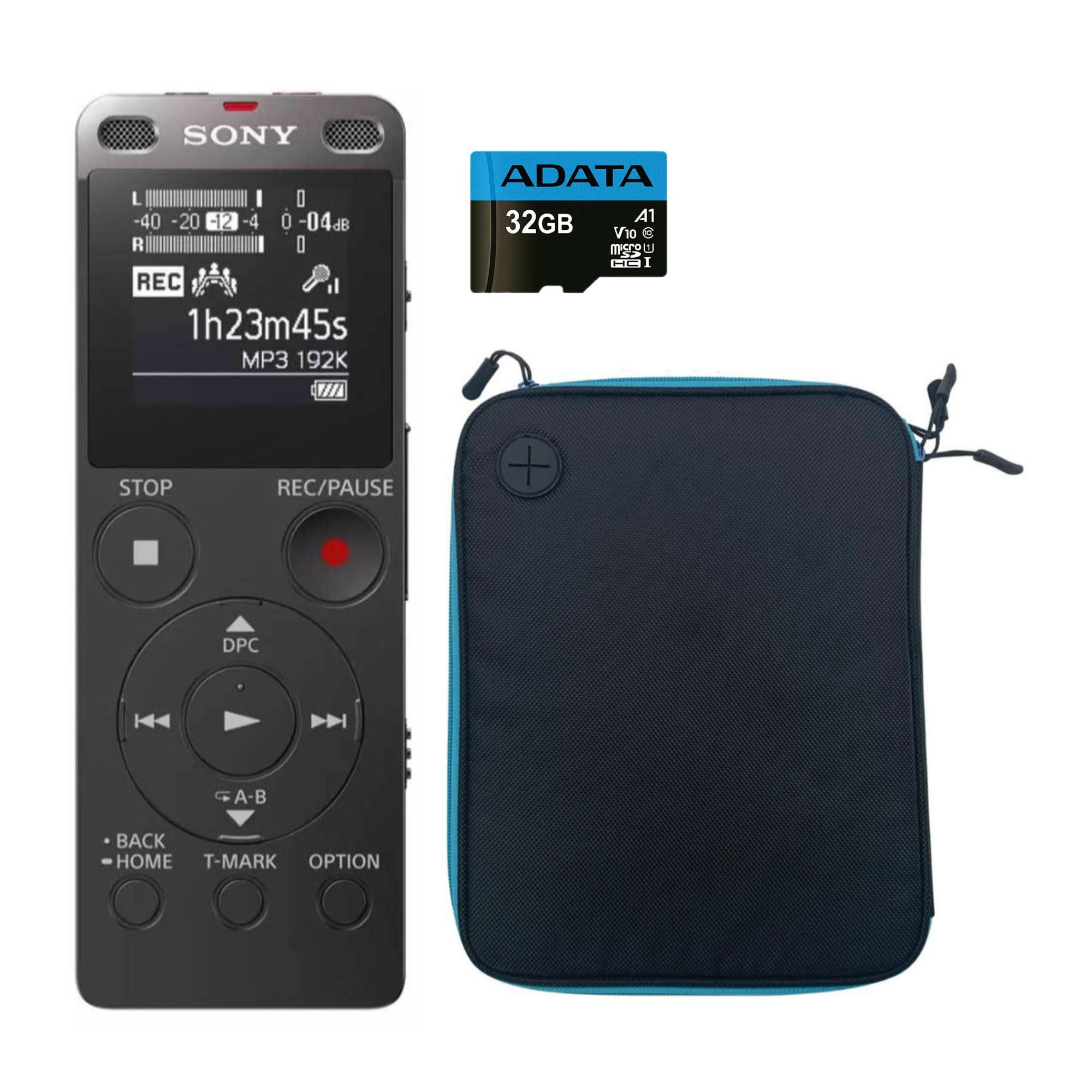
The Sony ICD-UX570 is the pocket-sized journalist’s companion, offering a built-in USB connector for direct file transfer to any laptop without a cable. Its S-microphone delivers clear voice reproduction, and the voice-operated recording feature saves storage by only capturing active speech. The bundled 32GB microSD card more than doubles the 4GB internal memory.
This recorder focuses on simplicity: three recording functions, a backlit display, and easy navigation. Recording formats include MP3, AAC, WMA, and linear PCM, giving you flexibility between quality and file size. The headphone jack and mic input add expandability for external microphones.
Audio quality in quiet rooms is very good, but background noise is noticeable in loud environments. The build is ultra-compact, but the sliding power switch is a common point of long-term wear. It feels premium and is ideal for journalists who need an off-the-shelf solution that just works.
Why it’s great
- Built-in USB for effortless file transfer.
- Extremely compact and portable.
- Voice-operated recording saves storage.
Good to know
- Background noise pickup in loud settings.
- Sliding power switch may wear over time.
- No XLR input for pro microphones.
5. OM System Olympus Voice Recorder DM-720
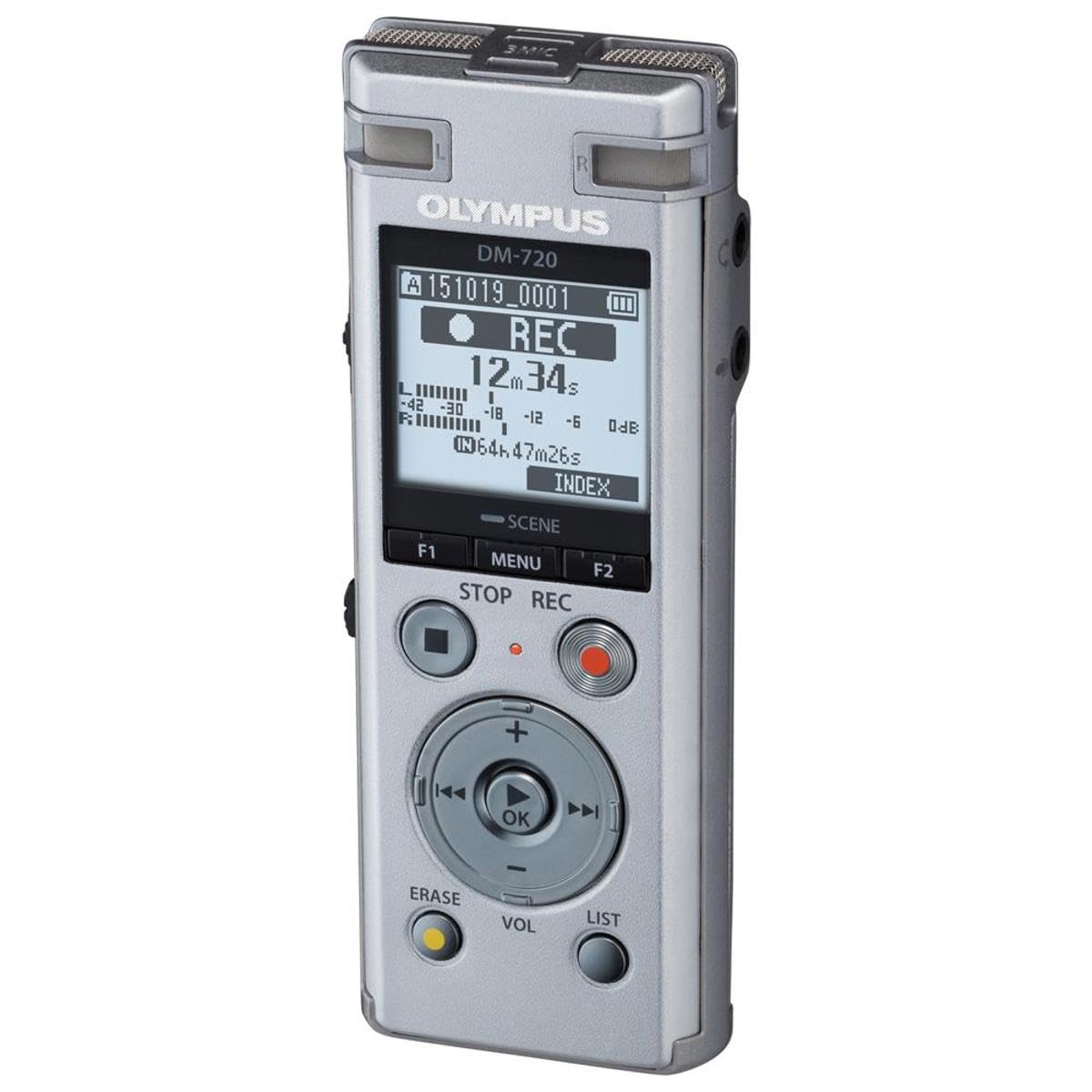
The OM System DM-720 uses a TRESMIC 3-microphone system — three independent mics in a stereo array — to capture a wide, realistic soundstage. The low-cut filter eliminates frequencies below 300 Hz, cutting out HVAC hum, traffic rumble, and other low-end noise that plagues interview recordings.
It records in 48 kHz/16-bit linear PCM and MP3 formats, and the Intelligent Auto Mode adjusts mic sensitivity automatically based on the input level, which is handy in varying environments. The built-in USB makes file transfer simple, and the use of a single AAA battery powers it for up to 985 hours of recording time.
Experienced users note a slight hiss at the highest sensitivity settings, and the startup time is slower than earlier Olympus models. The battery door feels flimsy, and the SDHC limit of 32GB prevents using it as a long-term music player. For interviewers in noisy rooms, however, the noise reduction is genuinely impressive.
Why it’s great
- Three-mic system excels in noisy settings.
- Very long battery life on a single AAA.
- Low-cut filter removes background rumble.
Good to know
- Noticeable hiss at high sensitivity.
- Slow startup time.
- Battery door feels less durable.
6. Olympus WS-883 Digital Voice Recorder

The Olympus WS-883 offers a classic, no-fuss recording experience with 8GB of internal memory and a microSD slot for expansion. It supports both Linear PCM and MP3 formats, giving you the choice of raw fidelity or space-efficient files. The true stereo microphones and low-cut filter help keep background noise manageable.
Its strongest asset is the retractable USB connector that plugs directly into any computer for drag-and-drop file transfers. Battery life is rated at 68 hours, and the simple one-switch/two-button operation makes it accessible for users of all ages. It charges over USB using standard NiMh or alkaline batteries.
Audio fidelity is lower than professional XLR-based recorders, and the auto power-off feature cannot be disabled, shutting down after about 20 minutes of inactivity. It also lacks a backlight on the playback button. Still, for entry-level interview work or quick field notes, it is a very affordable and reliable performer.
Why it’s great
- Built-in USB for quick file transfer.
- Simple controls ideal for beginners.
- Good battery life for daily use.
Good to know
- Auto power-off cannot be disabled.
- No backlight on playback button.
- Lower audio fidelity than pro models.
7. 128G Magnetic Voice Recorder with AI Noise Reduction
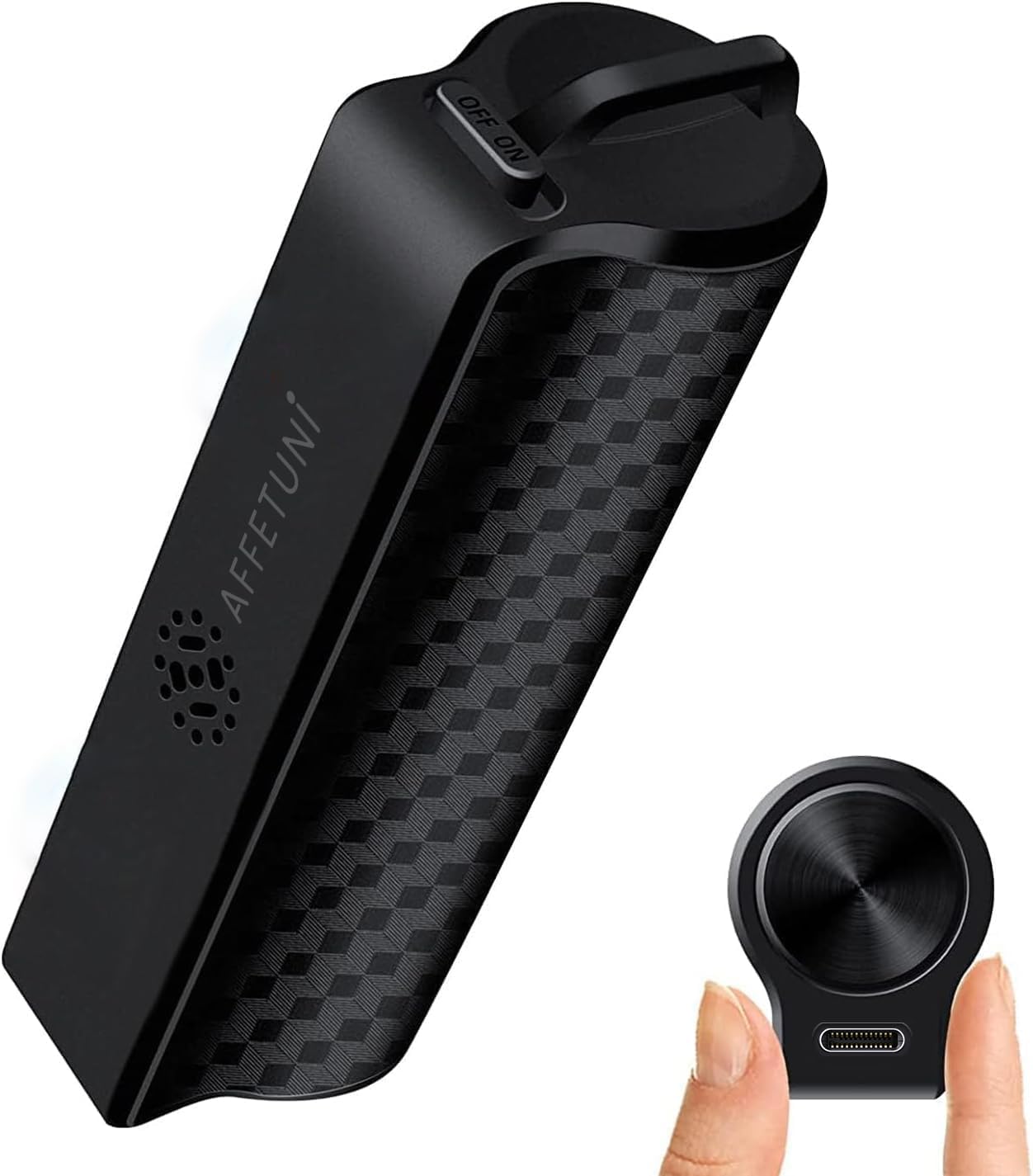
The AFFETUNI 128G recorder prioritizes storage and endurance above all else. Its massive built-in 128GB memory can store hundreds of hours of WAV recordings, while the battery life claim of 35 days of continuous recording means you never have to worry about carrying a charger. The magnetic back attaches securely to metal surfaces for hands-free placement.
The AI triple noise reduction system does a decent job filtering out background interference in busy environments, and the voice-activated recording mode saves both storage and battery by pausing when no one is talking. Data transfer is via USB-C, and the one-button start makes it beginner-friendly.
Audio quality from the built-in mic is adequate for speech but not studio-grade. The device lacks playback and delete controls on the unit — you need a computer or phone to manage files. Customer support has also been flagged as unreliable. This is best suited for long-form archival interviews where ease of storage matters more than pristine audio.
Why it’s great
- Massive 128GB internal storage.
- Exceptional battery life for long projects.
- Magnetic attachment for discreet placement.
Good to know
- No onboard file management controls.
- Audio quality is not pro-level.
- Customer support reported as inconsistent.
FAQ
Is 32-bit float recording necessary for interviews?
Should I use WAV or MP3 for interview recording?
Can I use a lavalier mic with a handheld recorder?
How much storage do I need for a full-day interview?
Final Thoughts: The Verdict
For most interviewers, the best audio recorder for interviews is the Zoom H4 Essential because it combines 32-bit float reliability, professional XLR inputs, and excellent battery life in a portable package. If you need a compact XLR recorder for travel, grab the Zoom H1 XLR. And for discreet, single-subject field work with a lavalier, nothing beats the TASCAM DR-10L Pro.

Mo Maruf
I created WellFizz to bridge the gap between vague wellness advice and actionable solutions. My mission is simple: to decode the research and give you practical tools you can actually use.
Beyond the data, I am a passionate traveler. I believe that stepping away from the screen to explore new environments is essential for mental clarity and physical vitality.