Our readers keep the lights on and my smoothie glass nicely filled. As an Amazon Associate, I earn from qualifying purchases.
Nothing kills a creative flow faster than picking up your art journal only to find your favorite marker or a splash of watercolor has bled through to ruin the drawing on the next page. The core difference between a frustrating art journal and an inspiring one comes down to paper weight, binding durability, and surface texture—three specs that determine whether your journal becomes a treasured archive or a frustrating experiment.
I’m Mohammad Maruf — the founder and writer behind WellFizz. I’ve spent years analyzing customer feedback, paper manufacturing standards, and real-world performance data from thousands of artists to separate marketing hype from tangible quality in the art supply space.
Whether you work with dry graphite or fluid watercolor washes, finding the right surface is critical. This guide breaks down the top options so you can confidently choose from the best art journals for your specific medium and creative habits.
How To Choose The Best Art Journals
Art journals vary wildly in paper thickness, surface texture, and binding. Choosing the wrong one means fighting with feathering ink, buckling pages, or a spine that won’t lay flat. Focus on three core factors to match a journal to your specific medium and workflow.
Paper Weight And The Bleed-Through Threshold
Paper weight is the single most important spec. Standard sketch paper (70-90 lb / 100-150 gsm) is fine for pencils and charcoal but will bleed with markers and buckle under watercolor washes. For mixed media or wet applications, look for 120 lb (200 gsm) or heavier. The journal must match the wettest tool you plan to use, not just your lightest one.
Binding: Flatness Versus Portability
If you draw across two-page spreads or need a stable surface while painting, a lay-flat binding—either spiral-bound or stitched with a flexible spine—is essential. Perfect-bound glued spines often force you to break the spine to get the book open, which can cause pages to fall out over time. Spiral binding solves this but can snag in a bag.
Surface Texture: Hot Press, Cold Press, Or Rough
The paper surface dictates how your medium behaves. Hot press paper has a smooth surface ideal for detailed pen work and fine pencil strokes. Cold press has a subtle tooth that grips watercolor and gouache without being overpowering. Rough paper provides heavy texture for expressive dry media. Choose the texture that matches your natural mark-making style.
Quick Comparison
On smaller screens, swipe sideways to see the full table.
| Model | Category | Best For | Key Spec | Amazon |
|---|---|---|---|---|
| Vanrtto Square Sketch Book | Mid-Range | Dry media and thin markers | 120 lb / 200 gsm paper | Amazon |
| LEATHER VILLAGE Vintage Journal | Mid-Range | Decorative art and Zentangle | 200 pages, deckle edges | Amazon |
| Moleskine Art Sketchbook | Mid-Range | Fountain pen and fine pencil | 104 pages, ivory paper | Amazon |
| Arches Aquarelle Travel Pad | Premium | Watercolor and gouache | 140 lb cold press paper | Amazon |
| Moleskine Watercolor Notebook | Premium | Wet media and mixed media | A4 size, 60 heavy pages | Amazon |
In‑Depth Reviews
1. Vanrtto Hardcover Square Sketch Book

The Vanrtto sketch book hits the sweet spot for artists who work primarily with dry media but occasionally reach for thin markers or ink pens. Its 120 lb (200 gsm) paper is thick enough to resist ghosting from most fineliners, and the square 8×8 format means your art is already cropped for social media sharing without any awkward trimming. The hardcover is wrapped in a comfortable PU leather that feels secure in hand, and the elastic closure keeps everything snug inside a backpack or tote.
Perforated pages are a thoughtful addition: you can tear out a finished piece cleanly without damaging the rest of the book. Ribbon bookmark and an inner pocket on the back cover add everyday convenience. The paper surface has a subtle laid texture that gives pencil and charcoal a slight tooth, reducing the polished glare you get on hot press sheets. Some users have noted the spiral binding can loosen over heavy use, so frequent page removal should be done gently.
The acid-free paper ensures your sketches won’t yellow or fade under normal storage conditions. For anyone who wants a reliable, portable, and low-worry sketchbook for daily practice, this is a very strong performer at a practical price.
Why it’s great
- Heavy 200 gsm paper resists feathering from most dry media and thin markers
- Square format eliminates image cropping for digital sharing
Good to know
- Paper too absorbent for watercolor and thick alcohol markers
- Spiral binding may loosen over time with heavy page removal
2. LEATHER VILLAGE Rustic Vintage Leather Spine Bound Journal
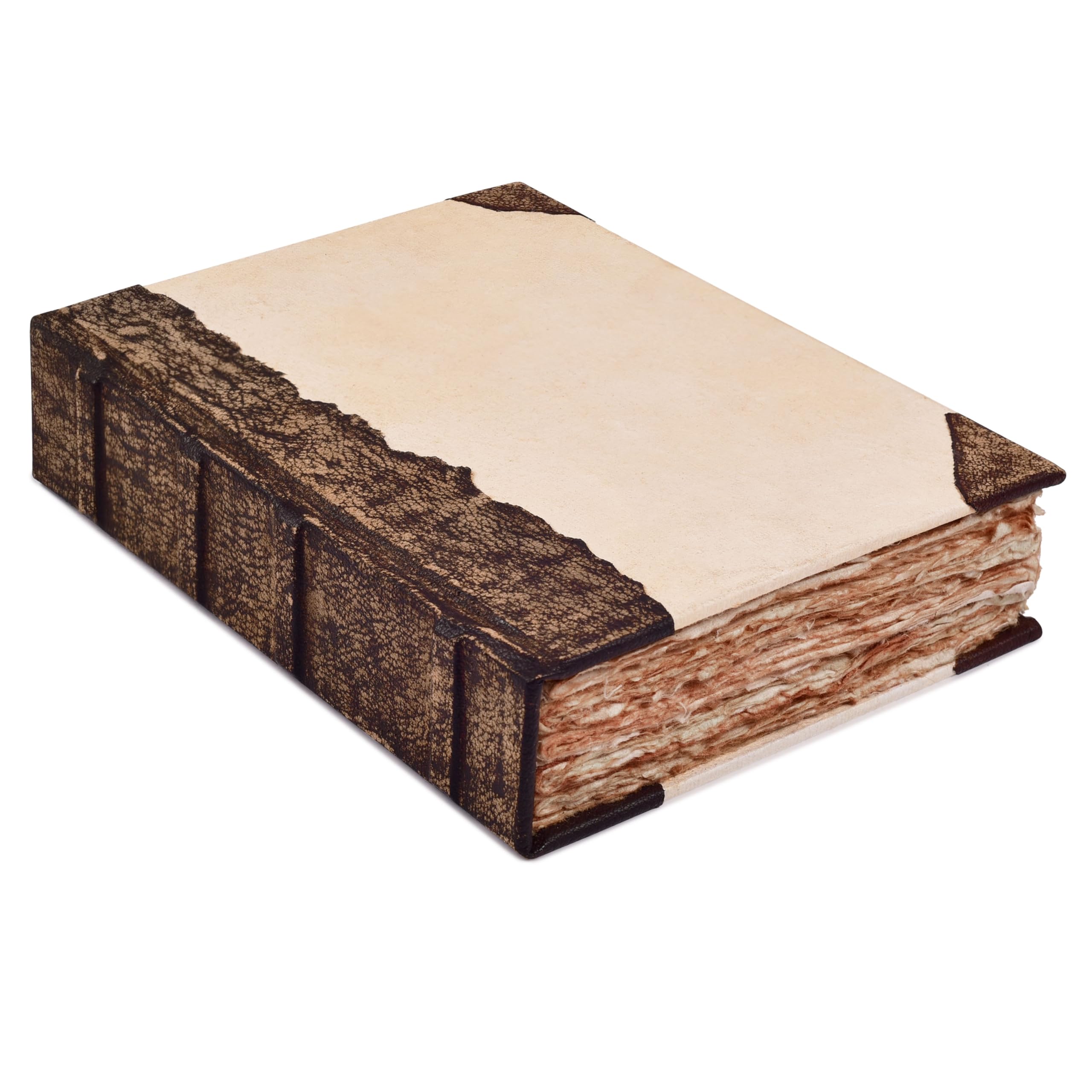
This journal from LEATHER VILLAGE leans heavily into aesthetic appeal without sacrificing practical function. The cover is genuine buffalo leather, naturally tanned without chrome, giving each unit a unique distressed look that improves with wear. Inside, the 200 pages feature antique-style deckle edges that mimic handmade paper, which is ideal for Zentangle, calligraphy, or any practice where the visual character of the page enhances the art. The belt-wrap closure keeps the contents secure, and the hand-stitched binding is robust enough for daily opening and closing.
The paper is a mixed-media stock that handles ink, pencil, and light washes, but reviews consistently note that heavy wet media will cause buckling. The A6 (6×4 inch) size is pocket-friendly but smaller than a standard sketchbook—perfect for quick field sketches, travel journaling, or a daily gratitude practice where portability matters more than page real estate. The lack of visible thread on the spine raises some questions about long-term hinge durability, though most users report the binding stays intact through normal use.
The paper has a warm manila tone that provides a nice base for white highlight work, and the varied thickness from page to page gives each sheet a handcrafted feel. This journal is less about clinical precision and more about tactile, ritualistic creative sessions.
Why it’s great
- Genuine buffalo leather cover develops a unique patina over time
- 200 pages with deckle edges provide a distinct vintage aesthetic
Good to know
- Paper too absorbent for heavy watercolor or wet washes
- Page thickness varies, making turning slightly difficult
3. Moleskine Art Sketchbook, Large

The Moleskine Art Sketchbook is a fixture in the art world for good reason. Its large format (5 x 8.25 inches) fits neatly into most bags without being cramped, and the plain ivory pages provide a warm base for pencil, charcoal, and fountain pen work. The paper handles extra-fine and fine nib fountain pens without bleed or feathering, though broader nibs may show through. The elastic closure band and inner expandable pocket follow Moleskine’s signature design language, making this a natural pick for artists who also use Moleskine notebooks for writing.
The hardcover is covered in a classic leather-like material that holds up well to being tossed in a backpack. Pages are non-perforated and stitched in sections, meaning you can draw across two-page spreads without worrying about paper tearing out. The ivory tone is less stark than bright white paper, which softens pencil lines and gives ink work a more organic feel. Artists who prefer spiral notebooks often note the Moleskine spine requires some breaking-in to lay flat, but once settled, it stays open without fussing.
At 104 pages, this is not a thick journal, but the quality per page is consistent. Sharpies will bleed through, so alcohol-based markers are not recommended. For dry media and fountain pen artists who value a refined, portable book, this remains a reliable standard.
Why it’s great
- Handles fountain pen ink well with minimal feathering
- Non-perforated pages allow seamless two-page spreads
Good to know
- Ivory paper can feel too warm for some color work
- Not suitable for alcohol markers or heavy watercolor
4. Arches Aquarelle Travel Pad

Arches is not a household name for casual doodlers, but for watercolor artists it is the gold standard. This travel pad contains 15 sheets of 140 lb cold press paper made from 100% cotton fibers distributed through a cylinder mold process. The result is a paper that slackens uniformly when wet, giving the painter outstanding control over washes. The cold press surface has a gentle tooth that holds pigment without letting it pool in unwanted ways, and the gelatin sizing “to the core” prevents paints from soaking deep into the fibers, allowing for easy lifting and layering.
The spiral binding lets the pad lay completely flat, which is crucial when you need both hands free for brush control. The 6×10 inch size is compact enough for plein air painting yet large enough to develop a composition. The pulp-dyed backboard adds rigidity, so you don’t need a separate board support when working on location. Each sheet can take multiple washes without buckling or pilling, and the paper withstands scrubbing and erasing without tearing.
The main trade-off is limited sheet count—15 sheets at this premium level—meaning this pad is best reserved for finished work or serious studies rather than quick daily sketches. For any watercolorist who values performance over page count, this is a top-tier investment.
Why it’s great
- 100% cotton paper handles multiple washes without buckling
- Gelatin sizing allows easy lifting and blending of wet media
Good to know
- Only 15 sheets per pad limits its use for casual sketching
- Premium price point is best for finished paintings and studies
5. Moleskine Art Watercolor Notebook, A4
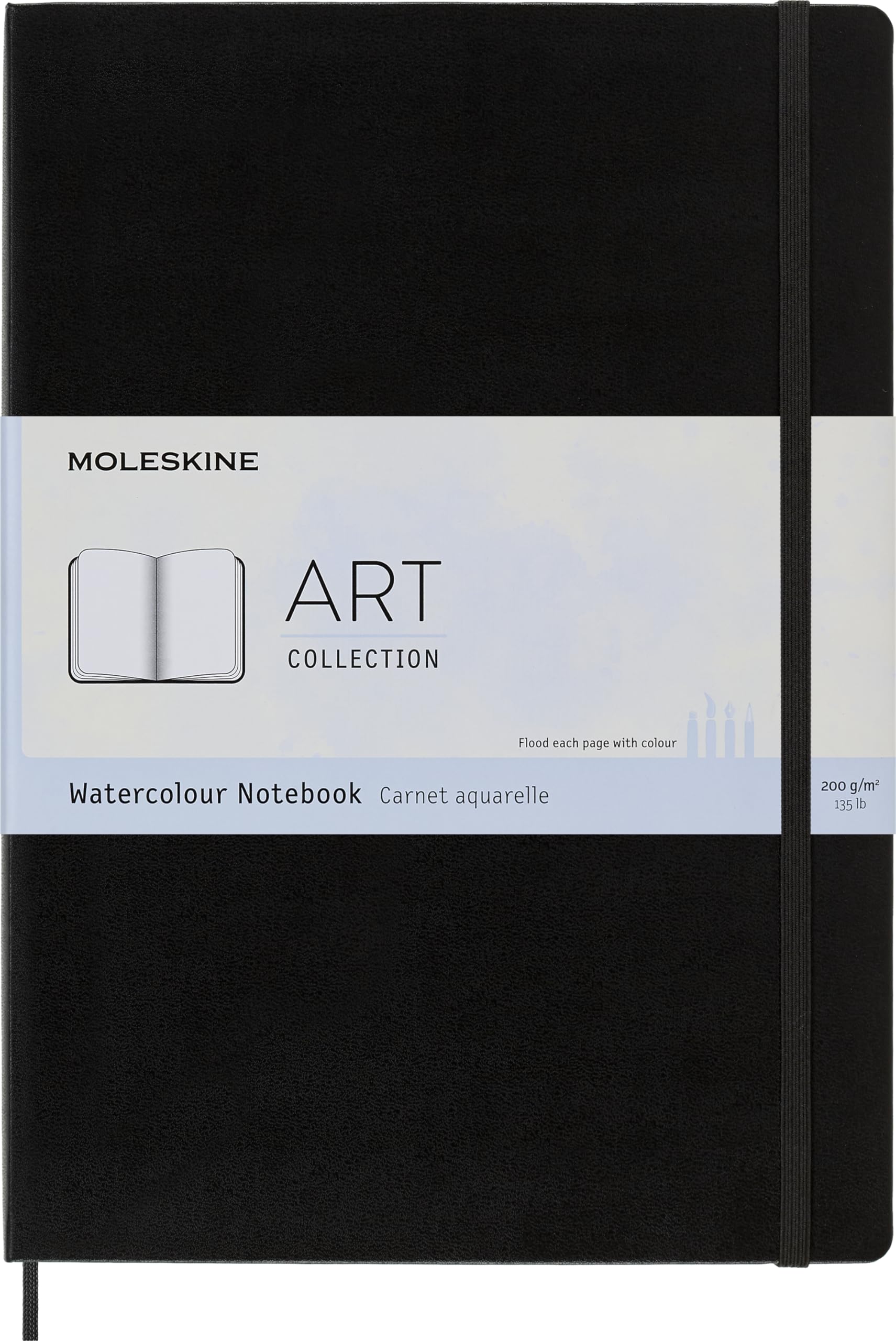
Moleskine’s dedicated watercolor notebook bridges the gap between standard sketchbooks and professional watercolor paper. The A4 size (8.25 x 11.75 inches) provides generous workspace without being unwieldy, and the heavy paper is engineered to take wet media without catastrophic buckling. It handles gouache particularly well, with enough tooth to grip pigment without impeding flow, and reviews consistently note no bleed-through even with multiple washes. The hardcover and elastic closure keep the notebook protected in transit.
Sixty pages is a comfortable count for a dedicated watercolor journal—enough for a month of daily practice or a focused travel project. The paper has a slightly textured surface that sits between a hot and cold press, offering versatility for both fine detail and expressive washes. Artists who pair this with pen and ink note that the paper withstands erasing without pilling, which is a common failure point on cheaper watercolor stock. The notebook opens reasonably flat, though some users add binder clips to the edges for absolute stability during wet work.
Edge buckling can occur with very heavy washes, though this is typical for any watercolor paper not mounted on a block. For any artist comfortable with minor buckling who wants a portable, durable, and well-sized watercolor journal, this Moleskine delivers consistent results.
Why it’s great
- Heavy paper handles gouache and watercolor without bleed-through
- A4 size gives plenty of room for detailed compositions and notes
Good to know
- Paper buckles slightly with heavy washes
- Not a true cold press surface, may not suit all watercolorists
FAQ
What gsm paper weight do I need for alcohol markers?
Is cold press or hot press paper better for watercolor?
Why do my pages fall out of my art journal?
Final Thoughts: The Verdict
For most users, the art journals winner is the Vanrtto Hardcover Square Sketch Book because its 200 gsm paper provides a reliable floor for dry media and thin markers at a balanced price. If you want a classic portable journal for fountain pen work, grab the Moleskine Art Sketchbook. And for serious watercolor painters who need professional-grade paper that handles multiple washes without buckling, nothing beats the Arches Aquarelle Travel Pad.

Mo Maruf
I created WellFizz to bridge the gap between vague wellness advice and actionable solutions. My mission is simple: to decode the research and give you practical tools you can actually use.
Beyond the data, I am a passionate traveler. I believe that stepping away from the screen to explore new environments is essential for mental clarity and physical vitality.