Our readers keep the lights on and my smoothie glass nicely filled. As an Amazon Associate, I earn from qualifying purchases.
A 50-inch QLED TV sits at a sweet spot—large enough for an immersive living-room setup yet compact enough to fit into a bedroom or apartment wall. Unlike standard LED screens that struggle with color volume in bright rooms, quantum-dot technology boosts brightness and preserves over a billion shades, making it the go-to choice for daytime sports and HDR movie marathons.
I’m Mohammad Maruf — the founder and writer behind WellFizz. I spend my time dissecting television hardware, from backlight zoning architectures to panel refresh rates, so you can skip the marketing fluff and understand what actually separates an average QLED from a high-performance one.
After combing through customer feedback and technical specifications across 11 models, I’ve pinpointed which features matter most. This guide breaks down the critical specs—Mini-LED vs. standard QLED, native refresh rates, and HDR support—to help you find the best 50 inch qled tv for your home and budget.
How To Choose The Best 50 Inch QLED TV
Not all QLED TVs are created equal. While the core quantum-dot layer delivers wider color, the supporting hardware—backlight system, refresh rate, and HDR support—determines whether you get a flat picture or a cinematic experience.
Backlight Technology: Standard QLED vs. Mini-LED vs. QD-Mini LED
Standard QLED uses edge or basic direct LED lighting, which often results in uneven brightness and visible blooming around bright objects. Mini-LED packs hundreds or thousands of smaller LEDs into precise dimming zones, dramatically boosting contrast—blacks look deeper and highlights pop without halos. QD-Mini LED combines this fine backlight control with quantum-dot color, delivering the highest brightness and widest color volume in the 50-inch class.
Refresh Rate: 60Hz, 120Hz, or 144Hz
A 60Hz panel handles standard TV and movies fine, but fast-paced sports and gaming demand higher rates. 120Hz reduces motion blur significantly, while 144Hz offers an extra edge for competitive PC or console gaming. Look for native refresh rate specs, not motion-enhancement marketing claims. For PS5 or Xbox Series X, a 120Hz HDMI 2.1 port is a must for 4K/120Hz gaming.
Smart Platform: Roku, Google TV, or Fire TV
Roku offers the cleanest, fastest interface with minimal ads and broad app support. Google TV excels at personalized recommendations and integrates tightly with Android devices and Google Assistant. Fire TV is deeply integrated with Alexa and Amazon services, making it ideal for Prime subscribers but can feel cluttered with promotions. Pick the ecosystem that matches your streaming habits.
HDR Format Support
Dolby Vision and HDR10+ are dynamic HDR formats that adjust brightness and contrast scene-by-frame, while HDR10 is static. Dolby Vision is widely supported on Netflix, Disney+, and Blu-ray. HDR10+ is more common on Amazon Prime Video. If you watch a mix of sources, prioritize a TV that supports both Dolby Vision and HDR10+ for maximum compatibility.
Quick Comparison
On smaller screens, swipe sideways to see the full table.
| Model | Category | Best For | Key Spec | Amazon |
|---|---|---|---|---|
| Hisense E7 Cinema Series | Mini-LED | Gaming & Sports | Native 144Hz, Dolby Vision | Amazon |
| TCL QM6K | QD-Mini LED | Premium Value | 144Hz, 500+ Dimming Zones | Amazon |
| Westinghouse Mini LED | Mini-LED | Budget Mini-LED | 93% DCI-P3 Color Gamut | Amazon |
| Roku Plus Series | Mini-LED | Roku Ecosystem | Dolby Vision, AI Upscaling | Amazon |
| Amazon Ember QLED | QLED | Fire TV / Alexa | Dolby Vision, HDR10+ Adaptive | Amazon |
| Samsung Q8F | QLED | Color Accuracy | 100% Color Volume, 144Hz | Amazon |
| Sony BRAVIA 3 II | LED | PS5 / Sony Ecosystem | XR Processor, 120Hz | Amazon |
| Samsung The Frame LS03D | QLED | Living Room Aesthetics | Matte Display, Art Mode | Amazon |
| Hisense CanvasTV S7 | Hi-QLED | Art Gallery / Aesthetics | Anti-Glare Matte, Art Mode | Amazon |
| Sony BRAVIA 7 | Mini LED QLED | Reference Picture Quality | XR Backlight Master Drive | Amazon |
| TCL 50S5K | QLED | Entry-Level QLED | FHD (1080p) Resolution | Amazon |
In‑Depth Reviews
1. Hisense 50″ E7 Cinema Series Hi-QLED Mini-LED 4K UHD Smart Fire TV
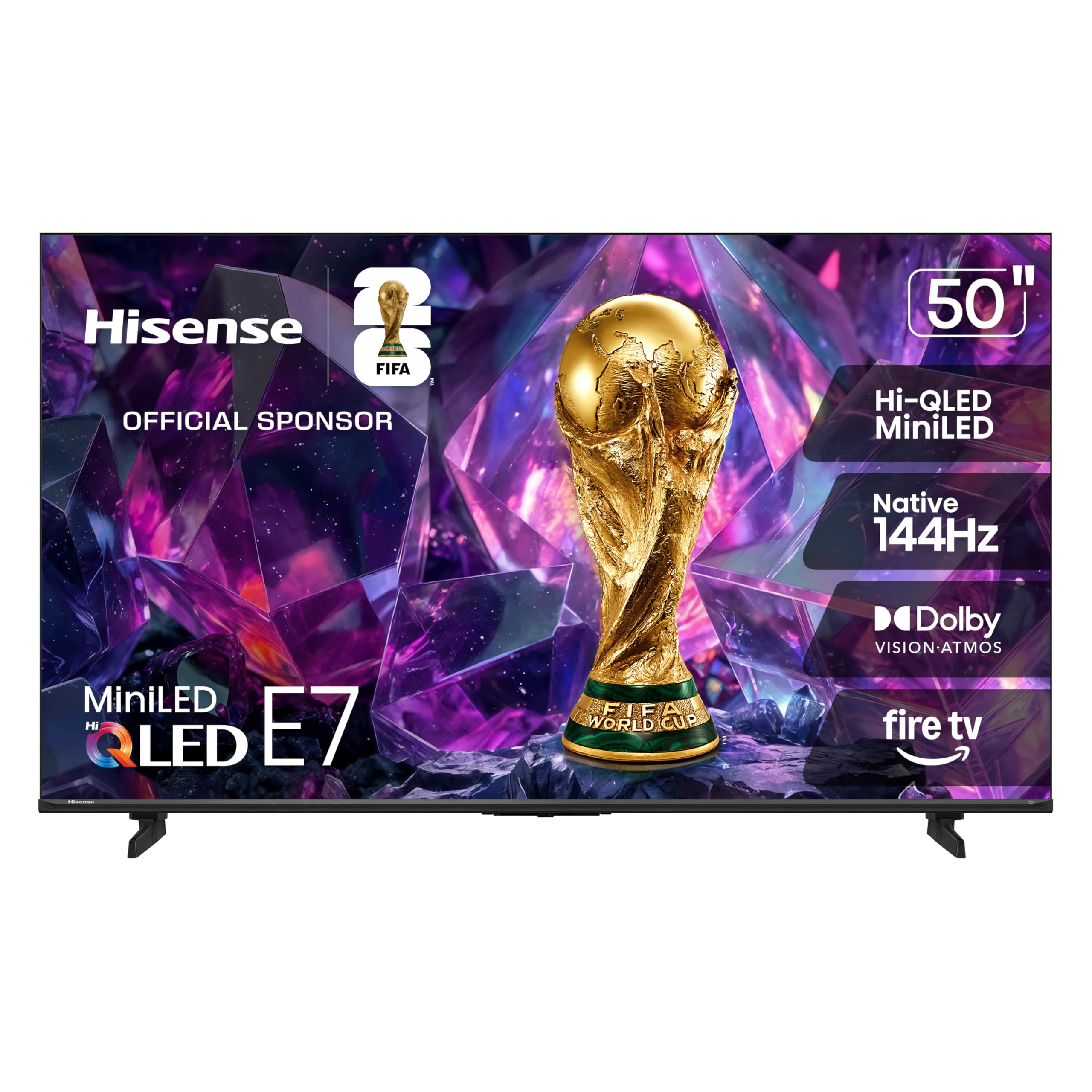
The Hisense E7 Cinema Series packs a Hi-QLED Mini-LED panel with thousands of precise light zones, delivering the kind of contrast that makes dark scenes in shows like *The Batman* look genuinely cinematic. Blacks stay inky, while highlights—like headlights in a night chase—burn bright without the halo effect that plagues edge-lit sets. The native 144Hz refresh rate is a standout for this price tier; fast motion in hockey or *Call of Duty* stays fluid and sharp, with AI Smooth Motion (MEMC) cleaning up judder during camera pans.
Dolby Vision IQ and HDR10+ Adaptive both make an appearance, so whether you’re streaming from Netflix or Amazon Prime Video, the TV adjusts brightness and contrast based on ambient room light. AI Picture processing analyzes content scene by scene to tweak color and sharpness automatically—a real boon for casual viewers who don’t want to fiddle with settings. Fire TV integration means Alexa voice commands are on tap, and the quad-core processor keeps app launches snappy.
On the downside, the stand is a basic plastic design that feels less sturdy than the Samsung or Sony offerings, and some users report occasional Wi-Fi disconnects in the first weeks of use. The 70W audio output is decent for a built-in system, but pairing a soundbar will unlock the full Dolby Atmos experience. For the feature set—Mini-LED, 144Hz, Dolby Vision—the E7 punches well above its asking price and earns the top spot.
Why it’s great
- Mini-LED backlight with excellent contrast and minimal blooming
- Native 144Hz panel ideal for competitive gaming
- Supports both Dolby Vision IQ and HDR10+ Adaptive
Good to know
- Plastic stand feels less premium than the picture quality suggests
- Built-in speakers lack bass; soundbar recommended
- Rare software glitches reported by some users
2. TCL 50-Inch QM6K Series QLED 4K Smart QD-Mini LED TV
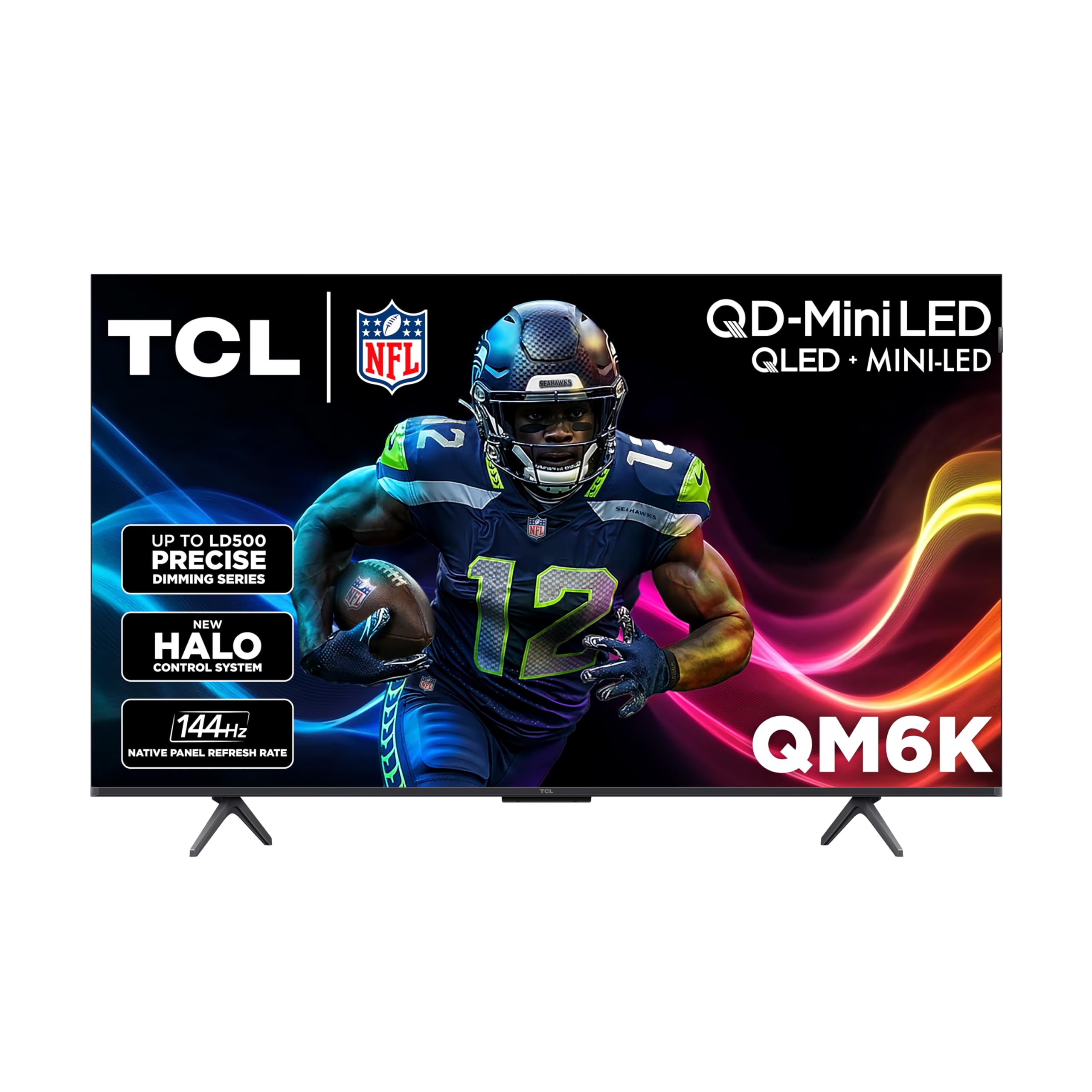
TCL’s QM6K brings its premium QD-Mini LED technology—combining quantum-dot color with a dense Mini-LED array—into a 50-inch package that rivals some OLEDs in contrast. The new Halo Control System manages over 500 precise dimming zones, so specular highlights on *Planet Earth II* look blindingly bright while the surrounding screen remains pitch black. The 144Hz native refresh rate, paired with VRR support, makes this a no-brainer for PC gamers who want tear-free motion on a medium-sized screen.
Google TV runs smoothly here, with quick app loading and a clean home screen that surfaces content from Netflix, Prime Video, and Disney+ without excessive ads. Gamers get two HDMI 2.1 ports that support 4K/144Hz, plus an instant Game Mode that automatically enables low-latency settings when a console is detected. The backlit remote is a welcome touch—it lights up when you pick it up, so fumbling in the dark for volume control is over.
The main trade-off is sound: the built-in speakers are adequate for dialogue but lack the depth for action movie thunder, and the included stand feels flimsy—wall-mounting is the smarter long-term move. Motion-smoothing purists will want to disable the default settings to avoid the soap-opera effect. For buyers seeking a gaming-first QLED with premium control over brightness and color, the QM6K is a standout performer.
Why it’s great
- QD-Mini LED delivers OLED-like contrast with high brightness
- Two HDMI 2.1 ports with 144Hz and VRR for gaming
- Backlit remote and clean Google TV interface
Good to know
- Flimsy stand; wall-mount recommended
- Speakers are mediocre for the price range
- Motion smoothing can be overactive out of the box
3. Westinghouse 50 Inch Mini LED 4K UHD Roku TV
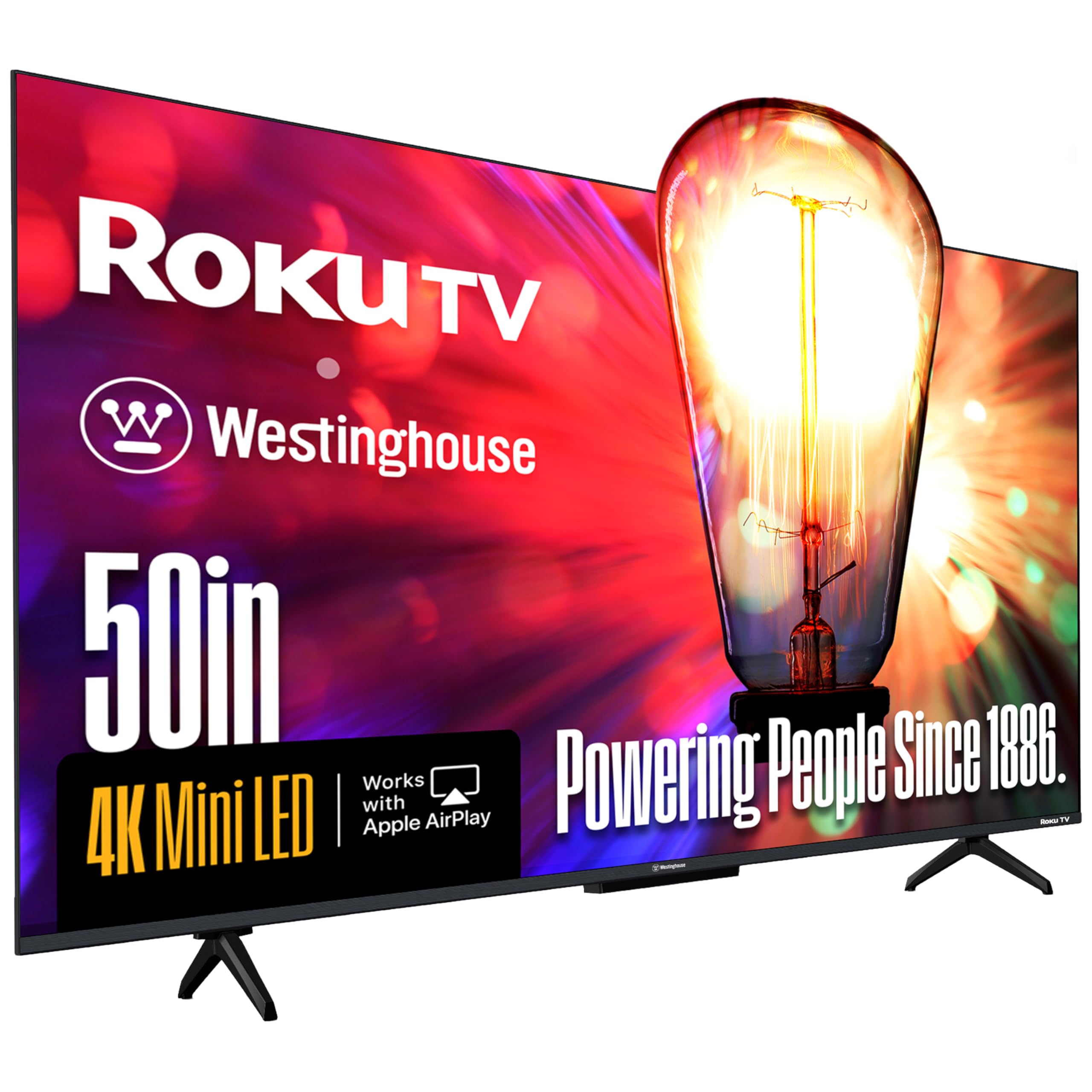
Westinghouse delivers an unexpected Mini-LED contender at a price that undercuts most competitors. The 93% DCI-P3 color gamut coverage means reds, greens, and blues look saturated and lifelike—a noticeable step up from standard LED panels at the same price. Local dimming zones, while not as numerous as the TCL or Hisense, still reduce light bleed enough that dark scenes in *Stranger Things* look far more immersive than traditional edge-lit sets. MEMC motion enhancement cleans up judder in fast camera pans and sports.
Roku TV is the star here for simplicity. The interface is fast, ad-light, and organizes streaming apps in a straightforward grid that anyone can navigate in seconds. Apple HomeKit and AirPlay 2 support are included, so iPhone users can cast content effortlessly. With four HDMI 2.1 ports—including eARC—you can connect a soundbar, PS5, and streaming stick without juggling ports.
The speaker system is one of the weaker aspects: audio is loud but sounds muddy in the midrange, as if voices are coming down a hallway. A budget soundbar solves this, but it’s a consideration if you want an all-in-one box. The bezel-less design looks modern on a wall, though the included stand is functional at best. For anyone wanting Mini-LED contrast on a tight budget, the Westinghouse is an impressive value option.
Why it’s great
- Mini-LED backlight delivers strong contrast at an entry-level price
- Wide 93% DCI-P3 color gamut
- Roku OS is fast, clean, and easy to use
Good to know
- Built-in speakers lack clarity and depth
- Plastic build feels less premium than mid-range competitors
- Dimming zones are limited compared to higher-end Mini-LED TVs
4. Roku Smart TV – 55-Inch Plus Series, Mini-LED TV
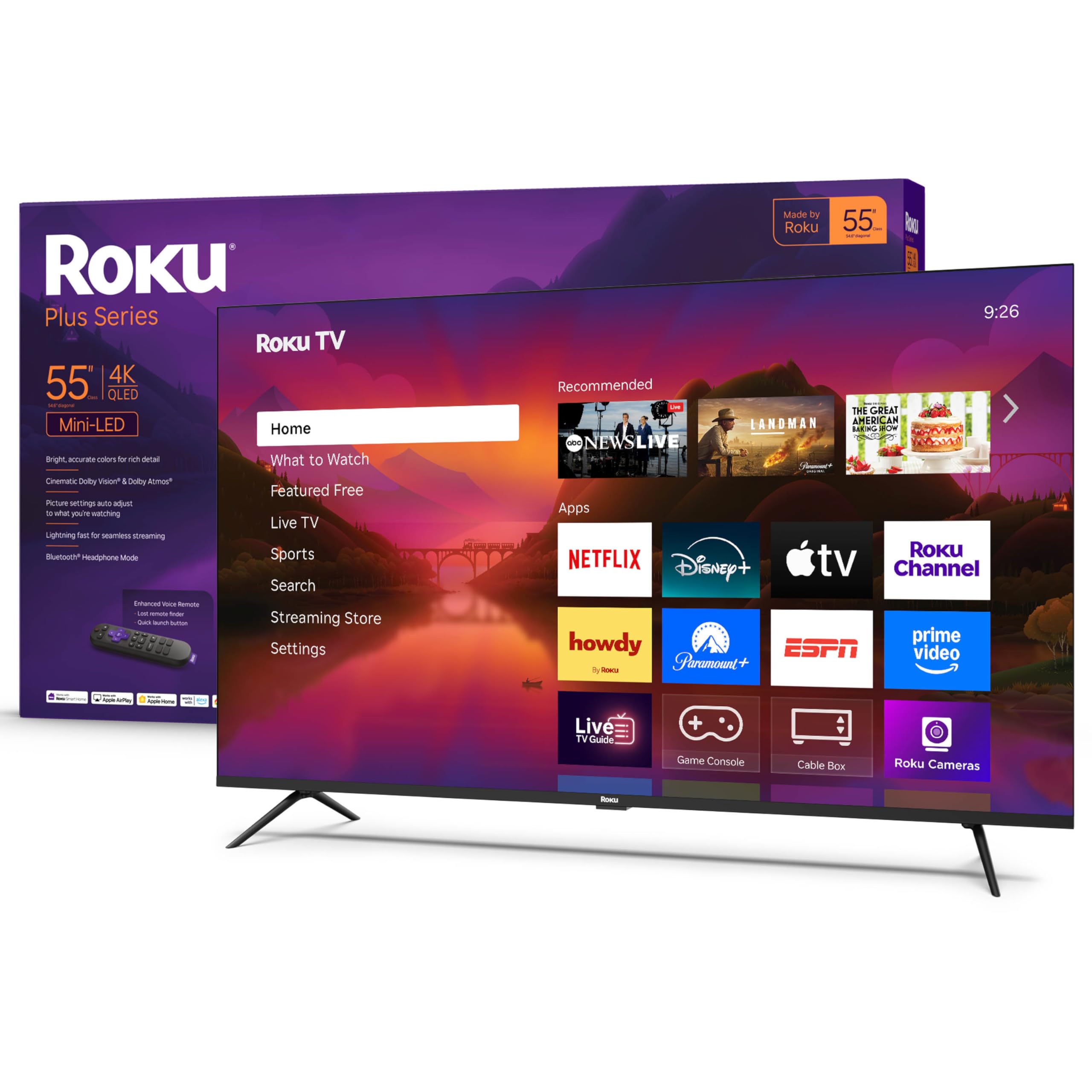
The Roku Plus Series leverages Mini-LED backlighting to deliver deep blacks and bright highlights that make HDR content—especially *The Mandalorian* on Disney+—pop with punchy contrast. The QLED layer ensures that colors stay vibrant even in rooms with large windows or bright overhead lights. AI-powered Roku Smart Picture Max automatically analyzes incoming signals and optimizes sharpness, color, and contrast for each scene, which helps lower-quality streams look cleaner than expected.
Audio is a genuine strength here: Dolby Atmos support and a built-in subwoofer produce room-filling sound with surprising bass presence for a flat panel. If you’re setting up a bedroom or small apartment, you can skip a separate soundbar entirely. The Enhanced Voice Remote includes a lost remote finder and programmable shortcuts, and the Roku interface remains the gold standard for user-friendliness. Bluetooth headphone mode is a thoughtful addition for late-night viewing without disturbing others.
The biggest catch is size: this model is only available as a 55-inch, not 50-inch, so you’ll need a bit more wall space. The settings menu is more basic than Google TV or Fire TV, lacking granular calibration options for advanced users. Some viewers also note that the out-of-the-box color temperature runs slightly warm. For Roku loyalists who want Mini-LED performance without breaking the bank, the Plus Series is a compelling option.
Why it’s great
- Mini-LED + QLED combo with excellent brightness and contrast
- Built-in subwoofer and Dolby Atmos create immersive sound
- Roku OS is intuitive with voice control and lost remote finder
Good to know
- Only available in 55-inch—no 50-inch variant
- Limited picture calibration settings for enthusiasts
- Out-of-box color may need slight cooling adjustment
5. Amazon Ember 50″ QLED Series with Fire TV
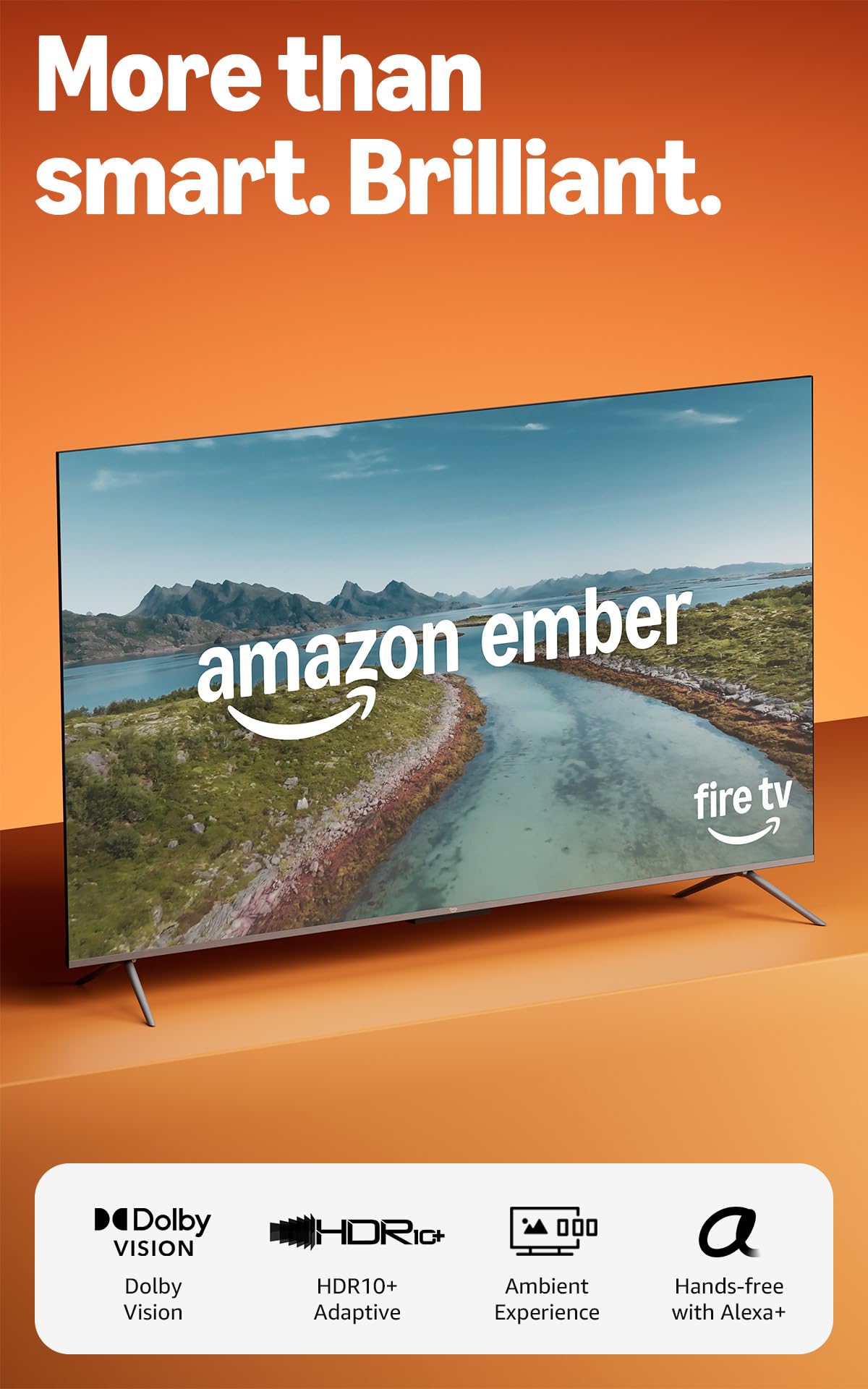
Amazon’s Ember QLED Series is built for Fire TV enthusiasts who want tight integration with Prime Video, Alexa, and the broader Amazon ecosystem. The 4K QLED panel delivers vibrant colors with Dolby Vision and HDR10+ Adaptive support, so *The Boys* and *Reacher* stream with dynamic brightness and contrast that adjust in real-time to your room’s lighting. The Omnisense technology wakes the display when you walk into the room—handy for glancing at the time or weather without a remote.
Performance is snappy thanks to a quad-core processor and Wi-Fi 6 support, which reduces buffering during high-bitrate streams. Alexa+ allows hands-free voice control for searching content, controlling smart home lights, or setting timers—all without a remote. Gamers benefit from Amazon Luna integration and Xbox Game Pass streaming, though the 60Hz panel means you won’t get the ultra-smooth motion of a 144Hz set.
Picture quality is generally impressive for the price, though some users report that upscaling of standard-def content falls short of Sony’s XR processor, and the 5.1 audio default can cause delay with some soundbars. The sleek design and four HDMI inputs make it easy to build a full setup. If your primary streaming source is Prime Video and you live in the Alexa ecosystem, the Ember is a natural fit.
Why it’s great
- Dolby Vision + HDR10+ Adaptive for dynamic HDR
- Wi-Fi 6 and quad-core processor for smooth streaming
- Hands-free Alexa with Omnisense wake-on-presence
Good to know
- 60Hz panel—not ideal for high-refresh-rate gaming
- Upscaling is decent but not class-leading
- Audio sync issues reported with some external soundbars
6. Samsung 50-Inch Class QLED Q8F 4K UHD Smart TV

Samsung’s Q8F is a testament to quantum-dot engineering: 100% Color Volume means colors don’t wash out as brightness increases, so an explosion in *Top Gun: Maverick* stays vivid even at max backlight. The Q4 AI Processor upscales 1080p and 720p content impressively, adding texture and reducing noise so older shows look closer to 4K. The AirSlim design sits flush against the wall with minimal protrusion, keeping the living room looking clean.
Gamers will appreciate the native 144Hz panel with VRR—motion is crisp and tear-free during fast-paced *Fortnite* sessions. Samsung’s Tizen OS is snappy, and Samsung TV Plus offers 2,700+ free channels without a subscription, a benefit for cord-cutters. The solar-powered remote charges via ambient light, eliminating battery swaps entirely. Alexa is built-in, so you can control the TV with voice even if you don’t have a separate Echo device.
The sound remains a familiar Samsung weakness: the built-in speakers output clear dialogue but lack bass extension, and purists will want a soundbar to feel explosions properly. The included legs are narrow and make the TV feel unstable on a wide console—wall-mounting is safer. If color accuracy and high brightness are your top priorities, the Q8F delivers one of the most punchy, vibrant QLED pictures in the 50-inch class.
Why it’s great
- 100% Color Volume for vibrant, bright scenes
- 144Hz native refresh with VRR for smooth gaming
- AirSlim design and solar-powered remote
Good to know
- Speakers lack low-end punch; soundbar recommended
- Narrow feet make tabletop placement wobbly
- Tizen OS can be less app-rich than Google TV
7. Sony BRAVIA 3 II 50 Inch 4K HDR LED Smart Google TV
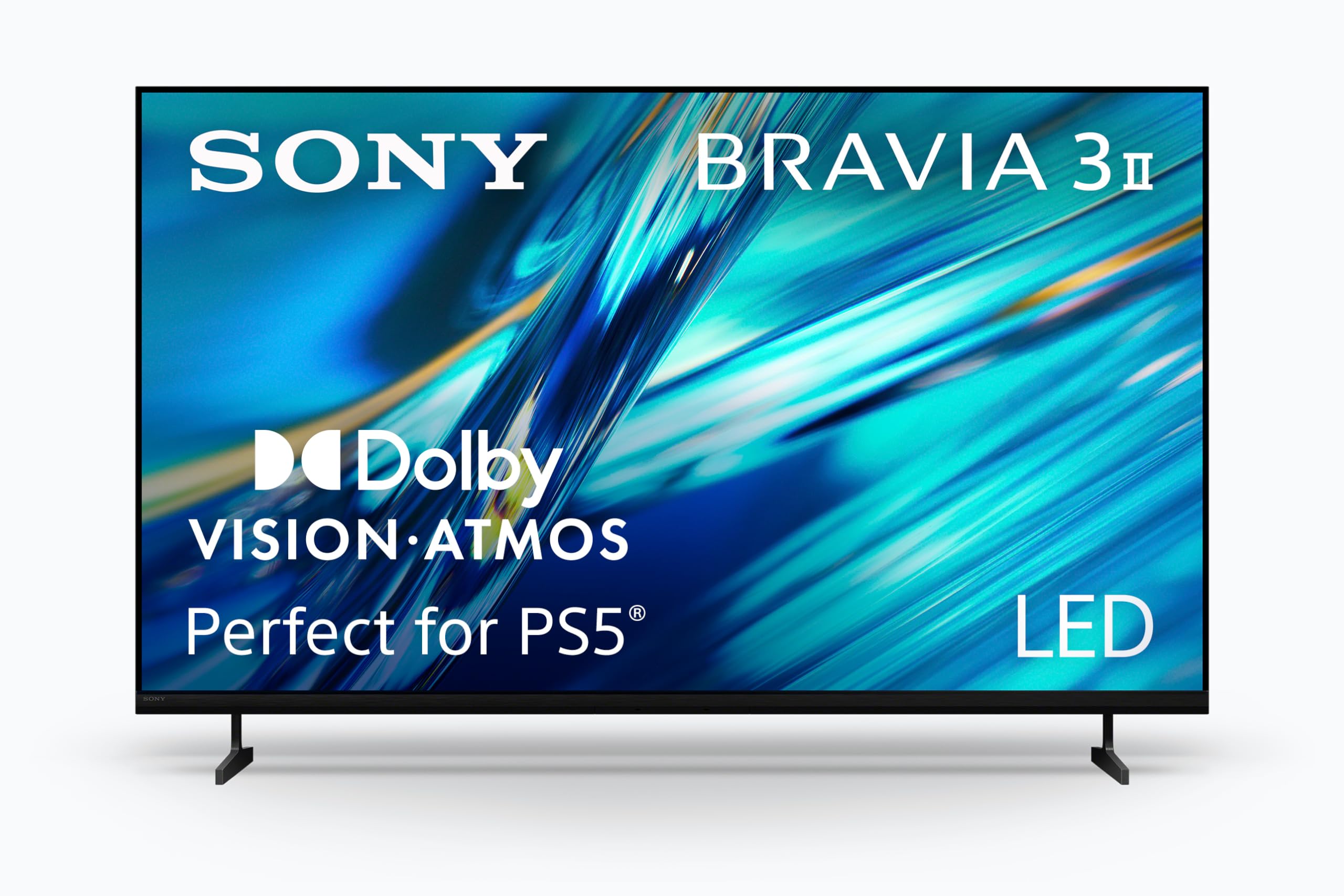
The Sony BRAVIA 3 II is a 50-inch LED TV that punches above its panel type thanks to the Cognitive Processor XR, which uses AI to cross-analyze thousands of elements in each scene and optimize color, contrast, and clarity in real-time. While it lacks Mini-LED backlighting, the XR Clear Image upscaling is so effective that 1080p YouTube videos and older Blu-rays look sharper than they have any right to—detail emerges from shadows, and faces have natural texture. Dolby Vision and Dolby Atmos ensure cinematic immersion, while DTS:X support adds flexibility for home theater audio systems.
This TV is designed around the PlayStation 5. Auto HDR Tone Mapping adjusts the console’s HDR settings automatically, and Auto Genre Picture Mode switches to Game Mode when you start playing, then reverts to Cinematic when you switch to a movie. HDMI 2.1 with 4K/120Hz, VRR, and ALLM makes it a strong choice for competitive gaming. The flush-surface design with an almost invisible bezel keeps the focus on the picture.
Key caveats: this is a direct-LED panel, not Mini-LED, so black levels in a dark room won’t match the QD-Mini LED competition—blooming is visible around bright subtitles. The Google TV integration forces a Google account sign-in for full functionality, which may feel intrusive to privacy-minded users. Sound is good for an LED TV thanks to X-Balanced speakers, but an external system elevates the experience. For PS5 owners who prioritize upscaling and motion clarity, the BRAVIA 3 II is a specialized winner.
Why it’s great
- XR Processor provides top-tier upscaling and AI scene optimization
- Perfect PlayStation 5 integration with Auto HDR Tone Mapping
- 4K/120Hz, VRR, and ALLM for competitive gaming
Good to know
- Standard LED panel—blooming noticeable in dark rooms
- Google login required for full smart features
- Remote battery door is stiff and hard to open
8. Samsung 50-Inch Class QLED 4K LS03D The Frame Series

Samsung’s The Frame LS03D reimagines the TV as a piece of furniture. The UL-certified matte display eliminates glare so effectively that the screen looks like a high-giclée print on canvas, even in a sun-drenched living room. When you’re not watching, Art Mode cycles through 2,500+ works from The Met, MoMA, and other museums—the included Slim Fit Wall Mount holds the panel flush against the wall, and an adjustable frame bezel (sold separately) lets you match your decor. Pantone Validated ArtfulColor ensures that Van Gogh’s sunflowers look museum-accurate.
Picture quality when watching content is solid: the QLED panel delivers vibrant colors with Quantum HDR, and the Quantum Processor 4K upscales HD streams competently. The One Connect Box keeps cable clutter to a single thin wire running to the TV, making wall installation look clean. Sound is surprisingly good for a slim set—dialogue is clear and music has reasonable presence without a soundbar.
The Frame is not a gamer’s TV. The 60Hz panel lacks HDMI 2.1 features like VRR, and input lag is higher than dedicated gaming sets. Art Mode requires a Samsung Art Store subscription for the full gallery (own photos work free), which adds recurring cost. The remote is slim but slippery, and some users report Samsung TV Plus ads invading the interface. If your primary goal is a TV that disappears into your interior design, The Frame is unmatched.
Why it’s great
- Glare-free matte display looks like real canvas
- Flush wall mount and One Connect Box eliminate cable mess
- Pantone-validated color for accurate art reproduction
Good to know
- 60Hz panel—not suitable for high-refresh gaming
- Art Store is subscription-based for full gallery access
- Remote is slim and easy to misplace
9. Hisense 50″ Hi-QLED S7 CanvasTV Series 4K UHD Google Smart Art TV
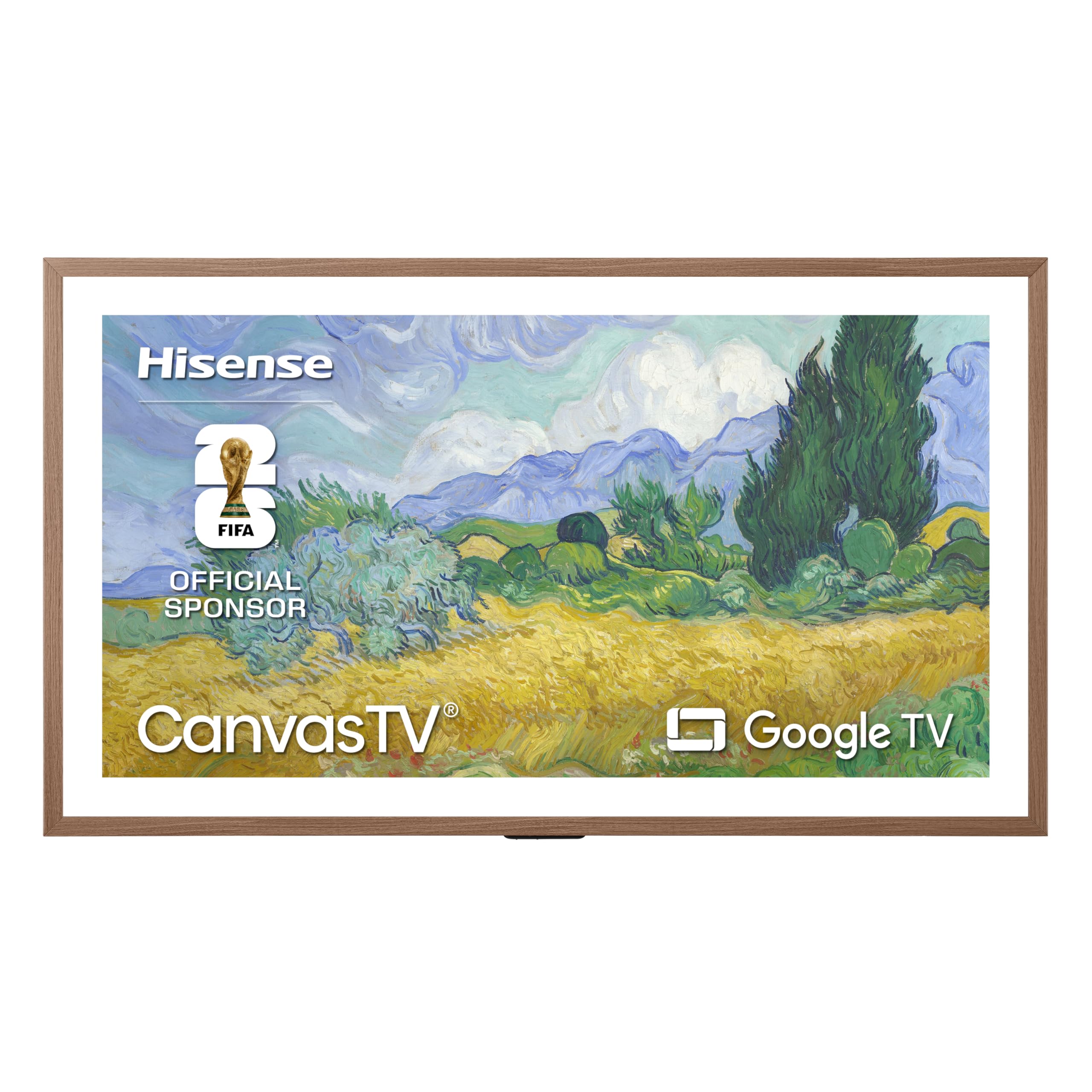
Hisense’s CanvasTV S7 directly challenges Samsung’s The Frame with a Hi-Matte anti-glare display that diffuses reflections so effectively the screen looks like a matte art print even in a brightly lit room. The included teak-colored magnetic frame snaps onto the TV edge in seconds, transforming it into furniture rather than a black slab. Over 1,000 complimentary curated artworks are available without a subscription, and you can upload your own photos. The AI Ambient Light Sensor adjusts brightness and color temperature automatically to match the room—art looks natural whether it’s 2 PM or 10 PM.
When you switch to movie mode, the 4K Hi-QLED panel delivers rich, accurate colors with Dolby Vision IQ and HDR10+ Adaptive. The 2.0.2 multi-dimensional sound with DTS Virtual:X creates a convincing spatial audio bubble, so a rain scene in *Blade Runner 2049* feels immersive without a separate soundbar. Google TV is fast and responsive, with a home screen that integrates your subscriptions and recommends content intelligently.
The motion detector that wakes the display when you enter the room is a nice touch, though the wall mount included is basic—it sits flush but has no tilt or swivel adjustment. The 4000:1 contrast ratio is good but not class-leading compared to Mini-LED competitors. Some users feel Art Mode still looks slightly like a backlit screen rather than a true canvas. For a dedicated art-first TV that delivers strong picture performance without a premium subscription lock-in, the CanvasTV is a superior value to The Frame.
Why it’s great
- Hi-Matte display eliminates glare for convincing art illusion
- 1,000+ free art pieces with magnetic frame included
- Strong sound stage with DTS Virtual:X
Good to know
- Wall mount lacks tilt/swivel adjustment
- Contrast not as deep as Mini-LED competitors
- Art Mode still looks slightly backlit, not a true painting
10. Sony 55 Inch Mini LED QLED 4K Ultra HD TV BRAVIA 7

Sony’s BRAVIA 7 represents a reference-level Mini LED QLED implementation. Thousands of Mini LEDs are driven by the XR Backlight Master Drive, which controls each zone with exceptional precision—sunsets are blindingly bright without throwing halos across the screen, a feat that even some OLEDs struggle with in high-brightness scenes. The XR Triluminos Pro reproduces over a billion colors with natural accuracy, and the XR Processor upsacles standard content so effectively that 720p cable looks like native 1080p.
This TV is a cinema enthusiast’s dream. Dolby Vision and IMAX Enhanced modes deliver the director’s intended frame and color. Studio-calibrated picture modes for Netflix, Prime Video, and Sony Pictures Core ensure that your favorite shows are displayed as the creators saw them during mastering. PS5 owners get Auto HDR Tone Mapping and Auto Genre Picture Mode, plus Game Menu for one-click access to gaming settings.
The premium comes at a premium cost—this is the most expensive option on the list, and at 55 inches (not 50), it requires more wall space. The narrow viewing angle (~30 degrees) means picture quality degrades significantly if you sit off-center, and the screen is reflective rather than anti-glare, so placement opposite windows needs consideration. A few owners reported panel failures just after the one-year warranty, though Sony’s picture processing remains best-in-class. If you demand the absolute best picture quality from a 55-inch QLED, the BRAVIA 7 delivers.
Why it’s great
- XR Backlight Master Drive delivers best-in-class Mini LED contrast
- Superior upscaling makes low-res content look HD
- PS5 integration and studio-calibrated picture modes
Good to know
- Very expensive; only available in 55-inch size
- Narrow viewing angle and reflective screen
- Reliability concerns reported by a small minority of users
11. TCL 50S5K Television 50 Inch Smart TV QLED HDR 10 Google TV

The TCL 50S5K is the most accessible point of entry into the QLED category, offering quantum-dot color at a price that undercuts most 4K QLED sets. However, it’s critical to note: this is a Full HD (1920×1080) panel, not 4K UHD. Colors are noticeably richer than a standard 1080p LED—reds in a *Mandalorian* scene look punchier, and greens in nature documentaries have more saturation—but the lower pixel density means fine text and distant details lack the crispness of the 4K models on this list.
Google TV runs smoothly on the platform, with voice assistant support and access to the Google Play store for apps. The slim, modern design makes it look more expensive than it is, and it’s lightweight enough for one-person wall mounting. HDR10 support adds a small dynamic range benefit, but the 60Hz panel limits motion clarity for sports and gaming compared to higher-refresh competitors.
This is not a TV for 4K streaming or next-gen console gaming. The 1080p resolution is a clear compromise, and upscaling 480p or 720p content can introduce softness. The included remote is basic, and the interface can feel sluggish compared to higher-spec models. For a guest room, kids’ playroom, or anyone who prioritizes color quality over raw resolution, the 50S5K offers a colorful QLED image at the lowest possible entry point.
Why it’s great
- Lowest-cost way to get QLED color enhancement
- Google TV with voice assistant and good app selection
- Lightweight and slim design for easy mounting
Good to know
- Full HD (1080p) only—not 4K
- 60Hz panel with no HDR10+ or Dolby Vision support
- Interface can feel slow compared to higher-tier models
FAQ
Is QLED better than OLED for a 50-inch TV?
Can I use a 50-inch QLED for PC gaming?
How long does a QLED TV typically last?
Do I need a soundbar with a QLED TV?
Does upscaling matter for a 50-inch QLED?
Final Thoughts: The Verdict
For most users, the best 50 inch qled tv winner is the Hisense E7 Cinema Series because it combines Mini-LED contrast, a native 144Hz panel, and Dolby Vision IQ at a price that undercuts rivals with similar specs. If you want the absolute best contrast and gaming performance in a 50-inch form factor, grab the TCL QM6K with QD-Mini LED and 500+ dimming zones. And for living room aesthetics where the TV needs to disappear into art, nothing beats the Hisense CanvasTV S7 for its glare-free matte display and included frame.

Mo Maruf
I created WellFizz to bridge the gap between vague wellness advice and actionable solutions. My mission is simple: to decode the research and give you practical tools you can actually use.
Beyond the data, I am a passionate traveler. I believe that stepping away from the screen to explore new environments is essential for mental clarity and physical vitality.