Our readers keep the lights on and my smoothie glass nicely filled. As an Amazon Associate, I earn from qualifying purchases.
Your feet take the brunt of every step on a rocky trail, and when the arch collapses mile after mile, the pain radiates up through your knees and into your lower back. A hiking shoe with adequate arch support isn’t a luxury—it’s the difference between a summit push and a day cut short by plantar fasciitis or a popped arch. The wrong shoe leaves your foot’s natural suspension system unsupported, forcing your plantar fascia to overstretch with every stride.
I’m Mohammad Maruf — the founder and writer behind WellFizz. My research focuses on biomechanical design in outdoor footwear, analyzing midsole geometry, insole depth, and shank construction to separate true arch support from marketing gimmicks.
Navigating dozens of models with conflicting claims about arch height and cushion density can be exhausting. This guide cuts through the noise to help you find the best arch support hiking shoes built to stabilize your stride and keep you hiking pain-free for years.
How To Choose The Best Arch Support Hiking Shoes
Selecting a hiking shoe for arch support requires looking beyond the insole label. The shoe’s structural chassis—the midsole density, the insole depth, the heel-to-toe drop, and the shank rigidity—determine whether your arch is actively supported or left to sag. Here are the three most critical factors to evaluate.
Insole Depth and Removability
A shoe with a deep, removable insole allows you to swap in orthotics or custom arch supports without raising your foot too high in the heel cup, which causes instability. Look for a removable insole with a pronounced medial arch post—a firm wedge of EVA or polyurethane under the arch—not a flat slab of foam. The depth of the insole channel should be at least 8–10 mm to accommodate aftermarket supports without jamming your toes against the roof of the shoe.
Heel-to-Toe Drop and Arch Strain
The drop—the difference in height between the heel and forefoot—directly affects how your arch loads during a stride. A high drop (8–12 mm) shifts impact to the heel and can shorten the calf, potentially aggravating plantar fasciitis. A zero-drop or low-drop shoe (0–4 mm) promotes a more natural midfoot strike but demands stronger calf and arch muscles. For maximum arch support, many hikers prefer a moderate drop (4–6 mm) that balances shock absorption with natural foot mechanics.
Midsole Density and Shank Rigidity
Arch support is not just about the insole—it’s about how much the midsole resists twisting under load. A shoe with a nylon or TPU shank embedded in the midsole prevents the shoe from bending excessively at the arch, reducing strain on the plantar fascia. Look for a shank that runs at least two-thirds the length of the shoe. Dual-density midsoles, with a firmer foam under the arch and a softer one under the heel and forefoot, provide targeted support without sacrificing comfort on rocky terrain.
Quick Comparison
On smaller screens, swipe sideways to see the full table.
| Model | Category | Best For | Key Spec | Amazon |
|---|---|---|---|---|
| KEEN Targhee 4 Low | Premium | Best Overall Arch Support | TPU shank, removable insole | Amazon |
| Brooks Cascadia 19 | Premium | Trail Running & Hiking | Rock plate, DNA Loft v3 midsole | Amazon |
| Orthofeet Dakota | Premium | Medical-Grade Arch Support | Orthotic insoles, wide toe box | Amazon |
| Merrell Moab 3 Waterproof | Mid-Range | All-Purpose Hiking | Vibram TC5+ sole, removable insole | Amazon |
| New Balance Hierro V1 | Mid-Range | Mid-Cut Ankle Support | Fresh Foam X, 4mm drop | Amazon |
| ALTRA Lone Peak 9 (Women’s) | Mid-Range | Natural Foot Shape | Zero drop, MaxTrac outsole | Amazon |
| ALTRA Lone Peak 9 (Men’s) | Mid-Range | Wide Toe Box & Stability | Zero drop, MaxTrac outsole | Amazon |
| Orthofeet Ryder | Mid-Range | Foot Drop & Neuropathy | Dual-zip, orthotic insole system | Amazon |
| Merrell Speed Strike 2 | Budget | Entry-Level Versatility | 1.5 lb weight, lightweight EVA | Amazon |
In‑Depth Reviews
1. KEEN Men’s Targhee 4 Low Height Durable Comfortable Waterproof Hiking Shoes

The KEEN Targhee 4 Low combines a TPU shank that runs through the midfoot with a generously deep removable insole, giving you a stable platform for custom orthotics or the stock arch support. The wide toe box allows your metatarsals to splay naturally on descents, reducing pressure on the arch. Reviewers consistently note that the arch support feels substantial from the first wear, with no break-in period needed for the medial post.
On wet and rocky terrain, the KEEN’s waterproof membrane and multi-directional lug pattern keep you confident, but the real story is the torsional rigidity. The shank resists twisting so your foot doesn’t collapse inward during side-hilling. For hikers with flat feet or mild overpronation, this shoe provides structural support that mid-range options often lack.
The trade-off is weight—this is a burly shoe, not a featherweight trail runner. But for day hikes and backpacking trips where arch fatigue is the primary concern, the Targhee 4 Low is the most balanced arch-support platform on this list. It also runs true to size, with enough room in the toe box for thicker hiking socks.
Why it’s great
- TPU shank provides excellent torsional rigidity for arch stability
- Deep removable insole accommodates aftermarket orthotics without raising heel height
- Waterproof membrane performs well in wet conditions without overheating
Good to know
- Heavier than trail-running hybrids, not ideal for ultra-light hiking
- Low-height cut offers less ankle coverage than the mid version
2. Brooks Women’s Cascadia 19 Mountain Trail Running Shoe
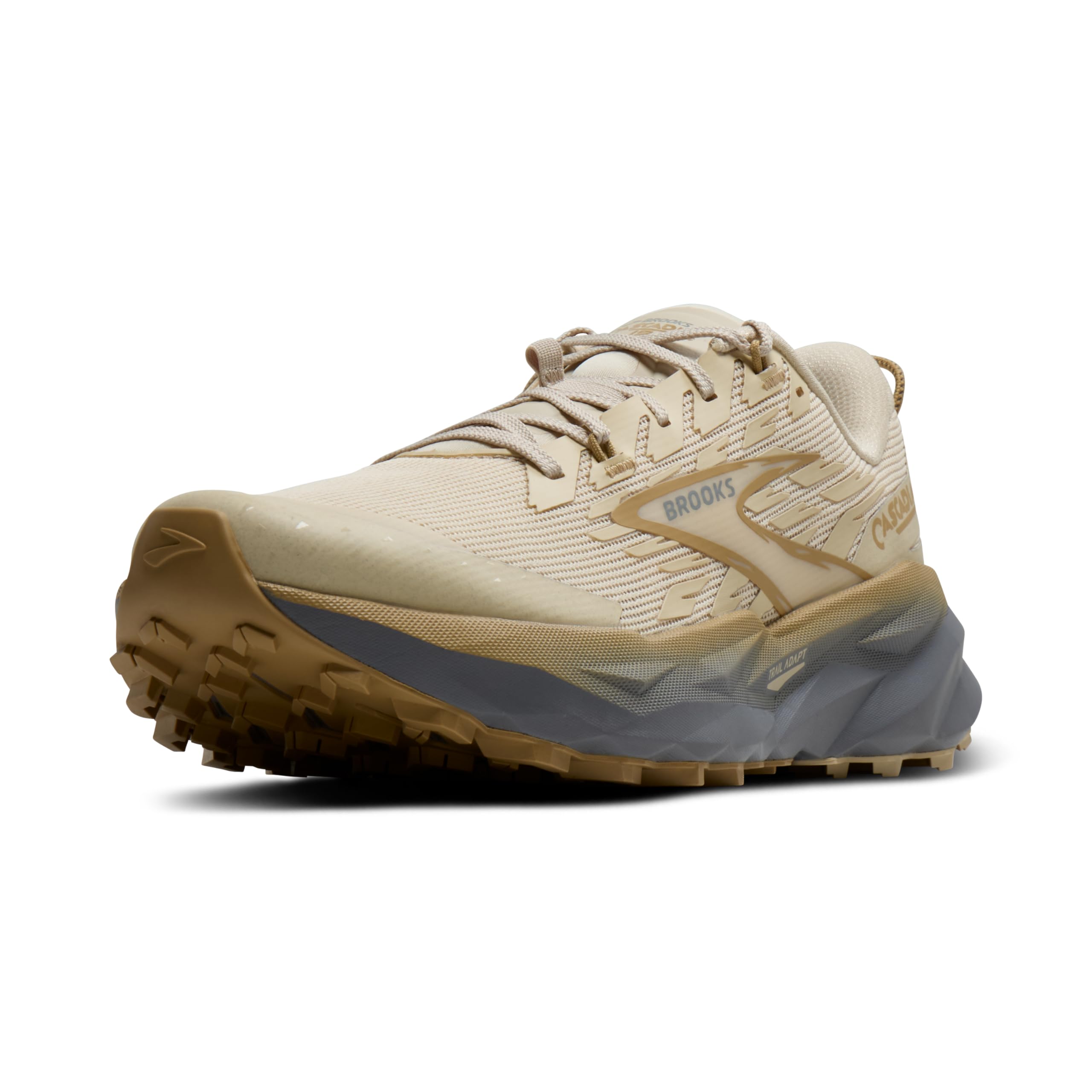
The Brooks Cascadia 19 is engineered with DNA Loft v3 cushioning and a rock plate that shields the arch from sharp trail debris while maintaining a responsive feel. The arch support comes from a pronounced medial post integrated into the midsole, not a removable sockliner. Runners with high arches report that the support aligns their foot without needing custom inserts.
The outsole uses a raised toe bumper to promote a natural rolling motion, and the traction on wet, slippery rock is among the best in its class. For hikers who also run trails, the Cascadia 19 transitions smoothly between a power hike and a jog without the midsole feeling mushy. The slightly roomier fit accommodates wider feet, though ultra-wide feet may find the toe box restrictive.
Where this shoe excels is its ability to combine arch support with a low weight. At under 1.5 pounds per pair, it avoids the heavy feel of traditional hiking boots while still providing a rigid enough platform for all-day comfort. The trade-off is a higher price point and a break-in period for the stiff upper.
Why it’s great
- Rock plate protects the arch from sharp stones without sacrificing flexibility
- DNA Loft v3 midsole offers plush cushioning under the heel and firm support under the arch
- Raised toe bumper encourages a natural, efficient stride on climbs
Good to know
- Toe box may feel snug for hikers with ultra-wide feet
- Upper requires a few hikes to fully soften and conform to the foot
3. Orthofeet Women’s Orthopedic Dakota Waterproof Lug Sole Hiking Boot
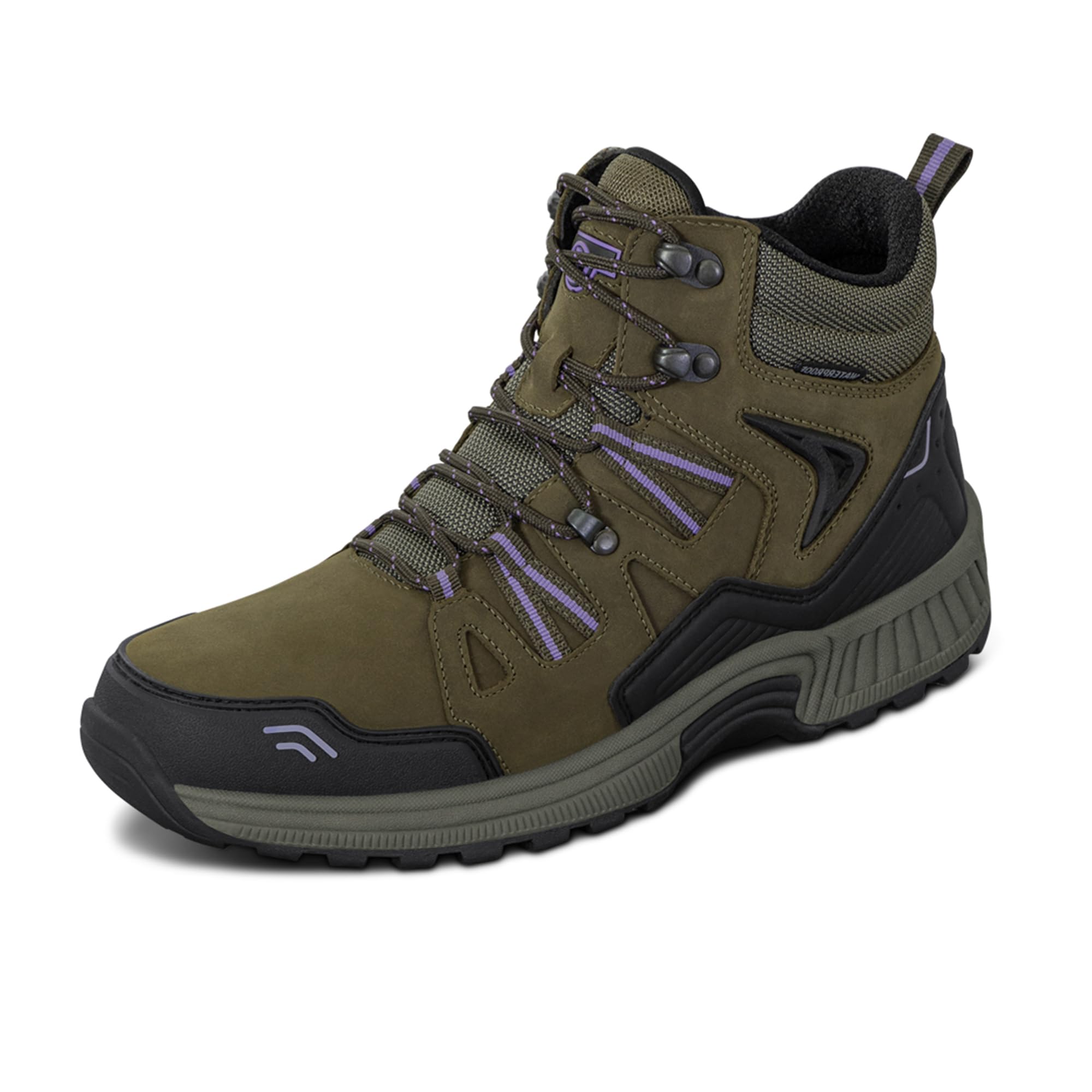
The Orthofeet Dakota is purpose-built for hikers with diagnosed foot conditions: bunions, high arches, plantar fasciitis, and arthritis. It arrives with a set of orthotic insoles that include a pronounced medial arch post and a metatarsal pad, plus multiple spacer inserts to fine-tune the volume. The wide toe box provides ample room for bunions or hammertoes to rest without friction.
During extended hikes on mixed terrain—wet rocks, packed gravel, mud—the Dakota kept feet warm and dry thanks to its waterproof construction and insulated lining. Reviewers report zero foot pain after five-mile days, even with pre-existing arch issues. The dual-density EVA midsole is firm under the arch and softer under the heel, providing targeted support without feeling like a block.
The trade-off is a stiffer feel that may feel clunky to hikers accustomed to flexible trail runners. The boot height offers more ankle coverage, which is beneficial for uneven terrain but adds warmth in hot weather. For anyone with orthopedic needs who refuses to sacrifice hiking performance, the Dakota is the clear winner.
Why it’s great
- Includes orthotic insoles with medial arch post and metatarsal pad for targeted relief
- Spacer inserts allow custom volume adjustment for high-volume feet
- Insulated waterproof construction keeps feet warm in cold, wet conditions
Good to know
- Stiffer midsole may feel less natural for hikers used to flexible shoes
- Boot height can be too warm for summer hikes in hot climates
4. Merrell Women’s Moab 3 Waterproof Hiking Shoe

The Merrell Moab 3 is a classic entry-level hiking shoe that has been refined over three generations. The arch support comes from a removable EVA insole with a mild medial post, combined with a Vibram TC5+ outsole that provides reliable traction on loose gravel and wet rock. The cushioned midsole absorbs shock without feeling overly soft, which helps maintain arch stability.
Reviewers praise the comfort straight out of the box, with no break-in period required. The padded tongue and ankle collar reduce pressure points, and the waterproof membrane keeps feet dry during stream crossings and light rain. For day hikers with moderate arch needs, the Moab 3 offers a balanced platform at a mid-range price point.
The main limitation is the midsole density—some hikers with high arches find the stock insole insufficient and prefer swapping in a firmer orthotic. The toe box is moderately wide but not spacious enough for those who need extra room for bunions. For the price, it’s a solid foundation that becomes excellent with a third-party insole upgrade.
Why it’s great
- Vibram TC5+ outsole provides dependable traction on mixed terrain
- Removable EVA insole allows easy customization with aftermarket orthotics
- Comfortable straight out of the box with no break-in period
Good to know
- Stock insole arch support may be too mild for high arches
- Toe box is moderately roomy but not ideal for extra-wide feet
5. New Balance Women’s Fresh Foam X Hierro V1 Mid-Cut

The New Balance Hierro V1 Mid-Cut pairs a 4mm drop with Fresh Foam X cushioning, which is softer than typical hiking midsoles but still provides decent arch support through a structured heel cup and a gusseted tongue that prevents debris entry. The mid-cut height offers ankle stability without the stiffness of a full boot, and the Vibram outsole delivers consistent grip on wet mud and roots.
Reviewers note that the arch support is moderate and positioned slightly differently than in traditional hiking shoes—it works well for hikers with neutral arches but may feel off for those with high or low arches. The toe box runs narrow, so many hikers order a wide width to achieve adequate forefoot room. The waterproof performance is strong, and the lightweight build makes it a good option for fast day hikes.
The key drawback is the placement of the arch support—some users with high arches found it to be slightly forward of their natural arch, causing discomfort. The shoe also runs small, so sizing up half a size is common. For hikers with neutral feet who prioritize a mid-cut design, the Hierro V1 is a capable performer.
Why it’s great
- Fresh Foam X midsole provides responsive cushioning without sagging
- Mid-cut height offers ankle support without the weight of a full boot
- Vibram outsole delivers reliable traction on wet and muddy terrain
Good to know
- Arch support placement may feel off for hikers with high or low arches
- Toe box runs narrow; wide width recommended for most users
6. ALTRA Women’s Lone Peak 9 Trail Running Shoe

The ALTRA Lone Peak 9 uses a zero-drop platform and a foot-shaped toe box that allows the toes to splay naturally, which in turn reduces cramping and helps the arch function as it was designed. The MaxTrac outsole provides excellent traction on dirt and gravel, and the midsole cushion is firm enough to keep your foot stable without sacrificing ground feel.
Reviewers with high arches and wide feet consistently praise the Lone Peak 9 for its ability to fit orthotics comfortably. The removable insole is deep enough to accept a custom arch support without raising the heel too high, and the zero-drop geometry encourages a midfoot strike that reduces overpronation. The shoe is lightweight and breathable, making it suitable for warm-weather hikes.
The trade-off is that zero-drop requires an adjustment period for hikers accustomed to traditional heel lift. The arch support in the stock insole is moderate, not pronounced, so those with severe flat feet may need an aftermarket insert. The shoe is not waterproof, but it dries quickly when wet. For hikers seeking a natural foot position with the option to add arch support, this is a top contender.
Why it’s great
- Zero-drop platform promotes natural midfoot strike and reduces overpronation
- Wide toe box allows toes to splay, reducing arch stress on descents
- Deep insole channel accommodates thick custom orthotics without raising heel height
Good to know
- Zero-drop geometry requires a transition period for heel-strikers
- Not waterproof; relies on quick-dry mesh construction
7. ALTRA Men’s Lone Peak 9 Trail Running Shoe
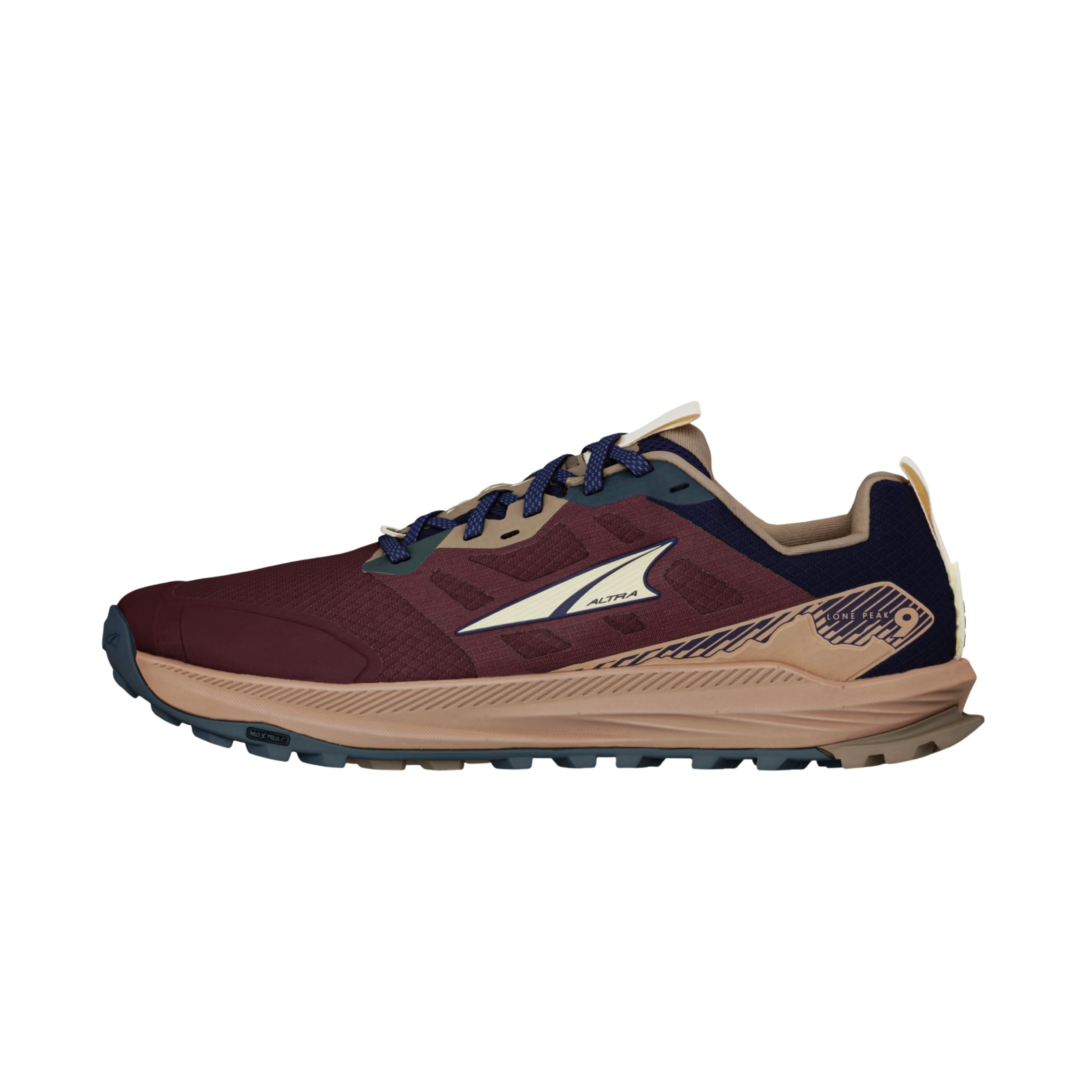
The men’s ALTRA Lone Peak 9 mirrors the women’s version in its zero-drop geometry and wide toe box, but the midsole tuning is slightly firmer to accommodate heavier average loads. The MaxTrac outsole compound bites into loose gravel and wet rock with confidence, and the shoe’s overall stability benefits from a broad platform that resists rollover during side-hilling.
Reviewers note that the arch support in the stock insole is adequate for neutral to low arches, but hikers with high arches will likely want to swap in a firmer orthotic. The shoe runs slightly large, and many users size down half a size for a snug fit. The lightweight construction and breathable upper make it a favorite for fast-and-light day hikes.
Like the women’s version, the Lone Peak 9 is not waterproof, so it’s best suited for dry or mild conditions. The zero-drop design may cause calf and Achilles soreness during the first few hikes if you’re transitioning from a high-drop shoe. For hikers who value a natural foot position and plan to use custom arch supports, this is a versatile and durable platform.
Why it’s great
- Zero-drop geometry with broad platform reduces ankle strain on uneven terrain
- MaxTrac outsole provides reliable traction on loose and wet surfaces
- Wide toe box fits orthotics comfortably without crowding the toes
Good to know
- Stock arch support may be too mild for high-arched hikers
- Not waterproof; dries quickly but not suitable for sustained wet conditions
8. Orthofeet Men’s Orthopedic Ryder Slip-Resistant Dual-Zip Leather Boot

The Orthofeet Ryder is a leather boot designed for hikers who need arch support combined with easy on-and-off access. The dual rear zippers allow the boot to open wide, making it accessible for those with foot drop, swollen feet, or limited flexibility. The included orthotic insoles feature a medial arch post and metatarsal pad, providing immediate relief for plantar fasciitis and high arches.
Reviewers with neuropathy and bunions report that the Ryder is comfortable from the first wear, with no break-in period. The leather upper is durable and slip-resistant, and the boot provides enough structure for light hiking on well-maintained trails. The removable insole allows for custom orthotics if you need firmer support than the stock pair offers.
The trade-off is that this is a casual walking boot, not a technical hiking shoe. The outsole is slip-resistant but lacks the aggressive lugs needed for loose rock or steep descents. It also runs slightly large, so sizing down is common. For hikers who prioritize arch support and accessibility over technical trail performance, the Ryder is an excellent choice.
Why it’s great
- Dual rear zippers provide easy access for those with foot drop or limited flexibility
- Includes orthotic insoles with medial arch post and metatarsal pad for immediate arch relief
- Leather upper is durable and slip-resistant for casual trail use
Good to know
- Outsole lugs are not aggressive enough for technical or steep terrain
- Runs slightly large; consider sizing down half a size
9. Merrell Men’s Speed Strike 2

The Merrell Speed Strike 2 is a lightweight, low-cut shoe that prioritizes versatility over deep arch support. The EVA midsole is soft and forgiving, making it a comfortable choice for casual walking and light trail use, but the arch support is mild and primarily comes from the removable insole. For hikers with low arches or mild foot fatigue, the Speed Strike 2 offers decent support without breaking the bank.
Reviewers praise the fit and finish, noting that the shoe is comfortable for all-day wear in a warehouse or on easy trails. The outsole provides good grip on dry surfaces, but the lack of a shank means the shoe bends easily at the arch, which can lead to overpronation over long distances. The breathable mesh upper keeps feet cool in warm weather.
The main limitation is the absence of a structural shank or a pronounced medial post. For hikers with high arches or diagnosed foot conditions, this shoe will require a third-party orthotic to provide adequate arch support. It is also not waterproof. As a budget-friendly entry-level option, it’s a solid foundation that can be upgraded with inserts.
Why it’s great
- Lightweight and comfortable for casual walking and light trail use
- Removable insole allows for customization with aftermarket orthotics
- Grippy outsole performs well on dry, packed trails
Good to know
- Arch support is mild; insufficient for high arches or plantar fasciitis without orthotics
- No shank means the shoe bends at the arch, increasing overpronation risk on long hikes
FAQ
Can I put my custom orthotics in any hiking shoe?
Is zero-drop bad for my arches if I have flat feet?
How do I know if a hiking shoe has enough arch support?
Final Thoughts: The Verdict
For most users, the arch support hiking shoes winner is the KEEN Targhee 4 Low because it combines a TPU shank, a deep removable insole, and a wide toe box into a single stable platform that works for flat feet, neutral arches, and custom orthotics alike. If you want a zero-drop natural foot position with the ability to dial in your own arch support, grab the ALTRA Lone Peak 9. And for medical-grade arch support with customized orthotic insoles and easy on-off access, nothing beats the Orthofeet Dakota.

Mo Maruf
I created WellFizz to bridge the gap between vague wellness advice and actionable solutions. My mission is simple: to decode the research and give you practical tools you can actually use.
Beyond the data, I am a passionate traveler. I believe that stepping away from the screen to explore new environments is essential for mental clarity and physical vitality.