Our readers keep the lights on and my smoothie glass nicely filled. As an Amazon Associate, I earn from qualifying purchases.
That familiar burn along your arch halfway through a long run isn’t just discomfort — it’s a sign your foot is collapsing under the repetitive load of your stride. For runners, the right arch support does more than pad a shoe; it stabilizes the midfoot, controls excessive pronation, and keeps the kinetic chain from your ankle to your hip aligned through each ground contact phase. Without it, overuse injuries ranging from plantar fasciitis to shin splints become a matter of when, not if.
I’m Mohammad Maruf — the founder and writer behind WellFizz. I analyze foot biomechanics studies, compare insole material densities, and track real-runner feedback to separate the inserts that genuinely stabilize from those that just feel soft in the store.
Whether you log miles on pavement, trail, or treadmill, finding the right fit starts here. This guide breaks down five of the most effective options on the market so you can confidently choose the best arch support for runners that matches your foot type and gait.
How To Choose The Best Arch Support For Runners
Selecting the right insole for running is more nuanced than picking a generic shoe insert. Your foot type, the mileage you cover, and the specific gait patterns you exhibit all dictate which design will provide lasting relief rather than temporary comfort.
Match Arch Height to Support Profile
Runners with low arches or flat feet need a support that fills the void and controls inward roll (overpronation), typically requiring a firmer, more rigid medial post. High-arched runners, on the other hand, need a more pronounced arch cradle to distribute impact and prevent supination. The three products here offer distinct arch profiles — from the low-arching SOPROM to the high-arching BestHalo — so identifying your wet-footprint arch type is the first step.
Evaluate Heel Cup Depth and Rigidity
A deep, structured heel cup cradles the calcaneus and limits excessive heel motion, which directly reduces strain on the plantar fascia and Achilles tendon. Shallow or overly flexible heel cups allow the heel to splay on impact, undermining the support goal. Look for insoles with a rigid or semi-rigid thermoplastic polyurethane (TPU) heel frame rather than purely foam-based designs if you run more than 15 miles per week.
Consider Material Density and Return Energy
Foam density directly correlates with longevity and shock dissipation. Open-cell EVA compresses quickly and loses rebound within a few hundred miles, while dual-density PORON or polyurethane layers maintain their spring. For runners, a good insole balances impact absorption (protecting knees and hips) with energy return (propelling your next stride). The products below range from gel-EVA hybrids to layered PORON constructions, so your weekly mileage should guide your material choice.
Quick Comparison
On smaller screens, swipe sideways to see the full table.
| Model | Category | Best For | Key Spec | Amazon |
|---|---|---|---|---|
| CRUVHEAL Sport Shock Absorbing Insoles | Premium | High-impact sports & training | Neutral arch, gel heel pad | Amazon |
| VALSOLE Heavy Duty Support Orthotics | Premium | Heavy runners & long shifts | 220+ lbs capacity, high arch | Amazon |
| BestHalo Plantar Fasciitis Insoles | Mid-Range | High arches & heel pain relief | Biomechanical high arch design | Amazon |
| Professional Heavy Duty Support Insoles (Psveb) | Mid-Range | Medium arches & work boot use | Double PORON, golden triangle | Amazon |
| SOPROM Running Insoles | Budget-Friendly | Low arches & pronation control | Low/Med/High arch options | Amazon |
In‑Depth Reviews
1. CRUVHEAL Sport Shock Absorbing Insoles

The CRUVHEAL Sport insoles are purpose-built for athletic movement that demands multidirectional responsiveness. The neutral arch profile suits runners who don’t need aggressive pronation correction but do require reliable energy return and impact damping. The strategically placed gel pads under the heel and forefoot absorb the sharpest forces during sprint intervals or court sports, and the deep heel cup stabilizes the rearfoot during lateral cuts.
Testers noted a spring-like feel underfoot that avoids the dead, compressed sensation of standard EVA insoles after several miles. The construction uses a denser base layer that resists flattening, with a breathable top cloth that manages moisture during sweaty sessions. Several users reported that the insoles fit well in both running shoes and cross-trainers, though they ran slightly bulky in low-volume models like Hokas.
The one-year protection policy adds confidence, even after trimming the insoles to your exact size. If your runs involve explosive movements, court sports, or a mix of surfaces, this is the most versatile top-tier option available.
Why it’s great
- Gel pads deliver targeted shock absorption for high-impact activities
- Neutral arch works well for runners without significant pronation issues
- Durable construction with a springy rebound that lasts through long sessions
Good to know
- Slightly heavier than pure-foam insoles, noticeable in ultra-light racing shoes
- May feel too bulky in low-volume footwear like Hokas
2. VALSOLE Heavy Duty Support Pain Relief Orthotics

The VALSOLE orthotics are engineered for heavier runners and those who demand structural rigidity from their arch support. Rated for users over 220 pounds, the high-arch cradle and firm TPU heel frame resist compression under load, making them a reliable choice for runners who need to control overpronation without relying on ultra-thick cushioning. The deep heel cup locks the calcaneus in place, reducing excessive motion that leads to shin splints and knee pain.
Real-world feedback from warehouse workers and larger-framed athletes shows a dramatic reduction in foot and lower-back fatigue after full-day wear. The material uses a dense polyurethane core that doesn’t bottom out, even during 10-hour shifts or long weekend runs. Several reviewers noted that these insoles transformed uncomfortable sneakers into their most supportive pair after a short adaptation period of a few days.
If your runs are supplemented by long hours on concrete or you carry extra weight that crushes softer insoles, the VALSOLE provides the durable, high-support structure that keeps your stride stable mile after mile.
Why it’s great
- Exceptional rigidity for heavy load support without premature compression
- Deep heel cup effectively controls overpronation during the gait cycle
- Proven to eliminate chronic foot and knee pain in heavy-use scenarios
Good to know
- Firm feel may be too intense for runners accustomed to plush cushioning
- Requires a few days of gradual wear to adapt to the high arch structure
3. BestHalo Heavy Duty Plantar Fasciitis Insoles
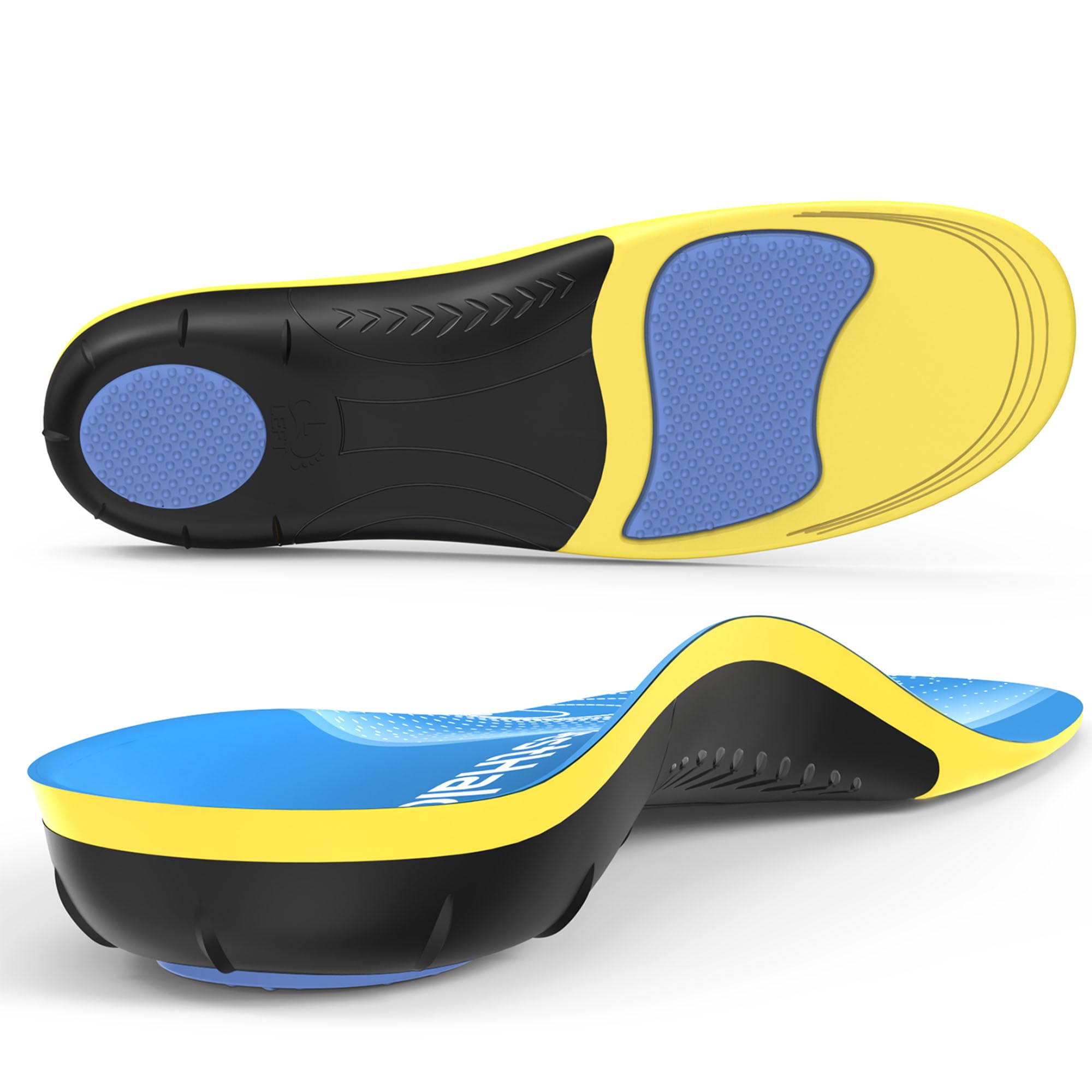
The BestHalo insoles target a specific but common runner need: high arches that demand a pronounced longitudinal support without excessive bulk. The biomechanical design uses a structured arch shelf made from polyurethane and TPU, which cradles the medial arch and reduces the strain that can pull on the plantar fascia insertion point at the heel. This makes them particularly effective for runners dealing with plantar fasciitis or supination-related lateral knee pain.
The dual-layer construction pairs a firm TPU base with a softer gel cushion at the heel and forefoot, offering a rare balance of support and comfort that doesn’t feel like standing on a brick. Reviewers noted a significant reduction in heel and sole pain after long standing days, with one user reporting elimination of post-surgery foot-to-hip pain. The trim-to-fit design accommodates work boots, sneakers, and athletic shoes without bunching.
A brief adaptation period of three to seven days is expected as your feet adjust to the high arch contour. If you have a visibly high arch or struggle with plantar fasciitis flare-ups during your running cycle, the BestHalo is the targeted solution you need.
Why it’s great
- Biomechanical arch design specifically addresses high arch and supination issues
- Gel cushion at contact points prevents the hard feel common in rigid orthotics
- Durable TPU construction maintains shape under repeated high-mileage loading
Good to know
- Soft heel cup design may not suit every foot type, potentially altering gait
- Higher unit count of returns from users who prefer a very firm, unsupported heel
4. Professional Heavy Duty Support Insoles (Psveb)
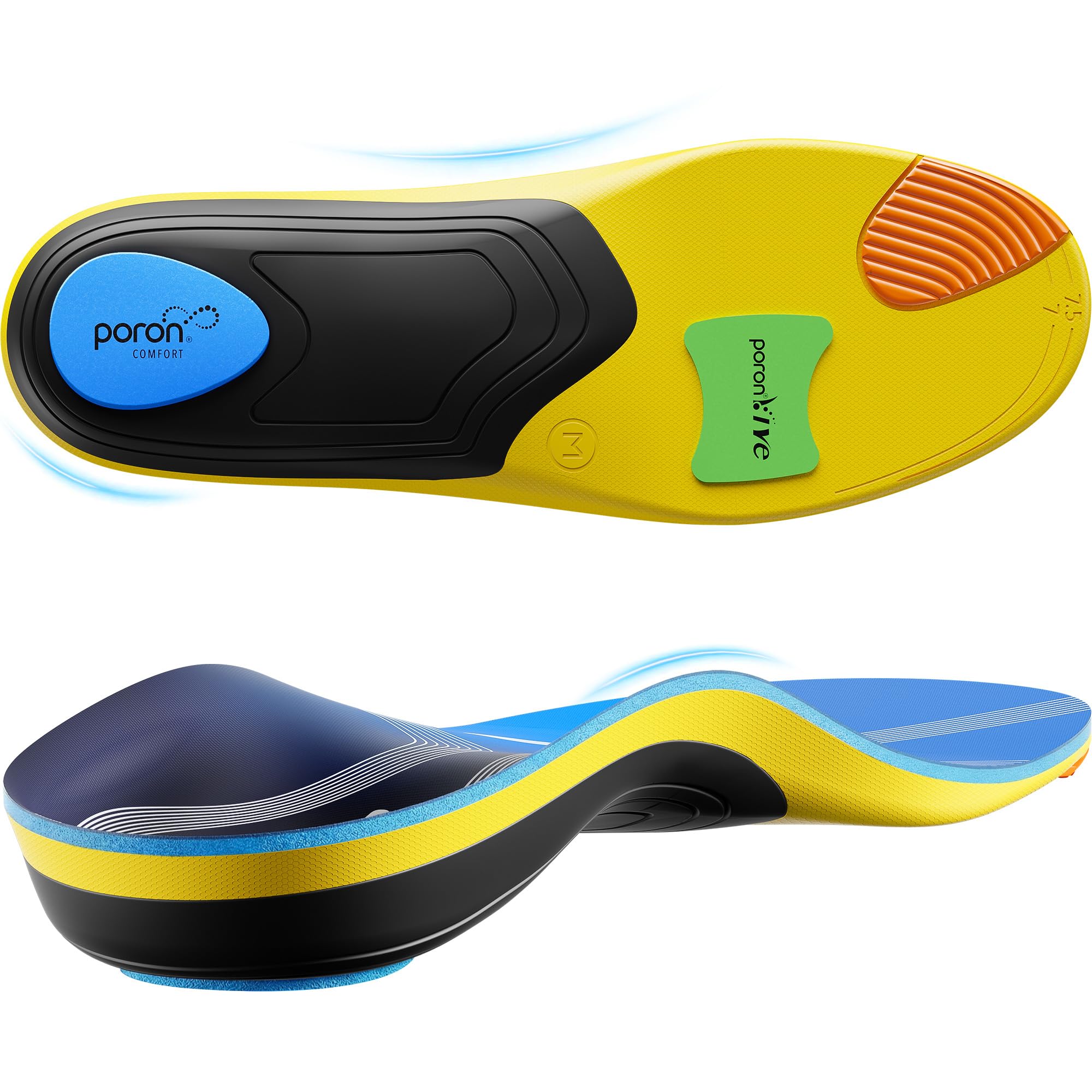
The Psveb insoles introduce a clever engineering twist: a ‘Golden Triangle’ three-point support system that distributes loading across the forefoot, arch, and heel. This design, combined with dual-layer PORON cushioning, delivers a medium arch profile that works well for runners who need a solid all-around support without committing to an extreme arch shape. The deep U-shaped heel cup prevents lateral slippage, adding a safety element for trail runners or those with narrow heels.
Customer reports reveal exceptional performance in work boots and running shoes alike, with users noting effective heel pain reduction after months of failed attempts with other brands. The full PU base layer adds a soft, durable feel that resists flattening even on 10-hour shifts. The skin-friendly, sweatproof fabric upper helps manage moisture, reducing the risk of blisters during longer efforts.
Runners with medium arches looking for a do-everything insole that transitions from work to track without sacrificing support quality will find the Psveb to be a hidden value champion.
Why it’s great
- Double PORON layers provide excellent shock absorption for high-mileage running
- Golden Triangle design evenly distributes pressure across three foot zones
- Deep heel cup enhances heel stability and prevents slippage during lateral moves
Good to know
- Medium arch may not provide enough lift for runners with very high arches
- Thicker profile may require looser laces in low-cut running shoes
5. SOPROM Running Insoles
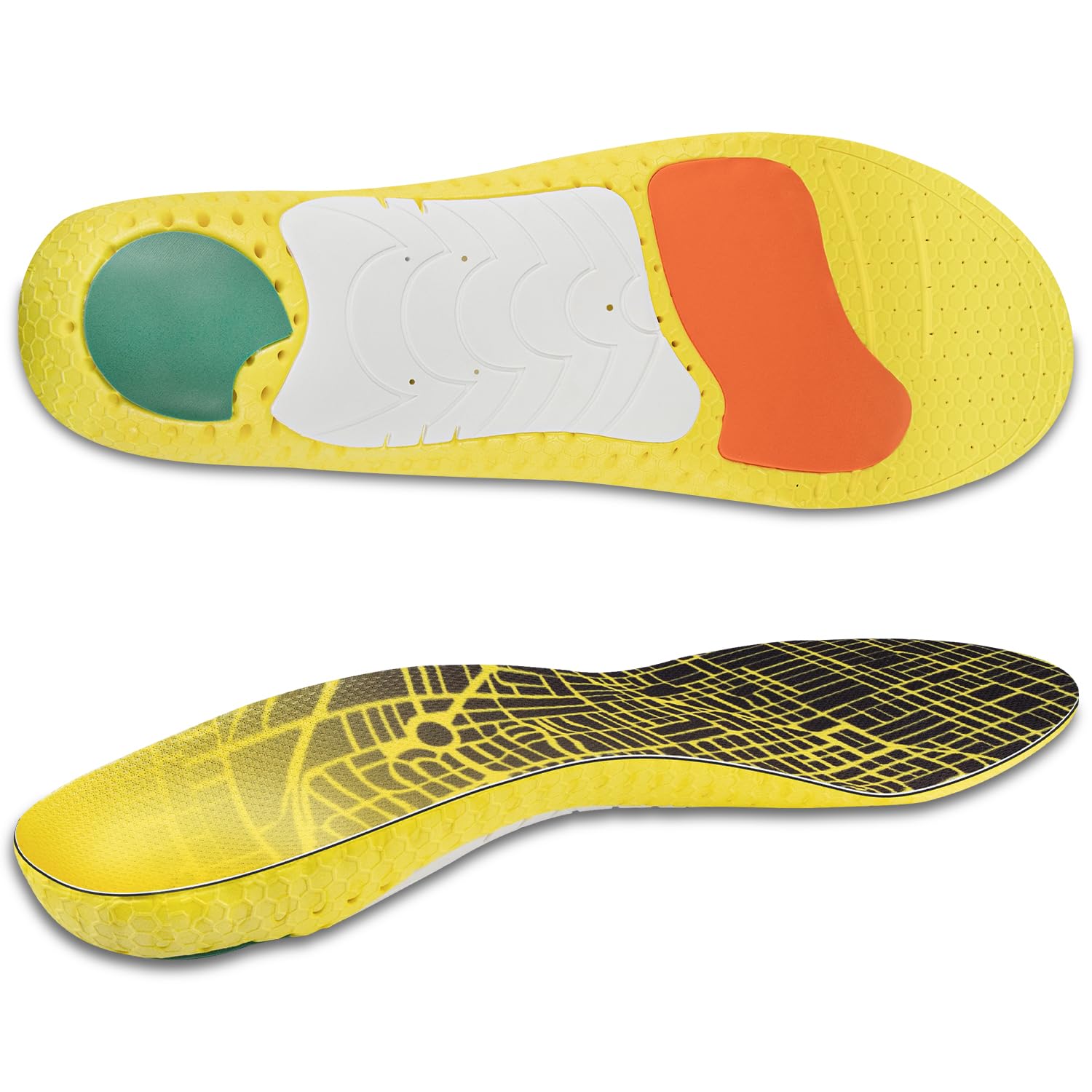
The SOPROM insoles offer a configurable arch height system that lets you choose low, medium, or high support based on your specific foot anatomy. This is a standout feature for runners who know their arch type but want to avoid the trial-and-error of buying multiple insole brands. The trim-to-fit design allows fine-tuning to match different shoe volumes, and the high-rebound pads under the forefoot and heel return energy efficiently with each stride.
Runners with low arches and overpronation found these insoles particularly effective, with one reviewer noting that the arch shape fits flat feet well and provides extra stability in Brooks shoes. The mesh top layer wicks moisture, and perforations on the bottom enhance overall breathability. A small issue reported involves a misalignment in the arch support that creates a ridge underfoot for some users, potentially causing discomfort over longer distances.
At its price point, the SOPROM delivers performance comparable to insoles costing several times more, making it the smart entry-level choice for new runners or those experimenting with arch support for the first time.
Why it’s great
- Three distinct arch height options accommodate a wide range of foot types
- High-rebound pads provide springy energy return for an efficient stride
- Breathable mesh and perforations reduce moisture buildup during sweaty runs
Good to know
- Some users experience a slight ridge underfoot from arch support misalignment
- Long-term durability may be lower than dual-density premium insoles
FAQ
Should I replace my arch support insoles as often as my running shoes?
Will arch support insoles make my running shoes feel tighter?
How long does it take to adapt to new running insoles?
Final Thoughts: The Verdict
For most runners, the best arch support for runners winner is the CRUVHEAL Sport Shock Absorbing Insoles because it balances neutral arch support with targeted gel cushioning and a secure heel cup, covering the widest range of running styles without overcorrecting. If you need heavy-duty stability for high body weight or severe overpronation, grab the VALSOLE Heavy Duty Support Orthotics. And for high-arched runners dealing with plantar fasciitis, nothing beats the BestHalo Insoles.

Mo Maruf
I created WellFizz to bridge the gap between vague wellness advice and actionable solutions. My mission is simple: to decode the research and give you practical tools you can actually use.
Beyond the data, I am a passionate traveler. I believe that stepping away from the screen to explore new environments is essential for mental clarity and physical vitality.