Our readers keep the lights on and my smoothie glass nicely filled. As an Amazon Associate, I earn from qualifying purchases.
Most household cleaners leave a surface sterile for only minutes before bacteria begin recolonizing. The difference between a basic disinfectant and a true antibacterial cleaner is whether the surface stays protected between cleaning sessions or becomes a fresh battleground the moment you walk away. That gap matters for high-touch zones—kitchen counters, bathroom sinks, pet areas—where constant recontamination is the norm.
I’m Mohammad Maruf — the founder and writer behind WellFizz. Over the past weeks I’ve analyzed kill-claims, residual activity data, contact time requirements, surface compatibility, and real-user reports across the leading antibacterial cleaning concentrates and sprays so you don’t have to read a single EPA master label yourself.
No two formulas extend protection the same way, and this guide cuts through the marketing to show you exactly which spray holds the line longest. Below is the definitive breakdown of the best antibacterial cleaner for every home and professional need.
How To Choose The Best Antibacterial Cleaner
The active ingredient—quaternary ammonium compounds (quats), bleach (sodium hypochlorite), hydrogen peroxide, or lactic acid—determines the cleaner’s kill spectrum, surface compatibility, and safety profile. Quat-based sprays offer up to 24 hours of residual protection but may leave a film on glass. Bleach-based formulas deliver broad-spectrum pathogen kill including C. diff spores within 3 minutes but can discolor fabrics and sealed stone if not rinsed. Hydrogen peroxide options break down into water and oxygen, making them gentler on respiratory systems but requiring longer contact times. Match the active chemistry to your primary surface type and frequency of use.
Residual Kill Claim vs Instant Disinfection
Standard disinfectants kill existing germs at contact time and stop working as soon as the surface dries. Antibacterial cleaners with a residual claim—such as Microban 24’s 24-hour layer—continue killing bacteria that land on the surface between cleanings. If your household has immunocompromised members, pets that track outdoor bacteria indoors, or kids who touch everything, the residual layer provides passive protection that a one-and-done spray simply cannot match. For clinical or tattoo environments where sterility between patients is required, hospital-grade instant disinfectants with validated contact times (Metrex CaviCide at 3 minutes, Clorox Healthcare at 3 minutes for C. diff) are non-negotiable.
Contact Time and Surface Compatibility
Every EPA-registered antibacterial cleaner lists a contact time—the amount of time the surface must remain visibly wet for the formula to achieve its stated log kill. Shorter contact times (30 seconds to 1 minute) make cleaning faster for high-traffic areas, while 3- to 5-minute contact times indicate a stronger formulation intended for healthcare environments. Always check the product label for fabrics, sealed stone, stainless steel, and food-contact surfaces. Many sprays are safe on non-porous hard surfaces only, while others are formulated for soft surfaces like couches and curtains—a critical distinction for families with upholstered furniture or carpeted play areas.
Scent, Residue, and Respiratory Sensitivity
The sensory experience of a cleaner determines whether you actually use it daily. Bleach-based products have a distinct chlorine odor that can irritate eyes and airways—users report eye watering and recommend goggles during application. Quat-based formulas like Microban 24 offer a mild citrus scent with no lingering chemical odor. Hydrogen peroxide options are often unscented and break down into harmless byproducts, making them the first choice for households with asthma, COPD, or pets with sensitive sinuses. Residue is another pain point: some sprays leave a visible film on mirrored or glossy surfaces, while others evaporate streak-free. If you clean stainless steel appliances or glass shower doors, a no-residue finish is a dealbreaker.
Quick Comparison
On smaller screens, swipe sideways to see the full table.
| Model | Category | Best For | Key Spec | Amazon |
|---|---|---|---|---|
| Microban 24 Multi-Purpose Cleaner | Quat-Based | Everyday home plus residual 24-hr protection | Residual kill-claim: 24 hours | Amazon |
| Metrex CaviCide Disinfectant Spray | Hospital Quat | Medical, tattoo, clinical surfaces | Contact time: 3 minutes | Amazon |
| Clorox Healthcare Bleach Spray | Bleach-Based | C. diff, MRSA in healthcare settings | Kills C. diff in 3 minutes | Amazon |
| Spic And Span Antibacterial Spray | Multi-Surface | Budget-friendly all-purpose cleaning | 44 fluid oz total volume | Amazon |
| Lysol Disinfectant Spray Bundle | Soft & Hard Surface | Multi-scent, soft surface sanitization | Kills 99.9% of viruses & bacteria | Amazon |
In‑Depth Reviews
1. Microban 24 Multi-Purpose Cleaner (2-Pack)
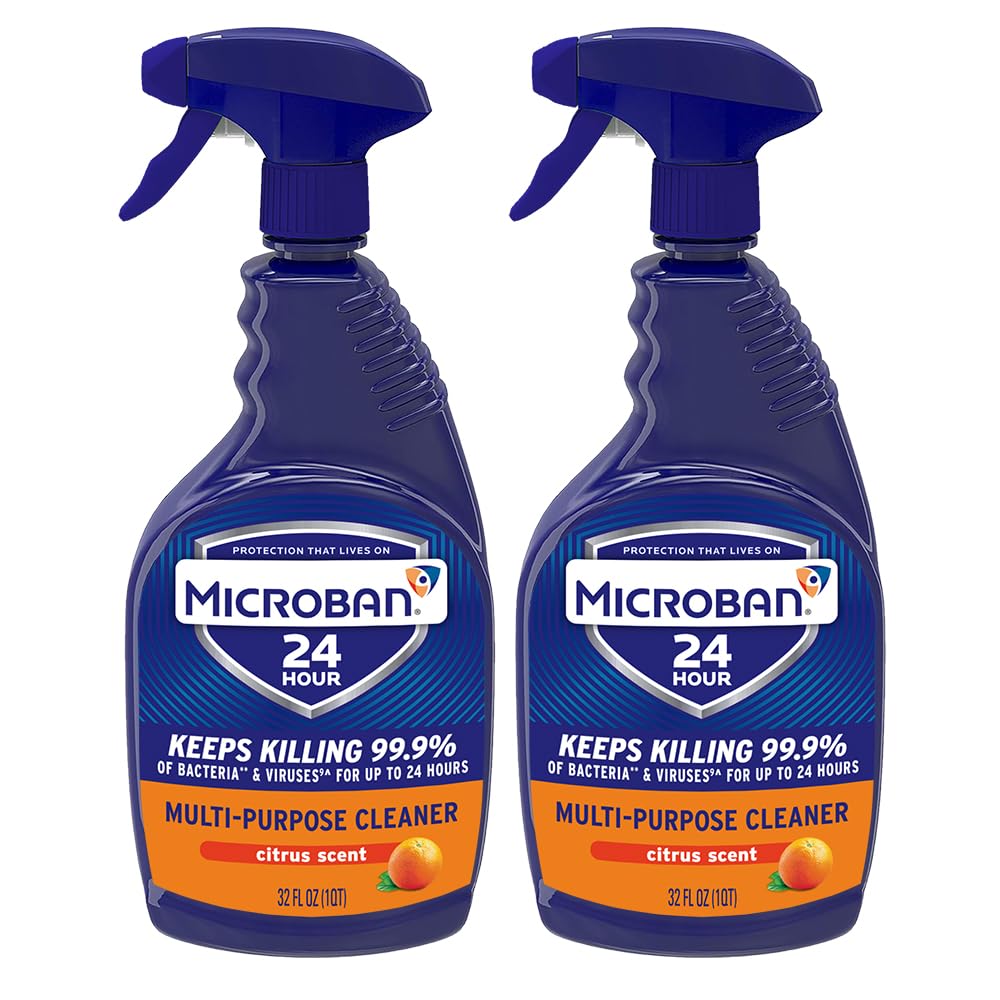
The defining feature of Microban 24 is its residual antimicrobial layer that keeps killing 99.9% of bacteria for 24 hours after the spray dries. Unlike standard cleaners that stop working the moment the surface evaporates, Microban 24’s quat-based formula leaves a microscopic barrier that continues neutralizing new bacteria that land on counters, bathroom fixtures, and garbage can lids throughout the day. Users specifically note it outperforms Lysol on high-touch surfaces in households with kids and pets, and the citrus scent is described as clean without any lingering chemical burn.
This formula penetrates soap scum and greasy soils in the same pass it disinfects, meaning you do not need a separate degreaser for kitchen spills or bathroom buildup. It is safe on sealed granite, glazed tile, Formica, Corian, and stainless steel, but not for food-contact surfaces—always rinse cutting boards or countertops before food prep. The 32-ounce bottles in the 2-pack provide good per-ounce value for a mid-range residual cleaner.
Users with respiratory sensitivity report no eye watering or airway irritation during application, citing the non-overpowering scent as a major upgrade over bleach sprays. A few reviewers wished the surface stayed visibly wet longer, but the residual technology does not require extended wetness—the dried layer does the work. For families who want set-it-and-forget-it protection between deep cleans, this is the most effective passive defense available at the consumer level.
Why it’s great
- Only consumer cleaner with 24-hour residual kill-claim
- Gentle enough for COPD and sensitive users
- No sticky residue on sealed surfaces
Good to know
- Not for food-contact surfaces
- 32 oz per bottle—smaller than some competitors
2. Metrex CaviCide Surface Disinfectant Spray
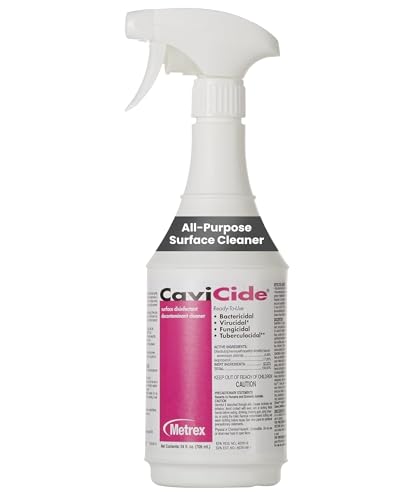
CaviCide is a hospital-grade disinfectant designed for non-critical and semi-critical surfaces in medical, lab, and tattoo environments. Its ready-to-use formula requires no dilution or mixing, and it achieves broad-spectrum kill—including TB, MRSA, VRE, and bloodborne pathogens—at a validated 3-minute contact time. Users in tattoo shops and clinical labs emphasize that the spray does not damage stainless steel instruments, plastics, or equipment finishes, which is the primary reason it is trusted in neonatal units and surgical centers.
The nozzle delivers a consistent fine mist without dripping, and the 24-ounce bottle is compact enough for mobile tattoo artists who need to carry supplies between stations. Users describe the scent as reminiscent of a hospital clean—sterile and clinical rather than floral or citrusy. A few reviewers note the smell is not for everyone, but for professional environments where disinfection compliance matters, the odor signals the product is working.
CaviCide is not designed for everyday home cleaning—its use-case is strictly institutional surfaces. It does not have a residual claim like Microban 24, so surfaces must be re-disinfected between high-traffic intervals. For home users who want hospital-level certainty on kitchen counters, the 3-minute contact time is longer than consumer products, which may be inconvenient for quick wipes. Still, for anyone running a home tattoo parlor, daycare, or pet boarding station, this is the gold standard for verifiable disinfection.
Why it’s great
- Validated 3-minute contact time for hospital pathogens
- Ready-to-use, no mixing required
- Safe on medical plastics and stainless steel
Good to know
- Strong clinical scent not suited for living rooms
- No residual activity—reapply between uses
3. Clorox Healthcare Bleach Germicidal Cleaner Spray

When you need to kill C. diff spores, C. auris, or other bleach-sensitive pathogens, the Clorox Healthcare formula delivers an equivalent 1:10 sodium hypochlorite dilution in a ready-to-use spray. It kills over 50 microorganisms—including MRSA and VRE—within 3 minutes, making it one of the fastest sporicidal cleaners on the consumer-accessible market. Users report that a small amount of spray is sufficient because the formula is concentrated: a light mist on kitchen sink stains or trash can interiors eliminates odors and discoloration in a single pass.
The pull-top nozzle provides hands-free application, and the 32-ounce bottle covers a large surface area per fill. Users testing it on walls, carpets, and trash cans confirm no bleaching occurred on fabrics—though the manufacturer advises spot-testing on colored materials. The bleach smell is notably strong at first spray, as expected, but dissipates within minutes. Several users recommend wearing goggles when spraying overhead or in bathrooms because the vapor can cause eye watering.
For households managing a Clostridioides difficile infection or caring for someone with a compromised immune system, this is the only option on the list with validated sporicidal activity at a consumer-friendly price. The tradeoff is the bleach odor and the requirement to keep surfaces wet for the full 3 minutes—a non-issue for clinical routines but potentially frustrating for quick kitchen wipes. If you need heavy artillery for deep cleans while using a milder daily spray for routine touch-ups, this fills the gap perfectly.
Why it’s great
- Kills C. diff spores and C. auris in 3 minutes
- Trusted by over 2,400 US hospitals
- Concentrated formula—small amount goes far
Good to know
- Strong bleach odor requires ventilation
- Not ideal for quick daily wipe-downs
4. Spic And Span Antibacterial Spray Cleaner (2-Pack)
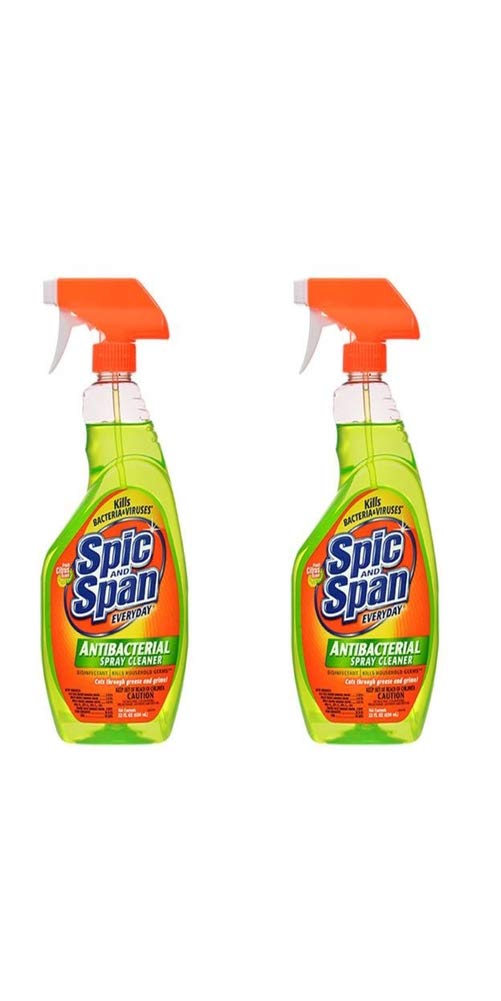
Spic And Span’s antibacterial spray offers a budget-friendly entry point for households that want reliable bacteria and virus kill without the premium price tag of hospital-grade or residual-technology products. The 2-bottle multipack provides 44 fluid ounces total—the largest volume on this list—making it the best per-ounce value for homes that go through cleaner quickly. Users specifically mention the formula does not irritate their cats’ sinuses, a critical consideration for pet owners who cannot use strong bleach or quat-based sprays near food bowls and litter boxes.
Reviewers with decades of experience using Spic And Span (some since the powder formula) confirm the antibacterial version maintains the brand’s signature cleaning power while killing germs across kitchen counters, bathroom tiles, and high-touch surfaces. One user notes the spray works well for routine daily cleaning but keeps a bleach-containing product for tougher bathroom soap scum and mold. The absence of a strong chemical smell is a recurring compliment—users describe it as mild and inoffensive compared to traditional disinfectants.
The tradeoff is that Spic And Span does not carry the same broad-spectrum pathogen kill claims as Metrex or Clorox Healthcare. It kills common household bacteria and viruses but is not validated for C. diff or healthcare-associated pathogens. For families without immunocompromised members who want a cost-effective daily cleaner that is gentle on pets and sinuses, this is the clear winner. The 22-ounce bottle size also fits under most kitchen sinks, and the no-fuss formulation means you can spray and wipe without waiting for extended contact times.
Why it’s great
- Largest total volume in 2-pack (44 oz)
- Does not irritate pet sinuses
- Mild scent, no chemical residue
Good to know
- Not validated for C. diff or hospital pathogens
- Best for routine daily use, not deep disinfecting
5. Lysol Disinfectant Spray Bundle (Crisp Linen + Early Morning Breeze)
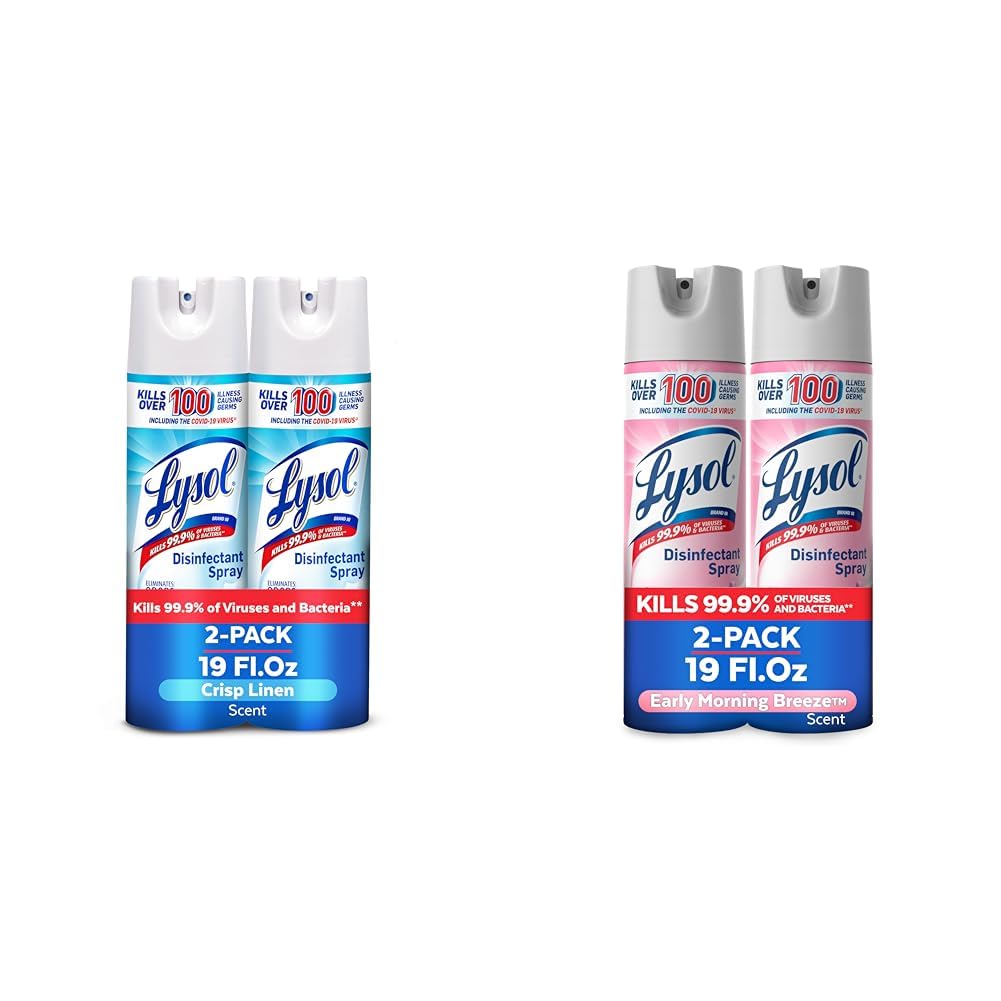
Lysol Disinfectant Spray is the household name for a reason: it kills 99.9% of viruses and bacteria, including the Covid-19 virus, Norovirus, and cold and flu viruses, on both hard non-porous surfaces and soft surfaces like couches, pillows, and curtains. The bundle pairs two scents—Crisp Linen and Early Morning Breeze—that users consistently describe as fresh and clean without the medicinal odor typical of disinfectants. For households that want the sensory experience of a clean home along with germ kill, this dual-scent pack provides variety across different rooms.
The formula’s ability to sanitize soft surfaces is its differentiator—most antibacterial cleaners on this list are restricted to hard non-porous surfaces only, while Lysol can be sprayed on upholstery, mattresses, and fabric toys. This makes it the best option for households with fabric furniture, area rugs, or cloth children’s items that cannot be bleached or wiped down. The spray nozzle delivers a fine mist that dries without soaking the fabric, and users confirm no staining or discoloration on light-colored couches.
However, the convenience of having two complementary scents delivered in one package appeals to shoppers who want variety without visiting multiple stores. Lysol does not offer the residual activity of Microban 24 or the sporicidal power of Clorox Healthcare—it is a classic, reliable disinfectant with proven lab results and a fresh-smelling finish.
Why it’s great
- Sanitizes soft surfaces—couches, curtains, toys
- Two pleasant scents (Crisp Linen, Early Morning Breeze)
- Kills 99.9% of viruses & bacteria including Norovirus
Good to know
- No residual activity—reapply between uses
- Higher per-can cost than warehouse clubs
FAQ
Can I use a hospital-grade antibacterial cleaner like Metrex CaviCide on my kitchen countertops?
How does a 24-hour residual cleaner like Microban 24 actually work after the spray dries?
What is the difference between sanitizing and disinfecting in an antibacterial cleaner?
Final Thoughts: The Verdict
For most users, the best antibacterial cleaner winner is the Microban 24 Multi-Purpose Cleaner because its 24-hour residual protection is a genuine category innovation that changes how you think about surface hygiene—spray once and the counter keeps defending itself all day. If you need hospital-level disinfection for a clinical or tattoo environment, grab the Metrex CaviCide for its validated 3-minute contact time against bloodborne pathogens. And for families on a budget who want a large volume of cleaner that is gentle on pets and sinuses, nothing beats the Spic And Span Antibacterial Spray 2-Pack for everyday value.

Mo Maruf
I created WellFizz to bridge the gap between vague wellness advice and actionable solutions. My mission is simple: to decode the research and give you practical tools you can actually use.
Beyond the data, I am a passionate traveler. I believe that stepping away from the screen to explore new environments is essential for mental clarity and physical vitality.