Our readers keep the lights on and my smoothie glass nicely filled. As an Amazon Associate, I earn from qualifying purchases.
Walking into a room that triggers a sneeze, a stuffy nose, or itchy eyes isn’t just uncomfortable — it’s a reminder that the air you’re breathing is filled with invisible triggers. For allergy sufferers, an air purifier isn’t a luxury; it’s the difference between a restful night and a congested morning. The challenge is cutting through marketing noise to find a unit that actually traps the microscopic particles that set off your symptoms.
I’m Mohammad Maruf — the founder and writer behind WellFizz. I’ve spent years analyzing air purification technology, comparing CADR ratings, HEPA classifications, and filter configurations to identify which models deliver real, measurable relief for allergy households.
After evaluating dozens of units across multiple price tiers, I’ve narrowed the field to the nine models that consistently outperform their peers in independent testing and real-world use. This guide breaks down the best air purifier for allergies based on filtration efficiency, coverage, noise, and long-term value.
How To Choose The Best Air Purifier For Allergies
Selecting the right unit for allergy relief means looking beyond the marketing claims and focusing on measurable performance metrics. Here are the three most critical factors to evaluate before buying.
HEPA Grade and Particle Filtration
Not all HEPA filters are created equal. True HEPA (or HEPA H13) captures 99.97% of particles sized 0.3 microns — the “most penetrating particle size” — which includes pollen, dust mite debris, pet dander, and mold spores. HEPA-type or “HEPA-like” filters often use lower-grade media and may only capture larger particles. For genuine allergy relief, insist on True HEPA or H13/H14 certification, not marketing language that sounds similar.
CADR and Room Coverage Matching
Clean Air Delivery Rate (CADR) tells you how many cubic feet of air per minute the unit cleans of smoke, dust, and pollen. A higher CADR means faster filtration. For an allergy sufferer, the unit should be capable of cycling the room’s air at least four times per hour. Calculate your room’s square footage, then multiply by two to find the minimum CADR you need. Oversizing slightly is better than undersizing — a unit with excess capacity simply runs quieter on lower speeds.
Filter Longevity and Replacement Costs
An air purifier is only as good as its filter maintenance. Pre-filters that are washable extend the life of the main HEPA filter by capturing larger debris like pet hair and dust bunnies before they clog the fine media. Check the manufacturer’s recommended replacement interval for both the HEPA and carbon filters, then multiply the cost across a year. A budget-friendly unit with expensive, frequent replacements may end up costing more than a premium model with durable, longer-lasting filters.
Quick Comparison
On smaller screens, swipe sideways to see the full table.
| Model | Category | Best For | Key Spec | Amazon |
|---|---|---|---|---|
| Coway Airmega AP-1512HH | Mid-Range Smart | Real-time air quality feedback | CADR: 246 Dust / 240 Pollen | Amazon |
| AirDoctor AD3500 | Premium Hospital-Grade | Ultra-fine particle removal | Captures 99.99% at 0.003 microns | Amazon |
| Winix 5520 | Smart Mid-Range | Large room coverage with auto mode | AHAM Verifide at 392 sq ft | Amazon |
| CleanForce Rainbow | Premium Large Room | Whole-home coverage up to 2,250 sq ft | Certified asthma & allergy friendly | Amazon |
| BLUEAIR Blue Signature | Premium Design | Furniture-style with quiet operation | HEPASilent up to 3,385 sq ft | Amazon |
| Medify MA-40 | Premium H13 HEPA | Large space with H13 filtration | CADR 406, 1,793 sq ft coverage | Amazon |
| GoveeLife H7129 | Smart Budget-Friendly | Smart features with real-time PM2.5 sensor | Auto mode with Turbo function | Amazon |
| LEVOIT Core 300-P | Value Compact | Small bedrooms with AHAM verification | 143 CFM CADR, Sleep Mode at 24dB | Amazon |
| GermGuardian AC4825E | Entry-Level Workhorse | Budget-friendly with UV-C option | Captures 99.97% at 0.1 microns | Amazon |
In‑Depth Reviews
1. Coway Airmega AP-1512HH
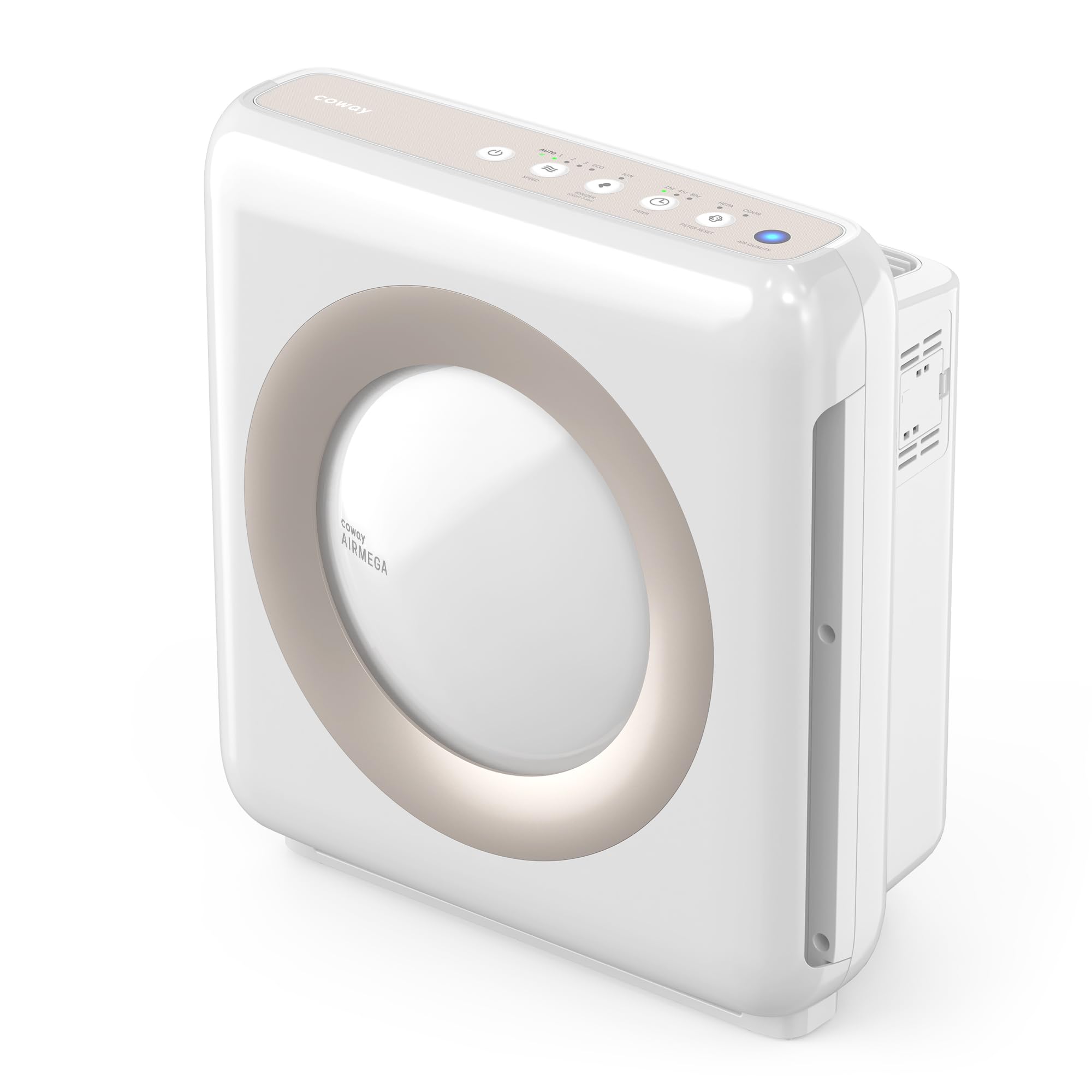
The Coway Airmega AP-1512HH is a perennial favorite because it balances high CADR ratings — 246 for dust, 240 for pollen — with a compact footprint that fits easily into a living room or bedroom. Its four-stage filtration system includes a washable pre-filter, a deodorization carbon layer, a True HEPA filter, and a Vital Ion option. The real-time pollution sensor displays air quality via a color-coded LED, making it easy to see when allergy season spikes indoor particle levels.
Users consistently report that this unit eliminates heavy wildfire smoke and cooking odors within minutes, with the auto mode adjusting fan speed seamlessly between 1 and 3. The eco mode automatically shuts the fan off when no pollution is detected for 30 minutes, saving energy without sacrificing performance. At a noise range of 24.4 dB to 53.8 dB, it remains nearly silent on its lowest setting.
Filter replacement is straightforward: the pre-filter slides out for a quick wash, while the main HEPA and carbon filter pack lasts roughly one year under normal use. The filter indicator separately tracks both the pre-filter and HEPA, so you never guess when maintenance is due. This attention to operational simplicity makes the Coway a set-and-forget solution for allergy households.
Why it’s great
- Excellent real-time air quality display with color-coded LED
- Washable pre-filter extends HEPA life and reduces waste
- Eco mode saves power when air is already clean
Good to know
- Auto mode defaults to low speed and can’t be set to a mid-range baseline
- No app connectivity for remote monitoring
2. AirDoctor AD3500
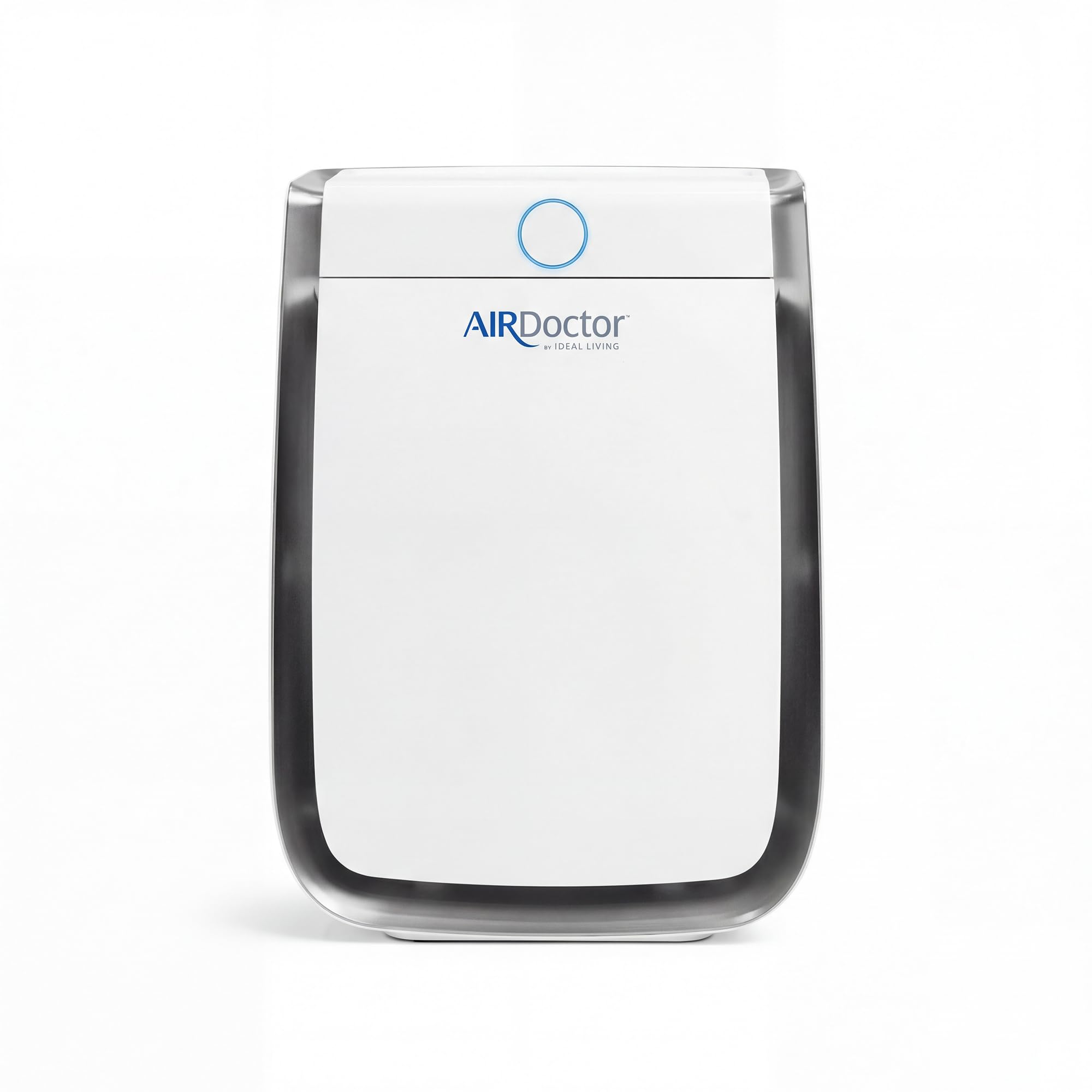
The AirDoctor AD3500 stands apart with its UltraHEPA filtration, which captures 99.99% of airborne particles as small as 0.003 microns — 100 times smaller than the standard HEPA requirement. This makes it exceptionally effective against bacteria, viruses, mold spores, and the finest allergen particles that typical filters might miss. The 3-stage system includes a pre-filter, a thick Premium Activated Carbon filter infused with potassium permanganate, and the UltraHEPA media.
Covering up to 2,520 square feet in one hour, the AD3500 is designed for open-concept homes and larger spaces. The built-in PM2.5 sensor powers the Halo air quality display, which shifts colors in real time. Auto Mode intelligently adjusts fan speed and activates Boost when sensors detect a spike in particulate matter. Users note that the unit responds to nebulizers, cooking, and even the dishwasher, proving its sensitivity.
At 24 pounds, this is a substantial unit, but its quiet operation on low speed makes it suitable for a master bedroom. The carbon filter requires replacement every six months, while the UltraHEPA lasts a full year. While the replacement filters carry a premium cost, the level of filtration performance justifies the investment for allergy sufferers who need the highest possible capture rate for microscopic triggers.
Why it’s great
- UltraHEPA captures particles 100x smaller than standard HEPA
- Thick carbon filter with potassium permanganate for gas and odor reduction
- Auto mode with Boost responds quickly to pollution spikes
Good to know
- Large and heavy at 24 pounds, not easily moved room-to-room
- Replacement filters require significant ongoing investment
3. Winix 5520
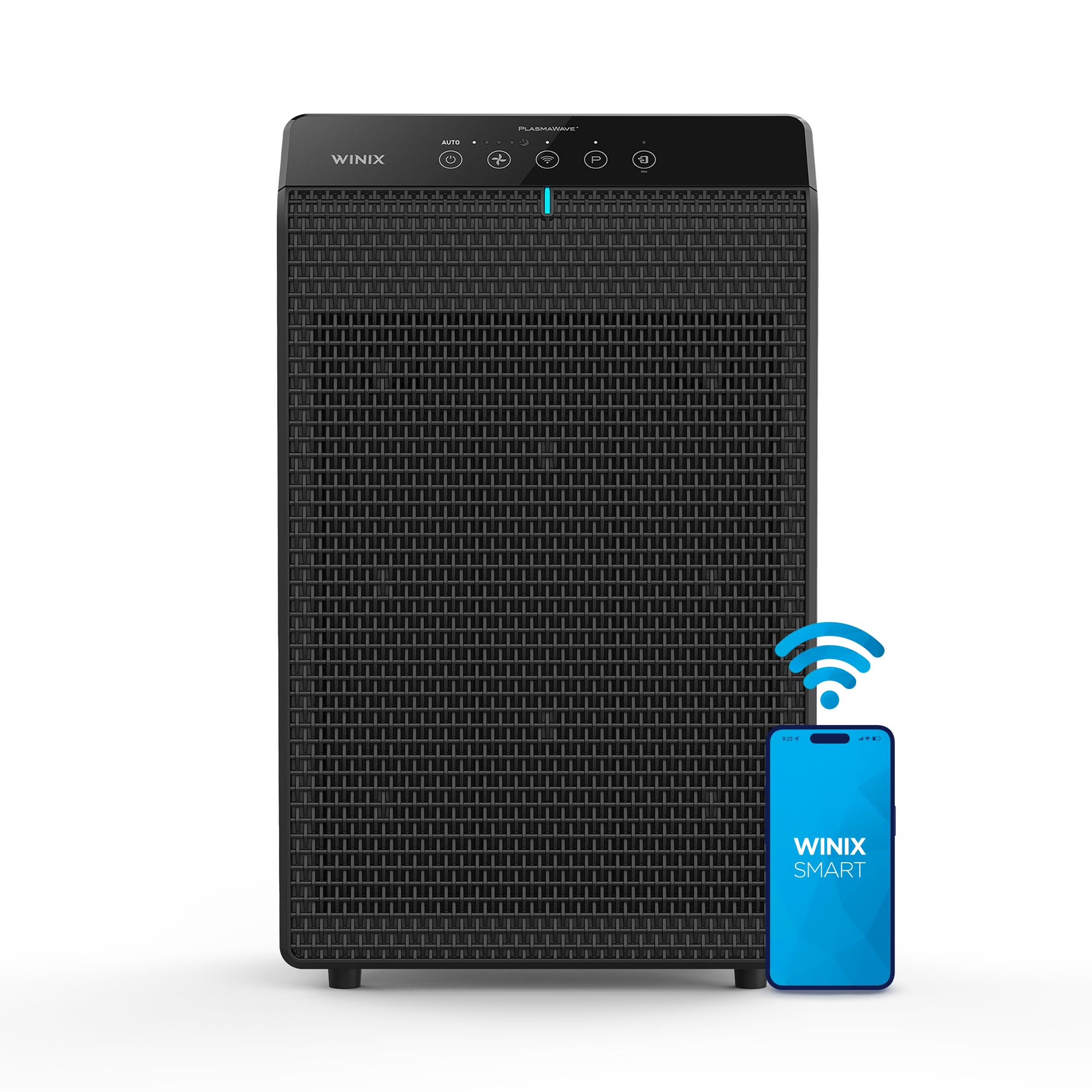
The Winix 5520 brings AHAM Verifide certification at 392 square feet, with the ability to clean spaces up to 1,882 square feet in one hour. Its three-stage filtration combines a washable Fine Mesh Pre-Filter, an Advanced Odor Control Carbon Filter, and a True HEPA filter that captures 99.99% of particles as small as 0.01 microns. The carbon filter is designed to reduce VOCs and household odors from pets, cooking, and smoke, which are common airborne triggers for allergy sufferers.
A built-in air quality sensor with color-coded LED indicator communicates real-time conditions, and the Smart Sensors plus Auto Mode adjust fan speed without user input. The Light Automated Sleep Mode automatically activates quiet, energy-efficient operation when the room darkens, then returns to Auto Mode when light returns. At 23.5 dB on the slowest speed, the unit is nearly silent for light sleepers.
The Winix Smart App adds remote control and monitoring, a feature usually reserved for higher-priced models. Users report that the sensor is sensitive enough to detect hair spray from the bathroom, demonstrating its responsiveness. The washable pre-filter and carbon filter can be vacuumed clean, while the HEPA filter lasts about a year — making this a strong mid-range choice with manageable ongoing costs.
Why it’s great
- AHAM Verifide with independently tested performance
- Light-activated sleep mode saves energy and reduces noise
- Washable pre-filter and carbon filter reduce replacement frequency
Good to know
- Side air intake openings may allow dust and pet hair to settle on exterior
- Replacement HEPA filters cost around per year
4. CleanForce Rainbow
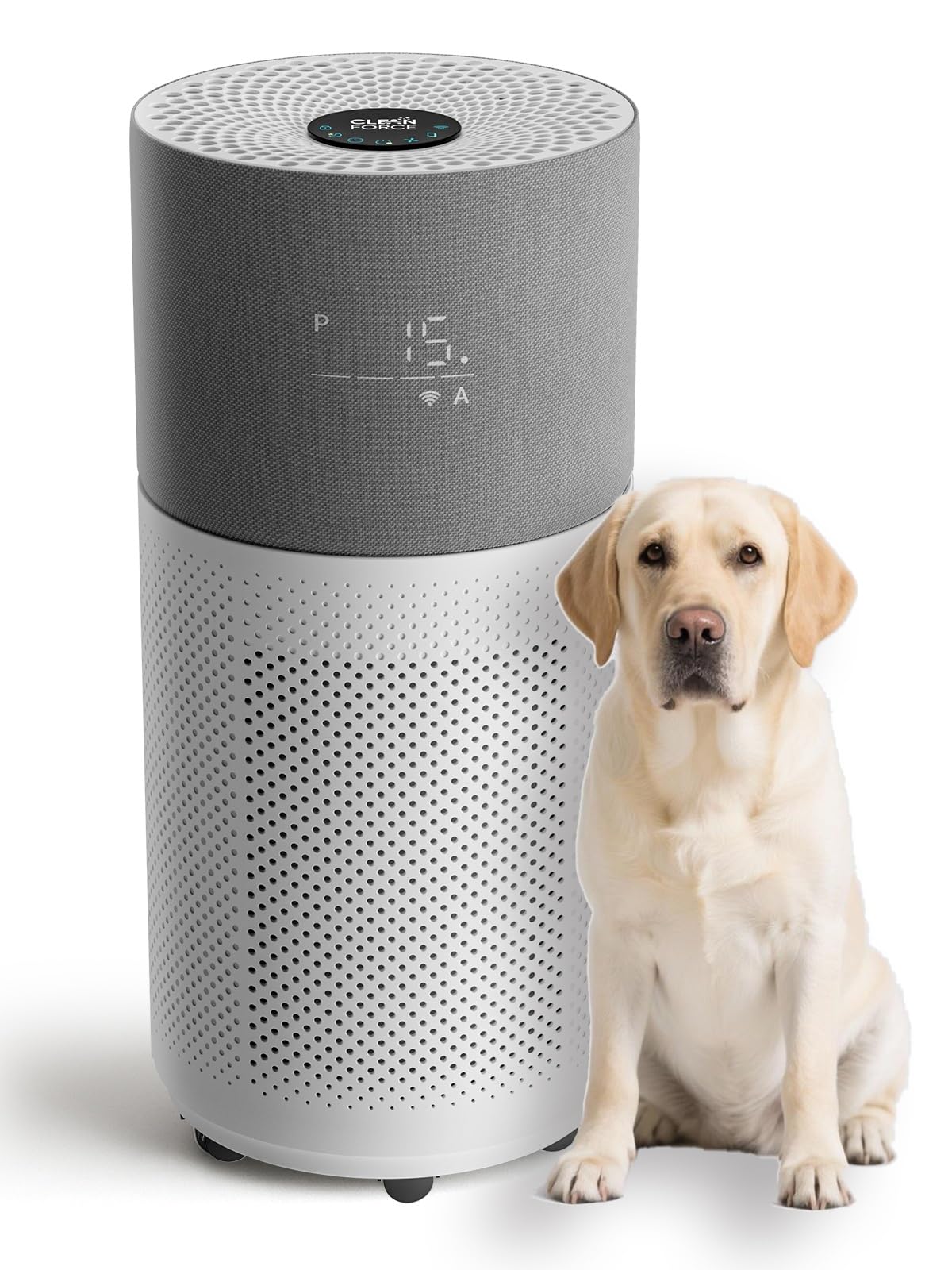
The CleanForce Rainbow holds the Asthma and Allergy Foundation of America (AAFA) certification, a meaningful distinction that indicates the unit has been tested specifically for allergen reduction. Its AllerSync multi-stage filter combines a pre-filter, HEPA media, and activated carbon to capture 99.97% of particles at 0.3 microns while also targeting household odors and VOCs. Designed for spaces up to 2,250 square feet, it’s one of the larger units in this roundup.
Quiet operation at 29 dB in sleep mode makes it suitable for bedrooms, and the Energy Star certification ensures low power draw during continuous use. The CleanForce App and Alexa compatibility allow voice and remote control, including schedule setting and filter status checks. The color-coded smart display provides real-time PM2.5 readings and automatically adjusts fan speed to maintain desired air quality.
Users in the HVAC industry have praised the unit’s ability to pull more air at lower, quieter speeds compared to smaller competitors. The integrated wheels make it easy to move between rooms despite its 15.4-pound weight. Filter replacement costs roughly for the two-filter set, which is competitive given the large coverage area and the AAFA certification that gives allergy sufferers extra confidence.
Why it’s great
- AAFA certified for asthma and allergy reduction
- Large coverage with quiet sleep mode at 29dB
- Wheels and app control add convenience for whole-home use
Good to know
- Tall at 25.5 inches, requires dedicated floor space
- Filter replacement set costs approximately
5. BLUEAIR Blue Signature
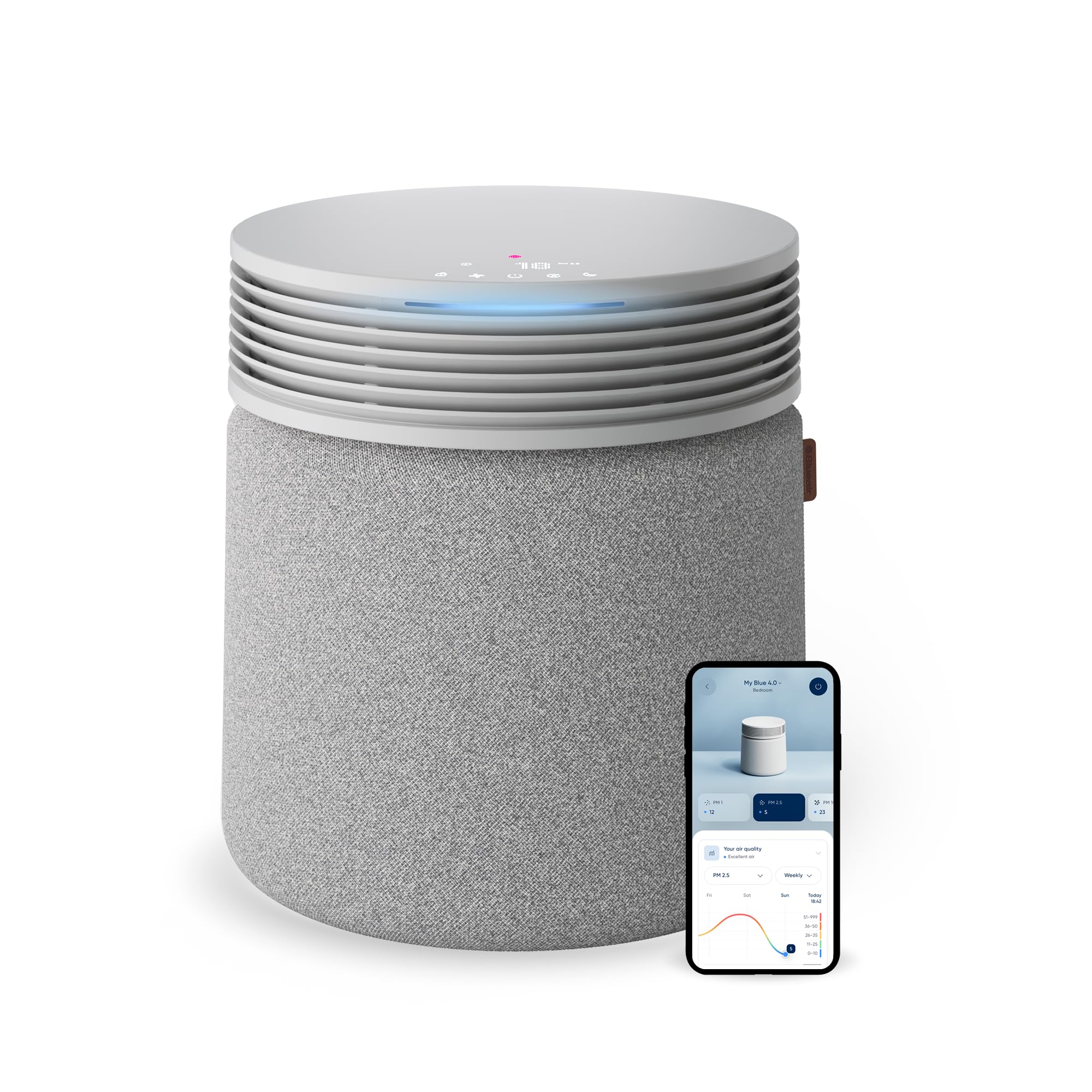
The Blueair Blue Signature distinguishes itself with a furniture-style design that doubles as a side table, making it a seamless addition to modern living rooms and open floor plans. Its proprietary HEPASilent technology combines electrostatic and mechanical filtration to capture dust, pollen, smoke, and pet dander while maintaining higher airflow and lower noise than conventional HEPA-only designs. The unit cleans up to 3,385 square feet in one hour, placing it among the highest coverage options.
Built-in smart sensors monitor air quality and automatically adjust fan speed, with WiFi connectivity enabling full control through the Blueair app. The auto mode responds to changes in particle levels, and users can track air quality trends and filter life remotely. At just 13.2 pounds, it is remarkably lightweight for its coverage capacity, and the minimalist grey finish blends into most decor schemes.
Noise performance is a standout: the unit runs quietly enough for bedroom use even at moderate speeds, and the lowest setting is virtually silent. While the replacement filters are more expensive than some competitors, their year-long lifespan and the unit’s energy efficiency offset the cost. For allergy sufferers who prioritize aesthetics and silence without compromising on coverage, the Blue Signature is a compelling premium option.
Why it’s great
- Furniture-style design functions as a side table
- HEPASilent technology offers high airflow with low noise
- Excellent coverage for open-concept spaces
Good to know
- Replacement filters carry a premium price
- App occasionally experiences connectivity lag
6. Medify MA-40

The Medify MA-40 uses a True HEPA H13 filter, which is a higher grade than standard HEPA, capturing 99.9% of particles down to 0.1 microns. With a CADR of 406 and coverage up to 1,793 square feet in one hour, it is engineered for large single rooms or open living areas. The dual-sided air intake pulls air from both the front and back, effectively doubling the filtration surface area compared to single-inlet designs.
Touch screen controls provide access to four fan speeds, an 8-hour timer, sleep mode that dims all panel lights, and a child lock for safety. Users report that the unit effectively eliminates cooking smells and cat litter odors in spaces around 400 square feet, with the upward airflow circulating clean air throughout the room. The sleep mode engages a near-silent fan speed suitable for light sleepers.
Medify backs the MA-40 with a USA registered Lifetime Warranty, which is uncommon at this price tier and adds long-term value. The replacement filter lasts approximately 3,000 hours — roughly six months of continuous use — and costs around . For allergy households that need H13 filtration without the price tag of more premium brands, this is a solid, well-supported choice.
Why it’s great
- H13 HEPA captures finer particles than standard HEPA
- Dual-sided intake increases filtration efficiency
- Lifetime warranty provides long-term peace of mind
Good to know
- Replacement filters cost around and need changing every 6 months
- Reports of quality control issues on some units
7. GoveeLife H7129

The GoveeLife H7129 brings a highly responsive PM2.5 sensor that feeds real-time air quality data to both the unit’s display and the companion app. With a CADR of 150 CFM, it can purify a 232-square-foot room five times per hour, making it ideal for standard bedrooms and home offices. The Auto Mode uses sensor readings to adjust fan speed automatically, while the Turbo Mode offers a rapid cleaning burst when air quality takes a sharp decline.
Smart home integration includes Alexa and Google Assistant compatibility, along with a full-featured app that logs historical data and allows remote control. Sleep Mode drops noise to a whisper-quiet 24dB, and the display lights can be turned off completely for an uninterrupted night. The award-winning design features an ambient color-changing LED that doubles as an air quality indicator and night light.
The detachable pre-filter captures large debris and extends the life of the main filter, while the activated carbon layer handles odors from pets and cooking. Replacement filters are competitively priced, and the Energy Star certification confirms efficient operation. For users who want app-driven automation and real-time visibility into their air quality, the GoveeLife delivers strong value at a mid-range price point.
Why it’s great
- Highly responsive PM2.5 sensor with color-coded feedback
- Turbo Mode for rapid air cleaning during allergy flare-ups
- Full smart home integration with Alexa and Google Assistant
Good to know
- Does not support 5GHz WiFi networks
- Filter replacement cost adds up over time
8. LEVOIT Core 300-P

The Levoit Core 300-P is AHAM Verifide with CADR ratings of 143 CFM for smoke, 153 CFM for dust, and 167 CFM for pollen — independently tested numbers that confirm its performance for allergy-related particles. Its 56W high-torque motor drives efficient airflow through a 3-in-1 filter system, refreshing a 222-square-foot room 4.8 times per hour. At just 7.9 pounds with a compact 8.7-inch square footprint, it fits easily on a nightstand or desk.
QuietKEAP Technology reduces noise to a near-silent 24dB in Sleep Mode, making it ideal for bedroom use. The touch panel includes a timer (2, 4, 6, or 8 hours), an optional display light off, and a check filter indicator. Users report that it effectively filters out incense smoke, kitchen smells, and pet dander within roughly 20 minutes on the highest setting, while levels 1 and 2 remain unobtrusive during daily life.
One of the Core 300-P’s strengths is its filter flexibility: Levoit offers multiple replacement options, including a Toxin Absorber for VOCs, a Smoke Remover for wildfire smoke, and a Pet Allergy filter for dander and odors. This allows users to tailor the unit to their specific triggers. While certified replacement filters are not cheap, their performance and fit are verified, and the unit’s modest power draw keeps operating costs low.
Why it’s great
- AHAM Verifide with independently tested CADR ratings
- Multiple specialty filter options for different allergy triggers
- Ultra-compact design fits small spaces easily
Good to know
- Official replacement filters are expensive compared to generic alternatives
- Level 3 (high) is noticeably loud for continuous use
9. GermGuardian AC4825E

The GermGuardian AC4825E has been a staple in the air purifier market since 2011, and its longevity speaks to its solid entry-level performance. Its HEPA PURE filter captures 99.97% of allergens as small as 0.1 microns, including pollen, dust, and pet dander. An optional UV-C light provides additional reduction of airborne bacteria and viruses, though it is not necessary for basic allergen capture.
Designed for a small bedroom (153 square feet) with filtration every 12.5 minutes, the unit also handles larger spaces up to 743 square feet on an hourly cycle. The activated carbon filter reduces cooking and pet odors, and the three-speed dial includes a quiet sleep mode. Users consistently note that it reduces stuffy noses and dust accumulation noticeably after a few weeks of continuous use.
Setup is simple — filters come pre-installed — and the washable pre-filter catches larger debris before it reaches the main HEPA. Replacement filters and UV bulbs are widely available and reasonably priced, keeping this among the most cost-effective options for allergy relief. The UV light is bright at night, but the unit can be run without it. For a straightforward, no-app, reliable workhorse that won’t strain a tight budget, the GermGuardian remains a proven choice.
Why it’s great
- Proven long-term reliability with over a decade of market presence
- UV-C light adds optional germicidal protection
- Washable pre-filter and affordable replacement filters
Good to know
- High speed is noticeably loud; best used during the day or in living areas
- UV light cannot be fully turned off if selecting the UV model
FAQ
Should I leave my air purifier on all the time for allergy relief?
How often should I replace the HEPA filter in my allergy purifier?
Can an air purifier completely eliminate my allergy symptoms?
What size air purifier do I need for a bedroom with allergies?
Do air purifiers produce ozone and will that affect my allergies?
Final Thoughts: The Verdict
For most users, the best air purifier for allergies winner is the Coway Airmega AP-1512HH because it delivers a rare balance of verified CADR performance, intuitive real-time air quality monitoring, and low-maintenance filter design at a price that fits mid-range budgets. If you need hospital-grade UltraHEPA filtration for microscopic triggers, grab the AirDoctor AD3500. And for a compact, AHAM-verified option that fits small bedrooms without sacrificing performance, the LEVOIT Core 300-P is a dependable choice that won’t disappoint.

Mo Maruf
I created WellFizz to bridge the gap between vague wellness advice and actionable solutions. My mission is simple: to decode the research and give you practical tools you can actually use.
Beyond the data, I am a passionate traveler. I believe that stepping away from the screen to explore new environments is essential for mental clarity and physical vitality.