Our readers keep the lights on and my smoothie glass nicely filled. As an Amazon Associate, I earn from qualifying purchases.
Nothing derails a sculpting session like a clay that crumbles at the edges, cracks while it cures, or refuses to hold fine detail. The difference between a frustrating afternoon and a finished piece you’re proud of often comes down to a few grams of material science.
I’m Mohammad Maruf — the founder and writer behind WellFizz. My research background focuses on evaluating material composition, tensile strength after drying, and pliability across temperature ranges for water-based clays.
After analyzing the formulation, moisture retention, and shrinkage rates of five top contenders, I’ve compiled the definitive guide to the best air-dry clay for your next project, whether you’re crafting delicate jewelry or building durable cosplay props.
How To Choose The Best Air-Dry Clay
Selecting the right clay starts with knowing what you’re building. A miniature flower petal needs a different material than a full-size mask. Focus on three core factors before you buy.
Fiber Content and Cracking Resistance
Paper and fiber-infused clays (like Creative Paperclay) resist cracking during cure because the fibers create internal reinforcement. Pure natural clay or fine-particulate polymer clays crack more easily on thin edges unless you work slowly and keep the surface damp.
Density and Finished Weight
Ultra-light clays (Activa Hearty Soft, Air Dough, Foamory) feel weightless when dry, making them ideal for earrings, ornaments, and wearable props. Heavy clays (AMACO 10-pound block) produce a stone-like feel, better for sturdy bowls or figurines that need heft.
Drying Time and Shrinkage Rate
Thin layers of light clay dry in 4–8 hours; thick slabs can take 48 hours or more. Heavy natural clay shrinks more — up to 10-15% — while paper clay shrinks minimally. Factor this into your final sizing.
Quick Comparison
On smaller screens, swipe sideways to see the full table.
| Model | Category | Best For | Key Spec | Amazon |
|---|---|---|---|---|
| Activa Hearty Soft | Ultra-Light Polymer | Fine flowers & miniatures | 180g, dries flexible in 24h | Amazon |
| Creative Paperclay | Paper Fiber | Sanding, drilling, repair | 8 oz, sandable/drillable | Amazon |
| The Foamory Foam Clay | EVA Foam | Cosplay props & armor | 300g, heat-shapeable | Amazon |
| AMACO Air Dry Clay | Heavy Natural | Large sculptures, bowls | 10 lbs, stone-like finish | Amazon |
| Scentco Air Dough | Kids Ultra-Light | Kids crafts, classroom | 1200ml, resealable bag | Amazon |
In‑Depth Reviews
1. Activa Hearty Soft Clay

This Japanese-formulated polymer clay delivers a marshmallow-fluff texture straight out of the package — no kneading fatigue. Its fine, silky consistency takes intricate detail without tearing, which makes it the top pick for realistic flowers, miniature food, and jewelry. Users consistently report that it dries to a velvety finish that remains slightly flexible rather than brittle, a critical advantage for thin petals that would snap in standard clays.
The 180-gram block is compact, but a little goes a long way thanks to its low density. You can blend acrylic pigments directly into the white base to achieve saturated custom colors. ACMI certification confirms it’s non-toxic and low-odor, so it’s safe for enclosed workspaces. Some users note a slight initial stickiness that resolves with a dab of lotion or a minute of warming in your palms.
For anyone who prioritizes fine detail and a resilient finished piece, this is the most reliable all-rounder on the list. The 24-hour drying window allows for careful refinement the same day, and the cured material can be sanded or sealed without flaking.
Why it’s great
- Silky, non-sticky feel after brief working
- Dries flexible — ideal for delicate shapes
- True white base for accurate color mixing
Good to know
- Small 180g quantity
- Can feel sticky initially until worked
2. Creative Paperclay

Creative Paperclay stands out for its fiber-reinforced structure, which dramatically reduces cracking during the drying process. This makes it the go-to choice for repair work, sculpting over armatures, and projects that require post-cure sanding or drilling. The 8-ounce block is affordable and available in white, accepting paint or stain easily once cured.
Its texture is airy and requires minimal kneading — a major relief for artists with hand fatigue or arthritis. The clay adheres to wood, canvas, and most surfaces without glue, which simplifies mixed-media builds. Drying time varies by thickness, but thin layers set in under 12 hours, and thick sections can be drilled or sanded after 48 hours.
For beginners and pros alike, the forgiving nature of this clay is its strongest selling point. If you accidentally push too hard, you can add a dab of water and smooth the surface. Reviews consistently highlight its superior machinability after curing — you can thread it, carve it, and even use it as a lightweight filler.
Why it’s great
- Minimal cracking due to fiber content
- Sandable, drillable after drying
- Soft on hands — little kneading needed
Good to know
- Must be stored airtight to prevent premature drying
- Can develop mold if kept damp too long
3. The Foamory Moldable Cosplay Foam Clay
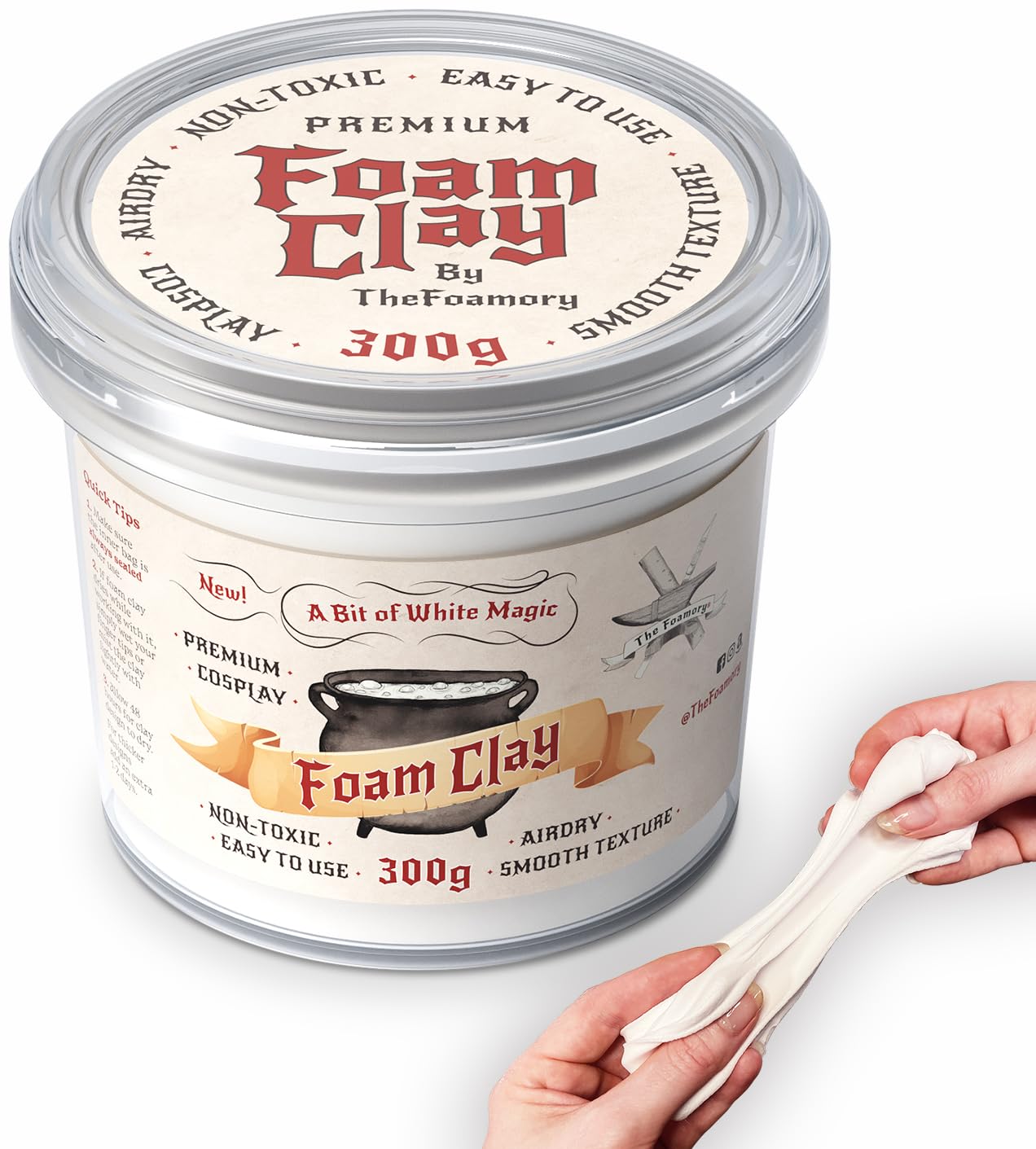
This high-density EVA foam clay bridges the gap between traditional sculpting and foam costuming. It adheres to EVA foam sheets while wet, then dries to a hard, sandable surface that accepts Dremel detailing, sandpaper, and heat shaping via a heat gun. The 300-gram block is enough for medium-sized props like bracers, shoulder armor, or decorative mask elements.
Unlike paper or polymer clays, this material remains extremely lightweight after curing — critical for wearable pieces that shouldn’t weigh down the wearer. Users report that it sands beautifully and paints easily without priming. The included instructional PDF guide helps beginners navigate common techniques like layering and texture stamping.
For cosplayers who need to add raised details, fill gaps, or create organic textures on a foam base, this is the most specialized tool in the lineup. Just be cautious with heat guns: one user noted bubbling if the temperature is too high. Also, thin layers can tear during application, so build up in thicker passes.
Why it’s great
- Adheres to EVA foam without glue
- Sands and Dremels like a dream
- Extremely light when cured
Good to know
- Heat gun can cause bubbling
- Thin layers may tear during molding
4. AMACO Air Dry Modeling Clay

When you need bulk for large projects — think sculptural bowls, figurines, or pinch pots — AMACO’s 10-pound block offers the lowest cost per ounce of any option here. This is a traditional natural clay with a gray color that fires to a stone-like hardness. It requires a bit of initial kneading to soften, but once workable, it holds detail well and dries without excessive cracking if wrapped and turned periodically.
Reviews note that it’s softer than Crayola’s air-dry clay and less prone to cracking on thicker sections. The earthy, grassy smell is natural and non-toxic. For best results, many users seal finished pieces with shellac to add strength and water resistance. Drying takes 24-48 hours depending on thickness, and slow, even drying on all sides is recommended to minimize shrinkage-related cracks.
This is not the clay for fine jewelry or delicate flowers — its weight and density make it better suited for sturdy, grounded projects. If you’re teaching a class, building large forms, or just want maximum material for your budget, the AMACO block delivers unmatched volume.
Why it’s great
- Massive 10-pound block for budget-conscious projects
- Less prone to cracking than other natural clays
- Softens easily with water for extended working time
Good to know
- Heavy when dry — not for wearables
- Requires sealant for water resistance
5. Scentco Air Dough

Scentco’s Air Dough is engineered for children ages 3 and up, with an ultra-light, mess-free formula that won’t stick to fabric or carpet. The resealable bag contains 1200ml of white clay, enough for multiple play sessions. It dries overnight to a lightweight, durable finish that holds up to gentle handling — it can even survive a short drop without cracking.
The texture is distinct from traditional play-dough: fluffier, less sticky, and odorless (despite the brand name, there is no added scent). Tutorial videos are available on the manufacturer’s website, which helps parents and teachers get started. One reviewer noted that some units arrived dried out, but Amazon’s return policy covers this issue.
For classrooms and home crafting with young kids, this is the safest, cleanest option. The low mess factor and fast drying time eliminate the frustration of waiting days for paint and clear coat. Just be aware that the clay can be torn apart after drying if handled roughly, so it’s best for decorative pieces rather than functional toys.
Why it’s great
- Resealable bag keeps clay fresh for weeks
- Dries lightweight and durable overnight
- Non-toxic, gluten-free, and no mess cleanup
Good to know
- Some units arrive dried out
- Cured pieces can be torn by force
FAQ
Can you put air-dry clay in the oven to speed up drying?
Why does my air-dry clay crack while drying?
Final Thoughts: The Verdict
For most users, the best air-dry clay winner is the Activa Hearty Soft Clay because it strikes the perfect balance between fine-detail workability, flexible durability after curing, and non-toxic formulation. If you want sandable, drillable material that resists cracking, grab the Creative Paperclay. And for cosplayers building lightweight armor that holds sharp detail, nothing beats the The Foamory Foam Clay.

Mo Maruf
I created WellFizz to bridge the gap between vague wellness advice and actionable solutions. My mission is simple: to decode the research and give you practical tools you can actually use.
Beyond the data, I am a passionate traveler. I believe that stepping away from the screen to explore new environments is essential for mental clarity and physical vitality.