Our readers keep the lights on and my smoothie glass nicely filled. As an Amazon Associate, I earn from qualifying purchases.
The promise of AI glasses is finally real: a wearable that captures your point of view, translates foreign languages in real time, streams your favorite playlist through open-ear speakers, and answers questions with a simple voice command. The challenge is cutting through the noise of specs—field of view, battery life, native 3DoF versus software-driven tracking—to find the pair that actually fits your daily workflow, not just a marketing slide.
I’m Mohammad Maruf — the founder and writer behind WellFizz. My research focus is on wearable tech, specifically how the latest X1 spatial computing chips and waveguide optics translate into real-world usability, from commute comfort to content creation stamina.
After analyzing the top nine contenders on the market, the best ai glasses blend durable hardware design with a software ecosystem that keeps your data private and your hands completely free.
How To Choose The Best AI Glasses
Not all AI glasses are built the same. The market splits into two distinct camps: *recording-first* models (like the Ray-Ban Meta line) that prioritize hands-free photo/video and AI voice assistance, and *display-first* AR glasses (like XREAL and VITURE) that project a virtual monitor or theater screen in front of your eyes. Knowing which camp solves your specific pain point is the first step toward making the right purchase.
Native Tracking vs. Software-Dependent Tracking
The most common source of buyer disappointment is motion sickness. Glasses that rely on your phone’s processor for 3DoF (three degrees of freedom) head tracking frequently suffer from latency jitter and drift, which causes visual disorientation. Models featuring a dedicated spatial computing chip—like the X1 chip in XREAL glasses—deliver sub-5ms motion-to-photon latency, keeping the virtual screen locked to your environment even during rapid head movements. If you plan to use the virtual screen for more than 30 minutes at a time, native tracking is non-negotiable.
Battery Life: Rated vs. Real-World
Manufacturer battery claims are always optimistic, measured under ideal lab conditions with moderate mixed use. For recording AI glasses, the real metric is how long you can shoot video continuously (usually capped at 3-5 minutes per clip to avoid overheating) and what the charging case can replenish. For display AR glasses, the glasses themselves are typically powered by the connected device via USB-C, so battery concerns shift to your phone or laptop. Look for a charging case that offers at least two full recharges on the go if you intend to wear them all day.
Audio Architecture: Open-Ear vs. Immersive Sound
Open-ear speakers (found on Ray-Ban Meta and Oakley Meta) let you hear ambient sound for safety, but they leak audio at higher volumes and offer little bass response. Closed speaker chambers tuned by specialist audio engineers—like Bose on XREAL or Bang & Olufsen on RayNeo—produce richer, fuller sound with better privacy, but they can isolate you from your surroundings. Your choice depends on whether you need to stay aware of traffic, colleagues, or family while listening.
Lens Type and Prescription Compatibility
Photochromic lenses automatically darken outdoors and clear indoors, saving you from swapping frames, but their UV protection and transition speed vary significantly. Most AI glasses now offer prescription lens inserts or built-in myopia adjustment (diopter ranges from -1.0 to -4.0). If you require astigmatism correction, the built-in diopter might not be enough, and you will need custom prescription inserts from a third-party lab. Always check the IPD (interpupillary distance) range to ensure the optical alignment matches your face.
Quick Comparison
On smaller screens, swipe sideways to see the full table.
| Model | Category | Best For | Key Spec | Amazon |
|---|---|---|---|---|
| XREAL One Pro | Premium AR Display | Immersive gaming & virtual monitor | 57° FOV, Native 3DoF, 120Hz | Amazon |
| Meta Ray-Ban (Gen 2) Wayfarer | Recording AI | Hands-free content creation | 3K UHD capture, 8hr battery | Amazon |
| XREAL 1S | Premium AR Display | Plug-and-play spatial screen | Native 3DoF, 120Hz, Bose audio | Amazon |
| VITURE Luma Pro | Premium AR Display | Sharpest display & myopia adjustment | 1200p, 52° FOV, Harman audio | Amazon |
| Meta Oakley Vanguard | Recording AI | Outdoor sports & activity sharing | Prizm™ lenses, Garmin integration | Amazon |
| Meta Ray-Ban (Gen 2) Skyler | Recording AI | Everyday hands-free capture | 12MP ultra-wide, 8hr battery | Amazon |
| RayNeo Air 4 Pro | AR Display | HDR10 movie & gaming | 201″ virtual display, 120Hz | Amazon |
| EarlySincere 4K AI Smart Glasses | Recording AI | Budget-friendly all-rounder | 4K EIS video, 410mAh battery | Amazon |
| Ray-Ban Meta (Gen 1) Skyler | Recording AI | Entry-level AI assistant | 12MP camera, open-ear audio | Amazon |
In‑Depth Reviews
1. XREAL One Pro AR Glasses

The XREAL One Pro sits at the pinnacle of consumer AR display glasses, featuring the company’s self-developed X1 spatial computing chip that delivers native 3DoF tracking with a 3ms motion-to-photon latency. This eliminates the nausea-inducing drift that plagues software-based solutions, making it suitable for extended movie sessions on a 171-inch virtual screen. The 57-degree field of view is the widest among the premium tier, and the Sony Micro-OLED panels refresh at a smooth 120Hz for gaming.
Bose-tuned open-ear speakers provide surprisingly clear mids and highs, though bass response remains limited by the form factor. The dual IPD design (M: 57-66mm, L: 66-75mm) covers over 95% of users, and the electrochromic dimming lets you block ambient light without carrying a separate shade. The glasses lack built-in myopia adjustment, but XREAL offers a straightforward prescription lens insert solution via third-party labs.
Battery life is not a concern here because the One Pro draws power from the connected USB-C DP device. The main trade-off is the price point, which is the highest in this roundup. For users who demand the sharpest virtual monitor with rock-steady spatial anchoring for productivity and gaming, this is the definitive choice. The optional XREAL Eye accessory unlocks 6DoF spatial capture, though that adds cost and complexity.
Why it’s great
- Widest 57° FOV with native 3DoF that stays locked in space without drift.
- Exceptional 3ms M2P latency eliminates motion sickness during extended use.
- Comfortable dual IPD sizing with three-stage adjustable arms and zero-pressure nose pads.
Good to know
- No built-in myopia adjustment; requires prescription lens inserts for vision correction.
- Highest price tier; the XREAL Eye accessory for 6DoF is sold separately.
- Plastic frame can feel warm during long sessions; not designed for active sports.
2. Meta Ray-Ban Wayfarer (Gen 2)
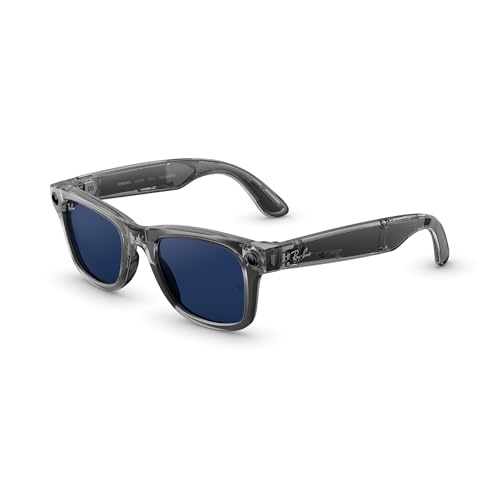
The second-generation Ray-Ban Meta Wayfarer refines the original formula with double the battery life—up to 8 hours of moderate use—and upgraded 3K Ultra HD video capture from the same 12 MP ultra-wide camera. The iconic Wayfarer silhouette now hides a five-mic array that blocks 90% of wind and street noise during calls, making it a genuine hands-free communication device. The Shiny Transparent Grey frame with Sapphire Transitions lenses automatically darkens outdoors, effectively doubling as sunglasses.
Open-ear speakers deliver adequate audio for podcasts and calls, though music lacks low-end punch at higher volumes. Meta AI integration allows real-time translation between seven languages, and the voice commands (“Hey Meta, what am I looking at?”) work reliably for identifying landmarks, plants, and products. The charging case provides up to 48 hours of backup power, and the physical tap and swipe gestures on the temples are more responsive than the previous generation.
Critically, the recording is limited to 1080p for image stabilization (3K mode lacks EIS), and the maximum clip length is 5 minutes per take. The frame is heavier than standard Ray-Bans at roughly 53 grams, which can cause pressure on the nose bridge after two hours of continuous wear. Privacy remains a concern—the front-facing LED blinks red during recording, but some users find it distracting rather than reassuring.
Why it’s great
- 8-hour battery life with a case that delivers 48 hours of total charge.
- Iconic Wayfarer style with automatic photochromic Transitions lenses.
- Excellent noise cancellation for calls and real-time multilingual translation.
Good to know
- Video capped at 5 minutes per clip; 3K mode disables image stabilization.
- Heavier than standard sunglasses; can feel front-heavy after prolonged wear.
- Requires Meta app permissions; no offline or standalone privacy mode available.
3. XREAL 1S AR/XR Glasses
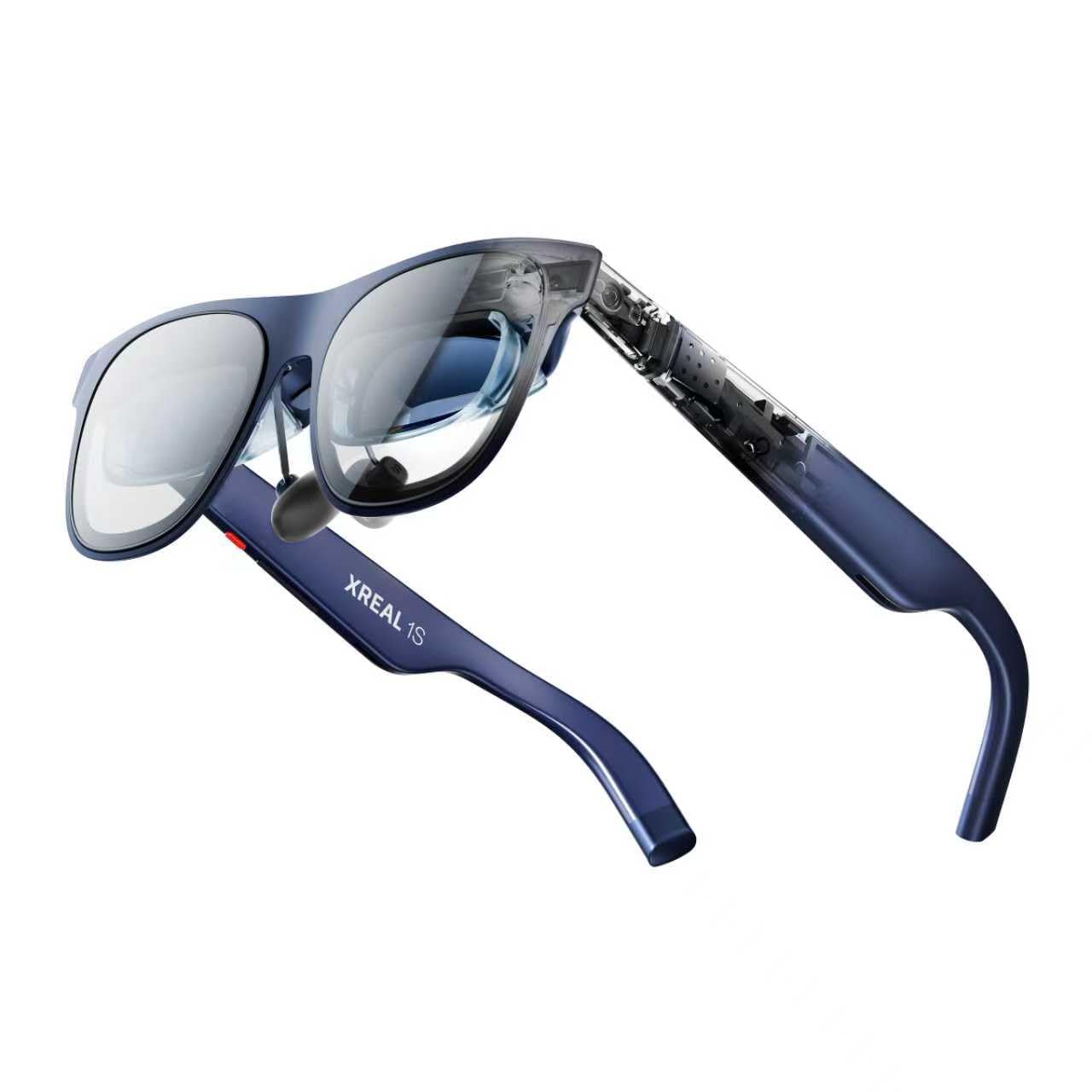
The XREAL 1S delivers a compelling mid-premium option with a native 3DoF screen powered by the first-generation X1 chip, offering the same rock-steady spatial tracking as the One Pro but at a lower price. The 52-degree field of view produces a virtual screen that feels like a 500-inch theater from about ten meters away. The REAL 3D mode instantly converts any 2D content—games, movies, photos—into stereoscopic depth with a single switch, though frame rate drops to 30fps and latency increases slightly.
Bose co-developed audio delivers a spacious soundstage with better vocal clarity than most competitors, and the open-ear design keeps you aware of your environment. The XREAL 1S also offers spatial viewing modes (0DoF follow, 3DoF anchor, Ultrawide 32:9) accessible directly from the glasses without requiring a phone app. The 120Hz refresh rate in 3DoF mode ensures smooth scrolling and gaming, and the TÜV Rheinland certification for low blue light and flicker-free operation makes it suitable for long work sessions.
Build quality is solid with a metal frame and cobalt blue finish, but the glasses lack a built-in diopter adjustment—users with prescriptions stronger than -1.00 will likely need contacts or custom inserts. The field of view, while impressive, still leaves black borders visible at the edges for some users, and the “500-inch” claim is based on a 10-meter projection distance that feels less grand in a small room. For a premium experience without the top-tier price, this is the smartest buy.
Why it’s great
- Native 3DoF with the X1 chip provides stable spatial anchoring for hours without nausea.
- REAL 3D mode transforms any content into stereoscopic depth for immersive viewing.
- TÜV Rheinland eye comfort certification with low blue light and flicker-free display.
Good to know
- No built-in myopia adjustment; requires contacts or third-party prescription inserts.
- Virtual screen edges may appear slightly blurry; 1080p resolution shows limits on text.
- USB-C DP Alt Mode required; does not support HDMI without a powered adapter.
4. VITURE Luma Pro XR Glasses
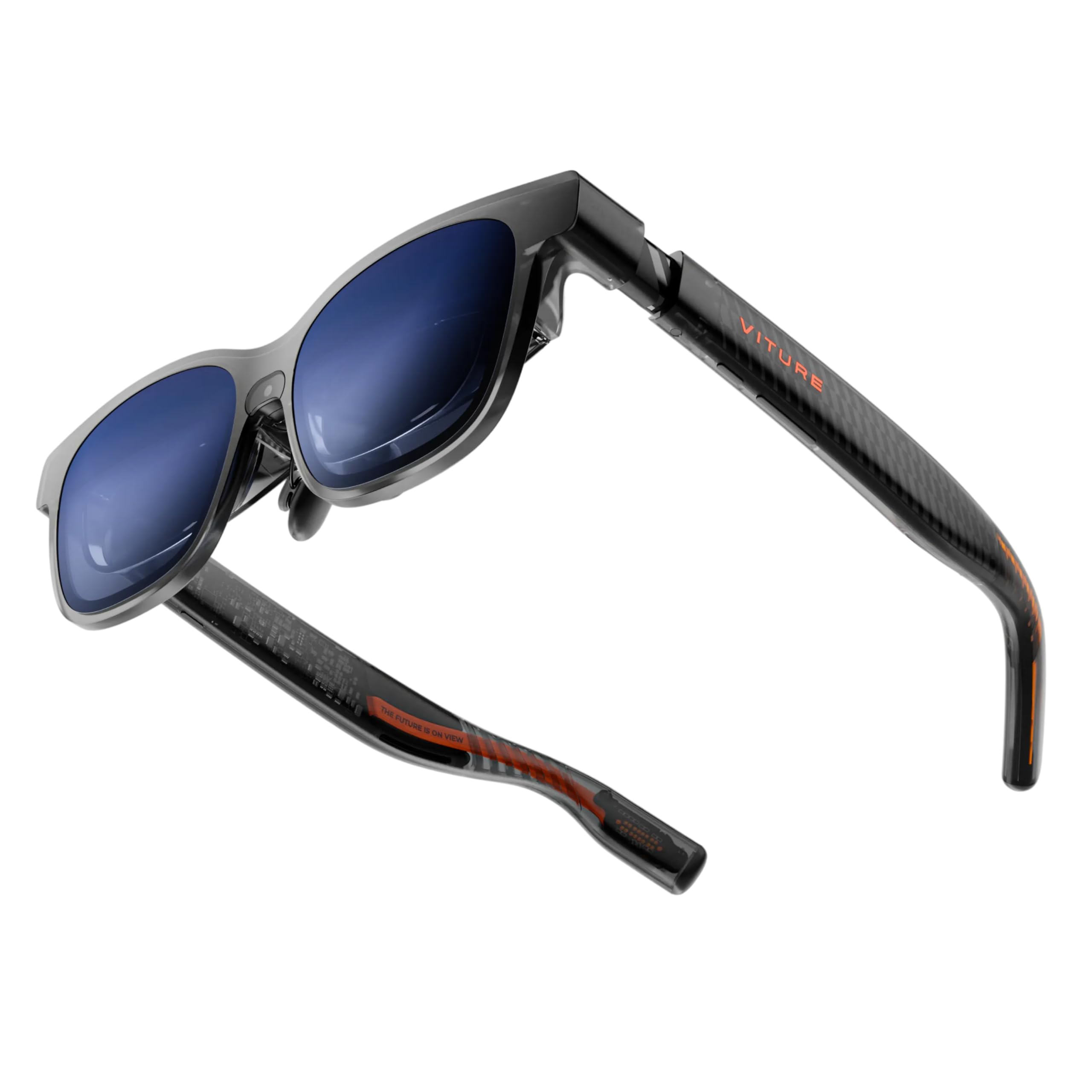
The VITURE Luma Pro boasts a 1200p per-eye resolution that makes text noticeably sharper than competing 1080p AR glasses, paired with a 52-degree field of view and 1000 nits peak brightness. The built-in myopia adjustment (-1.0 to -4.0 diopters) eliminates the need for prescription inserts for many users, a significant convenience. The electrochromic film darkens the lenses with a single tap to block ambient light, and the Harman-tuned speakers deliver fuller bass than most open-ear designs.
Gamers will appreciate the 120Hz refresh rate and the SpaceWalker software ecosystem, which enables multi-screen productivity modes with up to three virtual monitors. The world’s first real-time 2D-to-3D conversion works reliably for streaming and basic games, though the effect is less precise than native stereoscopic content. The glasses are physically larger than the XREAL options, with flexible arms and a magnetic nose pad that accommodates different face shapes.
The connector uses a magnetic attachment that can disconnect during sudden head movements, a known reliability concern. There is no native head tracking—the glasses rely on the SpaceWalker app or the optional Neckband for 3DoF, which introduces a slight latency jitter that some users find nauseating. Brightness at the minimum setting is still quite high for dark room use, and the virtual screen size cannot be manually adjusted. For clarity and color accuracy in a static setup, this is a top contender, but active motion scenarios reveal its limitations.
Why it’s great
- Sharpest 1200p display with excellent color accuracy (DeltaE < 2) and 1000 nits brightness.
- Built-in -4.0D myopia adjustment removes the need for expensive prescription inserts.
- Harman audio delivers fuller bass and a richer soundstage than most competitors.
Good to know
- Magnetic charging/data connector can detach easily; third-party clamps may be needed.
- No native 3DoF tracking—relies on app or Neckband, causing occasional jitter and drift.
- Not suitable for astigmatism correction; minimum brightness too high for dark environments.
5. Meta Oakley Vanguard
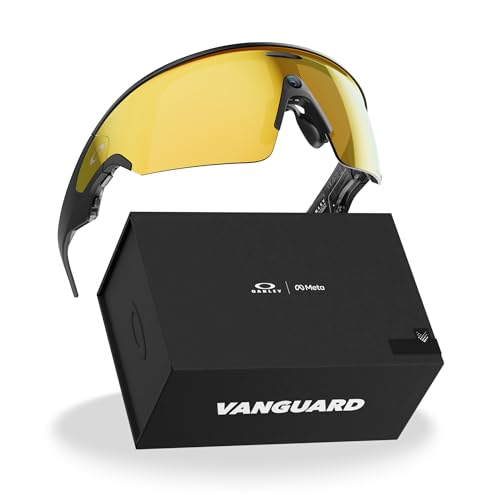
Part of the Meta AI glasses family, the Oakley Vanguard trades the classic Wayfarer silhouette for a sportier, wrap-around rectangular frame designed for active users. The Prizm™ 24K Gold lenses enhance contrast in outdoor environments, and the glasses are optimized for sports use with integrated Garmin and Strava activity sharing—you can overlay performance metrics directly onto your video captures. The 12 MP camera records in 3K Ultra HD, and the five-mic system blocks wind noise effectively during cycling or running.
Battery life matches the Gen 2 Ray-Ban Meta at up to 8 hours with moderate use, and the charging case provides the same 48-hour total backup. The open-ear audio is sufficient for call clarity but struggles with bass-heavy music outdoors. The frame is slightly heavier than the Ray-Ban version at 65 grams, and the wrap-around design can feel tight on wider faces after a couple of hours.
The lens selection includes Prizm Polarized, Clear, and Transitions options, making it versatile for indoor and outdoor wear. The privacy LED indicator remains a point of contention—it flashes when recording, which is protective but draws attention. Content creation features like hyperlapse work well, and the hands-free “Hey Meta” commands are responsive for capturing shots while your hands are occupied with equipment.
Why it’s great
- Prizm™ lenses enhance outdoor contrast and visual clarity for sports and activities.
- Direct Garmin and Strava integration lets you overlay metrics on hands-free video.
- Robust wind noise cancellation for clear calls and commands during active movement.
Good to know
- Heavier frame at 65 grams; tight fit on wider head shapes after extended wear.
- Open-ear audio leaks at higher volumes; not ideal for private listening in quiet settings.
- Requires full Meta app permissions with no offline mode for privacy-conscious users.
6. Meta Ray-Ban (Gen 2) Skyler
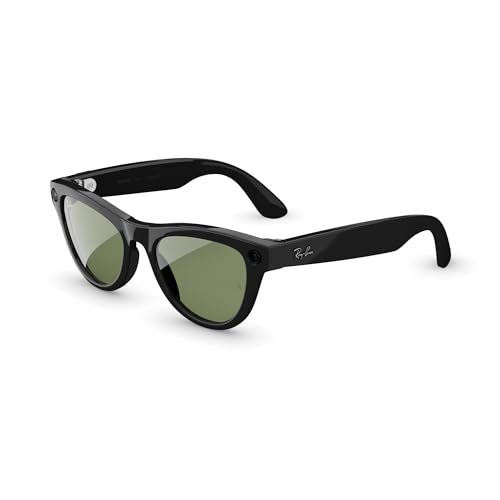
The second-generation Ray-Ban Meta in the Skyler frame is essentially the same hardware as the Wayfarer Gen 2 but in a slimmer, cat-eye silhouette that better fits smaller faces. The core specs are identical: 3K Ultra HD 12 MP recording, 8-hour battery life, 48-hour charging case, and the five-mic noise cancellation system that blocks 90% of wind and street noise. The Meta AI integration delivers real-time translation across seven languages and contextual answers via the “Hey Meta” assistant.
The open-ear speakers produce clear vocal tones for calls and navigation commands, though they lack the bass depth for music enjoyment at full volume. The lenses are green-tinted sunglasses, not photochromic, so you will need to swap frames if you want a clear lens option for indoor use. The frame weight is slightly reduced compared to the Wayfarer at around 48 grams, which improves comfort for all-day wear.
Recording limitations apply equally here: clips max out at 5 minutes, and 3K mode disables image stabilization, forcing you to choose between resolution and smoothness. The touchpad on the temple is sensitive and can be triggered accidentally when adjusting the glasses. For the price, this is the best entry point into the Meta AI ecosystem for users who prefer a lighter, less bulky frame.
Why it’s great
- Same hardware as the premium Wayfarer but in a lighter, more comfortable frame.
- 8-hour battery life with a case that provides 48 hours of total charging capacity.
- Excellent noise-cancelling microphones for crystal-clear hands-free calls.
Good to know
- Non-photochromic green lenses require separate frames for indoor use.
- Touchpad can be overly sensitive, triggering accidental captures or volume changes.
- Video limited to 5-minute clips; 3K mode disables electronic image stabilization.
7. RayNeo Air 4 Pro
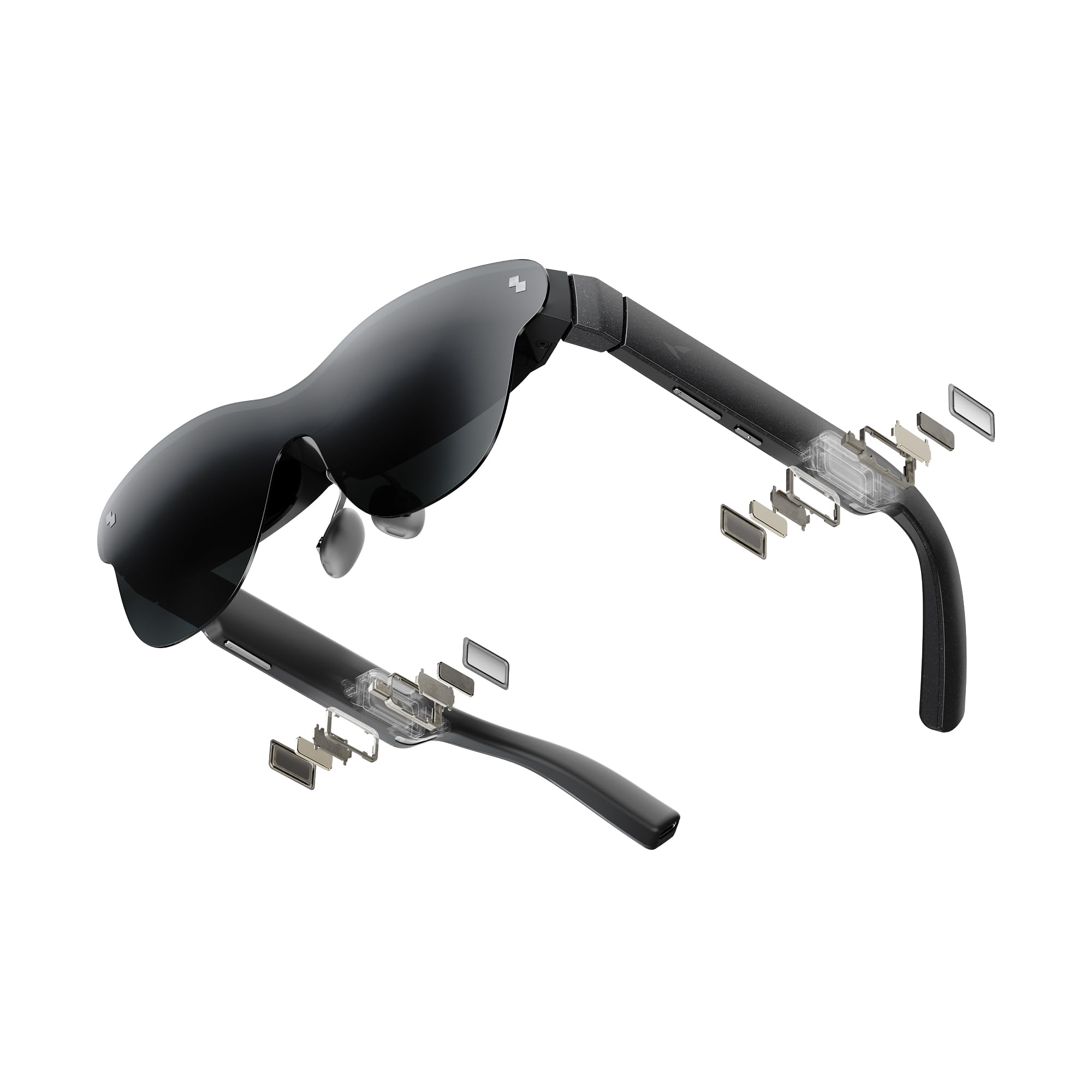
The RayNeo Air 4 Pro is the only AR display glass on this list to support native HDR10, rendering over 10 billion colors with deeper blacks and brighter highlights. The Vision 4000 chip, co-developed with Pixelworks, provides real-time AI SDR-to-HDR upscaling, improving contrast and sharpness on standard dynamic range content. The 201-inch virtual screen with a 120Hz refresh rate makes this the best option for streaming Netflix and playing console games on the go.
Bang & Olufsen integrated four precision speakers for 360-degree spatial sound, and the optional Sound Tube accessory (sold separately) directs audio into your ear canal for more private listening. The glasses weigh only 76 grams, making them the lightest full-featured AR display pair in this roundup. The 9-way fit adjustment with adjustable temples and interchangeable nose pads helps align the optics correctly for different face shapes, reducing edge blur significantly.
The biggest compromise is the lack of native spatial tracking—the Air 4 Pro offers 0DoF follow mode exclusively, meaning the virtual screen always stays centered on your gaze rather than anchored to a fixed point in space. This limits productivity use cases like text editing or spreadsheet work. The display resolution maxes out at 1080p, which is standard for this price tier, and there is no built-in myopia adjustment. For passive media consumption, this delivers the best bang for your buck among display glasses.
Why it’s great
- World’s first HDR10 AR display for vivid colors and high dynamic range in movies.
- Ultra-lightweight 76g frame with 9-way fit adjustment for edge-to-edge clarity.
- Bang & Olufsen audio with optional Sound Tube for private, immersive listening.
Good to know
- No spatial tracking—screen follows your gaze in 0DoF only, no anchored mode.
- 1080p resolution shows its limits for text-heavy productivity tasks.
- No built-in myopia adjustment; requires custom prescription lenses.
8. EarlySincere 4K AI Smart Glasses
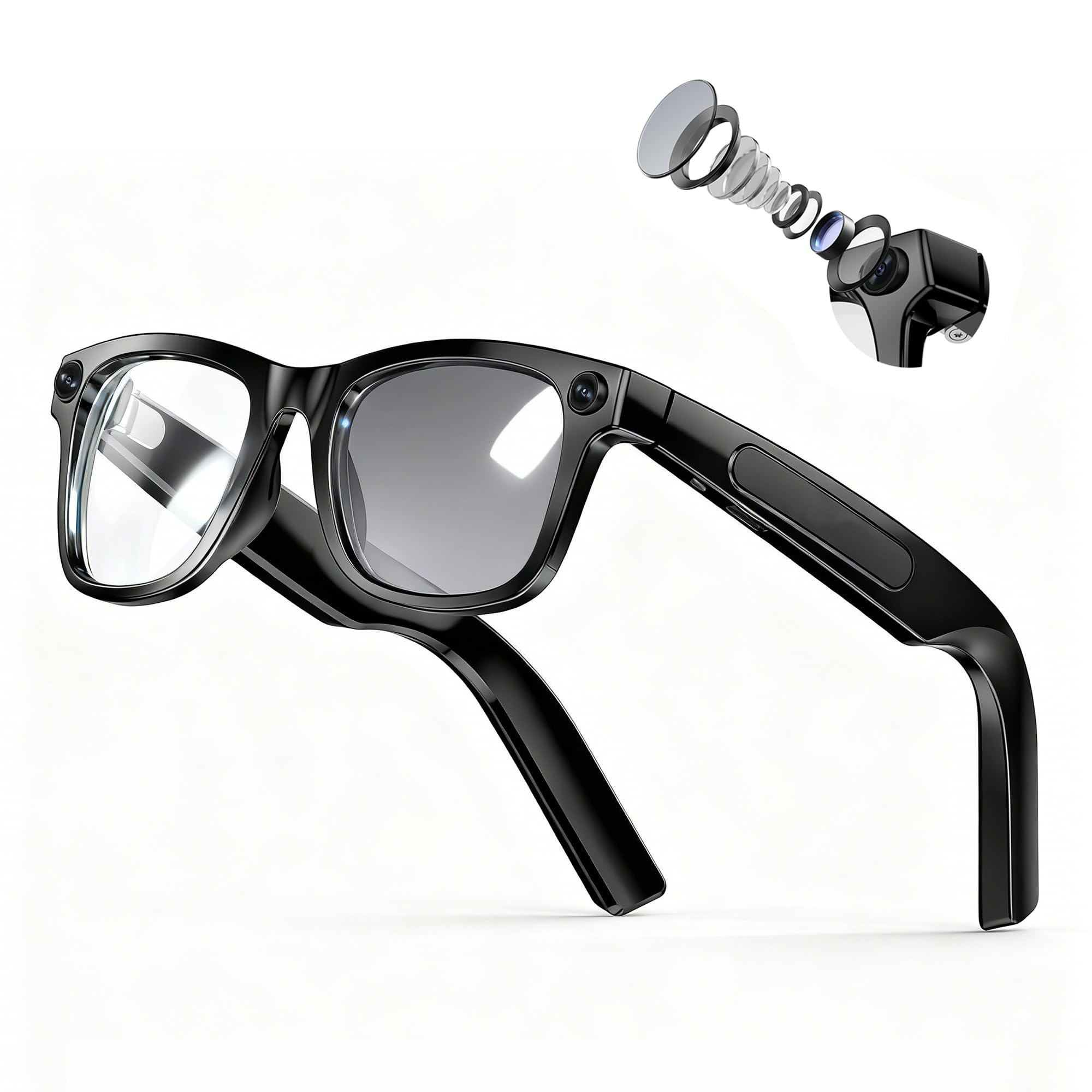
The EarlySincere 4K AI Smart Glasses pack an impressive feature set at the lower end of the price spectrum. The 8-megapixel camera captures 4K video with electronic image stabilization (EIS), which smoothens footage for first-person POV clips. The built-in ChatGPT-powered AI voice assistant offers real-time translation and photo analysis, functioning as a standalone smart assistant. The 410mAh battery provides up to 15 hours of continuous music playback or call time, with a standby life rated at 10 days.
The photochromic lenses automatically darken in strong sunlight, blocking 100% of UV rays (UV400), and clear up indoors, making this a true indoor/outdoor wearable. The TR90 frame material is flexible and durable, and the powder-metallurgical stainless steel hinges are tested for 10,000 folds. The aluminum alloy heat dissipation channels in the temples prevent overheating during extended recording, a thoughtful engineering touch at this price point.
The main caveat is the AI assistant’s reliability—multiple user reports indicate slow voice command response times and occasional inaccuracies, particularly when requesting local information like time or weather. The setup process can be finicky, and some users report the default time zone defaults to Beijing time instead of local time. The build quality is solid, but the software experience lags behind the Meta ecosystem significantly. For basic hands-free recording and music with AI assistance, it offers fantastic value, but power users should set their expectations accordingly.
Why it’s great
- 4K video recording with EIS for smooth hands-free POV footage at a low price.
- Photochromic UV400 lenses automatically adapt to indoor and outdoor lighting.
- Excellent battery life: 15 hours of playback and 10 days of standby.
Good to know
- AI assistant can be slow and inaccurate; setup may require multiple attempts.
- Voice commands sometimes misinterpret time zones and local data.
- Software ecosystem is far less mature than Ray-Ban Meta or XREAL offerings.
9. Ray-Ban Meta (Gen 1) Skyler
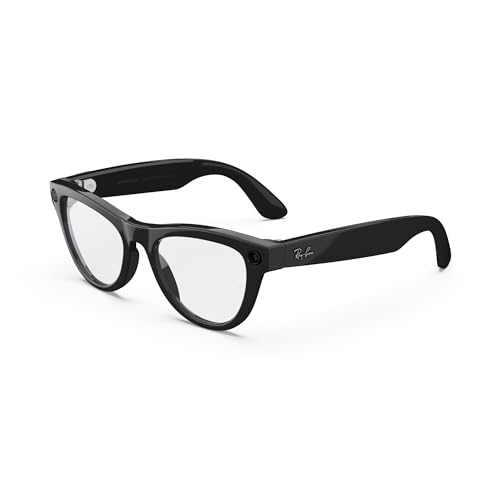
The first-generation Ray-Ban Meta Skyler is the most accessible entry point into the Meta AI ecosystem. It features the same 12 MP ultra-wide camera and five-mic array as the Gen 2, but with a shorter battery life of approximately 4 hours of moderate use and a smaller charging case. The open-ear speakers remain clear for podcasts and calls, and the Meta AI assistant is fully functional for real-time translation and contextual queries.
The Skyler frame is lighter than the Wayfarer model and sits more securely on smaller faces, making it a good option for extended wear. The clear lenses can be swapped with prescription lenses from any optician, and the frame style is minimalist enough to pass as a normal pair of glasses. The camera quality for still photos is solid in good lighting, though low-light performance is grainy, and the video stabilizer works best at 1080p.
The most significant limitation is the battery—at half the capacity of Gen 2, you will need to use the charging case frequently during a full day of use. The AI features are identical to the newer model, so you are not missing out on software improvements. For the budget-conscious buyer who wants to test the waters of AI glasses without a heavy investment, this is the logical starting point. Just be prepared for the shorter battery runtime.
Why it’s great
- Lowest entry price for the full Meta AI assistant and real-time translation experience.
- Lighter frame design that fits smaller faces comfortably for all-day wear.
- 12 MP camera captures good quality stills in daylight with simple voice commands.
Good to know
- Battery life is about half of Gen 2; requires frequent charging case top-ups.
- Video recording is limited to 1080p with stabilization; 4K mode is not available.
- Clear lenses only; does not include photochromic or tinted options in the standard package.
FAQ
What is the typical recording time limit for AI glasses?
Can I use AI glasses for prescription eyesight?
What is the difference between native 3DoF and software 3DoF tracking?
Final Thoughts: The Verdict
For most users, the best ai glasses winner is the XREAL One Pro because it combines the widest 57° FOV with native 3DoF tracking that prevents motion sickness, Bose audio quality, and a virtual screen that stays locked in space. If you want hands-free content creation and real-time translation, grab the Meta Ray-Ban Wayfarer (Gen 2). And for the best balance of display sharpness and built-in myopia adjustment, nothing beats the VITURE Luma Pro.

Mo Maruf
I created WellFizz to bridge the gap between vague wellness advice and actionable solutions. My mission is simple: to decode the research and give you practical tools you can actually use.
Beyond the data, I am a passionate traveler. I believe that stepping away from the screen to explore new environments is essential for mental clarity and physical vitality.