Our readers keep the lights on and my smoothie glass nicely filled. As an Amazon Associate, I earn from qualifying purchases.
Recording vocals at home comes with one persistent enemy: background noise. A fridge hum, a computer fan, or room echo can ruin an otherwise strong take. The choice between a dynamic microphone that ignores the room and a condenser that catches every detail defines whether your recordings sound professional or amateur. Getting that decision right for your space and voice is the single most important step in building a vocal recording setup.
I’m Mohammad Maruf — the founder and writer behind WellFizz. I’ve spent years tracking market data, analyzing real customer feedback, and comparing technical specifications across hundreds of vocal microphones to identify the models that deliver studio-quality results without breaking a budget.
Whether you need a dynamic mic that rejects background noise for a less-than-perfect room or a condenser that captures every nuance of your voice in a treated space, the affordable microphone for recording vocals you choose will define your entire recording experience.
How To Choose The Best Affordable Microphone For Recording Vocals
Choosing the right microphone for recording vocals comes down to three interconnected factors: your recording environment, the type of mic that suits that environment, and how that mic connects to your computer or recorder. Beginners often buy a condenser microphone for an untreated room, then wonder why every recording picks up the dog barking two rooms away. Understanding these trade-offs saves you time, money, and frustration.
Dynamic vs. Condenser: The Room Noise Decision
Dynamic microphones, like the Zoom ZDM-1 or PreSonus PD-70, are naturally less sensitive than condensers. They require more gain from your audio interface, but they reject ambient noise aggressively. If you record in a living room, bedroom, or any space without acoustic treatment, a dynamic mic is your best path to clean recordings. Condenser microphones, like the Audio-Technica AT2020 or Lewitt LCT 240 Pro, pick up far more detail — including room reflections, computer fan hum, and traffic noise. They excel in treated spaces where you want the full texture of your voice captured.
Polar Patterns: Cardioid, Supercardioid, and Isolation
A cardioid polar pattern captures sound primarily from the front of the microphone and rejects sound from the sides and rear. This is the standard for vocal recording because it isolates your voice while ignoring your computer, air conditioner, or room reflections. Supercardioid patterns, found on the Zoom ZDM-1, offer even tighter pickup, which can help in noisier environments but requires you to stay more precisely on-axis.
Connectivity: USB vs. XLR
USB microphones like the Blue Yeti and Sennheiser Profile include a built-in audio interface, so you plug directly into your computer and record. This is the simplest, most affordable path. XLR microphones require a separate audio interface to provide phantom power (for condensers) and clean gain. XLR setups offer better upgrade paths and sound quality potential, but the upfront investment is higher.
Quick Comparison
On smaller screens, swipe sideways to see the full table.
| Model | Category | Best For | Key Spec | Amazon |
|---|---|---|---|---|
| PreSonus PD-70 | Dynamic XLR | Broadcast-style podcast vocals | 350 Ohm impedance, cardioid | Amazon |
| Audio-Technica AT2020 | Condenser XLR | Treated home studio vocals | 20 Hz – 20 kHz frequency response | Amazon |
| Lewitt LCT 240 Pro | Condenser XLR | Detailed vocal tracking on a budget | Low self-noise, 20 dB(A) | Amazon |
| Logitech Blue Yeti | Condenser USB | Plug-and-play podcasting/streaming | Four pickup patterns, USB | Amazon |
| Zoom ZDM-1 | Dynamic XLR | Noisy rooms with untreated acoustics | Supercardioid pattern, metal body | Amazon |
| Sennheiser Profile | Condenser USB | Simple studio-grade vocal capture | USB-C, zero-latency monitoring | Amazon |
| Sennheiser e 935 | Dynamic XLR | Live stage and loud band vocals | Neodymium magnet, cardioid | Amazon |
In‑Depth Reviews
1. PreSonus PD-70

The PreSonus PD-70 is a broadcast-style dynamic microphone that delivers shockingly professional sound quality at a mid-range price point. Build quality is exceptional — the all-metal body feels tank-like, weighing in with a heft that signals durability. Its tailored frequency response is voiced specifically for spoken word, providing clarity and presence that reviewers consistently compared to microphones costing four times as much.
Customer reviews highlight that the PD-70 sounds nearly identical to the Shure SM7B with its presence boost switches engaged, after minimal EQ adjustment. The cardioid polar pattern effectively rejects off-axis sound, making it a strong choice for untreated rooms. The included windscreen reduces plosives adequately for most applications, though some users prefer an external pop filter for aggressive vocalists. One common note is that the mic is heavy enough to cause fatigue during extended handheld use, but on a boom arm this is a non-issue.
Where the PD-70 truly shines is in its value-to-performance ratio. It requires an XLR interface with at least 60 dB of clean gain to reach proper recording levels, but once set up, it produces broadcast-ready audio with minimal post-processing. For podcasters, streamers, or vocalists recording in less-than-perfect rooms, this microphone represents the best balance of cost and professional-grade sound.
Why it’s great
- Build quality rivals mics at three times the price
- Sound profile closely matches the industry-standard Shure SM7B
- Excellent off-axis rejection for untreated rooms
Good to know
- Requires a high-gain audio interface for proper levels
- Heavy body can cause fatigue without a boom arm
2. Audio-Technica AT2020

The Audio-Technica AT2020 has earned its reputation as the price/performance benchmark in entry-level studio condenser microphones. Its custom-engineered low-mass diaphragm delivers extended frequency response up to 20 kHz and superior transient response, capturing vocal nuances that dynamic microphones simply miss. The cardioid polar pattern reduces pickup from the sides and rear, though this is a condenser, so it will still capture room reflections more readily than a dynamic mic.
Customer reviews spanning a decade consistently praise its durability and consistent sound quality. One reviewer noted using the same AT2020 for ten years with no degradation in performance. The microphone requires 48V phantom power from an audio interface, and its sensitivity means that a pop filter is strongly recommended to handle plosives and sibilants. The self-noise rating of 20 dB(A) is respectable for this price tier, though not as low as pricier condensers.
For vocalists recording in a treated or quiet home studio, the AT2020 offers unmatched detail for its price. It captures the full texture of the voice — breath, resonance, and articulation — giving recordings a professional quality that stands up in mixes alongside far more expensive microphones. The trade-off is sensitivity to ambient noise, so this is best paired with some basic acoustic treatment.
Why it’s great
- Industry-standard entry-level condenser with proven durability
- Extended high-frequency response captures vocal detail
- Wide dynamic range handles loud and soft sources well
Good to know
- Requires 48V phantom power from an audio interface
- Picks up room noise and reflections much more than dynamic mics
3. Lewitt LCT 240 Pro

The Lewitt LCT 240 Pro punches well above its price class with an exceptionally low self-noise floor of 20 dB(A) and a high-performance condenser capsule that delivers clean, modern, and detailed recordings. A subtle boost in the upper frequencies adds air and presence to vocal tracks without sounding harsh, making it a favorite among home studio vocalists who want a polished sound with minimal post-production work.
Customer feedback consistently highlights how quiet this microphone is — one reviewer noted zero audible noise floor at normal recording levels, even when compared to a microphone costing twice as much. The stainless steel enclosure is both lightweight and sturdy, making it easy to position on a boom arm without sagging. The cardioid polar pattern provides adequate off-axis rejection for a condenser, though users in untreated rooms still report some ambient sound pickup.
Where the LCT 240 Pro distinguishes itself is in its ability to capture vocals with clarity and presence that feels more expensive than its price tag suggests. The proximity effect is reduced compared to many large-diaphragm condensers, which helps maintain consistent bass response even when the vocalist varies their distance from the mic. For singers and voice-over artists working in a semi-treated space, this is a compelling upgrade from basic entry-level condensers.
Why it’s great
- Extremely low self-noise floor for clean recordings
- Airy high-frequency boost adds vocal presence naturally
- Reduced proximity effect for consistent low-end response
Good to know
- Condenser design still captures room noise in untreated spaces
- Requires phantom power and XLR interface
4. Logitech Blue Yeti

The Blue Yeti is the most recognizable USB microphone on the market, and for good reason: its four-pickup-pattern design (cardioid, omnidirectional, bidirectional, stereo) makes it a Swiss Army knife for content creators who record more than just solo vocals. The custom three-capsule array delivers broadcast-quality sound that is a significant upgrade from any headset or laptop microphone, and the Blue VO!CE software adds effects and modulation for streaming applications.
Customer reviews confirm that the Yeti is easy to set up and produces clear, professional audio right out of the box. The onboard controls — headphone volume, pattern selection, mute, and mic gain — give you direct control without needing to open software. However, the Yeti is a condenser microphone, and reviewers note its sensitivity to plosives and room noise. Positioning the mic 3 to 6 inches away with gain set low yields the best results. The micro-USB connection feels dated compared to USB-C alternatives.
For vocalists who also need to record instruments, conduct interviews, or capture ambient room sound, the Yeti’s pattern flexibility is a genuine advantage. It is not the quietest or most detailed mic in this list, but its plug-and-play simplicity and versatility make it a strong choice for beginners who want one mic that does everything reasonably well. The heavy desktop stand provides stability, though the mic itself is dense and may not fit all boom arms without adapters.
Why it’s great
- Four pickup patterns for recording vocals, instruments, and interviews
- Onboard gain, mute, and headphone volume controls
- Plug-and-play USB setup with no interface needed
Good to know
- Condenser design picks up significant room noise and plosives
- Uses micro-USB instead of USB-C
5. Zoom ZDM-1

The Zoom ZDM-1 is a large-diaphragm dynamic microphone that excels in noisy environments thanks to its supercardioid polar pattern, which offers tighter off-axis rejection than standard cardioid mics. The all-metal body and grille are built to withstand daily use, and the internal shock mount provides some isolation from handling noise, though customer reviews universally recommend adding an external shock mount for desk bumps and vibration.
Customer feedback describes the ZDM-1 as having a darker, detailed sound that rivals the Rode PodMic and Shure MV7x at a fraction of the cost. The high SPL handling means it can accommodate loud vocalists without distortion, and the dynamic design naturally rejects ambient noise better than condensers. The included foam windscreen dampens highs slightly, which some users find beneficial for smoothing out sibilance, but it is not effective at stopping plosives — an external pop filter is advisable.
One limitation is that the ZDM-1 requires significant gain from your audio interface. Reviewers noted that it needs more preamp power than typical dynamic mics, so a budget interface with weak preamps may not drive it to adequate levels. The supercardioid pattern also means you must stay precisely on-axis, or the sound quality degrades noticeably. For vocalists recording in untreated, noisy rooms who are willing to pair this with a quality interface, the ZDM-1 offers exceptional value.
Why it’s great
- Supercardioid pattern provides superior room noise rejection
- Darker, detailed sound profile rivals premium dynamic mics
- High SPL handling for loud vocal sources
Good to know
- Requires high-gain preamps to reach proper recording level
- External shock mount strongly recommended for handling noise
6. Sennheiser Profile

The Sennheiser Profile brings German engineering to the USB microphone category with a cardioid condenser capsule housed in a metal chassis. Its defining feature is plug-and-play simplicity via USB-C, with zero-latency headphone monitoring and physical controls for gain, mix, and volume that do not require any software to function. Reviewers consistently highlight that this mic works across Windows, macOS, and Linux without drivers, and that its sound quality is superior to the vast majority of budget USB mics.
Customer reviews praise the natural, warm sound profile that accentuates the body and presence of the human voice. Unlike competitors that rely on software for processing, the Profile uses universal USB audio standards, meaning it will not become obsolete when software support ends. The compact table stand is adequate for desktop use, but reviewers recommend pairing with a boom arm to reduce ambient noise pickup from the desk surface and to allow optimal positioning closer to the mouth.
For vocalists who want professional-quality recordings without the complexity of an XLR interface, the Sennheiser Profile delivers exactly that. It does not offer multiple pickup patterns like the Yeti, but its single cardioid pattern is optimized specifically for solo vocal work. The sound is clean, balanced, and requires no EQ tweaking for most voices. If you want a USB mic that sounds like a studio condenser without any hassle, this is it.
Why it’s great
- Plug-and-play USB-C with zero-latency monitoring
- Warm, natural vocal sound without software processing
- Sturdy metal build with consistent German engineering
Good to know
- Single cardioid pattern only — no multi-pattern versatility
- Table stand captures ambient noise; a boom arm improves results
7. Sennheiser e 935
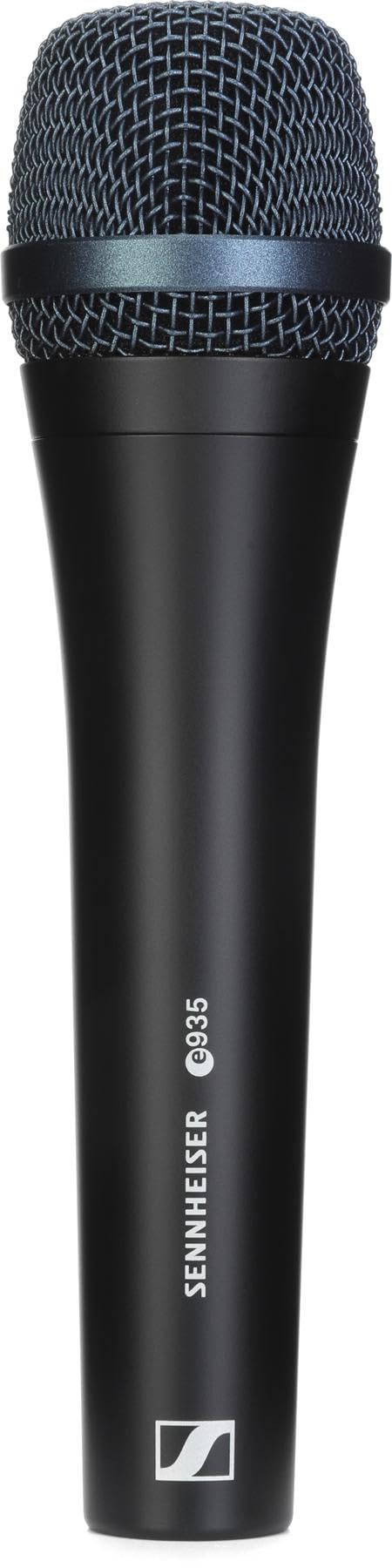
The Sennheiser e 935 is a professional-grade dynamic vocal microphone designed primarily for live sound reinforcement, but its natural, warm tonal character and excellent off-axis rejection make it a potent tool for studio vocal recording as well. The neodymium ferrous magnet with boron keeps the mic stable regardless of climate conditions, and the metal construction is rugged enough to survive drops and heavy touring use. Sennheiser backs it with a 10-year warranty, reflecting confidence in its durability.
Customer reviews describe the e 935 as having a bright, warm tone that cuts through a mix without sounding harsh. It handles high SPL levels from loud vocalists without distortion, and the cardioid pattern isolates the voice effectively from stage noise or other instruments. The lack of an on/off switch is standard for stage mics but something to note for studio use. Reviewers reported exceptional clarity and accuracy across diverse vocal ranges — contralto, baritone, and bass all sounded natural through this mic.
For vocalists who need a microphone that performs equally well on stage and in the studio, the e 935 is the clear choice. Its dynamic design rejects room noise better than any condenser in this list, and its output level is higher than many dynamics, meaning it requires less gain from your interface. The trade-off is that it lacks the extreme detail capture of a studio condenser, but for vocalists in untreated rooms or loud environments, that is a feature, not a flaw.
Why it’s great
- Exceptional clarity and warmth across diverse vocal types
- High output level requires less preamp gain than many dynamics
- Rugged metal build with a 10-year manufacturer warranty
Good to know
- Designed for live use; lacks some studio condenser detail
- No on/off switch — always active when connected to an interface
FAQ
Can I use a dynamic microphone for recording vocals without an audio interface?
What is the difference between a large-diaphragm and small-diaphragm condenser microphone?
How much gain do I need from my audio interface for a dynamic microphone?
Why does my condenser microphone pick up so much background noise?
Final Thoughts: The Verdict
For most users, the affordable microphone for recording vocals winner is the PreSonus PD-70 because it delivers broadcast-quality dynamic sound that rivals far pricier options, paired with build quality that will last for years. If you want the detail and air of a condenser in a treated space, grab the Audio-Technica AT2020. And for a plug-and-play USB experience that sounds studio-grade without any gear complexity, nothing beats the Sennheiser Profile.

Mo Maruf
I created WellFizz to bridge the gap between vague wellness advice and actionable solutions. My mission is simple: to decode the research and give you practical tools you can actually use.
Beyond the data, I am a passionate traveler. I believe that stepping away from the screen to explore new environments is essential for mental clarity and physical vitality.