Our readers keep the lights on and my smoothie glass nicely filled. As an Amazon Associate, I earn from qualifying purchases.
Finding a drone that delivers stunning aerial photos without breaking the bank or burying you in complexity is a serious challenge. With so many models claiming 4K video and 8K stills, it’s easy to get lost in marketing fluff and end up with footage that’s shaky, soft, or just plain disappointing.
I’m Mohammad Maruf — the founder and writer behind WellFizz. I’ve spent years analyzing drone camera specs, reading thousands of user experiences, and comparing real-world performance across price tiers to separate genuine quality from empty promises.
Whether you’re capturing family vacations or scouting real estate, the right choice comes down to sensor size, stabilization, and flight time. That’s exactly why I’ve assembled this deep-dive on the best aerial drones for photography to help you make a confident, informed purchase.
How To Choose The Best Aerial Drone For Photography
Before you click “buy,” you need to understand a few key specs that separate a toy from a tool. Here’s what to look for.
Sensor & Image Quality
The camera sensor is the heart of any photography drone. A larger sensor (1/1.3″ or 1/2″) captures more light, giving you cleaner shots at dusk or dawn. Look for at least 48MP effective stills and real 4K video (not upscaled). Sony CMOS sensors are a reliable benchmark.
Gimbal Stabilization
A 3‑axis mechanical gimbal is essential. Electronic stabilization alone can’t smooth out sudden movements the way a physical gimbal does. Without it, your footage will look like it was shot during an earthquake.
Flight Time & Batteries
Most drones claim 30+ minutes, but real-world flight time is often 20‑25 minutes per battery. For serious shooting, buy a model that comes with at least two batteries or supports fast charging. A total flight time of 60 minutes or more will keep you in the air while the light is perfect.
Transmission Range & Reliability
A long transmission range (10,000 ft or more) gives you freedom to frame the perfect shot without constantly repositioning. Digital transmission systems (non‑WiFi) offer lower latency and better interference resistance than basic WiFi links.
Weight & Regulations
Drones under 249 grams are exempt from FAA registration and Remote ID requirements in the US. If you travel often or just want hassle‑free flying, a sub‑250g drone is the way to go.
Quick Comparison
On smaller screens, swipe sideways to see the full table.
| Model | Type | Best For | Key Feature | Amazon |
|---|---|---|---|---|
| DJI Mini 3 (RC) | Premium | Overall photography | 1/1.3″ sensor, vertical shooting | Amazon |
| Potensic ATOM 2 | Value | Budget 4K HDR | 8K photo, AI Night Shot | Amazon |
| Holy Stone HS600D | Pro | Professional results | Sony CMOS, 6‑level wind resistance | Amazon |
| Ruko U11MINI 4K (RC3) | Premium | Built‑in touchscreen | 5.5″ controller, 20,000ft range | Amazon |
| Bwine F7MINI | Compact | Travel & portability | Under 249g, 96‑min total flight | Amazon |
| DJI Flip (RC‑N3) | Style | Beginner cinematography | Full‑coverage prop guards, subject tracking | Amazon |
| Veeniix V11PRO | Pro | High‑resolution stills | 8K photo, 6KM transmission | Amazon |
| Ruko F11PRO 2 | Value | Extended flight sessions | 70‑min total flight, 3‑axis gimbal | Amazon |
| Bwine F7GB2 Pro | Mid‑Range | High‑altitude shooting | 6‑level wind resistance, 2000m altitude | Amazon |
| DCX Volo X EZ AI | Smart | Obstacle avoidance | 360° LiDAR, 45‑min flight | Amazon |
| SwellPro FD2 Fisherman MAX | Specialty | Waterproof fishing drone | IP67, 7.0 lb bait capacity | Amazon |
In‑Depth Reviews
1. DJI Mini 3 (with DJI RC)

The DJI Mini 3 is the gold standard for aerial photography under 250 grams. Its 1/1.3‑inch CMOS sensor captures 4K HDR video with excellent dynamic range, and the 3‑axis mechanical gimbal keeps everything buttery smooth. The included DJI RC controller has a built‑in 5.5‑inch HD screen, so you don’t need to tie up your phone.
True vertical shooting is a game‑changer for social‑media content — no more cropping wide shots. Flight time reaches 38 minutes with the standard battery (up to 51 minutes with the Plus battery, though that pushes weight over 249g). The OcuSync 2.0 transmission gives you a solid 10km range with low latency.
For most photographers, this drone hits the sweet spot of portability, image quality, and reliability. It’s beginner‑friendly but capable enough for semi‑professional work. The only real downside is the lack of omnidirectional obstacle avoidance, but the front sensors help avoid common mistakes.
Why it’s great
- Excellent HDR video and 48MP photos
- Integrated controller screen reduces hassle
- True vertical shooting for social media
- No FAA registration required (under 249g)
Good to know
- No obstacle avoidance on sides or rear
- Plus battery makes it over 249g
- Premium price for the RC bundle
2. Potensic ATOM 2
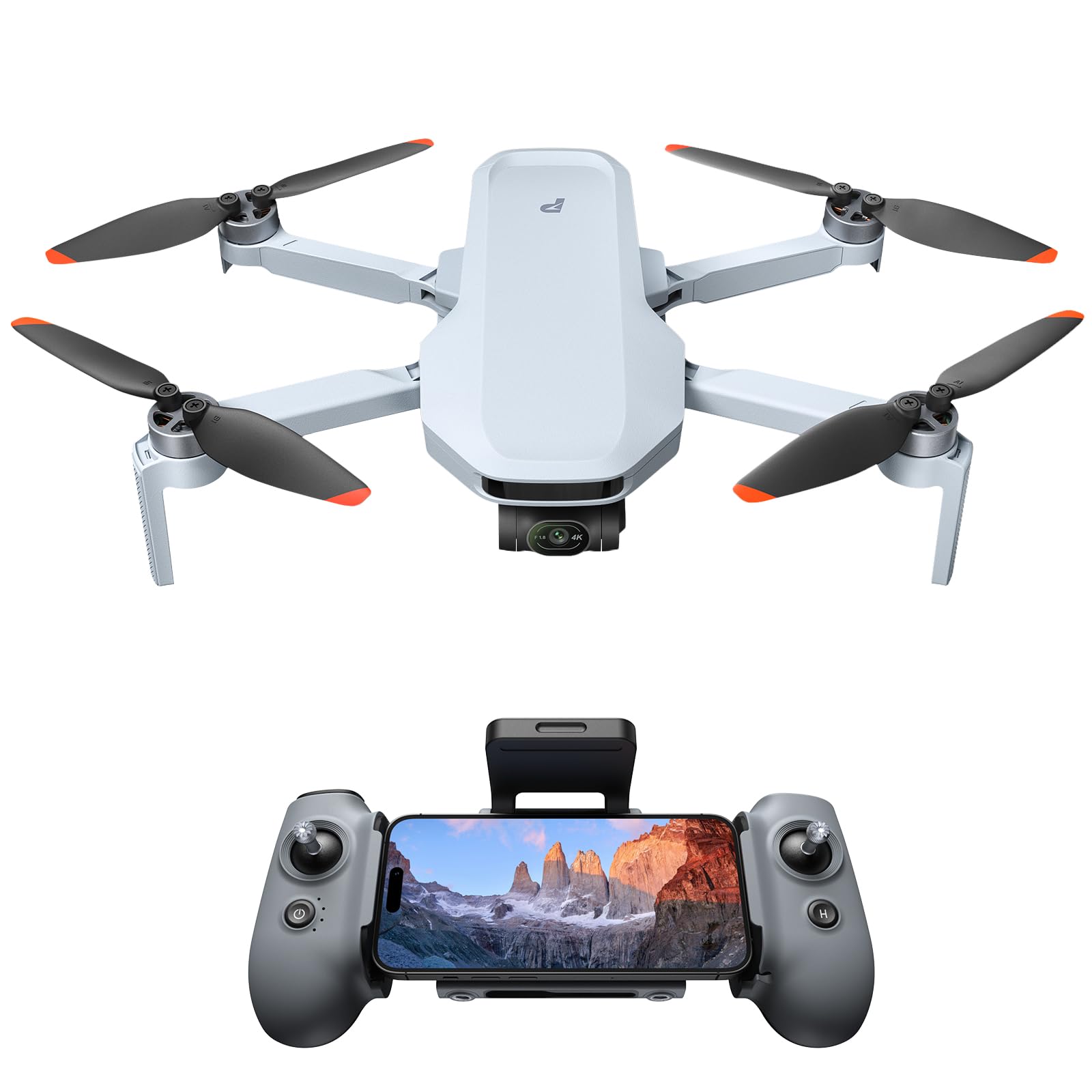
The Potensic ATOM 2 packs impressive camera specs into a sub‑250g frame. Its 1/2″ Sony CMOS sensor delivers 48MP stills (8K) and 4K/30fps HDR video. The 3‑axis gimbal provides rock‑steady footage, and the F1.8 aperture helps in low light. AI‑assisted night shot mode is a genuine bonus for evening shoots.
Transmission range reaches 10km thanks to PixSync 4.0 technology, and the 1080p live feed is crisp. Flight time is 32 minutes per battery — enough for a single outing, but you can grab the extended kit for more. The remote controller has a directional antenna for better signal lock, and the app offers QuickShots, Dolly Zoom, and slow‑motion modes.
At its price point, the ATOM 2 is a serious contender. It lacks obstacle avoidance (so fly carefully), but the AI tracking and vertical shooting make it a versatile tool for content creators. If you want DJI‑level features without the premium price, this is your drone.
Why it’s great
- Excellent 8K photos and 4K HDR video
- AI tracking and night shot modes
- Under 249g, no FAA registration
- Great value for the camera quality
Good to know
- No obstacle avoidance sensors
- Only one battery in standard kit
- Top speed could be higher
3. Holy Stone HS600D Sentinel

The Holy Stone HS600D is built for photographers who refuse to let wind ruin a shot. Its reinforced 603g frame and powerful motors handle Level‑6 wind, while the 3‑axis gimbal plus EIS keep the Sony 48MP sensor steady. The F1.8 aperture and 1/2″ CMOS produce rich, low‑noise images even in challenging light.
Transmission uses a wired‑relay system that eliminates WiFi interference, giving you a stable 20,000‑foot range. With two batteries, you get 80 minutes of total flight time — enough for a full morning shoot. Smart modes like Follow Me, Time‑Lapse, and Panorama make creative framing easy.
Beginners will appreciate the beginner mode with altitude limits and one‑button return. The only trade‑off is weight — at 603g it requires FAA registration. But for photographers who want a reliable, wind‑friendly platform with excellent image quality, the HS600D is a standout.
Why it’s great
- Superb wind resistance (Level‑6)
- Clear 4K HDR video with Sony sensor
- 80‑min total flight time (2 batteries)
- Wired transmission for interference‑free feed
Good to know
- Requires FAA registration (over 249g)
- App can be finicky at first
- No obstacle avoidance
4. Ruko U11MINI 4K (RC3)
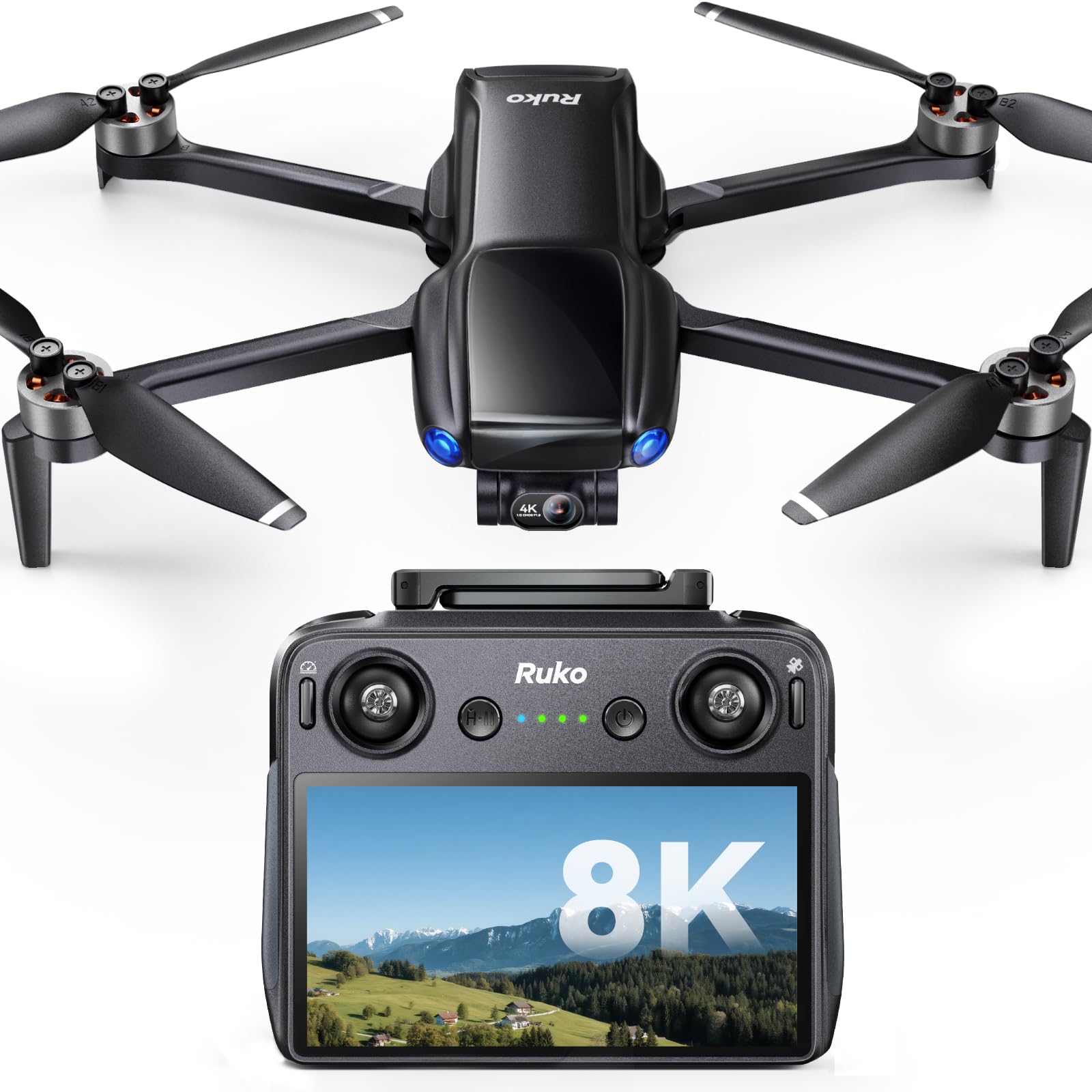
The Ruko U11MINI 4K is designed for photographers who want a no‑phone‑needed experience. The integrated 5.5″ 1080p touchscreen controller is bright and responsive, making it easy to frame shots without cables. The 1/2″ CMOS sensor captures 8K photos and 4K/30fps video, stabilized by a 3‑axis mechanical gimbal.
At under 249g, it’s FAA‑exempt and ultra‑portable. Transmission reaches 20,000 feet via the R2 digital system, and you get 64 minutes of flight time with two intelligent batteries. PD 3.0 fast charging keeps downtime minimal. AI takeoff/landing and quadruple positioning (GPS, barometer, TOF, optical flow) make it incredibly beginner‑friendly.
The U11MINI is a fantastic entry point for aerial photography. The touchscreen controller is a joy to use, and the image quality punches above its weight. Some users reported firmware update hiccups, but Ruko’s customer support is responsive. For a worry‑free start, this drone is hard to beat.
Why it’s great
- Built‑in 5.5″ screen – no phone required
- Under 249g, no FAA registration
- 64‑min total flight time with 2 batteries
- AI takeoff/landing for beginners
Good to know
- Firmware updates can be slow
- Controller range sometimes inconsistent
- No SD card included
5. Bwine F7MINI 4K
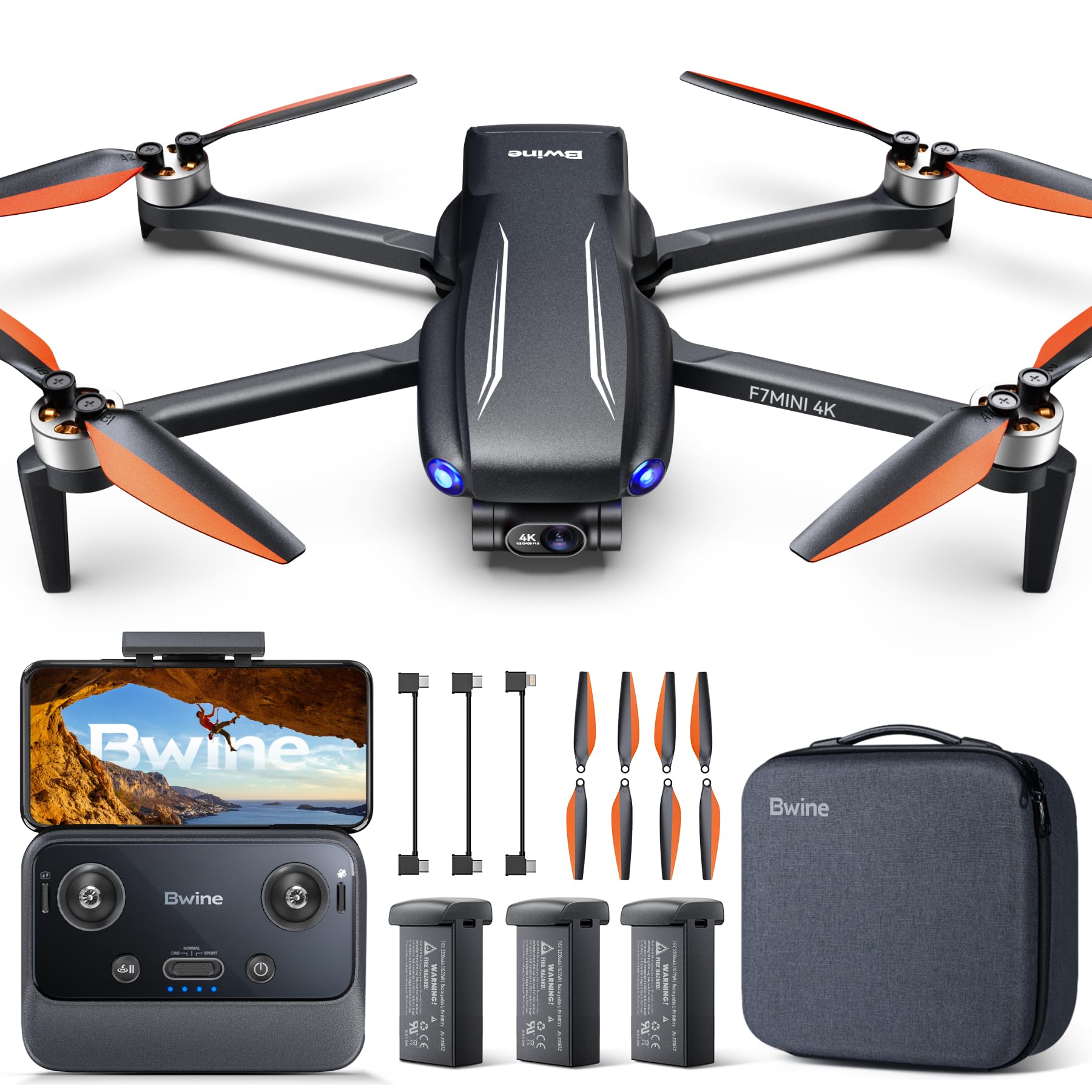
The Bwine F7MINI is a lightweight powerhouse that fits in a small bag. It weighs just 249g, so no FAA registration is needed, yet it packs a 48MP 1/2″ CMOS sensor with F1.8 aperture for sharp 8K photos and 4K/30fps video. The 3‑axis brushless gimbal plus EIS deliver smooth footage even in Level‑5 wind.
Three batteries give you a total of 96 minutes of flight time – among the best in its class. The 6km digital transmission is lag‑free, and GPS features like Follow Me, Waypoint, and Orbit make complex shots simple. The bright orange‑black propellers add visibility, and the included carrying case keeps everything organized.
This drone is ideal for travelers and hobbyists who want maximum flight time without extra weight. The camera quality is solid, though the gimbal can be sensitive to sudden yaw. Bwine’s 2‑year warranty and responsive support add peace of mind. If you value portability and endurance, the F7MINI delivers.
Why it’s great
- 96‑min total flight time (3 batteries)
- Under 249g, FAA‑exempt
- Stable 6km digital transmission
- Comes with premium carrying case
Good to know
- No SD card or power adapter included
- Gimbal can jitter during fast turns
- Joysticks are sensitive for beginners
6. DJI Flip (RC‑N3)

The DJI Flip is a unique entry that combines full‑coverage carbon‑fiber propeller guards with DJI’s legendary camera quality. The 1/1.3″ CMOS sensor shoots 4K/60fps HDR video and 48MP stills, and the 3‑axis gimbal keeps footage silky. Subject tracking turns the drone into your personal cinematographer.
Weighing under 249g, it doesn’t require FAA registration. The O4 transmission reaches 8 miles (13km) with a clear 1080p feed. Flight time is 31 minutes, and palm takeoff makes launching effortless. The foldable design is compact, and the included RC‑N3 controller works with your phone.
The Flip is ideal for vloggers and outdoor enthusiasts who want a safe, portable drone that follows them automatically. The only catch is that you lose 4K/60fps and manual camera control when using voice or phone‑only modes. Still, for sheer convenience and image quality, it’s a top pick.
Why it’s great
- Built‑in propeller guards for safety
- Excellent 4K/60fps HDR video
- Long 13km transmission range
- Palm takeoff and subject tracking
Good to know
- No 4K/60fps in phone‑only mode
- Only front obstacle avoidance
- Flight time average (31 min)
7. Veeniix V11PRO
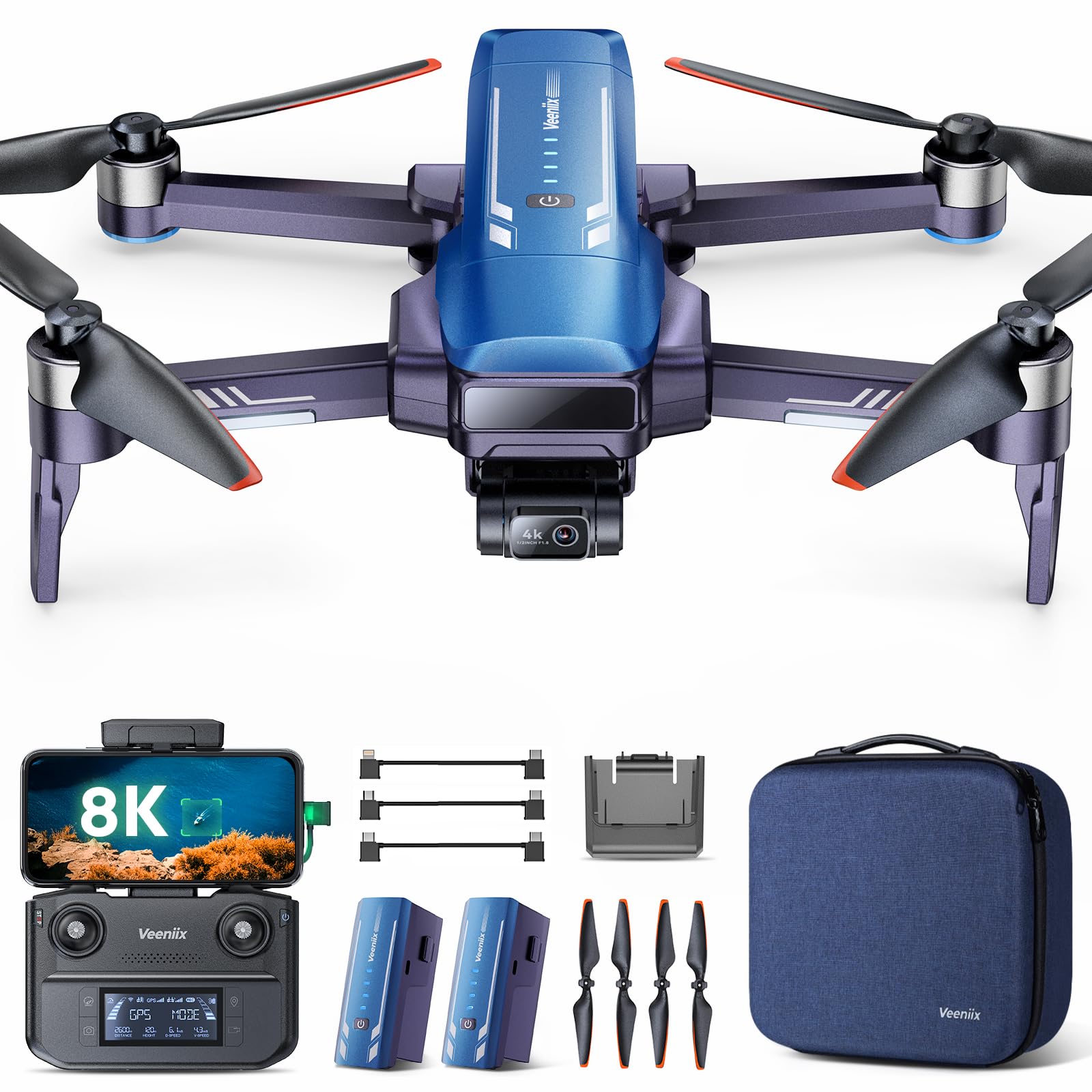
The Veeniix V11PRO is built for photographers who demand maximum resolution. Its 1/2″ Sony CMOS sensor captures 8K stills (48MP) and 4K/30fps video, with a 5x digital zoom for added flexibility. The 3‑axis gimbal paired with EIS eliminates shake, and the F1.8 aperture handles low light well.
Digital transmission gives you a stable 6km range, and two 3500mAh batteries provide 80 minutes of total flight time. PD 3.0 fast charging keeps you in the air. Smart flight modes include Cruise Control, Waypoint, and Point of Interest, making it easy to capture cinematic sequences.
The V11PRO feels solid and professional. The carrying case is well‑padded, and Veeniix’s customer service is consistently praised. The only downsides are the lack of obstacle avoidance and the slightly heavier weight (600g) requiring FAA registration. For resolution‑focused shooters, it’s a compelling choice.
Why it’s great
- True 8K photo capability
- 80‑min total flight time
- Stable 6km digital transmission
- Rugged build quality
Good to know
- No obstacle avoidance sensors
- Requires FAA registration (600g)
- Zoom is digital, not optical
8. Ruko F11PRO 2

The Ruko F11PRO 2 is designed for photographers who want to stay in the air longer. Two intelligent batteries give you 70 minutes of total flight time, and the 3‑axis mechanical gimbal delivers smooth 4K/30fps video and 6K photos. The 19MP effective resolution is slightly lower than some competitors, but image quality is still very good for its class.
Transmission range is 10,000 feet, and the digital connection is reliable. Beginner mode with one‑key takeoff/landing makes it easy for newcomers, while GPS Follow, Waypoint, and Orbit modes add creative flexibility. The TOF sensor helps with precise hovering.
This drone is a great choice for families or hobbyists who want a dependable, easy‑to‑fly camera platform without breaking the bank. The customer support is excellent, and the included carrying case is a nice touch. Just be aware that the camera is not as sharp as the premium Sony‑sensor models.
Why it’s great
- 70‑min total flight time (2 batteries)
- Beginner‑friendly with GPS auto‑return
- Solid 10,000ft transmission range
- Great customer support
Good to know
- Only 19MP effective stills
- Camera not as sharp as Sony‑sensor drones
- Requires FAA registration (over 249g)
9. Bwine F7GB2 Pro

The Bwine F7GB2 Pro is a solid mid‑range drone that balances flight time and image quality. It features a 4K camera with a 3‑axis gimbal and a 120° FOV lens, capturing stable footage even in windy conditions. The 5x digital zoom adds flexibility, though it’s not optical.
With three 2600mAh batteries, you get 75 minutes of total flight time — enough for extended shooting sessions. The drone is FAA Remote ID compliant, and its 1806 brushless motors provide Level‑6 wind resistance, allowing flight at up to 2000m altitude. GPS modes like Follow Me, Waypoint, and Circle Fly are included.
This drone is ideal for those who need long flight times and reliable performance at higher altitudes. The camera quality is good but not exceptional compared to Sony‑sensor models. Customer service is praised, and the 2‑year warranty adds confidence. A practical choice for hobbyists and property inspectors.
Why it’s great
- 75‑min total flight time with 3 batteries
- FAA Remote ID compliant
- Level‑6 wind resistance, high altitude capable
- Excellent customer support and warranty
Good to know
- Camera not as sharp as Sony‑sensor drones
- Requires FAA registration (over 249g)
- Digital zoom only
10. DCX Volo X EZ AI
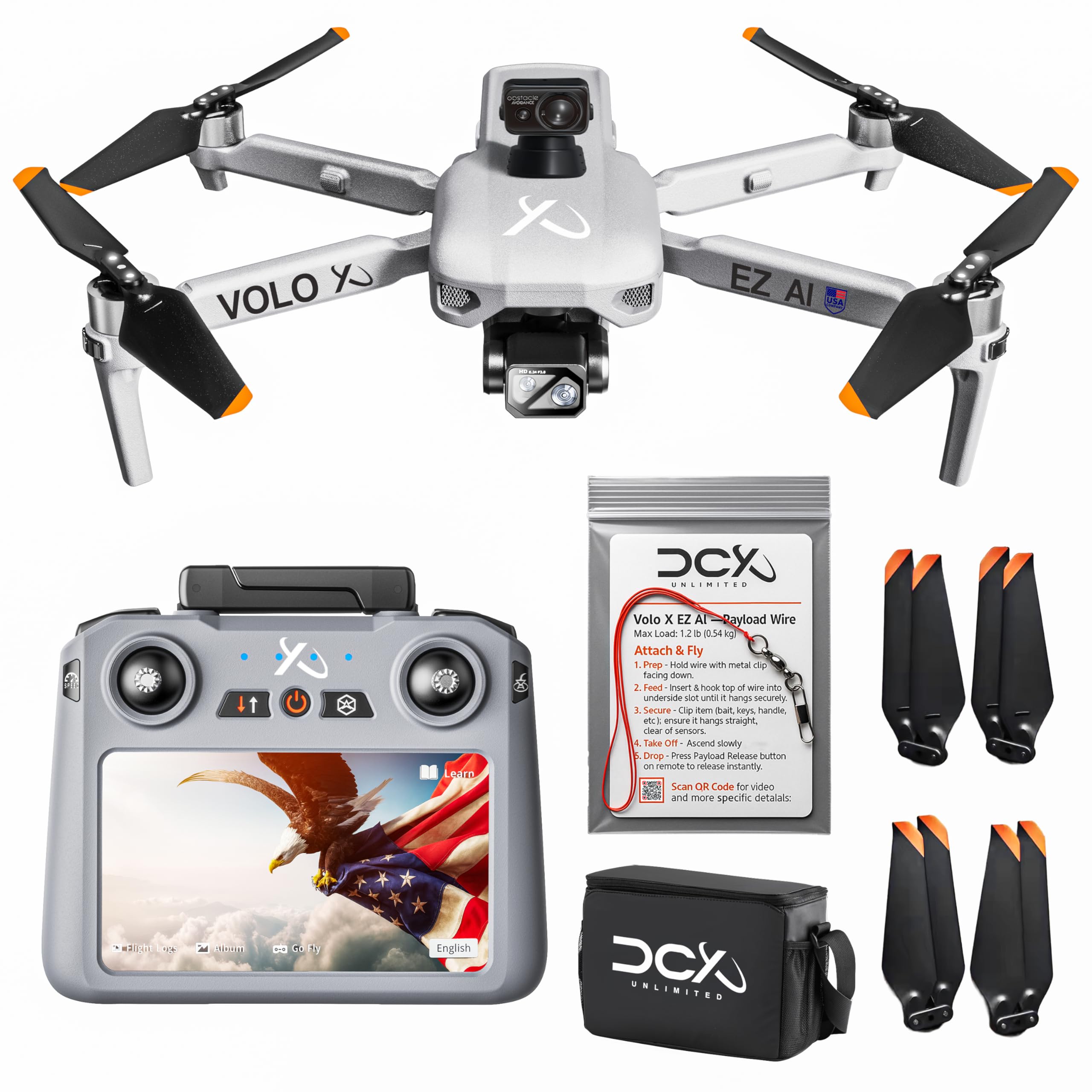
The DCX Volo X EZ AI stands out with its 360° LiDAR obstacle avoidance system — a rare feature at this price. It captures 4K video with a 3‑axis gimbal and EIS, and the built‑in screen on the controller makes framing easy. Flight time reaches 45 minutes, and the range is 4 miles.
AI‑assisted features like Follow Me and Precision Return‑to‑Home take the stress out of flying. It’s FAA Remote ID compliant and has no geofencing limits, giving you full freedom. The foldable design is travel‑ready, and the included carrying case protects everything.
This drone is perfect for beginners who want safety features and a large remote screen. The 12MP effective still resolution is lower than some competitors, but for video and obstacle avoidance, it’s a top contender. American‑based support is responsive, and the company stands behind its product.
Why it’s great
- 360° obstacle avoidance (LiDAR)
- 45‑min flight time, 4‑mile range
- Built‑in controller screen
- No geofencing, US‑based support
Good to know
- Only 12MP effective stills
- Camera not as detailed as Sony‑sensor drones
- Requires FAA registration (over 249g)
11. SwellPro FD2 Fisherman MAX
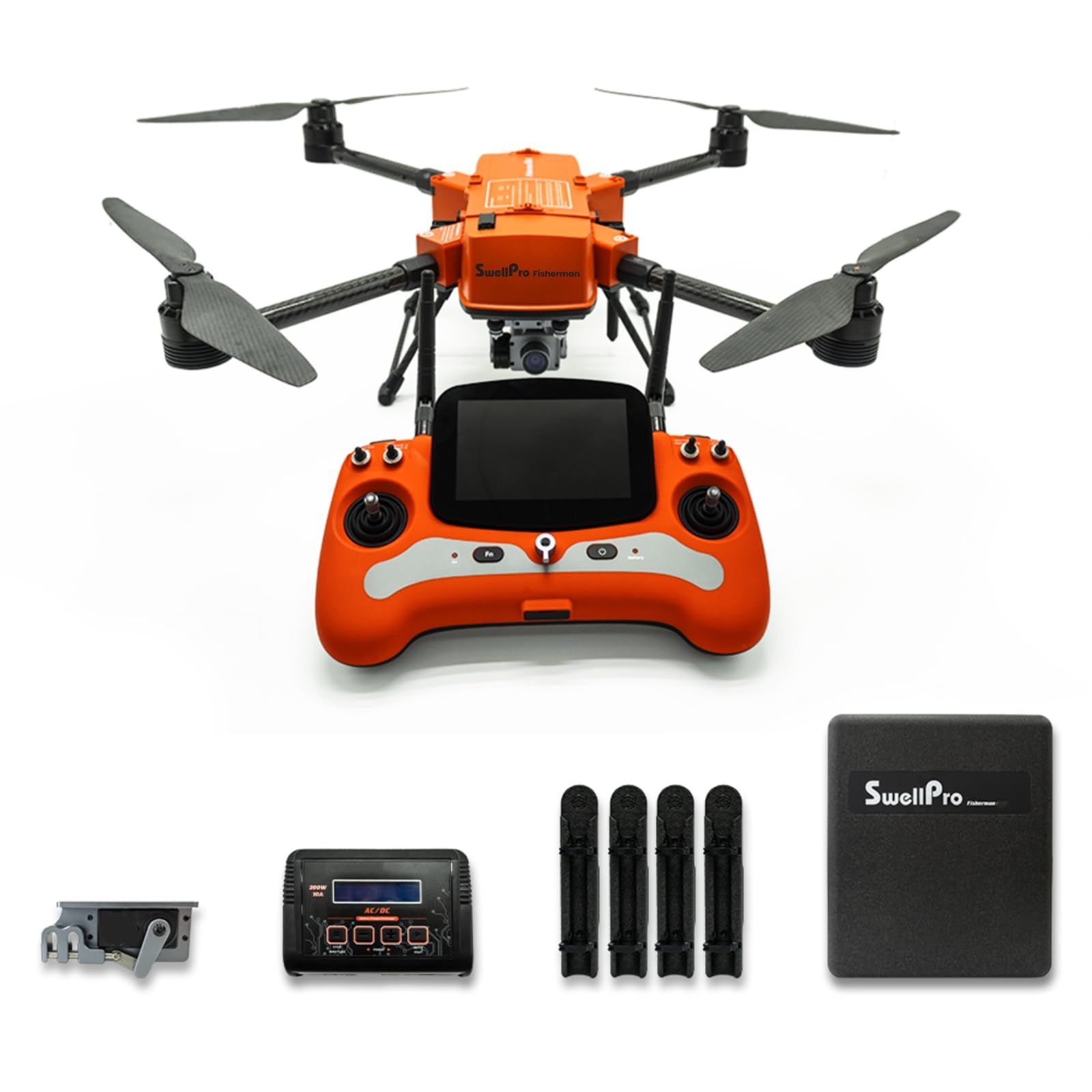
The SwellPro FD2 Fisherman MAX is a specialty drone designed for serious anglers. It’s IP67 waterproof (both aircraft and remote) and can lift up to 7.0 lbs of bait, casting lines up to 1.5km. The 4K camera with a multi‑color LCD remote helps spot fish and release bait precisely.
With Level‑6 wind resistance, it handles ocean gusts up to 40 mph. The auto‑return feature ensures your investment comes back safely. The foldable arms make it easier to transport, though the 7.8‑lb weight means it’s not a casual carry‑on.
This is not a general photography drone — it’s built for a specific purpose. The camera quality is adequate for spotting fish, not for professional landscapes. If you’re an angler looking to extend your reach, the FD2 is unmatched. Check local regulations before purchasing, as some areas restrict fishing drones.
Why it’s great
- IP67 waterproof – fly in rain or over water
- 7.0 lb bait capacity, 1.5km casting range
- Level‑6 wind resistance
- Auto‑return for safety
Good to know
- Very heavy (7.8 lbs) – not portable
- Camera only 8MP – not for photography
- Expensive; accessories hard to get
- May be banned in some states for fishing
Understanding the Specs
Gimbal vs. EIS
A 3‑axis mechanical gimbal physically stabilizes the camera, giving you smooth footage even in wind. Electronic Image Stabilization (EIS) crops and corrects the image in software, which can reduce quality and field of view. For photography, a gimbal is essential; EIS is a helpful backup.
Sensor Size & Megapixels
Larger sensors (1/1.3″ or 1/2″) capture more light, improving dynamic range and low‑light performance. Megapixels (e.g., 48MP) matter for cropping, but sensor quality matters more. Sony CMOS sensors are industry‑standard for good reason.
Transmission Technology
Wi‑Fi transmission is cheap but prone to interference and range limits. Digital transmission (like OcuSync or PixSync) uses dedicated radio frequencies for longer range, lower latency, and stable video feeds. Look for digital systems for serious flying.
Flight Time & Battery Care
Real‑world flight time is usually 70‑80% of advertised max. Lithium‑polymer batteries degrade if stored fully charged. Many smart batteries auto‑discharge after a few days to prolong life. Always buy extra batteries for extended shoots.
FAQ
Do I need an FAA registration for these drones?
What is the best drone for low‑light photography?
Can I use these drones for professional real estate photography?
How long do drone batteries last in real use?
Final Thoughts: The Verdict
For most people, the aerial drones for photography winner is the DJI Mini 3 (RC) because it offers the best combination of image quality, portability, and ease of use. If you want premium features without the DJI price, grab the Potensic ATOM 2. And for maximum flight time and wind resistance, nothing beats the Holy Stone HS600D. Choose the one that fits your budget and shooting style, and get ready to capture stunning aerial perspectives.

Mo Maruf
I created WellFizz to bridge the gap between vague wellness advice and actionable solutions. My mission is simple: to decode the research and give you practical tools you can actually use.
Beyond the data, I am a passionate traveler. I believe that stepping away from the screen to explore new environments is essential for mental clarity and physical vitality.