Our readers keep the lights on and my smoothie glass nicely filled. As an Amazon Associate, I earn from qualifying purchases.
Exterior stone projects fail in one predictable way: the adhesive lets go after the first hard freeze or a week of steady rain. A bond that looks solid during installation often turns brittle or washes out within months, forcing you to redo the work. The right formula must handle thermal expansion, moisture intrusion, and UV exposure without losing grip — that is what separates a permanent repair from a seasonal one.
I’m Mohammad Maruf — the founder and writer behind WellFizz. I’ve spent years analyzing construction-grade adhesives, studying formulation data from polyurethane to acrylic-polymer chemistries, and cross-referencing real-world performance with ASTM standards to separate lasting bonds from marketing claims.
Whether you are repointing a retaining wall, resetting a stone veneer, or sealing a fire pit, the adhesive for exterior stone you choose must resist freeze-thaw cycling, bond to damp surfaces, and maintain structural integrity in direct sun or buried contact with soil.
How To Choose The Best Adhesive For Exterior Stone
Selecting an exterior stone adhesive is not about picking the strongest grab in a five-minute cure. The product must survive seasonal expansion, constant moisture, and sometimes direct flame contact. Three factors separate the formulas that last from those that disappoint.
Bond Strength and Chemical Compatibility
Look for a minimum bond strength of 500 psi for general stone-to-masonry bonding. Acrylic-polymer latex adhesives like the SIKA SikaLatex R achieve this while remaining flexible enough to absorb movement. Avoid rigid epoxies for large stone surfaces — they will crack under thermal expansion. For high-heat zones such as fire pits and chimneys, you need refractory mortar rated above 2000°F, which uses silica or calcium aluminate rather than organic polymers.
Working Time and Cure Conditions
Vertical repairs demand a paste that stays put without sagging. Most cementitious adhesives offer 20 to 60 minutes of working time before initial set. If you are working on a hot, dry day, mix smaller batches and keep a spray bottle nearby to slow the cure. True full cure for many latex-based products takes up to 30 days, though the bond becomes load-bearing within 24 hours. For projects exposed to rain within the first week, choose a formula marketed as water resistant after initial cure.
Freeze-Thaw and Water Resistance
Exterior stone adhesives must survive repeated freeze-thaw cycles without delaminating. Acrylic fortifiers such as SikaLatex R are specifically engineered to resist freeze-thaw damage. Refractory mortars like the Tenon and Rutland options become water insoluble after full cure, meaning moisture will not re-emulsify the bond. If your stone sits in constant ground contact or near a sprinkler zone, prioritize a product that explicitly states water insolubility and acid resistance in its cured state.
Quick Comparison
On smaller screens, swipe sideways to see the full table.
| Model | Category | Best For | Key Spec | Amazon |
|---|---|---|---|---|
| SIKA SikaLatex R | Acrylic Latex | General masonry & concrete bonding | 500 PSI bond strength | Amazon |
| Quikrete 8620-05 | Pre-mixed Paste | Small masonry chips & crack filling | 16.5 fl. oz. per pack | Amazon |
| Tenon Refractory Mortar | High-Temp Mortar | Fireplace & fire pit construction | 2550°F heat rating | Amazon |
| Xmntdo Rock Glue | Landscape Binder | Gravel & pebble stabilization | 24-hour full cure | Amazon |
| Rutland Dry Mix 211 | Refractory Dry Mix | Kiln & forge hot-face lining | 2550°F, 2-hour cure | Amazon |
In‑Depth Reviews
1. SIKA SikaLatex R

This acrylic-polymer latex adhesive doubles as a bonding grout admixture and an acrylic coating primer, making it the most versatile exterior stone adhesive in this roundup. When mixed with portland-cement mortar, it delivers a 500 psi bond strength that holds up against repeated freeze-thaw cycles. Users report using it to reattach brick treads on front steps and secure ceramic fixtures to masonry walls — all holding for years without failure.
The formula is ready to use straight from the pail with no dilution required, which cuts prep time significantly. It does not create a vapor barrier, so moisture trapped behind stone veneer can still escape, reducing the risk of spalling in cold climates. One gallon covers roughly 50 to 80 square feet depending on the substrate porosity, making it suitable for medium-scale projects like patios, retaining walls, and stone cladding.
The only notable drawback is the 30-day full cure time. While the bond becomes functional within 24 hours, the adhesive continues to gain strength for a month. Plan your project timeline accordingly, especially if the stone will face heavy rain or freezing conditions within the first week. Check the expiration date before purchase — the latex can degrade beyond a year of storage.
Why it’s great
- 500 PSI tensile bond strength exceeds most general-purpose masonry adhesives
- Freeze-thaw resistant, ideal for northern exterior use
- Can be used as an admixture or a primer, expanding project flexibility
Good to know
- Full structural cure takes 30 days
- One-year shelf life — verify freshness on the label
- Liquid form requires mixing with mortar or cement for full strength
2. Tenon Refractory Mortar
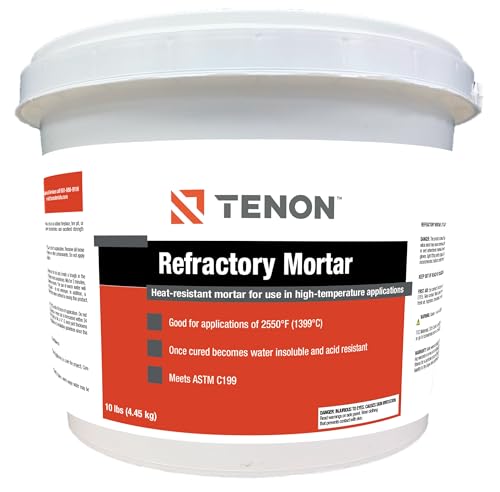
When the project involves direct flame or sustained high heat — fire pits, pizza ovens, chimney flue liners — standard masonry adhesive will fail. Tenon Refractory Mortar is preblended in dry form; you just add water and you have a paste rated up to 2550°F. It passes ASTM C199, which most building codes require for firebrick and flue installation, so you can pass inspection without a second product.
The dry mix offers a 1-hour working time before initial set, but real-world conditions can cut that down to about 20 minutes in hot, dry weather. Users building stone fireplaces recommend mixing in small batches and keeping a spray bottle nearby to slow the set. After full cure, the mortar becomes water insoluble and acid resistant, meaning rain and chimney runoff will not degrade the joint.
One downside is that the 10-pound pail is relatively small for large-scale projects like a full chimney rebuild. It works best for repairs, fire pit rings, and flue installations where high-temperature performance is required but total volume is under a few dozen pounds. Also, the paste consistency can be tricky to judge on first use — aim for a peanut-butter texture rather than a soupy mix.
Why it’s great
- ASTM C199 certified, meeting most code requirements for fire-rated masonry
- Becomes water insoluble after curing, resisting chimney moisture
- Preblended dry formula — simple mix-and-go process
Good to know
- Working time drops to around 20 minutes in hot conditions
- 10-pound pail covers limited square footage for large builds
- Requires careful water measurement to avoid overly thin consistency
3. Quikrete 8620-05 Mortar Repair

For small repairs — filling chips in brick steps, patching mortar joints between stones, or fixing cracks in a concrete stoop — this pre-mixed acrylic paste is the most convenient option. It comes in a squeeze tube with a slanted tip that lets you apply directly into gaps without a bag or trowel. Users report matching 15-year-old cement color perfectly, and the water-resistant formula holds up well in exterior conditions.
The paste dries quickly, so you can smooth it with a wet finger within minutes of application. Each three-pack provides 16.5 fluid ounces of material, enough for several small repairs like filling gaps along a walkway or sealing cracks around a window sill. The color blends naturally with gray concrete and mortar, making it difficult to spot after a light rain.
Quality control can be inconsistent. Several buyers received tubes where the seal had broken during shipping, resulting in dried-out contents. Others found that the paste was extremely thick and hard to squeeze from the tube, or that a watery substance leaked out before the mortar. Buying from a store where you can inspect the tube is advisable, but the low per-unit cost still makes this a solid option if you need a quick fix and the tube arrives intact.
Why it’s great
- Pre-mixed and ready to use directly from the squeeze tube
- Color matches aged cement and mortar very well
- Dries fast and can be smoothed with a finger for invisible repairs
Good to know
- Shipping damage can cause tubes to leak and dry out
- Consistency varies between tubes — some extremely thick
- Limited volume per pack; not suitable for large patching jobs
4. Xmntdo Rock Glue for Landscaping
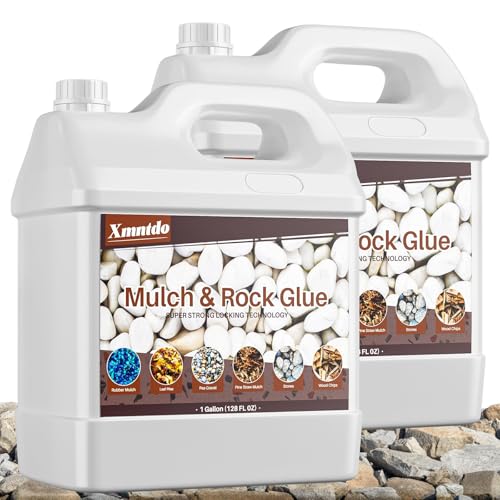
This water-based rock binder is specifically formulated to lock loose gravel, pebbles, and decomposed granite in place — not for bonding stones to vertical surfaces. If your problem is scattering walkway pebbles or washout from rain, this glue penetrates deep into the aggregate and forms a clear, non-yellowing bond that remains flexible. The formula is low-VOC and pet safe once cured, making it appropriate for garden paths and backyard pet runs.
Application is straightforward: pour into a standard garden sprayer, brush, or roller, and spread it over the loose stone. It dries to the touch in 4 to 6 hours and fully cures in 24 hours under dry, sunny conditions. The gallon size is ideal for residential yards, covering roughly 30 to 50 square feet depending on gravel depth. Weather resistance is solid — it handles heavy rain and power washing without disintegrating.
The main limitation is that this is a surface stabilizer, not a structural adhesive. It will not bond a loose capstone to a wall or attach stone veneer to a facade. Using it for vertical stone bonding will result in immediate failure. Also, the reviews for this product are mixed with unrelated content about AC window kits, indicating the listing may have been recycled. Verify the actual product matches the landscape binder description before ordering.
Why it’s great
- Non-toxic and safe for pets and children once cured
- Dries clear without yellowing or brittle cracking
- Works with standard sprayers for quick application on paths and driveways
Good to know
- Designed for loose aggregate stabilization, not structural stone bonding
- Requires dry, sunny conditions for proper cure
- Review content is inconsistent — verify the exact product listing
5. Rutland Dry Mix 211 Refractory Mortar
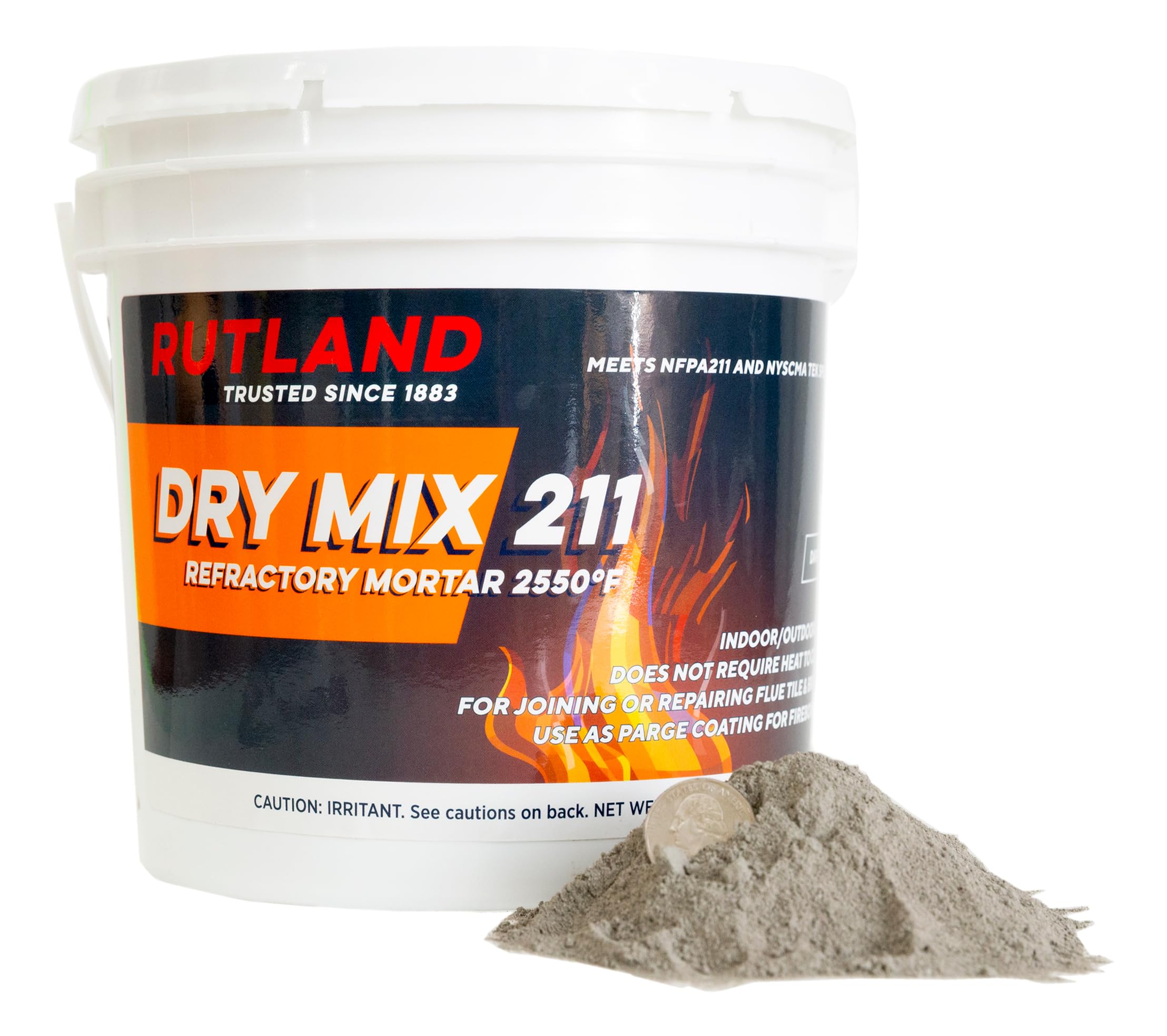
For high-heat applications that require a quick cure — forging, kiln lining, or fireplace repair — the Rutland Dry Mix 211 stands out because it does not require heat to cure. Most refractory mortars need a firing cycle to harden; this one cures at room temperature in about 2 hours, with full strength developing within 24 hours under a fan. The 2550°F rating matches the Tenon mortar, making it equally suitable for fireboxes and pizza ovens.
Users report excellent adhesion to dampened masonry, with the mortar forming a hard, durable surface that withstands direct contact with glowing orange steel. The dark gray color blends well with existing firebrick and stone. It handles thick layers well if applied in stages, though a single thick coat may develop superficial cracks during drying — a common characteristic of all cementitious refractories.
The main complaints revolve around shipping speed and the powder consistency. Several buyers needed multiple orders over weeks to complete pizza oven projects, and the fine fluffy powder is easy to overwater if you are not careful. Mix to a peanut-butter texture, and keep a damp sponge nearby to smooth joints. Also, the 10-pound pail is heavy but yields about half the volume of the Tenon product due to the powder density.
Why it’s great
- Cures at room temperature — no firing required for initial set
- Handles extreme heat up to 2550°F without melting or spalling
- Strong adhesion to dampened masonry for thick repairs
Good to know
- Powder consistency can lead to overwatering if not careful
- Thick applications may develop minor surface cracks as they dry
- Shipping can be slow — order well ahead of project start
FAQ
Can I use a general construction adhesive for exterior stone?
How do I apply adhesive to a vertical stone surface without sagging?
What is the difference between refractory mortar and regular mortar?
Will a stone adhesive bond properly if the stone is already wet?
Final Thoughts: The Verdict
For most users, the adhesive for exterior stone winner is the SIKA SikaLatex R because its 500 psi bond strength and freeze-thaw resistance cover the broadest range of general stone repairs and new installations. If you are working with high-heat masonry like a fire pit or chimney, grab the Tenon Refractory Mortar for its ASTM C199 certification and 2550°F rating. And for stabilizing loose gravel or pebble paths where structural bonding is not required, nothing beats the pet-safe, fast-curing Xmntdo Rock Glue.

Mo Maruf
I created WellFizz to bridge the gap between vague wellness advice and actionable solutions. My mission is simple: to decode the research and give you practical tools you can actually use.
Beyond the data, I am a passionate traveler. I believe that stepping away from the screen to explore new environments is essential for mental clarity and physical vitality.