Our readers keep the lights on and my smoothie glass nicely filled. As an Amazon Associate, I earn from qualifying purchases.
Dark scenes in modern cinema are not a weakness—they are a test of your display’s core engineering. A 75-inch television that crushes blacks into a single gray void or blooms light into shadowed letterbox bars ruins the director’s intent. The specific challenge for movie enthusiasts is finding a panel that delivers per-pixel luminance control, high native contrast, and accurate color volume across a massive screen area without introducing artifacts. This means understanding local dimming zone counts, panel type (OLED vs. Mini-LED vs. QLED), and HDR certification depth is not optional—it is the difference between a living room screen and a private cinema.
I’m Mohammad Maruf — the founder and writer behind WellFizz. With over a decade of deep market research focused on display technologies, I analyze panel specifications, backlight architectures, and real-world HDR performance data to separate genuine cinematic capability from marketing specs that look good on paper but falter in a dark room.
Whether you prioritize perfect blacks, sky-high brightness for HDR highlights, or smooth motion in 24fps content, this guide evaluates the top contenders to help you find the best 75 inch tv for movies that balances contrast, color accuracy, and long-term reliability.
How To Choose The Best 75 Inch TV For Movies
A 75-inch canvas magnifies every imperfection. Choosing a TV for movies requires evaluating panel technology, light control, and processing that together reproduce the cinematic experience at home. Focus on the four pillars below to separate a true home theater display from a general-purpose living room screen.
Panel Technology: OLED vs. Mini-LED vs. QLED
For movies, the panel determines the baseline contrast and black level. OLED pixels emit their own light and turn off completely for absolute blacks, which is unmatched for dark-room viewing. Mini-LED uses thousands of tiny LEDs to dim zones behind an LCD panel, offering high brightness with minimal blooming if the zone count is dense enough. Standard QLED without Mini-LED backlighting relies on edge-lit or fewer dimming zones—acceptable in bright rooms but prone to visible halos around subtitles in a dark theater setting.
Local Dimming Zone Count and Precision
Local dimming zones are the single most important spec for a Mini-LED movie TV. A low zone count (under 200) cannot control small bright objects against dark backgrounds, causing halos. High-end models with 1,000+ zones or more approach OLED-like contrast. For OLED, each pixel is its own zone, defining the gold standard. Always check for full-array local dimming (FALD) rather than edge-lit dimming when evaluating LCD-based options.
HDR Format Support and Peak Brightness
Movies are mastered in Dolby Vision, HDR10+, and IMAX Enhanced. A TV that supports all three formats ensures compatibility with the widest library of discs and streaming content. Peak brightness in nits determines how punchy highlights—explosions, sunlight, reflections—appear. OLEDs typically reach 800–1,000 nits while premium Mini-LEDs can exceed 2,000 nits, which is advantageous for bright room viewing and high dynamic range impact.
Motion Handling and Film Cadence
Film content is recorded at 24 frames per second. A TV that does not handle 24p cadence correctly introduces judder during slow pans. Look for a 120Hz or 144Hz native panel with adjustable motion interpolation (soap opera effect) that can be turned off. Filmmaker Mode is a strong indicator—it disables motion smoothing and preserves the original frame rate and color temperature.
Quick Comparison
On smaller screens, swipe sideways to see the full table.
| Model | Category | Best For | Key Spec | Amazon |
|---|---|---|---|---|
| Hisense 75″ U7 Mini-LED | Mini-LED | Bright room & HDR impact | 3000 nits peak, 165Hz native | Amazon |
| LG OLED77G5WUA | OLED | Black level purity | OLED evo, α11 Gen2 AI | Amazon |
| LG OLED77G4WUA | OLED | Reference cinematic image | OLED evo, α11 AI Processor | Amazon |
| Samsung 77S90F | OLED | QD-OLED color vibrancy | QD-OLED, NQ4 Gen3 AI | Amazon |
| Sony K-75XR70 (BRAVIA 7) | Mini-LED QLED | SDR upscaling & PS5 | XR Processor, XR Backlight Master Drive | Amazon |
| Panasonic 77Z8BAP | OLED | Filmmaker accuracy | Master OLED PRO, HCX Pro AI | Amazon |
| TCL 75QM8K | Mini-LED | Value Mini-LED performance | QD-Mini LED, 288 VRR | Amazon |
| Toshiba 75Z670R | Mini-LED QLED | Price-conscious HDR | Mini-LED, REGZA Engine ZRi | Amazon |
| Roku 75″ Pro Series | Mini-LED | Ease of use & casual viewing | Mini-LED, 120Hz refresh | Amazon |
| iFFALCON 75U85 | Mini-LED | Versatile gaming & movie mix | Mini-LED, 144Hz native | Amazon |
| Hisense 75S7SG CanvasTV | QLED | Living room art integration | Hi-Matte Display, 144Hz | Amazon |
| Samsung QN75LS03D The Frame | QLED | Aesthetic wall display | Matte Display, One Connect Box | Amazon |
| Sony K-75XR50 (BRAVIA 5) | Mini-LED | Balanced premium features | XR Processor, XR Backlight Master Drive | Amazon |
In‑Depth Reviews
1. Hisense 75″ U7 Mini-LED ULED 4K (75U7SG)
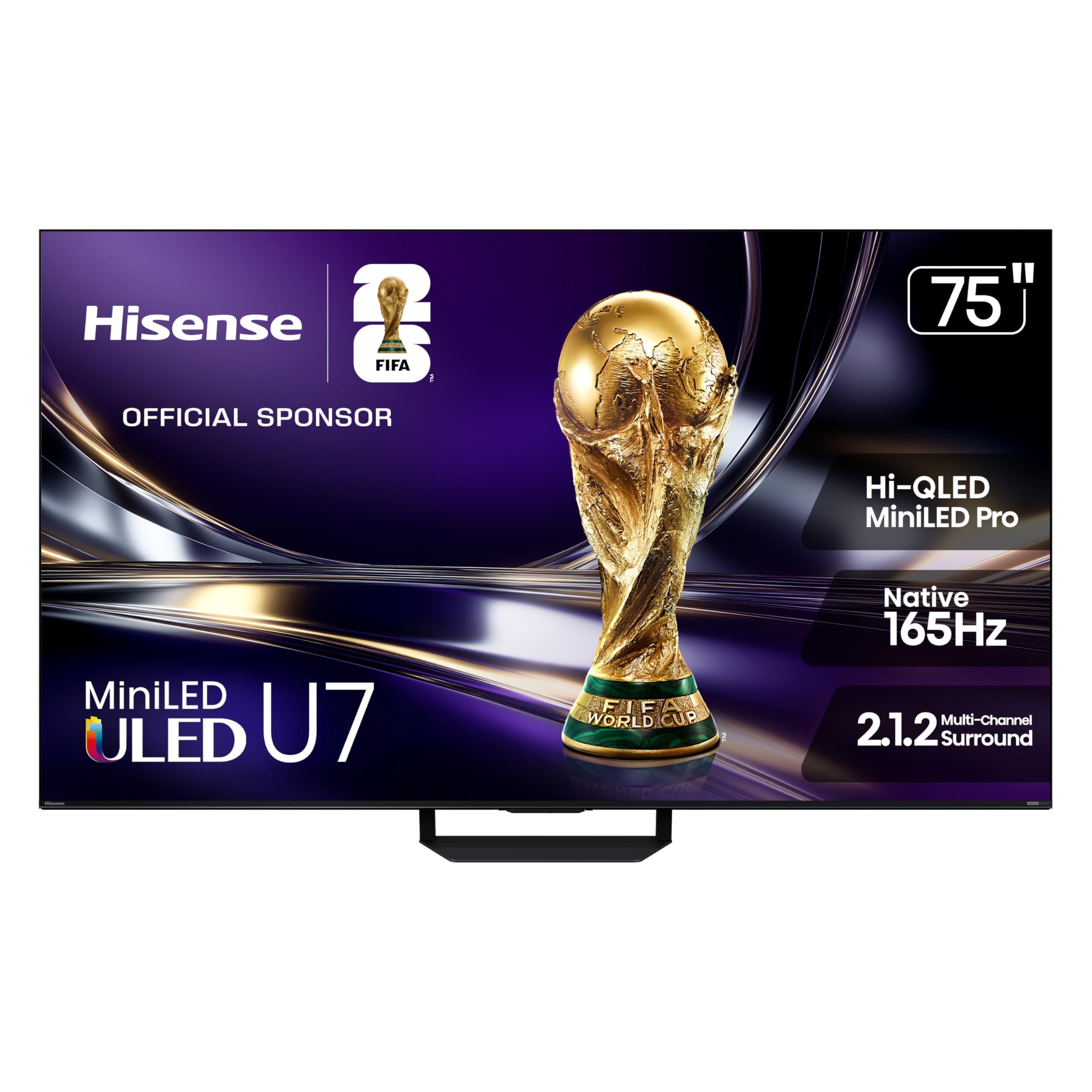
The Hisense U7 series sits at the intersection of raw brightness and precise zone control. With a native 165Hz refresh rate and VRR up to 330Hz, motion during fast-action sequences is buttery smooth. The Hi-View AI Engine Pro dynamically adjusts contrast and color scene by scene, which is critical for maintaining shadow detail in dark movie scenes without crushing blacks. The anti-reflection coating is unusually effective for a 75-inch panel—ambient light from windows or lamps does not wash out the image.
Peak brightness reaches up to 3,000 nits, making HDR highlights in movies like “Dune” or “Mad Max: Fury Road” intensely luminous. The combination of Hi-QLED MiniLED Pro and up to 3,000 local dimming zones suppresses blooming around bright objects against dark backgrounds more effectively than many competitors at this tier. Dolby Vision IQ, HDR10+, and IMAX Enhanced are all supported, ensuring compatibility across major streaming services and physical discs.
Built-in 2.1.2 channel sound with Dolby Atmos provides a solid foundation, though a dedicated soundbar will unlock the full spatial audio experience. Google TV interface is responsive and minimizes bloatware. For a flagship-level movie experience without jumping to OLED pricing, this set delivers the most balanced brightness, zone control, and motion handling in the 75-inch class.
Why it’s great
- Exceptional 3,000-nit peak brightness for HDR impact
- High zone count minimizes blooming
- Anti-glare layer performs well in mixed lighting
Good to know
- Built-in speakers lack bass depth for cinematic sound
- Requires careful calibration out of the box for accurate color
2. LG 77″ OLED evo G5 Series (OLED77G5WUA)

The LG G5 represents the pinnacle of self-emissive display technology for movies. With over 8 million self-lit pixels, it achieves perfect blacks—each pixel turns off completely—eliminating any trace of blooming around subtitles or bright highlights. The Brightness Booster Max pushes luminance beyond previous OLED evo models, exceeding 2,000 nits in some test patterns, which is a dramatic improvement for HDR specular highlights while maintaining infinite contrast ratio.
The α11 AI Processor Gen2 handles 24p cadence flawlessly, preserving film grain and motion without introducing the soap opera effect. Filmmaker Mode is pre-calibrated to D65 white point and gamma 2.4, matching theatrical standards. The G5’s One Wall Design leaves virtually no gap when wall-mounted, creating a seamless integration suitable for a dedicated home theater space.
Dolby Vision, Dolby Atmos, HDR10, and Filmmaker Mode are all natively supported. The 0.1ms response time ensures no motion blur, though 24fps content remains artifact-free when motion smoothing is disabled. The included wall mount bracket simplifies flush installation. This set is the reference for any cinephile who prioritizes black-level purity above all else.
Why it’s great
- Perfect black levels with zero blooming
- Excellent peak brightness for an OLED (2,000+ nits)
- Flush wall mount design for theater integration
Good to know
- No TV stand included in box
- Remote control lacks backlighting
3. LG 77″ OLED evo G4 Series (OLED77G4WUA)

The G4 series established LG’s OLED evo lineage with the α11 AI Processor, delivering class-leading contrast and color accuracy that remains highly competitive. Self-lit pixels provide infinite contrast and 100% Color Volume, meaning HDR gradients are smooth without banding. The Brightness Booster Max technology lifted OLED brightness significantly compared to earlier C-series models, making it viable for rooms with moderate ambient light while still crushing LCD-based panels in black level performance.
Dolby Vision and Filmmaker Mode are calibrated for cinematic accuracy. The webOS Re:New Program guarantees software updates for five years, which is a meaningful commitment for a premium investment. The One Wall Design allows near-zero gap wall mounting, and the included flush mount bracket is robust. G4 remains a strong contender for purists who want reference-level movie reproduction at a slightly lower entry point than the G5.
Gaming features including four HDMI 2.1 ports, NVIDIA G-Sync, and AMD FreeSync are included, but the primary strength is film content. Dark scenes in “The Batman” or “Blade Runner 2049” reveal texture and detail that Mini-LED TVs struggle to reproduce. This is an excellent choice for a dedicated home theater with controlled lighting.
Why it’s great
- Infinite contrast ratio with perfect black levels
- Accurate Filmmaker Mode out of the box
- Five-year software support guarantee
Good to know
- No stand included; wall mount is required
- Brightness lower than top-tier Mini-LEDs in very bright rooms
4. Samsung 77″ S90F OLED (77S90F)

Samsung’s S90F leverages a quantum dot OLED (QD-OLED) panel, combining the per-pixel black levels of OLED with the expanded color volume of quantum dots. The result is a wider color gamut than traditional WOLED panels, producing reds and greens that are more saturated without clipping. The NQ4 AI Gen3 processor, powered by 128 neural networks, upscales lower-resolution movie streams to 4K with impressive detail retention and minimal artifacts.
Motion Xcelerator 144Hz ensures smooth motion for sports and action scenes, and the AI-driven Motion Smoothing can be fully disabled for purist 24fps viewing. The panel reaches around 1,000 nits peak brightness, which is solid for an OLED and sufficient for impactful HDR but not as bright as the G5. The anti-reflective coating is effective, though direct sunlight can still degrade black levels.
The S90F supports HDR10+ Adaptive, which adjusts brightness and contrast based on room lighting, though it lacks Dolby Vision support—a consideration for anyone with a large Dolby Vision disc library. The Tizen smart platform is fast and integrates seamlessly with Samsung soundbars via Q-Symphony. For viewers who prioritize color vibrancy alongside perfect blacks, this is a top-tier choice.
Why it’s great
- Wider color gamut than WOLED for vibrant HDR
- Excellent AI upscaling for sub-4K content
- 144Hz panel for smooth motion
Good to know
- No Dolby Vision support
- Fragile panel; careful handling required during setup
5. Sony 75″ BRAVIA 7 Mini LED QLED (K-75XR70)

Sony’s BRAVIA 7 combines a dense Mini-LED array with the XR Backlight Master Drive, which controls each Mini-LED with high granularity. The XR Processor with AI enhances real-time contrast and clarity, producing an image that appears almost OLED-like in dark scenes while retaining the brightness advantage of Mini-LED for HDR highlights. The panel exceeds 1,500 nits peak, making specular highlights in movies like “1917” or “The Revenant” truly striking.
The XR Clear Image technology upscales HD and standard-definition content with exceptional fidelity—noticeably better than most competitors—which is valuable for viewers with large disc libraries of older films. The BRAVIA 7 supports Dolby Vision, IMAX Enhanced, and DTS:X, covering the full HDR ecosystem. Studio-calibrated picture modes for Netflix, Prime Video, and Sony Pictures CORE ensure accurate color without manual tweaking.
PS5 integration is seamless with Auto HDR Tone Mapping and Auto Genre Picture Mode, automatically optimizing settings for game content. Acoustic Multi-Audio speakers produce sound that follows on-screen action, reducing the need for an external soundbar in smaller rooms. The viewing angle is narrower than OLED, so center seating is recommended for best uniformity.
Why it’s great
- Excellent SDR and HD upscaling quality
- Bright, controlled Mini-LED with minimal blooming
- Studio-calibrated modes for major streaming services
Good to know
- Narrower viewing angle than OLED
- Reflective screen surface; positioning matters
6. Panasonic 77″ Z8 Series OLED (77Z8BAP)
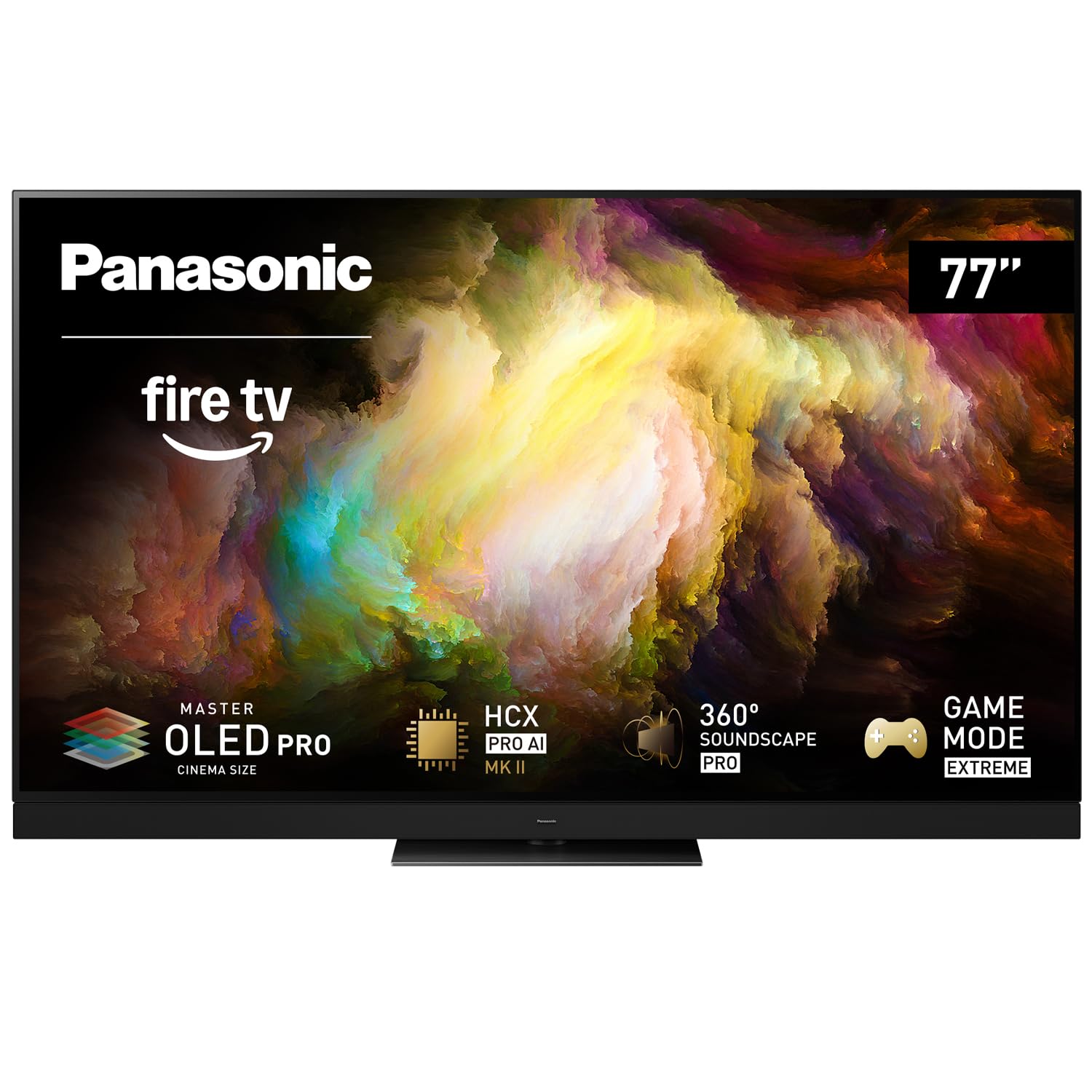
Panasonic returns to the US market with the Z8 Series, featuring a Master OLED PRO panel that prioritizes color accuracy and dynamic contrast. The HCX Pro AI Processor MKII fine-tunes brightness and color scene by scene, delivering Dolby Vision IQ and HDR10+ Adaptive that adjust to ambient lighting without manual intervention. In Filmmaker Mode, color temperature and gamma adhere closely to DCI-P3 and Rec. 709 standards, making it a strong option for calibrated home theaters.
The 360 Soundscape Pro audio system, tuned by Technics, includes upward and side-firing speakers that create a convincing Dolby Atmos bubble—one of the better built-in audio solutions at this size. The panel supports 144Hz refresh rate, AMD FreeSync Premium, and NVIDIA G-SYNC for gaming, though the primary strength remains movie reproduction. Fire TV built-in provides a clean, voice-controlled interface.
Brightness is not as high as the LG G5, so very bright rooms will wash out dark scenes. However, in a controlled lighting environment, the Z8 produces some of the most film-accurate images available. The panel uses a micro-lens-array for improved light efficiency, boosting brightness over previous Panasonic OLEDs without sacrificing black level.
Why it’s great
- Superb factory color calibration for film content
- Impressive built-in Dolby Atmos sound
- Dual HDR support (Dolby Vision IQ and HDR10+ Adaptive)
Good to know
- Lower peak brightness than competing OLEDs
- Heavy unit; needs sturdy wall mount or stand
7. TCL 75″ QM8K Series Mini-LED (75QM8K)
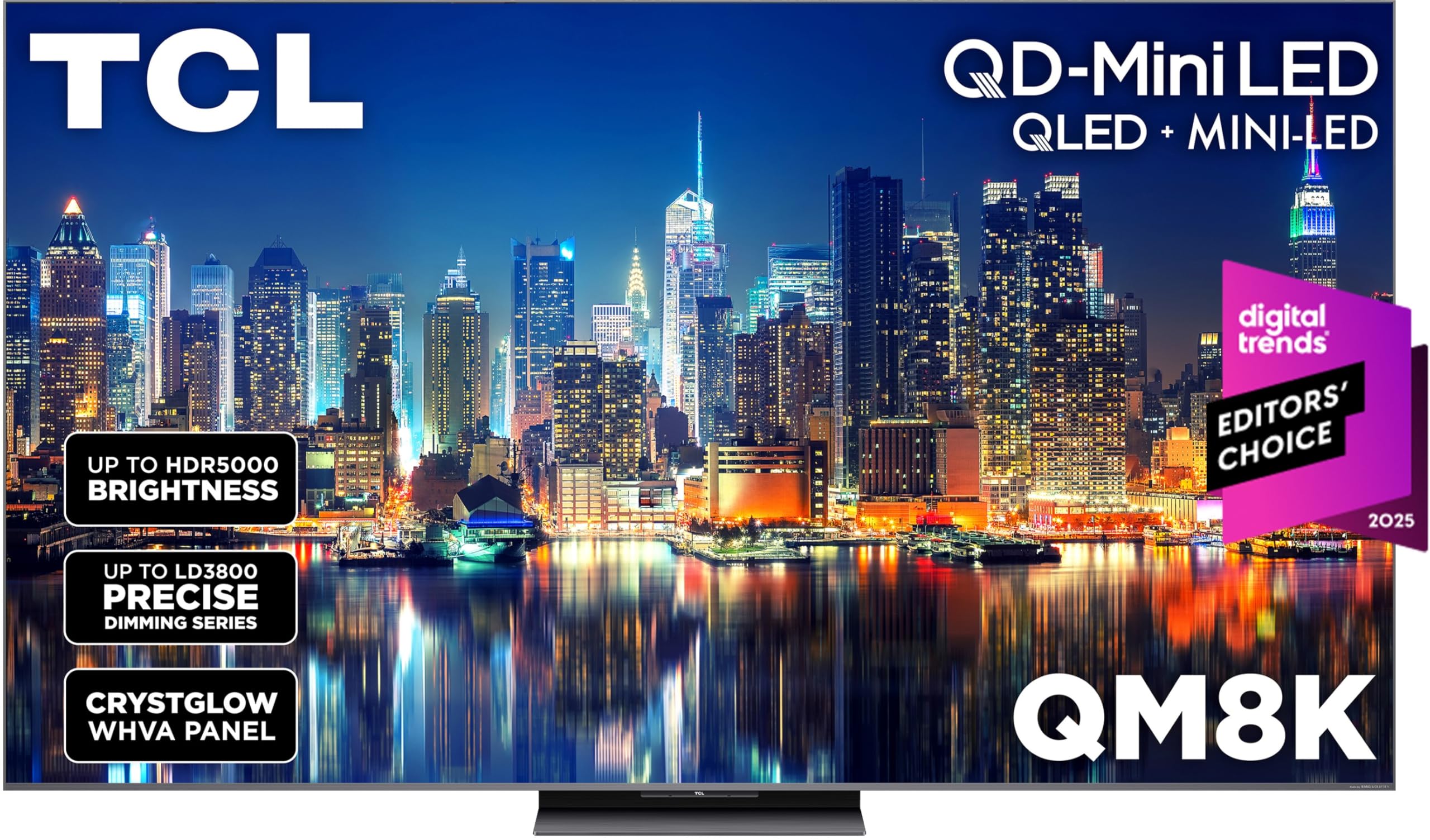
TCL’s QM8K sits as a high-value Mini-LED contender, utilizing the new Halo Control System that combines an upgraded LED microchip, condensed micro lenses, and bi-directional 23-bit backlight control. The result is reduced haloing around bright objects compared to previous QM8 generations. The CrystGlow WHVA panel with anti-reflective coating improves off-angle viewing and reduces glare in living rooms with windows.
Peak brightness reaches around 2,000 nits, providing robust HDR punch without the price of flagship models. Game Accelerator 288 drives VRR up to 288Hz for gaming, but the motion handling for movies is clean with Filmmaker Mode available. Google TV with hands-free voice control and a backlit premium remote makes navigation straightforward. The panel handles 24fps content without judder once motion smoothing is disabled.
The QM8K does not quite match the zone density of the Hisense U7 for blooming suppression, but for the price, it offers one of the best contrast-to-brightness ratios in the Mini-LED market. Built-in audio is clear with good dialogue reproduction, though a soundbar elevates the experience. This is a strong pick for buyers who want premium Mini-LED performance without exceeding a mid-range budget.
Why it’s great
- Excellent brightness for HDR content (2,000 nits)
- Effective anti-glare screen for daytime viewing
- Strong value for QD-Mini LED technology
Good to know
- Some blooming visible in challenging high-contrast scenes
- Hulu app has reported menu lag and sync issues
8. Toshiba 75″ Z670 Mini-LED (75Z670R)
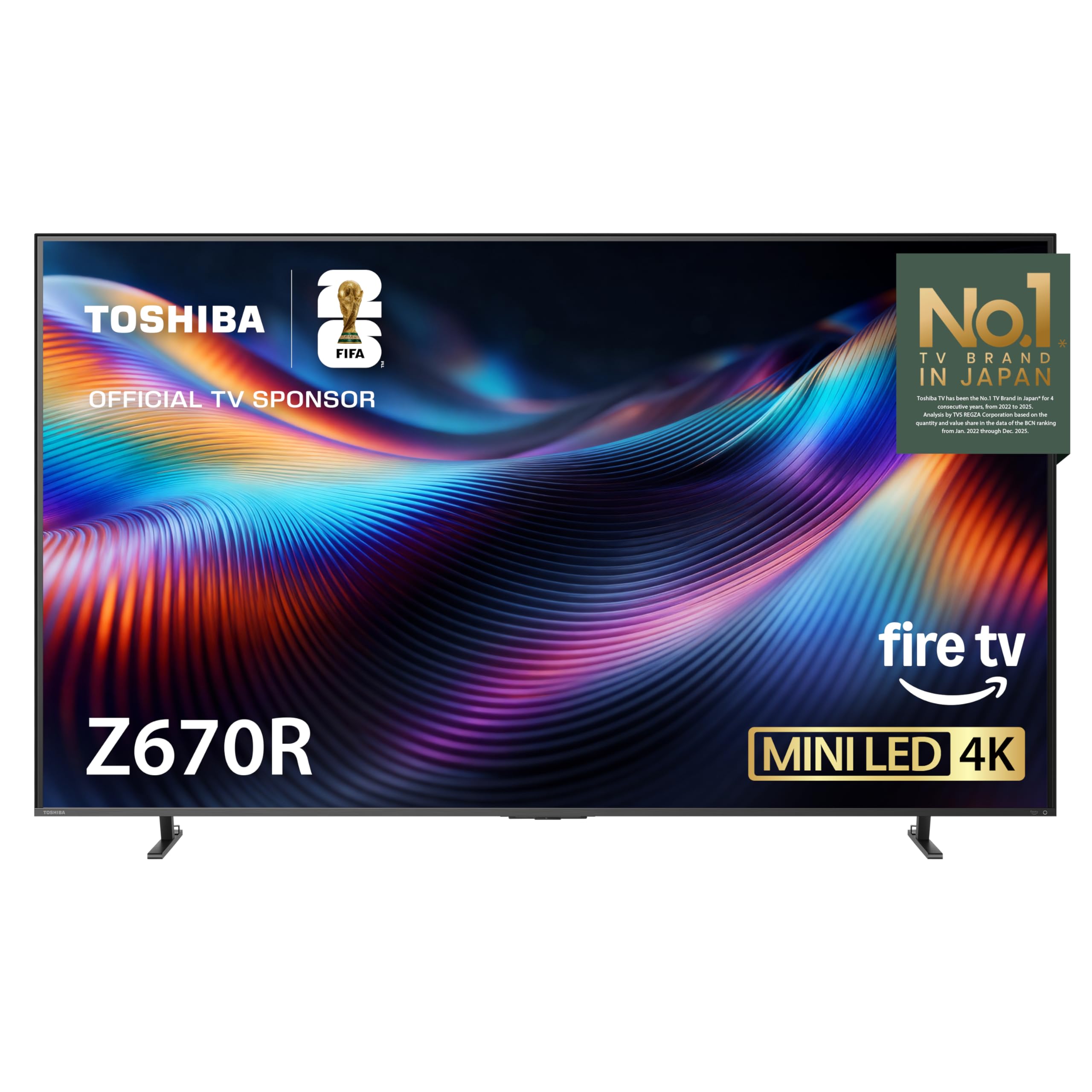
The Toshiba Z670 is a 2026 model that packs Mini-LED with Full Array Local Dimming and REGZA Engine ZRi Gen3 processing into an aggressively priced package. The Mini-LED backlight delivers deeper blacks and brighter highlights than edge-lit alternatives, and the REGZA engine optimizes clarity and contrast scene by scene. Native 144Hz refresh rate ensures smooth motion for both movies and gaming.
QLED color reproduction is vivid, covering over a billion shades with decent accuracy. Dolby Vision IQ, HDR10+, and HLG are supported, making it compatible with the full range of HDR movie content. The built-in REGZA Power Audio Pro with a bass woofer provides room-filling sound that is a step above basic TV speakers, with clear dialogue and surprising low-end punch for an integrated system.
Fire TV interface with Alexa built-in is intuitive and responsive. The panel brightness is lower than premium Mini-LEDs—around 500–600 nits—so HDR impact is less pronounced than the Hisense U7 or TCL QM8K. However, for buyers seeking a large-screen movie TV with Mini-LED contrast at a budget-friendly price, the Toshiba Z670 is a compelling entry point.
Why it’s great
- Mini-LED contrast at a compelling price point
- Good built-in audio with dedicated woofer
- Fire TV interface with Alexa hands-free control
Good to know
- Lower peak brightness limits HDR impact
- Limited local dimming zones compared to higher-tier models
9. Roku 75″ Pro Series Mini-LED
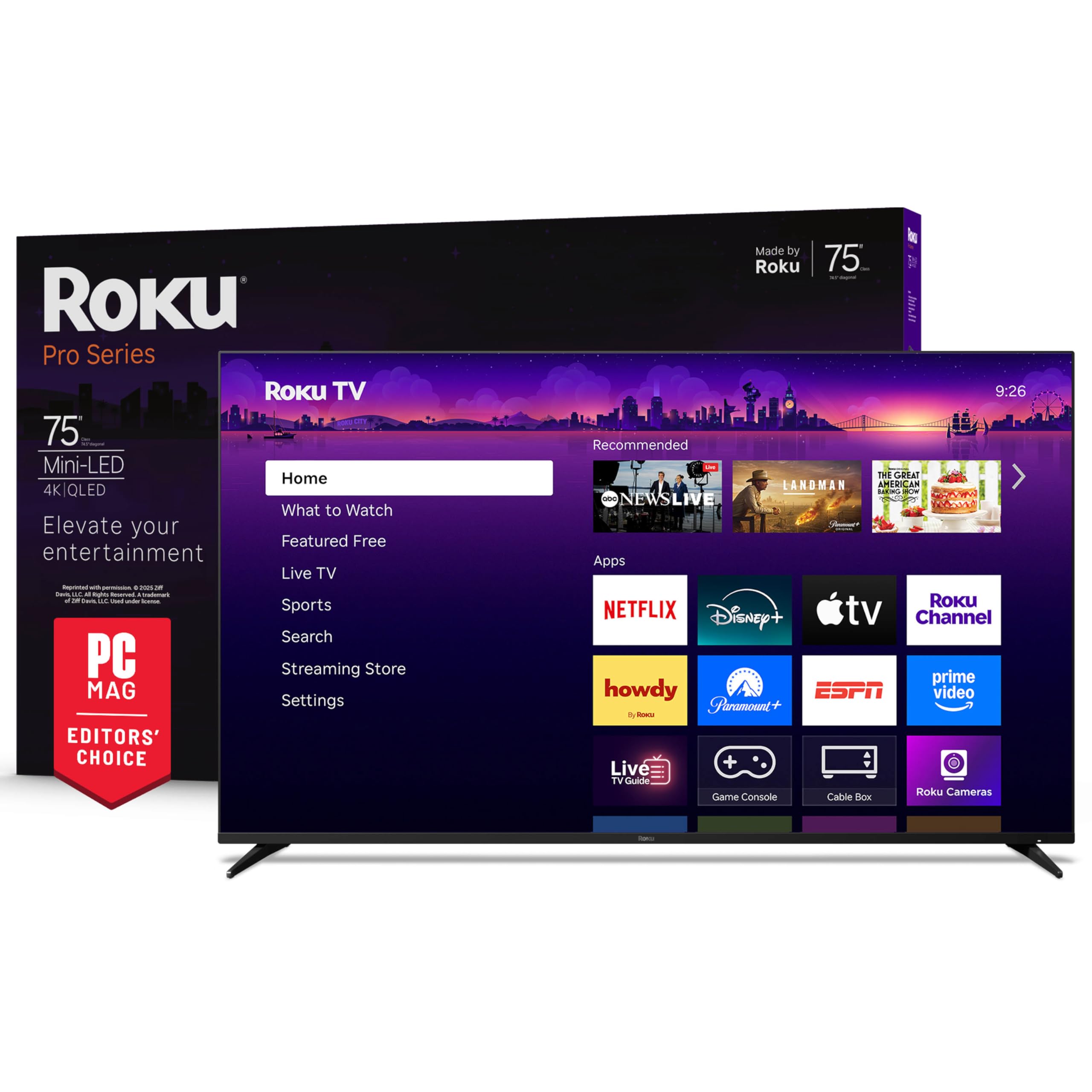
Roku’s Pro Series TV focuses on delivering a polished, user-friendly experience without sacrificing picture quality. The Mini-LED backlight with Dolby Vision IQ produces deep blacks and vivid highlights, though the local dimming zone count is lower than competing Mini-LEDs, resulting in some blooming in challenging scenes. QLED color reproduction is vibrant and satisfying for most movie content.
The 120Hz refresh rate handles 24fps content smoothly with judder reduction, and automatic game mode with FreeSync Premium Pro supports tear-free gaming. However, this set is not designed as a gaming monitor—it is optimized for streaming and casual home theater use. Roku’s Smart Picture Max AI enhancement cleans up lower-resolution signals, making older streaming content watchable at 75 inches.
The standout feature is the Roku operating system itself: fast, intuitive, and free of bloatware. The backlit Voice Remote Pro is rechargeable and includes a remote finder. Roku Soundstage Audio with side-firing speakers creates a wide soundstage, and Bluetooth headphone mode is useful for late-night viewing. For anyone who prioritizes interface simplicity over absolute contrast performance, this is a strong option.
Why it’s great
- Best-in-class smart TV interface speed and simplicity
- Rechargeable remote with backlight and finder feature
- Good built-in sound with side-firing speakers
Good to know
- Blooming noticeable in dark scenes with bright subtitles
- Not optimized for competitive gaming or high-end HDR
10. iFFALCON 75″ Mini-LED (75U85)
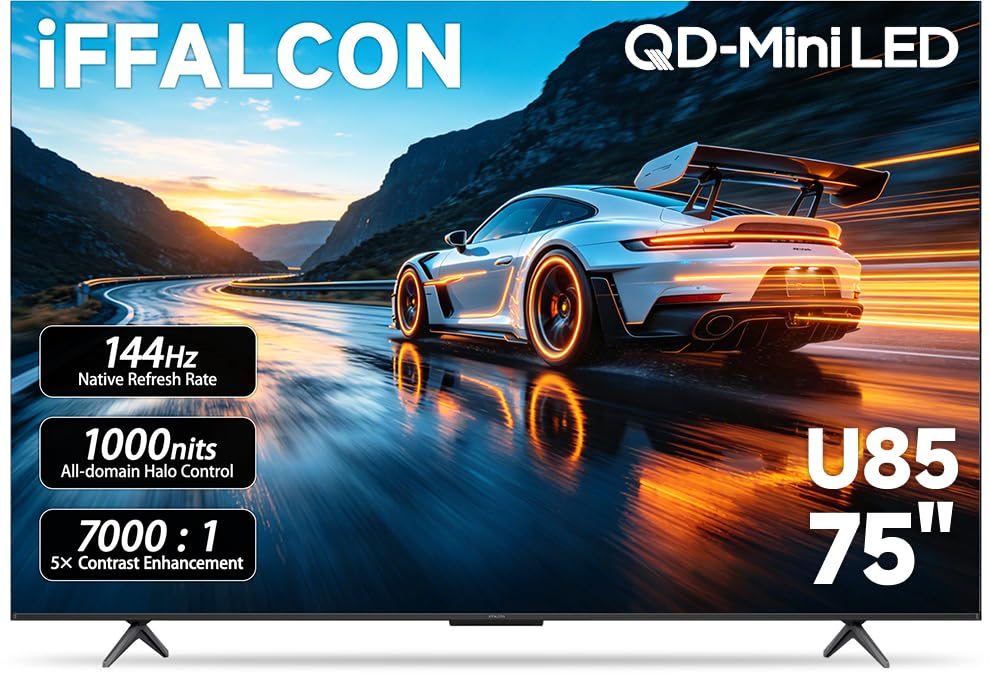
The iFFALCON 75U85 is a Mini-LED set that balances 144Hz native refresh rate, Dolby Vision IQ, and IMAX Enhanced at an accessible price. The Mini-LED backlight with local dimming achieves a 7,000:1 contrast ratio, which provides solid black levels for a Mini-LED in its price bracket. Peak brightness is around 1,000 nits, delivering convincing HDR highlights during movies while maintaining shadow detail.
Four HDMI 2.1 ports include two that support 4K@144Hz, making this a strong hybrid option for mixed movie and gaming use. The built-in 2.1-channel speaker system with Dolby Atmos and DTS Virtual:X produces 50 watts of audio—sufficient for a bedroom or small living room, though a soundbar is recommended for larger spaces. Google TV interface is smooth with far-field voice control and Chromecast built-in.
A unique feature is the built-in Hotel Mode, which allows locking menus and setting default inputs—useful for hospitality or managed environments. While the build quality feels less premium than flagship models, the raw panel performance for movies is impressive relative to the cost. For viewers seeking a feature-rich, large-screen TV that handles both cinema and gaming without compromise, this is a compelling dark horse.
Why it’s great
- Four HDMI 2.1 ports with 144Hz support
- Solid contrast ratio for the price tier
- Hotel mode for flexible installation options
Good to know
- Build quality is less refined than premium brands
- Integrated audio is adequate but not immersive
11. Hisense 75″ CanvasTV S7 Series (75S7SG)
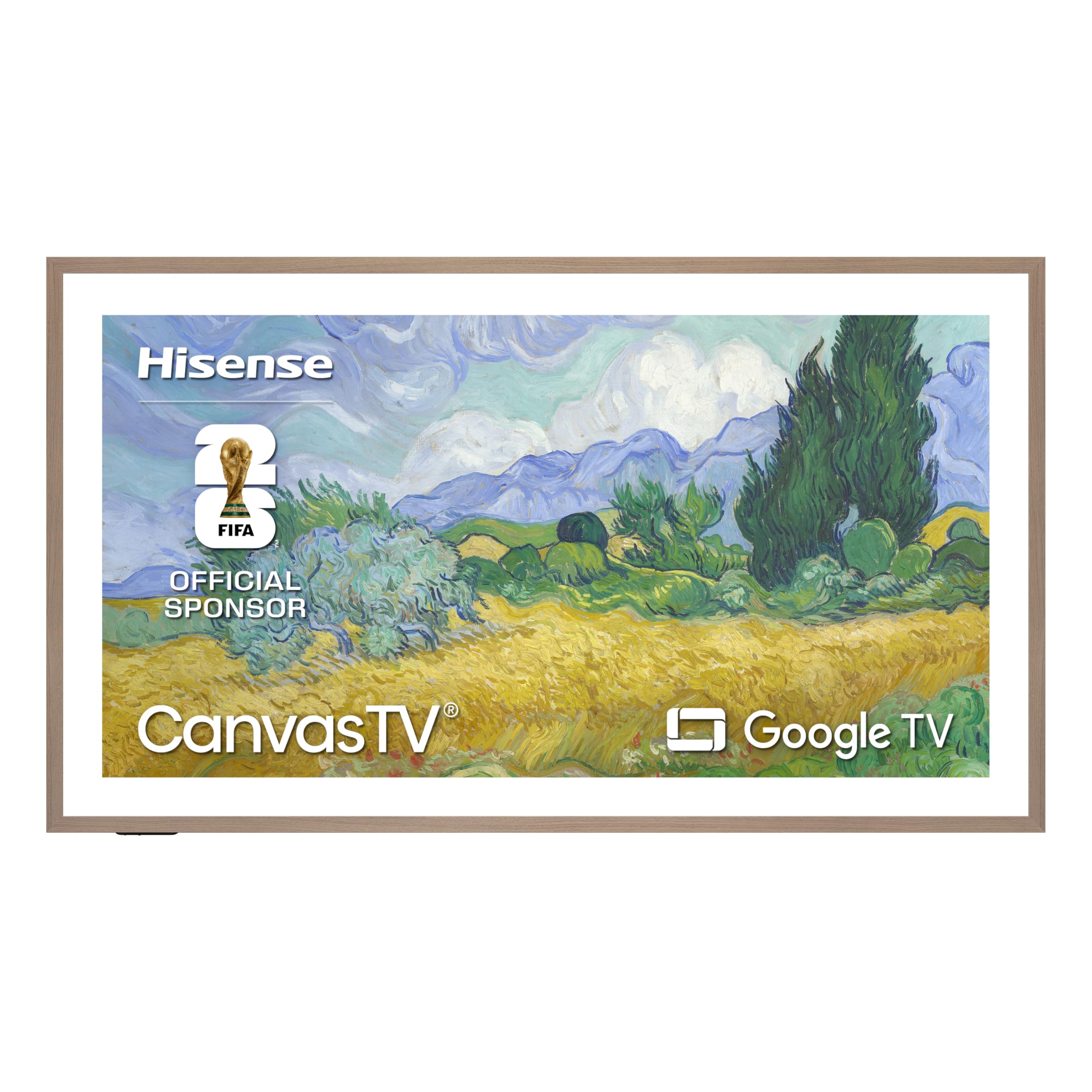
The Hisense CanvasTV is designed for viewers who want a TV that disappears into the room when not in use. The Hi-Matte anti-glare display reduces reflections to a minimum, making the screen look like a matte canvas when displaying artwork. The included Teak Frame and UltraSlim Wall Mount complete the gallery aesthetic. The motion sensor turns the display on when someone enters the room and fades it when empty, saving energy and adding a sense of presence.
Under the art mode exterior lies a 4K Hi-QLED panel with a native 144Hz refresh rate that handles movies competently. Color reproduction is vibrant, and the AI Ambient Light Sensor adjusts brightness and color temperature based on room lighting. The 2.0.2 multi-dimensional sound with DTS Virtual:X creates a reasonably wide soundstage, though bass depth is limited.
Picture quality for movies is solid but not reference-level—peak brightness is lower than dedicated Mini-LED models, and black levels are good for QLED but not OLED-depth. The CanvasTV excels as a lifestyle product that integrates art and entertainment. Viewers who prioritize home decor integration over absolute movie performance will appreciate its thoughtful design.
Why it’s great
- Excellent anti-glare display for art mode
- Magnetic bezel frames and flush wall mount included
- Motion sensor for energy-saving auto on/off
Good to know
- Lower peak brightness than dedicated Mini-LED models
- Art mode processing still looks like a screen, not canvas
12. Samsung 75″ The Frame LS03D (QN75LS03D)

Samsung’s The Frame is the original life-style art TV, and the 2024 LS03D model refines the concept with a Pantone Validated ArtfulColor matte display that mimics the texture of paper. The UL-certified glare-free screen significantly reduces reflections, making art mode convincing even in well-lit rooms. The One Connect Box separates processing and connections into an external puck, reducing cable clutter behind the TV.
Quantum HDR provides decent dynamic range for movie content, and the Quantum Processor 4K upscales streaming content adequately. However, the panel peaks at a lower brightness than purpose-built movie TVs, and the edge-lit backlight means black levels are not as deep as full-array or OLED alternatives. Filmmaker Mode is available and improves accuracy for movie viewing.
The Frame’s ecosystem includes access to 2,500+ artworks via the Samsung Art Store (subscription required), and customizable bezels in various colors and finishes. The Slim Fit Wall Mount is included, enabling a flush wall installation. For homeowners who want a TV that functions as decor 90% of the time and displays movies the other 10%, The Frame is unmatched—but movie purists should look elsewhere for contrast performance.
Why it’s great
- Industry-leading art mode with matte finish
- One Connect Box simplifies cable management
- Customizable bezels for decor matching
Good to know
- Edge-lit panel limits black depth and contrast
- Art Store requires a paid subscription for full library
13. Sony 75″ BRAVIA 5 Mini LED (K-75XR50)

The Sony BRAVIA 5 (XR50) sits as the entry point into Sony’s Mini-LED lineup, packing the XR Backlight Master Drive and XR Processor with AI technology into a more accessible package than the BRAVIA 7 or 9. The Mini-LED array delivers excellent brightness and contrast, with the processor intelligently enhancing color, clarity, and contrast in real-time. XR Triluminos Pro produces over a billion accurate colors, and the panel handles fast motion with XR Motion Clarity without introducing visible flicker.
For movie purists, the BRAVIA 5 includes Dolby Vision, Dolby Atmos, IMAX Enhanced, and DTS:X support, along with Netflix Adaptive Calibrated Mode and Prime Video Calibrated Mode for studio-accurate picture out of the box. The XR Clear Image upscaling is exceptional, making standard-definition and HD content appear sharper than on most TVs—a meaningful benefit for physical media collectors with older discs.
PS5 integration is a highlight: Auto HDR Tone Mapping and Auto Genre Picture Mode optimize settings automatically for games and streaming. Two of the four HDMI ports are HDMI 2.1, which is a limitation for multi-device gamers, but sufficient for most home theater setups. Built-in speakers are decent but benefit from a soundbar. For buyers seeking Sony’s renowned processing and color accuracy without the highest premium tier pricing, the BRAVIA 5 is a balanced choice.
Why it’s great
- Superb AI upscaling for old content
- Studio-calibrated picture modes for Netflix and Prime
- Seamless PS5 integration with auto HDR mapping
Good to know
- Only two HDMI 2.1 ports out of four
- Built-in audio may require soundbar for immersive listening
FAQ
Is OLED or Mini-LED better for a dark home theater?
Does Filmmaker Mode matter for movie watching?
How important is ATSC 3.0 for over-the-air movie channels?
Final Thoughts: The Verdict
For most users, the best 75 inch tv for movies winner is the Hisense 75″ U7 Mini-LED because it delivers the highest available peak brightness, dense local dimming zones, and broad HDR format support at a price that undercuts premium OLEDs while rivaling their contrast performance. If you want perfect black levels and don’t mind controlling room light, grab the LG 77″ G5 OLED for the ultimate image purity. And for a balanced blend of upscaling quality and Mini-LED brightness, nothing beats the Sony BRAVIA 7.

Mo Maruf
I created WellFizz to bridge the gap between vague wellness advice and actionable solutions. My mission is simple: to decode the research and give you practical tools you can actually use.
Beyond the data, I am a passionate traveler. I believe that stepping away from the screen to explore new environments is essential for mental clarity and physical vitality.