Our readers keep the lights on and my smoothie glass nicely filled. As an Amazon Associate, I earn from qualifying purchases.
If you’ve swapped out a factory 6×8 speaker, you already know the pain: the rear deck rattles, the midrange is a muddy smear, and the high end sounds like somebody dropped a cymbal through a pillow. That’s the exact gap this class of speaker is supposed to fill—a direct-fit upgrade that brings real detail to your daily commute without hacking up door panels or adding crossovers.
I’m Mohammad Maruf — the founder and writer behind WellFizz. After combing through hundreds of hours of real owner data and parsing the specs that actually matter (cone material, tweeter type, impedance curves, and sensitivity at 1W/1M), I’ve narrowed down exactly which 6×8 speakers deliver measurable improvement over stock—and which ones just look the part.
Whether you’re running a factory head unit or a small aftermarket amp, this guide will show you exactly where your money makes a difference when shopping for the best 6×8 speakers.
How To Choose The Best 6×8 Speakers
Not all 6x8s are created equal, and the wrong choice can leave you with a speaker that either sounds thin under factory power or demands an amp just to wake up. The key specs to focus on are sensitivity, power handling, tweeter design, and cone construction—each one tells you something specific about how the speaker will behave in your car’s listening environment.
Sensitivity: The Amp-Equivocal Metric
If you’re keeping your stock head unit, sensitivity is the single most predictive spec. A rating of 92 dB or higher means the speaker will produce ample volume with just 1 watt of input. Below 88 dB, and you’ll need to push the volume knob well past halfway—introducing distortion from the factory amp long before the speaker reaches its potential. For direct replacement without an extra amplifier, aim for 90 dB minimum.
Power Handling: RMS Tells the Truth
Peak power ratings are marketing numbers. RMS (continuous) power handling is the spec that tells you what a speaker can sustain. A speaker rated 40W RMS is a safe match for most factory systems (where actual output is often 10-15W clean). If you plan to add an amplifier later, look for RMS ratings of 60W or above—those speakers have larger voice coils and better heat dissipation, so they won’t burn up when you turn the gain up.
Tweeter Type and Crossover Integration
Hard tweeters (PEI, PET, titanium) can deliver sparkling highs but risk harshness on sibilant vocals if the crossover slope isn’t aggressive enough. Soft dome tweeters (silk, polyurethane) produce a warmer, more forgiving top end—ideal for long listening sessions. A built-in high-pass crossover is non-negotiable; without it, the tweeter tries to reproduce bass frequencies it can’t handle and will distort or fail prematurely.
Cone Material and Surround Compliance
Polypropylene cones with rubber surrounds dominate this segment because they offer the best balance of lightweight response and durability in humid car environments. Mica-reinforced IMPP cones (common in Pioneer’s mid-range line) add stiffness for cleaner midbass, while paper cones (found on some entry-level speakers) warm up the sound but absorb moisture over time. Butyl rubber surrounds outlast foam, especially in vehicles parked outdoors in extreme heat or cold.
Quick Comparison
On smaller screens, swipe sideways to see the full table.
| Model | Category | Best For | Key Spec | Amazon |
|---|---|---|---|---|
| KICKER 51KSC6804 | Premium Coaxial | High-volume clarity with OEM+ power | 92 dB sensitivity, polypropylene cone | Amazon |
| Rockford Fosgate Punch P1683 | Premium 3-Way | Audiophile-grade staging on a budget | 65W RMS, 3-way with PEI dome | Amazon |
| Rockford Fosgate Prime R168X2 | Mid-Range Coaxial | Reliable factory replacement with clear highs | 55W RMS, 4-ohm, silk dome tweeter | Amazon |
| Pioneer A-Series TS-A6881F | Mid-Range 4-Way | Widest frequency range for non-amped systems | 80W RMS, 4-way, 30 Hz–32 kHz | Amazon |
| JBL GX8628 | Mid-Range 2-Way | Bright highs with edge-driven soft dome | 3-ohm DCR voice coils, Plus One cone | Amazon |
| CERWIN-VEGA HED H7683 | Mid-Range 3-Way | High-output dynamism at a reasonable cost | 60W RMS, graphite-injected cone | Amazon |
| Pioneer G-Series TS-G6820S | Entry-Level 2-Way | Quick, low-cost fix for blown factory units | 40W RMS, mica IMPP cone, 92 dB | Amazon |
In‑Depth Reviews
1. KICKER 51KSC6804 KS-Series
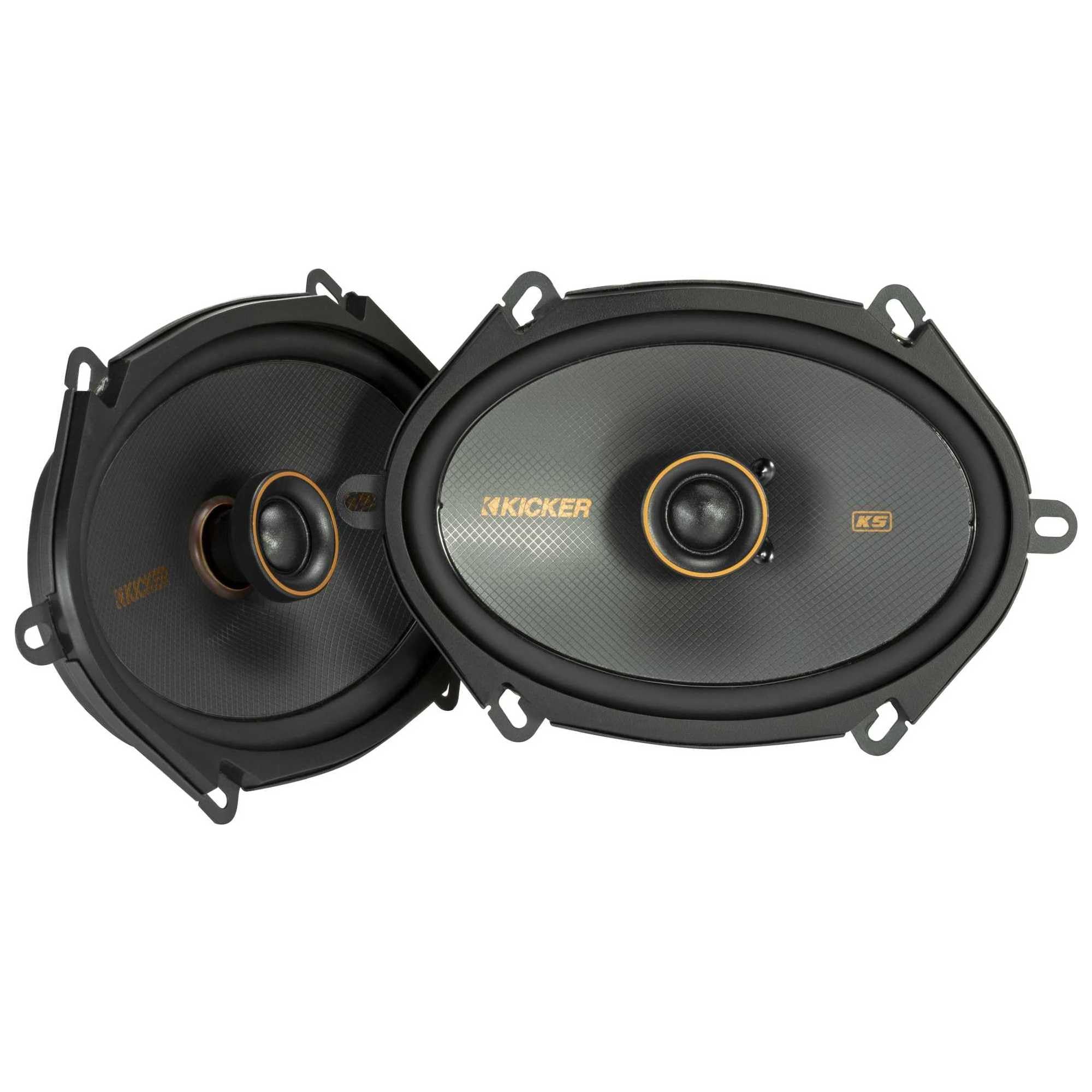
The KICKER KS-Series 51KSC6804 feels engineered for the driver who wants concert-like volume without sacrificing subtlety. Its 92 dB sensitivity means even a factory head unit can drive them to significant levels without strain. The internally dampened polypropylene cone and tough rubber surround combine to deliver punchy midbass and controlled low-end extension—rare for a 6×8 form factor—while the neodymium silk-dome tweeter keeps the top end smooth, not piercing.
Owner feedback consistently mentions a direct fit in a wide range of vehicles, including Jeep JL dash pods and older GMC trucks, often with zero modification required. The minimal tweeter protrusion design is a thoughtful touch that avoids interference with factory grilles. When paired with a modest DSP or aftermarket head unit, these speakers reward you with a warm, detailed soundstage that rivals far more expensive component sets.
The only potential friction point is that the mounting pattern may require drilling a new hole in some Subaru and import models, and the supplied capacitor blocks appear unused in some packages. Still, for the blend of build quality and acoustic composure, the KS-Series is the most versatile and future-proof pick in this segment.
Why it’s great
- Exceptional sensitivity for clean output from low-power sources
- Silk-dome tweeter delivers fatigue-free highs
- Internally dampened cone minimizes distortion at high volume
Good to know
- Some vehicles require a single new mounting hole
- May benefit from sound deadening in door panels for optimal midbass
2. Rockford Fosgate Punch P1683

The Punch P1683 takes everything Rockford Fosgate learned from its Prime line and pushes it further with a 3-way design that separates midrange, treble, and super-high frequencies across dedicated drivers. The injection-molded mineral-filled polypropylene cone with butyl rubber surround produces a taut, accurate bass response that can fool you into thinking there’s a small subwoofer in the trunk. The PEI dome tweeter, paired with a built-in crossover, articulates cymbal crashes and vocal sibilance with crisp separation.
Multiple owners note that these speakers thrive with a proper EQ curve applied—they can sound slightly aggressive on a flat factory head unit, but dialed in, the clarity is stunning. The FlexFit basket design is a standout feature: slotted mounting holes allow a few millimeters of adjustment to align with OEM holes, which saves time on tricky Ford and Chevy door panels. At 65W RMS, they are begging to be paired with a small 4-channel amp for full potential.
The main trade-off is bass depth at low volumes. Without at least 20 clean watts driving them, the low end can feel restrained. If you listen primarily at moderate levels on a stock radio, these may not feel fully utilized. But for the enthusiast who plans a staged upgrade path, the P1683 is an incredible foundation.
Why it’s great
- 3-way design provides superior frequency separation
- FlexFit slots make alignment a breeze
- Butyl rubber surround holds up to extreme weather exposure
Good to know
- Requires adequate amplifier power to unlock full bass potential
- Bright treble may need EQ adjustment for some listeners
3. Rockford Fosgate Prime R168X2

The Prime R168X2 is the speaker you grab when you want proven Rockford Fosgate reliability without the Punch premium. Rated at 55W RMS and 110W peak, it slots neatly into the sweet spot for factory replacement—enough headroom to handle an upgraded head unit, but efficient enough (90 dB sensitivity) to play loud on stock power. The polypropylene cone is lightweight and resistent to moisture, while the flush-mounted silk dome tweeter keeps the top end smooth and non-fatiguing on long drives.
Real-world installs show this speaker drops into Ford F-150s, Honda Civics, and Scion xBs with minimal fuss. The included high-pass crossover is integrated well, protecting the tweeter without adding wiring complexity. Several owners report these speakers surviving minor physical abuse—including a cone tear from a door panel screw—and continuing to play without failure, which speaks to the build tolerance.
Where the R168X2 falls short compared to the Punch series is in outright bass authority; the 2-way design can’t produce the same midbass weight as a 3-way. If you’re running a subwoofer and just need clean midrange and highs, these are a phenomenal match. As a standalone upgrade for a daily driver, they offer the best bang for the buck in this entire list.
Why it’s great
- Proven durability across extreme temperature cycles
- Smooth, non-fatiguing treble with silk dome tweeter
- Easy fitment in most American and Japanese vehicles
Good to know
- Limited bass extension; subwoofer recommended for low-end response
- Some units may have mild treble harshness on complex tracks
4. Pioneer A-Series TS-A6881F

Pioneer’s A-Series TS-A6881F pushes a 4-way architecture—essentially separating the frequency band into four distinct driver segments to minimize intermodulation distortion. With an RMS rating of 80 watts and a frequency response spanning 30 Hz to 32 kHz, it claims the widest bandwidth of any speaker on this list. The mica-reinforced IMPP cone provides stiffness for clean midbass, while the multi-section tweeter array aims to spread the treble load so no single driver gets overwhelmed.
Real-world impressions from F-150 and Mustang owners confirm a significant improvement over factory speakers, especially in clarity at moderate volumes. The 90 dB sensitivity is adequate for stock head units, but the power handling ceiling is high enough that adding a 50W RMS amp later won’t leave you needing to replace the speakers again. Build quality feels solid, with a 1.4-pound weight suggesting a substantial motor assembly.
The downside is that the 4-way design can sound slightly disjointed if the crossover isn’t perfectly matched to the vehicle’s acoustics—some users report a “layered” effect where individual frequencies feel separated rather than blended. Additionally, the mounting depth may be tight in some Ford rear door applications. For the price, though, you get genuine 30 Hz extension that most 6x8s simply can’t deliver.
Why it’s great
- Exceptional frequency range from 30 Hz to 32 kHz
- High RMS power handling supports future amplification
- Stiff mica-reinforced cone reduces distortion at high output
Good to know
- 4-way architecture can sound unblended in some vehicles
- Mounting depth may conflict with certain Ford models
5. JBL GX8628

JBL’s GX8628 leverages the company’s pro-sound heritage with an edge-driven soft dome tweeter and a proprietary Plus One cone that increases the effective radiating area without enlarging the frame. This translates to higher output per watt and a lighter moving mass, which helps the speaker react quickly to transient details like guitar picks and hi-hat accents. The 3-ohm DCR voice coil is an intentional choice—it draws more current from the amplifier than a typical 4-ohm speaker, producing higher volume from the same wattage.
Owners in Mustangs and F-Series trucks consistently praise the clarity of high-frequency reproduction, calling it “concert quality” when paired with a decent head unit. The red-and-black aesthetic is a nice touch for those who show off their install. The speaker mates well with aftermarket amplifiers; several users report dramatic improvement after adding a small 4-channel amp.
The caveat is that the 3-ohm load can stress some factory amplifiers not designed for lower impedance, potentially causing thermal shutdown on extended high-volume sessions. And while the top end is sparkly, the lower midrange can feel slightly recessed compared to speakers with stiffer cone materials. If your listening leans toward vocals and acoustic music, these are a strong contender.
Why it’s great
- Edge-driven soft dome tweeter delivers crisp, extended highs
- Plus One cone increases output without increasing frame size
- Low 3-ohm impedance extracts more power from compatible amps
Good to know
- 3-ohm load may cause overheating in some factory head units
- Midrange presence is slightly subdued versus more rigid cones
6. CERWIN-VEGA HED H7683

Cerwin-Vega built its reputation on high-output live sound, and the HED H7683 brings that DNA to the 6×8 segment. With 60W RMS and 360W peak power handling, these speakers are designed to be driven hard. The graphite-injected cone is stiffer than standard polypropylene, which reduces cone breakup at high excursion and keeps the midrange articulate even when you crank the volume. The 1-inch balanced PEI dome tweeter cuts through road noise without sounding ear-splitting.
Ford F-150 owners and Tacoma users report a noticeable improvement over both factory and entry-level aftermarket speakers, especially in midbass punch. The stamped steel vented frame aids cooling during long listening sessions, and the included mounting hardware simplifies installation. Many users note that these speakers require adequate power—ideally 50 clean watts RMS per channel—to shine; underpowering them leads to a thin, strained sound.
The biggest limitation is the 6×8’s inherent size constraint—these simply can’t match the sub-bass output of a 6×9, as several reviewers honestly note. If you’re expecting window-rattling lows without a subwoofer, manage your expectations. But for dynamic range and the ability to play loud without distortion, the H7683 is a standout at its tier.
Why it’s great
- Graphite-injected cone stays stiff at high output levels
- High 360W peak power handling for aggressive listening
- Vented frame improves heat dissipation under load
Good to know
- Underpowered systems produce thin, strained sound
- 6×8 form factor limits deep sub-bass extension
7. Pioneer G-Series TS-G6820S

If your goal is simply replacing a blown or distorted factory speaker without breaking the bank, the Pioneer G-Series TS-G6820S is the most sensible entry point. Its 40W RMS and 250W peak power handling are conservative numbers, perfectly matched to the 10-15W clean output most factory radios actually deliver. The mica-reinforced IMPP cone adds a stiffness that you typically don’t find at this budget level, which translates to tighter midbass than a plain paper cone can muster.
The 30mm PET hard dome tweeter is bright and clear, though it can lean toward harshness on poorly recorded tracks if the volume is pushed. Sensitivity is rated at 92 dB, so these will play loudly even on anemic head units—a major advantage over lower-sensitivity competitors at the same tier. Installation reports from F-150, Tacoma, and Mustang owners describe a perfect fit with no adapter plates required.
The trade-offs are predictable: the 2-way design struggles with complex midrange reproduction, and the frequency response rolls off sharply above 14 kHz, so the airiest treble details are lost. Bass extension is limited; these will never rattle the license plate. But as a direct swap for blown-in-five-years factory paper cones, they’re the most cost-effective fix you can buy.
Why it’s great
- High 92 dB sensitivity ensures loud output on low-power head units
- Mica-reinforced cone outperforms basic paper cones in durability
- Direct fitment in most American and Japanese trucks and cars
Good to know
- Frequency response capped at 14 kHz loses airy high-end detail
- Midrange can sound muddy on complex, multi-instrument tracks
FAQ
Will 6×8 speakers fit in my car without modification?
What’s the difference between 2-way, 3-way, and 4-way coaxial speakers?
Do I need an amplifier for aftermarket 6×8 speakers?
How important is the surround material for longevity?
Final Thoughts: The Verdict
For most users, the best 6×8 speakers overall are the KICKER 51KSC6804 KS-Series because they combine high sensitivity for stock power with enough RMS headroom to grow into an amplified system later—and the silk-dome tweeter keeps the sound fatigue-free on long drives. If you want the widest frequency range and plan to add an amplifier, the Pioneer A-Series TS-A6881F offers 30 Hz bass extension and 80W RMS that few competitors match. And for a rock-solid budget replacement that outperforms any factory paper cone, the Pioneer G-Series TS-G6820S is the only logical choice at its price tier.

Mo Maruf
I created WellFizz to bridge the gap between vague wellness advice and actionable solutions. My mission is simple: to decode the research and give you practical tools you can actually use.
Beyond the data, I am a passionate traveler. I believe that stepping away from the screen to explore new environments is essential for mental clarity and physical vitality.