Our readers keep the lights on and my smoothie glass nicely filled. As an Amazon Associate, I earn from qualifying purchases.
The market for large-screen televisions has never been more competitive, with Mini-LED and QLED technologies trickling down from flagship prices to become accessible in the 65-70 inch range. Shoppers are no longer forced to choose between size and picture quality — the real battle now is between backlight control, refresh rate capacity, and smart platform efficiency.
I’m Mohammad Maruf — the founder and writer behind WellFizz. Over the past several years, I’ve analyzed hundreds of television specifications, cross-referencing panel types, processor power, dimming zone counts, and HDR compliance to separate genuine performance leaps from marketing language.
My research focuses on identifying the models that deliver the most precise backlight control and motion handling for the investment. This guide breaks down the top contenders that qualify as a legitimate 65-70 inch tv under $1000, emphasizing the specific specs that determine real-world picture quality.
How To Choose The Best 65-70 Inch TV Under $1000
In this price range, you are primarily looking at two panel architectures: standard LED with quantum dot film (QLED) or Mini-LED with quantum dots. The latter offers significantly finer control over local dimming zones, directly translating to higher contrast and reduced blooming around bright objects on dark backgrounds. The key is understanding which specs actually influence your viewing experience versus which are marketing embellishments.
Backlight Architecture: Edge-Lit vs. Full Array vs. Mini-LED
Edge-lit panels place LEDs along the frame and rely on a light guide, resulting in poor local dimming and noticeable blooming. Full array backlighting places LEDs directly behind the panel in zones — the more zones, the better the contrast. Mini-LED shrinks those LEDs further, allowing for hundreds or even thousands of zones, which gives you OLED-like black levels without the burn-in risk. In this budget, prioritize full array or Mini-LED over any edge-lit model, regardless of brightness claims.
Refresh Rate and Motion Handling
Televisions in this class often quote “Motion Rate 240” or similar, but these are software tricks using black frame insertion. The native panel rate — 60Hz or 120Hz — is what determines true motion clarity. For sports and console gaming, a native 120Hz panel with VRR support provides frame pacing without stutter. A 60Hz panel is acceptable for casual viewing and streaming, but if fast motion matters to you, confirm the specification says “native 120Hz” not “effective refresh rate.”
HDR Format Compatibility and Brightness
Dolby Vision is the most widely supported premium HDR format across streaming services, while HDR10+ is more common on Amazon Prime and certain UHD discs. A television that supports both Dolby Vision and HDR10+ (alongside HLG for broadcast) ensures you get optimal metadata-based HDR regardless of source. Peak brightness in this range typically sits between 400 and 800 nits for standard models, while Mini-LED variants can exceed 1000 nits, making a noticeable difference in bright rooms and for specular highlights.
Smart Platform and Ecosystem Lock-In
Fire TV, Google TV, and Samsung Tizen each have different app availability, update cadence, and ad density. Fire TV offers deep Alexa integration but carries more sponsored content on the home screen. Google TV provides a cleaner interface and better integration with Android phones and Chromecast. Samsung’s Tizen offers Samsung TV Plus free channels but lacks Dolby Vision support entirely — a significant omission if you stream from Netflix or Disney+. Choose the platform that matches your streaming habits and smart home ecosystem.
Quick Comparison
On smaller screens, swipe sideways to see the full table.
| Model | Category | Best For | Key Spec | Amazon |
|---|---|---|---|---|
| TCL QM7K Series | Mini-LED QLED | Best Overall Picture | Up to LD2500 Dimming Zones | Amazon |
| Samsung Neo QLED QN70F | Mini-LED QLED | AI Processing & Upscaling | NQ4 AI Gen2 Processor | Amazon |
| Hisense U7 Mini-LED | Mini-LED ULED | High-End Gaming | Native 165Hz & VRR 330 | Amazon |
| Sony BRAVIA 2 (65″) | LED | PS5 Gaming & Color Accuracy | 4K Processor X1 | Amazon |
| Sony BRAVIA 2 (75″) | LED | Largest Screen at Budget | 75″ Class & 4K X1 Processing | Amazon |
| Toshiba Z670R | Mini-LED QLED | Immersive Audio & Picture | REGZA Bass Woofer & 144Hz | Amazon |
| TCL S5 (75″) | LED | Large Screen Value | 75″ Class & Dolby Vision | Amazon |
| Amazon Ember QLED | QLED | Alexa Integration & Smart Home | Full-Array Local Dimming | Amazon |
| Panasonic W70 Series | LED | Reliable Brand & HDMI 2.1 | 70″ Class & HDR Bright Panel | Amazon |
| Hisense E6 Series | QLED | Colorful QLED at Entry Level | Hi-QLED & Dolby Vision/Atmos | Amazon |
| Samsung Crystal UHD U8000F | LED | Budget-Friendly 70″ Size | 70″ Class & 4K Upscaling | Amazon |
In‑Depth Reviews
1. TCL 65″ QM7K Mini-LED QLED (65QM7K)
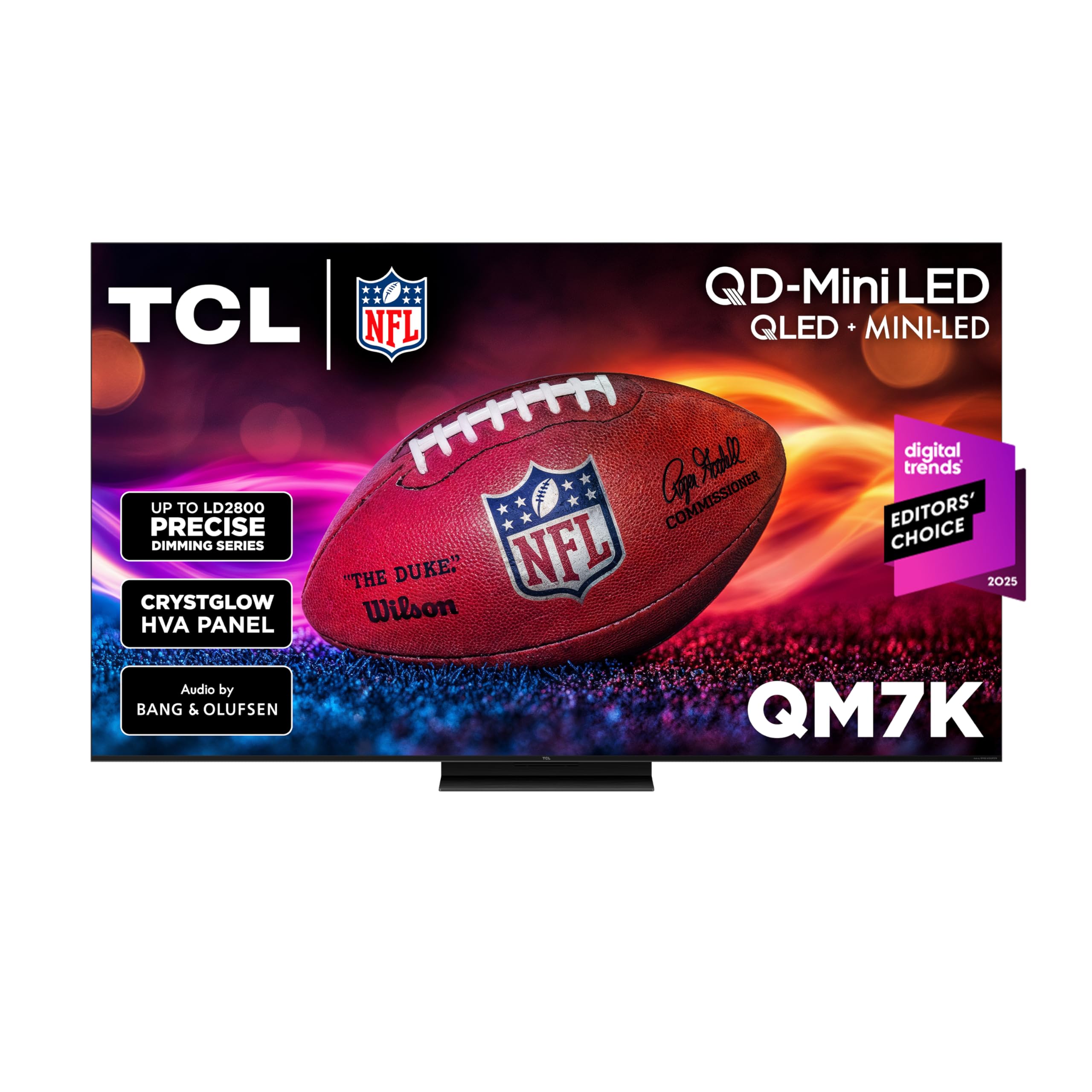
The TCL QM7K Series represents the sharpest intersection of Mini-LED technology and budget accessibility in the 65-inch class. With a claimed LD2500 precise dimming system and a CrystGlow HVA panel that aggressively suppresses reflections, this television delivers deep, uniform blacks and punchy highlights that rival much more expensive sets. The native 144Hz refresh rate, combined with VRR up to 288Hz, makes this a serious contender for both fast-paced console gaming and sports viewing.
The QD-Mini LED backlight architecture, paired with the TCL Halo Control System, produces minimal blooming around subtitles and bright logos in dark scenes — a complaint common with lower-zone count displays. The Onkyo-tuned audio system provides above-average built-in sound, though pairing with a dedicated soundbar unlocks the full Dolby Atmos experience. Google TV runs responsively, though the remote feels utilitarian for a set at this performance tier.
For buyers who prioritize contrast and motion handling above all else, the QM7K delivers Mini-LED performance that closely approaches OLED territory for black levels, without the burn-in anxiety. The combination of a 120Hz native panel, robust local dimming, and HDR brightness that handles bright rooms effectively makes this the most complete package in the 65-70 inch tv under $1000 category for discerning viewers.
Why it’s great
- High zone count Mini-LED delivers exceptional contrast and minimal blooming
- Native 144Hz panel with VRR ideal for competitive gaming
- Anti-reflective HVA panel maintains black levels in lit rooms
Good to know
- Included remote feels cheap relative to TV quality
- Google TV has noticeable bloatware pre-installed
- Built-in speakers lack bass; a soundbar is a worthwhile upgrade
2. Samsung 65″ Neo QLED QN70F (2025)

Samsung’s QN70F leverages the NQ4 AI Gen2 processor with 20 neural networks to perform real-time analysis of every frame, upscaling HD and SDR content to near-4K resolution with impressive texture recovery. The Mini-LED backlight, combined with Quantum Matrix Technology, produces deep blacks and precise highlight control, though the lack of Dolby Vision support remains a notable omission for a panel at this tier. Samsung Vision AI optimizes picture and sound based on ambient conditions and content type automatically.
The Motion Xcelerator 144Hz ensures tear-free gameplay for PC and console gamers, with low input lag that makes fast-twitch titles responsive. The slim metal chassis and aircraft-inspired design language give the television a premium aesthetic that sits flush in most living rooms. Samsung’s Tizen platform offers thousands of free channels via Samsung TV Plus and integrates deeply with Alexa and SmartThings, but the absence of Dolby Vision means HDR from Netflix and Disney+ defaults to HDR10, losing the dynamic metadata advantage.
For Samsung loyalists or those who prioritize AI-driven upscaling and smart home integration over Dolby Vision support, the QN70F is a refined Mini-LED option. The processor handles low-bitrate streaming impressively well, and the overall brightness output suits brightly lit rooms. This is the television to choose if you value processing intelligence and ecosystem continuity over absolute HDR format compatibility.
Why it’s great
- NQ4 AI Gen2 upscaling recovers texture and detail from low-resolution sources
- Mini-LED backlight provides excellent contrast and brightness
- Sleek metal design with very thin bezels
Good to know
- No Dolby Vision support limits HDR performance on many streaming services
- Remote is small and may take time to get used to
- Delivery logistics may require extra coordination
3. Hisense 65″ U7 Mini-LED ULED (65U7SG)
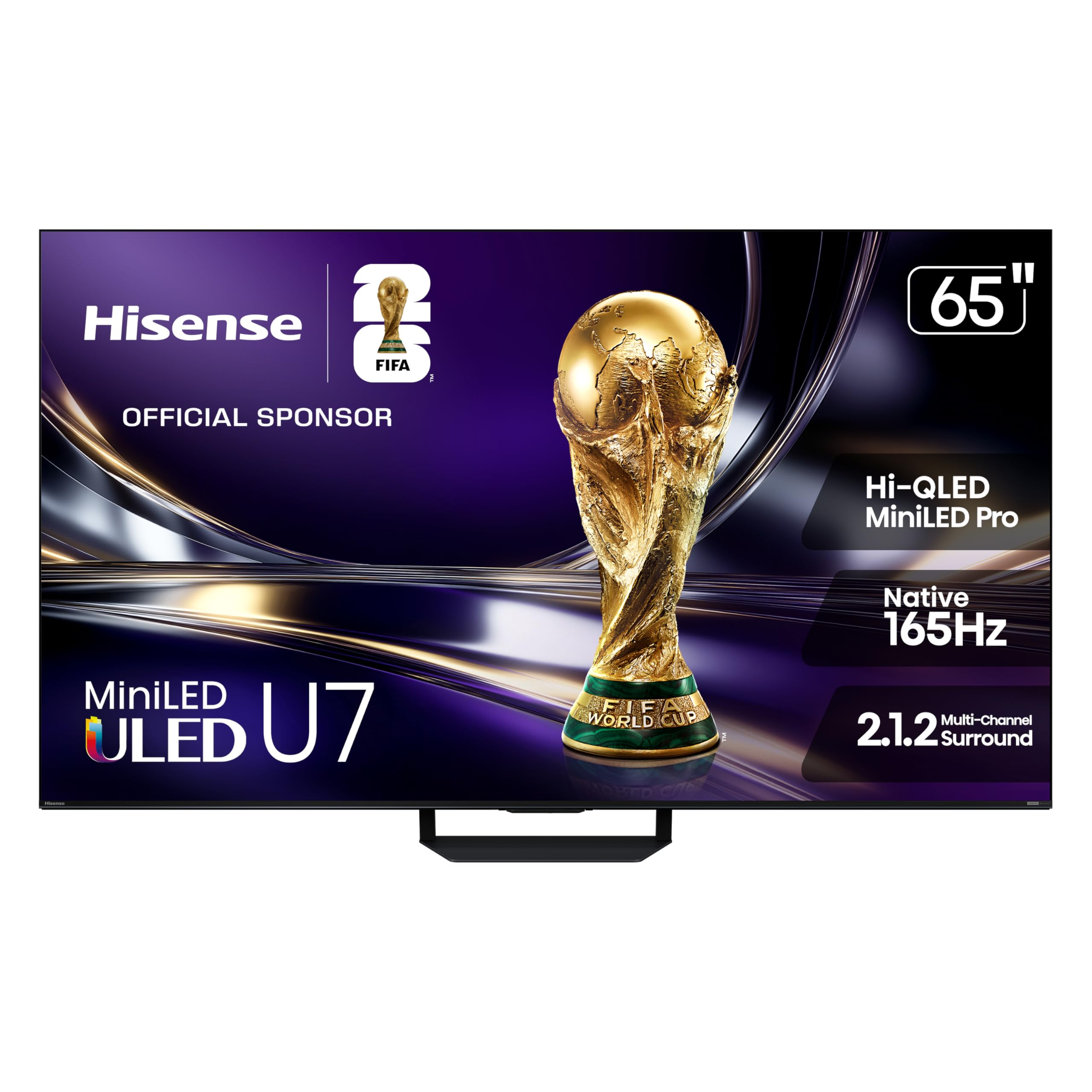
The Hisense U7 Series pushes gaming performance to the forefront with a native 165Hz refresh rate and VRR support up to 330Hz, making it one of the highest refresh rate panels available at this price point. The Hi-QLED MiniLED Pro backlight, with up to 3000 local dimming zones and 3000 nits peak brightness, delivers extraordinary specular highlights and near-OLED black levels. The Hi-View AI Engine Pro analyzes content in real-time to adjust color mapping and contrast dynamically.
What sets this television apart for real-world use is the anti-reflection and glare-free screen treatment. In bright rooms with windows or overhead lighting, the picture remains crisp and contrast-rich without washing out. The integrated 2.1.2 channel speaker system provides fuller sound than typical TV audio, though purists will still want a separate soundbar for true immersion. Filmmaker Mode is included for those who want accurate color reproduction without motion smoothing.
This is the television to choose if your primary use case involves high-frame-rate gaming on PS5, Xbox Series X, or PC, and you watch movies in a room with variable lighting. The combination of high zone count, extreme brightness, and 165Hz native panel puts it in a class of its own for gaming within this budget bracket.
Why it’s great
- Native 165Hz panel with VRR up to 330Hz for elite gaming performance
- Up to 3000 local dimming zones and 3000 nits brightness
- Outstanding anti-glare coating works well in bright rooms
Good to know
- Built-in sound is decent but a soundbar unlocks Dolby Atmos potential
- Requires Bluetooth 5.3+ devices for stable wireless audio sync
- Large 75-inch and 100-inch variants may require two-person setup
4. Sony BRAVIA 2 65″ (K-65S20M2)

Sony’s BRAVIA 2 brings the 4K Processor X1 to the 65-inch class, providing lifelike color reproduction and sharp detail through advanced processing. While this is a standard LED-backlit panel rather than Mini-LED, the processor compensates with superior upscaling and noise reduction. The exclusive features for PlayStation 5 — Auto HDR Tone Mapping and Auto Genre Picture Mode — ensure the console automatically optimizes picture settings without manual adjustment.
The Motionflow XR technology smooths motion effectively for sports and action content, though the native 60Hz panel means it cannot match the fluidity of 120Hz competitors for competitive gaming. Google TV provides access to a wide range of streaming apps, and Apple AirPlay 2 support makes casting from iOS devices seamless. The energy efficiency is notably better than older LCDs, consuming less power while delivering a cleaner image.
For PS5 owners who value color accuracy and processor-driven picture quality over raw refresh rate, this Sony delivers a cohesive ecosystem experience. The lack of Mini-LED backlighting means deeper blacks are not as profound as zone-based competitors, but the natural color science and motion processing keep it competitive for mixed-use households.
Why it’s great
- PS5 exclusive Auto HDR Tone Mapping and Game Menu integration
- 4K Processor X1 delivers natural colors and effective upscaling
- Excellent energy efficiency, consuming less than half of older LCDs
Good to know
- Standard LED panel lacks the black depth of Mini-LED alternatives
- Native 60Hz panel limits gaming fluidity at high frame rates
- Menu defaults to smart home screen rather than TV input
5. Sony BRAVIA 2 75″ (K-75S20M2)
Essentially the same BRAVIA 2 platform in a 75-inch chassis, this Sony provides the largest screen size available within the budget constraint while retaining the 4K Processor X1, Motionflow XR, and PS5 exclusive features. The physical dimensions (56.75-inch base width, 15.5-inch base depth) require a substantial media console, but the immersive benefit of the larger panel is immediate for movie watching and cinematic gaming.
The LED panel with X1 processing handles standard content well, though the absence of local dimming zones means black levels are uniform rather than deep. For buyers whose priority is sheer screen real estate for movies and sports, the 75-inch diagonal is dramatically more immersive than any 65-inch panel, making this a compelling choice despite the backlight limitations. Google TV and Apple AirPlay 2 provide flexible content access.
This television is best suited for buyers who sit at a moderate distance and prioritize size above contrast and refresh rate. The 75-inch Sony BRAVIA 2 gives you Sony’s processing reliability and PS5 integration at the largest possible screen size without exceeding the budget ceiling.
Why it’s great
- Largest 75-inch screen available within this budget tier
- 4K Processor X1 ensures consistent picture quality across content
- Native PS5 integration for automatic HDR and picture mode
Good to know
- Standard LED backlight lacks local dimming for deep blacks
- Native 60Hz panel limits gaming motion clarity
- Large footprint requires a spacious TV stand
6. Toshiba 65″ Z670R Mini-LED QLED (65Z670R)
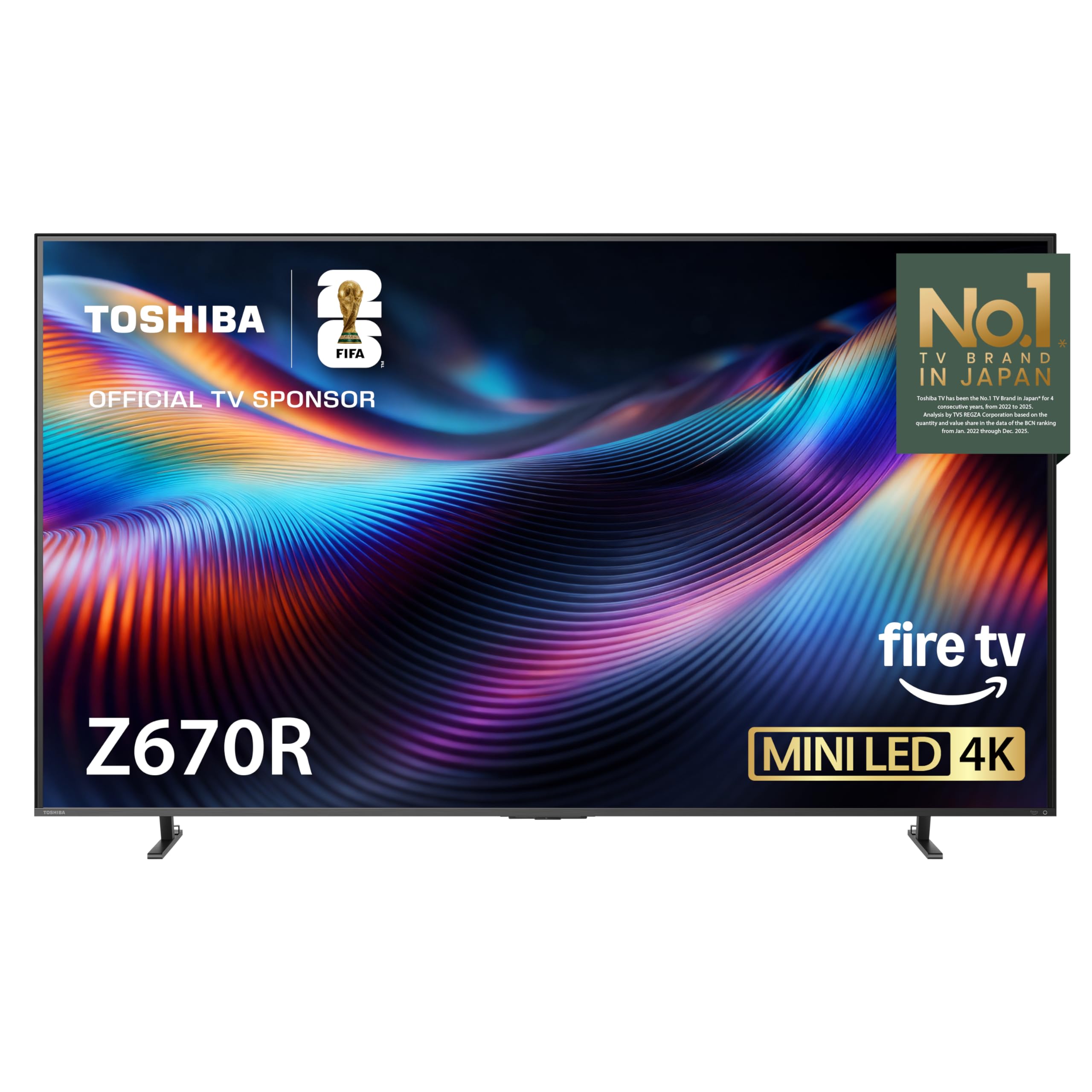
Toshiba’s Z670R Series reintroduces the brand as a serious competitor in the premium budget space, combining a Mini-LED backlight with QLED quantum dot color and a native 144Hz panel. The REGZA Engine ZRi Gen3, fine-tuned by Toshiba engineers in Japan, processes each scene to optimize clarity and contrast dynamically. What truly distinguishes this model is the REGZA Power Audio Pro system, which includes a dedicated bass woofer built into the chassis, delivering room-shaking low-end without a separate soundbar.
The Full Array Local Dimming with Mini-LEDs produces deep blacks and bright highlights, while the Total HDR Solution Pro supports Dolby Vision IQ, HDR10+, and HLG for maximum format compatibility. The AI Light Sensor Pro adjusts brightness and color balance to ambient room conditions, reducing eye strain during long viewing sessions. Fire TV with Alexa built-in provides voice control and smart home integration, though the operating system can feel sluggish if too many apps are running simultaneously.
This Toshiba is the best choice for buyers who want a complete viewing and audio experience in a single package. The built-in woofer eliminates the immediate need for a soundbar, and the combination of Mini-LED backlighting, 144Hz refresh rate, and comprehensive HDR support makes it a versatile performer for movies, sports, and gaming.
Why it’s great
- Integrated bass woofer delivers impactful built-in audio performance
- Native 144Hz panel with VRR for smooth gaming and sports
- Dolby Vision IQ and HDR10+ both supported for universal HDR
Good to know
- Fire TV interface can feel slow with heavy app usage
- Premium audio hardware increases overall depth of the chassis
- Bluetooth 5.0 may have minor lip-sync issues with wireless earbuds
7. TCL 75″ S5 UHD 4K LED (75S551F)

The TCL S5 Series delivers a 75-inch 4K panel at a price point that makes large-screen ownership accessible, while still including Dolby Vision and Dolby Atmos support. The High Brightness LED Backlight and Motion Rate 240 with MEMC frame insertion provide acceptable motion handling for mainstream content, though the lack of local dimming means black levels are typical of edge-lit LED panels rather than the deep blacks of Mini-LED competitors. The Fire TV platform with Alexa built-in offers hands-free voice control and access to thousands of streaming channels.
The Game Accelerator 120 feature provides VRR support up to 120Hz, making this a viable option for console gamers on a tight budget, though the native panel operates at 60Hz with motion enhancement software. Auto Game Mode (ALLM) automatically reduces input lag when a gaming console is detected. The built-in speakers are adequate for casual viewing but lack the power and clarity needed for a large living room, making a soundbar a practical addition.
This television is best for buyers who prioritize screen size above all else and want a recognizable brand with solid HDR format support. The 75-inch panel provides a genuinely cinematic experience for the investment, and the inclusion of Dolby Vision makes it suitable for streaming the latest movies in their intended color grading.
Why it’s great
- 75-inch screen size provides a large, immersive viewing experience
- Dolby Vision and Dolby Atmos supported for enhanced content
- Game Accelerator 120 with VRR for basic console gaming
Good to know
- Edge-lit LED panel produces grayish blacks in dark scenes
- Fire TV interface features prominent Amazon ad placements
- Remote has slight input lag during navigation
8. Amazon Ember 65″ QLED Series (2024 Model)
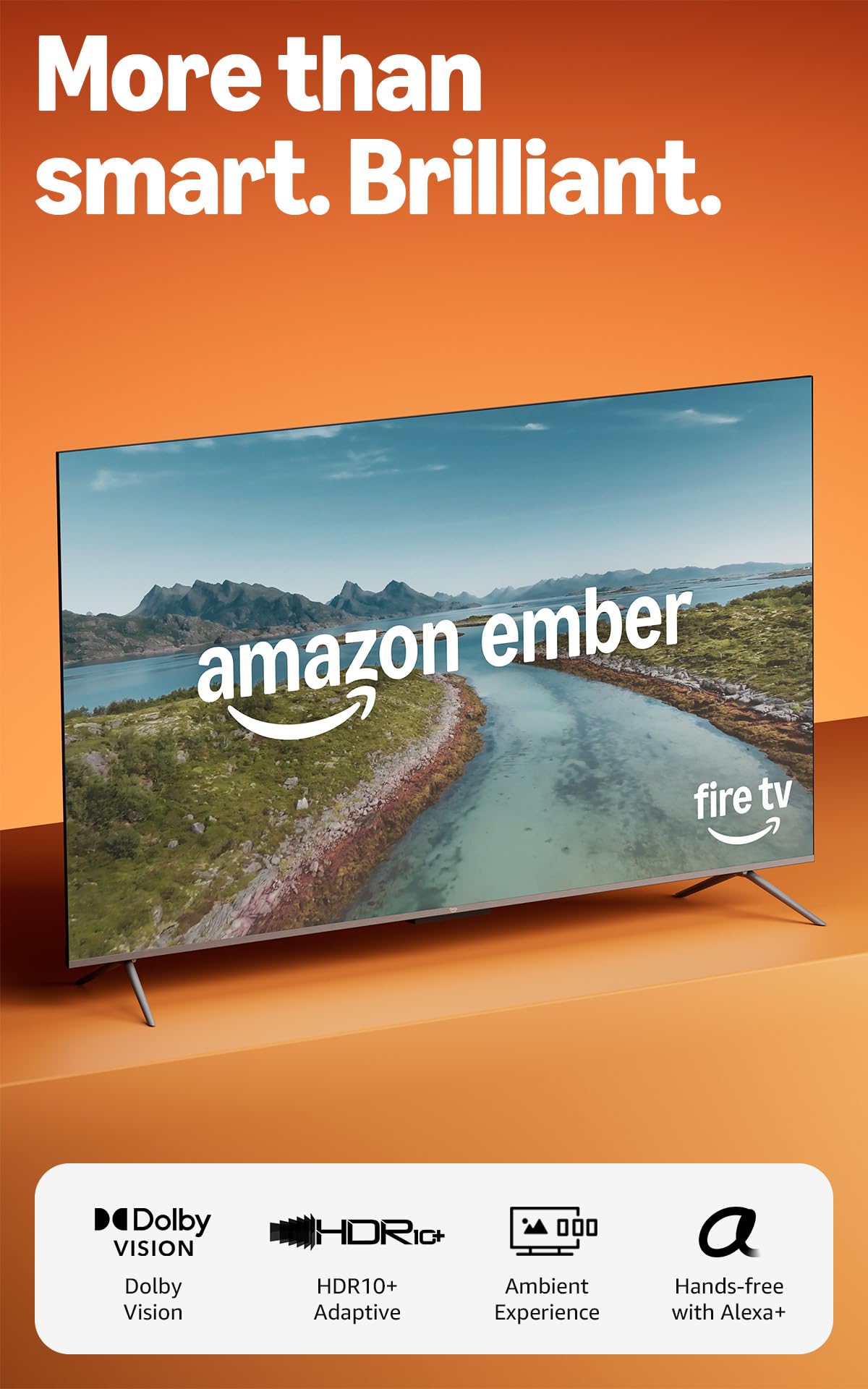
The Amazon Ember QLED Series is designed for deep integration with the Alexa ecosystem, featuring hands-free voice control even when the screen is off, Omnisense technology that wakes the display when you enter the room, and Wi-Fi 6 for fast streaming. The 4K QLED panel with full-array local dimming produces vibrant colors and decent contrast, though the dimming zone count is lower than dedicated Mini-LED competitors, resulting in some blooming around bright objects during dark scenes. Dolby Vision and HDR10+ Adaptive ensure broad HDR format support across streaming services.
The quad-core processor provides snappy app loading, and the built-in Fire TV platform seamlessly aggregates live TV, streaming apps, and free ad-supported content. Amazon Luna and Xbox Game Pass streaming are supported without a console, positioning this as a centralized entertainment hub. The built-in speakers are adequate for news and dialogue but lack the low-end presence for action movies, making a soundbar a recommended addition. The microphone disconnect switch provides a hardware-level privacy control.
This television is ideal for households already invested in Alexa smart home devices. The hands-free wake word detection, combined with the ability to control lights, thermostats, and security cameras from the TV, creates a cohesive smart home hub experience that sets it apart from standard televisions.
Why it’s great
- Deep Alexa integration with hands-free voice control and smart home hub
- Full-array local dimming offers better contrast than edge-lit panels
- QLED panel produces wide color gamut and bright HDR highlights
Good to know
- Built-in speakers require a soundbar for impactful audio
- Local dimming zone count is limited compared to Mini-LED alternatives
- Default 5.1 audio setting may cause dialog sync issues with external speakers
9. Panasonic 70″ W70 Series (70W70BP)

Panasonic’s W70 Series offers a 70-inch LED panel with the HDR Bright Panel powered by the 4K Studio Color Engine, providing solid brightness and acceptable color performance for everyday viewing. The inclusion of four HDMI ports including one HDMI 2.1 input makes it future-proof for next-gen consoles, though the native 60Hz panel limits the benefit of HDMI 2.1 to 4K at 60Hz. Fire TV built-in with Alexa provides voice-remote control and access to major streaming apps.
The MEMC motion compensation technology reduces judder during fast-moving sports and action sequences, though it introduces some soap opera effect that can be disabled for film content. Bluetooth 5.0 allows pairing with wireless headphones for private listening. The metal stand hardware feels sturdy, and the overall build quality reflects Panasonic’s reputation. Some users have reported inconsistent streaming performance due to Fire TV software, particularly when switching between apps rapidly.
This television is a safe choice for shoppers who prefer a legacy brand with reliable build quality and want a 70-inch screen with HDMI 2.1 capability. It does not excel in contrast or motion handling compared to Mini-LED competitors, but it provides a balanced feature set at a comfortable price point for general household use.
Why it’s great
- HDMI 2.1 port included for basic next-gen console compatibility
- 70-inch screen with metal stand provides sturdy, large display
- HDR Bright Panel delivers decent brightness for mixed room lighting
Good to know
- Native 60Hz panel limits motion clarity compared to 120Hz+ competitors
- Fire TV software can be slow when navigating apps
- Standard LED backlight lacks local dimming for deep black levels
10. Hisense 65″ E6 Cinema Series Hi-QLED (65E6QF)
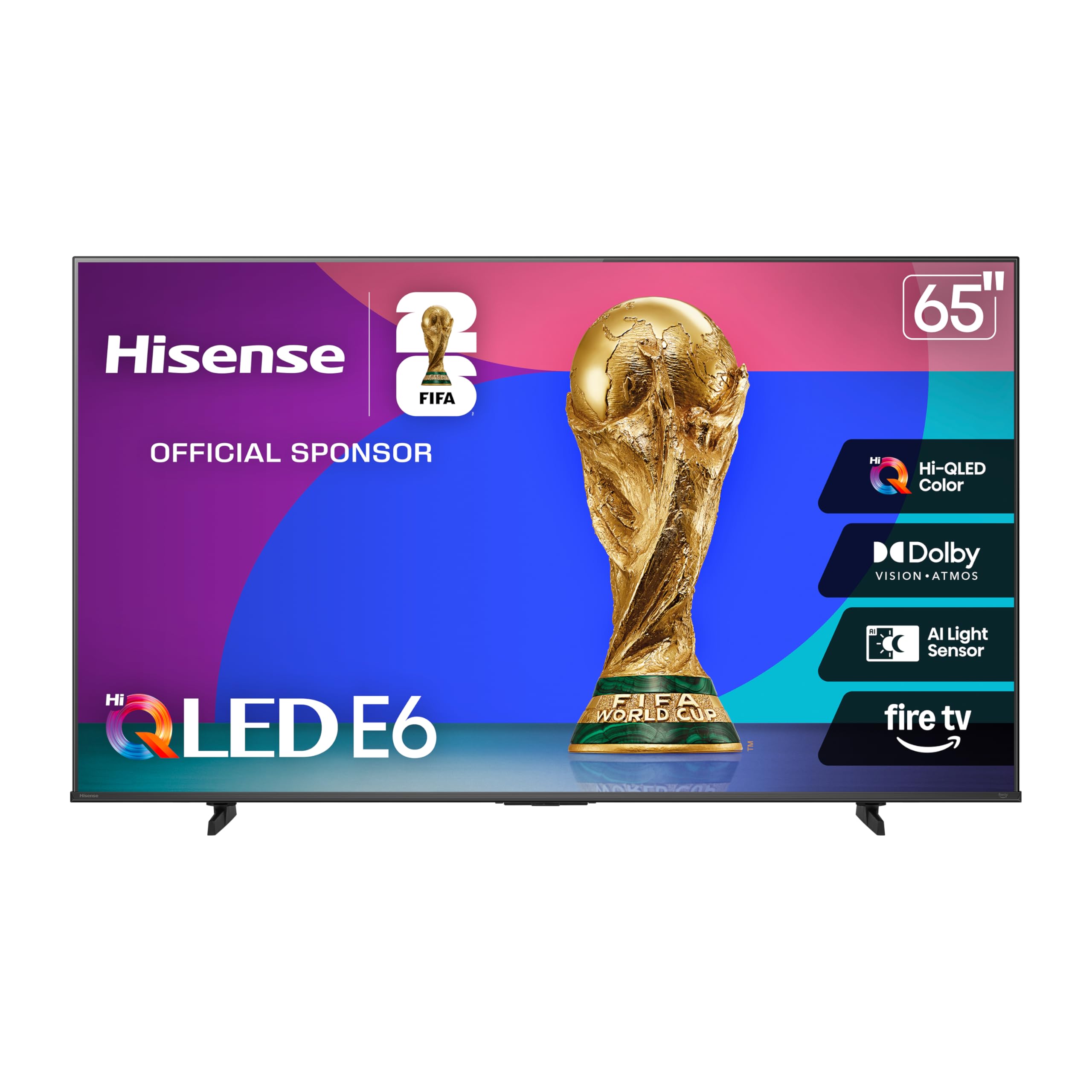
The Hisense E6 Cinema Series brings QLED color technology to an entry-level price point, providing vibrant, saturated colors that outperform standard LED panels in the same bracket. The Total HDR Solution supports Dolby Vision, HDR10+, and HLG, ensuring compatibility with HDR content from every major streaming platform. The Motion Rate 120 specification uses frame interpolation for motion clarity rather than a native high-refresh panel, so competitive gamers should manage expectations around motion fluidity.
Fire TV with Alexa provides voice control and app access, though the interface can feel slightly sluggish during initial app loading. The built-in sound system handles dialogue clearly but lacks the dynamic range for cinematic impact. The thin bezel design gives the television a modern appearance that integrates well into most living spaces. The primary trade-off here is between punchy QLED color saturation and the lack of precise local dimming, which means blacks appear more gray than deep in dark room viewing.
This Hisense is best suited for budget-conscious buyers who want vivid colors and broad HDR compatibility for mixed-content viewing in moderately lit rooms. It is a strong entry-level QLED option that prioritizes color volume over contrast precision.
Why it’s great
- Hi-QLED panel delivers highly saturated, vibrant colors
- Dolby Vision and HDR10+ both supported for universal HDR
- Slim bezel design with a clean, modern aesthetic
Good to know
- Motion Rate 120 uses frame interpolation, not a native high-refresh panel
- No local dimming, resulting in grayish blacks during dark scenes
- Fire TV interface can be slightly slow during app switching
11. Samsung 70″ Crystal UHD U8000F (2025)

Samsung’s Crystal UHD U8000F provides the largest screen size at the lowest entry point, using a standard LED panel with Crystal Processor 4K upscaling. The Motion Xcelerator technology estimates movement between frames to smooth motion at up to 60Hz, which is adequate for standard streaming but lacks the fluidity needed for competitive gaming. The MetalStream design with a single metal sheet and slim bezel gives the TV a premium aesthetic that belies its price tier.
The Samsung Tizen platform offers Samsung TV Plus with hundreds of free channels and deep integration with the Samsung SmartThings ecosystem. Knox Security provides triple-layer protection for personal data and IoT devices connected to the TV. The built-in speakers produce clear dialogue but lack low-end presence for action content. The 100×100 VESA mount pattern is standard but may require an adapter plate for some universal mounts.
This television is best for budget-focused buyers who prioritize brand reliability and large screen size over advanced picture features. It serves well as a secondary living room TV, a bedroom unit, or for casual viewing where deep contrast and high refresh rates are not critical requirements.
Why it’s great
- 70-inch screen at the most accessible entry price in Samsung’s lineup
- MetalStream design with slim bezel looks more premium than the price suggests
- Crystal Processor 4K provides effective upscaling for HD content
Good to know
- Standard LED panel lacks local dimming for deep black levels
- Native 60Hz panel with motion interpolation, not true 120Hz
- VESA mount requires a 100×100 adapter for some universal brackets
FAQ
Is Dolby Vision important for a TV under $1000?
What is the real difference between QLED and Mini-LED?
Can I use a soundbar with any of these televisions?
What HDMI version do I need for PS5 or Xbox Series X?
Final Thoughts: The Verdict
For most users, the clear winner for a 65-70 inch tv under $1000 is the TCL 65″ QM7K Mini-LED QLED because it delivers exceptional local dimming zone density, a native 144Hz panel, and an anti-reflective screen that performs well in bright rooms — all hallmarks of a premium viewing experience without exceeding the budget. If you prioritize AI-driven upscaling and a refined smart ecosystem, grab the Samsung 65″ Neo QLED QN70F. And for high-frame-rate gaming enthusiasts, nothing beats the Hisense 65″ U7 Mini-LED ULED with its native 165Hz panel and extreme VRR support.

Mo Maruf
I created WellFizz to bridge the gap between vague wellness advice and actionable solutions. My mission is simple: to decode the research and give you practical tools you can actually use.
Beyond the data, I am a passionate traveler. I believe that stepping away from the screen to explore new environments is essential for mental clarity and physical vitality.