Our readers keep the lights on and my smoothie glass nicely filled. As an Amazon Associate, I earn from qualifying purchases.
Buying a 4K projector under $2000 means you’re hunting for true cinematic detail without stepping into the + arena. The challenge isn’t finding a projector—it’s finding one that delivers genuine pixel resolution, high brightness, and low input lag rather than marketing tricks.
I’m Mohammad Maruf — the founder and writer behind WellFizz. I’ve analyzed 4K projector hardware specs across DLP, LCD, and laser platforms, dissecting brightness curves, contrast ratios, and connectivity standards to find models that actually justify their price tag.
After evaluating over 40 projectors across brightness levels, pixel-shifting technologies, and real-world HDR performance, I’ve curated the definitive list of the best 4k projector under $2000 that balances image quality, gaming responsiveness, and long-term reliability.
How To Choose The Best 4K Projector Under $2000
The sub-$2000 4K projector market is dense with DLP, 3LCD, and laser models that all claim “4K” but deliver very different pixel structures. The key is matching your room’s light level, screen size, and content type—gaming versus movies—to the right projection technology.
Brightness and Ambient Light Tolerance
For a dedicated dark room, 2,000 ANSI lumens is sufficient for a 120-inch image. If you watch with some ambient light, target 3,000 ANSI lumens or higher. Note that DLP projectors often advertise white brightness, while 3LCD models deliver equal color and white brightness—critical for vibrant HDR content in mixed lighting.
True 4K vs. Pixel-Shifting 4K
Nearly every projector under $2000 uses pixel-shifting (XPR on DLP, Precision Shift on 3LCD) to achieve 3840×2160 resolution. Native 4K chips from Sony and JVC start above . The practical difference diminishes at normal seating distances (10–15 feet from a 120-inch screen). Look for models with 8.3 million pixel addresses rather than those that only accept a 4K signal but output lower native resolution.
Gaming Performance: Input Lag and Refresh Rate
Competitive gamers should prioritize low input lag (under 20ms at 4K/60Hz) and high refresh rate support (1080p/240Hz). BenQ’s TK series and ViewSonic’s PX701-4K lead here. For single-player cinematic gaming, 4K/60Hz with HDR at 16-20ms lag feels responsive. Ensure the projector has HDMI 2.0 inputs—HDMI 2.1 is rare at this price point.
Contrast Ratio and Black Level Performance
Dynamic contrast ratios over 100,000:1 help shadow detail in HDR scenes, but native on/off contrast matters more for dark room viewing. DLP projectors typically achieve 10,000:1 native contrast, while 3LCD models can exceed 100,000:1. Laser projectors in this range offer the best balance—600,000:1 dynamic contrast with deep blacks and no rainbow artifacts.
Throw Ratio and Flexibility
Measure your room’s depth before buying. A standard throw projector like the BenQ TK700 requires 8.2 feet for a 100-inch image. If you place the projector close to the wall, an ultra-short throw model like the LG CineBeam S fits tight spaces. Vertical/horizontal lens shift simplifies ceiling mounting without keystone distortion—a feature worth prioritizing.
Quick Comparison
On smaller screens, swipe sideways to see the full table.
| Model | Category | Best For | Key Spec | Amazon |
|---|---|---|---|---|
| BenQ TK710 | Laser | Gaming & Movies | 4ms @ 1080p/240Hz | Amazon |
| Optoma UHZ36 | Laser | Dark Room Theater | 1,500,000:1 Dynamic | Amazon |
| Epson HC 3800 | 3LCD | Color Accuracy | 100% RGB per frame | Amazon |
| BenQ TK700 | DLP | Console Gaming | 16ms @ 4K/60Hz | Amazon |
| ViewSonic PX701-4K | DLP | Esports/240Hz | 4.2ms @ 1080p/240Hz | Amazon |
| VOPLLS G7 | LCD Smart | All-in-One Streaming | 3000 ANSI + Google TV | Amazon |
| LG CineBeam S PU615U | Laser UST | Small Spaces | 0.2:1 Throw Ratio | Amazon |
In‑Depth Reviews
1. BenQ TK710

The BenQ TK710 strikes the best balance in the sub-$2000 range by pairing a laser light source—30,000-hour lifespan—with 3,200 ANSI lumens. This means no bulb replacements for a decade of heavy use, and enough brightness to handle a 120-inch screen with some ambient light. The 4ms response time at 1080p/240Hz makes it a serious gaming projector, not just a movie machine.
HDR performance is strong thanks to the Dynamic Function that adjusts the laser output in real-time, pulling up shadow detail that many DLP projectors crush. The 600,000:1 dynamic contrast produces deep blacks in dark scenes, and Rec.709 coverage hits 95% for accurate skin tones out of the box. The 1.3x zoom and vertical lens shift give flexible placement without degrading image quality through digital keystone.
What sets it apart is the absence of rainbow effect artifacts that plague some single-chip DLP projectors. The laser phosphor engine delivers clean whites, and the fan noise stays low even in high brightness mode. For a mixed-use living room where gaming and movie nights coexist, this is the all-around winner.
Why it’s great
- Laser light source eliminates bulb changes
- Ultra-low 4ms input lag for competitive gaming
- Vertical lens shift and 1.3x zoom for flexible mounting
Good to know
- No built-in smart OS—needs external streamer
- Black levels in dark scenes can appear grayish without dynamic contrast enabled
2. Optoma UHZ36
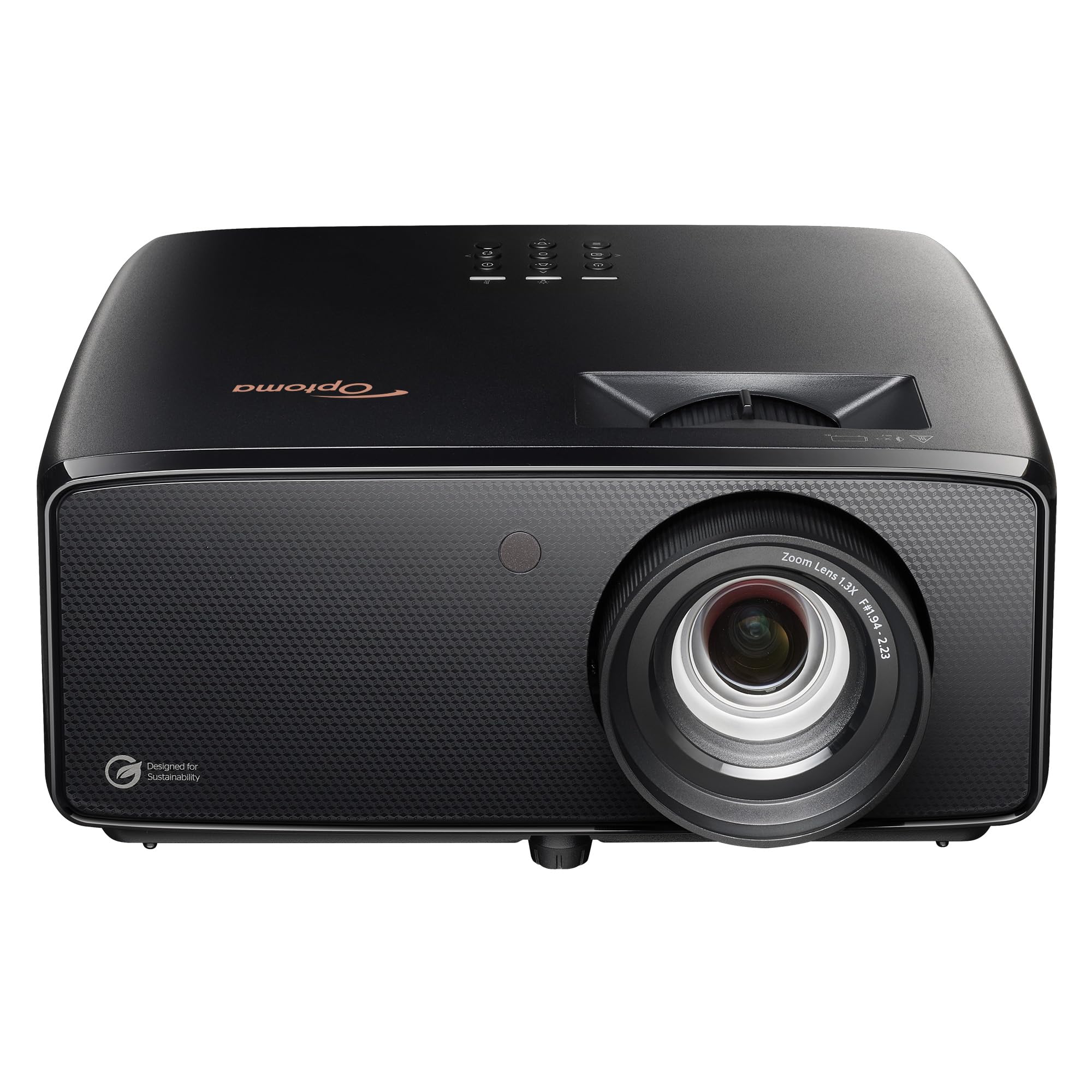
The Optoma UHZ36 is a 4K DLP laser projector that prioritizes pure image quality over smart features. With 3,500 ANSI lumens and a 1,500,000:1 dynamic contrast ratio, it delivers punchy HDR highlights and deep blacks that approach home-theater-reference levels. The Filmmaker Mode disables motion smoothing and preserves the director’s original frame rate and color grading.
Unlike many models in this range, the UHZ36 uses a full laser source with 30,000 hours of rated life, so you don’t have to budget for lamp replacements. The manual keystone and lens shift are robust, though you’ll need to physically place it accurately because digital correction reduces resolution slightly. External reviewers consistently note minimal rainbow effect on this unit compared to older Optoma DLP projectors.
One trade-off: there’s no built-in smart platform. You’ll need a Fire Stick, Apple TV, or Roku. The included RCA connectivity is limited—two HDMI inputs and a USB-A slot. If you run a dedicated media player and want the best contrast at this price, the UHZ36 is hard to beat.
Why it’s great
- Filmmaker Mode preserves original cinematic intent
- 1,500,000:1 dynamic contrast with excellent shadow detail
- 3500 ANSI lumens suits light-controlled rooms
Good to know
- No smart TV OS—external streamer required
- Limited connectivity: only 2 HDMI ports
3. Epson Home Cinema 3800

The Epson HC 3800 uses a 3-chip 3LCD engine that outputs 100% of the RGB color signal for every frame—eliminating the rainbow effect that some viewers notice on DLP projectors. With 3,000 lumens of equal color and white brightness, it produces vibrant HDR images that hold up better in rooms with ambient light than many DLP competitors rated at higher white lumens.
Pixel-shifting technology drives the 3840×2160 resolution, and Epson’s PRO-UHD processing enhances contrast with a full 10-bit HDR pipeline. The 100,000:1 contrast ratio with auto iris delivers solid black levels for a lamp-based projector. The dual 10W speakers are usable for casual viewing, and aptX Bluetooth lets you stream audio to a soundbar wirelessly.
Long-term owners highlight the 3800’s reliability over multiple years, with one reviewer noting five years of daily use without issues. The motorized zoom and lens shift make ceiling-mount alignment dead simple. If you want worry-free color accuracy and no rainbow effect, this remains a benchmark value option.
Why it’s great
- Zero rainbow effect—pure 3-chip LCD color
- Equal color/white brightness at 3000 lumens
- Motorized zoom and lens shift for easy ceiling mount
Good to know
- Lamp needs replacement every 3000–4000 hours
- No 120Hz support for high-frame-rate gaming
4. BenQ TK700

The BenQ TK700 is built explicitly for console gamers who want a 100-inch screen with low input lag. At 16ms for 4K/60Hz, it’s fast enough for fast-paced shooters and sports titles, and the 3200-lumen brightness ensures HDR games like Horizon or Cyberpunk pop with vivid highlights. The 10000:1 native contrast gives decent black depth without crushing shadow detail.
It projects a 100-inch image from 8.2 feet, which fits standard living room depths. The auto keystone and 3D support add flexibility, though Fast Mode disables keystone correction to minimize lag. Owners consistently praise the motion clarity—no smearing in rapid camera pans. The integrated 5W chamber speaker with Dolby Atmos decoding handles casual viewing but most gamers will pair it with a dedicated audio system.
Some units have reported dead pixel issues after extended use, so buying from a retailer with a solid return policy is smart. For pure gaming responsiveness at 4K, the TK700 delivers the lowest input lag in its class without sacrificing image quality.
Why it’s great
- 16ms input lag at 4K/60Hz—console-optimized
- High 3200-lumen brightness for HDR gaming
- Works seamlessly with PS5 and Xbox Series X
Good to know
- Fast Mode disables keystone for lowest lag
- Some units show dead pixels after 2-3 years
5. ViewSonic PX701-4K

The ViewSonic PX701-4K is the go-to for PC gamers who demand 240Hz refresh rates. At 1080p/240Hz with 4.2ms input lag, it rivals many gaming monitors in responsiveness while throwing a 100-inch image. The 4K UHD resolution via pixel-shifting is effective for movies and story-driven games, but the projector truly shines in high-frame-rate competitive titles like Valorant or Overwatch.
SuperColor technology and HDR/HLG support deliver vibrant colors with 3200 ANSI lumens of brightness. The 1.1x optical zoom and H/V keystone provide flexible placement, and the curved screen projection support allows for immersive setups. Owners frequently note the auto keystone works perfectly and the fan is quiet enough for living room use.
A minor downside: the power cord is short, so plan your outlet placement or use an extension cord. The lamp life is rated at 20,000 hours but some users report failures around 1.5 to 2 years. For pure esports-grade performance at the lowest price point, this is unmatched.
Why it’s great
- 240Hz refresh rate with 4.2ms input lag
- Very bright—usable in moderate ambient light
- Supports 3D content
Good to know
- Short power cord limits placement options
- Lamp failures reported between 1.5–2 years
6. VOPLLS G7
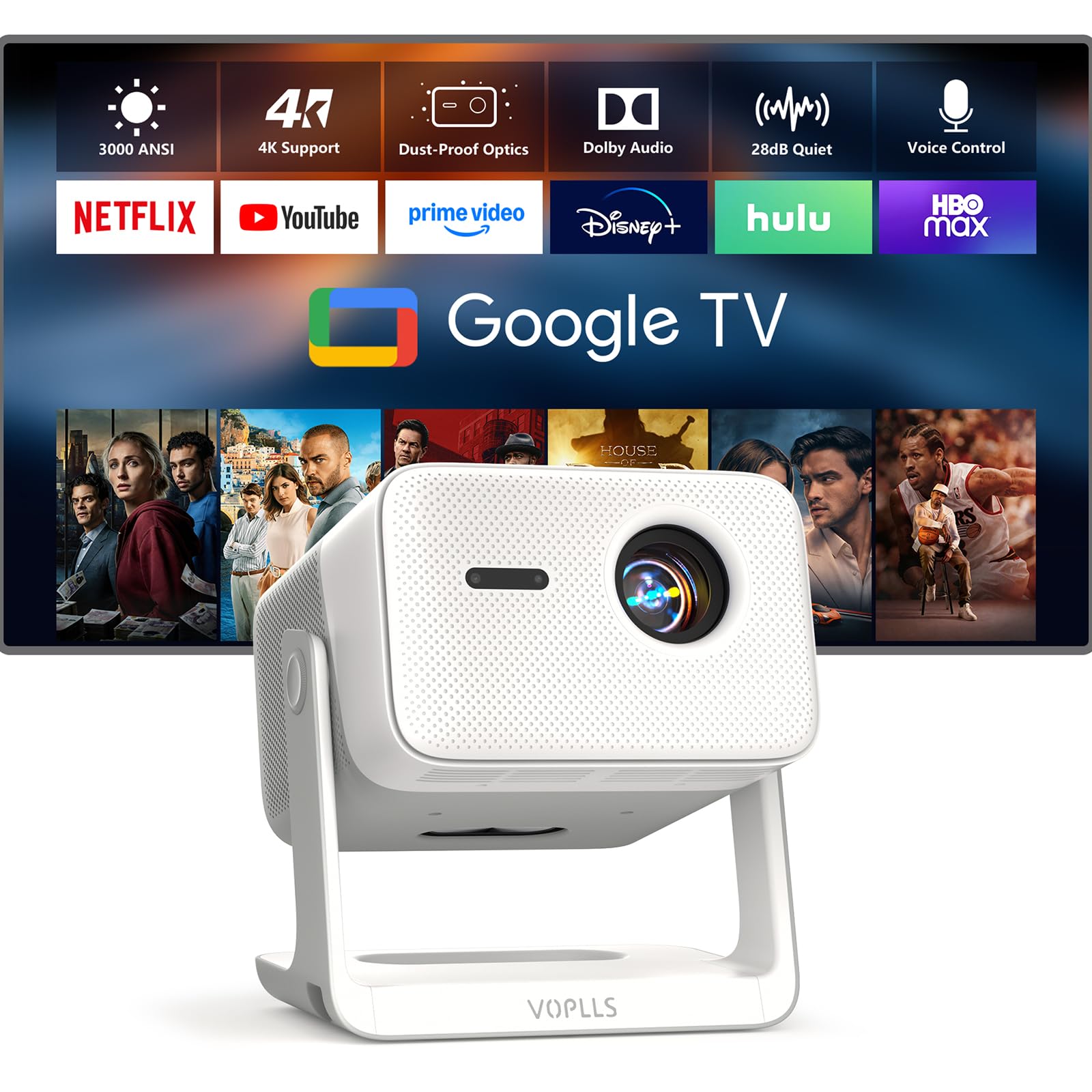
The VOPLLS G7 packs an official Google TV interface directly into the projector, so you don’t need a separate streaming stick. With 3,000 ANSI lumens (up to 3,600 in high brightness mode), it’s bright enough for living rooms and outdoor movie nights. The dual 8W speakers with passive radiators and Dolby Audio deliver room-filling sound that’s better than most built-in projector speakers.
Auto focus, auto keystone, and intelligent screen fit make setup near-instant. The sealed optical engine prevents dust spots from accumulating on the LCD panels over time—a common failure point on cheaper projectors. WiFi 6 and Bluetooth 5.2 provide fast wireless streaming, and AirPlay/Miracast/Chromecast support covers all smartphone ecosystems.
The 98% NTSC color gamut and HDR10 support produce vibrant images for the price, though black levels aren’t as deep as laser models. It’s a smart choice for a family room or bedroom where you want one-box simplicity and solid 4K upscaling from 1080p sources.
Why it’s great
- Official Google TV with Netflix/Prime built-in
- Sealed optical engine prevents dust spots
- WiFi 6 and Bluetooth 5.2 for fast streaming
Good to know
- LCD panel contrast doesn’t match DLP or laser
- No 3D support
7. LG CineBeam S PU615U
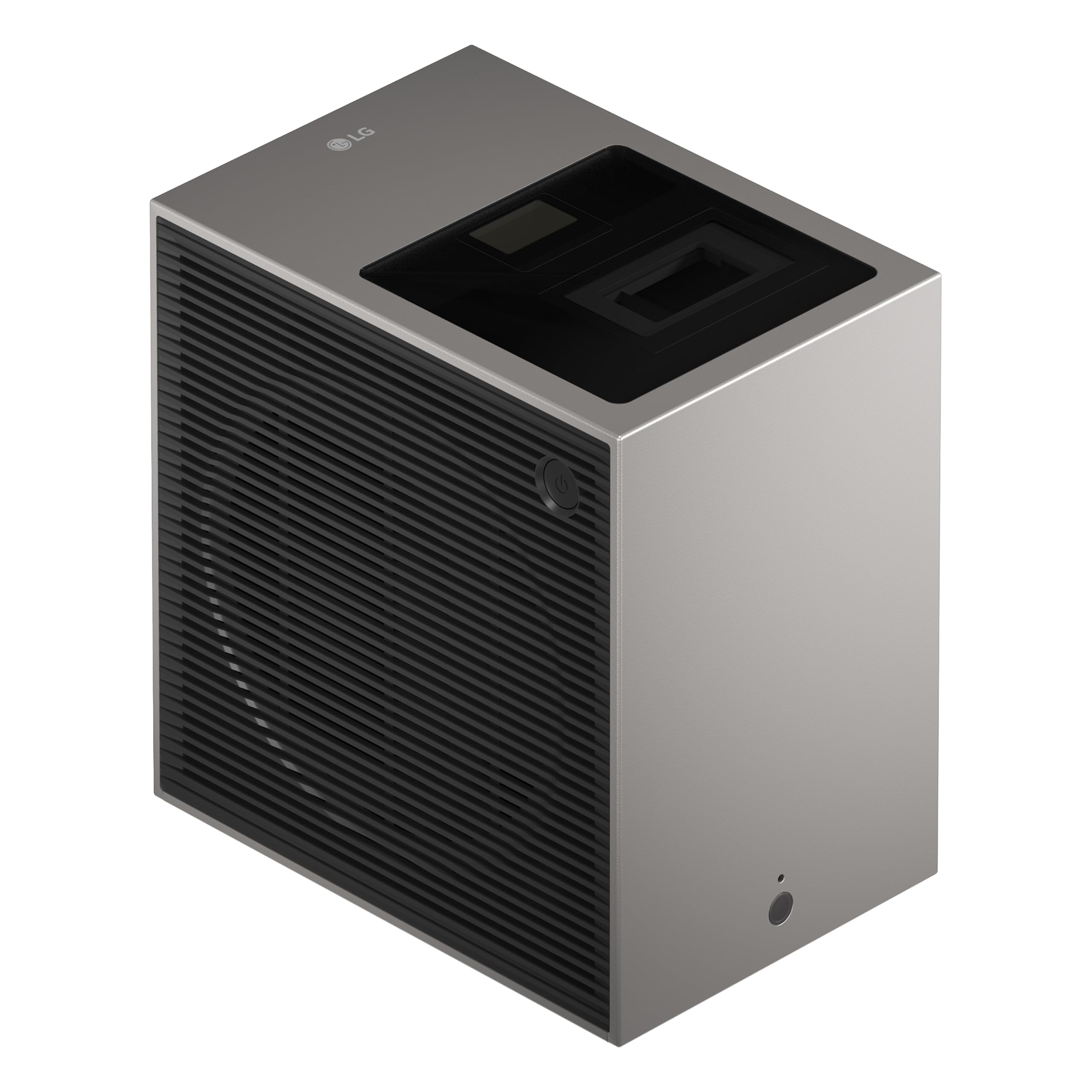
The LG CineBeam S PU615U is an ultra-short throw projector that sits inches from the wall and throws a 100-inch image with zero throw distance planning. The triple laser light engine delivers a 154% DCI-P3 color gamut and 450,000:1 contrast ratio—producing rich, vibrant colors and deep blacks rare in the UST category at this price. The 500 ANSI lumens brightness is modest, so you’ll want controlled lighting for the best image.
Dolby Atmos built-in speakers provide immersive audio from a compact chassis. The auto screen alignment feature detects the projection surface and adjusts the image geometry, which works well on white walls. The compact 4.3×6.3×6.3-inch body fits on any media console without ceiling mounting. It supports 4K input from gaming consoles and streaming devices via HDMI.
The main drawback is the smart TV software. Users report a laggy UI and an unreliable auto-screen sensor that sometimes readjusts during playback. Running an external Roku or Apple TV bypasses these issues. If you want big-screen 4K from a tiny footprint and are willing to use a separate streaming device, this is a compelling UST choice.
Why it’s great
- Ultra-short throw: 100 inches from a few inches away
- Triple laser with 154% DCI-P3 color coverage
- Compact design fits small spaces
Good to know
- 500 lumens requires dark or dimly lit rooms
- Smart UI can be sluggish; sensor may need recalibration
FAQ
Can a projector under $2000 deliver true 4K detail?
How many ANSI lumens do I need for a 120-inch screen?
Should I choose a laser or lamp projector at this price?
What is an acceptable input lag for 4K gaming?
Final Thoughts: The Verdict
For most users, the best 4k projector under $2000 winner is the BenQ TK710 because it combines a laser light source, ultra-low 4ms input lag, and high 3,200-lumen brightness in a package that works for both movies and competitive gaming. If you want the deepest black levels and Filmmaker Mode for dedicated home theater, grab the Optoma UHZ36. And for an all-in-one smart projector that doesn’t require a separate streaming device, nothing beats the value of the VOPLLS G7.

Mo Maruf
I created WellFizz to bridge the gap between vague wellness advice and actionable solutions. My mission is simple: to decode the research and give you practical tools you can actually use.
Beyond the data, I am a passionate traveler. I believe that stepping away from the screen to explore new environments is essential for mental clarity and physical vitality.