Our readers keep the lights on and my smoothie glass nicely filled. As an Amazon Associate, I earn from qualifying purchases.
A 4-line phone system is the anchor of a serious home office or a busy small business. When clients call in and every line is active, you need hardware that routes calls, records voicemail, and scales without a service contract. The wrong system leaves you juggling dropped calls and missed opportunities.
I’m Mohammad Maruf — the founder and writer behind WellFizz. Over the past decade, I’ve analyzed hundreds of multi-line phone systems, comparing auto-attendant routing, DECT 6.0 range, answering machine storage limits, and intercom capabilities to find what actually works for growing teams.
Whether you manage four active lines or plan to expand, choosing a reliable 4 line phone system requires understanding the difference between a basic cordless setup and a true small-business PBX replacement with digital receptionist features.
How To Choose The Best 4 Line Phone System
A 4-line phone system is a long-term investment. Choosing based on price alone leads to buyer’s remorse when you discover limited voicemail storage or a confusing interface for routing calls. Focus on these four factors first.
Auto Attendant vs. Basic Answering Machine
An auto attendant greets callers with a recorded menu and routes them to the correct extension or department without human intervention. A basic answering machine simply records a message. If your business receives more than a handful of calls per day, an auto attendant saves hours each week and presents a professional image.
Expandability to Wireless Extensions
Most 4-line base stations allow you to add cordless handsets or desksets wirelessly using DECT 6.0 technology. Some support up to 10 extensions. If you anticipate growing your team or covering a larger physical space, choose a system that lets you add stations without running new cables.
Voicemail Storage Duration
Answering system capacity is measured in minutes. Entry-level units offer around 22 minutes, while business-grade models store up to 200 minutes across multiple mailboxes. If you handle high call volumes or need long-archived messages, a higher-capacity digital answering system is non-negotiable.
Line-Power Mode for Power Outages
Not all 4-line systems work during a blackout. Corded base stations that draw power from the phone line itself remain operational when the electricity goes out. This is critical for medical offices, construction managers, or any operation that cannot afford downtime.
Quick Comparison
On smaller screens, swipe sideways to see the full table.
| Model | Category | Best For | Key Spec | Amazon |
|---|---|---|---|---|
| Panasonic KX-TGW420B | Premium | Professional small office with expansion plans | 200-minute digital answering system | Amazon |
| VTech AM18447 | Premium | Business requiring auto attendant on each line | 180-minute shared voicemail | Amazon |
| AT&T SynJ SB67158 | Premium | Legacy PSTN reliability with corded/cordless mix | DECT 6.0 with 1-4 line capability | Amazon |
| VTech VG208-4 | Mid-Range | Larger homes with multi-story coverage | 22-minute digital answering machine | Amazon |
| Panasonic KX-TGD864W | Mid-Range | Bluetooth cell pairing and 2-way call recording | Link2Cell Bluetooth | Amazon |
| AT&T DLP73490 | Mid-Range | Smart call blocking with 5-inch color display | 5-inch color base display | Amazon |
| Motorola ML1000 | Mid-Range | Plug-and-play wireless expansion to 10 handsets | 200-minute digital answering system | Amazon |
| ring-u Hello Hub | Premium | Full VoIP PBX with virtual receptionist | Up to 30 lines, 75 extensions | Amazon |
In‑Depth Reviews
1. Panasonic KX-TGW420B

The Panasonic KX-TGW420B is the gold standard for a 4-line corded base station that grows with your business. It offers 200 minutes of digital answering system storage across multiple mailboxes, a built-in digital receptionist that routes calls per line, and 6-way conferencing that keeps remote teams connected. The base station supports up to 10 compatible Panasonic handsets or desksets wirelessly — no additional cabling needed once the core is installed.
DECT 6.0 technology ensures long-range clarity even through walls and across separate floors, which is crucial for warehouses, retail spaces, or multi-room offices. The 2-way recording feature allows you to capture important calls for documentation or training. Setup is straightforward for anyone familiar with basic RJ11 connections, and the intuitive menu structure makes programming speed dials and call routing simple.
User feedback highlights excellent sound quality on the handset, though the speakerphone quality is described as acceptable rather than stellar. A few users note that the line selection buttons (1-4) sit above the dial pad, which can cause initial misdials until muscle memory adjusts. Overall, this system delivers professional-grade features at a mid-range investment point, making it the most versatile choice for small offices.
Why it’s great
- 200-minute answering system with up to 10 mailboxes
- Wirelessly expandable to 10 stations for growing teams
- 2-way call recording and 6-way conferencing
Good to know
- Speakerphone quality is subpar compared to handset audio
- Line buttons above dial pad cause occasional misdials
2. VTech AM18447
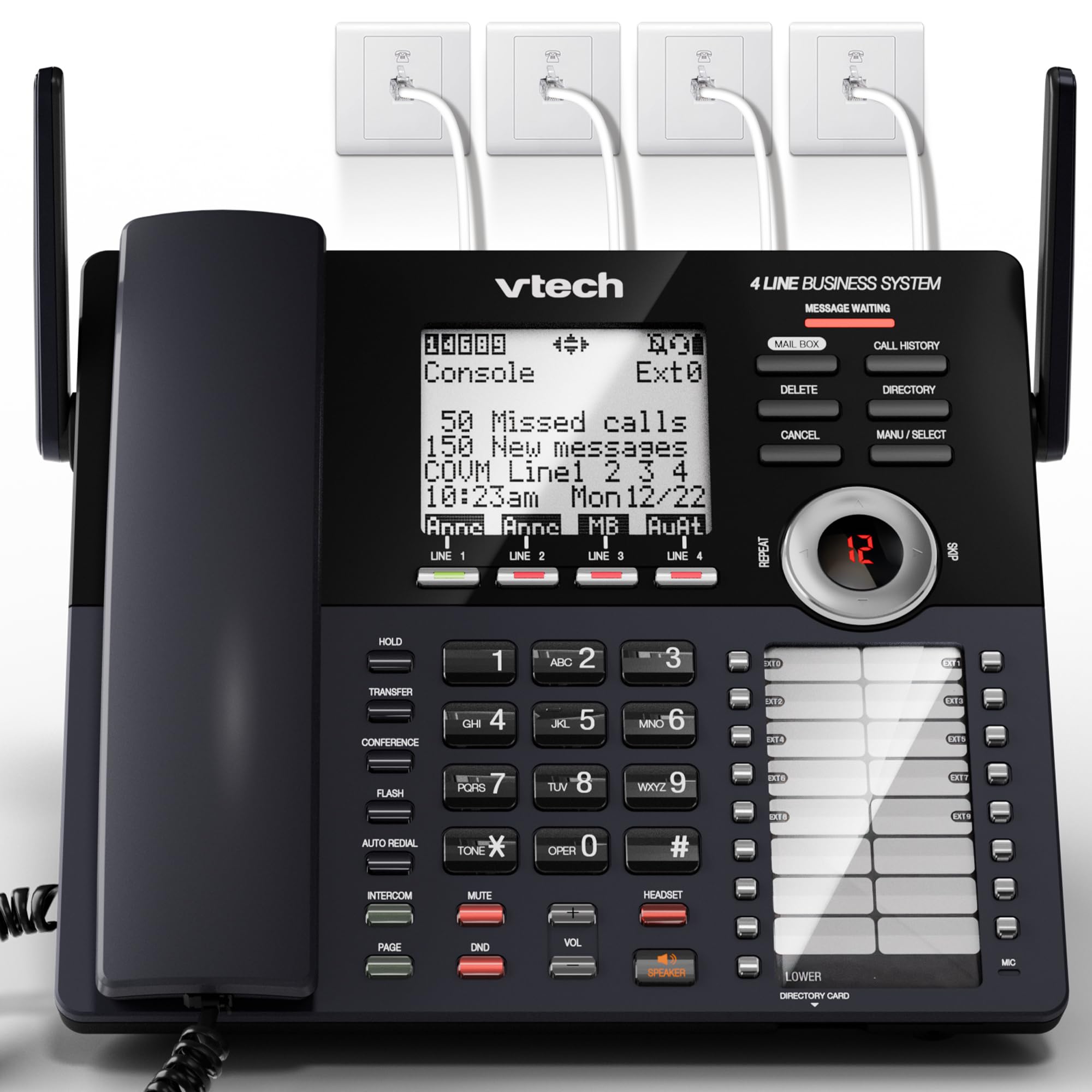
The VTech AM18447 is built for the small business that handles heavy incoming call volume across multiple lines. Each of the four lines can have its own auto attendant, greeting callers with a professional menu and routing them to the correct extension or department. The digital answering system captures 180 shared minutes across all mailboxes, which is ample for a team of five to ten people.
Expandability to 10 stations is handled wirelessly via DECT 6.0, and the base unit offers extra-large display, 32 speed dials, and a 100-name phonebook. Custom music-on-hold via the 2.5mm jack lets you play company-specific audio, which reinforces your brand during wait times. Full-duplex speakerphone on the base unit enables natural hands-free conversations for group calls or dictation.
Reviews praise the easy setup and reliability after replacing older analog PBX systems. Some users note that the missed calls counter requires manual clearing and that the auto attendant requires callers to press “#” after entering an extension. A small number of units have shown early failure, but the overall value—especially when paired with VTech desksets—makes this a top contender for professional offices.
Why it’s great
- Independent auto attendant per line for professional routing
- 180-minute shared voicemail across multiple mailboxes
- Custom music-on-hold via 2.5mm input
Good to know
- Missed calls counter resets manually
- Auto attendant requires “#” after extension
3. AT&T SynJ SB67158

The AT&T SynJ SB67158 is a seasoned workhorse that supports 1 to 4 landlines via traditional PSTN connections. Its DECT 6.0 technology delivers exceptional range and clarity, and the hybrid design includes a corded base unit with the option to add cordless handsets. For offices that already have DSL filters in place, this system integrates seamlessly with existing infrastructure.
The digital answering system handles messages across all four lines, and the intercom feature allows communication between handsets without tying up a line. Conference calling is available for three-way conversations. The base unit is compatible with TL7600 and TL7800 cordless headsets, which is useful for reception desks or managers who need hands-free operation.
Customer feedback is mixed but leans positive for those who value core reliability. Long-term users appreciate the solid build and clear audio even through concrete walls. Common criticisms include the inability to have separate voicemail greetings per line and the fact that switching lines places the previous call on hold rather than hanging up. A few units arrived with defective base components, so verifying functionality early is recommended.
Why it’s great
- DECT 6.0 range with corded base reliability
- Compatible with cordless headsets for hands-free use
- Intercom between handsets without line usage
Good to know
- Cannot set different voicemail greetings per line
- Switching lines puts previous call on hold automatically
4. VTech VG208-4
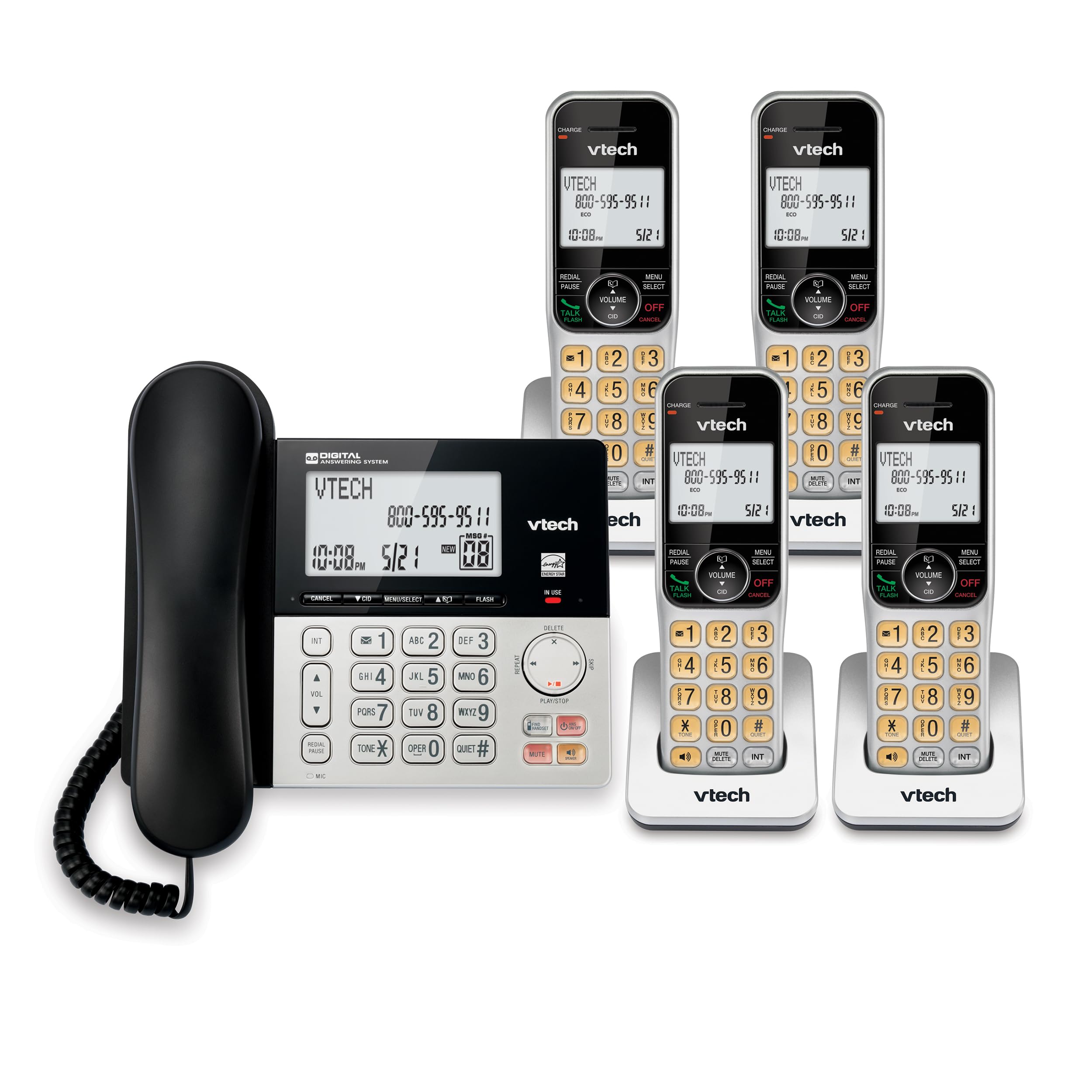
The VTech VG208-4 is a single-line DECT 6.0 system with four cordless handsets, making it ideal for large homes or offices where coverage across multiple floors is the priority. The corded base unit operates in line-power mode during outages, so your main phone stays functional when the electricity goes out. The 22-minute digital answering machine covers basic voicemail needs for a family or small team.
Advanced call blocking stops up to 150 robocall numbers, and the extra-large 3.5-inch backlit base display along with 2-inch handset screens make caller ID reading easy for users with vision challenges. Full-duplex speakerphone on both the base and handsets allows natural conversations without echo. The system is expandable up to 5 handsets total if you need one more station.
User reviews consistently praise the sound quality and ease of setup. Some note that the answering machine menu can be tricky for deleting specific messages, as navigation moves quickly between entries. The lack of a “+” key for international dialing is a minor annoyance for overseas callers. For the price, this system offers excellent voice clarity and range.
Why it’s great
- Line-power mode for operation during power outages
- Large backlit displays for easy caller ID reading
- Full-duplex speakerphone on base and all handsets
Good to know
- Single-line operation only, not a true 4-line system
- No “+” key for international dialing
5. Panasonic KX-TGD864W
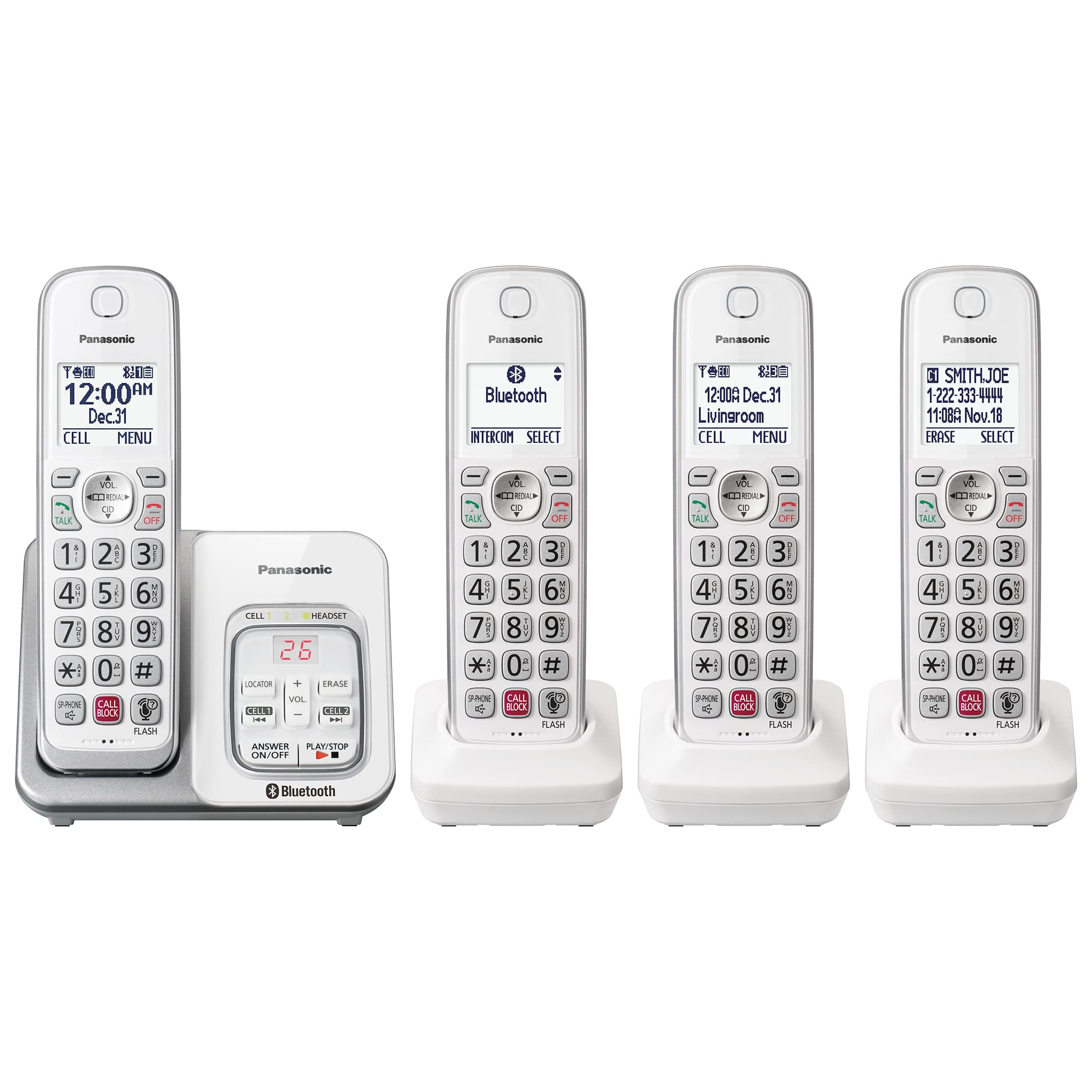
The Panasonic KX-TGD864W bridges your landline and mobile worlds with Link2Cell Bluetooth pairing. Connect up to two cell phones to the base station, then make and receive mobile calls through any of the four cordless handsets. This is a game-changer for users who keep their cell in a central location but want coverage throughout the house or small office.
The 2-way recording feature lets you capture conversations for reference, and a “Start Recording” announcement deters suspicious callers. Advanced Call Block pre-blocks robocalls, and the one-ring scam alert displays a confirmation screen before returning calls. The talking caller ID announces names in English or Spanish, which is helpful when you can’t look at the screen.
Owners report clear audio and long battery life, with handsets staying operational for a full day off the charger. The menu system is intuitive for basic functions, though secondary line caller ID can be inconsistent during active calls. The build feels lightweight, but performance remains reliable after a year of use. For those who want to merge landline and cell into one interface, this is the best option.
Why it’s great
- Bluetooth pairing with up to 2 cell phones for unified communication
- 2-way conversation recording with announcement
- One-ring scam alert for security
Good to know
- Second line caller ID may not show during active calls
- Plastic build feels less premium than business-grade units
6. AT&T DLP73490

The AT&T DLP73490 stands out with a 5-inch color display on the base unit that makes menu navigation, caller ID viewing, and shortcut management exceptionally clear. One-touch shortcuts let you assign your most-used functions—contacts, messages, call history, timer—directly to the base screen for instant access. This system includes four cordless handsets and supports conference calling between an outside line and up to four handsets.
Smart Call Blocker automatically prevents robocalls from ever ringing through, even on the first attempt. You can store up to 1000 names and numbers on the block list and add new ones with a single touch. The intercom function between handsets and the base is useful for internal communication without tying up a line. DECT 6.0 technology with enhanced antenna design delivers long-range coverage and noise-filtering clarity.
User reviews highlight the excellent call blocking as the standout feature, with many calling it indispensable. The large keys and bright screen are particularly appreciated by seniors or those with vision challenges. Some users find the menu structure non-intuitive for accessing missed calls and voicemail, requiring a learning curve. Sound quality is described as clear but occasionally tinny on certain calls.
Why it’s great
- 5-inch color display with customizable one-touch shortcuts
- Smart Call Blocker auto-blocks robocalls before they ring
- Large keys and bright screens ideal for users with vision issues
Good to know
- Menu navigation for missed calls is not intuitive
- Sound quality can occasionally sound tinny
7. Motorola ML1000
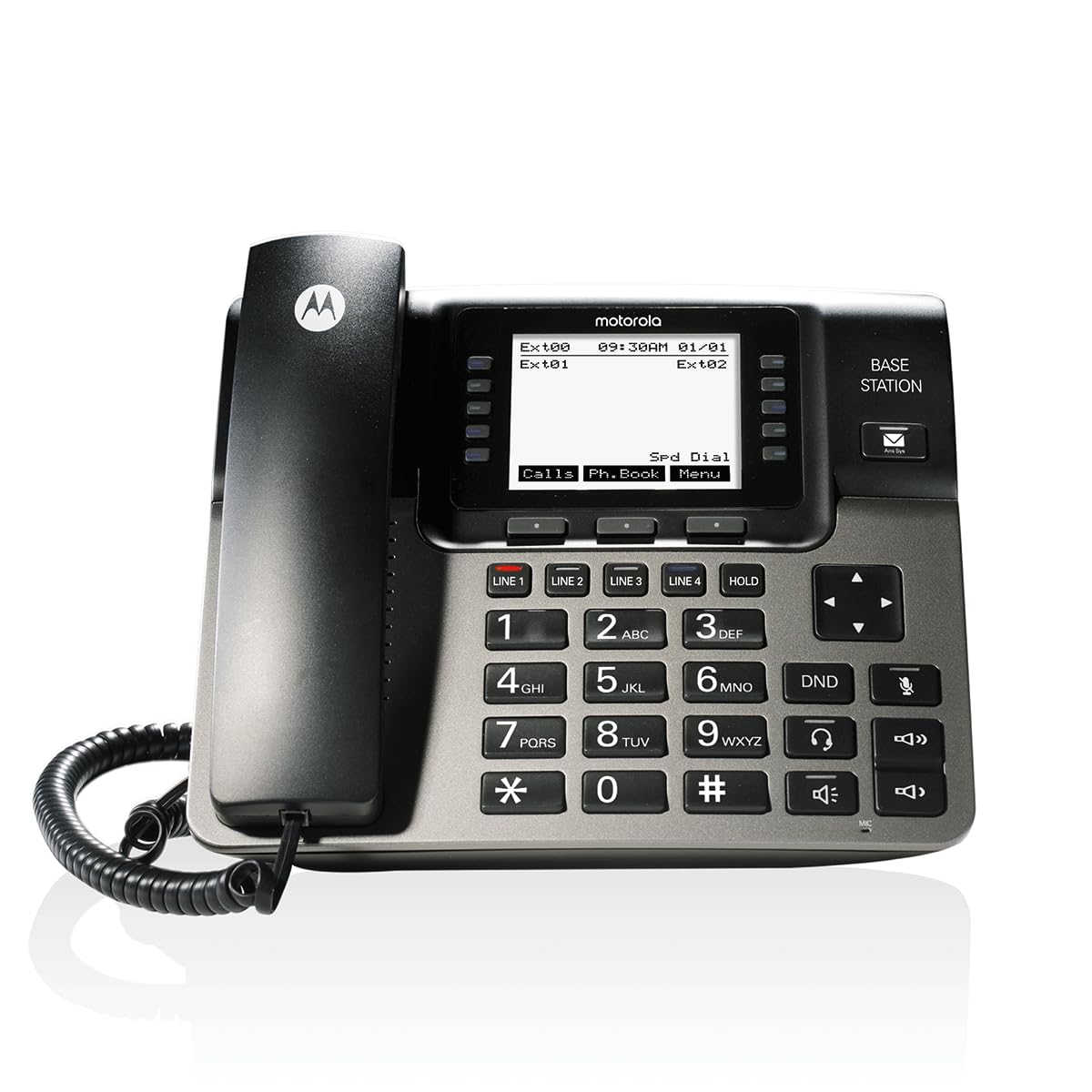
The Motorola ML1000 is the core base station for the Motorola ML Series, supporting up to 4 landlines and 10 wireless extensions (ML1100/ML1200 handsets or desksets). The digital receptionist auto-attendant answers and routes calls to the appropriate extension, ensuring every caller reaches the right person. The 200-minute digital answering system stores up to 10 mailboxes with time and date stamps plus remote message retrieval.
Setup is genuinely plug-and-play: you only need one phone jack to start the entire system, and additional wireless extensions pair without any wiring. The base is wall-mountable, headset-ready, and hearing-aid compatible. For small businesses that need to scale from a single desk to multiple stations over time, this system provides a clean upgrade path.
Customer feedback is largely positive, with users reporting professional look and feel, quick setup, and clear sound. A small number of units have experienced quality control issues, including defective handsets or false low-battery alerts. Motorola’s customer support handles replacements, but the inconsistency is worth noting. For the price, this system delivers solid auto-attendant functionality and generous voicemail storage.
Why it’s great
- 200-minute answering system with 10 mailboxes
- Wireless expansion to 10 handsets without additional wiring
- Digital receptionist for professional call routing
Good to know
- Some reports of quality control issues with handsets
- Requires Motorola-specific ML1100/ML1200 for extensions
8. ring-u Hello Hub

The ring-u Hello Hub is not a traditional corded phone—it is a hosted VoIP PBX system that replaces the need for a physical multi-line base station. It supports up to 30 concurrent lines and 75 extensions, with a virtual receptionist that answers calls, routes to departments, and offers ring groups for teams. The hub connects to your internet router and auto-configures compatible Grandstream phones.
This system shines for businesses that need a true PBX without the upfront hardware investment. It includes voicemail-to-email, mobile app extensions for iOS and Android, texting from your business number, and holiday/open/closed receptionist modes. The no-contract service is billed by the line, not per user, which keeps costs scalable. Setup is easier than a wireless router, with plug-and-play provisioning for Grandstream GXP and GRP series phones.
Reviews consistently highlight the exceptional USA-based customer support and the system’s ability to replace expensive on-premise PBX solutions at a fraction of the cost. Voice quality depends on your internet connection but is excellent on business-grade connections. One catch: the hub ships with zero phones, so you must purchase compatible handsets separately. For offices that want modern VoIP features without a long-term contract, this is the smartest path.
Why it’s great
- Scales to 30 lines and 75 extensions for growing teams
- No-contract VoIP service billed by line, not per user
- Voicemail-to-email and mobile app for remote workers
Good to know
- No phones included; requires compatible Grandstream handsets
- Voice quality depends on internet connection stability
FAQ
Can I use a 4-line phone system with VoIP without additional hardware?
Do all 4-line systems work during a power outage?
What is the difference between a basic answering machine and an auto attendant?
How many wireless extensions can I add to a typical 4-line base station?
Final Thoughts: The Verdict
For most users, the 4 line phone system winner is the Panasonic KX-TGW420B because it combines a 200-minute answering system, digital receptionist, and wireless expansion to 10 stations at a mid-range investment. If you need independent auto attendants on each line, grab the VTech AM18447. And for a modern VoIP PBX that scales to 30 lines without a contract, nothing beats the ring-u Hello Hub.

Mo Maruf
I created WellFizz to bridge the gap between vague wellness advice and actionable solutions. My mission is simple: to decode the research and give you practical tools you can actually use.
Beyond the data, I am a passionate traveler. I believe that stepping away from the screen to explore new environments is essential for mental clarity and physical vitality.