Our readers keep the lights on and my smoothie glass nicely filled. As an Amazon Associate, I earn from qualifying purchases.
Specs are compiled from manufacturer listings and verified buyer reviews and can change over time — please confirm the key details on the product page before buying.
Switching to an electric vehicle changes a lot, but your tires are still the only thing between the road and your battery range. A standard tire generates too much rolling resistance, which sapped range on your last gas car but now costs you real miles on an EV. The right electric car tire pairs a low-rolling-resistance tread with enough load capacity to carry that heavy battery pack, and the quietest ride you have heard in years. This guide breaks down the seven strongest options by their real-world grip, efficiency, and owner feedback so you know exactly which set to mount.
I’m Mohammad Maruf — the founder and writer behind WellFizz. This guide is built by comparing the manufacturers’ published specifications and the patterns across verified customer reviews, so you get each pick’s real strengths and trade-offs instead of marketing spin.
EV tires are a different breed — they need stiff sidewalls for the extra weight, special rubber compounds to cut energy loss, and noise-dampening features that make highway cruising genuinely serene. The electric car tire that wins on paper also has to win on the road, which is why every pick here is backed by real owner mileage and traction reports.
Our Picks at a Glance


How To Choose The Best Electric Car Tire
EV tires are engineered differently from standard all-seasons. The battery pack adds hundreds of pounds, so the tire must handle that weight without squirming. At the same time, every bit of friction you shave from the tread adds back to your driving range. Here is what to look for.
Load Index and Extra Load (XL) Rating
The load index number (91, 98, 104, and so on) tells you how much weight a single tire can carry at maximum pressure. EV batteries make cars heavy — a Tesla Model Y or a Chevy Bolt needs a tire with an XL (Extra Load) construction to avoid overheating and premature wear. A standard passenger tire on an EV wears down twice as fast because the sidewall is not built for the torque.
Rolling Resistance and Range
Low rolling resistance (LRR) rubber compounds reduce the energy wasted as the tire flexes against the pavement. Every 10% reduction in rolling resistance can improve EV range by roughly 3-5%. The best EV tires use silica-based mixes that stay flexible in cold weather while maintaining grip — you get the mileage without sacrificing safety in a rainstorm.
Noise Dampening Technology
Without an engine masking road noise, every hum and vibration from the tires reaches the cabin. Many EV-specific tires now include a foam layer bonded to the inner tread surface (K-Silent technology, SilentTread, or equivalent) that absorbs cavity resonance. That foam can drop interior noise by 2-4 decibels — enough to turn a drone into a whisper on long highway trips.
Treadwear Warranty and Mileage Expectations
EV torque chews through tread faster than a gas engine, so a 45,000-mile or 65,000-mile manufacturer warranty gives you a real benchmark for expected life. A higher mileage warranty usually signals a harder compound that might sacrifice a little wet grip. Your trade-off is between lasting longer and sticking harder — match the warranty to your driving habits.
Quick Comparison
| Model | Best For | Load Index | Item Weight | Treadwear Warranty | Amazon |
|---|---|---|---|---|---|
| Michelin Energy Saver AS★ Best Overall | Best Overall — proven fit on Leaf & Bolt | 91 | 20 lb | 65,000 miles | Amazon |
| Goodyear Assurance RangemaxPremium Pick | EV-tune range & hydroplaning defense | 101 | — | — | Amazon |
| Bridgestone Ecopia EP500 | Summer touring for BMW i3 / compact EVs | 89 | 17.6 lb | — | Amazon |
| Kumho Solus TA91(EV) | Premium foam-dampened comfort for Model Y | 104 | 26.4 lb | — | Amazon |
| Sailun ERange EV Touring 215/50R17 | Best value with SilentTread & XL rating | 95 | 22.4 lb | 45,000 miles | Amazon |
| Kumho Eco Solus KL21 | Ultra-high mileage at low cost | 101 | 26.7 lb | — | Amazon |
| Sailun ERange EV Touring 235/45R18 | Budget-friendly for Tesla Model 3 | 98 | 23.9 lb | 45,000 miles | Amazon |
In‑Depth Reviews
1. Michelin Energy Saver AS
Our pick — over 4.5★ from 50+ verified ratings; the strongest balance of quality and price.
The quiet EV staple that Leaf and Bolt owners keep coming back to.
Versatility is the Michelin Energy Saver AS’s real draw. It fits a wide range of EVs — buyers report “These are the recommended tires you need for a 2018 Nissan Leaf SL” — and the 17-inch diameter with a 44 psi maximum pressure gives you a compliant ride that still supports the car’s weight. The load capacity sits at 1356 pounds, which on a small EV like a Leaf is plenty, while the 20-pound item weight makes mounting manageable for any tire shop. At 4.7 stars from 50+ owners, the fit is the single thing everyone raves about, and the crowd calls it a great value for the price.
Where it really stands out is compared to a heavier-duty option like the Kumho Eco Solus KL21. The Michelin carries a load index of 91 versus the Kumho’s 101, and 1356 pounds of capacity versus 1874 pounds — a real difference if you are driving a heavy EV crossover. For lighter cars, though, the 65,000-mile manufacturer treadwear warranty gives you far more mileage coverage than most competitors, and the summery rain traction gets consistent praise from owners who say they “feel safer driving in the rain.”
The catch is availability in larger diameters. This is a 17-inch tire, so it will not fit bigger-rim EVs like a Tesla Model Y or a BMW iX. If your EV rolls on 18-inch or larger wheels, you will need to look at the Sailun or Kumho XL options further down. But if your car takes 17s, this is the set that delivers the highest owner satisfaction with the longest warranty.
Why owners love it
- 65,000-mile treadwear warranty — best in this lineup
- Great traction in rain, according to multiple owners
- Fit is the top aspect praised; buyers confirm it is perfect for Leaf and Bolt
The limitation
- Only 17-inch diameter — no larger sizes for SUVs
- Load index 91 is lower than EV-specific XL tires
Perfect fit for: small to mid-size EVs (Leaf, Bolt) needing a 65,000-mile tire with proven rain grip.
Think twice if: you drive a heavy EV crossover that demands a load index above 95.
2. Goodyear Assurance Rangemax 235/45R21 XL
Ultra-low rolling resistance that boost range for larger electric sedans and crossovers.
Goodyear built the Assurance Rangemax specifically for electric and hybrid vehicles, and the spec sheet reads like an EV owner’s wish list. The “EV-tune Efficiency” claim is backed by an ultra-low rolling resistance compound that is designed to reduce charging stops. The 21-inch diameter fits many of the latest electric SUVs, and the XL (101H rating) construction supports the heavier curb weight. Owners running it on a Honda Accord and a Sonata report a noticeably softer, quieter ride than their previous tires.
The hydroplaning defense — circumferential grooves that channel water away — is a standout feature for anyone driving in rainy climates. Buyers specifically mention the AA wet traction rating as a safety upgrade over older Goodyear MaxLife tires, saying the older set “dangerously lost traction on wet corners.” At 4.8 stars from 51 ratings, this is one of the highest-scoring tires in the entire roundup. Buyers also note it is “very suitable for oil-electric hybrid cars.”
The honest trade-off is price and sizing. This is a premium-tier tire at 21 inches, so it only fits vehicles with large-diameter rims. If your EV runs on 17- or 18-inch wheels, the Rangemax simply will not mount. And while the compound is designed for extended range, there is no published treadwear warranty to compare against the Michelin’s 65,000-mile guarantee.
Range advantage
- Ultra-low rolling resistance reduces charging stops
- Hydroplaning defense grooves for wet safety
- 4.8 stars — highest satisfaction in the premium tier
Size limitation
- 21-inch only — does not fit smaller EV rims
- No published treadwear warranty length
Best for: EV and hybrid owners with 21-inch wheels who want maximum range and AA wet traction.
Not for: drivers on 17- or 18-inch rims — this tire will not fit.
3. Bridgestone Ecopia EP500 Touring ECO Tire 175/55R20
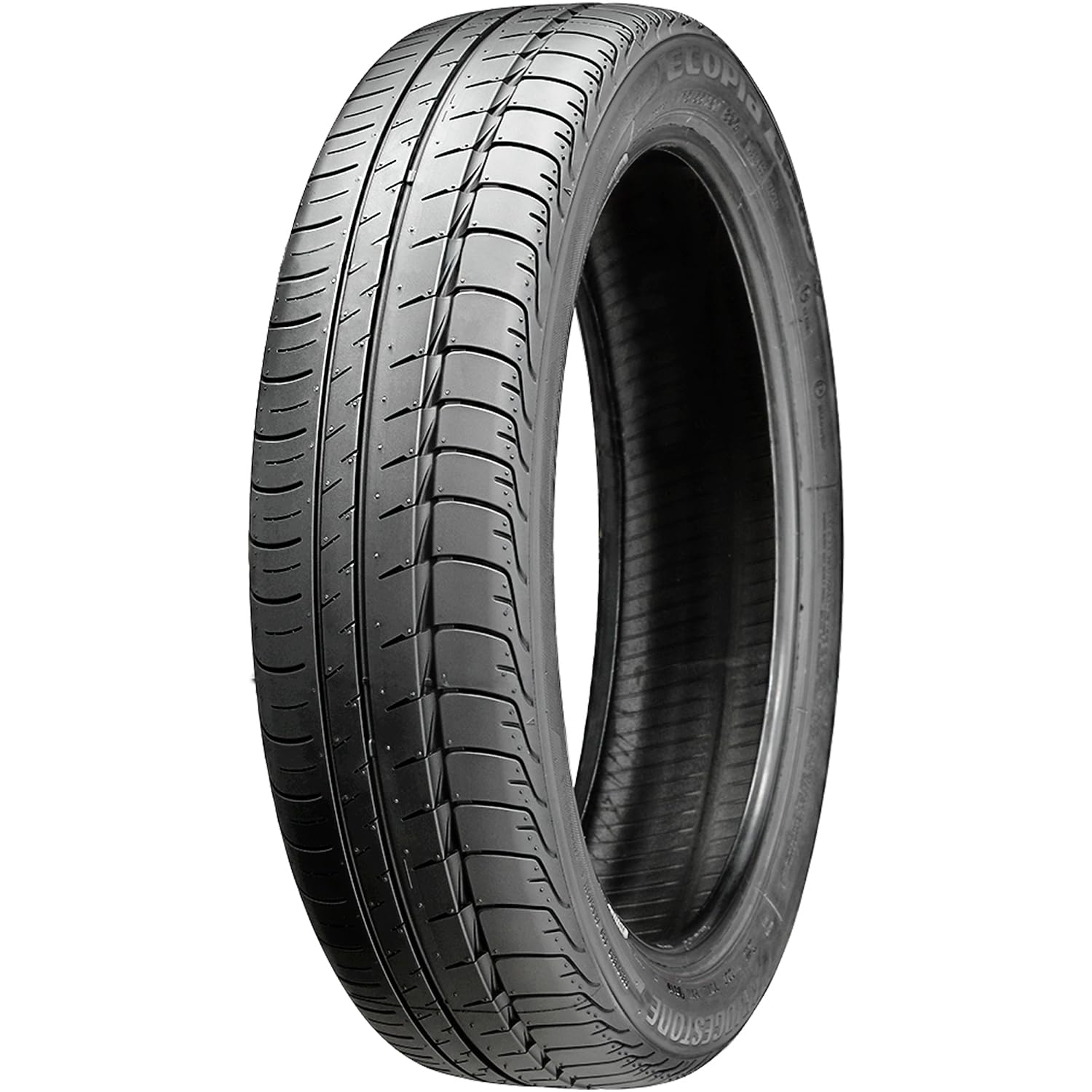
A light summer tire purpose-built for the BMW i3 and compact EVs.
The Bridgestone Ecopia EP500 is a very specific tool: it is a summer-touring tire engineered for small, lightweight EVs like the BMW i3. At 17.6 pounds, it is the lightest tire in this list, which helps preserve acceleration and range on cars with smaller battery packs. The 175/55R20 size is unusual — not every EV uses it — but owners confirm it is an “exact fit for my BMW i3” and that the 20-inch diameter matches the factory wheel perfectly. The load capacity sits at 1279 pounds with an XL rating, which is enough for a compact EV but well below what a Model Y needs.
The build quality gets high marks from the 44 owners who rated it at 4.7 stars. Buyers specifically mention the difficulty of finding this uncommon size locally, praising Amazon for shipping directly to the tire shop — one called the swap “15 min” at a local installer versus “all day” at a chain store. The summer-compound design means exceptional dry-road grip and low rolling resistance for range, but it is not an all-season tire.
The catch is the tread life and availability. At a load index of 89, this tire is on the lower end for weight capacity — it will not suit a crossover EV or a heavy sedan. And because it is a summer tire, you cannot safely run it through winter slush or near-freezing temperatures. If you drive an i3, a Smart EQ, or another micro EV in a warm climate, this is the perfect factory-replacement pick. For anyone else, it is too specialized.
Custom fit for micro EVs: 17.6 lb summer tire that bolts straight onto a BMW i3 with zero modifications.
Grab it if: you own a compact EV (BMW i3, Smart EQ) and want the lightest summer touring tire available.
skip it if: you need an all-season tire or your EV weighs more than a compact car.
4. Kumho Solus TA91(EV) 255/45R19 104V (Foam)
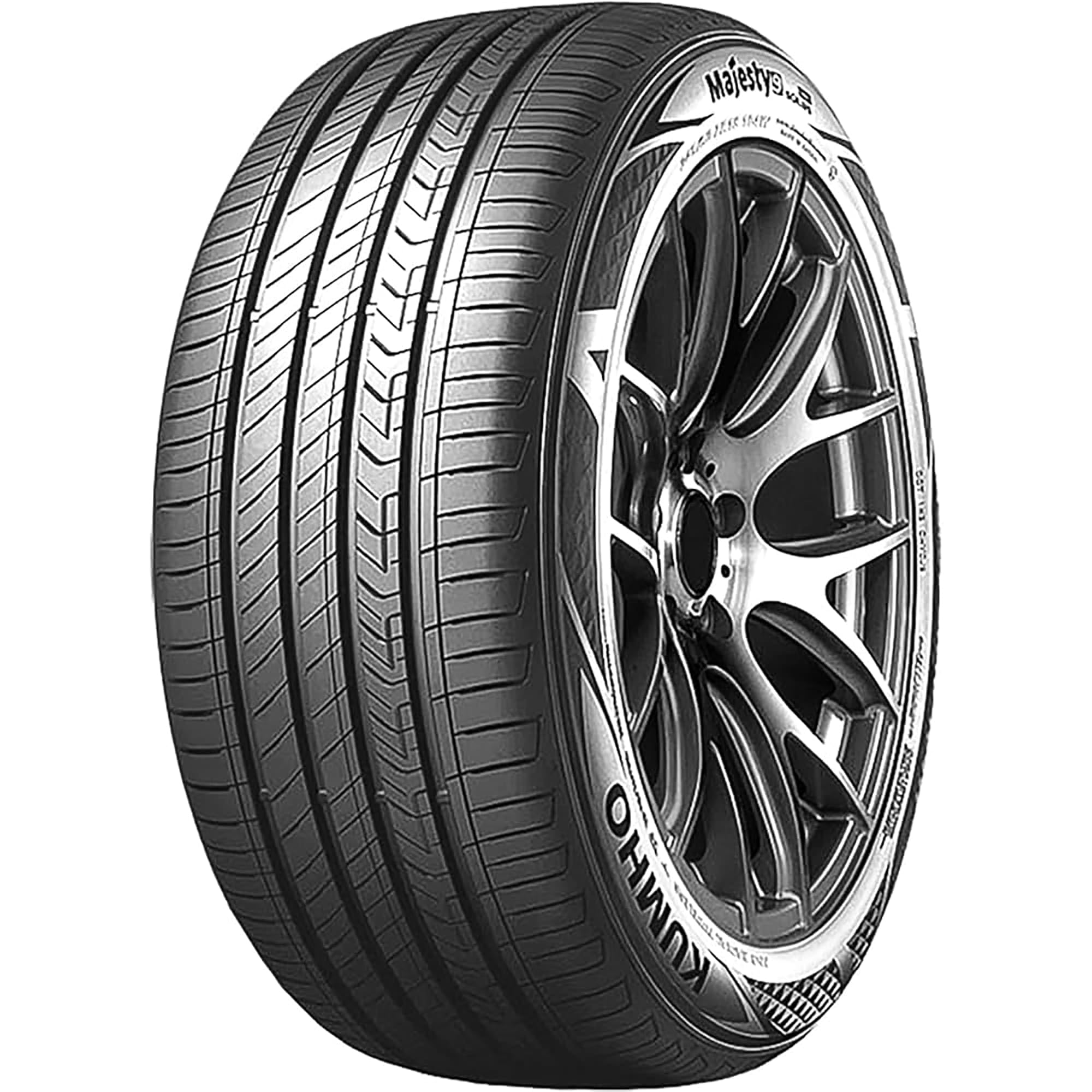
Foam-dampened and rated to 1,984 pounds — built for the weight of a Tesla Model Y.
The Kumho Solus TA91(EV) brings two critical features to heavy EVs: a load index of 104 (1984 pounds per tire, the highest in this review) and K-Silent foam technology that absorbs cavity noise inside the cabin. Owners driving a Tesla Model Y say it is “better than company fitted tires” and that the foam layer makes bumps disappear while reducing outdoor road noise. At 28.1 inches in diameter and 26.4 pounds, it is a substantial tire built for the torque and mass of a mid-size electric SUV.
Owner reports after 7,000 miles on a Nissan confirm the foam works: “I really like how quiet they are, and they also feel relatively soft and comfortable on the road.” Another buyer on a Model Y noted “low rolling resistance; improved Tesla Model Y range efficiency.” The XL load range and high-strength construction are designed for the instant torque of electric motors without squirming under hard acceleration.
The honesty is mixed on long-term durability. One owner reported that the foam layer inside the tire detached at roughly 6,000 miles, causing a noticeable vibration — a potential manufacturing defect on an early batch. The 4.0-star average across 15 ratings is the lowest in this lineup, reflecting that early adopter risk. If you buy these, have a local shop check the foam bond during the first rotation. For the price of a premium pick, the noise reduction and load capacity are genuinely top-tier when the quality holds.
Foam-quieted heavy lifter: 1984 lb load capacity and K-Silent foam make this the best choice for a quiet, stable ride on a Model Y or similar SUV.
Perfect for: Model Y, Nissan Ariya, or any heavy EV wanting foam-dampened comfort and high load index.
Watch for: isolated reports of foam detachment — inspect during installation.
5. Sailun ERange EV Touring 215/50R17 95V XL

SilentTread for barely any road noise, plus a 45,000-mile warranty at a fraction of premium prices.
The Sailun ERange EV Touring in 215/50R17 is purpose-built for EVs with its SilentTread technology and variable pitch sequence that cuts interior drone. At 22.4 pounds and a load index of 95 with XL construction, it handles the battery weight of a Chevy Bolt or VW ID.4 without the sidewall flex of a passenger tire. Buyers on a 2023 Bolt report “after 10K miles: no range loss, quiet, good wet/snow grip” — and at 35,000 miles one owner noted “minimal tread wear, still quiet, range slightly above OEM.” The ride quality is the top praised aspect across 7 counts, with noise level close behind at 6 counts.
The reinforced sidewall is a real safety feature — it increases load-carrying capacity to compensate for that heavy battery pack while improving cornering stability. The Liquid Phase Mixing and EcoPoint3 technology are engineering details that deliver a long-lasting tread life without sacrificing wet or dry grip. At 4.6 stars from 15 ratings, owners call it “best bang for the buck” on a Chevy Bolt and say it rides “smoother than Michelin” on a VW ID.4.
The honest trade-off is the price-to-warranty ratio. At right around the mark, the 45,000-mile limited warranty trails the Michelin’s 65,000-mile guarantee by a significant margin. If you drive 20,000 miles a year, you will hit the warranty limit in just over two years. For low-mileage commuters, though, the combination of quiet operation, EV-specific construction, and sub-premium pricing is tough to top.
Quiet commuter choice: SilentTread, Liquid Phase Mixing, and a load index of 95 — all at a price that undercuts the big names by a wide margin.
Best for: Bolt, ID.4, and Leaf owners who want EV-specific grip without the Michelin price tag.
Note the warranty: 45,000-mile treadwear coverage is shorter than the Michelin’s 65,000 miles.
6. Kumho Eco Solus KL21 P225/65R17 101H

One owner got 65,000 miles out of the first set — a durability benchmark in this class.
The Kumho Eco Solus KL21 is built around Low Rolling Resistance (LRR) technology that uses High Dispersion Silica (HDS) to strengthen the rubber’s molecular structure. The maker claims this improves fuel economy by up to 5% and reduces rubber dust particle emission by 10%. Real owners mention more practical results: “Great tires. My first set went 65000 miles!!” — a number that matches the Michelin warranty length and far exceeds what most EV tires deliver. At 26.7 pounds and 1874 pounds of load capacity, it sits as one of the heaviest-duty picks in this review.
Compared to the lighter Michelin Energy Saver AS (20 lb, 1356 lb load), the Kumho offers a heavier build (26.7 lb versus the Michelin’s 20 lb) and more load capacity (1874 lb versus 1356 lb). That gap matters if you drive a heavier EV like a Toyota bZ4X or a Ford Mustang Mach-E. The 28.5-inch diameter is larger than the Michelin’s 17-inch fitment, so it fills bigger wheel wells and handles rough pavement with more compliance. The anti-abrasion carbon black technology maintains wet and dry traction while keeping the tread from wearing flat under EV torque.
The downside is that the Kumho is listed as a Universal Fit rather than Vehicle Specific Fit, and there is no published manufacturer treadwear warranty attached to this listing. You are relying on owner reports rather than a paper guarantee. At 4.9 stars from 40 ratings, the crowd consensus is that these are “good in the rain” and a “great tire for the money,” but the lack of warranty documentation means you take a small gamble on long-term coverage.
65K-mile reputation: HDS compound and durable belt construction deliver real-world longevity that matches the best-warrantied tires.
Reach for these if: you drive a heavier EV crossover and want proven 65,000-mile tread life from a budget-friendly brand.
Heads-up: no explicit manufacturer treadwear warranty listed — the 65K claim comes from owner experience.
7. Sailun ERange EV Touring 235/45R18 98W XL
A Model 3-friendly budget option that saves over the factory price — with a 45,000-mile warranty.
The 235/45R18 version of the Sailun ERange EV Touring is designed specifically for Tesla Model 3 owners who want to avoid the dealership premium. At 23.9 pounds and a load index of 98 (XL), it matches the Model 3’s weight requirements without the 104 load index needed for a Model Y. Customers note that after several thousand miles, “road noise is about the same as the factory tires possibly slightly better” and that they “will probably purchase these again for the price.” The 45,000-mile limited warranty gives you a safety net similar to the higher-priced Sailun sibling.
The honest reality is that efficiency takes a small hit. One Model 3 owner measured a change from 230 Wh/mi on worn Michelins to 250 Wh/mi on these Sailuns after 5,000 miles — roughly a 10% range loss. Another Model Y Performance owner reported “significant wear” at 6,000 miles and said they would not repurchase. Those reports bring the overall rating to 4.0 stars across 17 ratings, making it the lowest average in this review but still a functional budget backstop.
Versus the 215/50R17 Sailun above, this 18-inch version has a slightly lower load index (98 vs 95 — a 3% gap) but carries the same 45,000-mile warranty. The difference in real-world grip seems to come down to vehicle weight: lighter Model 3 owners are happy, while heavier Model Y Performance drivers found the wear rate too fast. If you own a standard Model 3 Long Range and want to save money, this is a workable pick. If you drive a Performance model or a heavier EV, look at the Kumho Solus TA91 with the 104 load index instead.
Budget-friendly Model 3 tire: 45,000-mile warranty at a price that undercuts factory replacements by a wide margin.
Stick with this if: you own a standard-range Model 3 or other 18-inch EV and want the lowest entry price with warranty protection.
Not ideal for: Model Y Performance owners — the wear rate and efficiency drop are too high to recommend.
Understanding the Specs
Load Index and Extra Load (XL)
The load index number (91, 98, 101, 104) tells you how much weight one tire can carry at its maximum pressure. An EV tire almost always needs an XL (Extra Load) rating because the battery pack adds 500-1,000 pounds over a standard gas car. Running a standard passenger tire on an EV risks overheating and accelerated wear. Check your door jamb sticker for the minimum load index required — never go below it.
Low Rolling Resistance (LRR)
LRR tires use special rubber compounds and tread patterns that flex less as they roll, wasting less energy as heat. For an EV, every bit of rolling resistance you cut adds directly to your range. LRR compounds can reduce energy consumption by 3-5% on the highway. The trade-off is that very hard LRR compounds can lose some wet-weather grip, so always check that the tire carries a decent traction grade (A or AA) if you drive in rain.
Noise-Dampening Technology
Without an engine masking road hum, tire noise becomes the dominant sound in an EV cabin. Brands use different names for the same solution — K-Silent (Kumho), SilentTread (Sailun), foam lining (Michelin) — but they all work by bonding a layer of polyurethane foam to the inner tread surface. That foam absorbs the cavity resonance that normally creates a droning sound at highway speeds. A foam-lined tire can reduce interior noise by 2-4 decibels compared to an identical tire without foam.
Treadwear Warranty
EV torque accelerates tread wear faster than a gas engine, so a manufacturer treadwear warranty gives you a realistic expectation of how many miles the tire should last under normal driving. A 45,000-mile warranty is common for EV-specific tires; the highest in this review is 65,000 miles on the Michelin. The warranty is typically prorated — if the tread wears out before the stated mileage, the manufacturer covers a portion of the replacement cost. Hard driving, frequent launches, and rough roads all accelerate wear beyond the warranty estimate.
FAQ
Can I use regular all-season tires on my EV?
What does the load index number mean on an EV tire?
Do I need foam lined tires for my EV?
How many miles should an EV tire last?
Will a tire from a gas car fit my EV?
What is the difference between Sailun ERange EV Touring 215/50R17 and 235/45R18?
Why does my EV tire wear faster on the edges?
Can I mix different tire brands on my EV?
Final Thoughts: The Verdict
If you want one dependable pick, the electric car tire winner is the Michelin Energy Saver AS because it pairs the longest treadwear warranty (65,000 miles) with consistent owner reports of quiet, confident rain traction on popular EVs like the Leaf and Bolt. If you want foam-dampened silence on a heavy SUV, grab the Kumho Solus TA91(EV) with its 1,984-pound load capacity. And for the best value on a Bolt or ID.4, the Sailun ERange EV Touring 215/50R17 delivers SilentTread technology and a 45,000-mile warranty at a fraction of the premium price.
How We Picked
We do not accept paid placement. Every pick is matched to a real buyer and a real use-case; we do not hands-on test units.
Sources & Methodology
Specifications: manufacturer listings and product documentation. Review insights: verified customer reviews, as of July 2026. Pricing: not shown on this page (it changes often); check the current price via the retailer link.
As an Amazon Associate, WellFizz earns from qualifying purchases. This does not affect which products we feature.
Related Guides

Mo Maruf
I created WellFizz to bridge the gap between vague wellness advice and actionable solutions. My mission is simple: to decode the research and give you practical tools you can actually use.
Beyond the data, I am a passionate traveler. I believe that stepping away from the screen to explore new environments is essential for mental clarity and physical vitality.