Our readers keep the lights on and my smoothie glass nicely filled. As an Amazon Associate, I earn from qualifying purchases.
Specs are compiled from manufacturer listings and verified buyer reviews and can change over time — please confirm the key details on the product page before buying.
Picking the wrong pair of goggles for a day on the slopes can turn a bluebird morning into a miserable, fogged-in mess. You need lenses that handle the brutal shift from blinding sun to flat light, frames that seal tight against wind and snow, and a fit that works with your helmet — not against it. This guide cuts through the noise on the nine best options, from budget-friendly workhorses to premium optics built by the brands that outfit Olympic athletes.
I’m Mohammad Maruf — the founder and writer behind WellFizz. This guide is built by comparing the manufacturers’ published specifications and the patterns across verified customer reviews, so you get each pick’s real strengths and trade-offs instead of marketing spin.
You will find the right pair by matching your budget and light conditions to the lens technology and field of view that matters most, and this analysis of the best eyewear for skiing and snowboarding eye protection will show you exactly what separates a reliable companion from a disappointing one.
Our Picks at a Glance
How To Choose The Best Eyewear For Skiing And Snowboarding Eye Protection
Not every goggle is built for the same kind of day. Before you pick one, think about where you ride most — a resort with ever-changing light, a backcountry zone where you need maximum field of view, or a night session under the lights. Your choice depends on lens technology, fit with your helmet, and how easy it is to swap lenses when the weather turns.
Lens Technology and VLT
Visible Light Transmission (VLT) is the percentage of light a lens lets through. A low VLT (around 10%) works for bright, sunny days. A high VLT (60% or more) is perfect for overcast conditions or night riding. The best goggles give you at least two lenses so you can cover both extremes.
Anti-Fog Performance
Fogging is the fastest way to ruin a run. Look for dual-layer lenses (they create a thermal barrier) and ventilation ports that let moist air escape. A permanent anti-fog coating on the inner lens is a must — it prevents the build-up that single-layer goggles can’t stop.
Fit and Helmet Compatibility
A goggle that gaps at the top lets snow and wind in. Check that the frame shape and strap alignment match your helmet. Many brands design their goggles to interface smoothly with their own helmets, but an adjustable strap with a silicone lining will grip most models securely.
OTG (Over-the-Glasses) Design
If you wear prescription glasses, OTG goggles are the only way to go. They have extra volume inside so your frames fit without pressure, and the increased air space actually helps reduce fogging. Not every goggle on this list is OTG-friendly, so check the feature list if you wear specs.
Quick Comparison
| Model | Best For | Field of View | Lens Tech | OTG Compatible | Amazon |
|---|---|---|---|---|---|
| Oakley Flight Deck L★ Best Overall | Uncompromising wide-angle vision | boost (fighter-pilot inspired) | Prizm | Yes | Amazon |
| ZIONOR X4Best Value | Best value with magnetic lenses | Panoramic | Double-layer, 4 spare lenses | Yes | Amazon |
| Giro CruzSmart Design | Reliable anti-fog for mixed conditions | EXV frameless peripheral | Amber Scarlet 39% VLT | Yes | Amazon |
| findway OTG | Secure lens retention on a budget | Wide panoramic spherical | Dual-layer, clip lock + magnets | Yes | Amazon |
| Oakley O-Frame 2.0 Pro | Entry-level Oakley quality with HDO | Standard frameless | High Definition Optics | Yes | Amazon |
| OutdoorMaster Heron | Maximum value with toric lenses | Large spherical frameless | Magnetic 2-lens set, UV400 | Yes | Amazon |
| Wildhorn Roca Pro | Official U.S. Ski Team supplier tech | 185° ultra-wide | Aurora dual-lens, magnetic | No (standard frame) | Amazon |
| SMITH Squad ChromaPop | Top-tier optical clarity and color | Wide panoramic | ChromaPop, 100% UV | Yes (OTG models available) | Amazon |
| Giro Method VIVID | Two premium lenses with Zeiss optics | EXV frameless spherical | VIVID by Zeiss (2 lenses) | Yes | Amazon |
In‑Depth Reviews
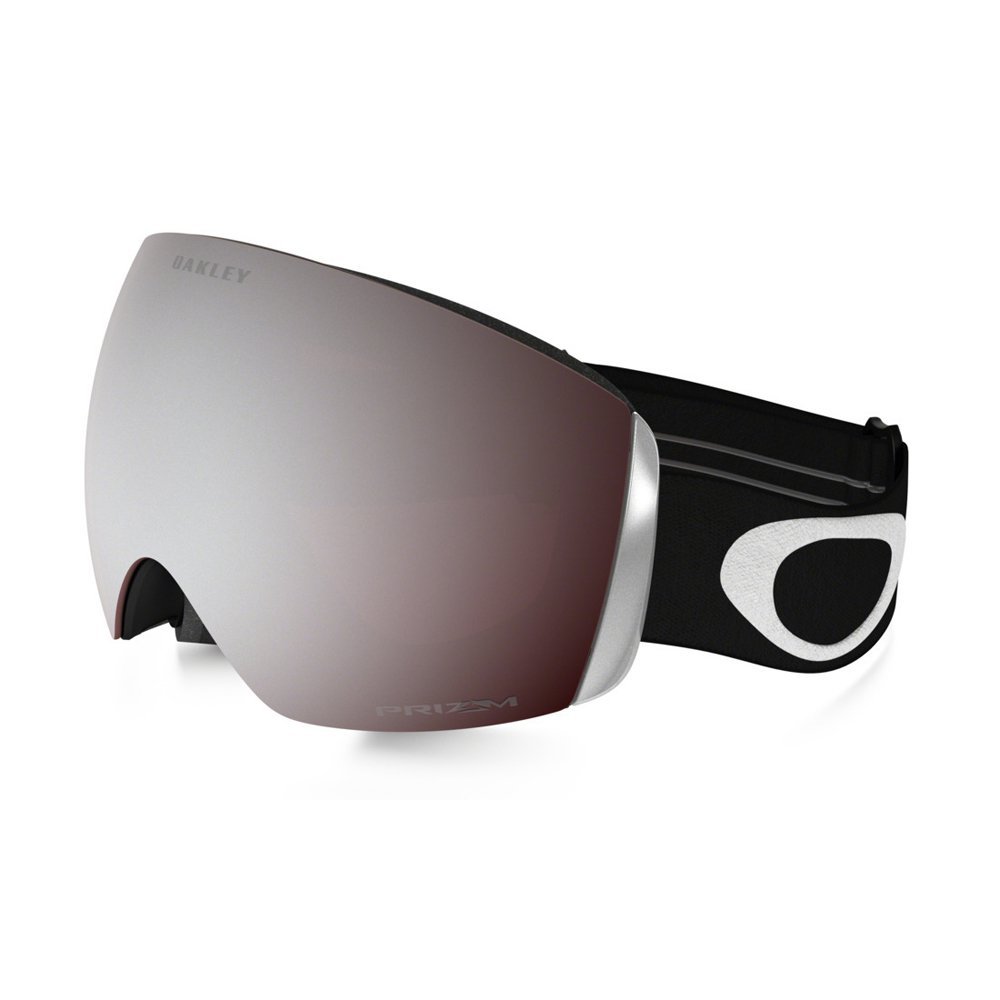
1. Oakley Flight Deck L Snow Goggle
Our pick — over 4.5★ from 950+ verified ratings; the strongest balance of quality and price.
The fighter-pilot-inspired goggle that gives you a field of view most goggles only dream about.
Your peripheral vision is wide open here — Oakley borrowed the visor shape from helmeted aviators so you can spot a hidden snow patch or an upcoming obstacle without turning your head. The Prizm lens technology fine-tunes color and contrast across changing light, so shadows stay readable and flat light doesn’t wash everything out into a white blur. The rimless frame also keeps mass low and plays nicely with Oakley’s MOD5 and MOD3 helmets for a smooth seal.
Buyers report excellent fog-resistance and comfort over eyeglasses, which is rare at this performance level. The fit earns the most praise — well over 80 owners single it out, and visibility is the second most-discussed strength with over 50 mentions. The trade-off you need to know: the lens scratches more easily than most at this price, so a soft case is essential. And at around the mid-range mark, it doesn’t come with a clear low-light lens, which feels like an oversight given the investment.
It meets the ANSI Z87.1 impact resistance standard, so a tumble or a stray branch won’t end your day. The crowd favorite — nearly a thousand owners give it a 4.7-rating consensus — sums it up: “Excellent fog-resistance, comfortable over eyeglasses, wide peripheral vision.”
What wins people over
- Prizm lens delivers class-leading contrast and color tuning for varied light
- Wide peripheral and downward vision inspired by fighter-jet helmet visors
- Rimless design fits smoothly with Oakley helmets and minimizes frame weight
Who should think twice
- Lens scratches easily — handle with care and store in the included case
- No clear low-light lens included at this premium price point
Grab these if: you want the top-tier field of view and Prizm color science and you already own or plan to own an Oakley helmet.
A fair warning: the lens durability requires more babying than cheaper options, and you’ll need to buy a spare lens for night or heavy overcast riding.
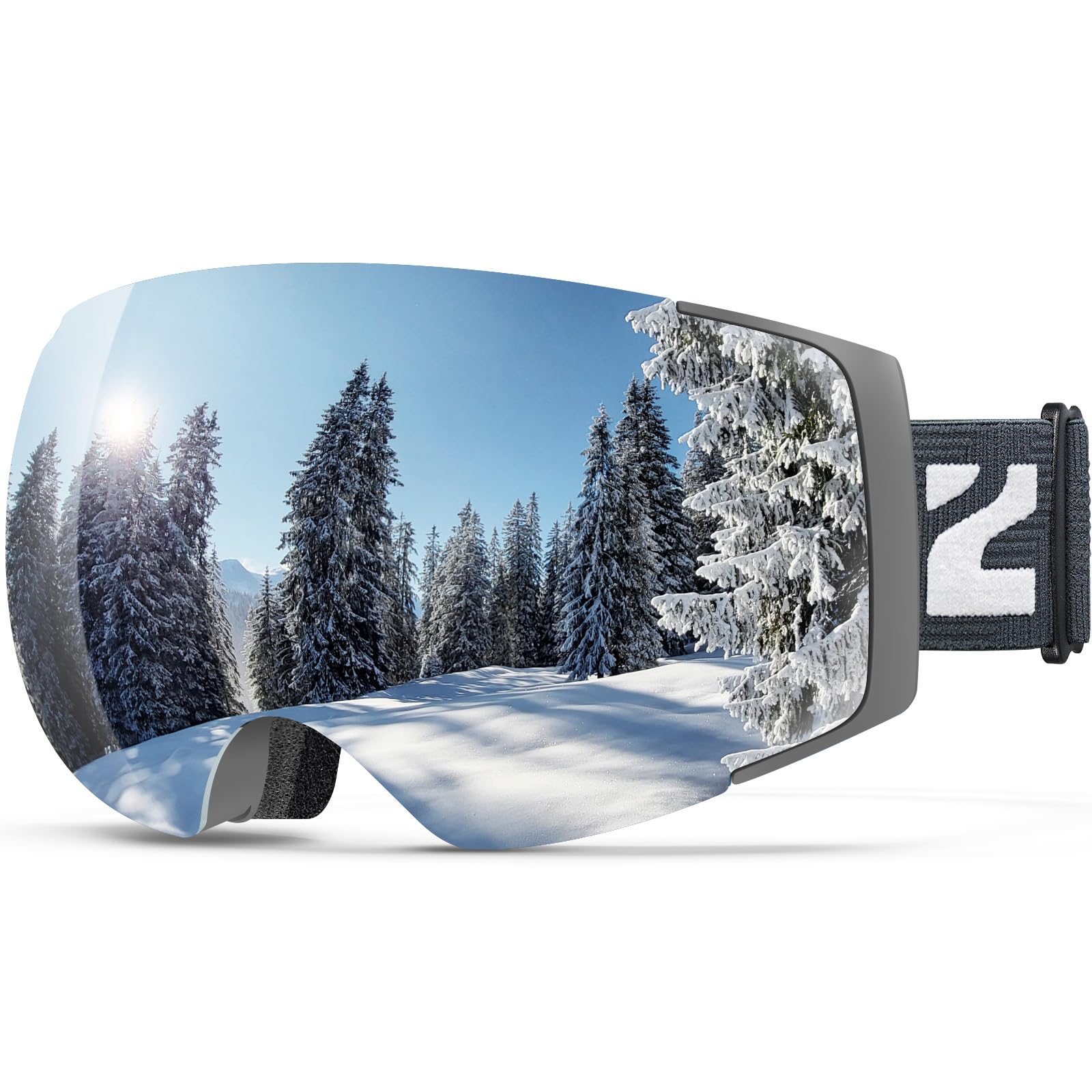
2. ZIONOR X4 Ski Goggles Magnetic Lens
Five years of hard use later, these still outperform rivals — owners are emphatic about that.
You get a goggle and four different lenses (sunny, bright sunny, overcast, and night) in one box, which means you are ready for any weather the mountain throws at you. The double-layer lens design creates a thermal barrier that fights fog much better than the single-layer goggles in the same price range, and the wide ventilation system pushes moist air out so your view stays clear even during a high-exertion run. The magnetic attachment uses eight strong magnets, so swapping a lens takes about two seconds and feels totally secure.
The thing everyone raves about is the value — owners who have owned premium brands say the optical clarity and anti-fog performance here match or beat what they paid three times more for. “I’ve owned and used these for 5 full years and they still work perfectly,” is the kind of longevity you rarely see at this end of the market. The strap can be a tight fit over the largest XL helmets, and the lenses do scratch if you are not careful with storage. Spare lenses beyond the four included are also harder to track down.
It is OTG-friendly, so prescription glasses slide right underneath. If you want a magnetic-lens system that delivers reliable performance without draining your budget for lift tickets, this is the pick.
Real-world staying power: multiple owners mention five full seasons of use with zero degradation in the lens or frame — uncommon at any price, almost unheard of at this one.
The honest limit: the strap maxes out at XL helmet sizes, and spare replacement lenses can be tough to find later.
Reach for this if: you want four lenses, magnetic quick-swap, and proven longevity without spending over a hundred dollars.
Look elsewhere if: you have a very large head and helmet combo — the strap might run out of adjustment room.
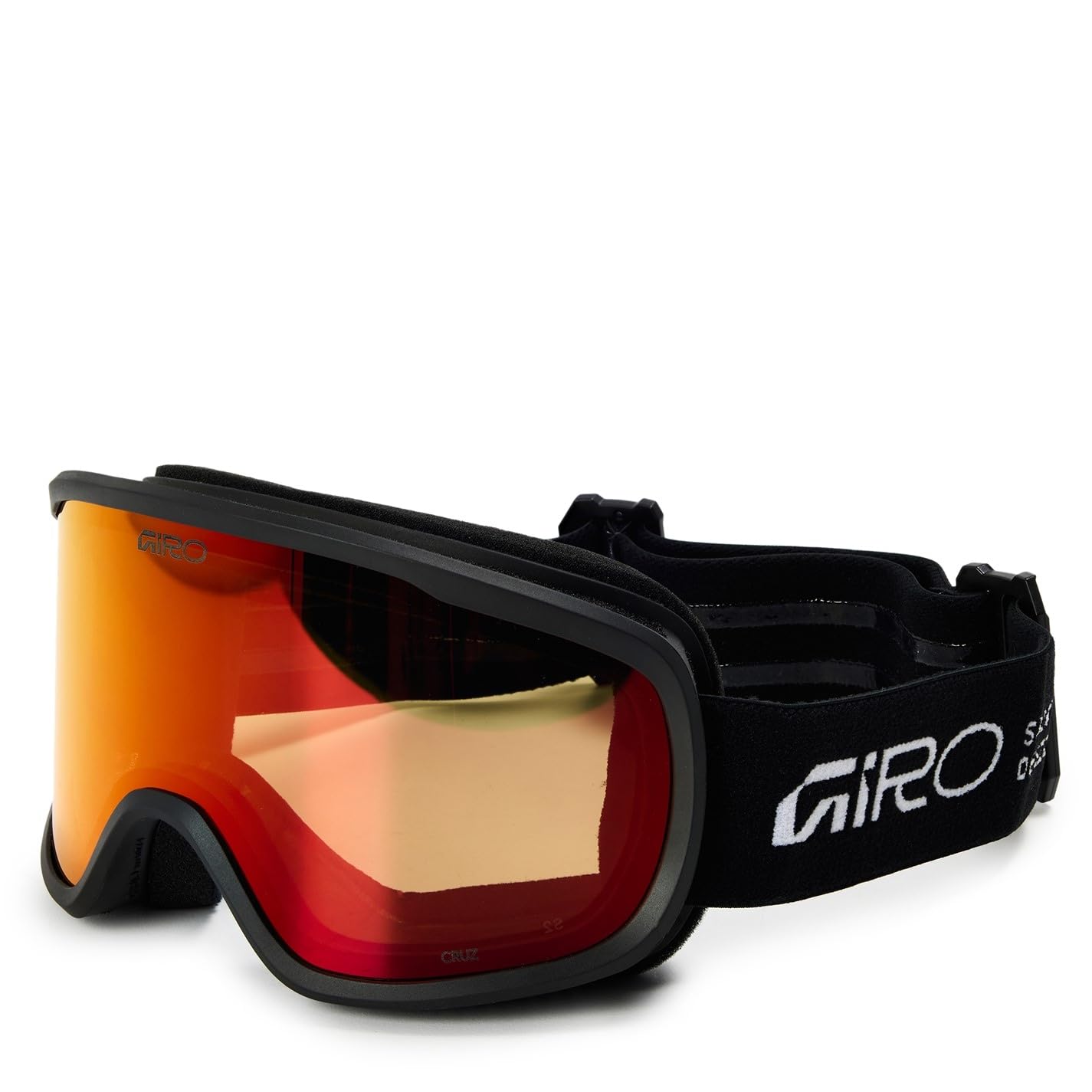
3. Giro Cruz Ski Goggles
A smart mid-range pick that nails the essentials — anti-fog, helmet fit, and over-glasses comfort.
Giro’s Expansion View (EXV) technology carves frameless zones into the frame so the spherical lens wraps around your peripheral vision without a bulky rim blocking the sides. The Amber Scarlet lens sits at a 39% VLT, which hits the balance for mixed clouds and sun — you can keep it on for the whole day if conditions are variable. The anti-fog coating and double-layer face foam with microfleece lining keep you comfortable and clear when you are working hard.
The OTG design is engineered with extra interior volume so glasses frames fit without pressing into your temples, and that extra air gap also helps keep fog away. Fit and quality are the two most-discussed strengths (23 mentions each), and value for money follows closely with 22 owners calling it out. It is also fully compatible with Giro helmets, creating a smooth interface that prevents the dreaded gap at the forehead. The single-lens setup means you are locked into that 39% VLT unless you buy a second lens separately, which is the main limitation compared to the magnetic-swap options on this list.
For a goggle that does not try to be everything, the Cruz does everything well — a solid, no-fuss companion for the skier who wants one reliable lens and a comfortable fit.
One-and-done simplicity: the 39% VLT Amber Scarlet lens works from bluebird to flat light, so you rarely feel the need for a second lens.
The catch: no extra lens in the box — if you ski night or require a dedicated sunny-only lens, you’ll need to buy one separately.
Best for: the intermediate skier who wants a reputable brand, dependable anti-fog, and a single lens that covers most conditions.
skip it if: you need multiple interchangeable lenses for wildly changing light or you prefer a magnetic quick-swap system.
4. SMITH Squad Goggles with ChromaPop Lens

ChromaPop lens technology pulls detail out of flat light that other goggles simply miss.
SMITH’s ChromaPop lens is the headline here — it filters specific wavelengths of light to boost contrast and color saturation so you can read the snow surface and spot terrain shifts instantly. The wide panoramic field of view means you never feel like you are peering through a tube, and the anti-fog coating combined with the ventilation system keeps your vision clear when you transition from a windy chairlift to a hard-charging descent. The frame accepts replacement lenses, though the J-hook system requires more patience than a magnetic swap.
The field of view gets the most praise from owners (22 mentions), and the fit and quality both score 21 mentions each. Optical clarity is a standout — owners call it “exceptional” and note the lens tint handles both bright sun and low light with ease. The lens swapping difficulty is the most-discussed negative; a few owners found the J-hooks risky and switched to a magnetic model. If you tend to change lenses often on the mountain, that is a real consideration. The soft case also offers minimal protection for travel.
Lightweight and durable enough for 48-mile days of alpine skiing in spring conditions, the Squad ChromaPop delivers pro-level optics at a mid-premium price.
What makes the difference
- ChromaPop lens dramatically boosts color and contrast in flat, overcast light
- Wide panoramic view with excellent peripheral coverage
- Anti-fog performance holds up through intense exertion and temperature shifts
The honest trade-off
- Lens interchange uses J-hooks — slower and trickier than magnetic systems
- Included soft pouch offers little protection for travel or storage
Reach for this if: optical quality and color accuracy in variable light are your top priorities, and you do not mind a non-magnetic lens swap.
A note of caution: if you swap lenses multiple times per session, the J-hook system may frustrate you — consider the magnetic alternatives on this list instead.
5. Giro Method Ski Goggles with VIVID Lenses (2-Pack)
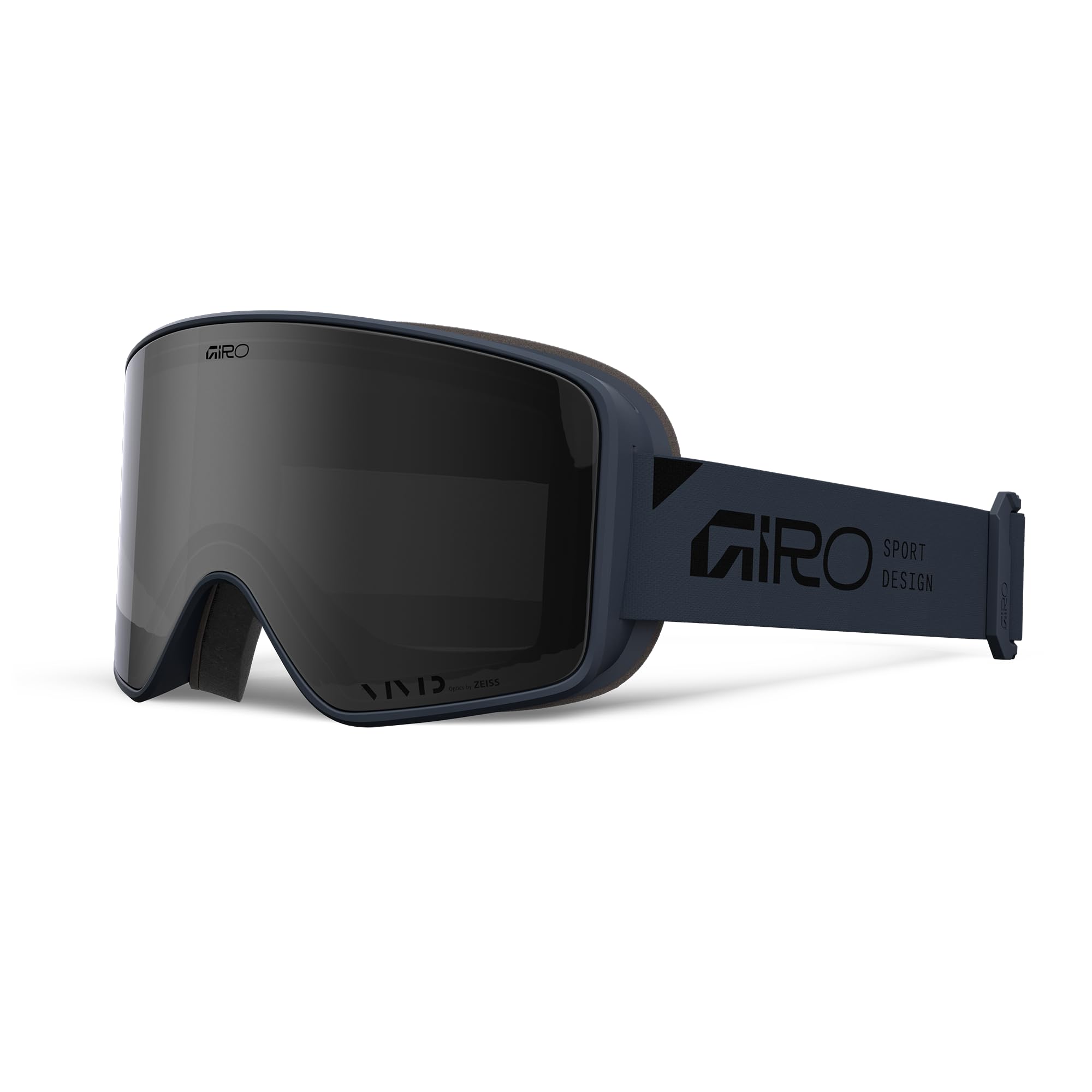
Two Zeiss-engineered VIVID lenses in the box — one for full sun, one for low light — so you are covered for the entire day.
Giro partnered with Zeiss Optics to create the VIVID lens technology, which manipulates blue light to cut through haze and enhance contrast without washing out color. You get a full-sun Vivid lens and an overcast/low-light Vivid lens included, which is rare at this price tier — most goggles make you buy the second lens separately. The EXV (Expansion View) frameless zones give you a massive spherical field of view, and the triple-layer face foam with microfleece facing provides a comfortable, moisture-wicking seal against your face.
Visibility in extreme cold is a standout — customers note excellent clarity in -23°F wind chill with no fogging issues. The Slash Seal lens interchange system is secure, though it isn’t magnetic — you slide and lock the lens in place rather than snap it on. The build quality impresses across the board, and the OTG-friendly design means glasses wearers get the same premium experience. The 4.5-rating from over 150 owners is solid, though not as high as Oakley’s Flight Deck crowd.
The Whitelines 100 award sums it up: “Hands down, this was our test team’s favorite looking goggle of the year, with a lens that could just about make a dog see color.”
Two-lens advantage: most premium goggles sell you the second lens separately. The Method includes both, which saves you a significant expense right from the start.
The fit note: the frame is medium-weight and designed for smooth pairing with Giro helmets — make sure your helmet is compatible if you are mixing brands.
Best for: the rider who wants Zeiss optics in a goggle that comes ready for both sunny and overcast days without buying anything extra.
Think twice if: you prefer magnetic lens swaps — the Slash Seal system is secure but not as fast as snapping on a magnetic lens.
6. Wildhorn Roca Pro Ski Goggles
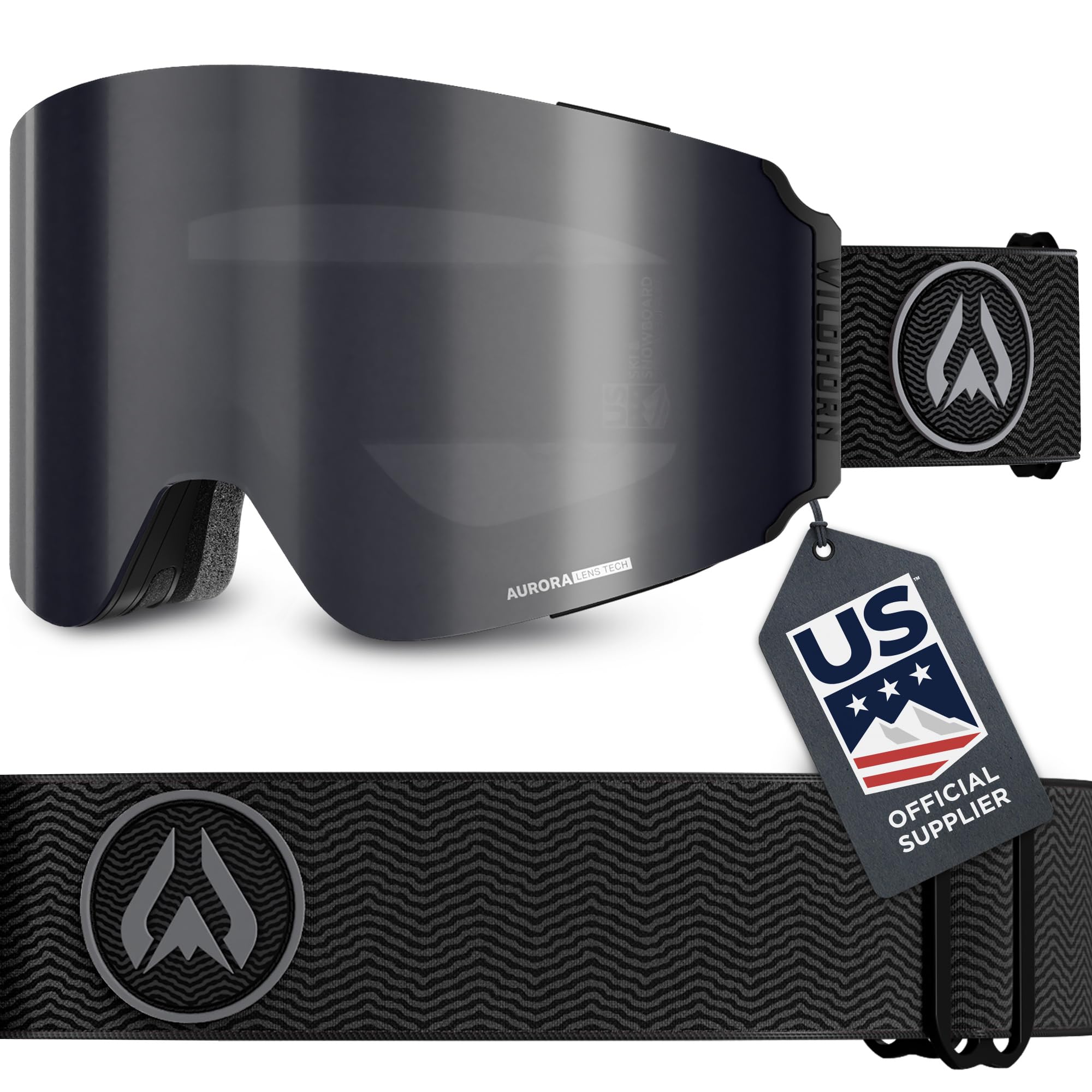
The official goggle supplier to the U.S. Ski & Snowboard Team brings a massive 185° viewing area to the slopes.
Wildhorn Outfitters is a proud supplier to the U.S. Ski & Snowboard Team, and the Roca Pro delivers that level of performance with an ultra-wide panoramic lens that eliminates tunnel vision. The 185° field of view on the large frame lets you spot terrain changes and other riders earlier. The Aurora dual-lens technology gets a scratch-resistant clear coat and three times the standard anti-fog treatment, so your view stays sharp even on long, wet days.
The magnetic lens swap uses eight rare earth N45 magnets for a fast, secure change. Field of view, quality, and value for money are the top-cited strengths (15 mentions each), and the anti-fog performance also stands out with 12 mentions. The big caveat is the fit — it is rated as mixed, with some owners saying the frame is too large for smaller faces. That is a real issue if you have a narrow face. One owner noted, “Huge lens. Clear vis and no fogging issue. Just too big for my face.”
If you have a medium to large face and want a wide-view, magnetic-swap goggle backed by an official Olympic team connection, the Roca Pro is a strong mid-premium contender.
Standout strengths
- 185° field of view
- Official supplier to the U.S. Ski & Snowboard Team
- Eight N45 magnets for a fast, secure lens swap
What to watch for
- Large frame does not fit smaller or narrower faces comfortably
- Not OTG-compatible — prescription glasses may not fit underneath
Grab this if: you want a massive field of view and easy magnetic lens changes, and you have a medium-to-large face.
A real caution: if you have a narrow face or wear prescription glasses, the large frame will not seal properly or fit over your specs.
7. findway Ski Goggles OTG
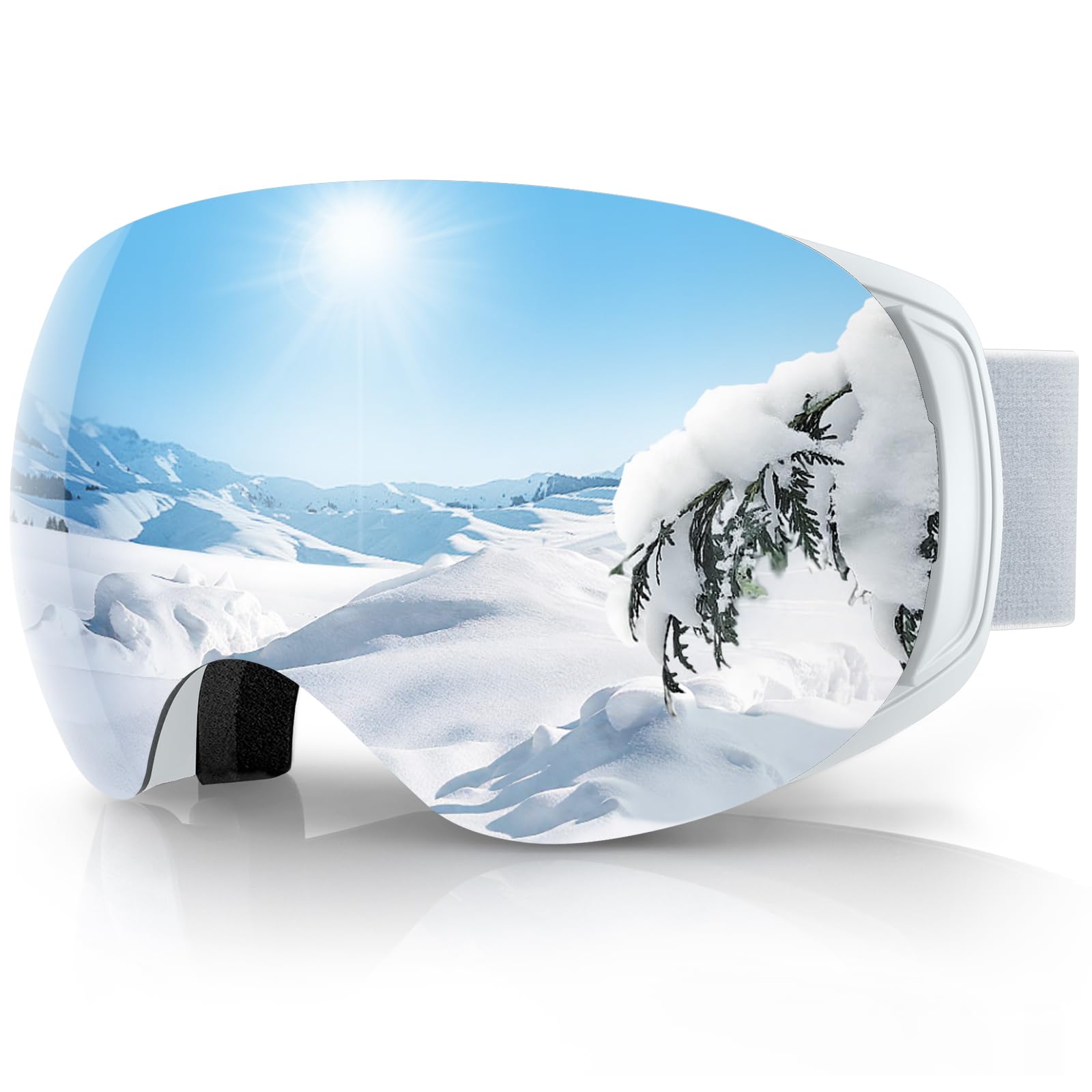
A budget-friendly goggle with a smart dual-retention system — magnets plus side clips — that keeps the lens locked even in a crash.
Findway uses six rare earth N45 magnets to align the lens, then adds a side-clip locking system that holds everything in place through hard impacts. The dual-lens technology creates a thermal barrier that significantly reduces fogging compared to single-lens goggles, and the spherical lens shape gives you a panoramic view with minimal distortion. The TPU (thermoplastic urethane polymer) frame is tough and resists deformation if you drop a pack on it or take a fall.
The OTG design provides enough interior space for prescription eyeglasses, and the triple-layer foam padding is ergonomically shaped to fit various face sizes. Quality is the most-praised aspect with 11 mentions, and the appearance scores well with 8 owners calling it out. The side clips, however, are the recurring complaint — a few reviewers point out they can fall off and get lost. That is a real annoyance if you are in deep snow or on a chairlift when it happens.
If your budget is tight but you need a goggle that handles glasses, fights fog effectively, and survives a tumble, the findway delivers far more than its sticker suggests.
Safety-first lens retention: the combination of six magnets plus a clip lock means this lens is not popping off during a jump or a fall.
The small gripe: the side clips are not permanently attached and can be lost during a lens change — handle them with care or keep a spare.
Ideal for: the budget-conscious skier who wears glasses and wants a goggle that stays together through rough conditions.
Consider the risk: if you swap lenses often, the detachable clips may eventually go missing — this is less of an issue if you pick one lens and stick with it.
8. Oakley O-Frame 2.0 Pro Ski Goggles

Oakley’s entry-level goggle that brings High Definition Optics and full prescription compatibility without the Prizm price tag.
Oakley’s HDO (High Definition Optics) technology eliminates distortion so your vision is sharper and clearer than what conventional lenses deliver, even in a lower-priced model. The anti-fog coating is permanent — not a spray that wears off — and the silicone-lined strap grips your helmet securely. The O-Frame 2.0 Pro is prescription-compatible, meaning you can wear it over most eyeglasses without pressure points. The permanent anti-fog coating is a real differentiator at this price point.
Quality is the most-discussed strength (34 mentions), and the fit scores 23 mentions, with many owners praising how well it works for larger head sizes. The fogging aspect, however, is mixed — 16 owners mention it, and while most report no issues, a minority say their pair fogs up badly. That split is note if you tend to overheat quickly or ride in very humid conditions. Soft case is also not included despite the product images showing one — you get a microfiber bag instead.
For the skier who wants Oakley reliability and HDO clarity at a price that leaves room for other gear, the O-Frame 2.0 Pro is a solid entry point — just know the fogging experience varies by user.
Reasons to pick it
- HDO optics deliver distortion-free, sharper vision than typical budget goggles
- Permanent anti-fog coating (not a temporary spray)
- Silicone strap lining keeps the goggle locked on your helmet
What to be aware of
- Fog resistance is inconsistent — some shoppers say fogging, others do not
- No soft case included despite the product images — only a microfiber pouch
Reach for this if: you want authentic Oakley optics and a goggle that works over glasses without spending -plus.
Look elsewhere if: you live in a humid climate or fog up easily — the mixed fogging feedback suggests a goggle with dedicated ventilation might serve you better.
9. OutdoorMaster Heron Ski Goggles Magnetic 2-Lens Set

A magnetic two-lens set with a toric (barrel-shaped) lens that reduces distortion better than a simple spherical design.
OutdoorMaster uses a toric lens shape — a barrel curve that mimics the natural curvature of the human eye more closely than standard spherical lenses — so you get less distortion and a wider, clearer view. The frameless design opens up your peripheral vision, and the magnetic system lets you swap between the included sunny and low-light lenses in seconds. The anti-fog coating is applied to every lens, and the UV400 protection blocks 100% of UVA and UVB rays.
Quality gets the most mentions (29), followed by value for money (17) and fit (16). Owners with large heads (65cm circumference) report a comfortable fit with the strap maxed out, and the lens swap is described as sturdy and secure. The recurring note is that the strap at its maximum adjustment barely fits over larger helmets, and the OTG design works for most glasses but thinner frames are easier. The anti-fog coating has a textured feel that owners say prevents fogging even during intense exertion in sub-zero temperatures.
If you want a magnetic two-lens system, a toric lens for reduced distortion, and solid anti-fog performance at a budget-friendly price, the Heron is a well-rounded choice.
Toric advantage: the barrel-curve lens shape reduces the peripheral distortion common in basic spherical lenses, giving you a truer view of the terrain.
The sizing note: the strap is long but may reach its limit on the largest helmet sizes — check your helmet’s circumference before buying.
Best for: the skier who wants a magnetic-swap system and a higher-quality lens shape (toric) without moving to a premium price tier.
Keep in mind: if you wear thick prescription frames, the OTG space may be tight — slimmer glasses work best here.
Understanding the Specs
VLT (Visible Light Transmission)
This is the percentage of light your lens lets through to your eye. A low VLT (10% or less) is for bright, sunny days — it cuts glare from snow. A VLT around 30-40% handles mixed sun and clouds. High VLT (60% or more) is for overcast or night skiing. Most goggles that come with two lenses include one low-VLT and one high-VLT option.
Lens Shape: Cylindrical vs. Spherical vs. Toric
A cylindrical lens curves only horizontally, which is simpler and cheaper but can cause distortion at the edges. A spherical lens curves both horizontally and vertically, matching the shape of your eye more closely for a wider, clearer view. A toric lens is a barrel curve — more complex than spherical — and offers even less peripheral distortion, which is why you tend to find it on higher-end goggles.
Anti-Fog Coatings and Dual-Layer Lenses
Fog happens when warm moisture from your face hits a cold lens. A permanent anti-fog coating absorbs that moisture before it beads up. A dual-layer lens creates a sealed thermal barrier between two layers of lens material, which keeps the inner lens warmer and significantly reduces fogging. Single-layer goggles fog much faster.
OTG (Over-the-Glasses) Design
If you wear prescription eyewear, you need a goggle with extra interior volume so your glasses frames fit comfortably without pressing into the lens. OTG goggles also have ventilation channels that route warm air away from the glasses, reducing the condensation that forms between your glasses and the goggle lens. Not every goggle on the market has this feature.
FAQ
What does VLT mean on ski goggles?
Can I wear ski goggles over my prescription glasses?
How do I stop my ski goggles from fogging?
What is the difference between a spherical lens and a cylindrical lens?
Are magnetic lens goggles better than clip-on ones?
Will any ski goggle fit any helmet?
How do I clean my ski goggles without ruining the anti-fog coating?
What does the term frameless mean on snow goggles?
Do I need a high-contrast lens for skiing?
Why do some goggles come with a spare lens and others do not?
Final Thoughts: The Verdict
If you want one dependable pick, the eyewear for skiing and snowboarding eye protection winner is the Oakley Flight Deck L because the Prizm lens and fighter-pilot field of view deliver the clearest, widest vision on the mountain backed by a crowd of nearly a thousand approving owners. If you want the best value with proven longevity and four magnetic lenses for every condition, grab the ZIONOR X4. And for pro-level optical clarity with Zeiss-engineered VIVID lenses and a spare included right in the box, the Giro Method is the premium pick to reach for.
How We Picked
We do not accept paid placement. Every pick is matched to a real buyer and a real use-case; we do not hands-on test units.
Sources & Methodology
Specifications: manufacturer listings and product documentation. Review insights: verified customer reviews, as of July 2026. Pricing: not shown on this page (it changes often); check the current price via the retailer link.
As an Amazon Associate, WellFizz earns from qualifying purchases. This does not affect which products we feature.
Related Guides

Mo Maruf
I created WellFizz to bridge the gap between vague wellness advice and actionable solutions. My mission is simple: to decode the research and give you practical tools you can actually use.
Beyond the data, I am a passionate traveler. I believe that stepping away from the screen to explore new environments is essential for mental clarity and physical vitality.