Our readers keep the lights on and my smoothie glass nicely filled. As an Amazon Associate, I earn from qualifying purchases.
Specs are compiled from manufacturer listings and verified buyer reviews and can change over time — please confirm the key details on the product page before buying.
You want a full-suspension mountain bike under a thousand bucks, but you have heard the horror stories — bikes that buckle on the third ride, parts that fail after a few miles. The difference between a bike that lasts and one that lets you down depends on a handful of specific parts. This guide breaks down four dual-suspension options at different price tiers, covering what the spec sheets do not tell you and what owners wish they knew before buying.
I’m Mohammad Maruf — the founder and writer behind WellFizz. This guide is built by comparing the manufacturers’ published specifications and the patterns across verified customer reviews, so you get each pick’s real strengths and trade-offs instead of marketing spin.
A genuine dual-suspension mountain bike with working front and rear suspension changes how rough terrain feels, but only if the frame and components can handle the abuse. Here is a clear look at the best dual suspension mountain bike options across different budgets, ranked by real owner experience and build quality.
Our Picks at a Glance

How To Choose The Best Dual Suspension Mountain Bike
Picking a full-suspension bike means looking past the paint job. The frame material, the type of suspension, and the drivetrain all decide whether this bike climbs hills smoothly or leaves you pushing it home.
Frame Material: Aluminum vs Carbon Fiber
Aluminum frames are the standard for budget and mid-range dual-suspension bikes. They are strong and durable but heavier — you feel that extra weight when climbing. Carbon fiber frames, found on premium models, are lighter and absorb trail vibration better, but they cost significantly more. For beginners, a quality aluminum frame is often the smarter choice because it takes a beating on rocks and roots without the repair bill a carbon frame would carry.
Suspension Type: Adjustable vs Fixed
Adjustable suspension lets you tune the fork and rear shock for your weight and the terrain you are riding. A lockout feature (a switch that stiffens the suspension) on the fork or shock is a big deal on climbs — it stops the bike from bobbing when you stand up to pedal, sending all your energy into forward motion. Fixed suspension is simpler and cheaper, but it cannot adapt to different trails or rider weights. If you plan to ride both smooth fire roads and rocky descents, adjustable suspension with lockout is worth the extra money.
Drivetrain: 1x vs 2x vs 3x
The drivetrain (the gear system that moves the chain) includes the chainrings and cassette. A 1x drivetrain has a single chainring up front and a wide-range cassette in the back. It is simpler, drops chains less often, and is the modern standard for mountain biking. A 2x or 3x setup has multiple front chainrings, which gives you more gear ratios but adds weight and complexity. For trail riding, a 1x setup with a clutch derailleur (a mechanism that keeps chain tension) is the most reliable choice. If you are on a tight budget, a 2x or 3x drivetrain still gets the job done, but expect more adjustments over time.
Quick Comparison
| Model | Best For | Frame Material | Suspension Type | Drivetrain | Amazon |
|---|---|---|---|---|---|
| Gravity FSX 1.0★ Best Overall | Budget entry-level trail riding | Aluminum | Adjustable front & rear | 24-speed (2x) | Amazon |
| Gravity FSX 29 LTD | Riders wanting 29-inch wheels on a budget | Aluminum | Adjustable rear, lockout fork | 21-speed (3x) | Amazon |
| Mongoose Impassse | Mid-range 1x drivetrain with hydraulic brakes | Aluminum | RST Blaze fork 100mm travel, lockout | 1×9-speed | Amazon |
| SAVADECK Titan 612 | Performance trail riding with carbon frame | Carbon Fiber | Dual-link with DNM air shock, 3-stage lockout | 12-speed (1x) | Amazon |
In‑Depth Reviews
1. Gravity FSX 1.0 Dual Full Suspension Mountain Bike
Our pick — over 4★ from 400+ verified ratings; the strongest balance of quality and price.
The entry-level standard that owners call “terrific value” despite a few assembly quirks.
What wins buyers over is the quality of the components for the price. You get disc brakes (clamping pads on a rotor) front and rear that deliver strong stopping power — buyers report the mechanical discs are quiet and effective after a simple adjustment. The aluminum frame is sturdy enough for casual trail riding, and the adjustable front and rear suspension lets you tune the ride without upgrading parts. The 24-speed drivetrain with Shimano shifters gives you a wide gear range for both climbing and flat sections. Owners mention it is heavier than pricier bikes, so you feel the weight on climbs.
The honest trade-off is that the bike needs patience during assembly. The instructions are poor, no tools are included, and the factory alignment of the brakes and derailleur often requires tweaking. Some owners swapped the seat immediately and note the tires lose air faster than expected. One reviewer who put 75 miles on it reported no major issues after setup. Compared to the Gravity FSX 29 LTD below, the 1.0 has a 2x drivetrain instead of 3x, which is simpler to adjust, but the 29 LTD offers larger wheels for better rollover.
What owners rate highly
- Build quality and overall component value for the price
- Adjustable front and rear suspension handles rough terrain well
- Mechanical disc brakes stop confidently after a minor tune
What requires patience
- Assembly instructions are vague with no included tools
- Stock tires tend to go flat quickly; many replace them
- Seat is hard and uncomfortable for longer rides
Best if you are a beginner wanting real dual suspension without overspending. You will need to be willing to spend an afternoon tuning brakes and swapping a seat. If you plan to ride aggressive downhill trails or jumps regularly, the mixed durability feedback suggests looking at a sturdier mid-range option instead.
2. 2025 Gravity FSX 29 LTD Dual Suspension 21 Speed Mountain Bike

A 29-inch wheel ride that feels smooth and light, but not without some assembly headaches.
The big story here is the 29-inch wheels (larger diameter that rolls over obstacles better) paired with a lockout fork (a switch that stiffens the front suspension for climbs). Larger wheels roll over obstacles like roots and rocks more easily than 26-inch or 27.5-inch wheels, and the fork lockout stops the front suspension from bobbing on pavement climbs — a useful feature for riders mixing trail with road sections. The adjustable rear suspension gives you some tuning control, and the 21-speed drivetrain offers enough range for moderate hills. Owners describe the bike as “smooth, light, nimble” after a proper tune-up, and one 16-year-old owner’s parent confirmed it is durable, lightweight, and easy to use after two years of use.
The catch is that the bike often arrives with a warped rear wheel or missing screws. One owner reported the rear wheel was bent from the start and needed replacement. The chunky weld quality on the frame limits this bike to gravel and dirt paths — it is not built for jumps or aggressive downhill runs. The stock seat and grips are uncomfortable enough that several owners replaced them with ergonomic parts immediately. Customer service also drew criticism for telling a buyer to hire a professional assembler when asked for missing screws. This bike is heavier and harder to handle on steep climbs than the lighter Gravity FSX 1.0.
Wheel-size advantage
- 29-inch wheels roll over trail obstacles with less effort
- Lockout fork prevents bounce during climbs
- Durable enough for a teenager’s daily use over two years
Factory quality concerns
- Frequent reports of warped rear wheels from the start
- Chunky frame welds restrict use to gravel or dirt, not jumps
- Missing screws and poor customer service response
The taller rider on a budget will appreciate the 29-inch wheels for better rollover and a lockout fork for mixed terrain. This bike delivers a smooth ride after you fix the factory issues. If you do not have the tools or willingness to true a wheel and adjust brakes right away, or if you want a bike ready to ride from the start, think twice.
3. Mongoose Impassse

A mid-range bike with a modern 1x drivetrain and hydraulic brakes, but quality control holds it back.
This bike brings features you normally find on pricier models. The Microshift 1×9 drivetrain (one front chainring, nine rear cassette gears) with an 11-46 cassette and a 30-tooth narrow-wide chainring means you get a wide gear range without a front derailleur — simpler shifting and fewer dropped chains. The RST Blaze suspension fork offers 100mm of travel (the distance the fork compresses to absorb bumps, so roots and rocks feel less jarring) with a lockout and an alloy crown, which helps absorb trail bumps while keeping the front end stiff during climbs. The front and rear hydraulic disc brakes (using fluid pressure for stronger, more precise stopping) deliver the kind of precise stopping power in wet or dry conditions that mechanical brakes cannot match. Owners who got a good unit report a one-hour assembly and accurate shifting without adjustment.
The problem is that quality and durability get mixed feedback, and the complaints are specific. Customers note that the “second bike failed after 3 days” of light use on flat surfaces. Other issues include stripped pedal bracket threads, chain slipping off the derailleur sprocket, handlebar clamp screws overtightened, and brake rotors bent from the factory. The frame on some units sounds “squeaky and cheap.” Compared to the Gravity FSX 1.0 above, the Impassse’s suspension travel is comparable at 100mm, but the build consistency is noticeably lower. The bike fits riders 5’7″ to 5’10” thanks to the 17-inch frame, so shorter riders should check the sizing carefully.
A gamble on the good units: When it works, the 1x drivetrain and hydraulic brakes are a genuine upgrade over entry-level bikes, and the suspension feels great on trails.
Manufacturing inconsistency: A notable number of owners received bikes with severe defects — stripped threads, bent rotors, and broken derailleurs after a few days. Factor in potential return shipping if you get a bad one.
Reach for this if you want the cleaner shifting of a 1x drivetrain and hydraulic braking on a mid-range budget, and you have the skills to inspect and adjust a bike thoroughly on arrival. Look elsewhere if you need a bike you can ride immediately without mechanical work, or you plan to ride rough mountain trails where component failure on the trail would be dangerous.
4. SAVADECK Titan 612 Carbon Fiber Soft Tail Mountain Bike
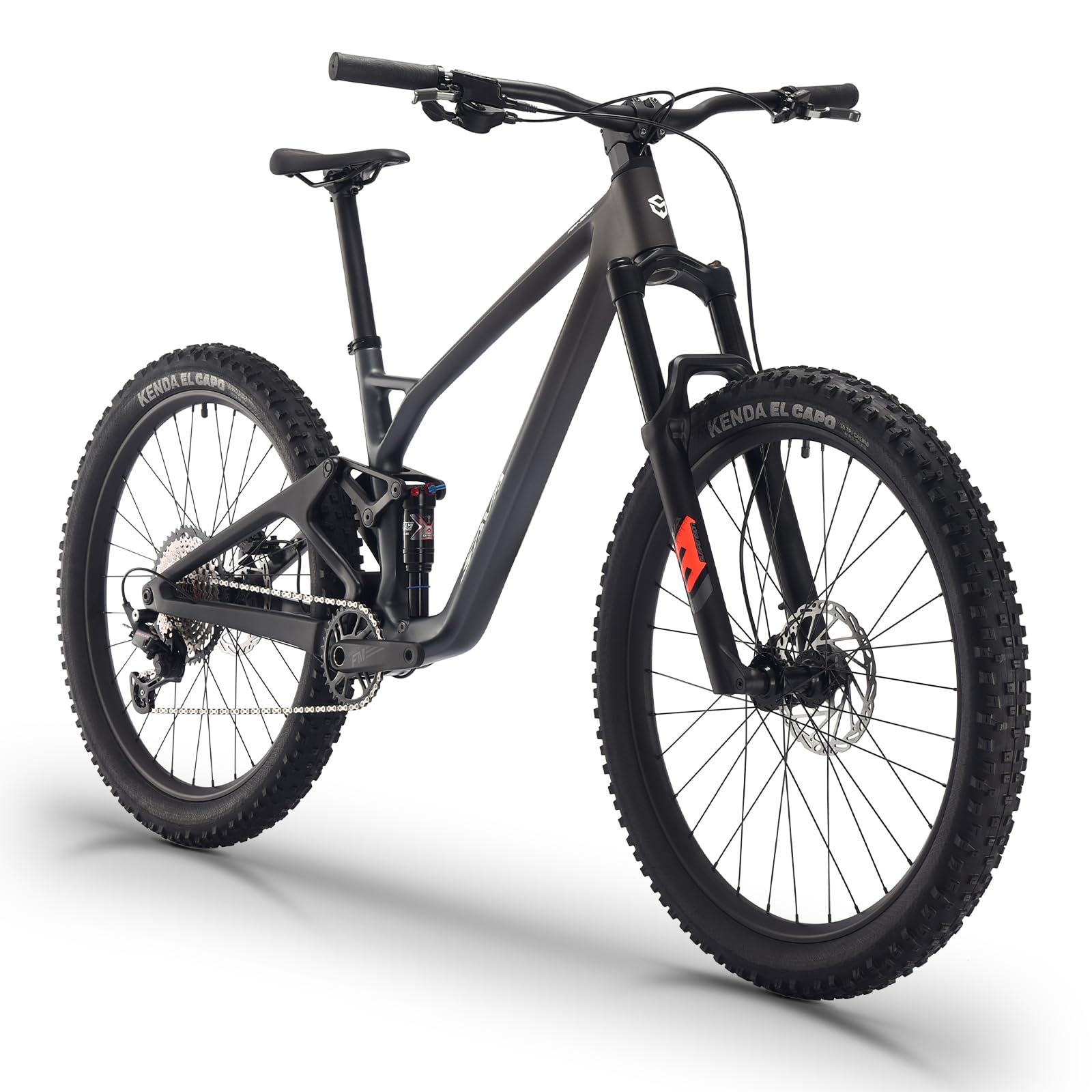
A carbon-fiber frame with a proper 12-speed groupset that feels like a serious step up in ride quality.
Everything about this bike is aimed at performance. The full carbon fiber frame (lighter and better at absorbing trail vibration than aluminum) with a reinforced rear triangle and dual-link suspension keeps the weight down while maintaining stiffness for technical trails. The DNM air shock (uses compressed air, which is lighter and more tunable than a coil spring) with a three-stage lockout lets you tune the rear suspension for climbing efficiency, plush trail riding, or firm descending — a level of adjustability the other bikes here do not offer. The Shimano DEORE M6100 12-speed groupset is a genuine step up in shifting precision, and owners describe the gear changes as “positive, direct, and confident.” The four-piston hydraulic disc brakes provide more stopping power and better heat dissipation on long descents than the dual-piston brakes on the Mongoose Impassse, which matters when you are braking repeatedly downhill to avoid brake fade.
The honest caveat is sizing and initial setup. The bike runs large — a 17-inch frame was too big for a 5’8″ rider, and the seller advises against it for anyone under 5’4″. There was also a report of receiving the wrong frame initially, though the seller resolved it quickly by swapping parts. One owner in Spanish called it “junk” compared to a brand-name Santa Cruz, but others call it “amazing value” for the spec level. The 2.4-inch Continental tires with multidirectional tread grooves provide aggressive grip on mud, gravel, and rocks, and the frame supports an upgrade to 2.6-inch tires for even more stability. This is the only bike in the lineup that a confident intermediate rider should pick over the Gravity FSX 1.0 if performance is the priority.
Trail-ready spec
- Carbon fiber frame is lightweight and absorbs trail vibration
- Shimano DEORE 12-speed drivetrain shifts precisely under load
- Four-piston hydraulic disc brakes handle long descents without fade
Sizing and assembly notes
- Bike runs large; a 17-inch frame may not suit riders under 5’8″
- One owner received the wrong frame initially (seller resolved it)
- Mixed reports on overall build quality versus established premium brands
The performance upgrade for the rider who wants a carbon frame, a real 12-speed drivetrain, and adjustable air suspension. It suits intermediate to advanced trail riders who know their geometry preferences. It is not for beginners who want a no-hassle out-of-box experience, or shorter riders — the sizing runs large and should be verified before purchase.
Understanding the Specs
Frame Material: Aluminum vs Carbon Fiber
The frame is the backbone of your bike. Aluminum frames, found on the Gravity and Mongoose models, are strong, affordable, and heavier. They handle abuse well but add weight that you feel on long climbs. Carbon fiber frames, like the one on the SAVADECK, are lighter and absorb trail chatter better, but they cost significantly more and can crack under extreme impacts. For most entry-level and mid-range riders, a well-built aluminum frame is the practical choice.
Suspension Travel and Lockout
Suspension travel, measured in millimeters (mm), tells you how far the fork and rear shock can compress to absorb bumps. More travel means better control on rough descents but more pedal bob on climbs. A lockout feature lets you stiffen the suspension for efficient climbing and then open it back up for descending. The Mongoose Impassse offers 100mm of travel with a lockout fork, while the SAVADECK has a three-stage lockout on its air shock for finer control. For general trail riding, 100mm to 120mm with a lockout is a versatile range.
Drivetrain: 1x vs 2x vs 3x
The drivetrain moves the chain across gears. A 1x drivetrain has one front chainring and a wide-range rear cassette. It is simpler, drops chains less often, and is the modern standard. A 2x or 3x setup has multiple front rings, giving you more gear options but adding weight and complexity. The SAVADECK and Mongoose use 1x drivetrains, while the Gravity FSX 1.0 uses a 2x (24-speed) setup. For trail riding, a 1x drivetrain with a clutch derailleur is the most reliable and low-maintenance option.
Brakes: Mechanical vs Hydraulic Disc
Disc brakes stop your bike by clamping a rotor between two pads. Mechanical disc brakes use a cable to pull the pads, while hydraulic disc brakes use fluid pressure. Hydraulic brakes offer stronger, more precise stopping power with less hand effort, especially on long descents where heat builds up. The Mongoose Impassse and SAVADECK use hydraulic disc brakes, while the Gravity models use mechanical disc brakes. For regular trail riding and any wet conditions, hydraulic brakes are a meaningful upgrade.
FAQ
What does full suspension mean on a mountain bike?
Is a dual suspension bike harder to pedal on pavement?
How much should I spend on a good dual suspension mountain bike?
What tools do I need to assemble a dual suspension bike bought online?
How do I know what size dual suspension bike to buy?
What does lockout on a fork do?
Are bigger wheels better on a dual suspension mountain bike?
How often do I need to service the suspension on a full suspension bike?
Final Thoughts: The Verdict
For most buyers looking for a dual suspension mountain bike, the smartest pick is the Gravity FSX 1.0 because it offers proven build quality, adjustable suspension, and strong component value at a price that leaves room for a seat and tire upgrade. If you want modern 1x shifting and hydraulic brakes for trail riding, the SAVADECK Titan 612 delivers a carbon frame and real performance specs, though sizing needs careful attention. And for riders set on 29-inch wheels for better rollover on a tighter budget, the Gravity FSX 29 LTD has the wheel size you want if you are ready to handle some factory adjustments from the start.
How We Picked
We do not accept paid placement. Every pick is matched to a real buyer and a real use-case; we do not hands-on test units.
Sources & Methodology
Specifications: manufacturer listings and product documentation. Review insights: verified customer reviews, as of July 2026. Pricing: not shown on this page (it changes often); check the current price via the retailer link.
As an Amazon Associate, WellFizz earns from qualifying purchases. This does not affect which products we feature.
Related Guides

Mo Maruf
I created WellFizz to bridge the gap between vague wellness advice and actionable solutions. My mission is simple: to decode the research and give you practical tools you can actually use.
Beyond the data, I am a passionate traveler. I believe that stepping away from the screen to explore new environments is essential for mental clarity and physical vitality.