Our readers keep the lights on and my smoothie glass nicely filled. As an Amazon Associate, I earn from qualifying purchases.
Specs are compiled from manufacturer listings and verified buyer reviews and can change over time — please confirm the key details on the product page before buying.
A rough idle, sluggish acceleration, or a mysterious drop in gas mileage often points to one thing: dirty fuel injectors. The right additive can dissolve those deposits and restore your engine’s pep, but picking the wrong one can leave you with nothing but an empty bottle. This guide cuts through the marketing hype to show you which formulas actually clean — and which ones just smell like fuel.
I’m Mohammad Maruf — the founder and writer behind WellFizz. This guide is built by comparing the manufacturers’ published specifications and the patterns across verified customer reviews, so you get each pick’s real strengths and trade-offs instead of marketing spin.
Whether you drive a high-mileage daily commuter or a performance car that sits most of the week, you need a cleaner for fuel injectors that matches your engine’s specific deposit problems and your maintenance routine.
Our Picks at a Glance

How To Choose The Best Cleaner For Fuel Injectors
The right cleaner depends on whether you are preventing buildup or dissolving a thick crust that has been baking on your injectors for years. You will find three main chemistries on the shelf: polyether amine (PEA), polyisobutylene amine (PIBA), and high-energy solvent technology (HEST). Each tackles a different type of deposit.
Active Chemistry — PEA vs. PIBA vs. Solvent
PEA-based cleaners, like those in Red Line and Chevron Techron, are the most effective at removing high-temperature deposits inside the combustion chamber and on intake valves. PIBA-based formulas work better on lower-temperature deposits in the intake system but can leave a residue in the chamber. Solvent-based products, such as Berryman’s HEST, dissolve heavy carbon and varnish quickly but can be aggressive on older seals and gaskets.
Concentration and Treatment Frequency
A “maintenance” cleaner with lower PEA concentration is meant to be poured in every oil change to prevent deposits from forming. A “clean-up” product has a higher concentration and is designed to remove existing buildup in one or two tanks. If you are chasing a specific symptom like a rough idle or a check-engine light, you want the higher dose first. For simply keeping a healthy engine healthy, a lower concentration used regularly is enough.
Engine Compatibility — Direct Injection vs. Port Injection
Direct injection engines (GDI) are prone to carbon buildup on intake valves because fuel never washes over them. Not all injector cleaners are effective on those deposits. Look for a formula that explicitly states it works with direct injection engines. Port injection engines, where fuel passes over the valves, respond well to most standard PEA cleaners. If you drive a GDI vehicle, avoid a cheap cleaner that only treats injectors — you need one that also targets the valves.
Quick Comparison
| Model | Best For | Active Chemistry | Bottle Size | Dose Type | Amazon |
|---|---|---|---|---|---|
| Red Line SI-1★ Best Overall | Deep clean, high mileage | PEA | 4 oz | Multi-dose per tank | Amazon |
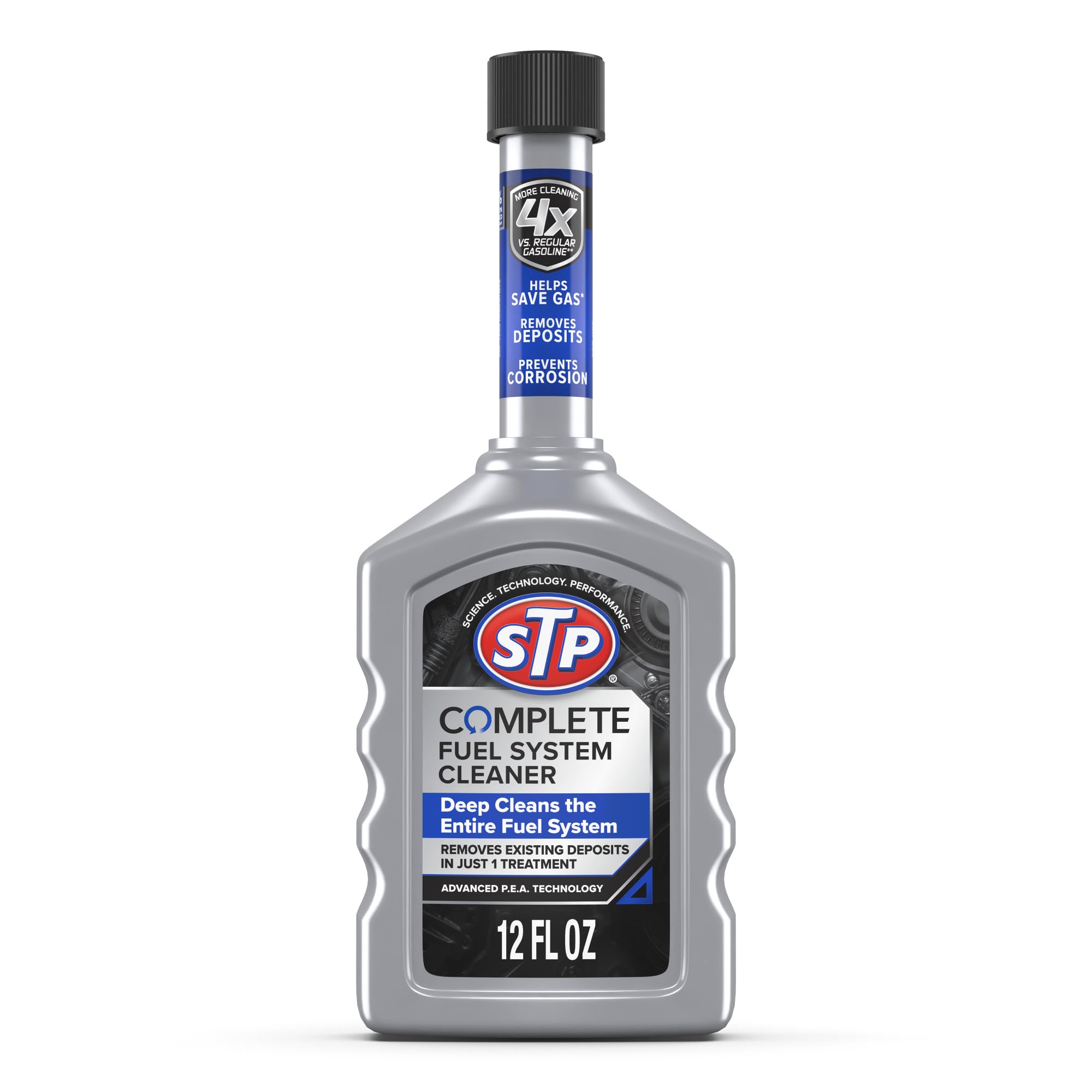
| STP DI Fuel Inj CleanerDI Specialist | Direct injection engines | PEA + PIBA | 12 oz | One bottle per treatment | Amazon |
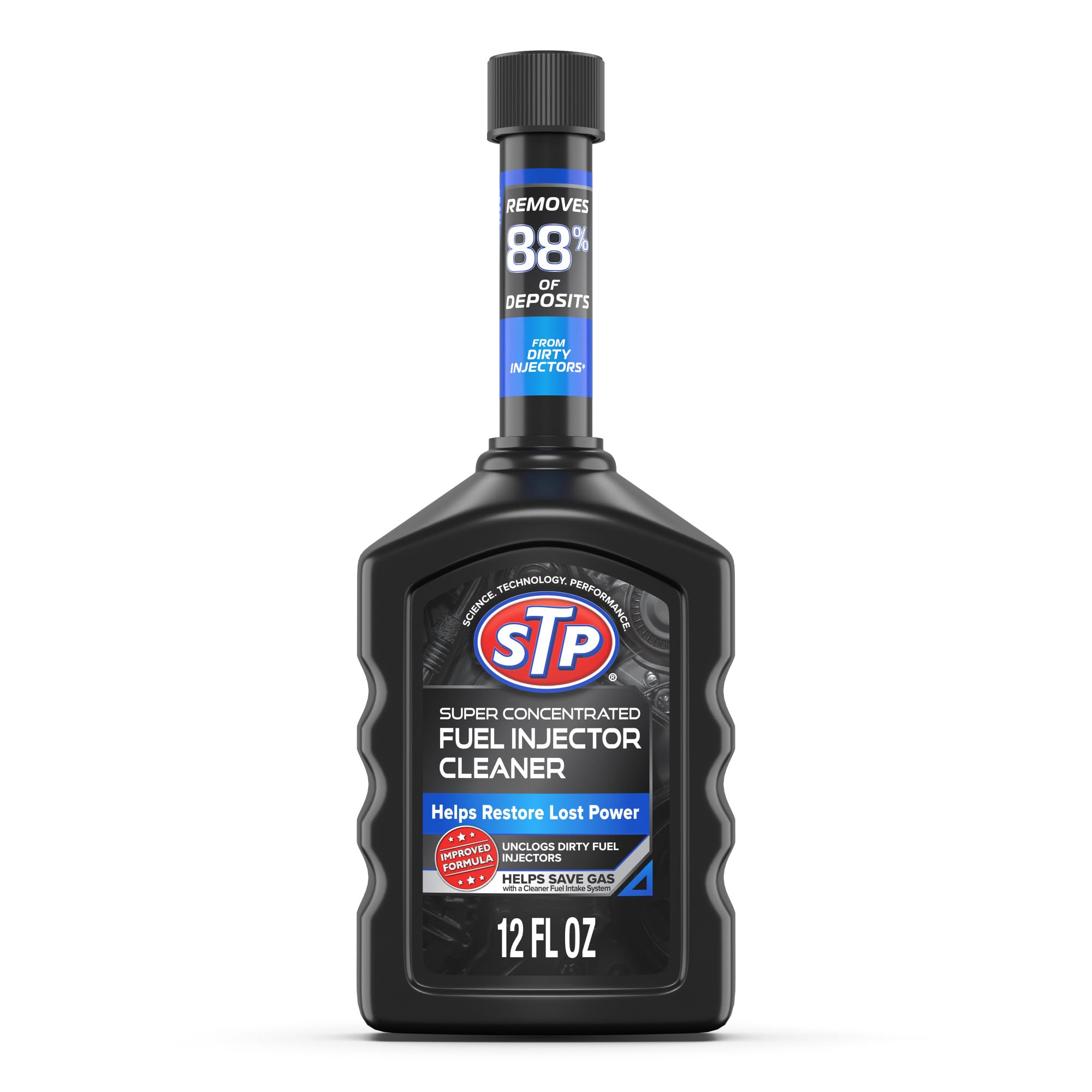
| STP Super ConcentratedMileage Boost | Large trucks, heavy cleaning | Jet fuel carrier | 12 oz | One bottle per treatment | Amazon |
| Berryman 7516 High Mileage | Severe carbon, old engines | HEST solvent | 15 oz | One bottle per treatment | Amazon |
| Chevron Techron Concentrate Plus | General maintenance, all engines | PEA | 20 oz | One bottle per treatment | Amazon |
| Gumout Fuel System Cleaner (6 Pack) | Multi-vehicle households, boats | Detergent | 6 x 10 oz | Single bottle per treatment | Amazon |
| Liqui Moly Truck Series | Large trucks, corrosion protection | Detergent | 500 ml | One bottle per treatment | Amazon |
| Liqui Moly Jectron (2 pack) | Immediate throttle response | Detergent | 2 x 300 ml | One bottle per treatment | Amazon |
| BG 44K (2 pack) | Professional-grade cleaning | PEA blend | 2 x 11 oz | One can per 20 gallons | Amazon |
In‑Depth Reviews
1. Red Line 60102 SI-1 Complete Fuel System Cleaner
Our pick — over 4.5★ from 9,500+ verified ratings; the strongest balance of quality and price.
The strongest PEA concentration per dollar you can pour into a gas tank.
Red Line SI-1 is the clean-up artist among fuel injector cleaners. The secret is its heavy dose of polyether amines (PEA) — the same chemistry dealership service departments use, but available off the shelf. What wins people over is that it does not just mask symptoms; it gradually dissolves carbon deposits over two to three fill-ups. In a 2003 S2000 with 99,700 hard-driven miles, it kept the intake and throttle body nearly spotless — a level of cleaning most competitors cannot match without multiple treatments.
The 4 oz bottle is small, but that is by design. You only need about an ounce per 15 gallons of fuel, making each treatment cost roughly the price of pocket change. The crowd favorite — it holds a stellar rating across nearly 10,000 owners — reports smoother idling, consistent throttle response, and resolved intermittent power loss. The thing everyone raves about is the concentration: as buyers put it, “Redline SI-1 contains the highest quantity of PEA per dollar among fuel system cleaners.”
Deep Cleaning Power
- Highest PEA concentration per dollar on the market — cleans injectors, valves, and combustion chambers.
- Costs pennies per tank when used as a maintenance dose (1 oz per 15 gal).
- Resolved hard acceleration problems in a 2010 Chevy Malibu that a mechanic could not fix in four days.
- Does not break down motor oil, so it is safe for regular use.
Consider These
- Small 4 oz bottle looks unassuming — you have to trust the concentration, not the size.
- Best results come from using it per tank rather than once every 3,000 miles.
- Not labeled specifically for direct injection engines, though reviews show it works well.
Grab it for: the strongest clean possible, especially if your car has high mileage or symptoms like hesitation and rough idle.
skip it if: you want a simple one-bottle-per-oil-change routine — this one requires measuring a smaller dose per tank for best results.
2. STP Direct Injection Fuel Injector Cleaner
A direct-injection formula that turns off the check engine light.
STP’s Direct Injection cleaner is built for the engines that suffer the most from carbon buildup: modern GDI engines. It combines PEA and PIBA detergents at a concentration it says is twice the amount found in leading premium gasoline. The biggest flex here is compatibility — it works with turbo, direct inject, and hybrid engines, so you are not hunting for a different bottle if your next car has a different fuel system. A 2007 Honda Accord owner using it monthly reports the check engine light has not returned since the first treatment.
The 12 fl oz bottle treats one full tank at every oil change or every 4,000 miles, which makes the math simple. A few owners note the price feels high compared to some other options, but the targeted formulation for GDI engines justifies the premium over a generic cleaner. It also uses a jet-fuel carrier to deliver the detergents, which sounds like marketing speak until you see how well it dissolves the hardened deposits unique to direct injection engines.
Targeted Formula
- Twice the cleaning agents vs. leading premium gasoline — built specifically for GDI engines.
- Compatible with turbo, supercharged, and hybrid gasoline engines.
- Monthly use kept a check engine light off long-term, per a 2007 Honda Accord owner.
- Contains corrosion inhibitors to protect the entire fuel system.
Heads Up
- More expensive per ounce compared to generic STP or other brands.
- Some users felt the benefit was marginal on older port-injection engines.
Best for: drivers of direct-injection cars who want a cleaner designed for their engine’s specific deposit problems, not a one-size-fits-all bottle.
Look elsewhere if: you drive a pre-2005 port-injection vehicle — a standard PEA cleaner like Red Line or Chevron will do the same job for less.
3. STP Super Concentrated Fuel Injector Cleaner
The 12 oz giant that boosts highway MPG by as much as six miles per gallon.
The headline here is the real-world mileage gain: one owner saw MPG jump from 33 to 39 on a three-year-old car used only for short trips. That is an 18% improvement from a single bottle. The super-concentrated formula uses a jet-fuel carrier, which means the active ingredients are delivered in a solvent that aggressively cuts through the gummy varnish that builds up in injectors over time. On the road, people report better acceleration and a noticeable “boost” during acceleration.
At 12 oz, this bottle is larger than the standard 10 oz, making it a rare find for people with big tanks or large vehicles. A 2011 Jetta owner noted throttle response improved after some driving. The main trade-off? It is a concentrated formula meant for occasional deep cleaning rather than monthly maintenance. The consensus among owners is that you feel the difference after one tank — but the effect fades if you do not follow up with a lighter maintenance product every few months.
Noticeable Gains
- Real MPG improvement — one owner recorded a jump from 33 to 39 mpg on a short-trip car.
- Larger 12 oz bottle ideal for trucks and SUVs with bigger fuel tanks.
- Made with a jet-fuel carrier that provides a high-quality delivery system for the detergents.
Consider
- Some users found the acceleration boost obvious but were unsure about long-term mileage effects.
- Not designed for regular monthly maintenance; best used as an occasional deep cleaner.
Reach for this if: you want a single-treatment mileage boost and your car is used mostly for short trips where deposits build up fastest.
pass on it if: you need a routine maintenance additive — this is better as a periodic shock treatment than a regular diet.
4. Berryman 7516 High Mileage Fuel System Rejuvenator

The solvent that brought a three-year-sitting motorcycle back to life.
Berryman’s High Mileage Rejuvenator is not for the faint of fuel system. It uses the brand’s proprietary HEST (High Energy Solvent Technology), which is a blend of aggressive solvents rather than weak carriers like mineral spirits. This makes it the weapon of choice for engines with severe carbon buildup. One owner dosed a Victory Hammer motorcycle that had sat for over three years with one ounce per gallon, ran it for 30 minutes, and eliminated all hesitation. The same bottle also works on 2-stroke and 4-stroke marine engines and small gas engines.
The 15 oz metal can is larger than most alternatives, and the pour spout makes it easy to direct into the tank without a funnel. A 2007 RAV4 with severe oil burning (one quart every 300 miles) saw consumption drop to one quart per 1,000 miles after the first tank. The trade-off is that this formula is strong enough to cause a misfire on the first treatment if the carbon breaks loose in large chunks, so it is best used on an engine you know needs heavy cleaning rather than as a routine preventative.
Aggressive Clean
- HEST solvents dissolve carbon and varnish faster than standard PEA or PIBA cleaners.
- Works on 2-stroke and 4-stroke engines, including marine and small engines.
- Reduced oil consumption from 1qt/300mi to 1qt/1000mi on a high-mileage RAV4.
- Eliminated three-year-old stale fuel hesitation in a motorcycle.
Caution
- Strong solvent may cause a temporary misfire as heavy carbon breaks loose.
- Not designed for monthly maintenance — use once or twice a year for a deep clean.
Best for: high-mileage or long-sitting vehicles with significant carbon problems that a standard PEA cleaner cannot handle.
Not for: routine maintenance or modern GDI engines with sensitive oxygen sensors — the strong solvent can be too much for a healthy system.
5. Chevron Techron Concentrate Plus Fuel System Cleaner

The 20-ounce giant that mechanics have recommended for decades.
Chevron Techron is the default answer for “what fuel system cleaner should I use?” — and for good reason. It is the product with the most owner votes by a wide margin. The active ingredient is PEA, and the concentration is high enough that some owners use two bottles per tank (or four for a truck) to tackle engine knock or persistent carbon codes like P0420. It reduces rough idle, engine surge, hesitation, and spark plug fouling, all from one bottle.
The value here is tough to top: a single bottle treats a whole tank, and the improvement in cold start performance and fuel stability can last for up to one year. Owners of older Chevrolet motors and high-mileage Equinoxes (one hit 303,023 miles) swear by it. The most-discussed downside is occasional bottle leakage during shipping — the caps can crack in transit. That is a packaging issue, not a formula problem, but it is note if you buy in bulk. Between the Red Line and this one, the choice depends on concentration: Red Line doses per tank for a deeper clean, while Techron is a simpler one-bottle-and-go solution.
Proven Track Record
- Most popular PEA cleaner on the market with a massive base of long-term owners.
- Large 20 oz bottle means one bottle treats a full tank easily.
- Stabilizes fuel for up to one year, making it ideal for seasonal vehicles.
- Recommended by mechanics and used by owners who hit over 300,000 miles.
Watch For
- Bottle caps sometimes leak in transit — check the seal before pouring.
- Concentration per ounce is lower than Red Line, so heavy-duty cleaning may need two bottles.
Grab it for: a simple, one-bottle maintenance treatment that nearly every mechanic trusts and every car parts store stocks.
it’s not for you if: your engine has severe carbon buildup — you will need two bottles or a higher-concentration option like Red Line.
6. Gumout 510021W-6PK Fuel System Cleaner (6 Pack)

A six-pack that makes it easy to treat every vehicle in your driveway.
Gumout’s six-pack is the practical choice for the household with multiple cars, a boat, or a lawn tractor. It prevents carbon buildup on indirect fuel injectors, carburetors, intake valves, and ports, and it is oxygen-sensor safe and safe for turbocharged and supercharged engines. The six-bottle pack means you keep one in each vehicle’s glove box and never forget a treatment. One owner reported handing out bottles “like Gatorade at a football game” because the difference is that obvious.
The formula is concentrated and works best as a preventative — keep deposits from forming rather than dissolving a thick crust. It is particularly effective on boats where moisture in the fuel causes condensation issues. The comparison to Sea Foam comes up often: owners say Gumout is more affordable and works nearly as well, though not quite as aggressively on varnish. For a family with four cars and a boat, the six-pack is the most cost-effective way to keep the entire fleet running smoothly without buying six single bottles.
Multi-Vehicle Practicality
- Six bottles in one purchase — ideal for households with multiple vehicles or a boat.
- Oxygen-sensor safe and safe for turbo and supercharged engines.
- Particularly effective at removing moisture condensation from boat fuel systems.
- Buyers report noticeable improvement in acceleration and gas mileage.
Note
- Not as strong on heavy carbon buildup as dedicated PEA or solvent cleaners.
- Some owners prefer Sea Foam for tough jobs, though Sea Foam costs more.
Reach for this if: you have multiple vehicles or a boat and want a convenient, cost-effective way to maintain them all.
Look elsewhere if: you need to clear heavy existing carbon deposits from a single high-mileage engine.
7. Liqui Moly Truck Series Complete Gasoline System Cleaner

German-engineered protection that cleans the injection system and prevents corrosion.
Liqui Moly’s Truck Series cleaner comes from a brand known in European and high-performance circles for precision additives. It cleans the injection system, intake valves, and combustion chamber, but the standout claim is corrosion prevention in the fuel system. It also normalizes fuel compensation and exhaust emissions values, which is helpful if you live in a state with strict emissions testing. The 500 ml bottle smells like proper fuel detergent — a small detail that long-time users take as a sign of quality.
Owners of full-size trucks and SUVs use it every 2-3 months, and the screw-on funnel included in the cap makes pouring into a large tank mess-free. A 2016 Denali owner reported a noticeable “refresh and revive” effect. The mixed aspect is smooth operation: some owners mention stalling after treatment. This seems to happen when the cleaner loosens enough deposits that they temporarily clog a passage before being burned off. If your truck has thick carbon, drive it hard after treatment to clear the system quickly.
Engineered Additive
- Cleans injection system, intake valves, and combustion chamber in one treatment.
- Prevents corrosion in the fuel system — not just removes existing deposits.
- Includes a screw-on funnel for easy pouring without a separate funnel.
- Works fine in direct injection engines despite label specifying port injection.
Consider
- Some owners experienced stalling after treatment as loosened carbon passed through.
- More expensive per ounce than domestic brands like Gumout or STP.
Best for: truck and SUV owners who want a long-term corrosion-prevention additive from a respected German brand.
look elsewhere if: you want a cheap, simple cleaner for a small sedan — this is overkill for a basic port-injection 4-cylinder.
8. Liqui Moly Jectron Gasoline Fuel Injection Cleaner (2 Pack)

Two bottles of German detergent that cured a sputtering Can-Am Spyder in a few miles.
Liqui Moly Jectron is the injector-targeted sibling of the Truck Series cleaner. While the Truck Series is a complete system clean, Jectron focuses specifically on fuel injectors and claims lower fuel consumption, cleaner combustion, smoother idling, and better throttle response. The two-pack means you get one bottle for now and one for the next oil change, or you can treat two vehicles at once. A Can-Am Spyder owner who was experiencing a sluggish, fuel-starved feel poured in a bottle and reported the engine was running well after just a few miles.
The biggest praise is for how it quiets noisy lifters — the hydraulic valve adjusters that tick when oil passages get clogged. Owners of 4-cylinder turbo engines note it does help, though not as much on stubborn lifters as some dedicated oil additives. The value verdict is positive: owners say it is an affordable way to maintain engine performance without a professional service visit. What wins people over is the smooth idle after treatment — the engine just sounds tighter.
Injector Focus
- Specifically targets injector deposits for smoother idling and better throttle response.
- Two-pack offers good value for maintaining two vehicles or one vehicle over two services.
- Quiets noisy lifters by cleaning oil deposits on hydraulic valve adjusters.
- Increased gas mileage while towing, per truck owners.
Note
- Less effective on stubborn lifter noise in some 4-cylinder turbo engines.
- Smaller 300 ml bottle — may need two doses per tank for larger trucks.
Reach for this if: your main complaint is rough idle or lifter noise and you want a focused injector treatment rather than a full system flush.
Look elsewhere if: you need a comprehensive system cleaner that also treats valves and combustion chambers — the Truck Series formula is better for that.
9. BG 44K Fuel System Cleaner (2 Pack)

The dealer-grade two-pack that makes a 1987 Dodge run like new.
BG 44K is the cleaner that dealership service departments have used for over 40 years. One 11 oz can treats up to 20 gallons of gasoline, and the PEA-blend formula rapidly cleans fuel injectors, valves, and combustion chambers. what separates it is the industry reputation — mechanics and dealer techs buy it for their own vehicles. A 1987 Dodge pickup with 69,000 miles runs “like new” after treatment, a sign that this formula addresses the long-term sticky varnish that builds up over decades.
The two-pack makes each treatment cost less than what a dealer would charge for a single service, and the concentrated formula means one can is enough for a full tank on most cars. Carbon removal results are slightly mixed: heavy, baked-on carbon may need a second can, but the majority of customers note the engine runs smoother and sluggish acceleration disappears. The best use-case is for the weekend car or seasonal vehicle that sits for months — one can before storage and one when you bring it back out.
Dealer Cred
- Professional-grade formula used by dealerships and mechanics for over 40 years.
- One 11 oz can treats up to 20 gallons — covers most car and truck tanks.
- Dramatic improvement reported on a 1987 Dodge pickup with 69,000 miles.
- Two-pack is less expensive than a single dealer injector service.
Consider
- Some owners note carbon removal is not as complete as expected — heavy deposits may need a second treatment.
- More expensive than consumer-grade cleaners like STP or Gumout.
Best for: owners who want the same product their mechanic uses, especially for classic cars, seasonal vehicles, or post-storage revival.
steer clear if: you need a routine monthly maintenance additive — this is a periodic deep cleaner, not a every-tank-dose product.
Understanding the Specs
Polyether Amine (PEA) Concentration
PEA is the active chemistry that dissolves carbon deposits at high temperatures inside the combustion chamber and on intake valves. A higher PEA concentration means stronger cleaning power per ounce. Red Line SI-1 and Chevron Techron are PEA-heavy. If your engine has a rough idle or knock, look for a product that clearly states PEA as the active ingredient — PIBA-based cleaners leave a residue that can worsen deposits in direct injection engines over time.
Bottle Size vs. Treatment Dose
A 10 oz bottle treats one tank of gas, while a 4 oz bottle like Red Line is meant to be dosed at roughly an ounce per 15 gallons. The bottle size does not tell you the total cleaning power — a small bottle with highly concentrated PEA can clean better than a large bottle full of weak detergent. Always check if the product is a “one bottle per treatment” formula or a “multi-dose per tank” concentrate.
FAQ
Can I use a fuel injector cleaner in a direct injection engine?
How often should I use a fuel injector cleaner?
Will a fuel injector cleaner turn off my check engine light?
What is the difference between PEA and PIBA in fuel cleaners?
Can I use too much fuel injector cleaner?
Will a fuel injector cleaner improve my gas mileage?
Is there a difference between a fuel system cleaner and an injector cleaner?
Can I use a fuel injector cleaner in a boat or small engine?
How long does it take for a fuel injector cleaner to work?
Can a fuel injector cleaner damage my catalytic converter?
Final Thoughts: The Verdict
For most buyers, the cleaner for fuel injectors winner is the Red Line 60102 SI-1 because it packs the highest PEA concentration per dollar, costs pennies per treatment, and has resolved engine problems that mechanics could not fix in days. If you want a straightforward one-bottle maintenance routine that over 17,000 ratings support, grab the Chevron Techron Concentrate Plus. And for tackling severe carbon buildup in a high-mileage or long-sitting engine, the Berryman 7516 High Mileage Rejuvenator is the one to reach for.
How We Picked
We do not accept paid placement. Every pick is matched to a real buyer and a real use-case; we do not hands-on test units.
Sources & Methodology
Specifications: manufacturer listings and product documentation. Review insights: verified customer reviews, as of July 2026. Pricing: not shown on this page (it changes often); check the current price via the retailer link.
As an Amazon Associate, WellFizz earns from qualifying purchases. This does not affect which products we feature.
Related Guides

Mo Maruf
I created WellFizz to bridge the gap between vague wellness advice and actionable solutions. My mission is simple: to decode the research and give you practical tools you can actually use.
Beyond the data, I am a passionate traveler. I believe that stepping away from the screen to explore new environments is essential for mental clarity and physical vitality.