Our readers keep the lights on and my smoothie glass nicely filled. As an Amazon Associate, I earn from qualifying purchases.
Specs are compiled from manufacturer listings and verified buyer reviews and can change over time — please confirm the key details on the product page before buying.
You are after rich, vibrant colors from your 35mm shots, but picking the wrong roll can waste a whole afternoon of shooting. Every film stock makes a promise about color, grain, and shadow detail on the final print. This guide breaks down six real contenders, sorted by what they do best, so the next roll you buy matches your camera and your subject.
I’m Mohammad Maruf — the founder and writer behind WellFizz. This guide is built by comparing the manufacturers’ published specifications and the patterns across verified customer reviews, so you get each pick’s real strengths and trade-offs instead of marketing spin.
The real trick is matching the ISO (the film’s sensitivity to light) to the light you shoot in most. This breakdown of the best color film 35mm focuses on the images you will actually get, not the box hype.
Our Picks at a Glance


How To Choose The Best Color Film 35mm
The first decision is ISO — it controls how your camera sees light. A low ISO (200) needs bright sun or a flash; a high ISO (800) handles dim interiors and evening street shots without blurring. The second is color personality: some films deliver warm, saturated skin tones, while others lean cooler with muted greens. Finally, count your exposures — 27 frames per roll gives a faster turnover and a lower upfront cost, while 36 frames stretches your shooting session longer. Stick with C-41 color negative film for standard lab developing, because that process is what nearly every one-hour photo shop uses.
ISO and Light Sensitivity
ISO is the film’s hunger for light. A 200 ISO roll is a midday specialist — crisp, fine-grained, and happiest outdoors. A 400 ISO roll is the everyday workhorse that balances indoor and outdoor use without demanding a flash. An 800 ISO roll eats dim light for breakfast, letting you shoot moving subjects indoors or at dusk, but the grain is more visible and colors can lose some saturation. The data here shows the Kodak Colorplus 200 at ISO 200 and the Amber 800 at ISO 800, so you will feel that difference as soon as the sun dips.
Exposure Count Per Roll
The number of shots on a roll dictates how often you reload — and how much the roll costs per frame. A 27-exposure roll is lighter on the wallet upfront and works well for testing a new stock or a short afternoon walk. A 36-exposure roll, on the other hand, gives you roughly 33% more frames per roll versus a 27-exposure roll, so you spend more time shooting and less time swapping rolls. For a special trip or a long event, the 36-count rolls win.
Quick Comparison
| Model | Best For | ISO Speed | Exposures | Pack Size | Amazon |
|---|---|---|---|---|---|
| Kodak Colorplus 200 (4‑Pack)★ Best Overall | Best Overall — Sunny Value | 200 | 36 | 4 Rolls | Amazon |
| Amber 800 Cine FilmVintage Character | Dreamy Vintage Look | 800 | 27 | 1 Roll | Amazon |
| Fujifilm 400 (3‑Pack) | Versatile All‑Rounder | 400 | 36 | 3 Rolls | Amazon |
| Kodak Gold 200 (3‑Pack) | Premium Color Richness | 200 | 36 | 3 Rolls | Amazon |
| Kodak Colorplus 200 (3‑Pack) | Vibrant Hollywood Look | 200 | 36 | 3 Rolls | Amazon |
| Kodak Portra 800 (2‑Pack) | Low‑Light Professional | 800 | 36 | 2 Rolls | Amazon |
In‑Depth Reviews
1. Kodak Colorplus 200 ASA 36 Exposure 4‑Pack
Our pick — over 4.5★ from 950+ verified ratings; the strongest balance of quality and price.
The sun‑loving four‑pack that beginners and veterans both reach for first.
This Kodak Colorplus 200 4-Pack earns its top spot because it gives you warm tones, punchy sky blues, and fine grain at an ISO 200 that needs good light but rewards with sharp detail. The buyers consensus is clear: image quality tops the list of what owners praise, with 21 mentions calling it out as the best non‑professional option they have found. Even seasoned shooters confess it might replace Ektar as their daily driver. When you compare it to the Fujifilm 400 3-Pack, this Kodak pack leans warmer and delivers more saturated skies, while the Fujifilm offers more ISO versatility for mixed indoor and outdoor use.
At 36 exposures per roll, you get a full shooting session before needing to reload. Four rolls in the pack means you cover a weekend trip without restocking. Reviewers report that the “first roll produced better‑than‑expected results,” a sentiment that echoes across the board — this is the stock that makes your camera look smarter than you are.
The honest trade‑off is the ISO 200 sensitivity. If you shoot indoors without a flash or in late‑evening light, you will push the limits of what this film can hold. Stick to sunny days and bright windows, and this pack is class-leading for the price.
Why It Wins
- Warm, vibrant colors with excellent shadow detail — buyers call them among the best for non‑professional use
- Four rolls at 36 exposures each stretch your shooting budget far
- Fine grain keeps prints sharp without that harsh digital look
The Limitation
- ISO 200 needs bright daylight or a flash — dim interiors will disappoint
Your sunny‑day companion: Grab this four‑pack if you shoot outdoors often and want reliable, beautiful colors without the premium price tag.
skip it if: You primarily shoot indoors, at dusk, or in fast‑changing light — you will feel the ISO limit with every shot.
2. Amber 800 35mm Color Negative Cine Film, 27 Exposures
A motion‑picture emulsion that paints your frames with a warm, faded‑memory glow.
This Amber 800 roll is for shooters who crave a look, not just a record. Built on a color negative motion picture emulsion, it produces a slight halation effect (a soft halo around bright highlights) and colors that feel dreamy rather than clinical. The ISO 800 sensitivity means it handles dim cafés and evening walks without a flash, making it more light‑sensitive than a standard ISO 200 roll like the Kodak Colorplus 200, at ISO 800 vs 200. Buyers who took it to Paris report being “very happy with the results,” praising the warm, unsaturated tones that keep images from looking cartoonish.
The deliberate trade‑off is grain. At 800 ISO, the grain is more visible than a fine 200 stock, and the image quality category in the reviews is mixed — some love the texture, others find it too grainy for their taste. You also get 27 exposures per roll instead of 36, so you swap rolls sooner. Think of this as a specialty tool for days when you want your photos to feel like they came from a different decade.
The Appeal
- Warm, dreamy color palette that buyers describe as a “faded 1970’s look”
- ISO 800 lets you shoot indoors and at dusk without a flash
- Versatile enough for both indoor and outdoor scenes
Heads Up
- Grain is noticeable — the look is intentional, but crisp‑shot lovers may not enjoy it
- Only 27 exposures per roll means you reload sooner
Choose this for mood over sharpness. If you want a nostalgic, warm mood straight from the start, this is ideal for travel journals and moody portraits. If you prefer sharp, grain‑free images with predictable color, this film thrives on its imperfections.
3. Fujifilm 35mm Color Negative Roll Film, 400 ISO, 36 Exposures, 3‑Pack
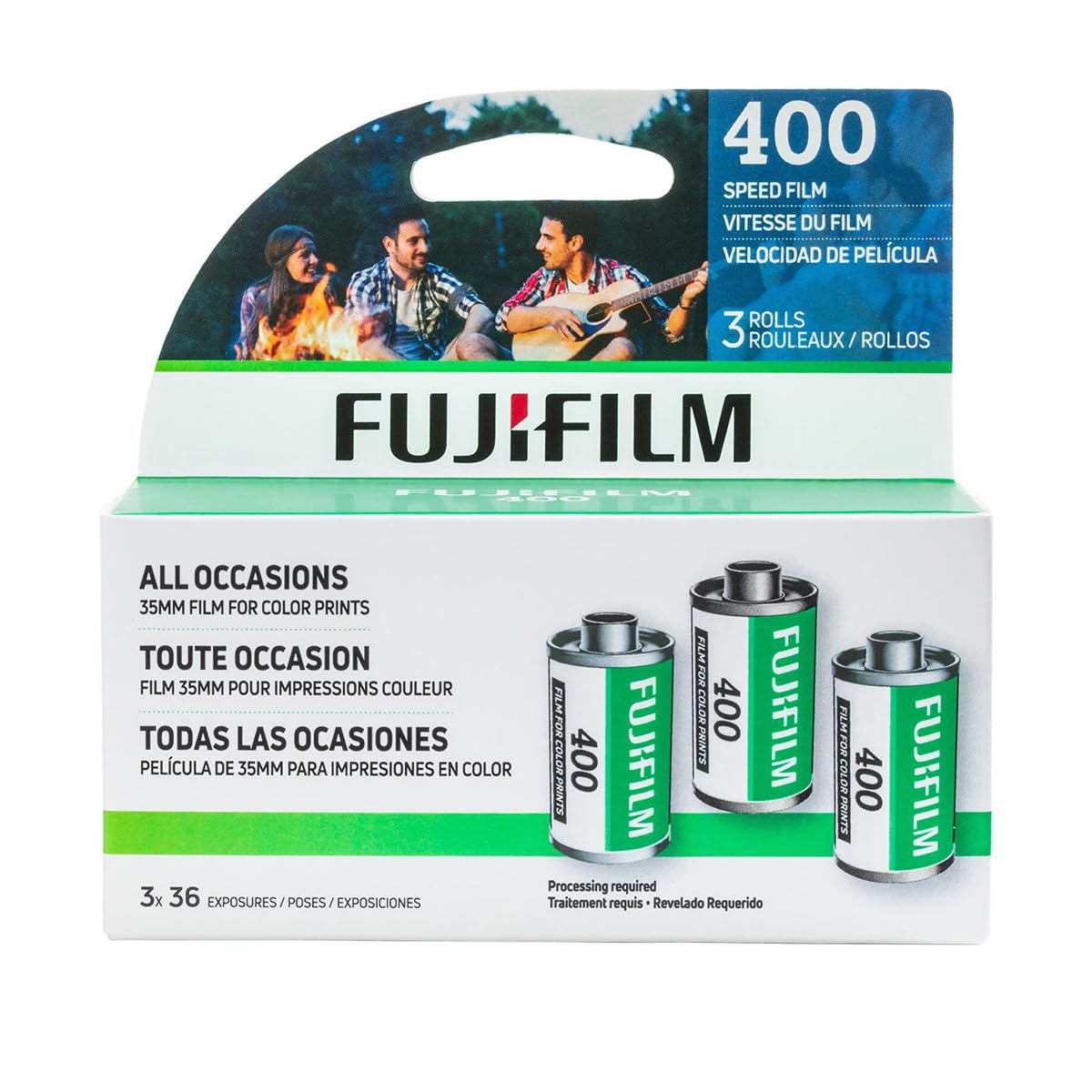
The middle‑ISO master that slides from a noon park to a lit living room without blinking.
Fujifilm 400 is the jack‑of‑all‑lighting film. At ISO 400, it sits between the sunny‑day specialists (like the Kodak Colorplus 200 at ISO 200) and the grainy night‑crawlers, giving you enough sensitivity to shoot indoors near a window while still keeping fine grain on a bright afternoon. The three‑roll pack gives you 108 frames total — enough for a full weekend away or a month of casual shooting. Buyers report it as “great, affordable film sold at a competitive price,” with the highest praise landing on film quality (20 mentions) and value for money (16 mentions).
Where this film shines is its true‑to‑life color reproduction and wide exposure latitude (the ability to be off by a stop or two and still get a usable image). It plays nicely with point‑and‑shoot cameras and SLRs alike — owners mention success with Canon AE‑1s and Olympus Trip cameras. The occasional feedback notes a slight yellow or green tint in mixed lighting, but for an everyday roll you can grab without overthinking, this three‑pack is tough to top.
Strengths
- ISO 400 balances indoor and outdoor use without forcing a flash
- Wide exposure latitude forgives small metering mistakes
- Three rolls at 36 exposures deliver excellent daily value
Trade‑off
- Some rolls can lean slightly yellow in mixed indoor light
The all-light shooter’s pack. Pick this if you wander from bright sun to shaded streets to dim interiors and want one film that handles it all. If you need frame‑perfect color neutrality in every light condition, a more specialized stock like the Kodak Portra 800 will deliver more consistency for low-light work, though it costs more per frame.
4. Kodak Kodacolor Gold 200GB 135‑36 CN 3P Film

The classic Kodak Gold formula that long‑time shooters buy again and again for its punchy color.
Kodak Gold 200 is the film that has earned repeat buyers — as one owner put it, “I’ve bought this film many times. It’s always reliable and has never let me down.” The emulsion delivers that signature Kodak look: reds that pop, greens that feel alive, and skin tones that look natural and warm. At ISO 200 with 36 exposures per roll, you get three full rolls of consistent, bright‑light performance that holds up beautifully in daylight and with electronic flash.
Where this pack stands apart is its color saturation, which is noticeably punchier than the natural tones of the Fujifilm 400 3-Pack. Buyers specifically call out the “amazing” colors, and the film handles bright sunny days with a richness that cheaper stocks can wash out. The ISO range is listed at 200‑399, giving you a little flexibility to push it slightly in dimmer conditions, though it lives best in the sun. No complaints about grain or sharpness appear in the reviews — this is a reliable, proven stock that delivers exactly what Kodak promised.
Why It Shines
- Vibrant, saturated colors — buyers call them “amazing” and keep coming back for more
- Three 36‑exposure rolls give you plenty of frames for trips and events
- Rock‑solid reliability with consistent results roll after roll
The Catch
- ISO 200 needs good lighting; not the best for dim interiors or twilight shooting
Go for the gold if you love punchy, saturated colors on sunny days. This three‑pack is for shooters who want a film stock you can trust every single time. If you need low‑light versatility or prefer the muted, cooler tones of a different emulsion, look elsewhere.
5. Kodak Colorplus Film 200 (Pack of 3)

The vibrant‑color three‑pack that gives your sunny frames a nostalgic, almost Hollywood finish.
Kodak Colorplus 200 is the runaway favorite for shooters who want their colors to pop without looking artificial. The three‑pack delivers vivid reds and blues with a soft, slightly blurred quality that buyers describe as giving photos “a vintage Hollywood‑movie look.” The ISO 200 speed demands good light, but when the sun is out, the colors burst. One owner who used it on an Ektar H35 said it “delivered exactly that” vibrant look they were chasing, with grain that adds character without overwhelming the frame.
The consensus across owners is loud: film quality is the most‑praised aspect at 28 mentions, followed closely by color at 13. Buyers love the “nostalgic look” and how reliable the stock is in cameras like the Canon AE‑1 Program and Pentax Zoom. Compared to the Kodak Gold 200 3-Pack, this Colorplus version runs slightly warmer and softer, giving a more deliberate vintage feel rather than the Gold’s punchy, saturated look. The three‑roll count at 36 exposures each gives you 108 frames to fill with those bright‑day tones.
The Highlights
- Vibrant color reproduction with a nostalgic, soft film look
- Excellent quality consistency across all three rolls
- Works beautifully in bright sunlight and with flash
The Note
- ISO 200 means low‑light shots without a flash will be tough or too dark
Best for bright‑light lovers. Grab this pack if you shoot mostly outdoors on sunny days and want that rich, almost cinematic color pop. If you prefer subtle, neutral tones or do most of your shooting in dim conditions, skip it.
6. Kodak Portra 800 Color Negative Film, 35mm, 36 Exposures, 2‑Pack

The pro‑grade 800‑speed roll that handles low light with a grace most fast films cannot match.
Kodak Portra 800 is the choice when the light is fading but the shot matters. At ISO 800, it sees in the dark — capturing background nuances and freezing motion indoors without the harsh grain of budget fast films. The emulsion pushes cleanly to 1600 (one full stop brighter) if you need even more speed. Buyers use it on Contax T2s and find the “colors were vibrant and beautiful,” with a grain that feels “nostalgic without being cartoonish.” The two‑roll pack gives you 72 frames of low‑light confidence.
The praise centers on film quality (13 mentions) and color quality (9 mentions), with owners calling it “one of the best color negatives by far.” Unlike the Amber 800 Cine Film, which leans into a grainy, vintage look, Portra 800 keeps nice saturated tones and a dreamy quality that buyers love for night and low‑light photography. The price per frame is higher than budget stocks, but the consistency and beautiful grain make it a favorite among serious shooters.
The Strengths
- ISO 800 captures sharp, beautiful images in low‑light conditions without a flash
- Can push to 1600 for even darker settings
- Colors stay vibrant and saturated even in dim light
The Consideration
- Premium price per roll — you pay for the professional‑grade performance
Your low‑light champion. Choose this two‑pack if you shoot in the evening, indoors, or anywhere the sun has left the building — and you want colors that still sing. If most of your shooting is in bright sun, a 200‑400 ISO stock like the Kodak Colorplus 200 4-Pack will save money and deliver finer grain.
Understanding the Specs
ISO Speed and Grain
ISO is the film’s sensitivity to light — a lower number (like 200) means you need more light but get finer grain and sharper detail. A higher number (800) lets you shoot in dim conditions but creates a more visible, textured grain. The jump from 200 to 800 is a difference in light sensitivity (ISO 800 vs 200), which is the difference between a bright noon shot and a candlelit dinner scene. Most everyday shooters land on 400 as the best balance, since it works in both sun and shade.
Color Negative vs Slide Film
All six films here are color negative — the standard C‑41 process that every drugstore and lab can develop. Color negative film has a wide exposure latitude, meaning you can be off by a stop or two and still pull a usable image. Slide film (E‑6 process) gives punchier colors and higher contrast, but it demands perfect exposure and fewer labs develop it. For anyone starting out or shooting casually, color negative is the correct choice because it forgives mistakes and develops anywhere.
FAQ
What does ISO mean on a roll of 35mm film?
Can any lab develop these films?
Why do some rolls have 36 exposures and others only 27?
Will ISO 800 film look too grainy for regular use?
Which ISO is best for a beginner?
How should I store 35mm film rolls?
Can I use 200 ISO film indoors without a flash?
Does color negative film expire?
Final Thoughts: The Verdict
For most shooters, the best color film 35mm pick is the Kodak Colorplus 200 4‑Pack because it delivers the best balance of warm, vibrant colors and fine grain at a price that keeps you shooting. If you want a low‑light specialist that handles evening scenes beautifully, grab the Kodak Portra 800 2‑Pack. And for an everyday all‑rounder that moves from sun to shade without a fuss, the Fujifilm 400 3‑Pack is the one to reach for.
How We Picked
We do not accept paid placement. Every pick is matched to a real buyer and a real use-case; we do not hands-on test units.
Sources & Methodology
Specifications: manufacturer listings and product documentation. Review insights: verified customer reviews, as of July 2026. Pricing: not shown on this page (it changes often); check the current price via the retailer link.
As an Amazon Associate, WellFizz earns from qualifying purchases. This does not affect which products we feature.
Related Guides

Mo Maruf
I created WellFizz to bridge the gap between vague wellness advice and actionable solutions. My mission is simple: to decode the research and give you practical tools you can actually use.
Beyond the data, I am a passionate traveler. I believe that stepping away from the screen to explore new environments is essential for mental clarity and physical vitality.