Our readers keep the lights on and my smoothie glass nicely filled. As an Amazon Associate, I earn from qualifying purchases.
Specs are compiled from manufacturer listings and verified buyer reviews and can change over time — please confirm the key details on the product page before buying.
Finding paper that actually grips colored pencil pigment instead of letting it slide around in a waxy mess is the difference between a drawing you are proud to sign and one you toss. The real battle is against pilling — those little balls of paper fiber that form when you burnish layer after layer. The paper’s tooth (its surface texture) and its weight determine whether your hard work pays off or falls apart.
I’m Mohammad Maruf — the founder and writer behind WellFizz. This guide is built by comparing the manufacturers’ published specifications and the patterns across verified customer reviews, so you get each pick’s real strengths and trade-offs instead of marketing spin.
You want a sheet that lets you layer color without tearing through to the desk. This roundup of the best colored pencil drawing paper options covers everything from budget classroom reams to archival cotton pads that will hold your art for decades.
Our Picks at a Glance
How To Choose The Best Colored Pencil Drawing Paper
Not all paper is built for the abuse of layered colored pencils. A sheet that works for a quick graphite sketch can pill, buckle, or tear when you start burnishing with wax-based pencils. These are the three things to nail down before you pick a pad.
Paper Weight — The Backbone of Your Drawing
Paper weight, measured in pounds (lb) or grams per square meter (gsm), tells you how much abuse the sheet can take. Light paper under 90 lb buckles when you lay down heavy pigment or use solvents for blending. the balance for serious colored pencil work is 100 lb and up — heavy enough to stand up to burnishing (rubbing layers of color into a smooth polish) without the texture of the desk showing through on the other side.
Tooth — The Grip That Makes It Work
Tooth is the slight texture on the paper surface. A medium tooth grabs the pigment particles from your pencil tip so they stay put instead of sliding off. Too much tooth (like rough watercolor paper) eats your pencil point and makes fine detail a struggle. Too little (like hot-press bristol) leaves the pigment sitting on top, making layering harder. For colored pencils, you generally want a smooth-to-medium vellum surface — it holds enough pigment for rich layers but stays fine enough for small details.
Quick Comparison
| Model | Best For | Weight | Sheets | Surface | Amazon |
|---|---|---|---|---|---|
| Strathmore 400 Series★ Best Overall | Serious layering & blending | 90 lb | 30 | Medium (vellum) | Amazon |
| Cezanne 100% CottonPremium Pick | Archival cotton for fine art | 120 lb | 20 | Fine tooth | Amazon |
| Canson C à Grain | Versatile dry & wet media | 111 lb | 20 | Fine & medium (two-sided) | Amazon |
| Legion Stonehenge | Smooth cotton for pencil drawings | 90 lb | 15 | Smooth | Amazon |
| UCreate Mixed Media | High-volume classroom & practice | 80 lb | 500 | Medium tooth | Amazon |
In‑Depth Reviews
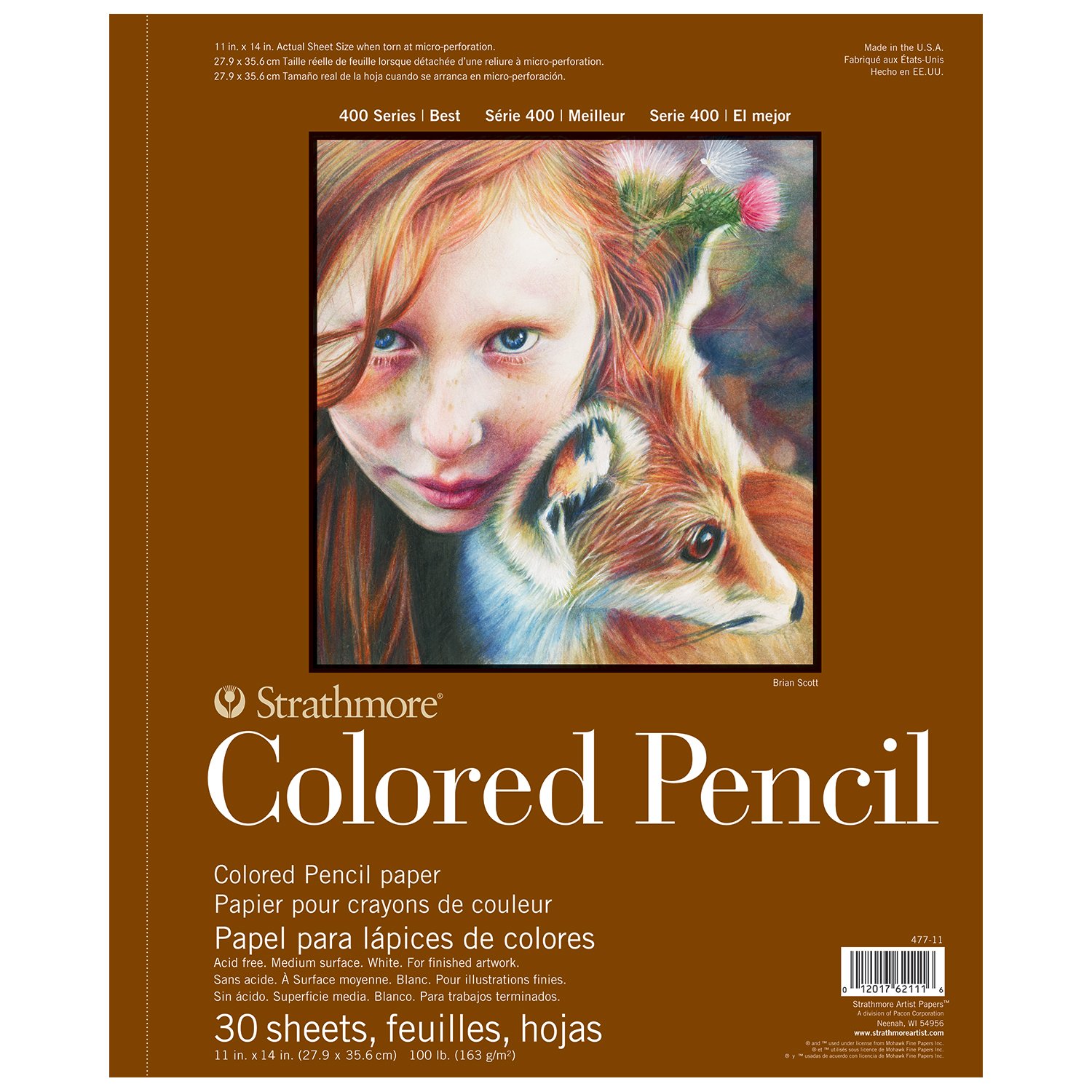
1. Strathmore 400 Series Wire Bound Colored Pencil Pad, 100 lb. Paper, 11 X 14 inches, 30 Sheets
Our pick — over 4.5★ from 3,000+ verified ratings; the strongest balance of quality and price.
The crowd-favorite workhorse that hits the exact tooth and weight for serious layering.
The thing everyone raves about here is the medium surface — a vellum tooth that grabs each pencil stroke without letting pigment puddle or pill. It is a 90-lb sheet, so you can burnish layer after layer of wax-based pencils like Prismacolor without the paper buckling or the fibers rolling up into little balls. That thickness also means no bleed-through if you switch to micron pens or graphite for underpinning. As the review pages sum it up: “I think this is pretty much the perfect colored pencil paper.”
One trade-off that comes up repeatedly is the color: the paper has a warm tint rather than a stark bright white. For artists who need a pure white base for light pastel shades, that matters. The 30 sheets and 11 x 14-inch format give you plenty of room for bigger compositions, and the wire binding lets you flip pages flat. The perforation could tear more cleanly — several owners wish the perforation was deeper — but that is a small complaint about an otherwise spot-on pad.
The Tooth That Works
- 90-lb weight handles heavy burnishing without buckling
- Medium vellum surface grabs pigment for smooth blending
- Wire-bound 11 x 14-inch format lies flat
The Real Catch
- Warm tint — not pure bright white
- Perforation is finicky; sheets don’t tear cleanly every time
Reach for this if: you are building multi-layer colored pencil pieces and want a reliable medium-tooth surface that blends easily.
Look elsewhere if: you need a pure white base for light pastel work or prefer a larger sheet count for quick studies.
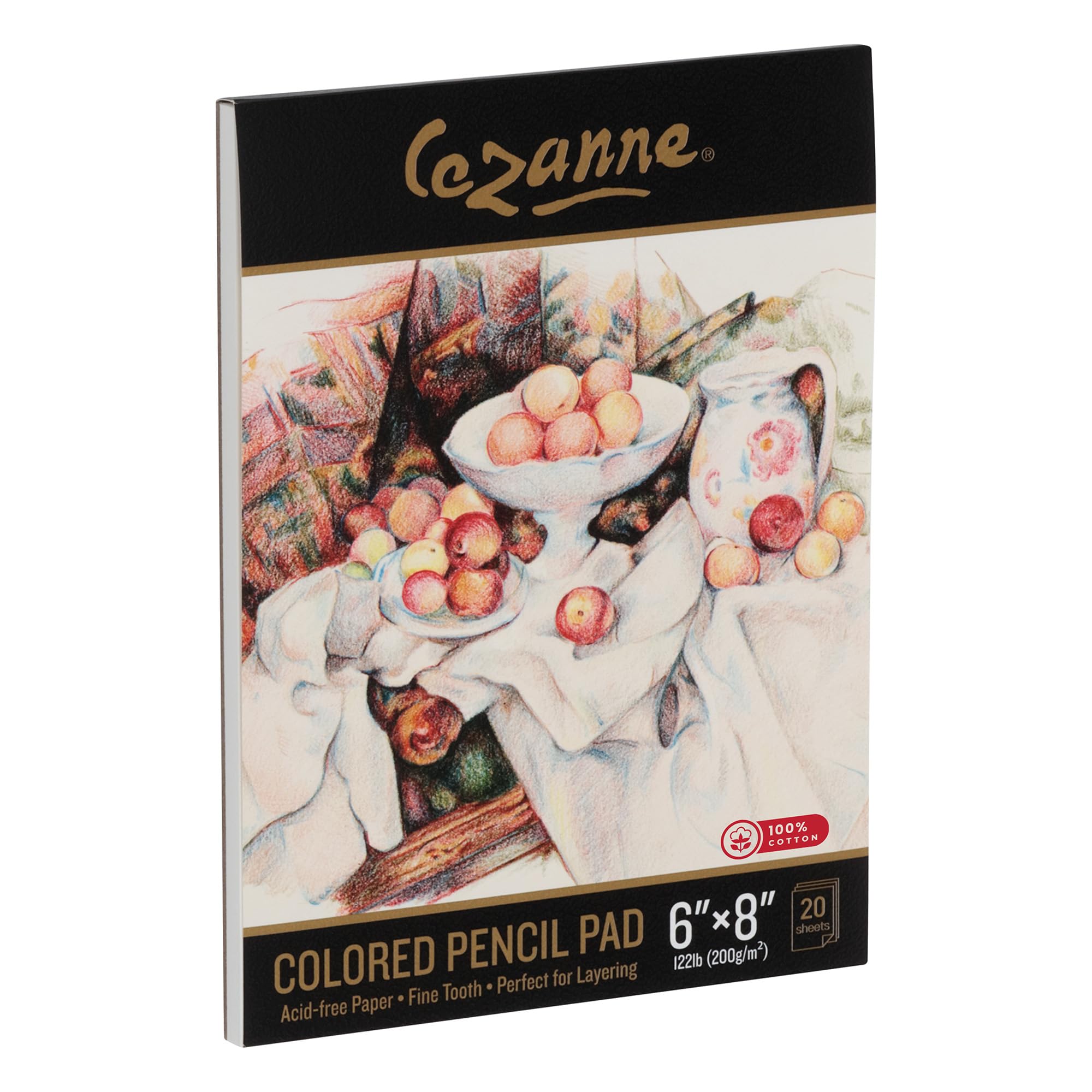
2. Cezanne 100% Cotton Colored Pencil Sketch Pad – 6×8, 20 Sheets, 122 lb Fine-Tooth Paper
Cotton paper with a 122-lb spine that laughs at heavy burnishing.
This pad is built from 100% cotton fiber, which gives it a resilience that wood-pulp paper cannot match — the fibers hold the pigment without breaking down, and the acid-free nature means your drawing will not yellow over the years. The paper weight sits at 120 lb (200 gsm), which is a full 22 lb heavier than the Strathmore 400 Series, so you can sand, scrape, and layer until your hand cramps without worrying about a hole. “Great for colored pencil work. 122lb paper!” is the straight-from-owners take.
The fine-tooth surface is noticeably smoother than a vellum finish, making it excellent for detailed work where you need fine lines and sharp edges. The 6 x 8-inch size is pocket-friendly for sketching on the go but a bit cramped for large compositions. You get 20 sheets per pad, and the price per sheet is higher than almost anything else on this list — so it is best reserved for final pieces rather than practice.
Built to last: 100% cotton and archival-grade means your work stays stable for decades, not years.
Size reality check: at 6 x 8 inches, this is travel-art territory — not for big poster-sized studies.
Use this for: finished pieces you plan to sell or frame, where archival quality and heavy layering matter.
Skip it for: daily practice or large-format work — the small pad and higher cost-per-sheet add up fast.
3. Canson Artist Series C à Grain Drawing Paper, Wirebound Pad, 9×12 inches, 20 Sheets (111lb/180g)

A two-sided heavyweight that gives you two textures in one pad.
The Canson C à Grain paper has a neat extra that no other pick here matches: each sheet has a fine texture on one side and a medium texture on the other. That means you get two different gripping surfaces from a single sheet — the fine side for detail and the medium side for broader layering and blending. At 111 lb (180 gsm) it is heavy enough for colored pencil burnishing without bleed-through, yet light enough that a 9 x 12-inch pad stays portable. “I reserve this paper for pencil and color pencil. Excellent surface with a fine, homogeneous tooth,” is how frequent users describe it.
The wirebound pad format lies flat and the top-spiral binding makes page turning easy. A recurring note is that the paper has a subtle off-white tone, similar to the Strathmore, so it is not a bright white. Some pads arrive with bent wire rings because Amazon ships them in soft bags — worth inspecting on delivery. For the price, you get a French-made sheet that handles pencil, colored pencil, charcoal, and even fine-liner pens without feathering.
Two Sides, One Pad
- 111 lb weight handles heavy colored pencil work
- Fine on one side, medium on the other — two textures
- Acid-free and made in France
Delivery Roulette
- Not pure bright white — off-white tone
- Spiral rings can arrive bent in bag packaging
Ideal for: artists who switch between fine detail and broad blending without switching pads.
Think twice if: you need bright white paper for light pigment colors or a hard cardboard backing for outdoor sketching.
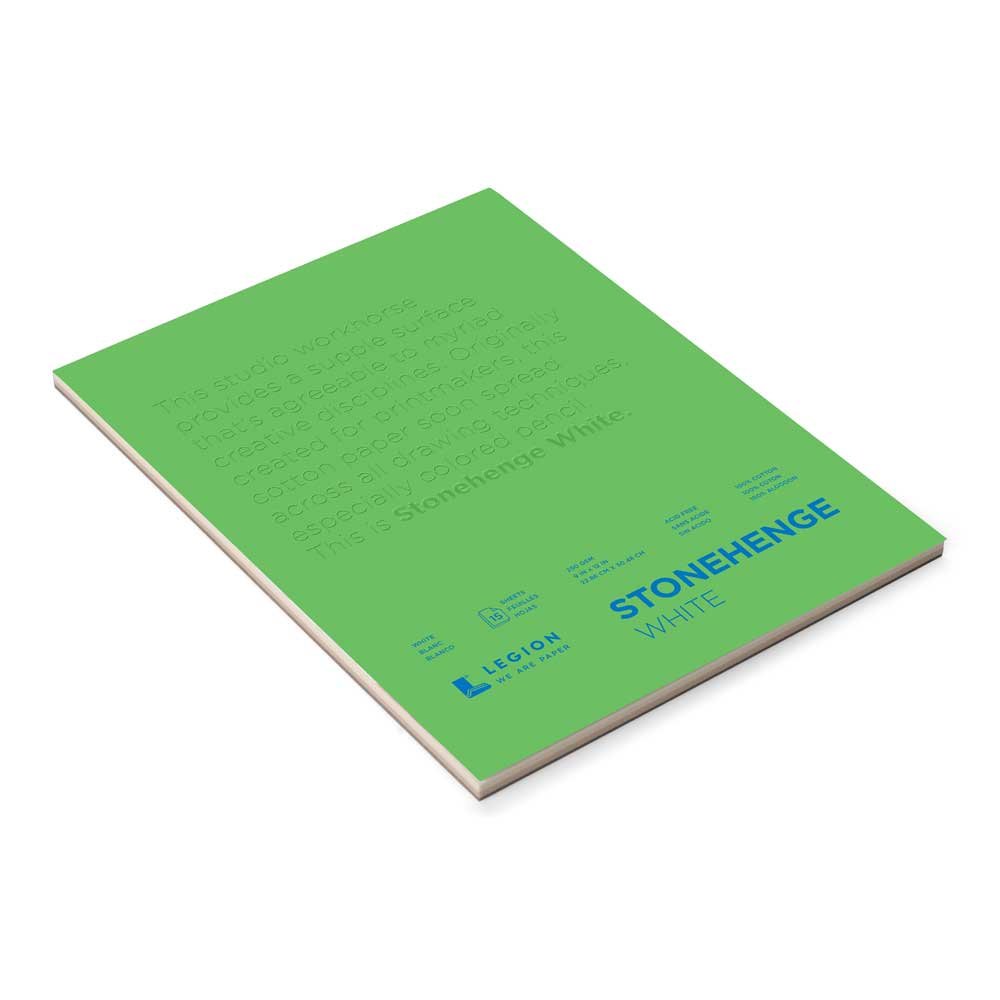
4. Legion Stonehenge Pad, 9 X 12 inches, White, 15 Sheets
The original printmaking cotton sheet that colored pencil artists adopted as their own.
Stonehenge paper started life as a printmaking paper, but its smooth, 100% cotton surface turned out to be perfect for colored pencils — especially wax-based ones like Prismacolor. The surface is smooth enough for crisp detail but has just enough grab to hold pigment for layering. At 90 lb it is lighter than the Strathmore or Cezanne options, so you will see a bit of texture transfer if you burnish really hard, but for most colored pencil work it holds up beautifully. “This is an excellent paper for pencil drawings,” is the consistent verdict from the community.
The pad comes with only 15 sheets, and that is the main conversation around it — at this price, you are paying for archival-quality cotton rather than volume. The paper quality earns the most praise by far, but durability gets mixed notes; some pads arrive with dented corners. The smooth white surface is genuinely bright white, unlike the warmer tones of Strathmore and Canson, which is a big plus if you work with light pastel shades or want a clean base for photography.
Cotton advantage: archival-grade, acid-free cotton that won’t yellow or become brittle — built for keeps.
Sheet count sting: 15 sheets at this price point means each one feels precious; not a practice pad.
Best suited for: polished, frame-worthy colored pencil pieces where bright white and archival stability matter more than sheet count.
Not for you if: you run through pads quickly for daily practice or need heavy burnishing capacity without texture transfer.
5. UCreate Mixed Media Art Paper, Heavyweight, 9″ x 12″, 500 Sheets, Sulphite Art Paper

Half a thousand sheets of decent sulphite paper — the volume play for classroom and practice work.
For the times you need raw volume — a classroom of kids, an art workshop, or just working through dozens of compositional sketches — the UCreate pack gives you 500 sheets of 9 x 12-inch paper for roughly the cost of a premium pad with 15 sheets. The 80-lb sulphite paper is not built for heavy burnishing like the cotton picks, but its medium-tooth surface takes colored pencil well for low-layer work and general practice. Paper quality is the aspect owners praise most, and versatility comes in a close second — it handles pencil, colored pencil, charcoal, and even light watercolor washes.
The catch is thickness. At 80 lb this paper will buckle noticeably if you lay down heavy watercolor washes or aggressive solvent blending. It is also a sulphite (wood-pulp) paper, not archival-quality cotton, so it will yellow faster over the years. But as a straight-up value proposition for high-volume colored pencil sketching, nothing else on this list comes within shouting distance of 500 sheets. Owners specifically note that it beats printer paper for texture while costing less than dedicated art paper.
Volume King
- 500 sheets in one pack — class-leading value per sheet
- Medium tooth works well for basic colored pencil practice
- Acid-free and recyclable
Thin Trade-Off
- 80-lb weight buckles under heavy water or solvent use
- Sulphite paper will yellow sooner than cotton paper
Grab this for: art classrooms, high-volume practice, or any situation where you need lots of paper without worrying about archival quality.
Use something else for: serious multi-layer colored pencil pieces — the 80-lb weight cannot handle burnishing the way heavier sheets can.
Understanding the Specs
Paper Weight (lb / gsm)
This number tells you how thick and sturdy the sheet is. Paper weight is measured in pounds (lb) for a ream of a standard size, or grams per square meter (gsm). For colored pencils, aim for at least 100 lb (about 150 gsm). Heavier paper resists buckling when you burnish — that is, rubbing layers of color into a smooth polish — and keeps the desk texture from showing through on the drawing side. Lighter paper under 90 lb is fine for preliminary sketches but will wrinkle under heavy pressure.
Cotton vs. Wood-Pulp Paper
Cotton paper is made from 100% cotton fibers, which are stronger and more stable than wood-pulp (sulphite) fibers. Cotton paper is acid-free by nature, meaning it will not yellow or become brittle over decades — that is why it is called “archival.” Wood-pulp paper is cheaper and works well for practice, but it degrades faster. If you plan to sell or frame your work, cotton paper is worth the money. If you are just practicing or teaching a class, wood-pulp is perfectly fine.
FAQ
What paper weight do I need for colored pencils?
What does “tooth” mean in art paper?
Is cotton paper worth the higher price for colored pencils?
Can I use regular printer paper for colored pencils?
How many sheets do I need in a pad?
What is the difference between hot-press and cold-press paper?
Does paper affect how my colored pencils blend?
Will colored pencil bleed through the page?
What size pad should I buy for colored pencil drawing?
Final Thoughts: The Verdict
For the majority of shoppers, the best colored pencil drawing paper winner is the Strathmore 400 Series Colored Pencil Pad because the 100-lb medium-vellum surface hits the exact balance between pigment grip and smooth blending that every colored pencil artist needs. If you want archival cotton that can survive heavy burnishing for finished pieces, grab the Cezanne 100% Cotton Sketch Pad. And for high-volume practice or classroom use where sheet count is king, the UCreate Mixed Media 500-Sheet Pack is the one to reach for.
How We Picked
We do not accept paid placement. Every pick is matched to a real buyer and a real use-case; we do not hands-on test units.
Sources & Methodology
Specifications: manufacturer listings and product documentation. Review insights: verified customer reviews, as of July 2026. Pricing: not shown on this page (it changes often); check the current price via the retailer link.
As an Amazon Associate, WellFizz earns from qualifying purchases. This does not affect which products we feature.
Related Guides

Mo Maruf
I created WellFizz to bridge the gap between vague wellness advice and actionable solutions. My mission is simple: to decode the research and give you practical tools you can actually use.
Beyond the data, I am a passionate traveler. I believe that stepping away from the screen to explore new environments is essential for mental clarity and physical vitality.