Our readers keep the lights on and my smoothie glass nicely filled. As an Amazon Associate, I earn from qualifying purchases.
Specs are compiled from manufacturer listings and verified buyer reviews and can change over time — please confirm the key details on the product page before buying.
A writer’s computer needs to fade into the background. The screen should be easy on the eyes for hour five of a draft, the keyboard quiet enough to not disturb a coffee shop, and the battery strong enough to survive a full day of research and rewriting. The wrong pick means fighting glare, a noisy fan, or a trackpad that misreads a swipe — all of which pull you right out of the flow.
I’m Mohammad Maruf — the founder and writer behind WellFizz. This guide is built by comparing the manufacturers’ published specifications and the patterns across verified customer reviews, so you get each pick’s real strengths and trade-offs instead of marketing spin.
Whether you draft novels, write code, or produce daily content, the right machine makes words feel weightless. Here is the essential computer for writers that handles long typing sessions without breaking your budget or your focus.
Our Picks at a Glance

How To Choose The Best Computer For Writers
A writing machine doesn’t need a dedicated graphics card or a flashy chassis. What it does need is a comfortable keyboard, a sharp screen that reduces eye fatigue, enough memory to keep a browser full of research tabs alive, and a battery that lasts through your workday. Here is what to check before you click buy.
Keyboard Comfort and Travel
The keyboard is your primary tool. Look for a scissor-switch or a well-reviewed chiclet design with decent key travel (roughly 1mm to 1.5mm). A backlit keyboard is a huge help for late-night sessions, letting you see the keys without straining under a desk lamp. If the data mentions a “soft” or “quiet” keyboard, that is a strong sign for shared spaces.
Display Quality and Eye Strain
A high-resolution screen makes text look sharp instead of fuzzy. For a writer, a Full HD (1920 x 1080) display is the minimum, but a higher resolution (2.5K or 3K) makes a big difference when you zoom in to edit. An IPS panel offers wide viewing angles, and an OLED panel gives deep contrast that makes black text on a white background pop. Anti-glare coatings help too, especially if you work near a window.
Battery Life and Portability
A writer’s computer should last a full day without hunting for an outlet. Look for machines that advertise 12 hours or more of real-world use. Weight is also critical — a laptop under 3 pounds is easy to toss in a bag and carry to a library, café, or co-working space. The lightest picks here feel like carrying a magazine.
Quick Comparison
| Model | Best For | Processor | Display | Battery (Claimed) | Amazon |
|---|---|---|---|---|---|
| Apple MacBook Air M5★ Best Overall | Overall Best | Apple M5 | 13.6″ Liquid Retina | Up to 18 hours | Amazon |
| Acer Aspire Go 15Best Value | Budget Value | AMD Ryzen 7 7730U | 15.6″ FHD IPS | Exceptional | Amazon |
| Lenovo IdeaPad Slim 3Touchscreen Choice | Touchscreen | AMD Ryzen 7 5825U | 15.6″ FHD Touch | All-day | Amazon |
| Apple MacBook Neo A18 Pro | Budget Mac | Apple A18 Pro | 13″ Liquid Retina | Up to 16 hours | Amazon |
| HP 17.3″ Business | Massive Screen | AMD Ryzen 5 | 17.3″ FHD IPS | 9 hours | Amazon |
| Microsoft Surface Laptop 2024 | Windows Premium | Snapdragon X Plus | 13.8″ Touchscreen | Up to 20 hours | Amazon |
| Samsung Galaxy Book4 Pro | Brilliant OLED | Intel Core Ultra 7 | 16″ 3K AMOLED Touch | Long-lasting | Amazon |
| Samsung Galaxy Book5 Pro 360 | 2-in-1 Writer | Intel Core 7 Ultra | 16″ 3K AMOLED Touch | Up to 25 hours | Amazon |
| LG Gram 17 | Ultra-Light 17″ | Intel Ultra 7 258V | 17″ WQXGA Touch | All-day | Amazon |
| Dell 16 Plus | Power User | Intel Core Ultra 9 | 16″ 2.5K | Good | Amazon |
| ASUS Zenbook Duo | Dual Screen | Intel Core Ultra 9 | Dual 14″ 3K OLED | Up to 16 hours | Amazon |
In‑Depth Reviews
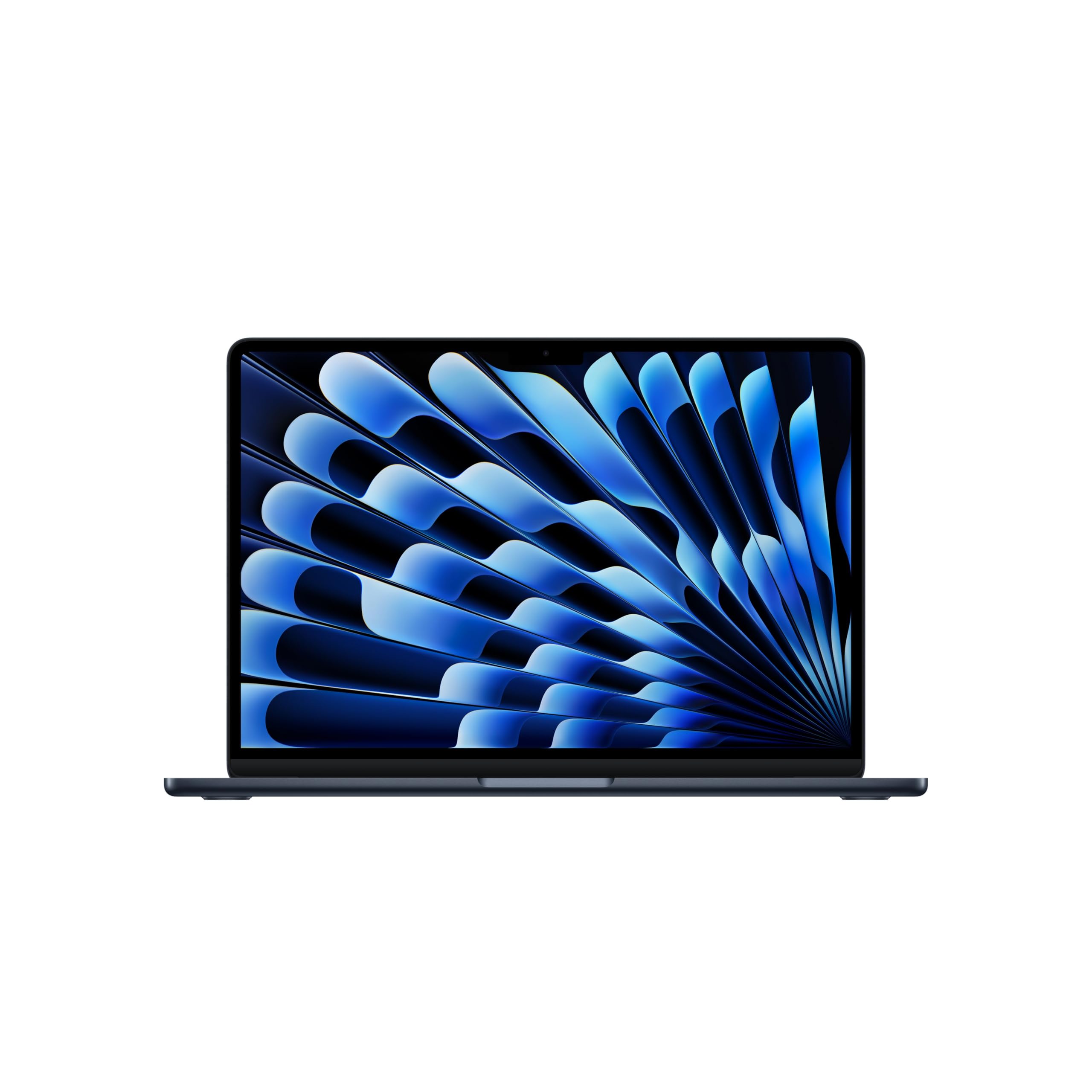
1. Apple 2026 MacBook Air 13-inch with M5 chip
Our pick — over 4.5★ from 800+ verified ratings; the strongest balance of quality and price.
The featherweight that outlasts your writing marathon without breaking a sweat.
This is the machine that feels built for the written word. The M5 chip makes everything instant — switching between a full-screen draft, a dozen research tabs, and a notes app feels frictionless. The 16GB of unified memory and 512GB SSD mean you never hit a wall mid-sentence. Owners call it “perfect for authors,” pointing out the keyboard is soft and quiet for typing and that the battery can go 2-3 days between charges for lighter use. The 13.6-inch Liquid Retina display supports 1 billion colors, making text look super crisp and easy on the eyes for hours.
The thing everyone raves about is the performance, with over 120 owners singling it out. It is also praised for being lightweight at 2.71 pounds, so it slips into a bag without a second thought. The 12MP Center Stage camera and three-mic array make video calls clear, and the four-speaker sound system with Spatial Audio handles media beautifully. Wi-Fi 7 and Bluetooth 6 keep your connections future-proof.
The Writing Flow
- Silent, fanless design means zero noise during a late-night session
- Battery life up to 18 hours — write all day without a charger
- Touch ID open up your session instantly, no password typing
The Trade-Offs
- Only two Thunderbolt 4 ports — you may need a hub for external drives
- Midnight finish shows fingerprints easily; a case helps
Your daily driver if: you want a silent, lightweight laptop with legendary battery life that handles heavy writing and research without lag.
Think twice if: you need multiple USB-A ports or a larger 15-inch+ screen for split-screen drafting.
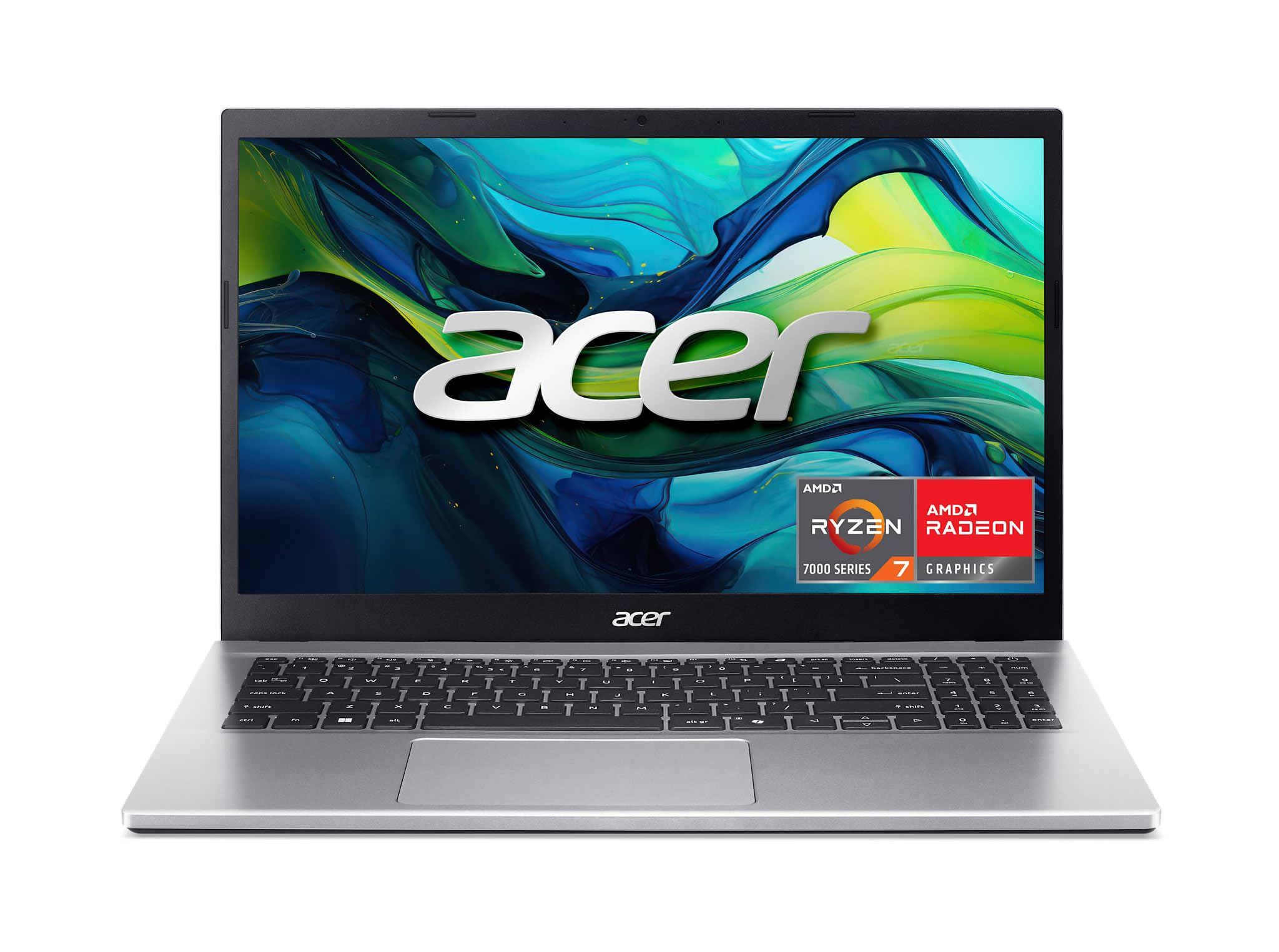
2. Acer Aspire Go 15 AI Ready Laptop
The budget-friendly workhorse that handles Sims 4 between chapters without a hiccup.
The Acer Aspire Go 15 proves you do not need to spend a fortune for a smooth writing experience. It packs an AMD Ryzen 7 7730U processor with 16GB of DDR4 RAM and a 512GB PCIe Gen4 SSD, so it runs fast and stays responsive even with many apps open. Buyers report it works “super fast” and has no problem running multiple apps, large downloads, and even games like Sims 4 and Cities Skylines without bogging down. The 15.6-inch Full HD IPS display is sharp for reading and editing, and Acer BluelightShield helps reduce eye strain during long sessions.
Performance and value for money are the top aspects here — over 20 owners call out the smooth performance. The battery life impresses too, with some saying it lasts “days” on a charge for light use. The AcerSense app lets you manage battery, storage, and apps with one button. A few owners mention the fan noise is mixed, with some finding it loud while others say it is almost silent, so it depends on your tolerance.
The catch for writers: the front-facing vent blows heat onto the screen, which some owners worry about for long-term durability. It is also a larger machine — not ideal for working on your lap for hours.
Reach for this if: you want a fast, large-screen laptop for under that handles heavy research and light multitasking without complaint.
Look elsewhere if: you need a silent fan for a quiet library or a compact model for frequent travel.
3. Lenovo IdeaPad Slim 3 Laptop 2025
The touchscreen that lets you tap through research while your other hand rests on the keyboard.
This Lenovo brings a 15.6-inch Full HD touchscreen into the mix, which is great for writers who like to scroll through long documents, zoom in on images, or quickly tap links during research. Under the hood, an AMD Ryzen 7 5825U (8-core) with 16GB of DDR4 RAM and a 512GB SSD keeps Word, Scrivener, or Google Docs running smoothly. Owners say it is “super fast and reliable” and that the keys feel soft for comfortable typing. It also comes with a pre-installed Lifetime Microsoft Office Professional Plus, which saves you a separate purchase for Word and Excel.
The top praise here is performance, with a solid 10 owners calling it out. Speed and value for money follow closely. The USB-C port and HDMI 1.4 let you connect an external monitor for a bigger writing setup. One owner wishes the max brightness were a bit higher, though, so it is not the best choice for working outdoors in direct sunlight. There is also no backlit keyboard, which can be a drawback for typing in dim light.
Best use case: you want a touchscreen for quick navigation and need Office pre-loaded, all at a mid-range price that does not sacrifice speed.
Perfect for: writers who rely on Microsoft Office daily and want a touch interface for scrolling through research.
skip it if: you need a backlit keyboard for night writing or a higher-brightness screen for outdoor cafes.
4. Apple 2026 MacBook Neo 13-inch with A18 Pro chip

The entry-level Mac that gets the job done for a fraction of the Air’s price.
The MacBook Neo is the most affordable way into the Apple ecosystem, and for a writer, it covers the essentials well. The A18 Pro chip handles everyday tasks smoothly — browsing, typing, video calls — without stutter. The 13-inch Liquid Retina display supports 1 billion colors, making text look crisp. Up to 16 hours of battery life means you can write through a full day of classes or client work without hunting for an outlet. Owners note it is “fast, smooth, and has outstanding battery life,” and that the Citrus color is unique and attractive.
Performance is the standout here, with over 120 owners praising it. Value for money is the second most-discussed aspect, since this is the cheapest new Mac you can buy. The 1080p FaceTime HD camera and two side-firing speakers make video calls and media sound decent. However, a few practical trade-offs exist for writers: there is no keyboard backlight, only two USB-C ports (one is USB 2.0 speed), and the 8GB of unified memory is tighter for heavy multitasking than the 16GB in the M5 Air.
What Works for Writers
- Extremely portable at 2.71 pounds and 0.5 inches thin
- Battery lasts all day, even with heavy Safari use
- Runs iOS and iPadOS apps — great for distraction-free writing apps
The Honest Limits
- No backlit keyboard makes it a challenge in dim settings
- 256GB SSD fills up fast with writing projects and media
Best if: you are on a budget but want a new Mac with excellent battery life and a sharp display for pure writing tasks.
Not for you if: you need a backlit keyboard, type for hours in low light, or keep a large library of files and apps.
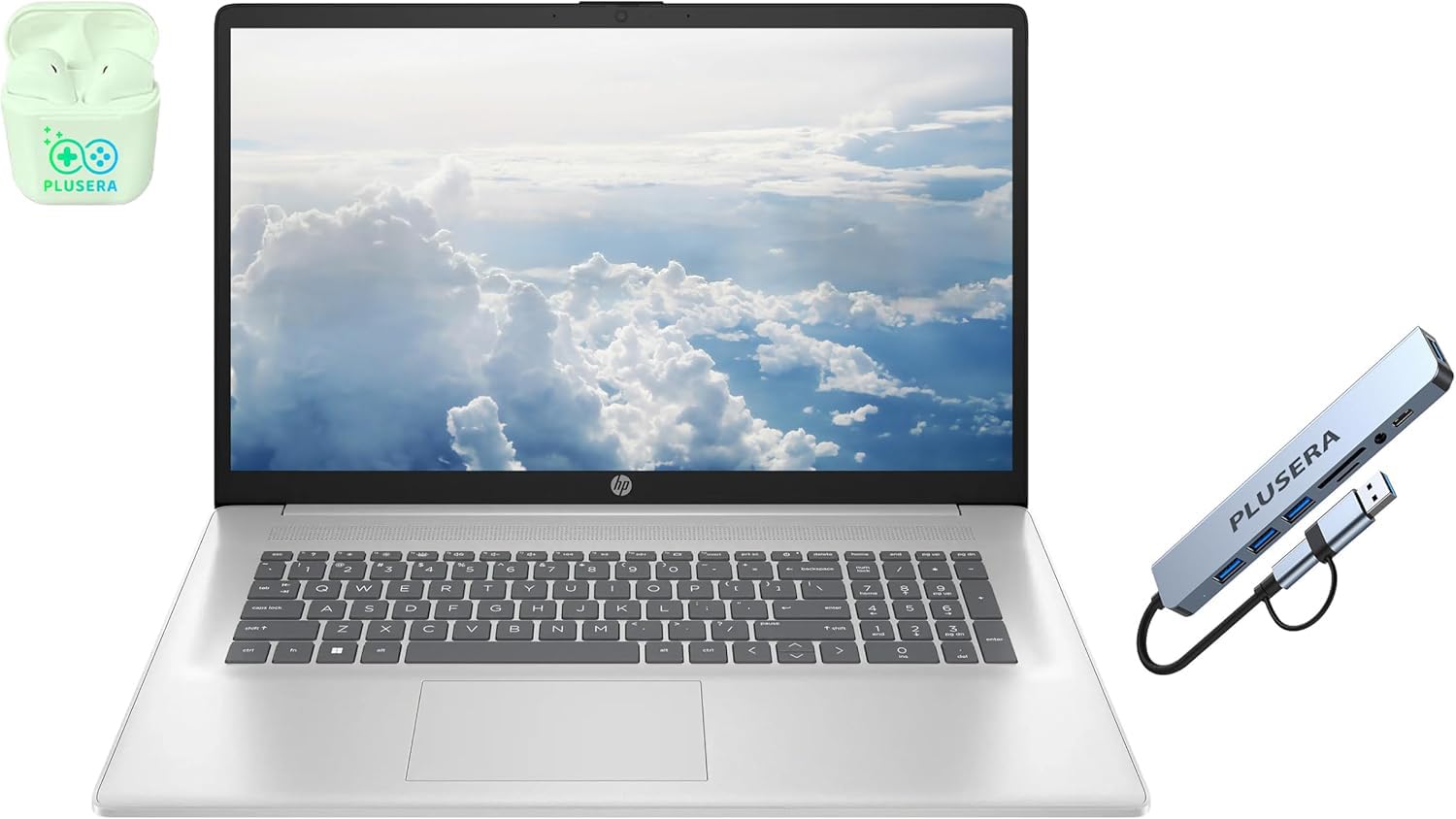
5. HP 17.3″ FHD Business & Student Laptop
The desktop-replacement that gives you a massive 17.3-inch canvas for side-by-side drafting.
For writers who juggle multiple documents, research papers, and a browser full of tabs, the HP’s 17.3-inch Full HD IPS screen is a dream. It offers 32GB of DDR4 RAM and a combination of 1TB SSD plus a 512GB docking station set, so you have plenty of room for projects and files. The 6-core AMD Ryzen 5 processor runs fast, and owners say there is “no lagging on videos” and that it handles daily work wonderfully. The 9-hour battery life is respectable for a large-screen machine.
Laptop quality is the top-mentioned aspect, with 14 owners praising it. Setup is easy, and the included PLUSERA earphones are a nice bonus. The HP features a USB-C 3.0 port, two USB-A 3.0 ports, and HDMI for connecting external monitors. A few owners note that reliability is mixed — while most say it works perfectly, there are occasional reports of crashes. The keyboard is not backlit, which is a common complaint for those who write at night.
The real trade-off: at 17.3 inches, this is not a laptop you toss in a small bag. It is built for a desk setup where you want maximum screen real estate for your writing.
Ideal for: writers with a dedicated desk who want a huge screen for split-view drafting without needing an external monitor.
Consider something else if: you travel often or need a backlit keyboard for low-light writing sessions.
6. Microsoft Surface Laptop (2024)

The Windows machine that finally gives the MacBook Air real competition for typing comfort.
The Surface Laptop has a fanatical following among writers for one reason: the keyboard. Owners consistently say it has a “fantastic keyboard” with solid feel and travel. The 13.8-inch touchscreen display is a big step up from the MacBook Air’s 60Hz panel — it runs at 120Hz, making scrolling through long documents incredibly smooth. The Snapdragon X Plus chip delivers snappy performance, with apps opening in under 2 seconds. Battery life is rated up to 20 hours, and owners confirm it lasts a full 8-hour workday with plenty left over.
The haptic trackpad rivals the MacBook’s, and Windows Hello facial recognition is faster than typing a password. The USB-A port is a welcome addition for plugging in a flash drive without a dongle. The Omnisonic Speakers with Dolby Atmos sound great for media breaks. A small number of long-term owners mention issues with the USB port driver compatibility and the laptop failing to wake from battery-saving mode, so it is best for everyday tasks rather than complex peripherals.
Why Writers Love It
- top-tier keyboard feel among Windows ultraportables
- Brighter, higher-refresh-rate touchscreen than the MacBook Air
- 16GB RAM and 512GB SSD give you room to work
Heads Up
- Some customers note USB driver glitches with certain peripherals
- Snapdragon ARM chip may have app compatibility quirks
Reach for this if: you love Windows and want the best typing experience on a premium, long-lasting ultraportable.
Look elsewhere if: you rely on niche software that may not be tune for ARM processors.
7. Samsung 16″ Galaxy Book4 Pro

The 3K AMOLED screen that makes every word look like it is printed on premium paper.
The Galaxy Book4 Pro’s display is the star here. The 16-inch Dynamic AMOLED 2X touchscreen with a 2880 x 1800 resolution and 120Hz refresh rate makes text incredibly sharp and colors vivid. For a writer who spends hours reading, editing, and proofreading, this screen reduces eye strain significantly. The Intel Core Ultra 7 processor with Intel ARC Graphics handles everything smoothly. Owners call it “the best laptop I had” and say the “beautiful OLED screen” makes content pop. At 3.44 pounds, it is slim and portable for a 16-inch machine.
Hardware quality is the most praised aspect, with 28 owners impressed by the build. The appearance and display quality also get strong marks. The 76Wh battery provides solid all-day endurance, and the 65W adapter charges it quickly. However, performance and battery life are mixed in reviews — some say it delivers excellent work and play capabilities, while others report occasional performance hiccups. A rare but vocal complaint involves keyboard failure after extended use, so a warranty is wise.
The honest take: this is a stunning screen-first laptop for writers who value visual clarity above all else, but the long-term reliability is less certain than on the MacBook Air.
Best for: writers who prioritize a gorgeous screen for long reading sessions and want a large, portable display.
Think twice if: you need bulletproof long-term reliability or plan to run Linux (driver support is poor).
8. Samsung 16″ Galaxy Book5 Pro 360

The 360-degree hinge that turns your laptop into a tablet for sketching ideas between chapters.
This is a premium 2-in-1 that caters to writers who also sketch, annotate, or edit by hand. The 16-inch Dynamic AMOLED 2X display with 2880 x 1800 resolution and 120Hz is stunning for reading, and the included S Pen feels natural for marking up drafts or brainstorming diagrams. The Intel Core 7 Ultra processor handles writing apps, browsing, and light creative work without lag. Battery life is rated up to 25 hours for video playback, which means you can go days between charges for writing tasks. Owners say the “battery life is insane” and that it handles everything they throw at it.
Performance and display are the top positives, with 26 and 12 mentions respectively. The laptop is lightweight for its size, and the quad speakers with Dolby Atmos sound excellent. The 360 hinge is sturdy and lets you use it in tent or tablet mode. However, reliability is mixed — some owners love it, while a few report the keyboard feels “soft/rubbery” and the screen can be fragile. A small number of units freeze or fail to shut off properly, so a good return policy is recommended.
Creative Writer’s Dream
- S Pen included for handwriting notes and marking up documents
- Up to 25 hours of battery life — charge every few days
- Thunderbolt 4, HDMI, and USB-A ports for full desktop connectivity
Watch Out For
- Some reviewers point out screen fragility and occasional freezing
- Keyboard feel is softer than a traditional laptop — not for heavy typists
Perfect for: creative writers who want a 2-in-1 for both typing and sketching or annotating with a stylus.
pass on it if: you only type and want the most durable, reliable machine for pure writing.
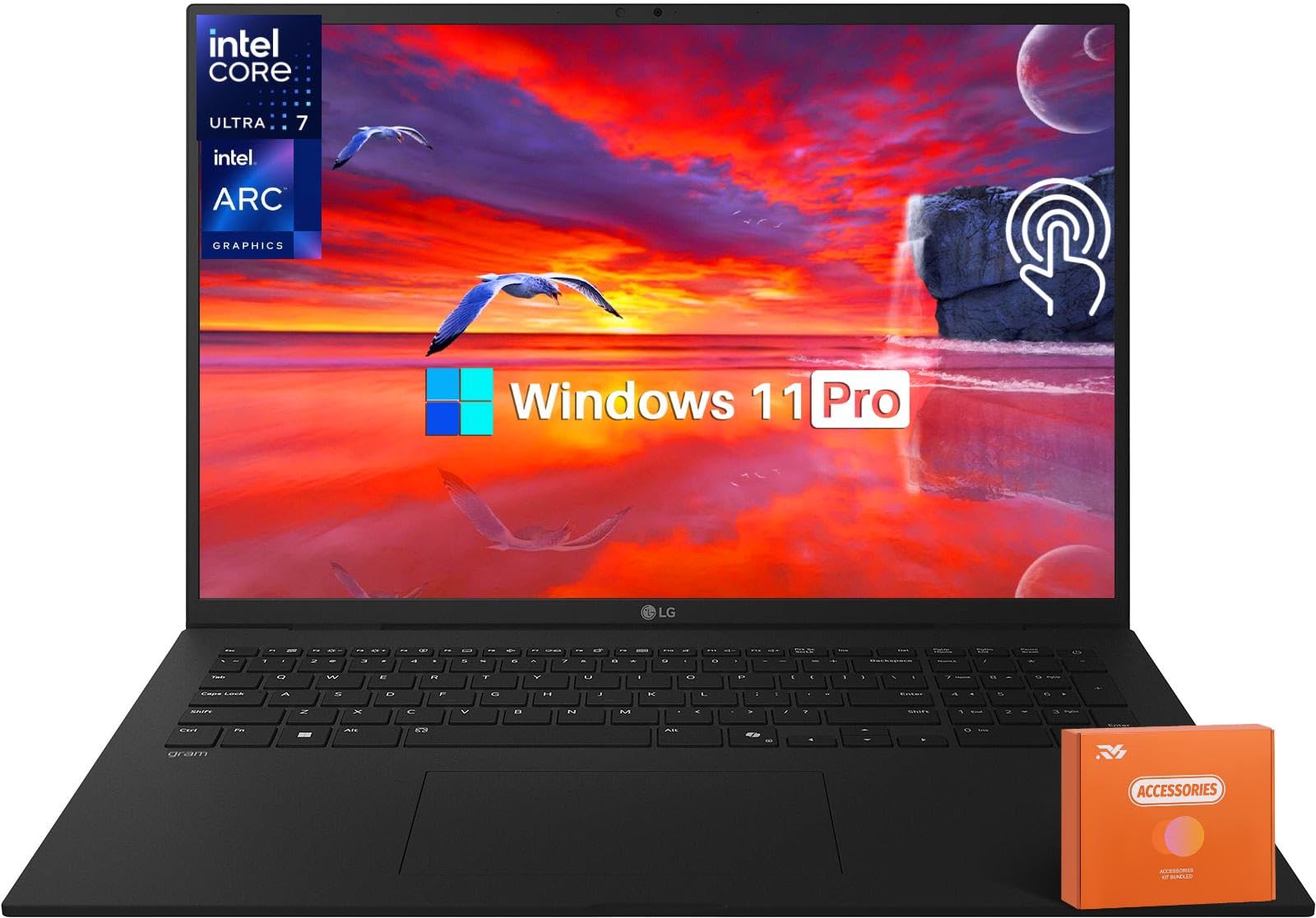
9. LG 2025 Gram 17 Ultra-Light Business Laptop
The 17-inch colossus that somehow weighs less than most 14-inch laptops.
The LG Gram 17 defies physics — it has a massive 17-inch WQXGA (2560 x 1600) touchscreen yet weighs just 3.2 pounds. For a writer who wants to see two full pages side by side on a single screen, this is a revelation. The Intel Core Ultra 7 258V processor with 32GB of LPDDR5X RAM and a 2TB SSD means you never worry about slowing down or running out of space for your manuscript library. The anti-glare coating on the display helps with long sessions under office lights. Owners say it has “excellent battery life” and can go “several days without charging.”
Build quality is the top praise, with 27 owners impressed by its premium feel. Weight is the second most-discussed aspect, as it is exceptionally portable for its size. Battery life and speed also get strong marks. The port selection is generous: Thunderbolt 4, USB4, HDMI 2.1, and Wi-Fi 7. A few shoppers say backlight bleed on the screen, and the bottom-firing speakers are muffled when the laptop sits on a soft surface.
The real-world trade-off: you get a huge, lightweight screen with a premium build, but the speakers are weak and some units have screen-quality issues (backlight bleed).
Ideal for: writers who need a large display for split-screen work but refuse to carry a heavy laptop.
Consider something else if: you rely on built-in speakers for media or want perfect screen uniformity from the start.
10. Dell 16 Plus Laptop DB16250

The processing beast that chews through data-heavy research and spreadsheet chaos.
Writers who also handle data analysis, large spreadsheets, or complex research will appreciate the Dell 16 Plus. The Intel Core Ultra 9 288V processor with 32GB of LPDDR5X memory and a 2TB SSD is overkill for pure typing, but it means you never hit a performance ceiling. The 16-inch 16:10 2.5K (2560 x 1600) display is taller than a standard 16:9 screen, giving you more vertical space for reading long documents without scrolling. The FHD+ webcam makes video calls crisp, and the low-blue-light screen helps with eye strain during 8-hour writing marathons.
Performance is the top positive, with 22 owners saying it handles everything smoothly. Speed and value for money follow closely. Owners call it “extremely fast for photography” and note it runs multiple apps without hitting 50% capacity. The biggest negative is the port selection — it has only one USB-A port and two USB-C ports (one for charging), so you will need a USB hub for a mouse, external drive, and other peripherals. The speakers are flat with no bass, so headphones are better for media.
Why a Writer Might Buy This
- Massive 2TB SSD for storing huge manuscript libraries and backups
- Tall 16:10 screen shows more of your document without scrolling
- MIL-STD 810H tested for durability on the go
The Annoyances
- Only one USB-A port — you will likely need a hub
- Speakers are weak; plan on using headphones
Best if: you need top-tier processing power for data-heavy research or multi-app workflows alongside your writing.
Not for you if: you are a pure writer who wants a simpler, more portable machine without dongles.
11. ASUS Zenbook Duo Laptop

The dual-OLED dream that gives you a second screen without buying an external monitor.
The ASUS Zenbook Duo is unique in this list — it has dual 14-inch 3K OLED touchscreens with a 120Hz refresh rate. For a writer, this means you can have your full draft on one screen and research, notes, or a reference PDF on the other, all without an external monitor. The detachable Bluetooth keyboard and built-in kickstand mean you can use it as a traditional laptop or as a dual-screen workstation. The Intel Core Ultra 9 285H processor with 32GB of RAM and a 1TB SSD handles multiple apps and virtual desktops easily. Owners say the “dual screens are a standout for multitasking” and that the displays are “gorgeous and versatile.”
The dual 14-inch Lumina OLED displays are the star — 2880 x 1800 resolution, 500-nit HDR peak brightness, and 100% DCI-P3 color accuracy. The 75Wh battery provides up to 16 hours of video playback in laptop mode and 9 hours in dual-screen mode. Owners note that it runs hot under load and the fans can get loud. The keyboard has a flat profile that takes some getting used to, and the battery drains faster when using both screens at full brightness.
The Multi-Screen Advantage
- Two 14″ 3K OLED displays for class-leading split-screen productivity
- Detachable Bluetooth keyboard and kickstand for versatile positioning
- Included ASUS Pen 2.0 for annotations and sketches
The Real Cost
- Heavier and thicker than a standard laptop at 3.64 lb
- Fans get loud and the machine runs hot under sustained load
Perfect for: writers who need two screens for research and drafting on the go, and who value a stunning OLED display.
Not for you if: you prefer a simple, quiet, single-screen laptop that does not get hot or require a learning curve for the keyboard.
Understanding the Specs
Processor (CPU)
The processor is the brain of the computer. For a writer, you do not need the absolute fastest chip, but you want something modern that handles multitasking — having a dozen browser tabs, a word processor, and a note app all open at once. Chips like the Apple M5 or an AMD Ryzen 7 are more than enough for smooth writing and research. A faster processor means less waiting when you switch between apps.
RAM (Memory)
RAM is your computer’s short-term memory for running multiple apps simultaneously. For a writer, 8GB is the bare minimum for basic writing and browsing. 16GB is the balance — it lets you keep a heavy browser, Word, and research PDFs open without slowdowns. 32GB is overkill for most writers but useful if you also edit large spreadsheets or handle data analysis.
Display Resolution and Panel
Resolution refers to the number of pixels on the screen. Full HD (1920 x 1080) is sharp enough for most writing. Higher resolutions like 2.5K or 3K make text look even crisper, which reduces eye fatigue during long sessions. The panel type matters too — IPS screens offer good color and viewing angles, while OLED screens give deep blacks and high contrast that make text pop. Anti-glare coatings help if you work in bright environments.
Battery Life
Battery life is critical for a writer who moves between a desk, a café, and a library. Look for claims of at least 12 hours of real-world use, but note that “up to” numbers from manufacturers are based on light tasks like video playback. Actual writing with a bright screen and Wi-Fi on will be lower. A battery that lasts a full workday (8 hours) is the gold standard.
FAQ
Do I need a dedicated graphics card for writing?
Is 8GB of RAM enough for a writer?
What is the best screen size for writing?
Should I get a touchscreen for writing?
How much storage do I need for writing?
Is a backlit keyboard important for writers?
Can I use an iPad instead of a laptop for writing?
What is the difference between an IPS and an OLED display for writing?
Should I buy a MacBook or a Windows laptop for writing?
How do I reduce eye strain while writing on a laptop?
Final Thoughts: The Verdict
Across the board, the computer for writers winner is the Apple MacBook Air M5 because it combines a silent, fanless design with up to 18 hours of battery life and a crisp 13.6-inch Liquid Retina display — everything a writer needs to stay in the flow all day. If you want a massive screen for under, the Acer Aspire Go 15 delivers fast performance and a 15.6-inch display at a budget-friendly price. And for writers who crave a dual-screen setup for research and drafting side by side, the ASUS Zenbook Duo is the one to reach for with its stunning dual 14-inch 3K OLED panels.
How We Picked
We do not accept paid placement. Every pick is matched to a real buyer and a real use-case; we do not hands-on test units.
Sources & Methodology
Specifications: manufacturer listings and product documentation. Review insights: verified customer reviews, as of July 2026. Pricing: not shown on this page (it changes often); check the current price via the retailer link.
As an Amazon Associate, WellFizz earns from qualifying purchases. This does not affect which products we feature.
Related Guides

Mo Maruf
I created WellFizz to bridge the gap between vague wellness advice and actionable solutions. My mission is simple: to decode the research and give you practical tools you can actually use.
Beyond the data, I am a passionate traveler. I believe that stepping away from the screen to explore new environments is essential for mental clarity and physical vitality.