Our readers keep the lights on and my smoothie glass nicely filled. As an Amazon Associate, I earn from qualifying purchases.
Specs are compiled from manufacturer listings and verified buyer reviews and can change over time — please confirm the key details on the product page before buying.
Your legs feel heavy by midday. Your ankles swell after a few hours on your feet. That is where the right compression hose changes your day — they push blood back toward your heart (a process called graduated compression, where the pressure is highest at the ankle and decreases up the leg), so you feel lighter and less achy the moment you pull them on. Today’s options are not your grandmother’s stockings; they are discreet fabrics with real, measurable pressure.
I’m Mohammad Maruf — the founder and writer behind WellFizz. This guide is built by comparing the manufacturers’ published specifications and the patterns across verified customer reviews, so you get each pick’s real strengths and trade-offs instead of marketing spin.
Whether you are a nurse logging twelve-hour shifts, a traveler facing a long-haul flight, or someone managing post-surgical recovery, this breakdown of the best compression hose matches each real-world scenario to a genuinely proven option.
Our Picks at a Glance
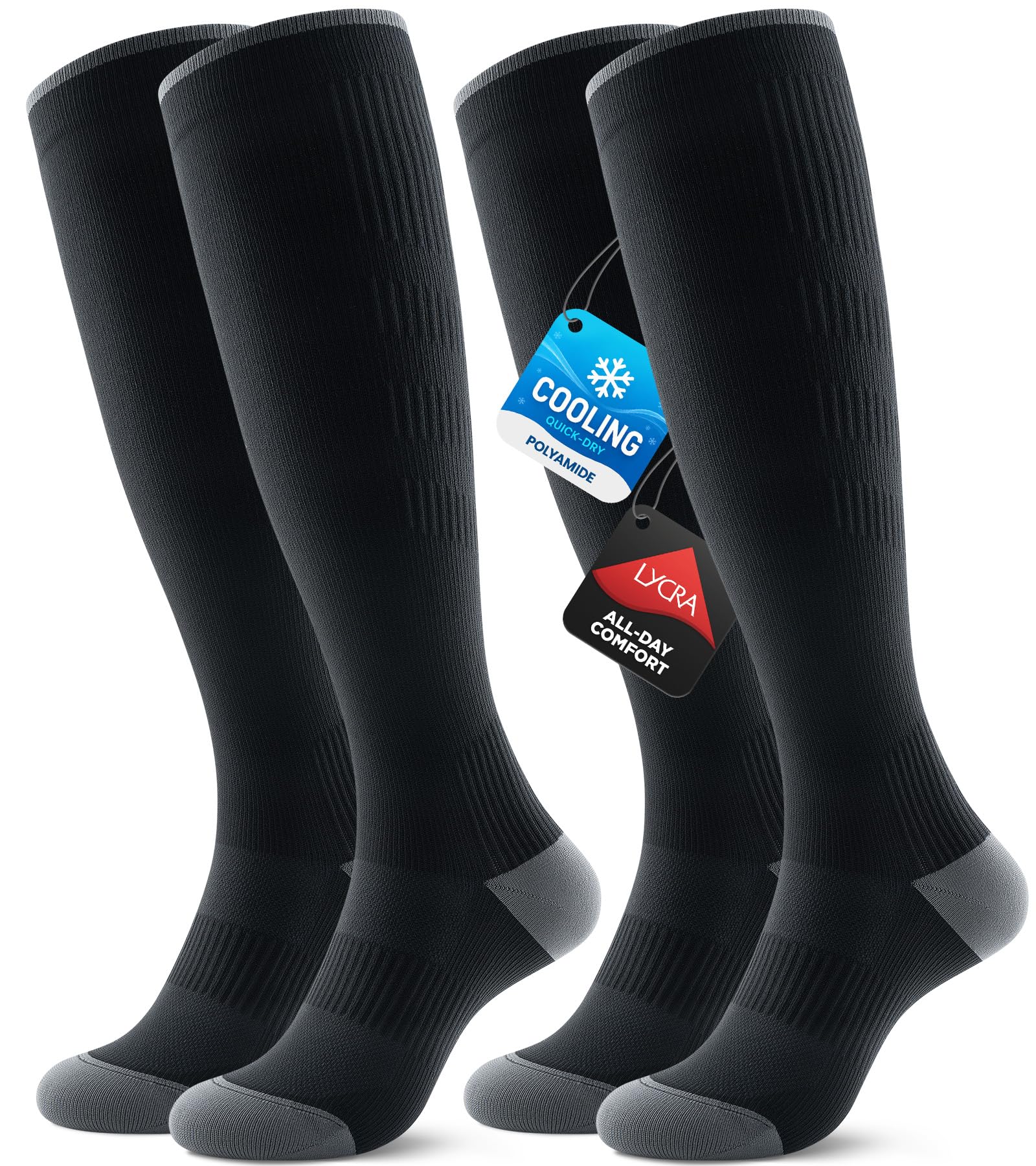

How To Choose The Best Compression Hose
Compression hose are a medical tool and a comfort accessory. Picking the wrong level or length means you either do not get the support you need or you struggle to put them on every morning. Here are the two things that matter most.
Understanding the mmHg Number
The rating in mmHg (millimeters of mercury, the unit that measures how much pressure the sock applies) tells you the tightness. A lighter 15-20 mmHg eases tired legs and minor swelling for long flights or a day of standing. The firm 20-30 mmHg level is for serious issues — post-surgical recovery, DVT (deep vein thrombosis, a blood clot in a deep vein) prevention, or chronic swelling that does not respond to lighter compression. Go higher, and you need a prescription. For most everyday use, 15-20 mmHg is the balance: noticeable support that is still comfortable for all-day wear.
Length and Fit: Knee-High vs Waist-High
Knee-high socks cover the most common problem area — the calf and ankle — and are easiest to put on and remove. Waist-high stockings, like the JOBST Relief in this list, extend all the way to your waist. They are typically for people with varicose veins (swollen, twisted veins visible under the skin) higher on the leg or for those who cannot tolerate thigh-high bands that roll down. Knee-high works for most daily scenarios; waist-high is for comprehensive medical management. Get a soft measuring tape and follow the brand’s size chart around your ankle, calf, and thigh — a poor fit either rolls down or cuts into your skin.
Quick Comparison
| Model | Best For | Compression Level | Length | Material | Amazon |
|---|---|---|---|---|---|
| Benirap Breathable Compression Socks★ Best Overall | Firm all-day support for standing workers | 20‑30 mmHg | Knee High | Breathable fabric blend | Amazon |
| Truform 15‑20 mmHg StockingsWorkhorse Value | Budget‑friendly medical‑grade support | 15‑20 mmHg | Knee High | 85% Nylon, 15% Spandex | Amazon |
| Compression Socks 3‑Pair (15‑20 mmHg) | Nurses & pregnant women needing gentle all‑day wear | 15‑20 mmHg | Knee High | Soft fabric blend | Amazon |
| Doctor’s Select Plus Size 3‑Pair | Wide calves & large feet needing 20‑30 mmHg | 20‑30 mmHg | Knee High | Quality stretch material | Amazon |
| CHARMKING 8‑Pair 15‑20 mmHg | Best value multi‑pack for everyday wear | 15‑20 mmHg | Knee High | Copper‑infused fabric | Amazon |
| +MD 2‑Pair 20‑30 mmHg Open Toe | Firm post‑op support with open‑toe convenience | 20‑30 mmHg | Knee High | Spiral‑knit fabric | Amazon |
| JOBST Relief Waist High 20‑30 mmHg | Comprehensive varicose‑vein & edema management | 20‑30 mmHg | Waist High | Nylon & Spandex blend | Amazon |
In‑Depth Reviews
1. Benirap Breathable Compression Socks for Women Men, 20-30mmHg Knee High, 2 Pairs
Our pick — over 4.5★ from 500+ verified ratings; the strongest balance of quality and price.
The firmest compression on this list that still feels breathable enough for summer wear.
This pick delivers firm 20-30 mmHg pressure without the sweaty, stifling feel typical of that level. The fabric is noticeably lightweight — owners describe it as cooling even in warm weather. Standing workers report that these socks fix swollen, irritated feet faster than any cream. It is not just the compression level that wins people over; it is that the material is flexible enough to go on and off without a wrestling match.
At 3.53 ounces per pair and 20-30 mmHg compression, while the Truform stockings weigh 2.89 ounces and provide 15-20 mmHg. Buyers report that a single pair lasts through a full workday without needing to be reapplied. Buyers with venous insufficiency and standing-related rashes give these a perfect score. The only real caveat: do not wear them for a full 24-hour cycle. They work best for daytime or nighttime use, not both.
What wins people over
- Highest compression (20-30 mmHg) in a breathable, lightweight knit that does not trap heat
- Easy to pull on and off compared to other firm-level socks
- Two pairs included means you always have a clean set ready
The honest trade-off
- Not designed for simultaneous day-and-night wear — choose one or the other
- Beige color has a slight pink undertone that some find noticeable
Reach for these if: you are on your feet for hours and need firm, all-day support that stays cool.
Think twice if: you prefer a very mild squeeze — the 20-30 mmHg level is noticeably firmer than the usual 15-20 mmHg.
2. Truform 15-20 mmHg Compression Stockings for Men and Women, Knee High, Open Toe, Beige, X-Large
A made-in-the-USA medical stocking that has been a pharmacy staple for nearly a decade.
These are the old reliable of compression hose. The 85 percent nylon, 15 percent spandex blend gives a consistent 15-20 mmHg graduated squeeze — pressure is highest at the ankle and decreases up the leg — strong enough to help with swelling, varicose veins, and DVT (deep vein thrombosis) prevention, but still comfortable enough for overnight wear. The open-toe design means you can wear sandals or check your toes for circulation, and the defined heel pocket keeps the stocking anchored so it does not twist around your leg.
Where the Truform stockings differ from the Benirap pair is longevity. Owners mention that these last about a month before the compression starts to loosen and the heel frays. It is a fair trade for the price — you get a quality medical-grade garment made in the USA, but you will need to replace it roughly every four to six weeks with regular use. The snug fit is easier to manage after the first few days, and hand-washing extends the life noticeably.
The defining angle: a trustworthy, latex-free (no natural rubber), medical stocking with proven circulation support, but budget for replacing it every month or two.
Best for: someone who needs a dependable, prescription-level support stocking at a low entry price and does not mind replacing them regularly.
3. Compression Socks for Women and Men, Knee High 15-20mmHg Graduated Support, 3 Pairs
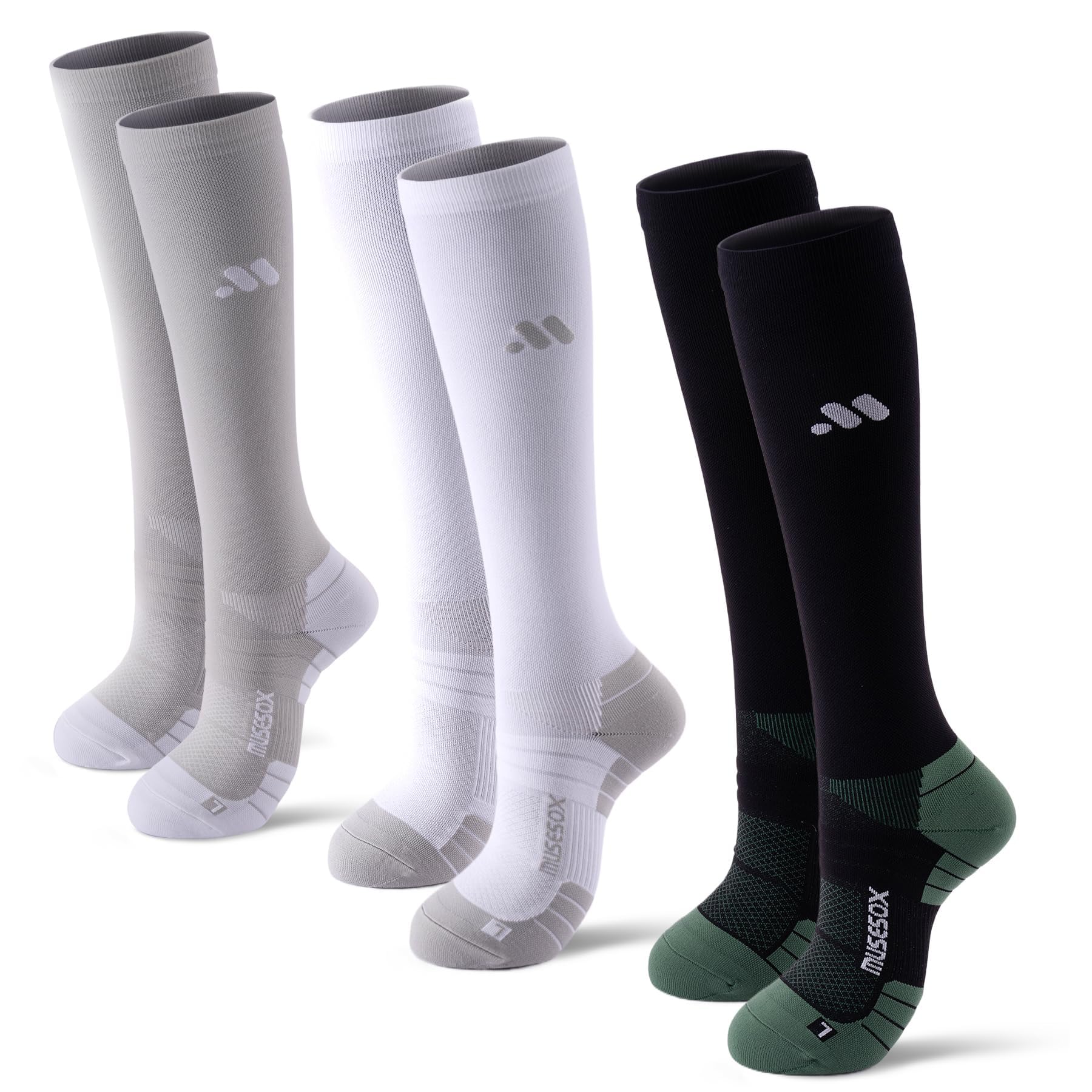
Three pairs of soft, smooth socks that feel like nothing on your legs but actively fight swelling.
Comfort is the most-praised feature, singled out by over a hundred owners. The 15-20 mmHg graduated pressure is present but gentle enough that one buyer wore them through an entire 11-hour flight without needing to peel them off. The socks are labeled left and right, which means the contoured fit around your heel and arch is precise. Nurses working back-to-back therapy shifts report wearing them for 6 to 10 hours straight with no leg indentations or knee-band digging.
Compared to the Truform pair, these last longer before the compression fades and come in a three-pack for roughly the same cost. The main drawback is a limited palette of colors and patterns — if you like variety, you might find the options a bit dull. But for pure, all-day relief that disappears under pants, this is the set that keeps getting recommended for pregnancy swelling, standing shifts, and long travel days.
Why they stand out
- Soft, smooth fabric that does not leave marks on your skin even after 10 hours
- Left/right foot labeling gives a custom-like fit around the heel
- Holds shape well after washing — no shrinking or bunching
A small concession
- Color and pattern choices are limited compared to other multi-packs
- No grip bottom, so they can slide slightly inside smooth shoes
Grab these for: long shifts, pregnancy leg swelling, and any day you want to forget you are wearing compression at all.
4. Doctor’s Select 3 Pairs Plus Size Compression Socks Wide Calf — Up to 6XL, 20-30 mmHg
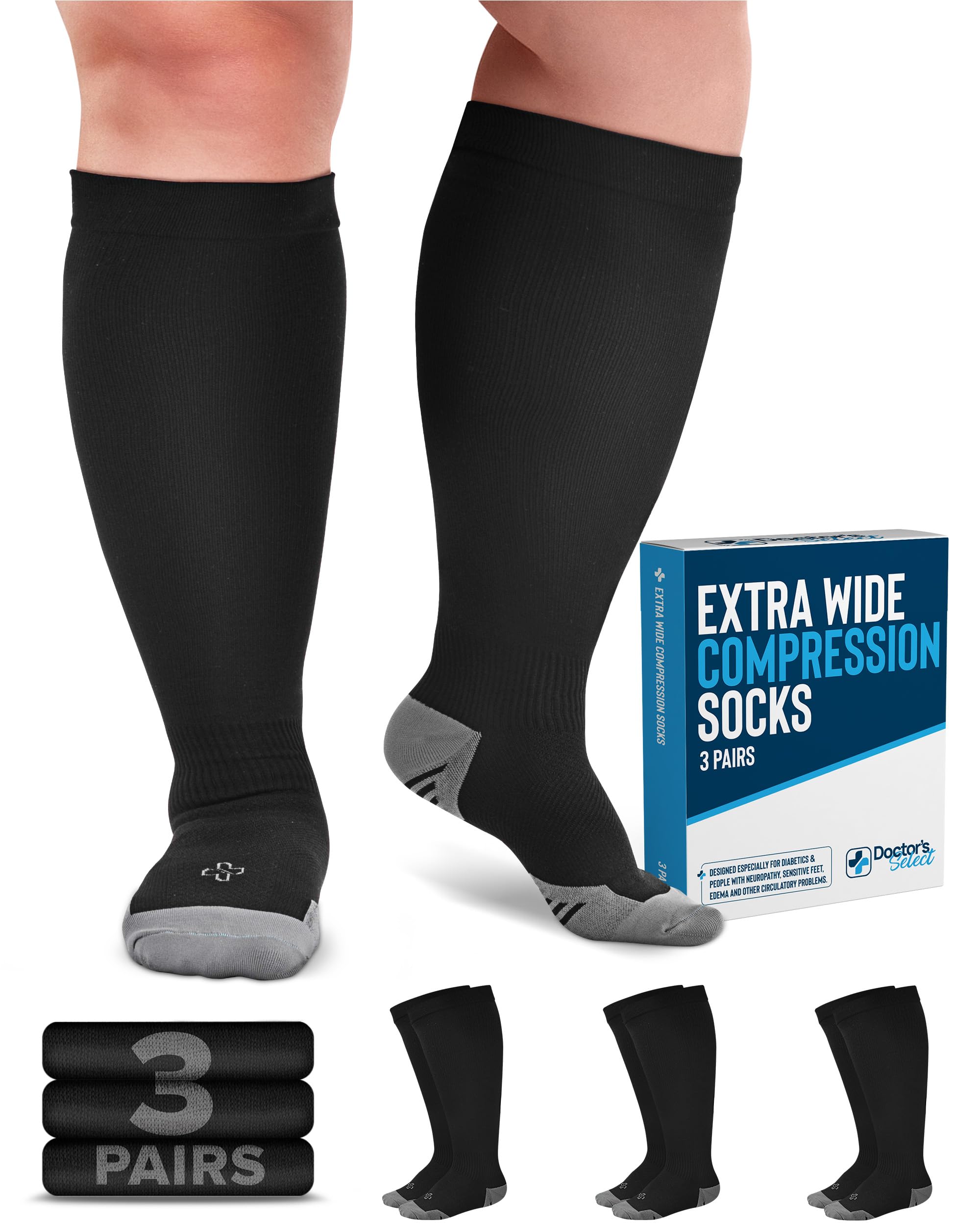
The only pick here that fits a 21-inch calf without pinching or rolling down.
If you have wide calves or large feet, standard compression socks either cut off circulation or slide down to your ankle within an hour. Doctor’s Select specifically sizes up to 6XL, and the feedback from buyers with 21-inch calves and size-15 feet is that the 4XL fits perfectly without that tourniquet feeling. The 20-30 mmHg firm compression is ideal for post-surgical recovery — one owner calls them exactly what you need to prevent DVT (deep vein thrombosis) after knee replacement.
The three-pair set comes in both solid and multicolor options, but there is an honest fit quirk: the multicolored pairs feel slightly looser than the solids because the thread knots create tiny indentations. For the most consistent compression, stick with the solid colors. The material is high-quality, not too thick, and reduces foot sweat. One detail owners appreciate is that the sizing guide is accurate, so if you measure carefully, these fit surprisingly comfortably even on the first wear.
Standout spec: 20-30 mmHg compression in sizes up to 6XL — the only wide-calf option on this list that genuinely works for larger builds.
Reach for these if: you have struggled with standard compression socks being too tight around the calf or too short for your foot length.
5. CHARMKING Compression Socks for Women & Men Circulation, 8 Pairs, 15-20 mmHg

Eight pairs of everyday compression that look and feel like normal socks but keep your legs energized.
This is the most-reviewed compression sock on the list. The 15-20 mmHg level is gentle enough for someone with chronic illness or POTS (postural orthostatic tachycardia syndrome, a condition where standing causes rapid heart rate) who needs support from morning to night, yet firm enough that a concrete-floor worker notices the difference in ankle swelling. The copper-infused fabric is soft and breathable, and the fit — which tens of thousands of buyers call out positively — stays in place without rolling down. Owners say you can wear these for 10 to 18 hours a day without the “too tight” sensation that some medical-grade socks create.
The trade-off for this eight-pack price is patterning. Solid colors hold up beautifully through washes, but the multicolored and patterned versions can create indentations on your skin from the thread knots, and the patterns fade over time. Fit also varies by calf size — the stock compression works best for average to medium calves, and the length can be slightly long for shorter legs. For pure daily value, though, this pack is tough to top: eight pairs mean you have a fresh set every day of the work week plus spares for travel.
Biggest strengths
- Exceptional cost-per-pair in the 15-20 mmHg range
- Soft, breathable copper-infused fabric that feels like a normal sock
- Held up after repeated wear and machine washing
Things to check
- Patterned pairs can cause indentations — stick to solids for the smoothest feel
- Slightly long for people with shorter legs
Best for: building a daily rotation of gentle, all-day compression without spending a lot per pair.
6. +MD 2 Pairs 20-30 mmHg Compression Socks, Knee High Open Toe Stockings
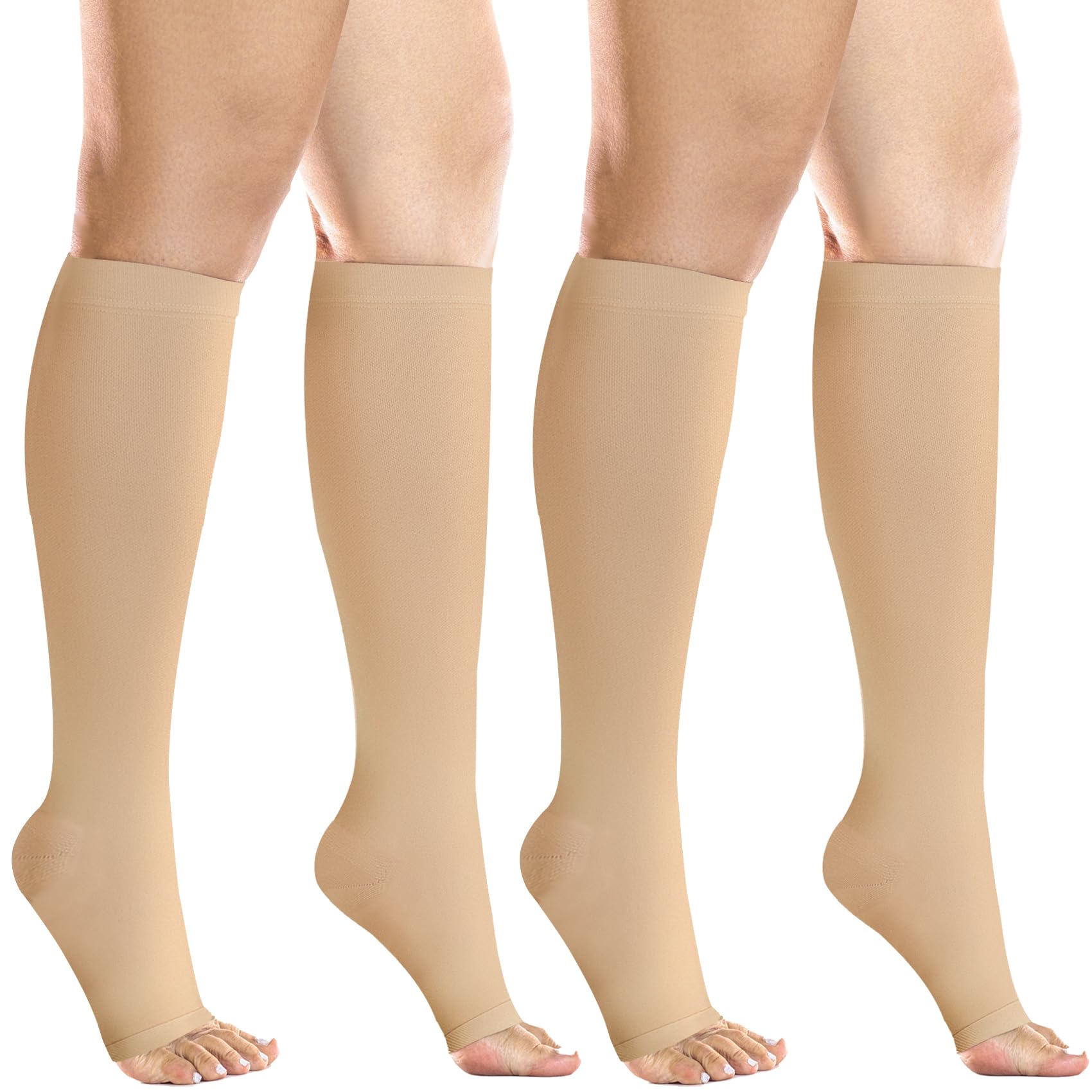
Post-surgery firmness with an open-toe design and a spiral-knit (a weaving method that makes the fabric more durable and snag-resistant) build that resists snags.
The +MD stockings are built for people who need serious 20-30 mmHg compression — think post-operative recovery, vascular issues, or chronic edema (swelling from excess fluid trapped in tissues) — but want the convenience of an open toe. The spiral-knit construction is tougher than standard circular knits, so they hold up to daily wear without hooking or fraying quickly. The company includes a foot-cover slider tool to make the notoriously difficult donning process easier, and it comes with clear illustrated instructions.
Compression is the most-praised feature here, but the fit is the most-discussed topic overall, and it is mixed. Some buyers find the top band too tight and have to return them even though the rest of the sock fits perfectly. Others report that after the first wash, the toe opening starts to roll up, making them uncomfortable inside a shoe. The advice from experienced users is to size up if you are new to firm compression. For those who nail the fit, these deliver excellent support that lasts through long shifts and prevents swelling effectively.
The honest trade-off: compression is excellent and the fabric is durable, but getting the right size is crucial — the top band can be too tight for some, and the open toe may curl after washing.
Best for: someone who has worn 20-30 mmHg before and knows their exact size, especially for post-surgical or vascular support.
7. JOBST Relief Waist High Graduated Compression Stockings 20-30mmHg, Open Toe, Black, Large
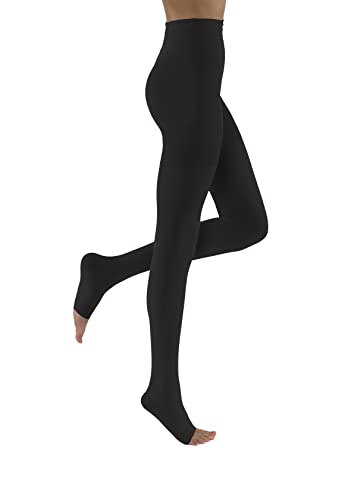
Waist-high coverage that stays put without thigh bands that roll down.
This is the most comprehensive option here — a waist-high stocking from JOBST, a brand that physicians frequently recommend. At 20-30 mmHg with gradient pressure from ankle to thigh (pressure is strongest at the ankle and gradually lessens up the leg), it is designed for people managing venous disease (conditions affecting the veins), chronic edema, or varicose veins that extend above the knee. The reinforced heel pocket adds durability, and the open-toe design allows you to check for swelling or adjust the fit. Buyers who work long nursing shifts or walk three-plus miles daily report that this stocking controls edema (swelling from trapped fluid) and prevents vein issues from progressing.
The reality of waist-high compression is that it takes effort to put on. There is a learning curve, and getting the fabric smooth without creases is critical — a fold can create a rubber-band effect that cuts off circulation. Durability is also a split verdict: some owners say the stockings last through many hand washes and keep their support, while others report tearing within a month. If you need full-leg coverage and are willing to invest the time in proper application, these deliver the most thorough compression on the list.
Where it leads
- Full waist-high coverage — no rolling thigh bands or garter belts needed
- Physician-recommended brand with a thick, long-wearing knit
- Effective for managing varicose veins and post-surgical edema
The challenges
- Difficult to put on; requires careful smoothing to avoid dangerous creases
- Some units tear within the first month, despite good general durability
Choose these for: full-leg venous management and a trusted medical brand — be prepared for a firm donning process and a premium cost.
Understanding the Specs
mmHg — The Pressure Rating, Explained
Millimeters of mercury (mmHg) is the unit that measures how much pressure the sock applies to your leg. Think of it as the tightness dial. A 15-20 mmHg rating is a mild squeeze — enough to keep blood from pooling in your ankles during a long flight or a day of standing. A 20-30 mmHg rating is a firm, therapeutic level typically used for post-surgical recovery, chronic swelling, or DVT (deep vein thrombosis) prevention. Most people start with the lower end and move up only if their doctor recommends it or if 15-20 does not control their swelling.
Graduated Compression — Why It Works Better
Graduated means the pressure is highest at your ankle and gradually decreases as it moves up your leg. This mimics the natural muscle pump that pushes blood back to your heart. A sock that is the same tightness all over would simply squeeze your entire leg equally, which does not help circulation. Graduated compression actively moves fluid upward, which is why it reduces swelling and tiredness more effectively than a uniform squeeze.
Open Toe vs Closed Toe
An open-toe stocking leaves your toes exposed. This is useful if you need to check for swelling or circulation in your toes, or if you prefer to wear sandals. The downside is that the edge can roll up or create a ridge inside your shoe. Closed-toe socks offer full coverage and a smoother fit inside shoes but can feel warmer and limit toe mobility. For everyday wear under pants, closed-toe is usually more comfortable; for medical monitoring, open-toe is the standard.
Knee High vs Thigh High vs Waist High
Knee-high socks cover from the ankle to just below the knee and handle 90 percent of common compression needs — tired legs, mild swelling, travel, and pregnancy. Thigh-high stockings extend to the upper thigh and are for people with varicose veins above the knee, but they often roll down. Waist-high stockings, like the JOBST Relief in this list, go all the way to your waist and stay in place because there is no thigh band. They are the most secure option but the hardest to put on and the most expensive.
FAQ
How tight should compression hose feel?
Can I wear compression hose all day and night?
Do compression hose really prevent blood clots on a flight?
What size should I buy for wide calves?
How long does a pair of compression hose typically last?
Can I run compression hose through the washing machine?
Why do my compression socks leave red marks on my legs?
What is the difference between 15-20 mmHg and 20-30 mmHg compression?
Can I wear compression hose if I have a skin condition like eczema?
Final Thoughts: The Verdict
For most people shopping for the best compression hose, the winner is the Benirap Breathable Compression Socks because it delivers the strongest 20-30 mmHg compression in a lightweight fabric that stays comfortable all day and comes as a two-pack for a practical price. If you want a gentle, all-day sock you can wear every shift without thinking about it, the 3-Pair Compression Socks (15-20 mmHg) are the softest, most discreet option here. For anyone with wide calves or post-surgical needs, the Doctor’s Select Plus Size 3-Pair is the only pick that fits a 21-inch calf without pinching. And if you need waist-high coverage for comprehensive venous support, the JOBST Relief Waist High Stockings are the medical-grade choice that stays in place all day.
How We Picked
We do not accept paid placement. Every pick is matched to a real buyer and a real use-case; we do not hands-on test units.
Sources & Methodology
Specifications: manufacturer listings and product documentation. Review insights: verified customer reviews, as of July 2026. Pricing: not shown on this page (it changes often); check the current price via the retailer link.
As an Amazon Associate, WellFizz earns from qualifying purchases. This does not affect which products we feature.
Related Guides

Mo Maruf
I created WellFizz to bridge the gap between vague wellness advice and actionable solutions. My mission is simple: to decode the research and give you practical tools you can actually use.
Beyond the data, I am a passionate traveler. I believe that stepping away from the screen to explore new environments is essential for mental clarity and physical vitality.