Our readers keep the lights on and my smoothie glass nicely filled. As an Amazon Associate, I earn from qualifying purchases.
Specs are compiled from manufacturer listings and verified buyer reviews and can change over time — please confirm the key details on the product page before buying.
A bad pair of winter boots turns a walk to the car into a miserable slog — cold toes, wet socks, and a heel that slides with every step. The right pair, though, makes you forget the weather entirely, letting you focus on the day ahead instead of your feet. This guide cuts through the noise to find the cold weather boots for men that actually deliver on warmth, grip, and lasting comfort when the thermometer drops.
I’m Mohammad Maruf — the founder and writer behind WellFizz. This guide is built by comparing the manufacturers’ published specifications and the patterns across verified customer reviews, so you get each pick’s real strengths and trade-offs instead of marketing spin.
You need insulation that matches the temperatures you actually face — and that insulation is measured in grams. Among these seven boots, the crowd favorite balances 200g of insulation with a price that won’t make you wince, making it a proven performer for shoveling, hiking a snowy trail, or standing watch at a job site.
Our Picks at a Glance


How To Choose The Best Cold Weather Boots For Men
Buying winter boots without checking the key specs is like buying a truck without knowing its towing capacity — you might get lucky, but you probably won’t. Here is what actually matters.
Insulation Weight (Grams)
This is the single most important number. A 200g boot is perfect for active use in moderate cold (down to about 15°F), letting your feet breathe while you walk. A 400g boot doubles the warmth for standing around in colder temps. Go up to 1200g and you are in full-on arctic territory — very warm, but also heavy and bulky. Match the grams to your activity level. If you are hiking, less is often more. If you are sitting in a deer stand, go heavy.
Waterproofing Matters More Than You Think
A boot can be the warmest in the world, but if water seeps in at the seam, your feet will freeze fast. Look for “seam-sealed” construction or a built-in waterproof membrane (like Rocky Waterproof or KEEN’s own). This keeps slush and puddles out so the insulation stays dry and effective.
Sizing is Almost Always Off
Nearly every winter boot runs small or narrow. The most common advice across thousands of owners: size up at least a half size, and sometimes a full size. You need room for thick wool socks without your toes hitting the front. A boot that fits snug in the store will be painful after an hour of walking in the cold.
Traction on Ice and Snow
Not all “rugged” outsoles are equal. Look for a specific cold-weather rubber compound (like Columbia’s Omni-Grip or Kamik’s synthetic rubber sole) that stays flexible and grippy in freezing conditions. A standard hiking boot sole can get stiff and slippery on packed snow.
Quick Comparison
| Model | Best For | Insulation | Waterproofing | Sizing Note | Amazon |
|---|---|---|---|---|---|
| The North Face Chilkat V 200g★ Best Overall | Daily winter use | 200g | Seam-sealed / DWR | Size up 1/2 | Amazon |
| The North Face Chilkat V 400gDeep Cold Specialist | Truly cold weather | 400g | Seam-sealed / DWR | Size up 1/2 | Amazon |
| Columbia Expeditionist Shield | Light hiking & daily | 200g | Omni-Tech waterproof | Size up 1/2 | Amazon |
| Columbia Bugaboot III | Deep snow comfort | 200g | Seam-sealed / rubber shell | Size up (narrow toe) | Amazon |
| Kamik Fargo 2 Wide | Wide feet & mountain life | 145g HEAT-MX | Seam-sealed / rubber shell | Size up 1+ size | Amazon |
| KEEN Revel 4 Polar | Wide toe box & subzero hikes | 200g | Waterproof membrane | True to size (wide fit) | Amazon |
| ROCKY Blizzard Stalker 1200G | Extreme cold & hunting | 1200g Thinsulate Ultra | Rocky Waterproof | Size up for thick socks | Amazon |
In‑Depth Reviews
1. The North Face Men’s Chilkat V Lace-up Waterproof Snow Boot (200g)
Our pick — over 4.5★ from 400+ verified ratings; the strongest balance of quality and price.
The 200g boot that has carried buyers through a decade of Northeast winters without complaint.
This boot hits the balance for daily winter life — shoveling, walking the dog, commuting, or light errands in the snow. The 200g of insulation (the amount of synthetic fill that traps body heat) is enough for normal winter temps, and buyers report it handled a recent Northeast snowstorm extremely well, keeping feet warm and dry with great traction. The heel ridge for snowshoes and the D-ring for gaiters (a strap that seals snow out of your boot top) are thoughtful details if you ever venture off the pavement.
The most-discussed trade-off is the fit. Many owners find it runs small across the top of the foot, and the advice to size up a half size is nearly universal if you plan to wear thick socks. A few long-time fans noted that previous North Face boots eventually saw rubber separating from the leather, but the current pair is well-made and lighter than the Sorel alternatives. Bottom line: this is the crowd-pleaser because it nails the essentials — warmth, dryness, and a price that makes sense.
Who it fits: The daily winter user who wants a lightweight, warm, waterproof boot that works for both a city sidewalk and a snowy trail.
The sizing reality: Order a half size up, especially if you have a wide midfoot, or the top of the boot will feel tight with thick socks.
Reach for this if: you want the best-balanced cold weather boot for everyday use — warmth, value, and a trusted brand in one package.
skip it if: you need extreme cold protection below 10°F for long periods; consider the 400g version instead.
2. The North Face Men’s Chilkat V 400 Waterproof Snow Boot (400g)
400g of insulation compared to the 200g version, for truly cold weather without the clunk of an arctic boot.
If you live where winter is a serious adversary and you need to stand around in it — not just walk through it — the 400g upgrade is a meaningful step up. Buyers describe these boots as “crazy comfortable” and warm enough that some were actually too warm for milder days. The traction on ice and snow earns high marks, and the wider fit accommodates thick socks without sacrificing comfort. One owner called them the “best winter boots” for their daily hikes and driveway duty.
The honest caveat is that a 400g boot is a focused tool. A few owners found themselves cold after about an hour at 15°F, suggesting that individual circulation plays a big role. And the lacing system draws some fire for being flawed — consider a half size up if your foot is on the wider side. But for the buyer who wants the extra thermal buffer over the 200g version, this is the quieter, more capable sibling.
Warmth buffer: Compared to the 200g standard, this carries 400g of insulation — which makes a real difference when you are standing still in the cold.
The catch: It can be too warm for active use above freezing, and the lacing system has disappointed a few owners.
Reach for this if: you need a warmer boot for true cold weather and are willing to trade some breathability for the extra insulation.
pass on it if: your winter is mostly mild snow flurries; the 200g or Columbia options will feel lighter and less bulky.
3. Columbia Men’s Expeditionist Shield

A rugged daily driver that stays warm, dry, and light enough to wear every single day.
This boot sits at the top of the value spectrum. It uses Columbia’s Omni-Tech waterproof-breathable membrane and a cold-tune tread that buyers confirm grips tight to ice and snow. Owners consistently call these “spectacular shoes” — wearing them every day and all day, praising the lightweight feel, the warmth without overheating, and the easy walking comfort. One buyer described them as “one of the best, light weight and warm snow boots you could ever have.”
Compared to the Bugaboot III, the Expeditionist Shield runs slightly more true to size, though a half-size-up recommendation still pops up. The main purchase friction is the aggressive tread, which a few owners note tracks snow and sand inside — a minor detail, not a dealbreaker. And a vocal minority found the fit too narrow and the lace loops weak. But the consensus is clear: this boot delivers outstanding quality, warmth, and water resistance at a price that feels like a steal.
What wins owners over
- Remarkably lightweight for an insulated winter boot
- Omni-Tech waterproofing keeps feet dry in deep snow and rain
- Heat-reflective lining boosts warmth without bulk
Where it stumbles
- Runs half-size small for most buyers; order up
- Aggressive tread picks up snow and mud into the house
- A handful of units had weak lace eyelets
Reach for this if: you want a do-it-all winter boot that is lighter and more comfortable than the price suggests.
Look elsewhere if: your foot is wide — the Expeditionist runs narrow for some — and consider the KEEN or Kamik wide options instead.
4. Columbia Men’s Bugaboot III
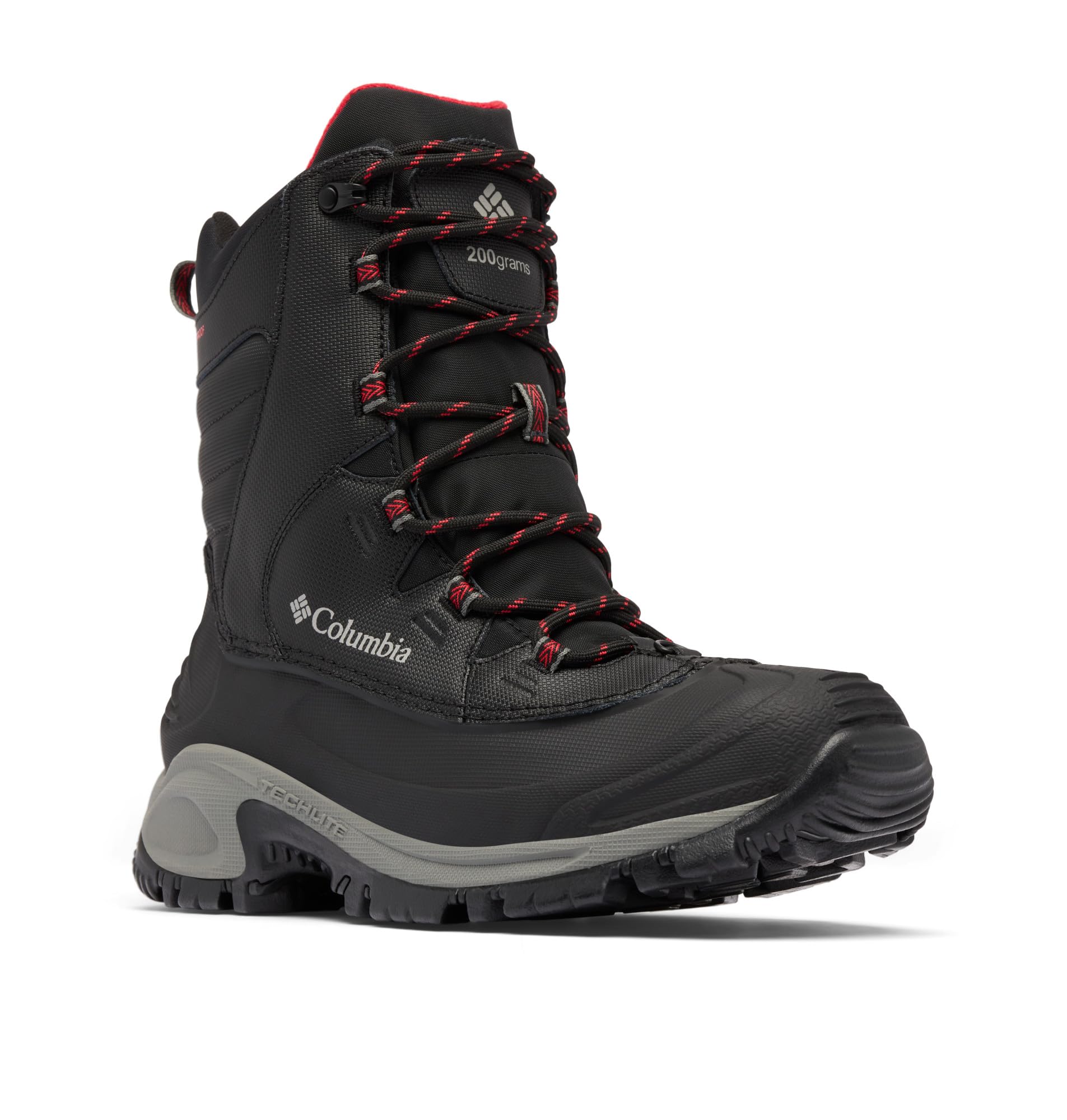
The 200g boot that owners call “the go to winter boot” — with one critical sizing catch.
The Bugaboot III carries 200g of insulation and an injection-molded rubber shell that buyers consistently report keeps feet dry even in sloppy conditions. The thing owners praise most is the warmth — over 40 people single it out — and the quality overall is a close second. One long-time fan in the Northeast reports these boots have lasted two winters and counting, staying warm and dry at temperatures down to 0°F. The Techlite midsole adds comfort, and the Omni-Grip tread handles snow and ice capably.
The sizing problem here is more acute than on the Expeditionist Shield. The toe box is narrow, and the boot runs small. The advice from the review pages is decisive: order up a full size, or get the wide version if available. A buyer who ignored this warning ended up with a US 11W that fit like a US 9.5. That frustration is real, but it is also the main complaint. Anyone who sizes correctly gets a durable, warm, lightweight boot that outlasts cheaper alternatives.
Warmth vs the Expeditionist: Both carry 200g, but the Bugaboot’s rubber shell and seam-sealed construction give it an edge in deep wet snow — buyers confirm the waterproofing is bulletproof.
The sizing fix: Go up a full size, and consider the wide width; if you do, you get a boot that outlasts its price class.
Reach for this if: you want a proven winter boot that handles deep snow and sub-zero temps, provided you size up.
it’s not for you if: you have a wide foot and don’t want to play the sizing game — the Kamik or KEEN below will fit better from the start.
5. Kamik Fargo 2 Wide Snow Boots for Men

A rugged wide boot with a loyal following — and a durability legend that spans 14 years.
The Kamik Fargo 2 is built for buyers who need a generous fit without compromise. It comes in a wide design that actual owners confirm accommodates thick wool socks without pinching. The genuine suede upper and synthetic rubber shell are seam-sealed for waterproofing, and the 145g HEAT-MX insulation is paired with a moisture-wicking fleece lining. Buyers at a 7,800-foot elevation in Colorado call these a “solid boot” — beefy, warm, and with a sole that grips snow well.
The insulation here (145g) is lighter than the 200g standard, but the boot’s true selling point is the comfort and space. One owner reported that their first pair of Kamik boots lasted 14 years — a statement that few winter boots can make. The downside is that the sole cushioning is not as plush as some competitors, and a few owners found the lace hooks too tight. Sizing is a common speed bump: plan to go up a full size to a size and a half. But for wide-footed buyers, the Fargo 2 is a rare reliable option.
The fit difference: While the Columbia Bugaboot III runs narrow, the Kamik is engineered wide — owners say it fits right from the start for wider feet.
The trade-off: At 145g of insulation, it is better for active use in moderate cold; for deep winter, you might want the 200g or 400g options.
Reach for this if: you have wide feet or need a boot that accommodates heavy wool socks without squeezing.
Look elsewhere if: you need maximum cold protection — the lighter insulation means this boot shines in active, not stationary, use.
6. KEEN Revel 4 Mid Height Polar Insulated Waterproof
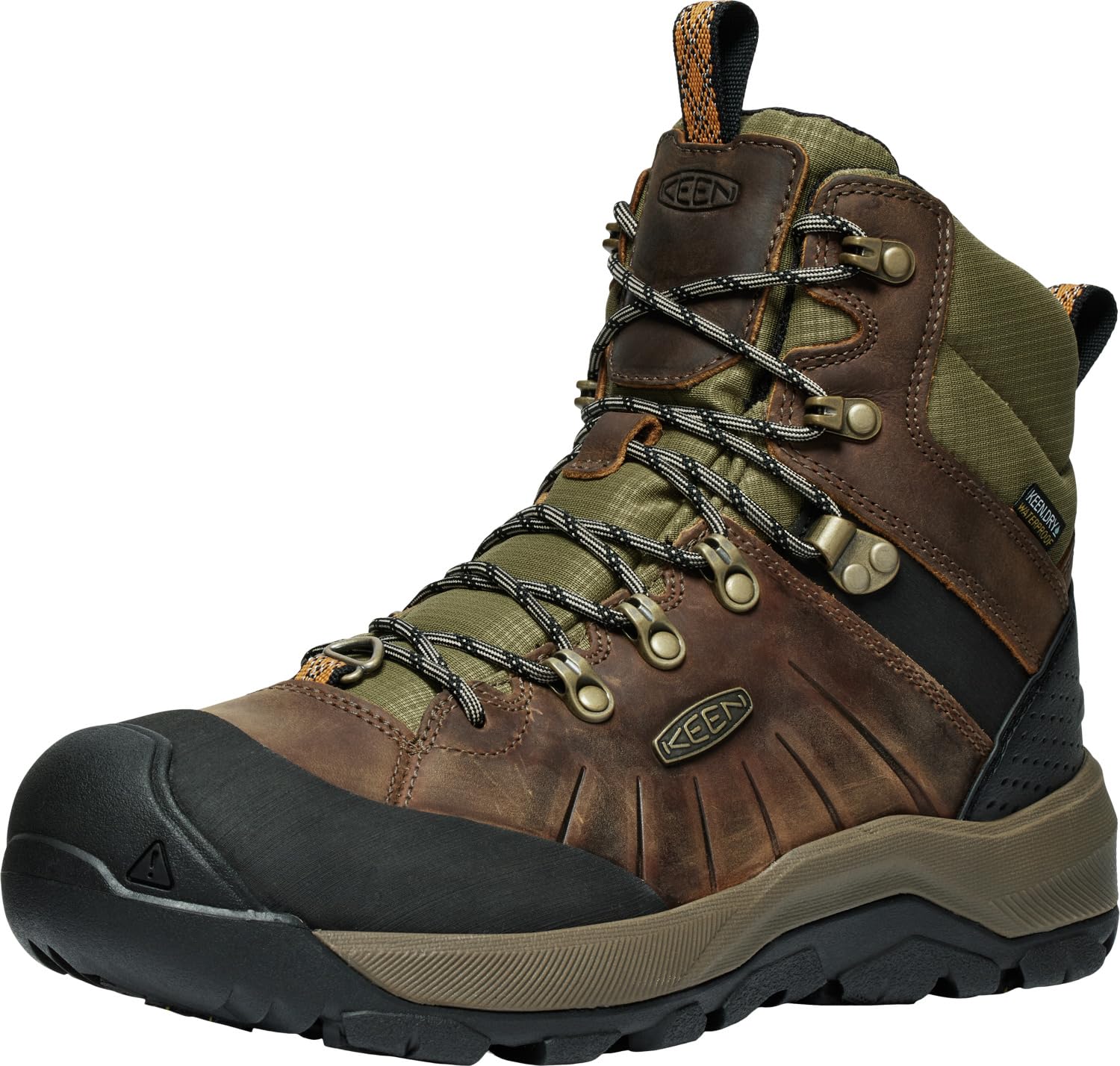
The boot that hikers choose for Colorado 14ers and subzero wind chills — with enough toe room for a comfortable stride.
KEEN’s traditional wider toe box is the headline here. Buyers with extra-wide feet (EEE width) report a great fit straight from the start, and the speed lace webbing system makes getting in and out fast. The boot uses a thermal heat shield inside to reflect warmth, and owners confirm it kept feet dry and warm while climbing a 14,000-foot peak in Colorado at -5°F wind chill. Traction is a standout — described as phenomenal in snow and solid with snowshoes and crampons.
The split among buyers here is about durability. While many owners praise the build quality after two winters, a meaningful number report shoelace anchors breaking or other hardware failures. The quality is the most mentioned single aspect (over 50 owners note it), but the durability consensus is mixed. Still, for the buyer who prioritizes a roomy toe box and active-winter performance — snowshoeing, hiking, winter walks — the Revel 4 Polar is a near-perfect match.
Toe room vs the Kamik: The KEEN is built on a wider form but with a standard width; the Kamik is a dedicated wide — choose based on where your foot needs extra space (toe box vs overall volume).
The durability split: Your experience may vary on longevity, but the majority find it reliable for two-plus years of heavy use.
Reach for this if: you spend your winter hiking, snowshoeing, or climbing and need a boot with a generous toe box and solid grip.
look elsewhere if: you need bombproof durability for daily work use; the Columbia Bugaboot or Kamik may hold up better over several seasons.
7. ROCKY Blizzard Stalker Waterproof 1200G Insulated Boot

When 200g just is not enough — 1200g of Thinsulate Ultra for snowmobiling in -25°F.
This is a boot built for a different world — one where you are standing on frozen concrete, ice fishing in Colorado, or riding a snowmobile through arctic winds. The 1200g of Thinsulate Ultra insulation is the highest on this list by a wide margin, and owners confirm their feet stayed warm and dry at -25°F. The multi-directional Blizzard outsole provides excellent traction on snow and uneven terrain, and the 8-inch height offers good ankle support. At 5.4 pounds per pair for a size 10, it is heavy, but that is the price of extreme warmth.
The most common praise is the warmth — over 100 buyers single it out. But the boot is not without trade-offs. A few owners mention the rubber separating from the upper after heavy use, and the sole cushioning is described as thin by some, with a raised rim that creates side pressure. It is also bulky and not suitable for general hiking off snow. But for the specific job of standing in extreme cold, the Blizzard Stalker is a proven specialist.
The warmth advantage
- 1200g Thinsulate Ultra is among the warmest you can buy — tested at -25°F
- Blizzard outsole delivers excellent traction on snow and ice
- Durable build with a 15-year lifespan reported by one long-time owner
The bulk penalty
- Heavy and clunky at 5.4 lbs per pair — not for long walks or hiking
- Some units had rubber separating from the upper after about 10 uses
- Thin insole and raised rim cause side pressure for some feet
Reach for this if: you need extreme cold protection for stationary use — hunting, ice fishing, snowmobiling, or outdoor work in deep winter.
steer clear if: you plan to walk more than a few hundred yards at a time; the weight and stiffness become a burden quickly.
Understanding the Specs
Insulation Weight (Grams)
The number of grams of insulation material (like Thinsulate or synthetic fill) packed inside the boot. This is the single clearest measure of how warm a boot will be. 200g is good for moderate cold and active use. 400g handles deeper cold and standing around. 1200g is arctic-level protection for extreme conditions. Always match the grams to your activity — more insulation means less breathability and more weight.
Waterproof Construction
A boot can be the warmest in the world, but if water gets in, your feet freeze. Look for “seam-sealed” construction, a waterproof membrane (like Columbia’s Omni-Tech or Rocky Waterproof), or a rubber shell. These keep slush, puddles, and melting snow out of the boot so the insulation stays dry and effective. No waterproof claim means a wet-foot guarantee in deep snow.
Sizing and Fit
Winter boot sizing is not the same as sneaker sizing. Nearly every boot here runs small or narrow. The most common advice from owners: order up at least a half size, and sometimes a full size. You need room for thick wool socks without your toes hitting the front of the boot. A boot that feels perfect in the store with thin socks will be painful after an hour outside with proper winter socks.
Traction Compounds
Not all outsoles are created equal at low temperatures. Look for a specific cold-weather rubber compound (Columbia’s Omni-Grip or Kamik’s synthetic rubber outsole) that stays flexible in freezing conditions. A standard hiking boot sole can stiffen up and lose grip on packed snow and ice. The tread pattern (multi-directional lugs, like the Blizzard outsole) also matters for stability on uneven terrain.
FAQ
Should I size up for winter boots?
What is the difference between 200g and 400g insulation?
Is 1200g insulation too much for daily use?
Can I wear these boots for hiking?
How do waterproof membranes work?
Which boot is best for wide feet?
What traction pattern works best on ice?
How long should a good winter boot last?
What socks should I wear with these boots?
Do these boots work with snowshoes?
Final Thoughts: The Verdict
For the majority of shoppers, the best cold weather boots for men is the The North Face Chilkat V 200g because it balances proven warmth, reliable waterproofing, and a trusted brand at a fair price — all without the bulk of a specialist boot. If you want a lighter, more affordable daily driver that still handles serious snow, grab the Columbia Expeditionist Shield. And for extreme cold — ice fishing or a long stand in single-digit temps — the ROCKY Blizzard Stalker 1200G is the one to reach for.
How We Picked
We do not accept paid placement. Every pick is matched to a real buyer and a real use-case; we do not hands-on test units.
Sources & Methodology
Specifications: manufacturer listings and product documentation. Review insights: verified customer reviews, as of July 2026. Pricing: not shown on this page (it changes often); check the current price via the retailer link.
As an Amazon Associate, WellFizz earns from qualifying purchases. This does not affect which products we feature.
Related Guides

Mo Maruf
I created WellFizz to bridge the gap between vague wellness advice and actionable solutions. My mission is simple: to decode the research and give you practical tools you can actually use.
Beyond the data, I am a passionate traveler. I believe that stepping away from the screen to explore new environments is essential for mental clarity and physical vitality.