Our readers keep the lights on and my smoothie glass nicely filled. As an Amazon Associate, I earn from qualifying purchases.
Specs are compiled from manufacturer listings and verified buyer reviews and can change over time — please confirm the key details on the product page before buying.
Making videos for YouTube, TikTok, or Instagram is frustrating when your gear is too big to carry or takes too long to set up. A compact vlogging camera fixes that — it slips into a pocket, starts recording in seconds, and gives you video quality that your phone cannot match, all without needing a film degree. The right compact vlogging camera changes how freely you shoot because you stop wrestling with menus and start capturing the action as it happens, whether you are filming a travel diary, a cooking tutorial, or a day out with the kids.
I’m Mohammad Maruf — the founder and writer behind WellFizz. This guide is built by comparing the manufacturers’ published specifications and the patterns across verified customer reviews, so you get each pick’s real strengths and trade-offs instead of marketing spin.
Quick Picks
- Insta360 Luna Ultra Endurance Bundle — Best Image Quality
- DJI Osmo Pocket 3 Vlog Combo — Best Overall
- Sony ZV-1 II Vlog Camera — Widest Selfie Lens
- Sony ZV-1F Vlogging Camera Kit — Best Starter Kit
- DJI Osmo Nano Standard Combo (128GB) — Pocket-Sized POV
- Canon PowerShot V10 Compact Vlogging Camera — Compact & Affordable
- Canon PowerShot G7 X Mark III Digital Camera — Optical Zoom Champ
How To Choose The Best Compact Vlogging Camera
Choose a compact vlogging camera based on portability, shooting environment, and external mic support.. Every model here is small, but the differences in stabilization, video resolution, and battery life change what you can actually capture in a day.
Sensor Size and Low-Light Performance
A larger sensor captures more light for cleaner video in low-light conditions.. The cameras here use either a 1-inch type sensor or a smaller 1/1.3-inch type sensor. A 1-inch sensor typically delivers cleaner footage when the lights are dim, while the 1/1.3-inch sensors are still very capable but may show a bit more grain in dark scenes.
Stabilization: Mechanical vs. Electronic
Mechanical stabilization physically cancels hand shake for smoother walking footage.. Mechanical stabilization (a small gimbal built into the camera) physically moves the lens or sensor to cancel out your hand movements. Electronic stabilization (software-based) crops into the image to reduce shakiness but can make the shot feel a little swimmy. For walking or handheld vlogging, mechanical stabilization is noticeably smoother.
Frame Rate and Video Quality
Higher frame rates produce smoother motion in video.. 30fps is standard for talking-head vlogs.. 60fps delivers smoother playback for fast action like biking or dancing.. 120fps or higher enables smooth slow-motion playback without stutter..
Quick Comparison
| Model | Best For | Sensor | Max Video | Stabilization | Amazon |
|---|---|---|---|---|---|
| Insta360 Luna Ultra | Cinematic 8K quality | 1″ main + 1/1.3″ tele | 8K / 30fps | 3-axis mechanical | Amazon |
| DJI Osmo Pocket 3 | Pro-level 4K on the go | 1-inch CMOS | 4K / 120fps | 3-axis mechanical | Amazon |
| Sony ZV-1 II | Ultra-wide selfie framing | 1.0-type | 4K | Electronic | Amazon |
| Sony ZV-1F Kit | All-in-one starter bundle | 1-inch Exmor RS | 4K | Electronic | Amazon |
| DJI Osmo Nano (128GB) | Ultra-portable POV clips | 1/1.3-inch | 4K / 60fps | Electronic | Amazon |
| Canon PowerShot V10 | Pocket-friendly beginner vlogs | 1-inch CMOS | 4K / 30fps | Electronic (IS modes) | Amazon |
| Canon G7 X Mark III | Optical zoom versatility | 1-inch | 4K UHD | Electronic | Amazon |
In‑Depth Reviews
1. Insta360 Luna Ultra Endurance Bundle

The sharpest video quality you can fit in one hand, with a screen that pops off.
If image quality is your absolute priority, this is the one that beats everything else on the list. The Insta360 Luna Ultra packs dual Leica lenses — a 1-inch main sensor plus a pro-grade telephoto lens with a 1/1.3-inch sensor and an F2.0 aperture — so you get exceptional detail whether you are framing a wide shot or zooming in on a distant subject. It records cinematic 8K30fps video with Dolby Vision, meaning the colors and contrast look vivid straight out of the camera. For low-light scenes, the 4K60fps PureVideo mode and advanced AI noise reduction keep the image bright and clean, which buyers report as a standout feature for evening shoots.
The detachable 2-inch OLED touchscreen separates it from every other pick here — you can control the camera wirelessly from up to 20 meters away, The detachable screen lets solo vloggers frame themselves from up to 20 meters away.. The 3-axis mechanical stabilization keeps walking shots smooth, and the AI tracking holds your subject centered even when you move. The battery lasts up to 4 hours on a single charge, and fast charging brings it to 80% in just 23 minutes, so you rarely run out of power during a long shoot. Reviewers consistently praise the premium build quality and say the Leica color science delivers Hollywood-ready tones without needing to color-grade heavily.
Where It Shines
- 8K30fps resolution gives you room to crop in post
- Detachable touchscreen enables creative angles and solo control
- 4-hour battery life outlasts most all-day shoots
The Trade-Offs
- Front-heavy feel with the handle attached
- Not as rugged as a dedicated action camera
Who it fits: The vlogger who prioritizes resolution and color depth above all else and wants professional-grade tools in a pocketable body.
Who might pass: Anyone who needs something drop-proof or prefers a lighter, simpler carry for casual daily clips.
2. DJI Osmo Pocket 3 Vlog Combo
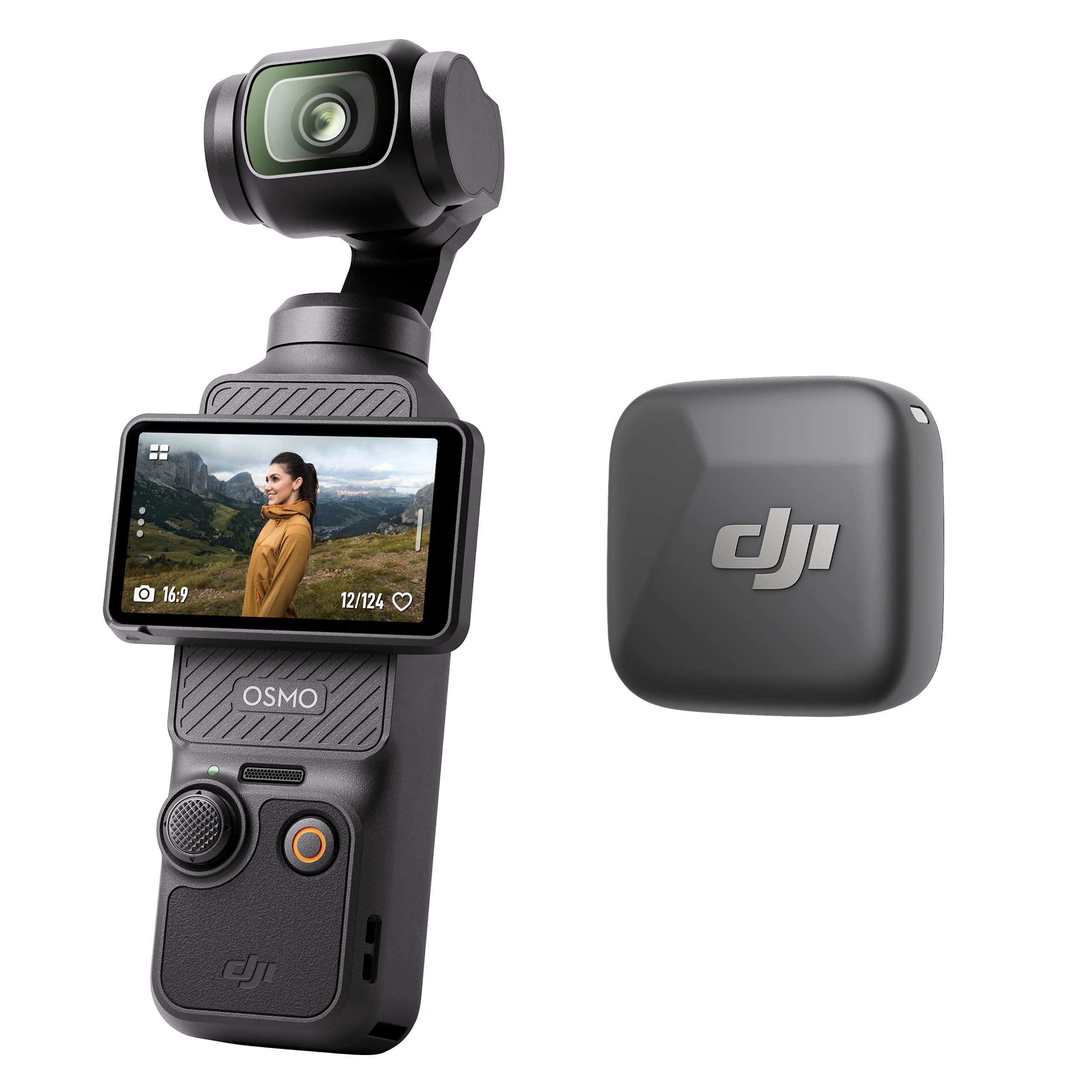
A pocket-sized powerhouse that shoots 4K slow-motion and follows you automatically.
For the best balance of video quality, ease of use, and creative features, the DJI Osmo Pocket 3 is tough to beat in this compact vlogging camera category. It records 4K video at up to 120fps using a 1-inch CMOS sensor, which means you can capture buttery-slow-motion clips or rock-solid 30fps talking-head footage from the same camera. The 2-inch touchscreen rotates between horizontal and vertical orientation, so switching from a YouTube video to a TikTok short takes about a second. The 3-axis mechanical stabilization is the same technology used in DJI’s larger gimbals — it cancels out walking bounce so well that reviewers describe the footage as “insane” and “professional” straight out of the camera.
ActiveTrack 6.0 locks onto you (or a subject) and keeps you centered in the frame as you move, which is incredibly useful for hands-free vlogging on a tripod. The included DJI Mic Mini transmitter delivers clear audio with minimal setup, and OsmoAudio technology lets you connect two transmitters directly to the camera for interviews. Owners mention that the battery lasts long enough for full-day intermittent shooting and charges quickly via USB-C. Unlike the Insta360 Luna Ultra, the Pocket 3 does not shoot 8K, but its 4K/120fps capability and smaller price tag make it the smarter pick for most creators who want professional results without the premium jump.
What It Excels At
- 4K120fps allows smooth slow-motion in full resolution
- Rotating touchscreen makes vertical shooting easy
- ActiveTrack 6.0 keeps you in frame without a camera operator
Keep In Mind
- No built-in tripod in the base Standard Combo kit
- Battery charger for the camera is sold separately
the balance pick: Perfect for anyone moving from phone vlogging to proper gear — the stabilization and tracking features alone save you hours of editing shaky clips.
One real limit: If you need 8K resolution for heavy cropping in post-production, step up to the Insta360 Luna Ultra.
3. Sony ZV-1 II Vlog Camera

An ultra-wide zoom lens that actually fits you and a friend in the selfie frame.
The Sony ZV-1 II is built specifically for creators who film themselves. Its 18-50mm zoom lens is the widest you will find on this list (the previous model was 24mm), which means holding the camera at arm’s length still gets plenty of background and your whole face in the shot without a weirdly cropped composition. The large 1.0-type sensor paired with the F1.8-4.0 aperture lens delivers natural background blur, giving your vlogs that expensive-camera look without needing a separate lens. Real-time Eye AF (autofocus that tracks the subject’s eye) keeps your face sharp even when you turn your head or move around the frame.
Audio is handled by a directional 3-capsule microphone and includes a wind screen accessory, so outdoor clips stay clear without needing a separate mic for every outing. The side tripod mount is a thoughtful touch — it does not block the tilt screen when you set the camera on a tripod. Reviewers consistently praise the good battery life and lightweight portability. Unlike the Osmo Pocket 3, the ZV-1 II relies on electronic stabilization instead of a mechanical gimbal; the footage is still stable for static or slow walking, but fast movement will show more jitter than the DJI or Insta360.
Strengths
- 18mm ultra-wide zoom perfect for handheld selfie vlogs
- Real-time Eye AF keeps your face sharp automatically
- Side tripod mount does not interfere with the screen
Weaknesses
- Electronic stabilization is less effective than mechanical gimbals
- No USB-C cable or charger included in the box
Ideal for: Vloggers who film themselves talking to the camera and want a zoom range to fit more of the scene without walking backward.
A reason to look elsewhere: If you do lots of walking while filming — the mechanical stabilization on DJI models is significantly smoother.
4. Sony ZV-1F Vlogging Camera Kit

A full creator bundle that saves you from buying accessories separately.
This kit takes the already beginner-friendly Sony ZV-1F camera and packs it with everything you need to start vlogging immediately. The camera itself has a 20.1 MP 1-inch Exmor RS sensor and records 4K video with oversampled clarity, meaning the footage looks detailed and natural. The fixed 20mm ultra-wide lens is ideal for selfie-style filming, and the background defocus button lets you blur the background with one tap — no manual settings required. The flip-out LCD screen makes framing yourself straightforward, and the camera weighs under 300 grams, so holding it up for a long vlog does not tire your arm.
The kit includes a case, a 64GB Extreme Pro card, two replacement NP-BX1 batteries plus a charger, a memory card reader, Corel photo software, an HDMI cable, an LED light, a 12-inch flexible tripod, a memory card wallet, lens cap keeper, and a cleaning kit. Reviewers consistently mention the incredible value of having everything in one box and the ease of transferring footage to a phone via the Imaging Edge app. The trade-off compared to the ZV-1 II is the fixed 20mm lens — you cannot zoom in optically, so you have to physically move closer to your subject. One buyer also noted the included battery arrived dead, though the extra spares solve that issue for most.
Kit Highlights
- Comes with two extra batteries, charger, tripod, and more
- Oversampled 4K video delivers sharp, natural-looking footage
- Background defocus button gives instant cinematic blur
Kit Limitations
- Fixed 20mm lens means no optical zoom
- Electronic stabilization only — not ideal for walking vlogs
Perfect entry point: First-time vloggers who want one box with all the accessories and no guesswork about what to buy next.
Who should skip: Anyone who needs a zoom lens or mechanical stabilization for action-heavy content.
5. DJI Osmo Nano Standard Combo (128GB)
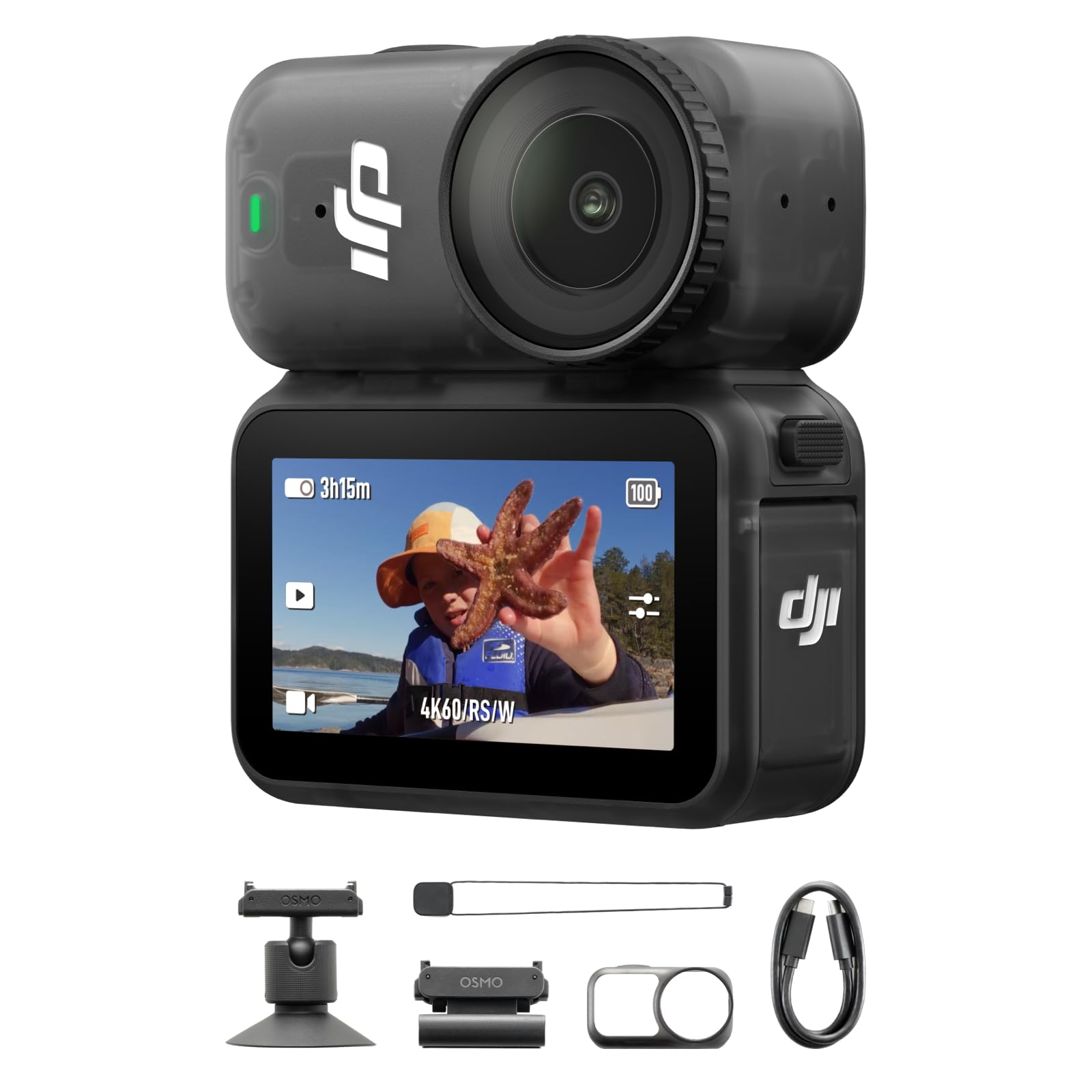
A magnetic cube that clips anywhere and shoots 4K60fps with a 143-degree view.
The DJI Osmo Nano is the smallest and most portable camera on this list — it is a tiny magnetic cube that you can attach to a hat clip, lanyard, or any metal surface for true point-of-view footage. It records 4K at 60fps using a 1/1.3-inch sensor, which is a step down in size from the 1-inch sensors on some competitors, but it captures bright and sharp results even in moderate light. The 143-degree ultra-wide field of view (FOV) is significantly wider than traditional vlogging cameras, making it ideal for rich scenes like hiking trails or pet adventures. It comes with 128GB of built-in storage, so you can start recording immediately without buying a memory card.
The battery life is about 60 minutes at 4K when the camera is used by itself, but attaching it to the Vision Dock extends recording to around 2 hours — a detail buyers specifically mention as useable for a full outing. The camera is waterproof up to 10 meters and offers IPX4 splash resistance with the dock, which lets you take it on wet adventures without worry. Unlike the Osmo Pocket 3, this camera lacks a built-in gimbal, so stabilization is electronic. It also runs at 60fps max compared to the Pocket 3’s 120fps — that is a 2.0x gap in motion smoothness for slow-motion fans. Reviewers love the magnetic accessories and the tiny footprint, calling it “the ultimate pocket-sized changer” for mobile content.
Why It Stands Out
- Magnetic mount system clips to hats, bags, or metal surfaces
- 128GB built-in storage eliminates need for a memory card
- Waterproof to 10m for underwater or wet-weather shots
The Catch
- Electronic stabilization only — no mechanical gimbal
- Battery life is 60 min at 4K without the dock
Best for: Active creators who want hands-free POV shots — the magnetic clip system is class-leading for biking, running, or wandering through markets.
Consider the Pocket 3 if: You need smoother walking footage or the ability to shoot slow-motion at 120fps.
6. Canon PowerShot V10 Compact Vlogging Camera

A simpler, cheaper alternative that fits in a fanny pack and shoots clean 4K.
The Canon PowerShot V10 is the most affordable camera in this guide with a 1-inch CMOS sensor, giving you that large-sensor look without stretching your budget. It records 4K video at 30fps and Full HD at 60fps — the same sensor size as the more expensive Sony ZV-1 II, but at a lower frame rate for 4K. The built-in stand folds forward or backward to set the camera on a table or shelf, making hands-free recording easy without buying a separate tripod. The 19mm wide-angle lens (35mm equivalent) is good for selfie-style vlogging, and the stereo microphone setup (with a third mic for noise cancellation) captures clear audio for casual use.
The controls are dead simple — reviewers describe it as “point & shoot” for vloggers who do not want to learn complex menus. However, a critical issue reported by multiple buyers is overheating: one reviewer wrote, “It was getting hot really quickly and then would turn itself off within a few minutes,” which makes it unreliable for long continuous recording sessions. There is also no lens cover, so throwing it in a bag risks scratching the glass. Compared to the Sony ZV-1F, the PowerShot V10 is more pocketable thanks to the built-in stand, but its maximum 4K30fps frame rate gives you less flexibility for slow motion — the DJI Osmo Nano records 4K at 60fps for smoother motion.
What Works
- Built-in stand is great for tabletop recording without extra gear
- 1-inch sensor delivers good video quality for the price
- Easy to use — no complicated menus or settings
What Doesn’t
- Overheating issues reported during extended recording
- No lens cover, leaving the lens vulnerable in a bag
- No optical zoom and no 4K60fps option
Suits: Casual vloggers on a tight budget who will shoot short clips (under 10 minutes) and value the built-in stand more than frame rate.
skip it if: You plan to film long sessions (over 15 minutes) where overheating may interrupt your recording.
7. Canon PowerShot G7 X Mark III Digital Camera
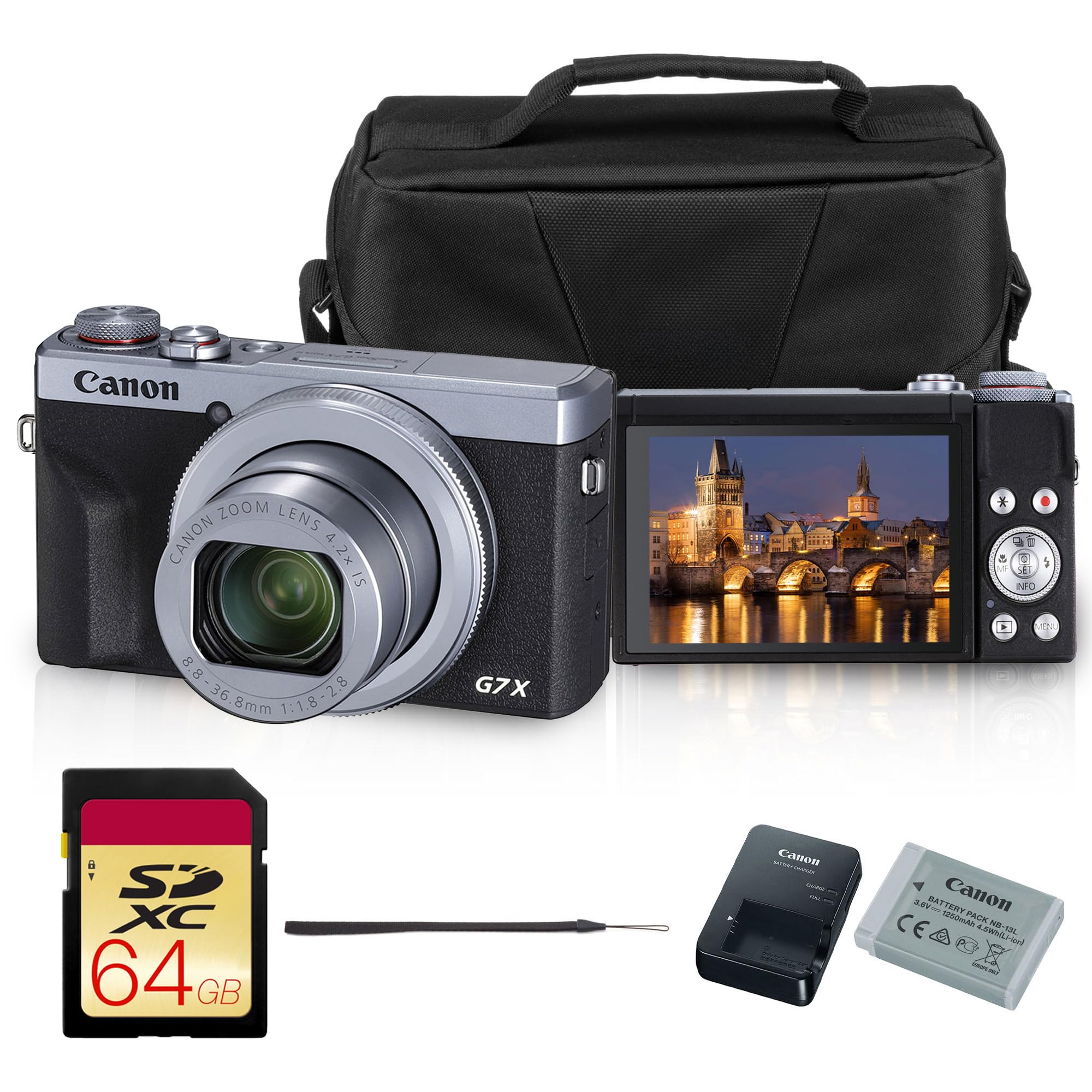
A premium point-and-shoot with true optical zoom that no other pocket camera here matches.
The Canon PowerShot G7 X Mark III sits at the premium end because it offers something none of the other compact vlogging cameras in this list can: a 4.2x optical zoom lens with a bright aperture. Unlike the fixed wide-angle lenses on the Sony ZV-1F or the digital zoom on the DJI Osmo Nano, the G7 X Mark III lets you zoom in physically without losing image quality, which is critical for events, stage performances, or wildlife shots where you cannot walk closer. It packs a 20.1MP 1-inch sensor and records 4K UHD video, and the Hybrid autofocus system with 39 autofocus points keeps your subject sharp during zoom and movement. The silver body is compact enough for a jacket pocket, which buyers confirm is easy to carry everywhere.
The included kit adds a shoulder bag and 64GB memory card, so you have protection and storage from day one. Reviewers consistently praise the “amazing picture quality” and describe the photos as “incredible” — it is as capable for still photography as it is for video. The trade-off versus the DJI Osmo Pocket 3 is the lack of mechanical stabilization; the G7 X Mark III relies on electronic image stabilization, so walking shots will show more bounce. One reviewer noted a faulty unit with no replacement option through Amazon due to a third-party seller, so it is worth checking the seller before ordering. At this price, it is only the right pick if optical zoom is a must-have feature.
Why It Stands Out
- 4.2x optical zoom is unique among pocket vlog cameras
- 20.1MP 1-inch sensor delivers excellent still photos too
- Compact body with a shoulder bag included in the kit
Where It Falls Short
- Electronic stabilization only — walking footage will be shaky
- One review reported a faulty unit with no replacement option
For the zoom shooter: Anyone who films events, performances, or far-away subjects and cannot sacrifice optical reach for gimbal smoothness.
Better options exist if: You primarily vlog while walking — the Osmo Pocket 3 or Insta360 Luna Ultra will save your footage from shake.
Understanding the Specs
Sensor Size: 1-Inch vs 1/1.3-Inch
The sensor is the part of the camera that captures light. A larger 1-inch type sensor (found in the Canon PowerShot V10, Sony ZV-1F, and Insta360 Luna Ultra) lets in more light, which means your video stays cleaner and less grainy when you film indoors or at dusk. A 1/1.3-inch sensor (found in the DJI Osmo Nano) is slightly smaller but still good for well-lit scenes; it just shows more grain in very dark conditions.
Frame Rate: 30fps, 60fps, and 120fps
Frames per second (fps) measure how many still images the camera captures each second. 30fps is standard for normal-looking video and is fine for talking-head vlogs. 60fps makes motion look smoother — great for walking, biking, or any action. 120fps (available on the DJI Osmo Pocket 3) allows you to slow the footage down to one-quarter speed in editing for dramatic slow-motion without stutter.
Mechanical vs Electronic Stabilization
Mechanical stabilization uses a tiny motorized gimbal (the Insta360 Luna Ultra and DJI Osmo Pocket 3 have 3-axis mechanical stabilization) to physically counteract your hand movements, giving you silky-smooth footage even while walking fast. Electronic stabilization is software-based — it crops into the image and shifts it to reduce shake. It works for gentle movement but gets swimmy during fast motion. For vloggers who walk and talk, mechanical stabilization is always better.
Built-in Audio and External Mic Support
Built-in microphones range from simple stereo (Canon PowerShot V10) to directional multi-capsule setups (Sony ZV-1 II). A directional mic focuses on sound in front of the camera, which helps isolate your voice. If you plan to vlog outdoors or in noisy places, an external microphone port (auxiliary mic jack) lets you plug in a dedicated lapel or shotgun mic for much cleaner audio. The DJI Osmo Pocket 3 can connect two wireless transmitters directly, and the Canon PowerShot V10 has an external mic auxiliary port.
FAQ
How much storage do I need for 4K vlogging?
Can I use a compact vlogging camera as a webcam?
Do I need a separate microphone for outdoor vlogging?
Which compact vlogging camera has the best image stabilization?
What is the difference between 4K30fps and 4K60fps?
Is a 1-inch sensor much better than a smaller sensor?
Can I use a compact vlogging camera for live streaming?
How long does the battery last on these cameras?
Do compact vlogging cameras have a zoom feature?
What does 3-axis mechanical stabilization mean in plain English?
Final Thoughts: The Verdict
For most people, the compact vlogging camera winner is the DJI Osmo Pocket 3 Vlog Combo because its 1-inch sensor, 3-axis mechanical stabilization, and 4K120fps video deliver professional-grade results in a genuinely pocketable size with no compromises on audio or tracking. If you want higher 8K resolution and a detachable screen for solo framing, grab the Insta360 Luna Ultra. And for a tight budget with a built-in stand, the Canon PowerShot V10 covers the basics if you keep your clips short.
How We Picked
We do not accept paid placement. Every pick is matched to a real buyer and a real use-case; we do not hands-on test units.
Sources & Methodology
Specifications: manufacturer listings and product documentation. Review insights: verified customer reviews, as of July 2026. Pricing: not shown on this page (it changes often); check the current price via the retailer link.
As an Amazon Associate, WellFizz earns from qualifying purchases. This does not affect which products we feature.
Related Guides

Mo Maruf
I created WellFizz to bridge the gap between vague wellness advice and actionable solutions. My mission is simple: to decode the research and give you practical tools you can actually use.
Beyond the data, I am a passionate traveler. I believe that stepping away from the screen to explore new environments is essential for mental clarity and physical vitality.