Our readers keep the lights on and my smoothie glass nicely filled. As an Amazon Associate, I earn from qualifying purchases.
Specs are compiled from manufacturer listings and verified buyer reviews and can change over time — please confirm the key details on the product page before buying.
If your legs ache, swell, or feel like lead by midday, the right pair of socks can change that — but with so many pressure ratings and fabrics out there, the wrong pick wastes your money and leaves you uncomfortable. This guide breaks down seven real compression socks by what they actually do for you, so you can confidently choose the pair that fits your day.
I’m Mohammad Maruf — the founder and writer behind WellFizz. This guide is built by comparing the manufacturers’ published specifications and the patterns across verified customer reviews, so you get each pick’s real strengths and trade-offs instead of marketing spin.
Whether you’re a nurse often on your feet or a traveler looking to prevent swollen ankles, finding the right fit matters. Here is our choice for the best compression socks to keep you moving, all explained in plain terms.
Quick Picks
- LEVSOX Cotton Compression Socks 20-30mmHg — Best Overall
- Physix Gear Compression Socks 20-30 mmHg — Performance Pick
- Merino Wool Compression Socks 15-20 mmHg — Smart Value
- Benirap Breathable Compression Socks 20-30 mmHg — Easiest On/Off
- Feetures Compression Knee High Socks — Active Traveler
- CHARMKING Compression Socks 15-20 mmHg (8 Pairs) — Budget Champion
- Compression Socks for Women and Men 15-20 mmHg — Shift Saver
How To Choose The Best Compression Socks
Picking the right compression socks is not complicated, but getting it wrong means buying a pair you will not wear. Focus on just a few things: how firm the pressure is, what the sock is made of, and how it fits your specific leg shape.
Compression Level: mmHg and what it feels like
The number you see — 15-20 mmHg or 20-30 mmHg — measures the pressure the sock applies to your leg, in millimeters of mercury. Think of 15-20 mmHg as a firm, comfortable hug that helps with mild swelling and tired legs; 20-30 mmHg is a tighter squeeze, often recommended for more noticeable swelling or for people who spend their entire shift on hard floors. Buyers report that anything above 20 mmHg can be harder to pull on, so consider your hand strength if you have arthritis.
Fabric matters: Cotton, Merino wool, or synthetics
Compression socks are made from different blends. Cotton feels soft and breathable but can get warm. Merino wool is a natural fiber that wicks moisture away and resists odors — owners mention it stays cooler than polyester. Nylon and spandex blends are common, especially for high-pressure socks, but some people find them sweaty. If you have sensitive skin, look for a smooth toe area so the stitching does not rub or cut into your toes all day.
Fit: Measure your calf, not just your shoe size
A common mistake is picking socks based on shoe size alone. Compression socks need to fit your calf circumference and the length of your leg. Many brands offer a size chart that asks for calf and ankle measurements. If a sock is too long, it can bunch behind your knee and restrict movement. Buyers with larger calves often find that a wide-calf size or sizing up makes a critical difference in comfort. If the top band digs in, the sock is too small.
Quick Comparison
| Model | Best For | Compression Level | Pairs Included | Material | Amazon |
|---|---|---|---|---|---|
| LEVSOX Cotton 20-30mmHg | All-day softness & firm support | 20-30 mmHg | 1 Pair | Cotton blend | Amazon |
| Physix Gear 20-30mmHg | Intense leg fatigue & recovery | 20-30 mmHg | 1 Pair | Nylon/Spandex | Amazon |
| Merino Wool 15-20mmHg | Warmer days & odor control | 15-20 mmHg | 1 Pair | Merino Wool blend | Amazon |
| Benirap 20-30mmHg | Easy to pull on, firm squeeze | 20-30 mmHg | 2 Pairs | Nylon/Spandex | Amazon |
| Feetures Graduated | Active performance & travel | — (Graduated) | 1 Pair | Lightweight knit | Amazon |
| CHARMKING 15-20mmHg (8 Pairs) | Budget-friendly everyday use | 15-20 mmHg | 8 Pairs | Nylon/Spandex | Amazon |
| Compression Socks 15-20mmHg (3 Pairs) | Quick relief for long shifts | 15-20 mmHg | 3 Pairs | Nylon/Spandex | Amazon |
In‑Depth Reviews
1. LEVSOX Cotton Compression Socks 20-30mmHg

Cotton-soft comfort with a firm 20-30 mmHg squeeze that stays put all day.
These socks solve the two biggest complaints about compression wear: they are hot and they have nasty toe seams. The LEVSOX uses a cotton blend that feels noticeably softer and cooler against the skin than the typical nylon-spandex sock. At 20-30 mmHg (millimeters of mercury, the pressure unit), this is the firmest level of compression you can buy without a prescription — perfect if you deal with moderate swelling or need serious support during a long shift. Customers note the toe area is the best they have bought in fifty years, with no seam you can feel rubbing or cutting into your toes. The socks do run a bit long; one reviewer with shorter legs said the top pulled past their knee, but rolling it down about three inches fixed it. Unlike the Physix Gear below, these are easier on sensitive skin because the cotton reduces irritation, though they may not stay as tight over dozens of washes if you tumble dry them — hang them to dry instead.
One thing that separates these is the thicker cushioned sole, which adds a layer of comfort if you are walking or standing on hard floors. Several buyers mention they reduce the swelling in their ankles and make their legs feel great by evening. A reviewer noted the top band does not cut into your circulation, even if you have larger calves. The socks come as a single pair, which feels steep compared to the multi-pair packs below, but the quality of the cotton and the smooth build justify the price for someone who wears compression every day.
Pure comfort pick: Great if soft cotton fabric and a smooth toe (no irritating ridge on your toes) matter more to you than having 8 pairs in a drawer. The compression is firm and effective, but the length might be too long for shorter legs.
Reach for these if: You want a premium-feeling cotton sock with firm 20-30 mmHg compression and zero toe-seam irritation. They are best for nurses, counter workers, or anyone who stands all day.
Look elsewhere if: You have short legs (under 5’2″) or need a multi-pack to cover the week at a lower cost.
2. Physix Gear Compression Socks 20-30 mmHg

Hard-to-beat support for severe leg fatigue that one reviewer noted “gave my legs new life.”
These are the socks you turn to when milder options are not cutting it. The 20-30 mmHg pressure provides more firmness than the CHARMKING socks , making them a step up for serious swelling or pain. One reviewer, recovering from a knee injury, wore them for a 12-hour shift and was shocked to see their ankle bones again at the end of the day — something they had not seen in six years. The graduated compression (tightest at the ankle, looser at the calf) works exactly as designed to push blood upward. Reviewers point out the arch support feels targeted and comfortable, and the sock leaves room for toes to wiggle despite the firm squeeze. However, a senior citizen reviewer found them very hard to get on alone and needed a partner’s help, so consider your hand strength before buying.
The material is a nylon-spandex blend, which is standard for high-compression socks but can feel warmer than cotton. The design includes a cushioned footbed that buyers appreciate for impact absorption. Unlike the Feetures socks below, these have a wider calf fit — one reviewer with 15-16 inch calves found the XL worked well. The top band is described as comfortable and does not dig in or roll down. They come as a single pair, and the price is higher than multi-packs, but one buyer who needed relief from chronic pain ended up buying four more pairs immediately. If you have severe leg fatigue or post-injury swelling, these are a strong contender.
Standout strengths
- Firm, effective compression (20-30 mmHg) that visibly reduces swelling
- Excellent arch and ankle support with comfortable toe room
- Stays put all day — no sliding down or rolling at the top
Know before you buy
- Very difficult to pull on, especially for people with arthritis
- Only one pair, which feels pricey for the budget-conscious
- Nylon-spandex material can feel warm in hot climates
Perfect for intense relief: If you have notable swelling, pain, or are recovering from leg issues, these deliver the strongest squeeze and proven results. Buyers with strong hands and average-to-slim calves will get the most benefit.
Skip if: You have arthritis, limited hand strength, or need a budget-friendly multi-pack for daily rotation.
3. Merino Wool Compression Socks 15-20 mmHg
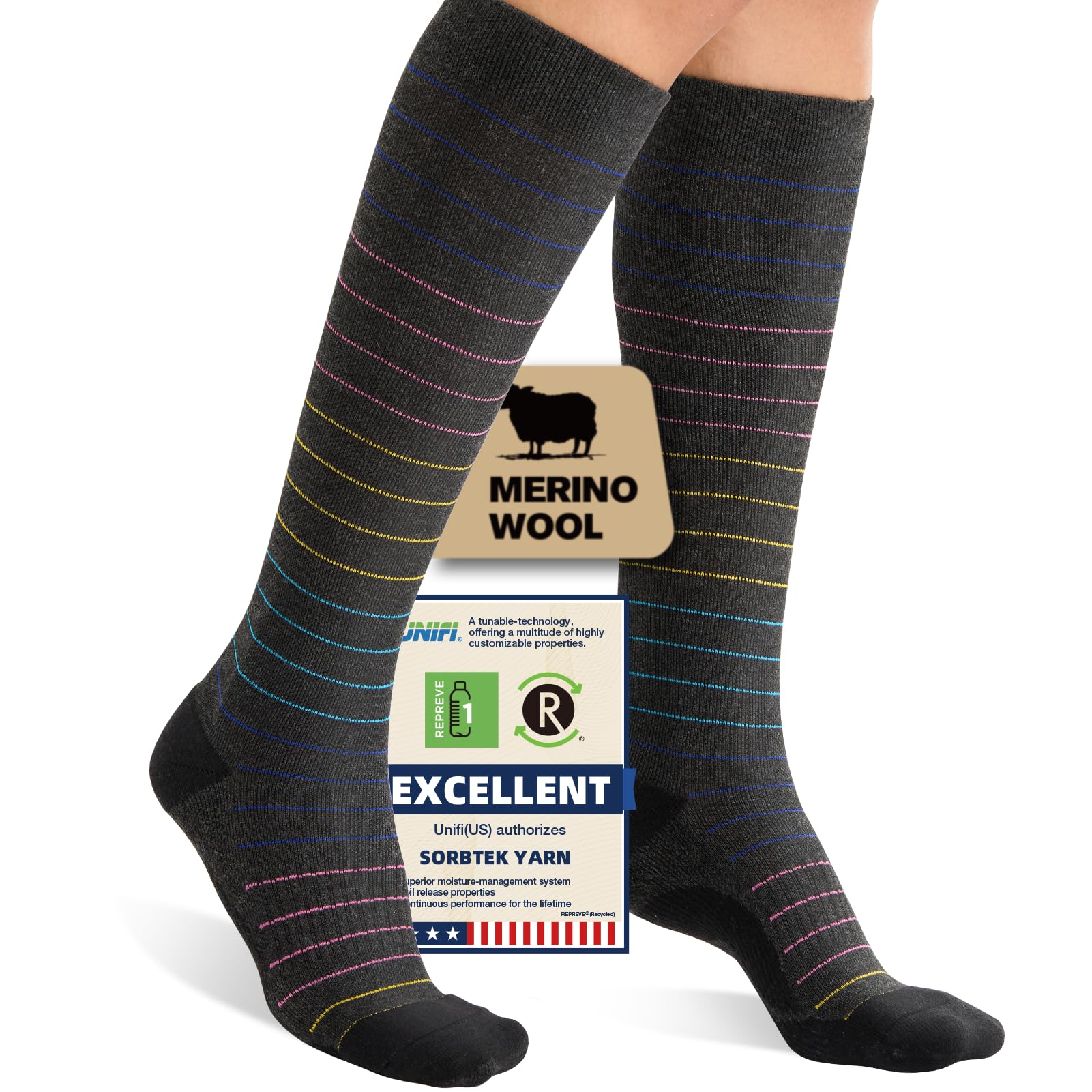
A breathable natural fiber sock that stays comfortable on warm days without the itch.
These are a smart choice if you have been avoiding compression socks because the synthetic ones make your feet sweat. The Merino wool blend is the star here — it naturally wicks moisture and resists odors, so your shoes stay fresher at the end of a long day. One buyer, a nurse on long shifts, said these were the first socks that helped with smelly feet and kept them feeling dry. At 15-20 mmHg, the compression is gentle and ideal for preventing mild swelling, not for treating severe edema. Shoppers say the socks feel “unbelievably comfortable,” with a thickened area around the heel and toes that cushions every step. The top band stays secure without digging in, and the socks breathe well enough that one buyer mentioned they feel invisible during wear.
A key detail: buyers report these are much cooler than polyester versions, making them a solid pick for spring and summer. The sizing is accurate, and even buyers who are not small find the bands comfortable compared to other brands. They come as a single pair, and the price is reasonable for what you get. One nurse mentioned they are a bit pricey for one pair, but if you can afford them, the natural material and moisture-wicking performance make them worth it. Unlike the Benirap socks with 20-30 mmHg, these are easier to put on but less effective for moderate swelling.
Dry and comfortable: Best for people who want the odor-fighting and temperature-regulating benefits of Merino wool in a compression sock. The 15-20 mmHg level is gentle enough for all-day wear without feeling restrictive.
Reach for these if: You work in a warm environment, have sweaty feet, or just prefer natural fabrics over synthetics. They are a great everyday pick for mild support.
Look elsewhere if: You need firm compression for significant swelling or a budget-friendly multi-pack.
4. Benirap Breathable Compression Socks 20-30 mmHg
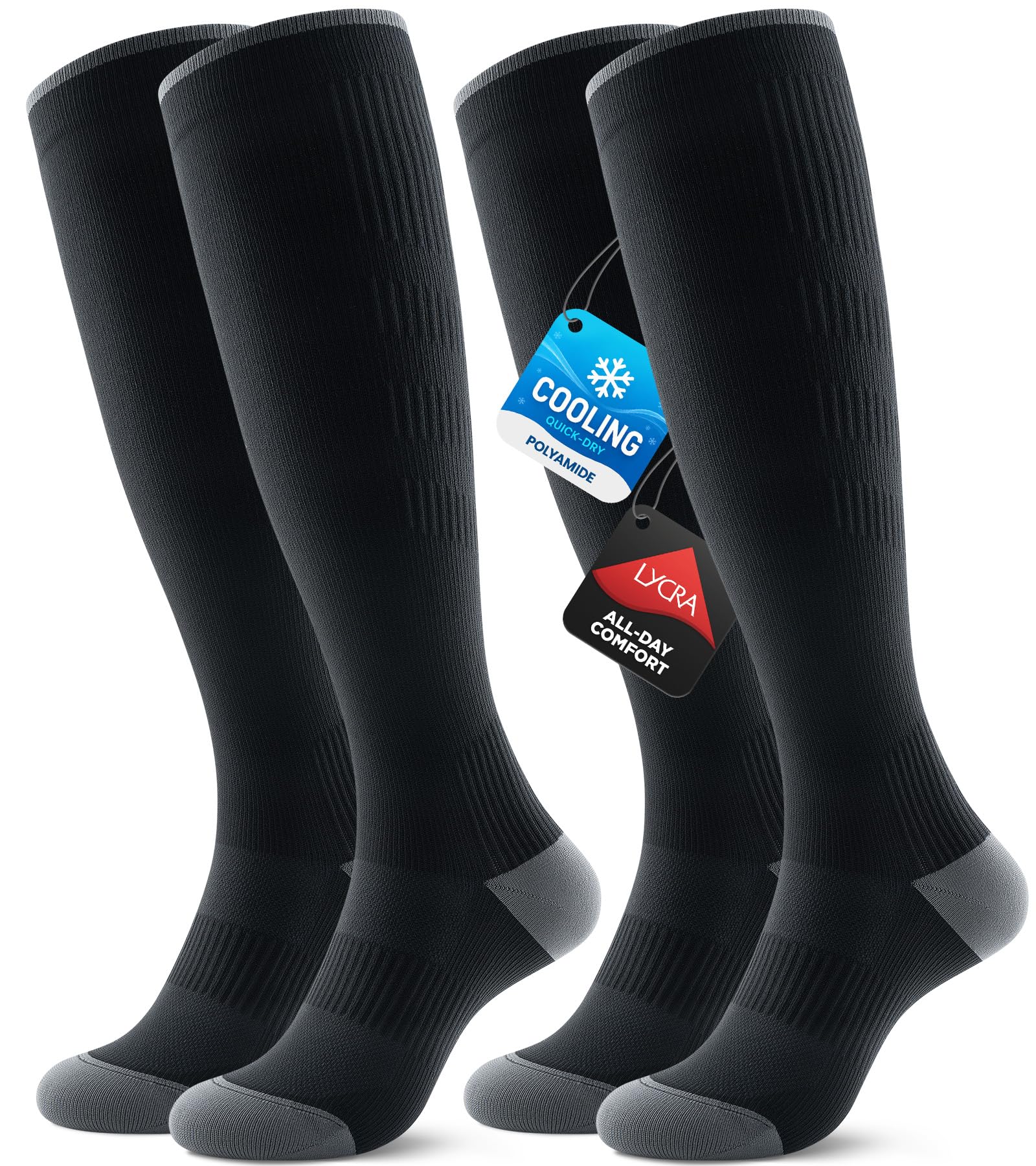
Two pairs of firm socks that slide on without the wrestling match.
If you have tried compression socks before and gave up because they were too hard to pull on, these are worth a shot. One buyer, who tried four other brands, called these “the 5th time was the charm” — they got them on without needing help, even with a “huge skaters calf.” The secret is the way the sock is constructed: it has a targeted band around the arch of the foot and you work it up bit by bit. At 20-30 mmHg, these give you firm compression, the same level as the Physix Gear above, but they are noticeably easier to get on and off. The top band does not cut into the back of the knee, and the sock stays in place all day.
You get two pairs in the box, which is better value than the single-pair premium options. Reviewers mention the socks are comfortable for all-day wear and the compression feels amazing once on. A note: one buyer found them thick and warm, calling them best for winter. They include a QR code card with a 180-day free replacement, which is a nice safety net. Unlike the Feetures socks, which are tight and slim, these have a more accommodating fit for larger calves. If you need firm pressure but struggle with dexterity, these solve that problem directly.
What works
- Easier to put on than most 20-30 mmHg socks
- Two pairs included for the price of one of some competitors
- Firm graduated compression without a tight top band
What to consider
- Can feel thick and warm, ideal for cooler months
- Sizing is critical — check your calf measurement to avoid buying too small
Perfect for larger calves: If you need 20-30 mmHg support but have trouble getting socks on, these are your best bet. The two-pair pack adds value.
Skip if: You prefer lightweight, breathable socks for hot weather or need only gentle 15-20 mmHg compression.
5. Feetures Compression Knee High Socks
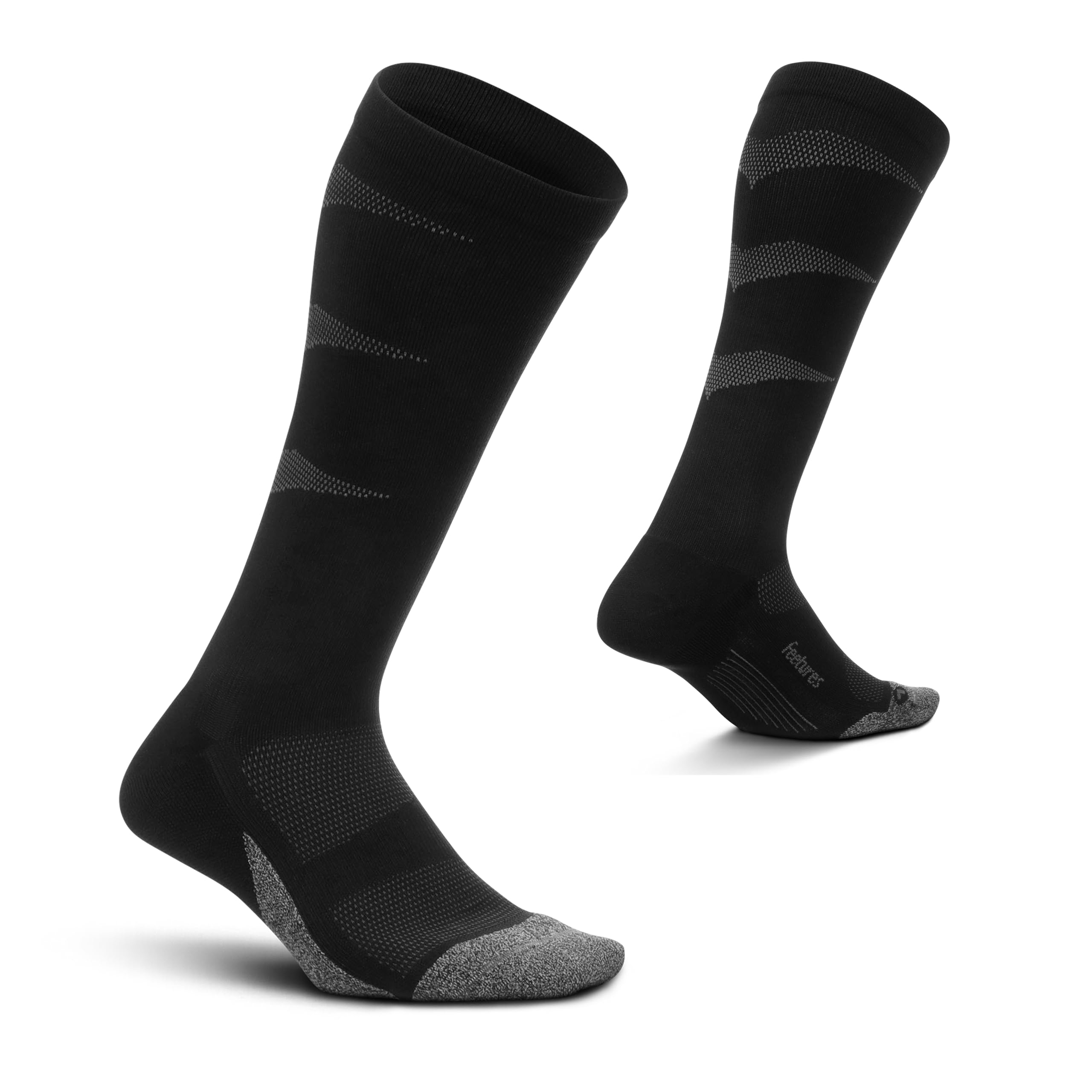
A lightweight athletic sock that fits slim legs best and feels barely there.
These socks are built for people who are active — hiking, traveling, standing on their feet all day — and want compression without the bulk. The material is noticeably lighter and more breathable than standard compression fabrics, so your feet do not overheat. Feetures uses “targeted compression” and an anatomical design, which means the sock is shaped to fit the left and right foot separately, with graduated pressure that improves circulation and reduces muscle fatigue. Owners mention they are very comfortable and do not leave deep indentations around the calves. One dedicated user uses them for travel, hiking, and long days on feet, ordering more pairs after seeing how well they worked.
The catch? These are for slim legs. Multiple reviewers warn that the socks are very tight and may be uncomfortable if you have larger calves — one 140-pound female buyer found them “WAY too tight.” The manufacturer recommends them for people with slim legs only. They come as a single pair and cost more than most other options here, reflecting the premium athletic brand. Unlike the LEVSOX, which has a soft cotton feel, the Feetures have a performance knit feel that wicks moisture but offers less cushioning. If you have thin legs and want a performance-oriented sock for recovery, these are a top choice, but they will not fit every body type.
For active, slim builds: Great for runners, hikers, and travelers who want a lightweight, breathable sock that stays put. Not recommended if you have larger calves or need soft, cushioned comfort.
Reach for these if: You have slim legs and want a performance sock for exercise, travel, or recovery that breathes well and feels light.
Look elsewhere if: You have larger calves, need a soft cotton feel, or find the price of a single pair hard to justify.
6. CHARMKING Compression Socks 15-20 mmHg (8 Pairs)

Eight pairs of comfortable everyday socks for the price of one premium pair.
This is the no-brainer value pick if you want to fill your drawer with comfortable compression socks without spending a lot. At 15-20 mmHg, the gentle pressure is ideal for preventing mild swelling and general leg fatigue — the same level as the 3-pair option below, but with a huge quantity advantage (8 pairs versus 3 pairs). One buyer who wears them all day, every day, from the moment they wake up to the moment they get in bed, reported the socks held up great over months of daily use on hardwood and carpet. Another buyer with chronic illnesses and POTs (Postural Orthostatic Tachycardia Syndrome, a condition that affects blood flow) said these socks help give them energy and reduce pain. The copper-infused fabric is soft and breathable, and customers note the socks are easy to put on without struggling.
The trade-offs are real: the compression is lighter than the 20-30 mmHg options, so do not buy these for severe swelling. Multiple reviewers point out that patterns fade slightly after multiple washes, though this does not affect performance. One short buyer (5 feet) found the knee-high length a bit too long, which is a common issue with standard sizing. If you need daily, light support and want to stock up without a big investment, these are excellent. But if you need firm medical-grade pressure, you will want the LEVSOX or Physix Gear instead.
Highlights
- Eight pairs for a very low per-pair cost
- Soft, easy to pull on, and comfortable for all-day wear
- Buyers with chronic conditions report noticeable relief
Trade-offs
- Light 15-20 mmHg compression is not for significant swelling
- Patterns can fade after washing
- Knee-high length may be too long for shorter people
Best for the cost: Perfect if you want gentle compression for daily wear and need many pairs to rotate through. Great for travel, light activity, and mild swelling.
Skip if: You need firm 20-30 mmHg support for medical conditions or serious swelling.
7. Compression Socks for Women and Men 15-20 mmHg (3 Pairs)
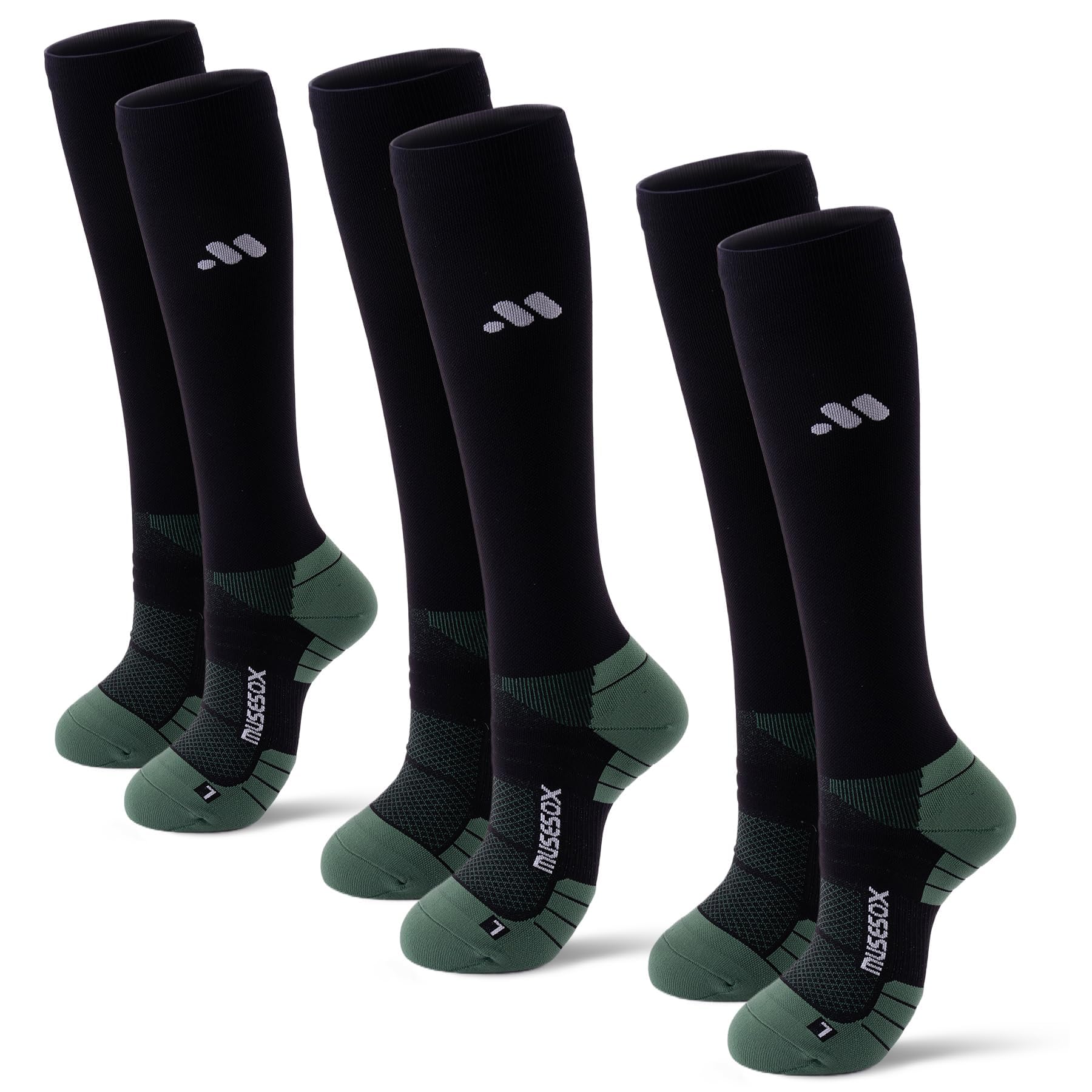
A three-pack of comfortable 15-20 mmHg socks that one owner reported “drastically relieved pain in my calves after 8hr shifts.”
These are a solid middle-ground option: three pairs give you a work week of rotation without the bulk of the eight-pack. The 15-20 mmHg graduated compression is gentle enough for all-day wear but effective enough to make a real difference for people on their feet. A food service worker with long shifts reported these drastically relieved their calf pain. The socks fit properly with a toe seam that is hardly noticeable — a detail that matters if you have ever been driven crazy by an irritating seam. Shoppers say they are comfortable, true to size, and provide “just a squeeze” that is not too tight. A salon professional standing behind a chair for long hours called them a standout.
The fit is universal casual — not as tailored as the LEVSOX, but that makes them flexible for different leg shapes. One buyer with a 12-inch calf circumference wore a medium and found them perfect. If you want a quick, affordable solution for shift work or travel, these deliver. The main downside is that at 15-20 mmHg, they are not for people with significant swelling who need the firmer squeeze of a 20-30 mmHg sock. Compared to the CHARMKING pack, these have fewer pairs but some buyers felt the fit was slightly better for narrower legs.
Reliable everyday relief: A straightforward three-pack that works for nurses, restaurant workers, and travelers. Gentle, effective, and comfortable — no frills, but it gets the job done.
Reach for these if: You want a simple, affordable three-pack for long shifts or travel. They are easy to put on, comfortable all day, and the gentle compression helps with tired legs.
Look elsewhere if: You need firm 20-30 mmHg pressure for medical conditions or prefer natural fiber fabrics like cotton or wool.
Understanding the Specs
mmHg — The pressure number
This tells you how tight the sock squeezes your leg. 15-20 mmHg feels like a supportive hug, good for everyday tiredness and mild swelling. 20-30 mmHg is firmer, like a strong wrap, and is used for more noticeable swelling or serious leg fatigue. A higher number means more pressure but also more difficulty getting the sock on.
Graduated compression
Graduated means the sock is tightest at your ankle and gradually gets looser as it goes up your calf. This design helps push blood upward toward your heart, which reduces swelling and fatigue. A sock that is the same tightness all the way up is not doing you much good. Always look for the word “graduated” on the label.
smooth toe
A smooth toe means the sock is knit in a way that avoids a thick ridge of thread across your toes. That ridge can rub and cut into your skin with every step, especially inside a shoe. If you have ever taken off a sock to find red lines on your toes, you know why smooth matters. Many premium socks advertise this feature.
Fabric: Cotton vs Nylon vs Merino Wool
Cotton is soft and breathable but holds moisture. Nylon and spandex blends are stretchy and common for high-compression socks, but they can make your feet feel hot. Merino wool is a natural fiber that wicks sweat away, resists odors, and feels cooler than polyester. Your choice depends on climate and how sweaty your feet get.
FAQ
What does 15-20 mmHg mean in compression socks?
Is 20-30 mmHg better than 15-20 mmHg for swelling?
How do I know what size compression sock to buy?
Can I wear compression socks to bed?
How long do compression socks last before losing their tightness?
Why do my compression socks leave red marks or indentations?
Can compression socks help with restless legs or varicose veins?
Are cotton or Merino wool compression socks better for hot weather?
Can I wear compression socks while flying?
What is the difference between a compression sock and a compression stocking?
Final Thoughts: The Verdict
If you want one dependable pick, the compression socks winner is the LEVSOX Cotton Compression Socks because it pairs a firm 20-30 mmHg squeeze with the soft comfort of a cotton blend and a smooth toe that prevents irritation. If you want a bulk value pack for gentle daily support, grab the CHARMKING 8-pair set. And for serious leg fatigue where you need the strongest relief, the standout is the Physix Gear 20-30 mmHg.
How We Picked
We do not accept paid placement. Every pick is matched to a real buyer and a real use-case; we do not hands-on test units.
Sources & Methodology
Specifications: manufacturer listings and product documentation. Review insights: verified customer reviews, as of July 2026. Pricing: not shown on this page (it changes often); check the current price via the retailer link.
As an Amazon Associate, WellFizz earns from qualifying purchases. This does not affect which products we feature.
Related Guides

Mo Maruf
I created WellFizz to bridge the gap between vague wellness advice and actionable solutions. My mission is simple: to decode the research and give you practical tools you can actually use.
Beyond the data, I am a passionate traveler. I believe that stepping away from the screen to explore new environments is essential for mental clarity and physical vitality.